

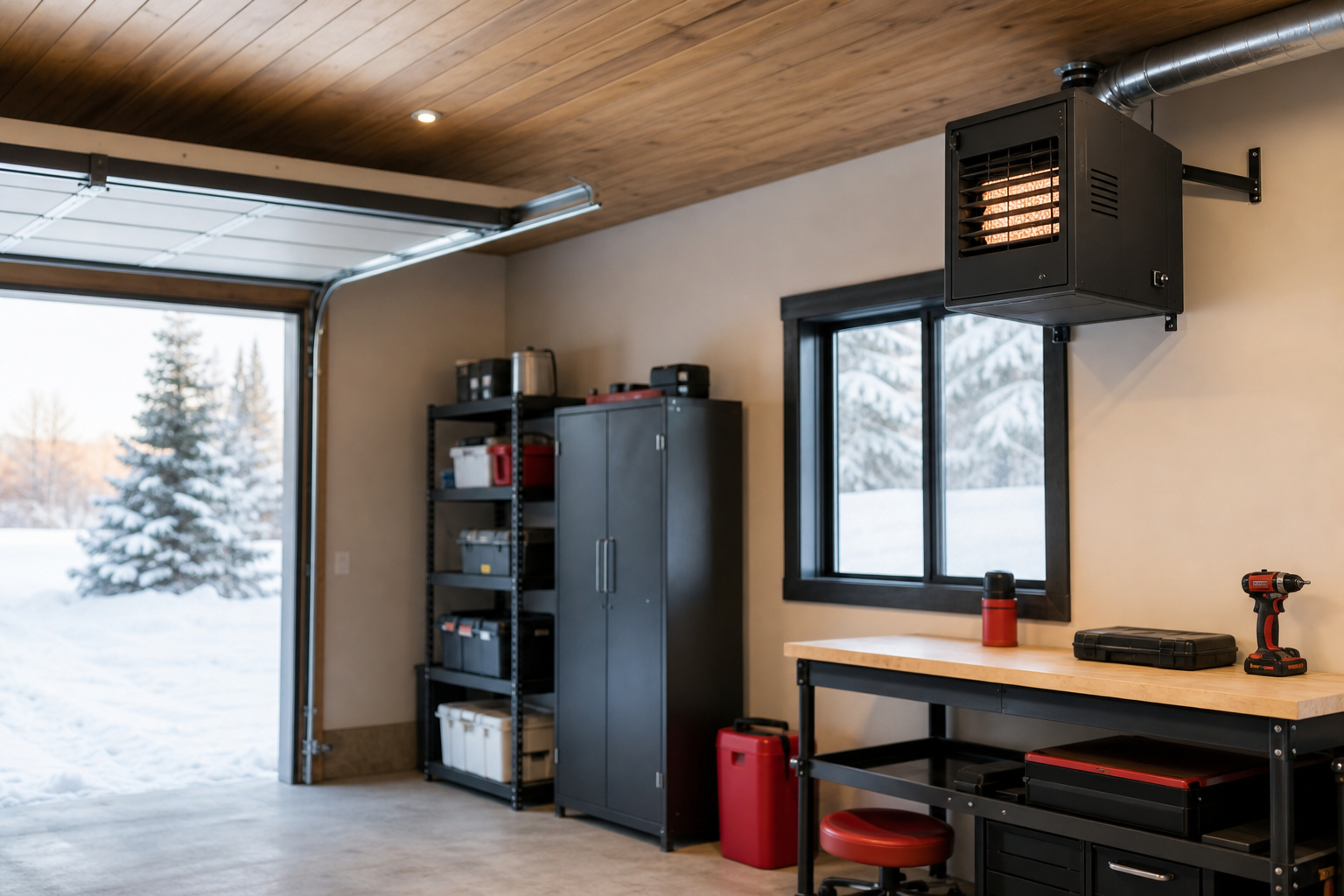
Shopping for garage heaters for cold climates means sifting through dozens of options that all claim to be the best. Marketing language is unreliable, and Amazon reviews can be misleading with incentivized ratings mixed in.
This guide focuses on specs and features that matter for real-world garage use. Every recommendation is based on performance, durability, and value, not advertising budgets.
Understanding Garage Heating Basics
Natural gas and propane heaters give the most BTUs per dollar. They require proper exterior venting (never run unvented combustion heaters in enclosed garages) and a gas line. Higher install cost, but lowest operating cost for daily use in cold climates.
BTU output must match your space. Multiply square footage by ceiling height, then by 3 to 5 BTUs based on insulation quality and climate. A well-insulated 500 sq ft, 10-foot-ceiling garage needs roughly 15,000 to 25,000 BTUs.
Electric forced-air heaters need no venting or fuel lines. A 5,000-watt 240V unit produces about 17,000 BTUs. Quick to heat, consistent temperature. Downside: higher operating cost than gas, especially where electricity is expensive.
Electric Forced-Air Heaters
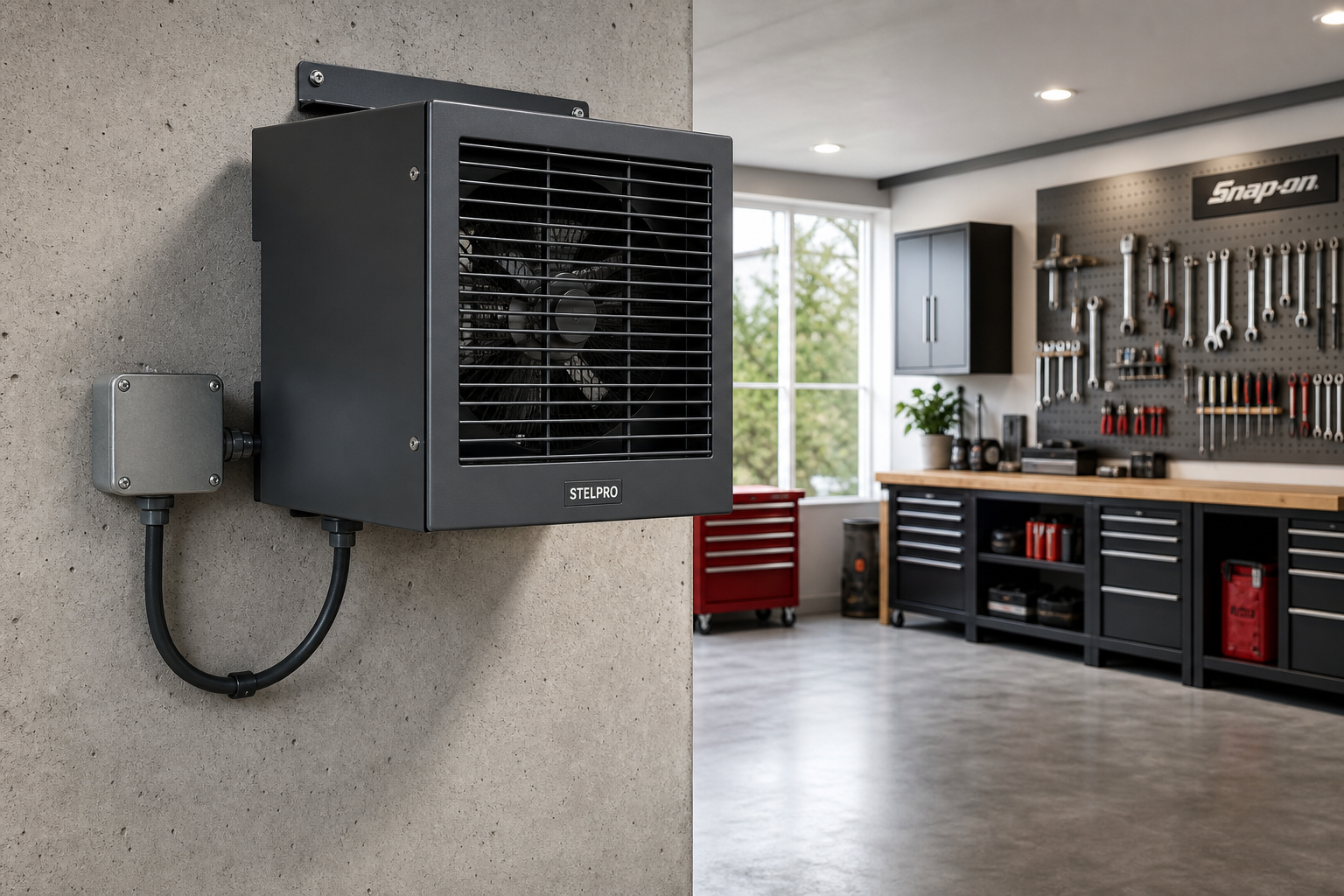
Electric forced-air and infrared radiant options dominate the residential market. The details here make the difference between a result that lasts and one that needs redoing within a year. Take the time to assess your conditions before committing to a method or product.
Follow manufacturer instructions exactly, even when online tutorials suggest shortcuts. Formulations differ between brands; what works for one product can cause failure with another. Check wiring capacity before installing high-wattage units.
Consider how this change fits the larger garage picture. Better insulation changes humidity patterns and reduces heater runtime. Heavy storage affects air circulation patterns. Think about these interactions when planning your heating setup.
A quality garage thermostat makes a noticeable difference in comfort and efficiency. Check current options and reviews on Amazon to find the right match for your setup and budget.
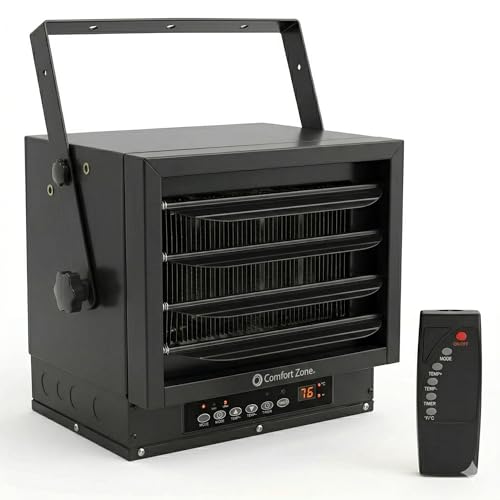
Electric Garage Heater 240V
High BTU output with consistent heating for daily garage use
Propane and Natural Gas Heaters
Propane and natural gas heaters deliver the highest heat output for the lowest operating cost. The details here make the difference between a safe installation that lasts and one that creates problems within a year.
Check specific venting requirements before purchasing. Measure the vent path, note unusual conditions (extreme temps, high humidity, structural obstacles), and read manufacturer specs carefully. A mismatch between your venting setup and the heater’s requirements is the most common cause of installation failures.
Professional installation is required for gas line connections and venting. Many areas require permits and inspections for gas appliance installations. These aren’t optional steps when dealing with combustion heating.
BTU Calculations for Different Garage Sizes
BTU calculations for different garage sizes (1-car and 3-car) require precision. This is an area where cutting corners comes back to haunt you. Invest the effort upfront and you’ll avoid undersized or oversized equipment.
Measure twice and calculate once. A tape measure and five minutes of verification prevent the mistakes that lead to inadequate heating. This applies especially to ceiling height and total cubic footage calculations.
Factor in insulation levels when choosing BTU requirements. An uninsulated garage needs 50% more heating capacity than an insulated one. Weather stripping replacement can significantly reduce your heating requirements.
Single-Car Garage (200-300 sq ft)
Most single-car garages need 6,000 to 15,000 BTUs depending on insulation and climate. Well-insulated garages in moderate climates work fine with smaller electric units. Cold climates with poor insulation require gas heating for reasonable operating costs.
Two-Car Garage (400-600 sq ft)
Two-car garages typically need 12,000 to 30,000 BTUs. This is where gas heating starts making financial sense for regular use. Electric units this size require 240V power and draw significant current.
Three-Car Garage (600+ sq ft)
Large garages benefit most from gas heating. Electric units capable of heating 600+ square feet cost significantly more to operate and may require electrical panel upgrades.
120V vs 240V Electric Options
120V vs 240V electric options and power requirements determine what’s possible with your existing electrical setup. Getting this right requires matching your approach to actual electrical capacity rather than following generic recommendations.
120V units max out around 1,500 watts (about 5,000 BTUs). Adequate for small, well-insulated spaces or supplemental heating. Most garages need more capacity than 120V units can provide.
240V units range from 3,000 to 7,500 watts (10,000 to 25,000 BTUs). Require dedicated circuits and proper electrical installation. Check your panel capacity before committing to high-wattage units.
Consider installation requirements early in your planning. Converting your garage to a home office or workspace makes proper heating even more critical.

240V Garage Heater
Higher BTU output for larger garages with dedicated circuit requirements
Infrared Radiant Heaters
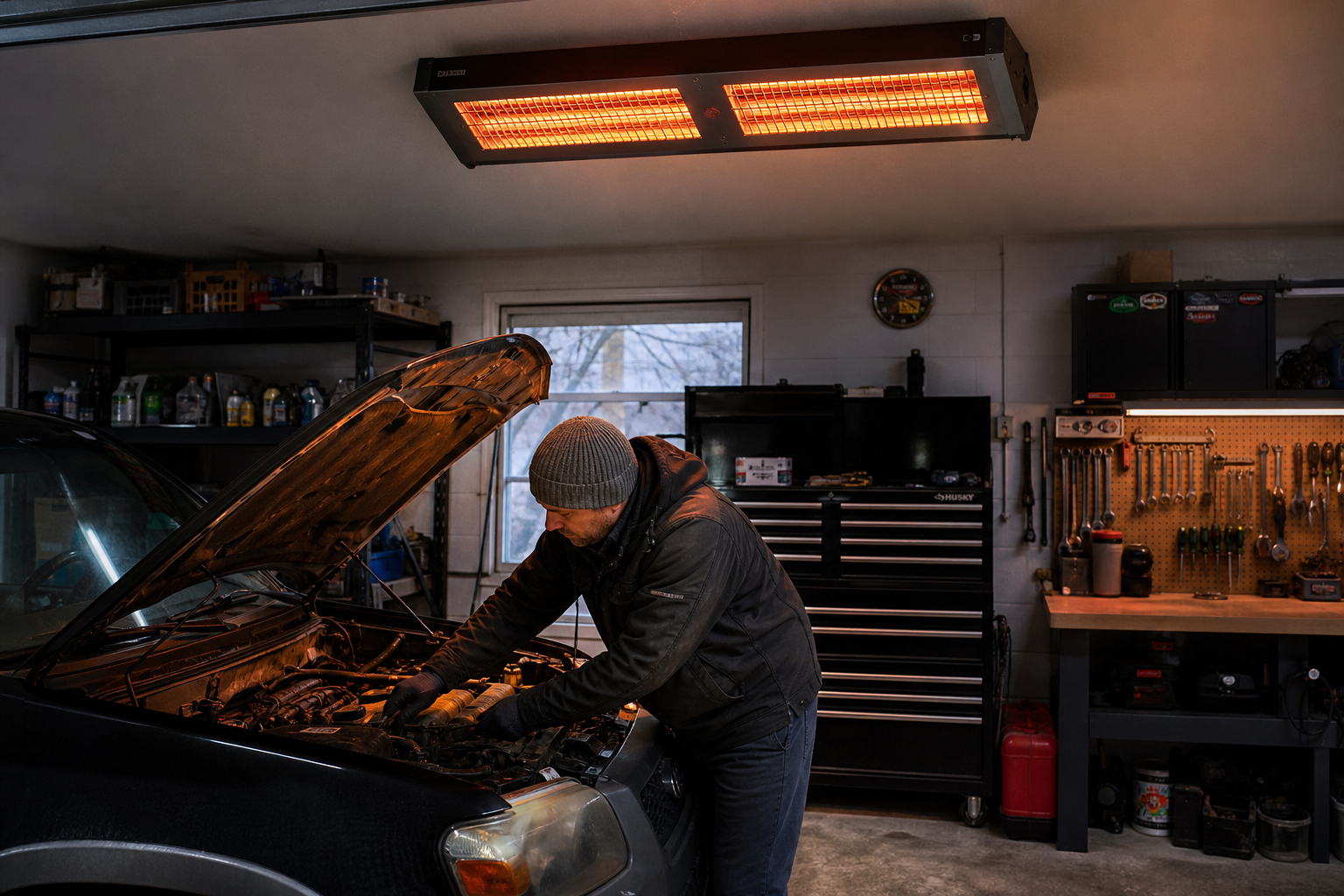
Infrared radiant heaters warm objects and surfaces directly instead of heating air. Efficient in drafty spaces since warmth doesn’t dissipate as quickly. The trade-off is uneven heating: direct-path areas get warm while corners stay cool.
Radiant heaters work best for spot heating or task-specific warming. Great for workshop areas where you’ll be working in one location for extended periods.
Gas-fired radiant heaters provide more heat per dollar than electric versions. Electric radiant panels work well for smaller areas or where gas isn’t available.
Installation and Safety Considerations
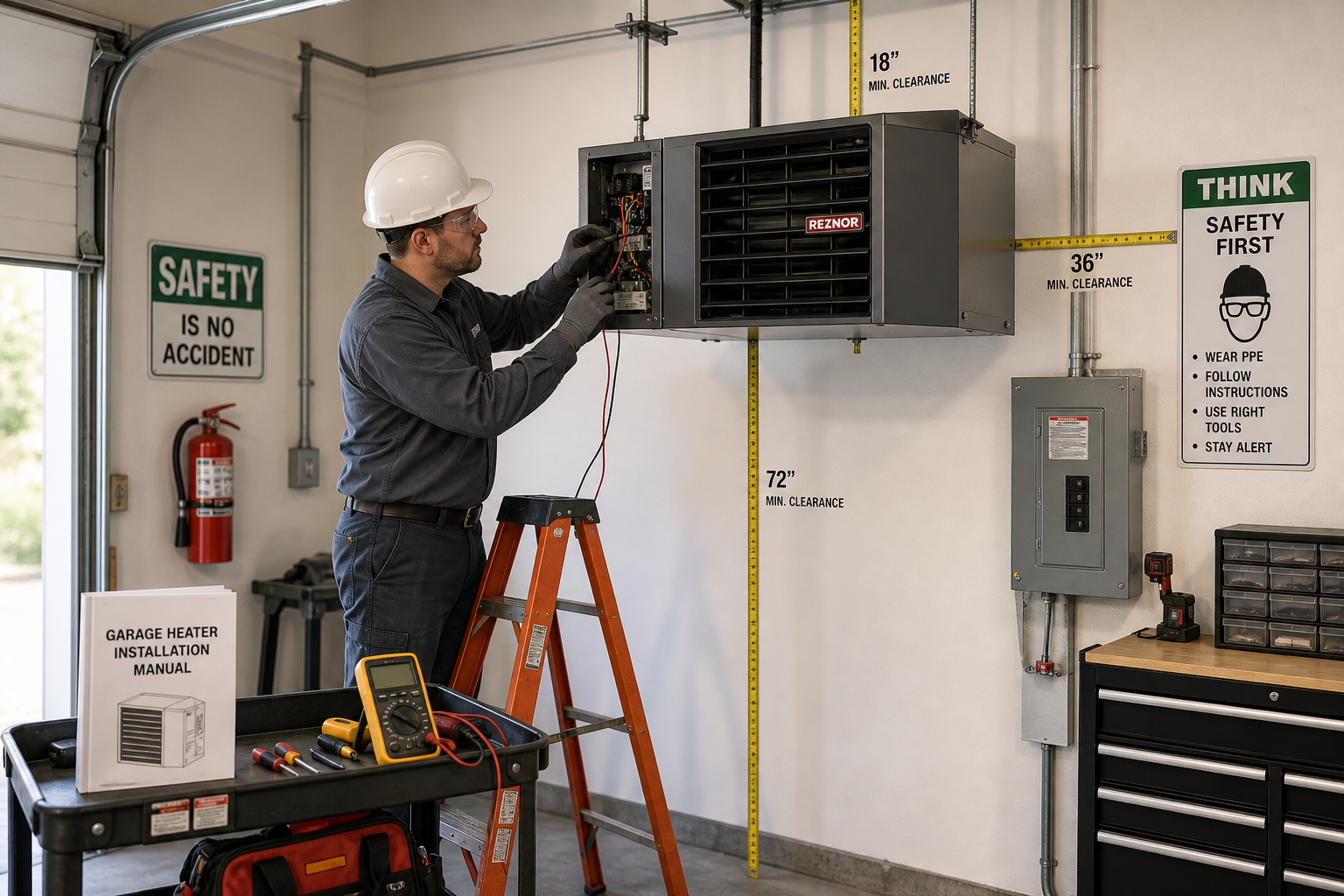
Research local building codes and permit requirements for your specific heater type. Electrical work, gas connections, and venting installations often require permits and inspections. Working without required permits creates liability issues and problems when selling the home.
Gas heaters require carbon monoxide detectors and proper ventilation. Never compromise on safety equipment to save money. Professional installation ensures compliance with safety codes.
Electric heaters need proper circuit sizing and GFCI protection where required. Undersized circuits cause breaker trips and potential fire hazards.
Practical Planning Tips
Consider the seasonal timing of your project. Heater installation works best before cold weather hits, but electrical and gas work can happen year-round. Plan installations during mild weather when contractors are more available.
Insulation dramatically improves any heater’s effectiveness. Even basic improvements like installing a radiant barrier reduce heating requirements and operating costs.
Set a realistic timeline and budget before buying anything. Most garage heating projects take longer than expected, especially when electrical or gas work is involved. Build buffer time into your plan.
What to Avoid
Knowing what to skip prevents expensive mistakes:
- “Universal” heaters claiming to work everywhere. Purpose-built garage heaters consistently outperform generic space heaters.
- Unknown brands with rock-bottom prices. Established manufacturers provide proven reliability and actual warranties.
- Unvented combustion heaters for enclosed spaces. These create carbon monoxide risks in garages without adequate ventilation.
- Undersized units to save money upfront. An undersized heater runs constantly and costs more to operate than a properly sized one.
For electric options, garage heaters designed for cold climates offer the reliability needed for harsh winter conditions. Browse current selection on Amazon for latest models and features.
Maintenance and Efficiency Tips
Regular maintenance keeps heaters running efficiently and safely. Gas units need annual inspections of venting and combustion components. Electric units need periodic cleaning of fans and heating elements.
Combining heating with other garage improvements multiplies effectiveness. Proper ventilation prevents moisture buildup that makes spaces feel colder than they actually are.
Smart thermostats designed for garage use prevent energy waste from forgotten heaters. Look for models with smartphone connectivity and scheduling features.

Propane Garage Heater
Portable option for garages without permanent gas lines, high BTU output
Frequently Asked Questions
Will insulating my garage lower energy bills?
If your garage shares a wall with heated living space, yes. The insulated garage buffers heat loss from adjacent rooms. Most noticeable in cold-climate attached garages. Even basic insulation makes any heater dramatically more efficient.
Do I need a permit for garage heater installation?
Most areas require permits for new electrical circuits, gas line connections, and venting installations. Check with your building department before starting work. Unpermitted installations create problems when selling and may violate insurance requirements.
Can I heat an uninsulated garage effectively?
A heater will run constantly without reaching comfortable temperatures in an uninsulated space. Even basic improvements like a garage door insulation kit can make a 10 to 15-degree temperature difference and reduce operating costs significantly.
What’s the difference between forced-air and radiant heating for garages?
Forced-air heaters warm the entire space evenly but lose heat quickly when doors open. Radiant heaters warm objects directly, providing comfort even in drafty conditions, but create uneven temperatures throughout the space.
This article contains affiliate links. We may earn a small commission at no extra cost to you.
