

As an Amazon Associate I earn from qualifying purchases.
Slatwall panels are one of the most flexible storage upgrades you can make to a garage wall. You can rearrange hooks, bins, and brackets without drilling new holes every time your needs change. In this article I’m covering four ways people are putting slatwall to work: full wall coverage, tool and accessory hooks, bin and basket systems, and mixed storage layouts.
Full Wall Coverage
Covering an entire wall with slatwall panels gives you a clean, consistent look and maximum flexibility from floor to ceiling. Instead of patching holes every time you reorganize, you just slide accessories to a new position. It works especially well in single-car or two-car garages where one wall is dedicated entirely to storage. If you’re weighing your options before committing, the garage wall panels guide breaks down slatwall alongside other popular panel systems so you can make an informed choice. Getting the installation right from the start is what makes full-wall coverage worth the effort, and the complete guide to installing slatwall panels in a garage walks you through every step.
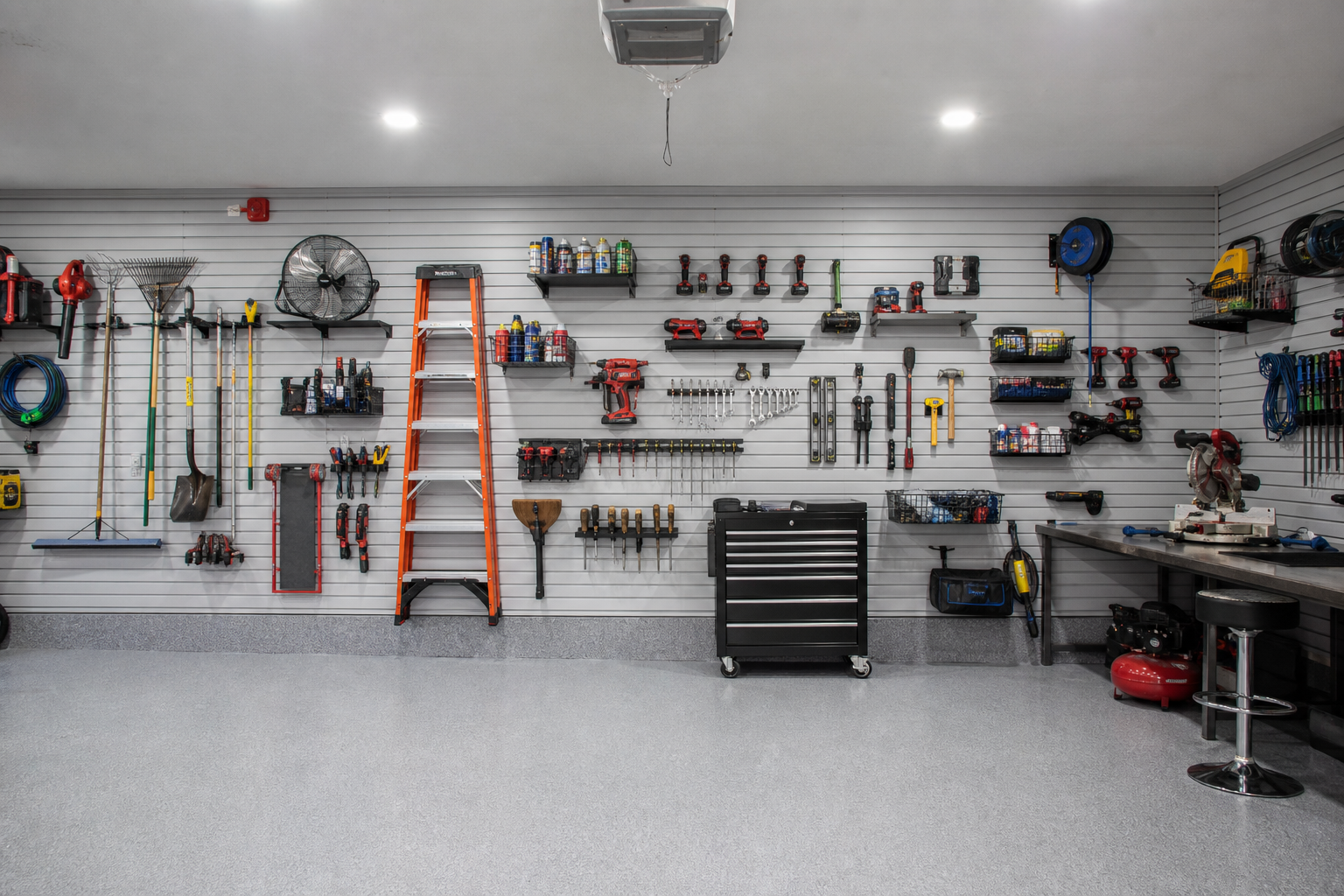
Light gray PVC slatwall runs from the floor plate to the top of the wall, giving this garage a clean, uniform backdrop for storage. The matching gray finish ties in naturally with the epoxy floor and white ceiling, making the whole space feel intentional rather than cluttered. Every accessory sits at exactly the right height because nothing is locked into fixed positions.
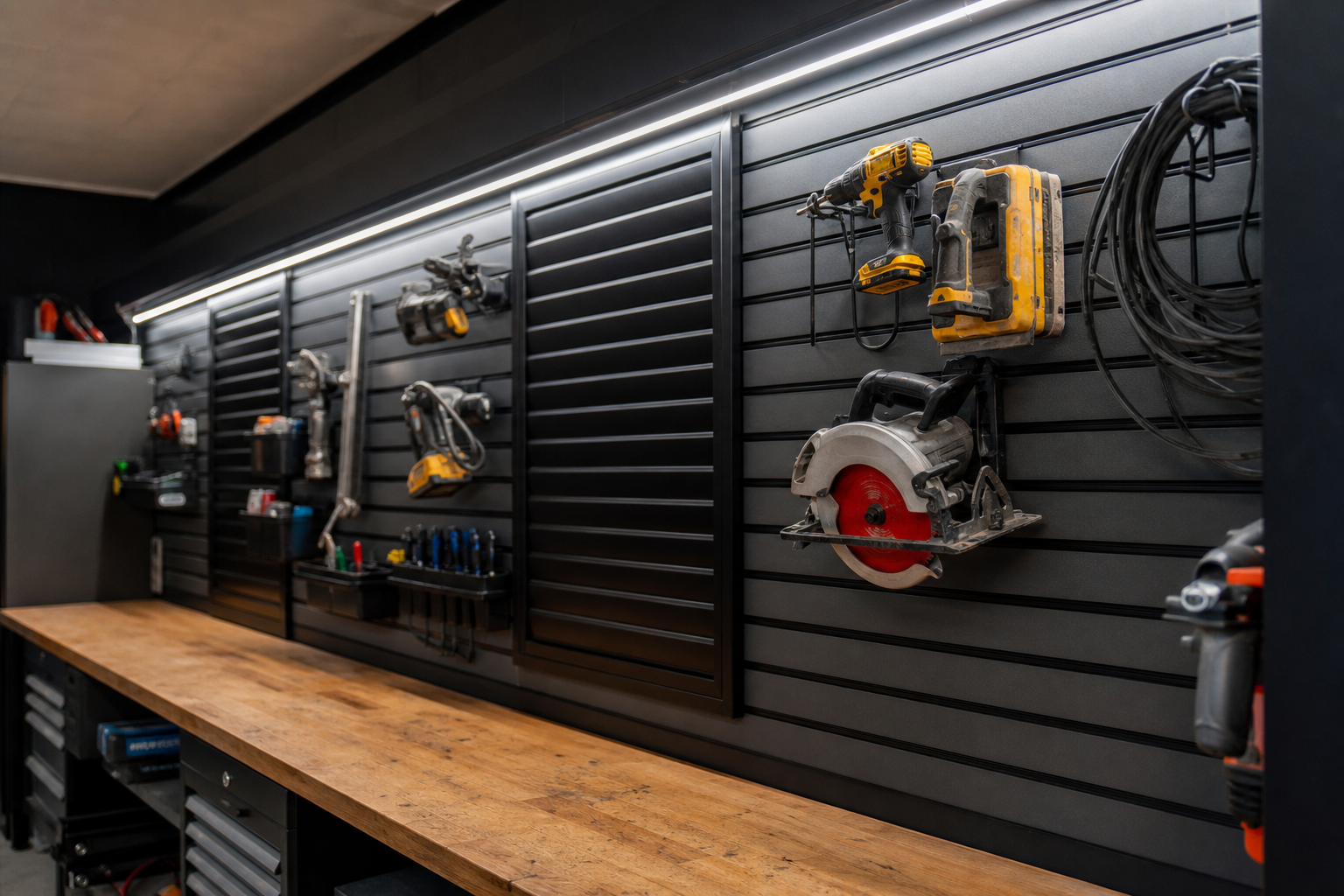
Charcoal gray panels with black aluminum groove inserts give this setup a sharp, workshop-ready look that doesn’t show dust or scuffs easily. Heavy-duty hooks are rated for power tools, and the solid wall coverage means there’s always an open slot nearby when you add something new. The LED strip along the top edge keeps shadows off the wall so you can actually see what you’re grabbing.
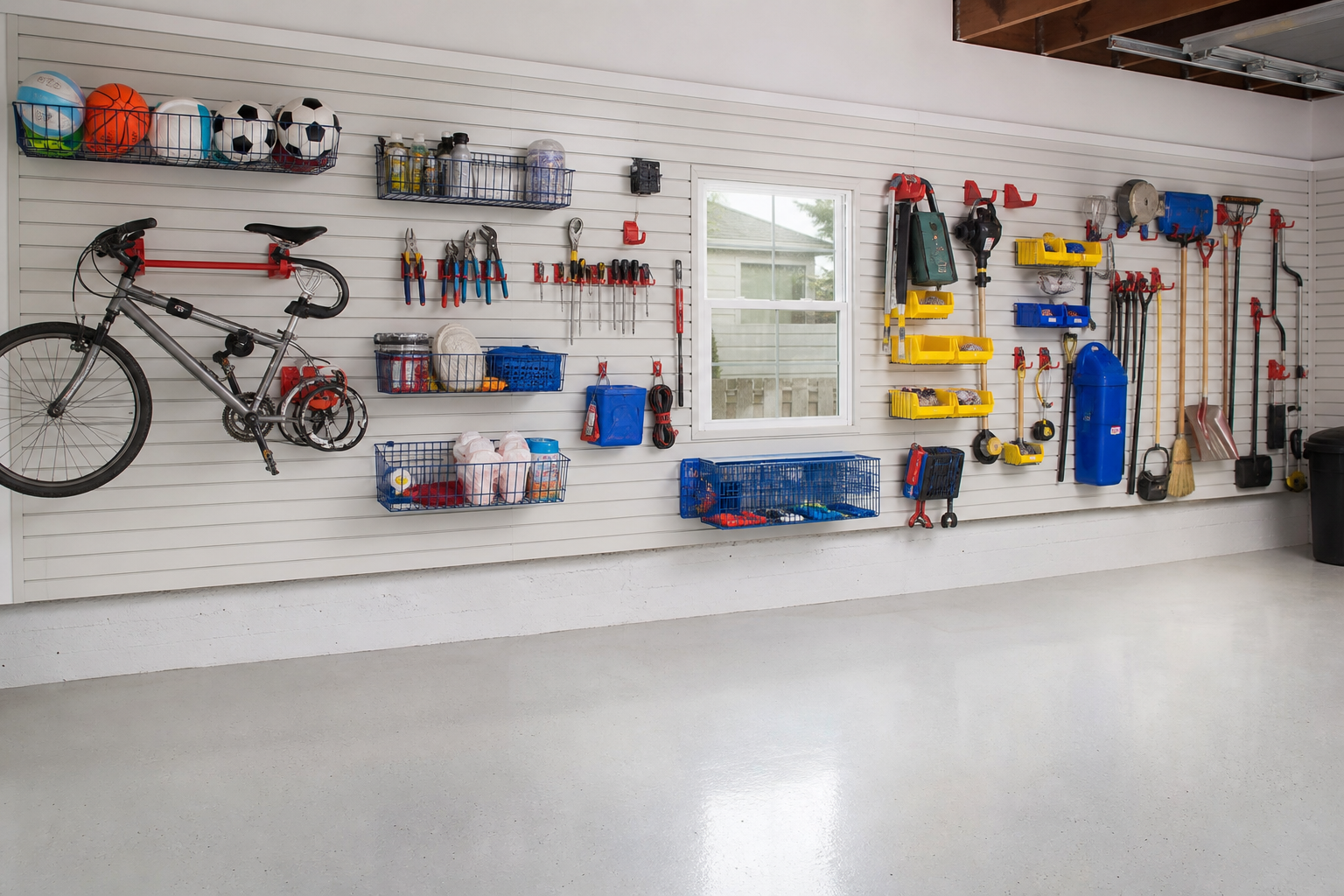
White slatwall keeps the wall feeling bright and open even when it’s loaded with gear. Color-coded accessories make zones easy to read at a glance, which is especially useful in a shared family garage where everyone needs to find and return things quickly. The bike hook slides right into the same groove system as the bins, so there’s no mixing of different mounting systems on this wall.
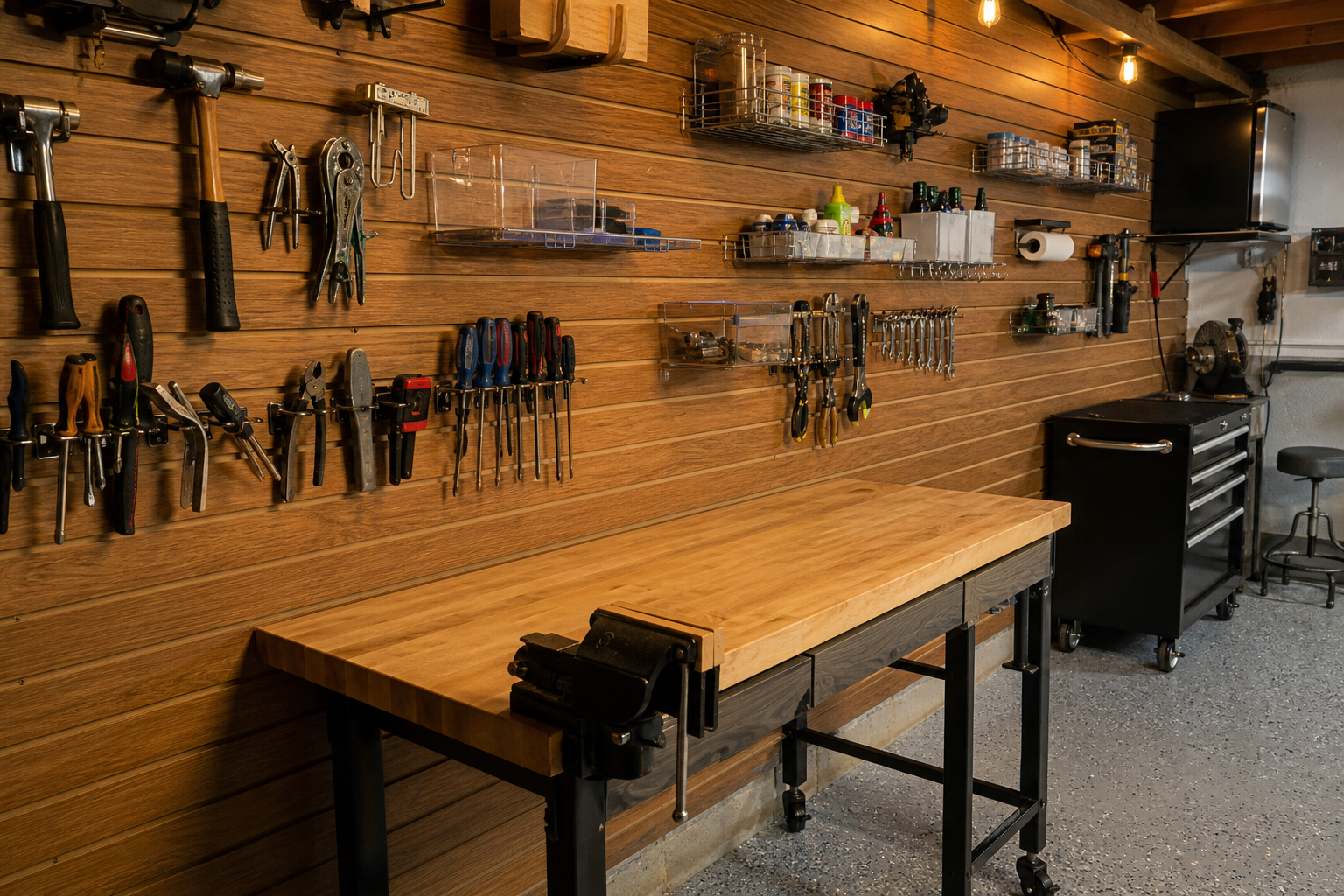
A warm oak laminate finish on these slatwall panels turns a plain garage back wall into something that looks more like a workshop showroom. Stainless steel and chrome accessories complement the wood tone without competing with it. This kind of finished look pairs well with a built workbench below, and if you’re planning that combination, the DIY garage workbench with storage build guide has solid plans to work from.
Tool and Accessory Hooks
One of the biggest reasons people choose slatwall over pegboard is the hook selection. Slatwall hooks are heavier, more rigid, and made to hold real weight without pulling out under load. You can find hooks designed for hand tools, power cords, garden hoses, ladders, and just about anything else that hangs. If you’re building out a serious tool wall, the best garage wall hooks and hangers guide covers the hardware worth buying. For anyone coming from a pegboard setup, it’s also worth seeing how the two systems compare in the garage pegboard ideas article before committing to one or the other.
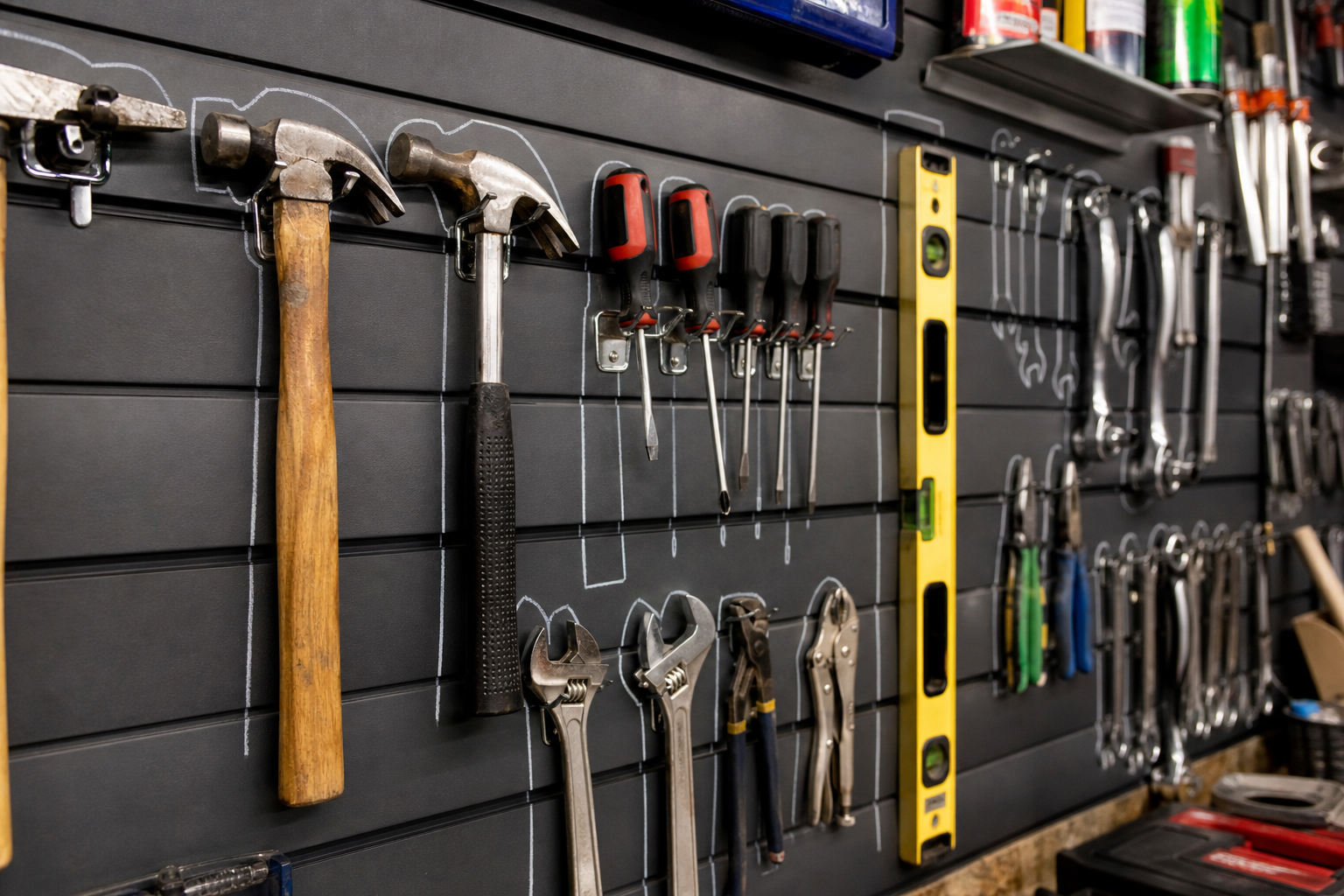
Painted tool silhouettes behind each hook make it immediately obvious when something is missing from its spot, which is one of the most practical habits you can build into a tool wall. The double and J-hooks here are rated slatwall hooks, not the lightweight pegboard variety, so heavier items like hammers and wrenches stay put. This kind of shadow-board style setup takes a little extra time to set up but saves a lot of searching later.
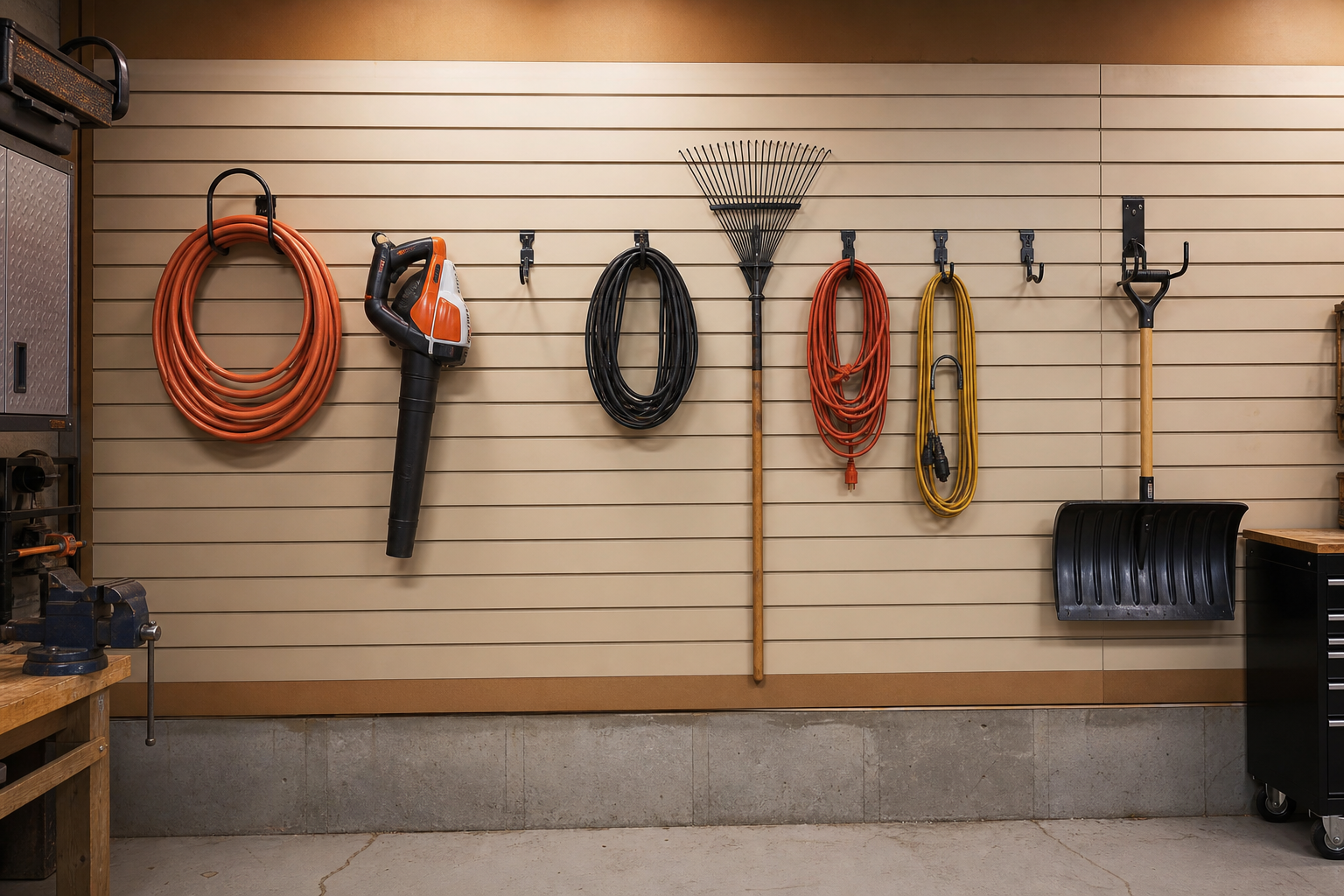
Large looped hooks are the right choice for bulky items like garden hoses and extension cords because they support the weight evenly without pinching the material. This section of beige slatwall handles the kind of gear that usually ends up piled on the garage floor: blowers, hoses, and power cords. Spacing items out like this also makes them faster to grab and easier to put back in a hurry.
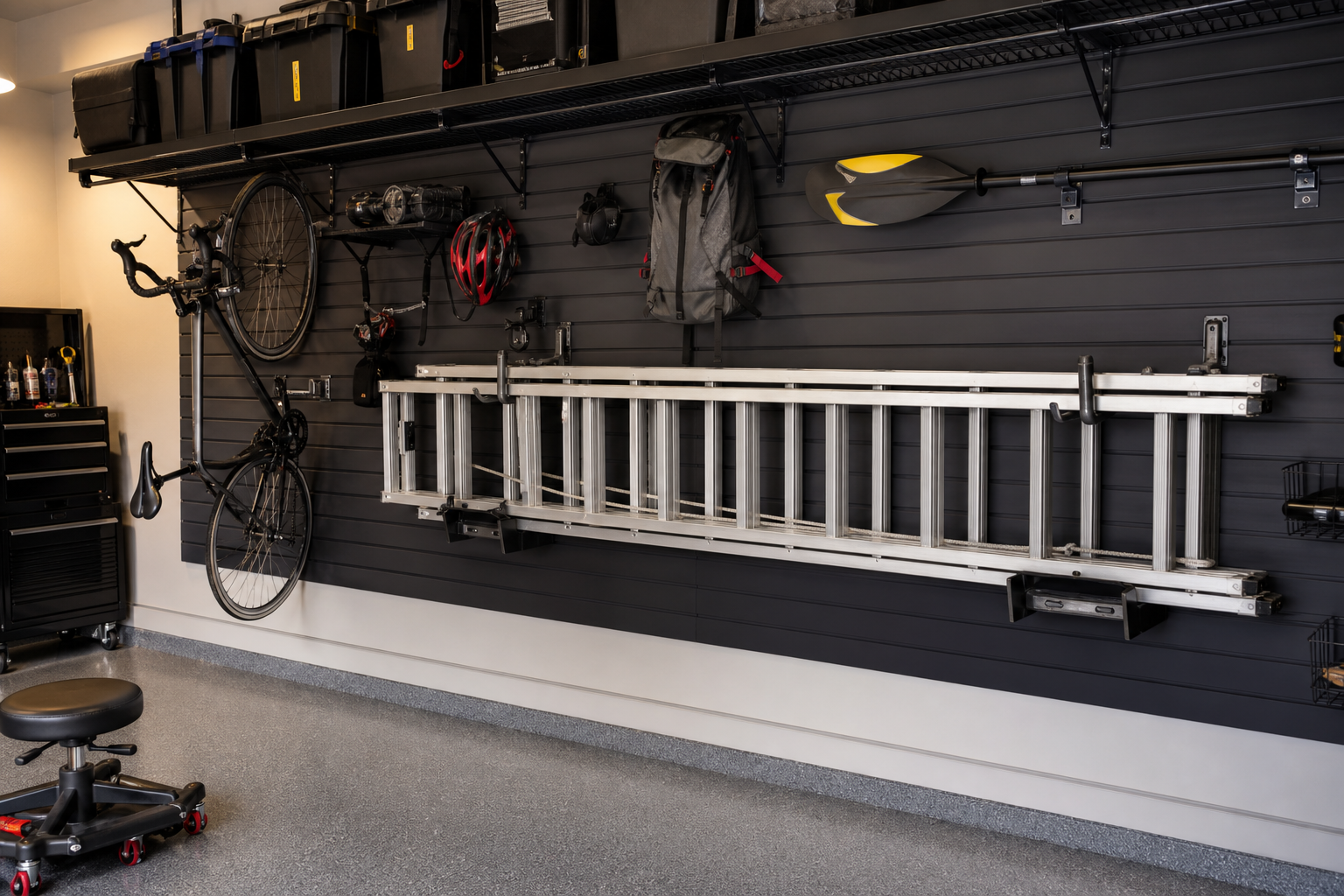
Storing a ladder flat against the wall on padded slatwall hooks is one of the cleanest ways to handle a bulky item that otherwise leans against things or takes up floor space. The wide, foam-padded hooks protect the ladder rails and keep it from sliding. If you have bikes to store alongside gear like this, the best wall-mounted bike racks guide covers hooks and mounts that work with slatwall systems.
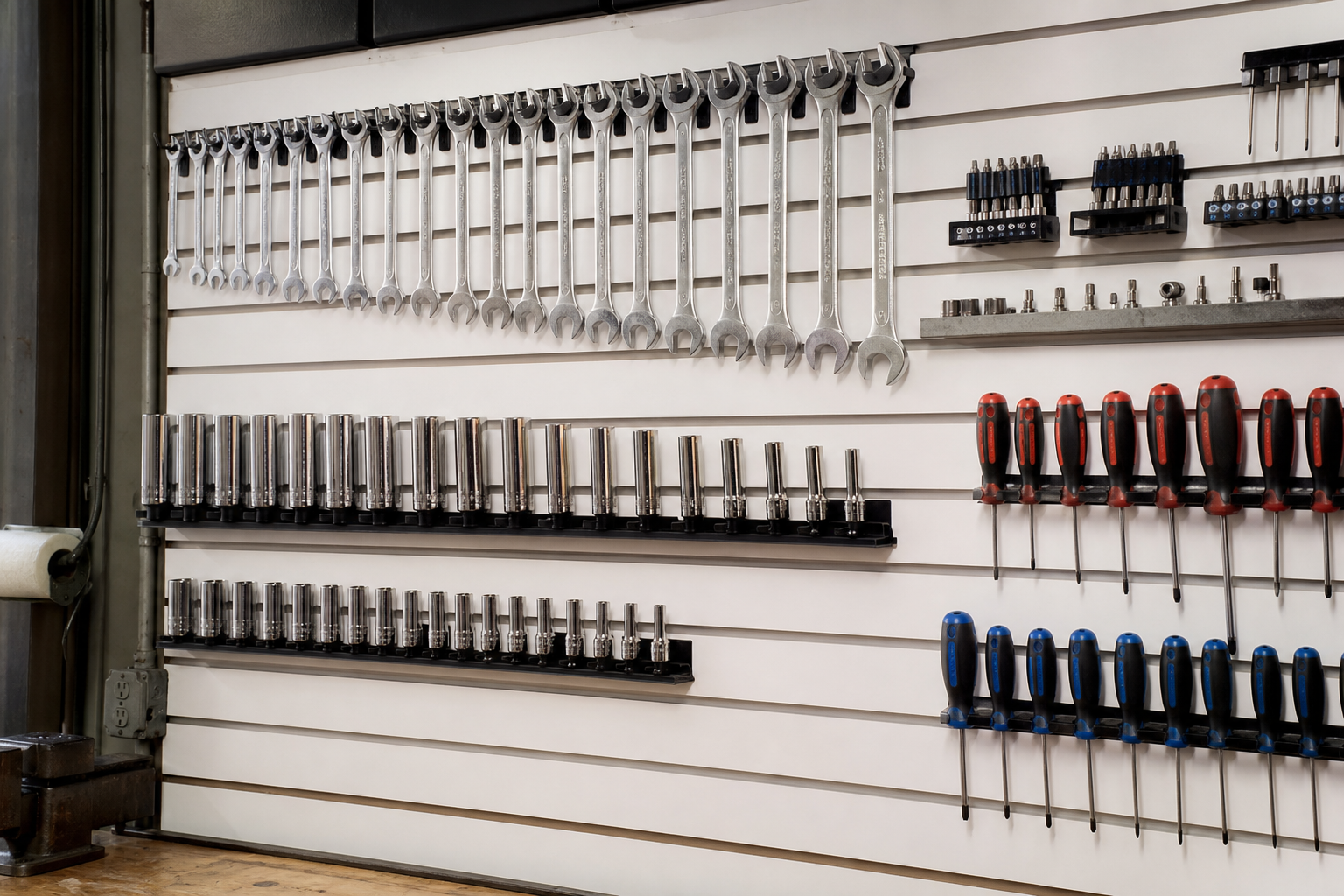
Slanted slatwall hooks keep socket rails and wrench sets visible at a glance, so you’re not digging through a drawer to find the right size. Organizing by size from left to right is a small habit that pays off every time you’re mid-project and moving fast. If you’re putting together a serious mechanic or DIY tool wall, the best garage tool storage solutions guide has product recommendations that pair well with a slatwall setup like this.
Bin and Basket Systems
Hooks are great for things that hang, but bins and baskets handle everything else: fasteners, rags, safety gear, spray cans, small power tool accessories, and all the loose odds and ends that tend to collect on workbench surfaces. Slatwall bins slide in and out without tools, so reorganizing by category takes minutes, not an afternoon. Wire baskets are especially popular because you can see the contents without opening anything. For anyone working with a compact footprint, pairing slatwall bins with smart floor-level storage is covered in the small garage organization guide. The best slatwall panels buyer’s guide also covers which panel brands have the widest accessory ecosystems, which matters a lot when you’re building out a bin system.
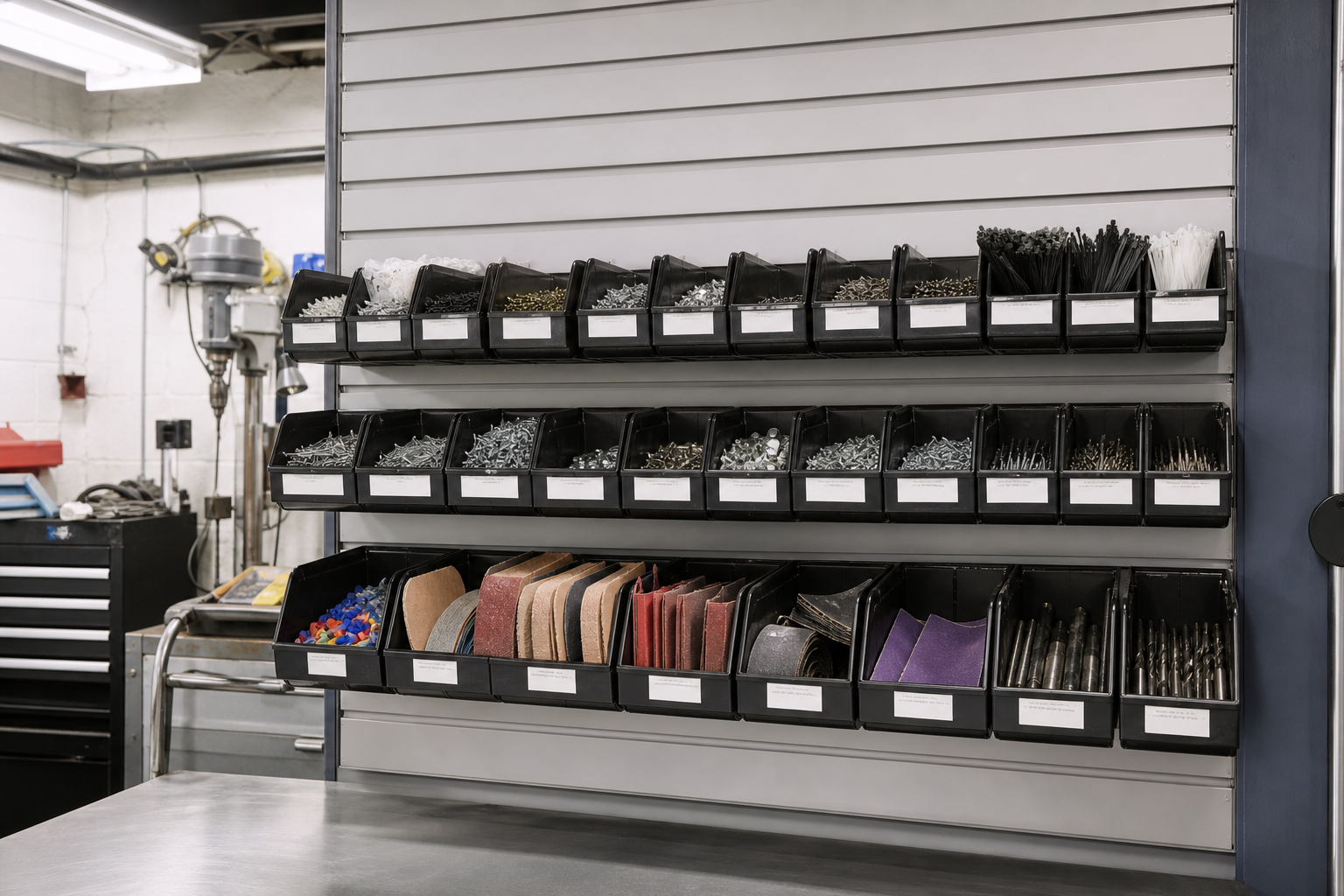
Stacking small, medium, and large bins in a grid turns a plain section of slatwall into a parts organizer that rivals any hardware store shelf. Black bins with white labels keep things easy to scan without having to open anything. This approach is especially practical above a workbench where you’re constantly reaching for small fasteners mid-project.
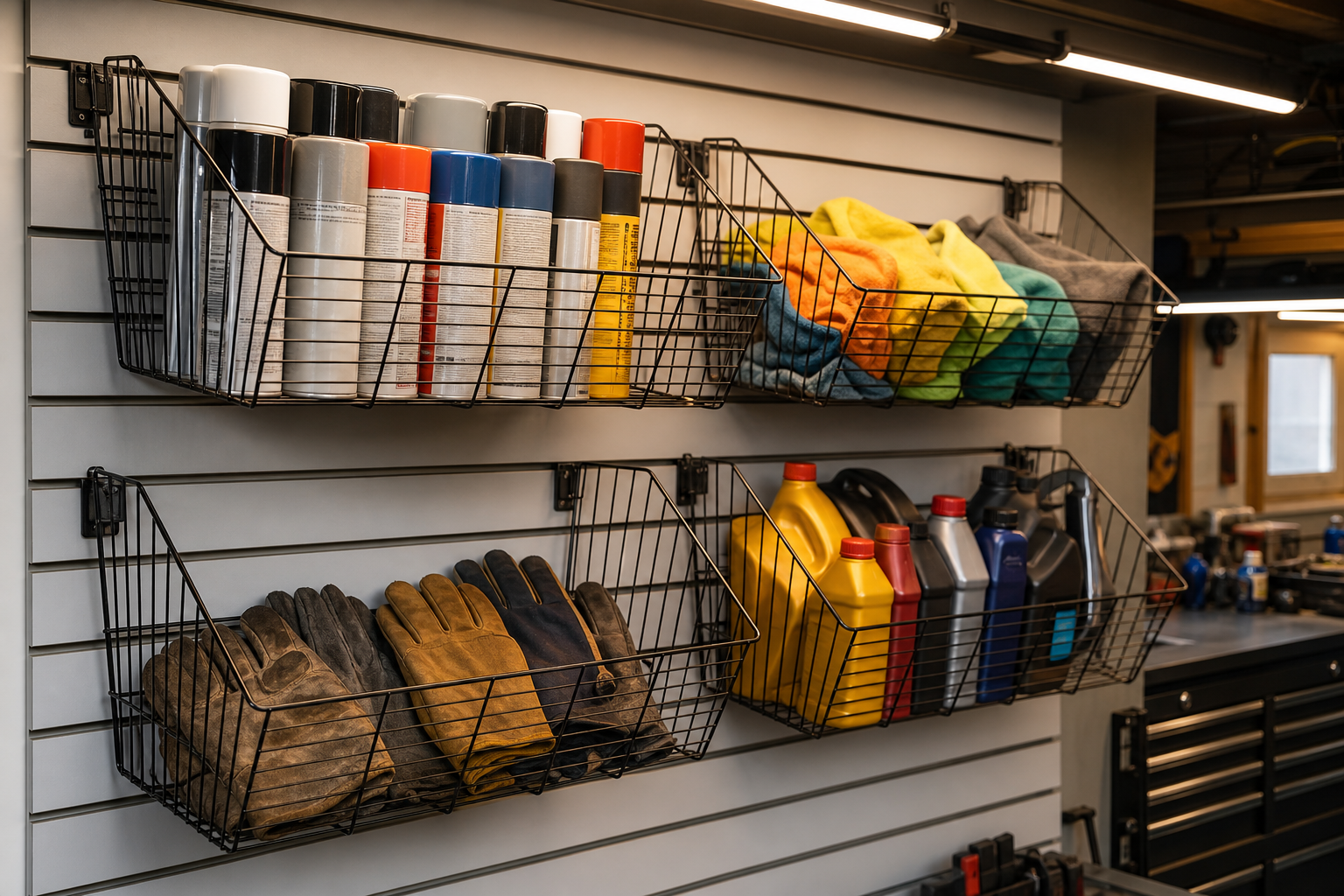
Tilted wire baskets are a smart choice for taller items like spray cans and fluid bottles because you can read the labels without pulling everything out. The open wire sides also mean nothing gets forgotten at the back of a solid bin. Storing automotive chemicals in an accessible but contained spot like this is the right move, and the guide to safely storing paint, gas, and chemicals in the garage covers what else to keep in mind.
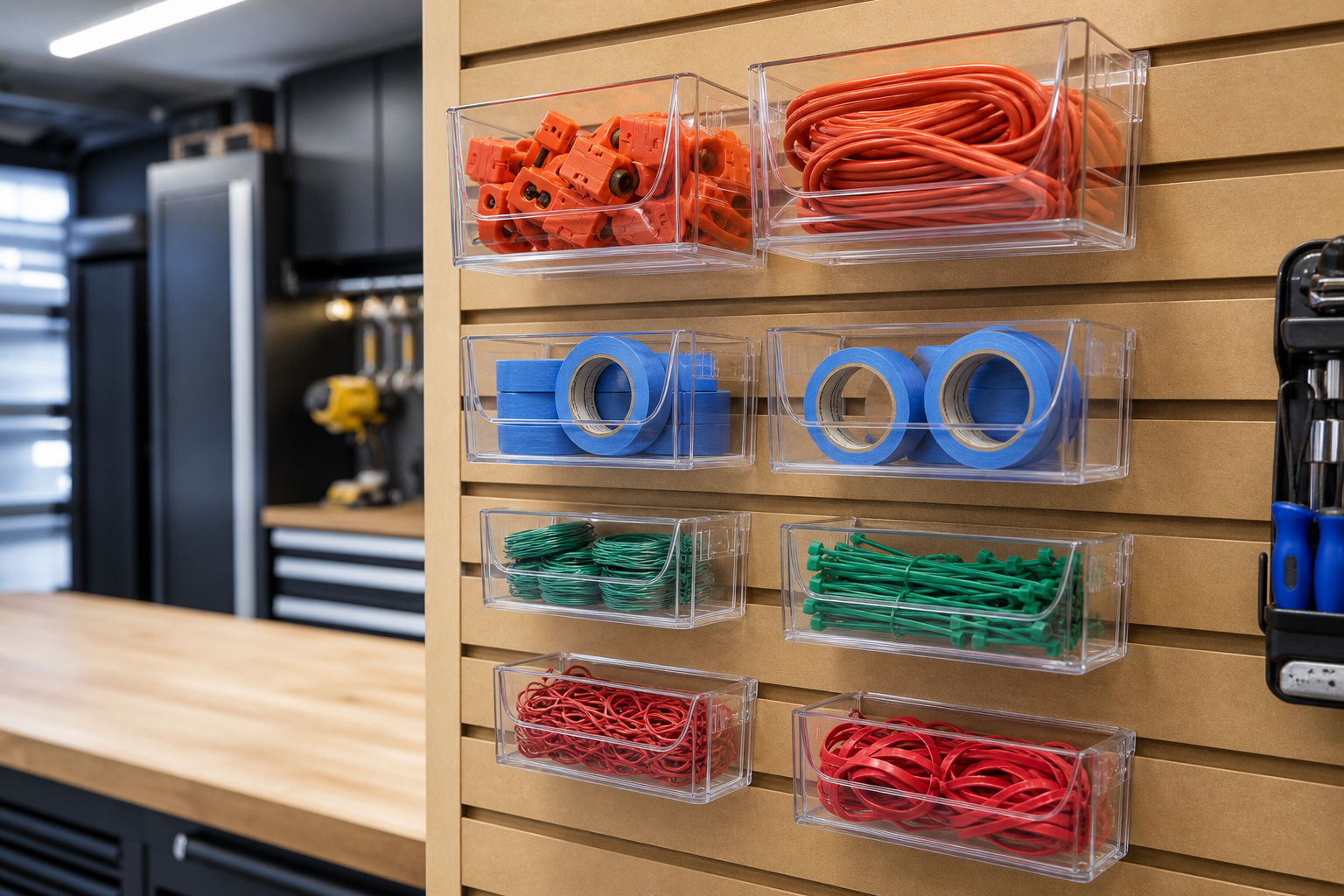
Clear acrylic bins are a step up from opaque plastic when the goal is finding things fast. The color contrast between the contents and the neutral tan wall makes each bin pop visually, so your eye goes straight to what you need. These bins also look sharp enough that this section of the garage feels organized rather than just stored.
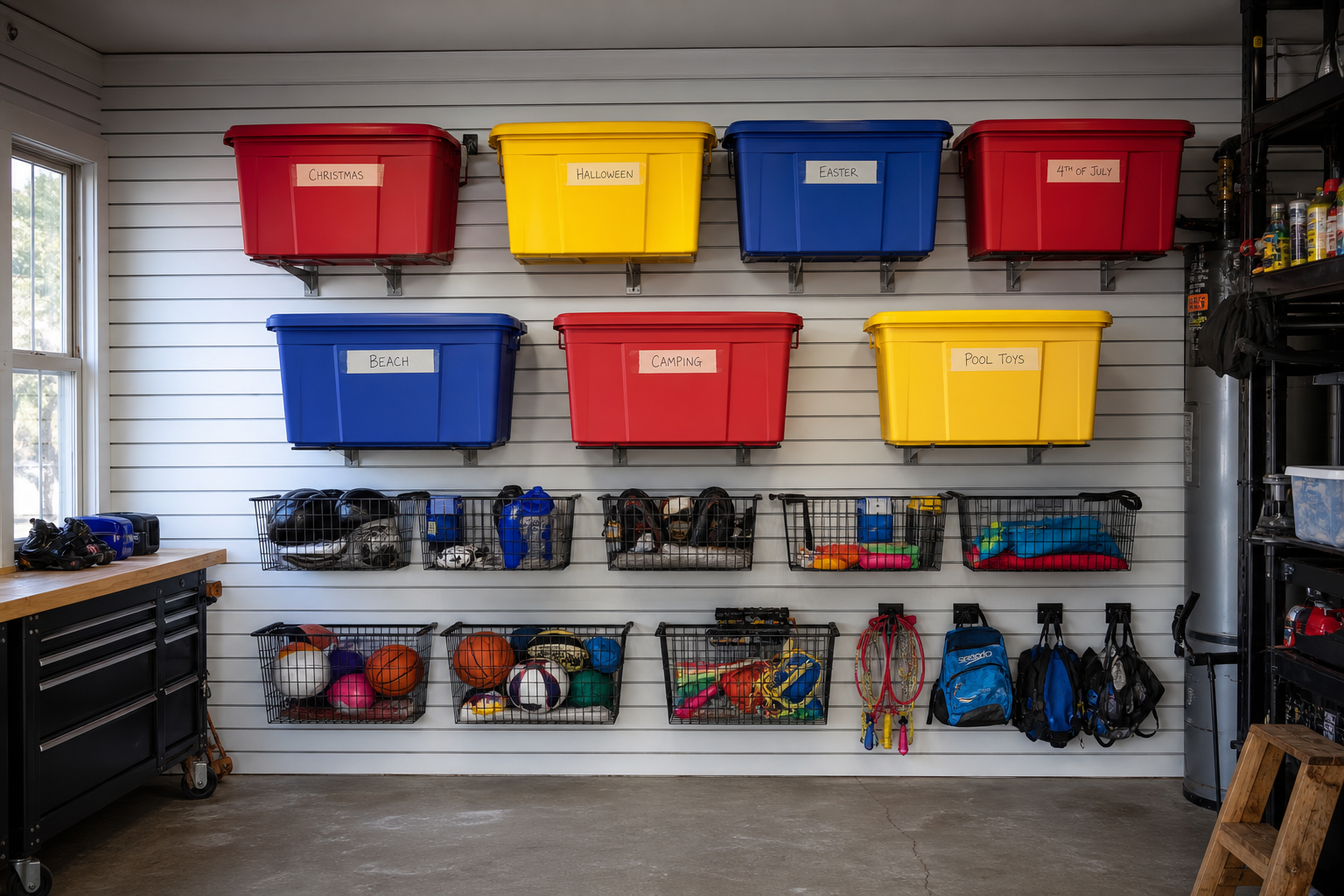
Setting up bins at different heights based on who needs to reach them is a simple idea that makes a real difference in a family garage. Lower bins within a child’s reach hold balls, jump ropes, and daily-use gear, while seasonal and less-used items live up high. If your garage doubles as a toy and sports equipment hub, the garage toy storage guide has more ideas for keeping that kind of gear under control.
Mixed Storage Layouts
A mixed layout is what most real garages actually look like once you’ve had slatwall for a while. You start with hooks for tools, add a few bins for small parts, then a shelf bracket for a power strip, and before long you’ve built a custom storage wall that handles everything. The key is planning your zones before you start loading it up, so related items stay together and each section of the wall has a job. The how to plan a garage storage layout guide is worth reading before you start placing accessories. Mixing in overhead storage above the slatwall zone can also free up space on the wall for the things that are best stored at eye level, and the garage overhead storage ideas article shows what that combination looks like.
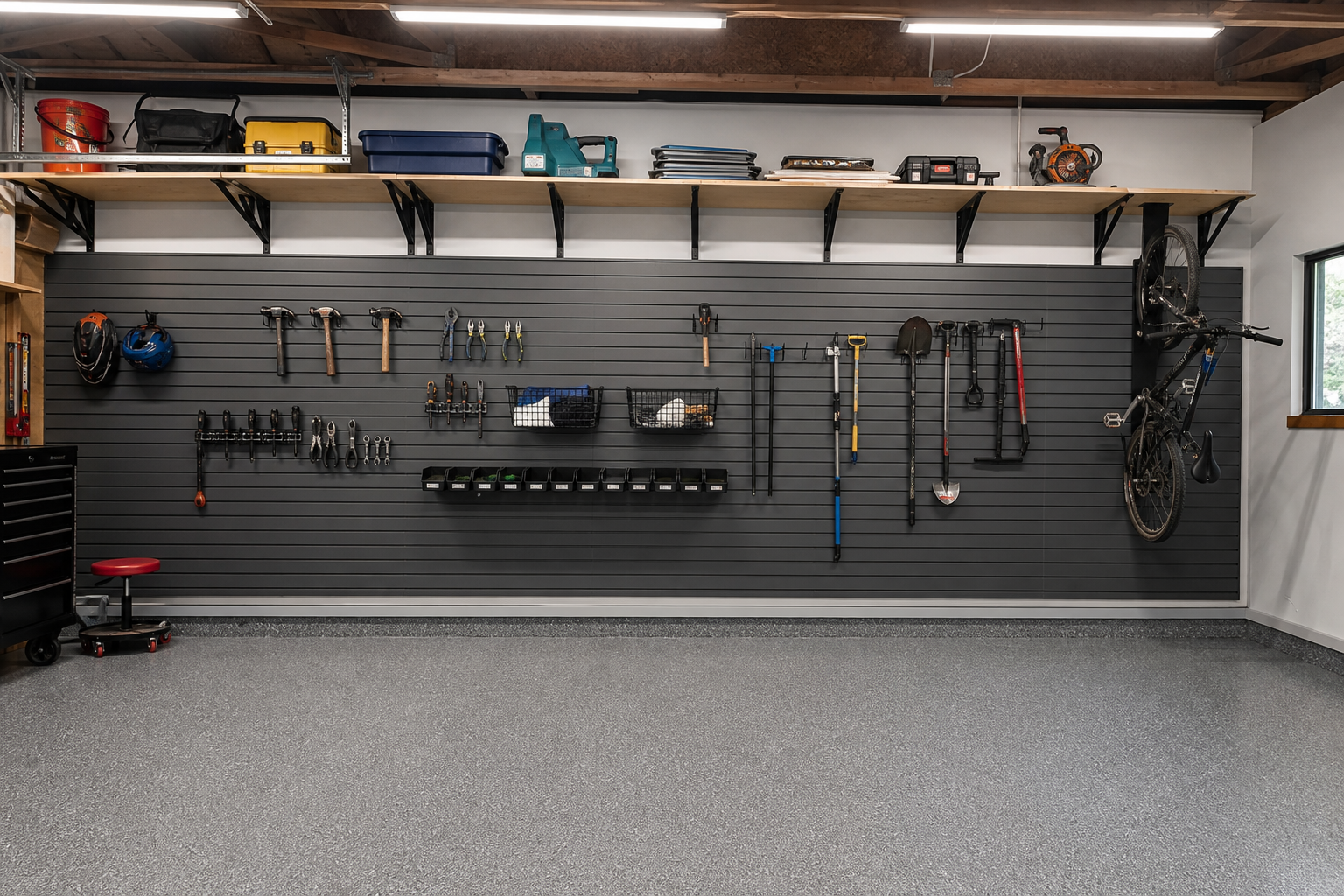
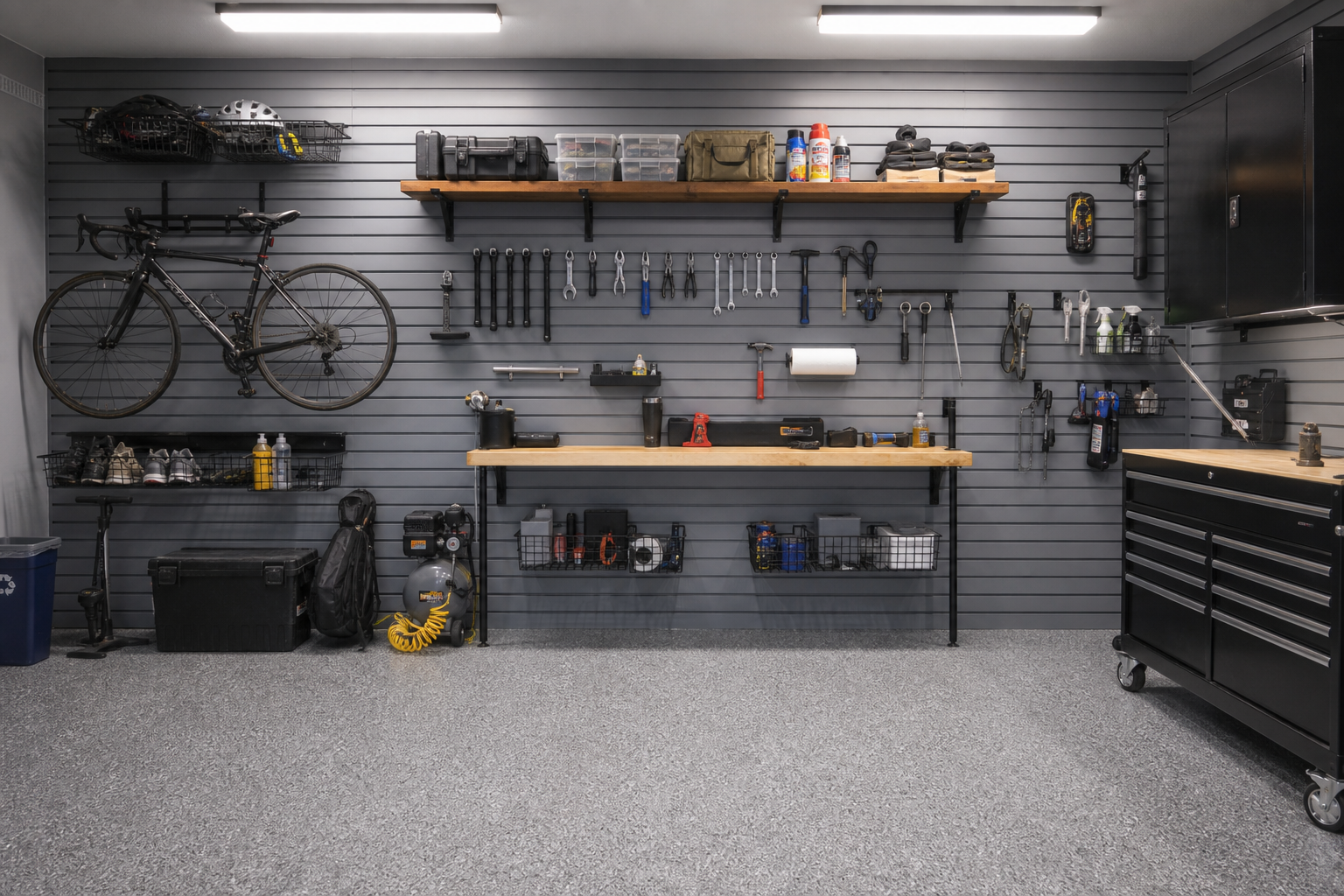
A continuous wooden shelf running on slatwall brackets gives this layout a clear visual break between upper and lower zones, with tools and daily-use items below the shelf and longer-term storage above. The bike hook on the right end of the wall keeps the floor clear without requiring a separate bike storage system. Mixing shelf brackets, hooks, and bins on the same slatwall run like this is exactly what the system is designed for.
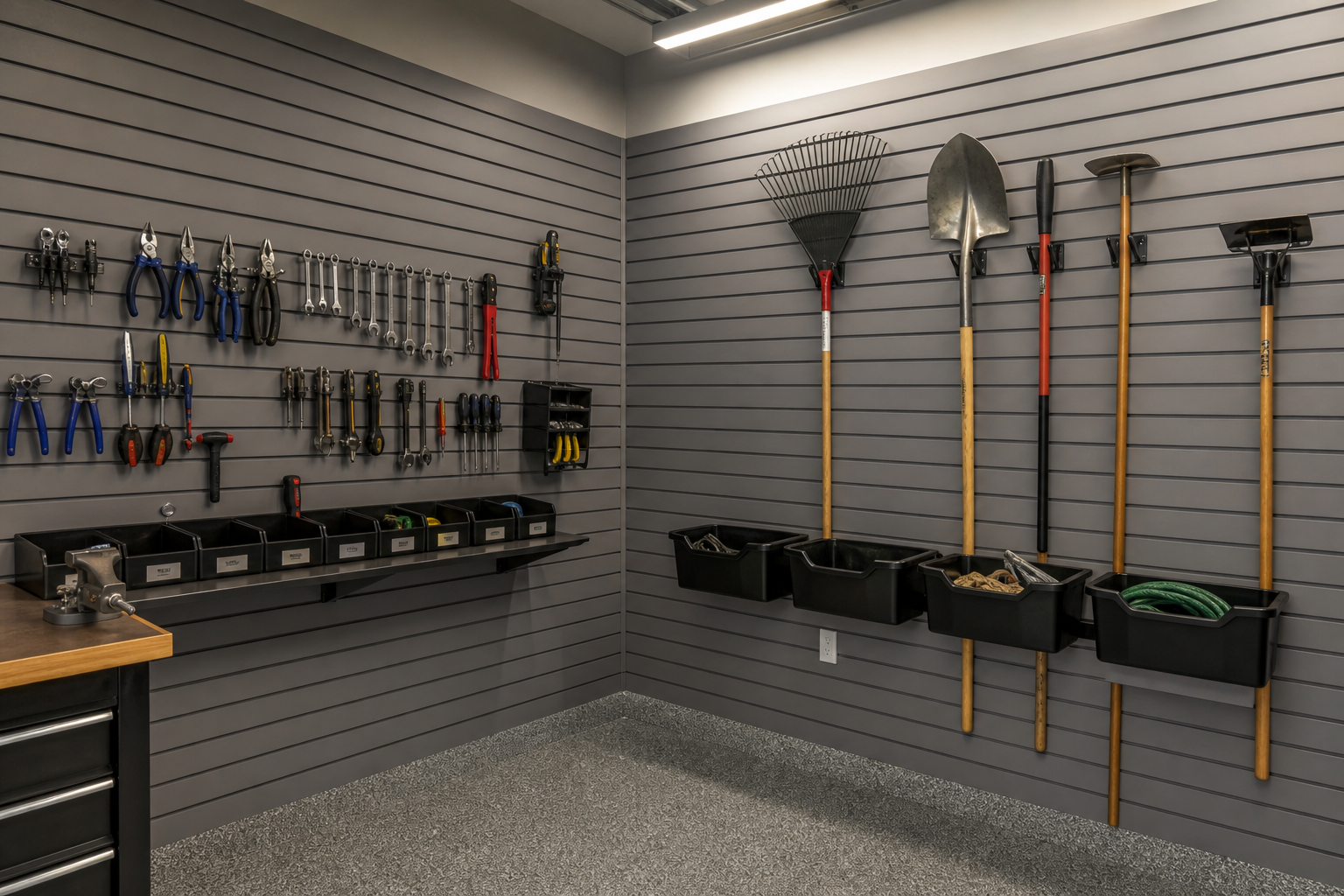
Running slatwall around a corner lets you zone two different categories of gear on the same continuous wall system without any awkward gaps. The left side holds workshop hand tools while the right side takes on garden tools and supplies, keeping two very different categories separated but equally accessible. Long-handle tool hooks for rakes and shovels are heavy-duty slatwall accessories, and they store those awkward items far more neatly than leaning them in a corner.
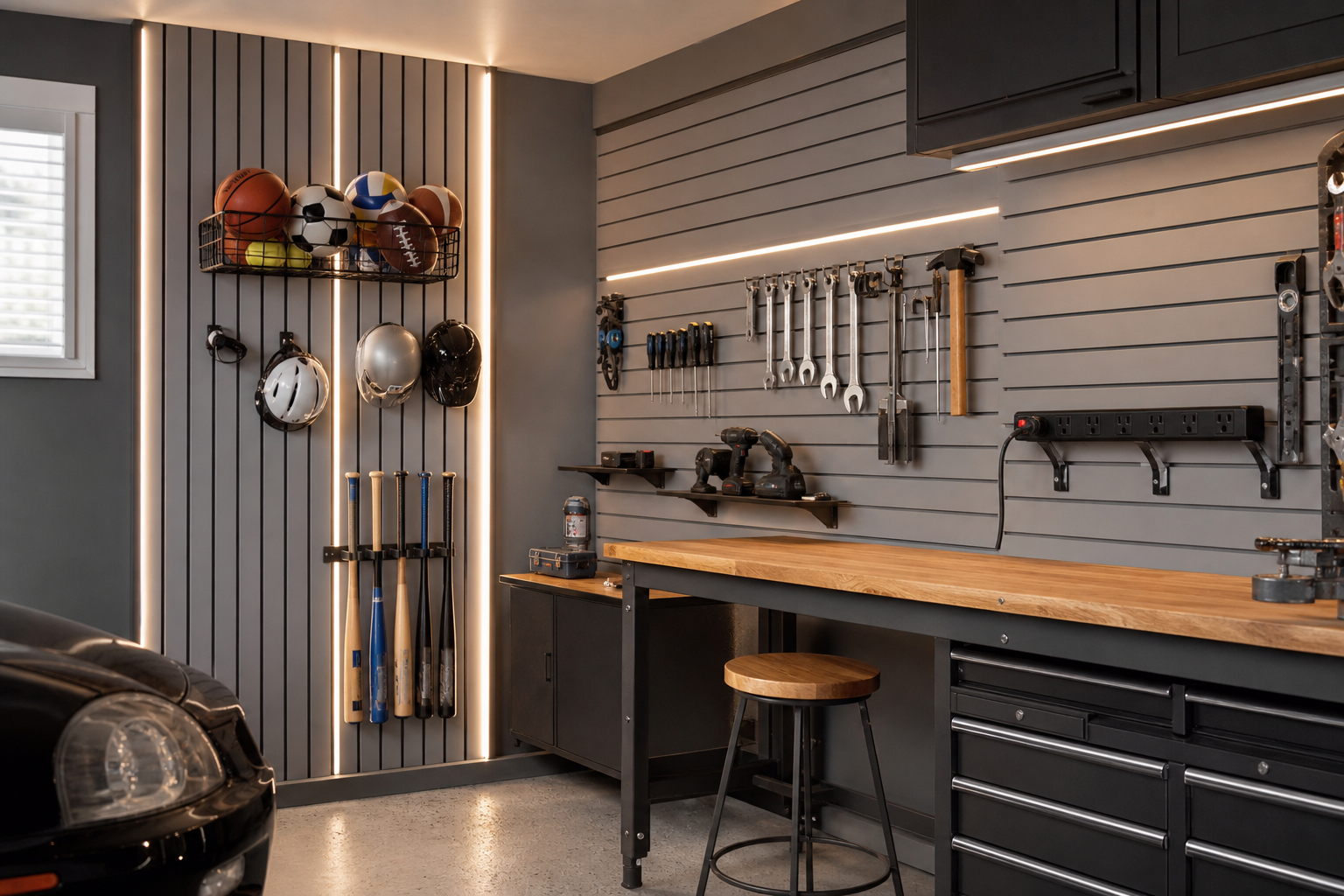
Dividing a single wall into distinct activity zones makes a mixed slatwall layout feel purposeful rather than random. The sports side handles the gear that rotates with the seasons, while the workshop side stays consistent year-round. If you’re storing a lot of balls and sports gear in the sports zone, the slatwall sports gear storage setup guide covers the specific accessories that work best for that kind of load.
