

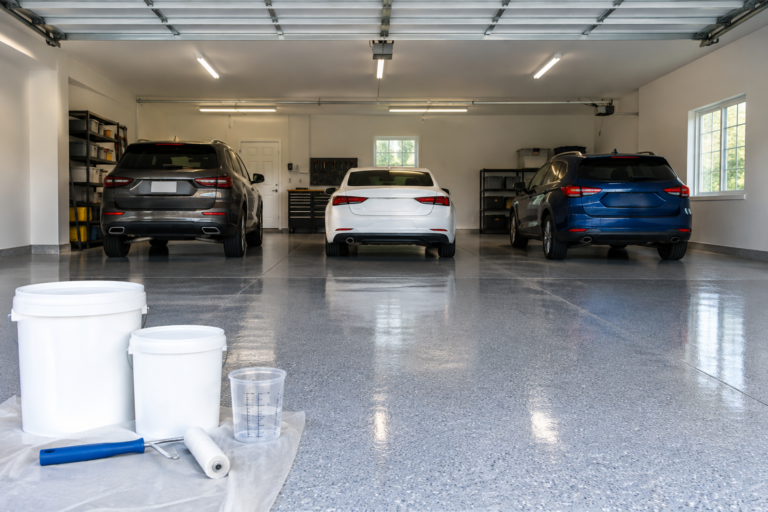
Standing in the paint aisle trying to figure out how many kits to buy is where most epoxy projects go sideways. Buy too little and you run out mid-pour with a half-finished floor turning tacky in the sun. Buy too much and you’ve got leftover hardener slowly curing in a bucket you’ll never use again. The fix is doing the math before you ever load a cart, and it’s simpler than it looks once you know the actual numbers involved.
Start With Your Actual Square Footage
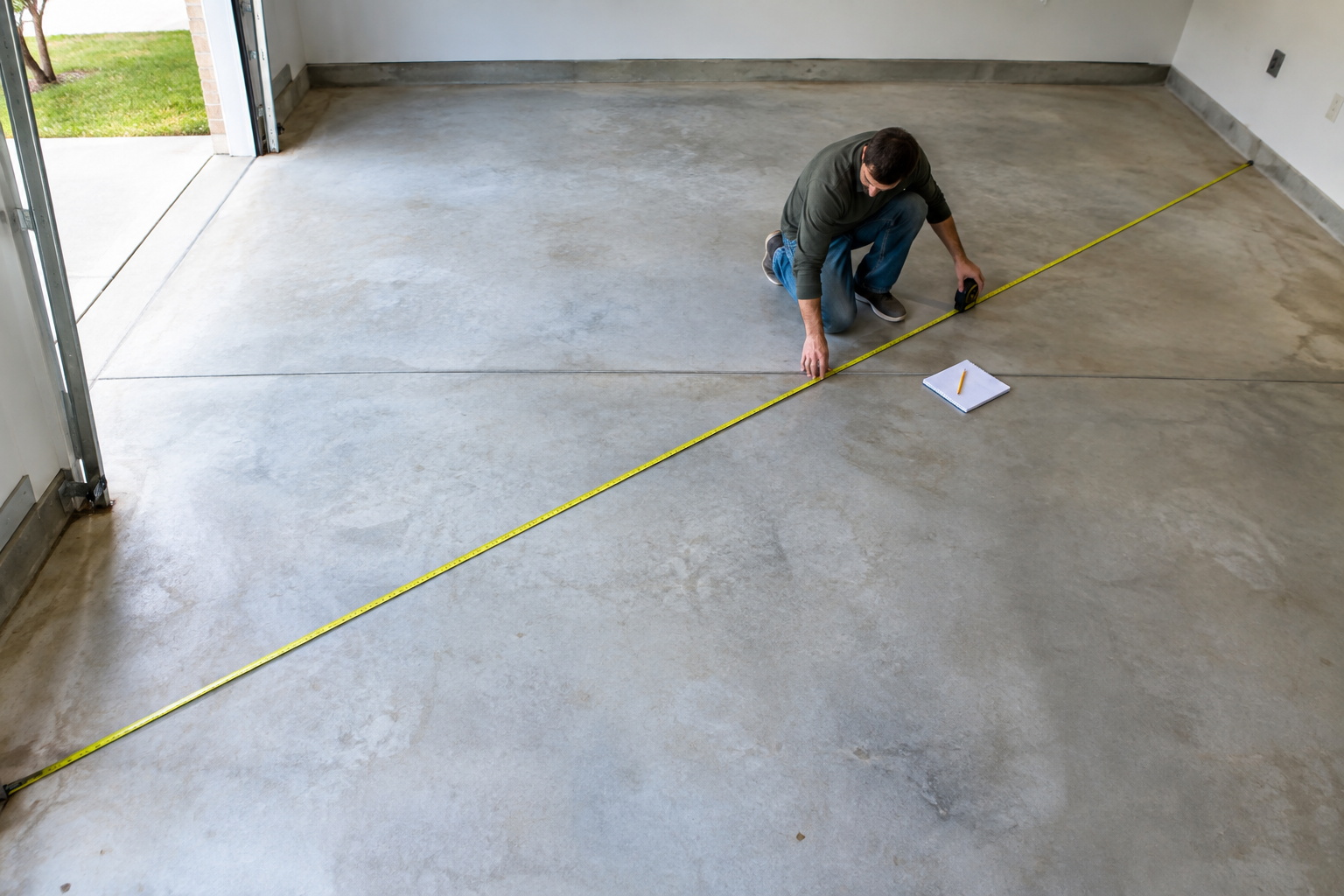
Epoxy coverage is calculated per square foot, so the first step is measuring your garage floor accurately rather than guessing based on the number of car bays. Multiply the length by the width in feet, and subtract nothing for cabinets or shelving since epoxy still needs to go under and around most of that footprint. If you’re not sure how your garage measures up against typical layouts, our garage floor plans and dimensions guide breaks down standard sizes by bay count.
Here’s how the most common garage sizes typically measure out:
- 1-car garage: roughly 12 ft x 22 ft = 264 sq ft (often rounded to 250-280 sq ft)
- 2-car garage: roughly 20 ft x 22 ft = 440 sq ft (commonly 400-480 sq ft)
- 3-car garage: roughly 30 ft x 22 ft = 660 sq ft (commonly 600-700 sq ft)
These numbers are a solid starting point, but every slab is a little different. If your layout is unusual or you’re planning storage that eats into the pour area, it’s worth checking our two-car or three-car garage layout guides for real dimension examples before you buy materials.
The Coverage Rate Math Behind Every Epoxy Kit
Most standard epoxy kits advertise coverage of around 200 to 250 square feet per coat, per kit, at a thickness of roughly 6 to 8 mils. That number assumes a smooth, sealed, non-porous surface, which almost no residential garage floor actually has. Once you understand that gap, the rest of the calculation gets a lot more realistic.
Here’s the baseline math for each garage size, using a single coat at standard advertised coverage:
- 1-car garage (264 sq ft): about 1 to 1.2 kits per coat
- 2-car garage (440 sq ft): about 1.8 to 2.2 kits per coat
- 3-car garage (660 sq ft): about 2.7 to 3.3 kits per coat
Those figures already show why “one kit covers a 2-car garage” claims on packaging rarely hold up in practice. You’re almost always rounding up to the next full kit, and that’s before accounting for porosity or a second coat.
Garage Floor Epoxy Kit
A solid full-kit option that includes base coat, top coat, and color flakes for a durable, professional-looking finish.
Porous Concrete Changes the Numbers
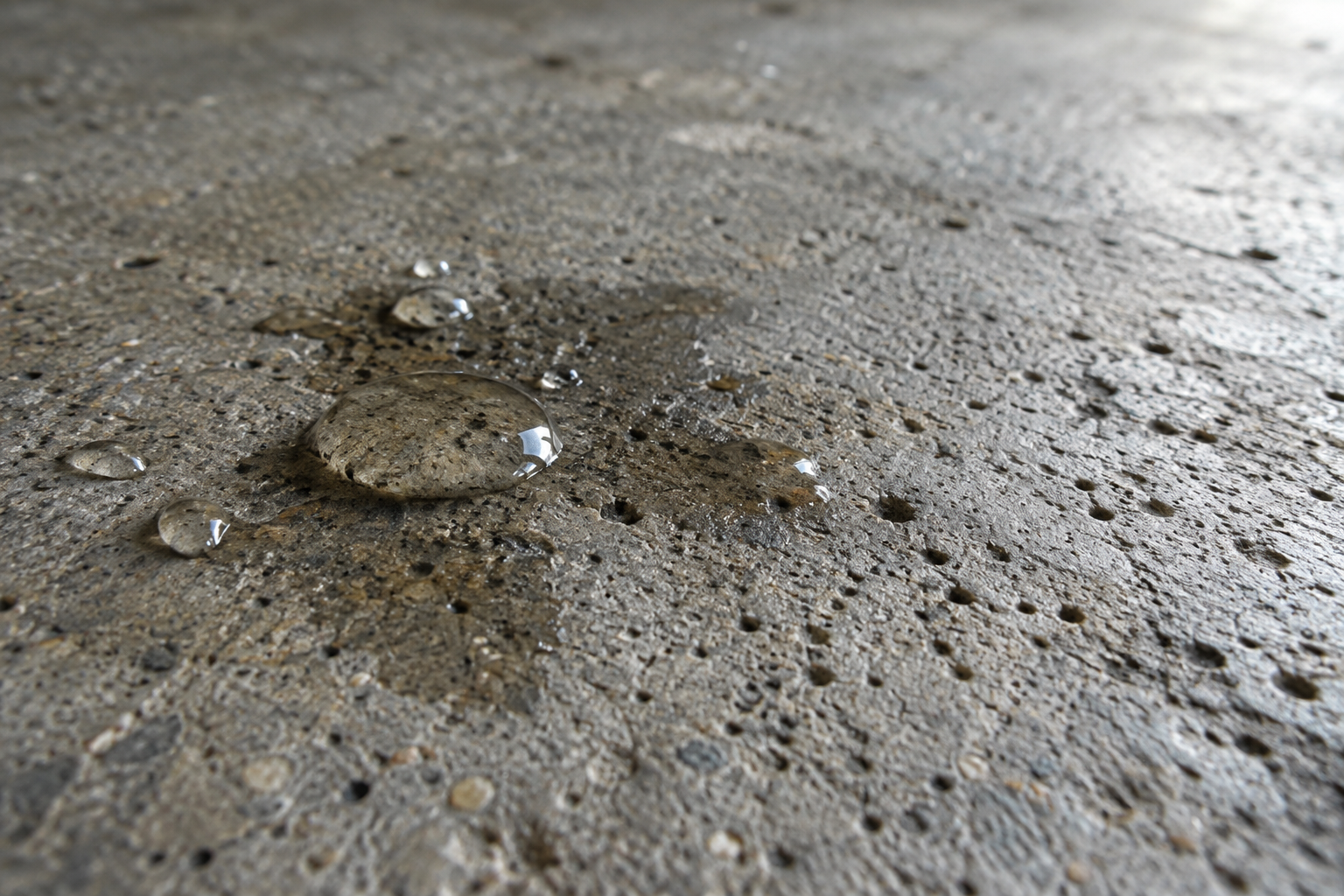
New concrete, older slabs with surface wear, and floors that have never been sealed all soak up epoxy faster than the can label assumes. Porous concrete can pull coverage down by 20 to 30 percent on the first coat alone, since the material is absorbing resin into the surface instead of just sitting on top of it. This is especially common in garages with a history of moisture intrusion or efflorescence.
If you’ve noticed white powdery residue, damp patches, or a musty smell near the slab, it’s worth running a moisture test before you buy epoxy at all. Our garage floor moisture problems guide walks through how to test and fix that before it ruins an otherwise good epoxy job.
Concrete Moisture Test Kit
Cheap insurance against epoxy failure, since coating over a damp or porous slab wastes both material and labor.
To adjust for a porous or previously unsealed floor, add a buffer to your base coverage estimate:
- 1-car garage: plan for 1.3 to 1.5 kits on the first coat
- 2-car garage: plan for 2.3 to 2.7 kits on the first coat
- 3-car garage: plan for 3.4 to 4 kits on the first coat
Multiple Coats and the Real Total You’ll Need
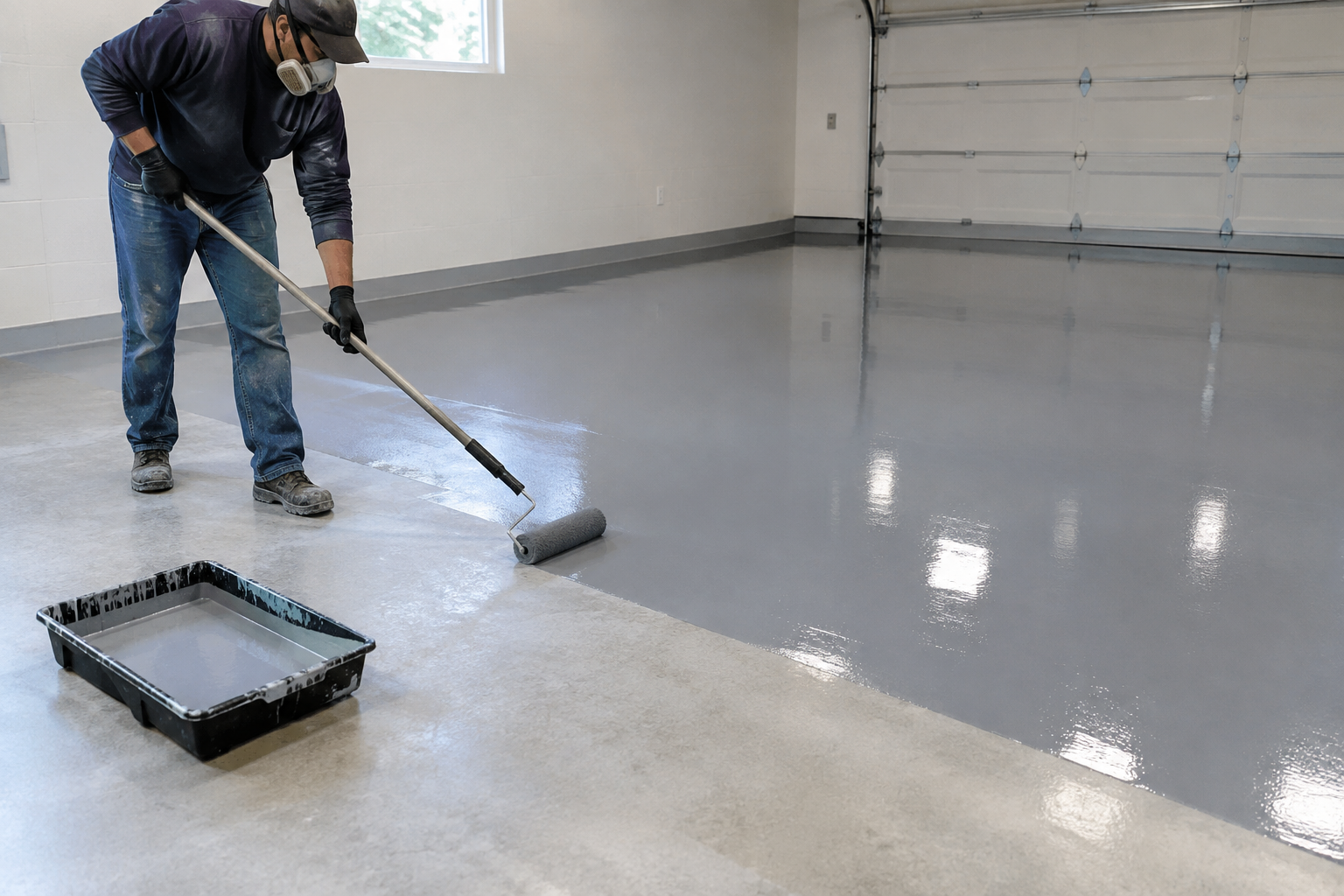
Almost every epoxy manufacturer recommends at least two coats for a durable finish, and most DIY kits are actually formulated as a base coat plus a top coat rather than one thick single application. That means your total material need is closer to double the single-coat number, not a small top-off.
Putting it all together, here’s a realistic total kit estimate per garage size, factoring in porosity and a two-coat system:
- 1-car garage: 2 to 3 full kits total
- 2-car garage: 3 to 5 full kits total
- 3-car garage: 5 to 7 full kits total
These ranges assume a standard flake or solid-color finish. If you’re planning a metallic epoxy look or a heavier broadcast of decorative flakes, lean toward the higher end of each range since those finishes typically use more base material to achieve full coverage.
Add a Waste Margin Before You Check Out
Even careful DIYers lose material to mixing residue left in buckets, roller tray absorption, uneven pours near edges, and the inevitable touch-up spots you’ll want after the first coat dries. A 10 to 15 percent waste margin on top of your calculated total isn’t overkill, it’s standard practice among flooring contractors.
Applying that margin to the two-coat totals above gives you a buying number you can actually trust:
- 1-car garage: round up to 3 kits
- 2-car garage: round up to 4 to 5 kits
- 3-car garage: round up to 6 to 7 kits
Rounding up always beats rounding down here. Epoxy kits often have a limited working window once mixed, so running out mid-pour and scrambling for a matching batch is a much bigger headache than having a partial kit left over.
Why the Label Coverage Rarely Matches Reality
Manufacturers test coverage rates under ideal lab conditions: sealed concrete, controlled temperature, and a perfectly even mil thickness applied by a machine rather than a roller. Your garage floor has none of those advantages. Temperature swings, humidity, hand-applied rolling technique, and slab imperfections all pull real-world coverage below the number printed on the bucket.
Proper surface prep also affects how much epoxy you use. A floor that’s been etched, ground, or degreased correctly will actually take epoxy more evenly and predictably than a scuffed, oily slab, which tends to cause uneven absorption and patchy coats. If your existing coating is already failing, it’s worth reading up on why garage floor paint wears off before you recoat over the same problem.
Application technique matters just as much as prep. Rolling too thin to stretch a kit further is one of the most common reasons DIY epoxy jobs fail early, and it’s also a leading cause of the bubbling and pinholing covered in our epoxy floor bubbles guide. Buying enough material up front removes the temptation to spread it too thin.
Epoxy Roller and Squeegee Kit
The right nap roller and a notched squeegee help you hit consistent mil thickness instead of guessing by eye.
If you’re still deciding on colors or finishes, browsing our garage epoxy floor ideas or broader garage flooring ideas collections can help you settle on a look before you start doing quantity math for flakes or metallic pigments, which use material differently than a solid color.
Frequently Asked Questions
How many square feet does one epoxy kit really cover?
Most standard kits are labeled for 200 to 250 square feet per coat, but that assumes a sealed, non-porous surface with perfect application. On a typical garage slab with some porosity, expect real coverage closer to 150 to 200 square feet per coat.
Do I need two coats of epoxy or is one enough?
One coat can work for a quick refresh, but it won’t hold up to daily vehicle traffic, hot tires, or dropped tools nearly as well as a two-coat system. Most manufacturers and contractors recommend a base coat plus a top coat for any garage that sees regular use.
What happens if I run out of epoxy mid-application?
Because epoxy has a limited working and recoat window, running out mid-pour often means a visible seam or texture change where the new batch meets the old. Buying an extra kit beyond your calculated total, even if you don’t use all of it, avoids this problem entirely.
This article contains affiliate links. We may earn a small commission at no extra cost to you.
