

As an Amazon Associate I earn from qualifying purchases.
Your garage floor takes a beating every single day, but that doesn’t mean it has to look like it. Whether you’re parking daily drivers, running a home gym, or building out a proper workshop, the right flooring can completely change how the space feels and functions. In this article I’ve pulled together 20 garage flooring ideas across four popular categories: epoxy coatings, interlocking tiles, painted concrete, and roll-out mats.
Epoxy Coatings
Epoxy is still the gold standard for garage flooring, and it’s easy to see why. A properly applied epoxy coating bonds directly to the concrete, creating a hard, chemical-resistant surface that can handle tire traffic, oil drips, and heavy foot traffic for years. The color and finish options have exploded in recent years too, from classic solid grays to dramatic metallic swirls and color-flake blends. If you’re trying to decide between products, my comparison of the best DIY epoxy kits is a good starting point. One thing to keep in mind before you coat: any cracks or surface issues in the concrete need to be addressed first, or they’ll telegraph right through your new floor.
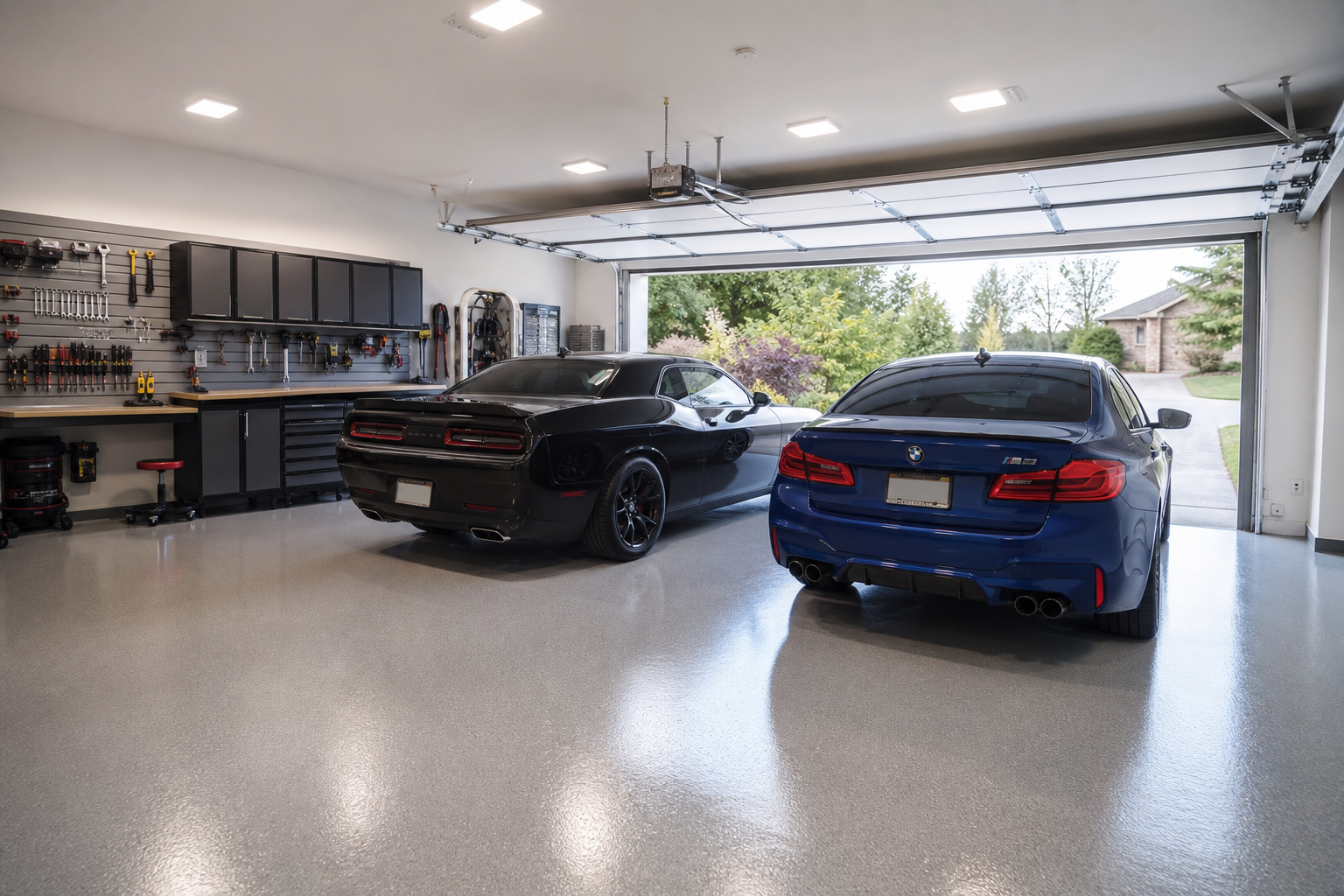
A solid light gray epoxy coat is the most popular choice for a reason. It’s clean, neutral, and makes every other element in the garage pop without competing for attention. The high-gloss finish reflects overhead lighting beautifully, which makes the whole space feel larger and brighter.
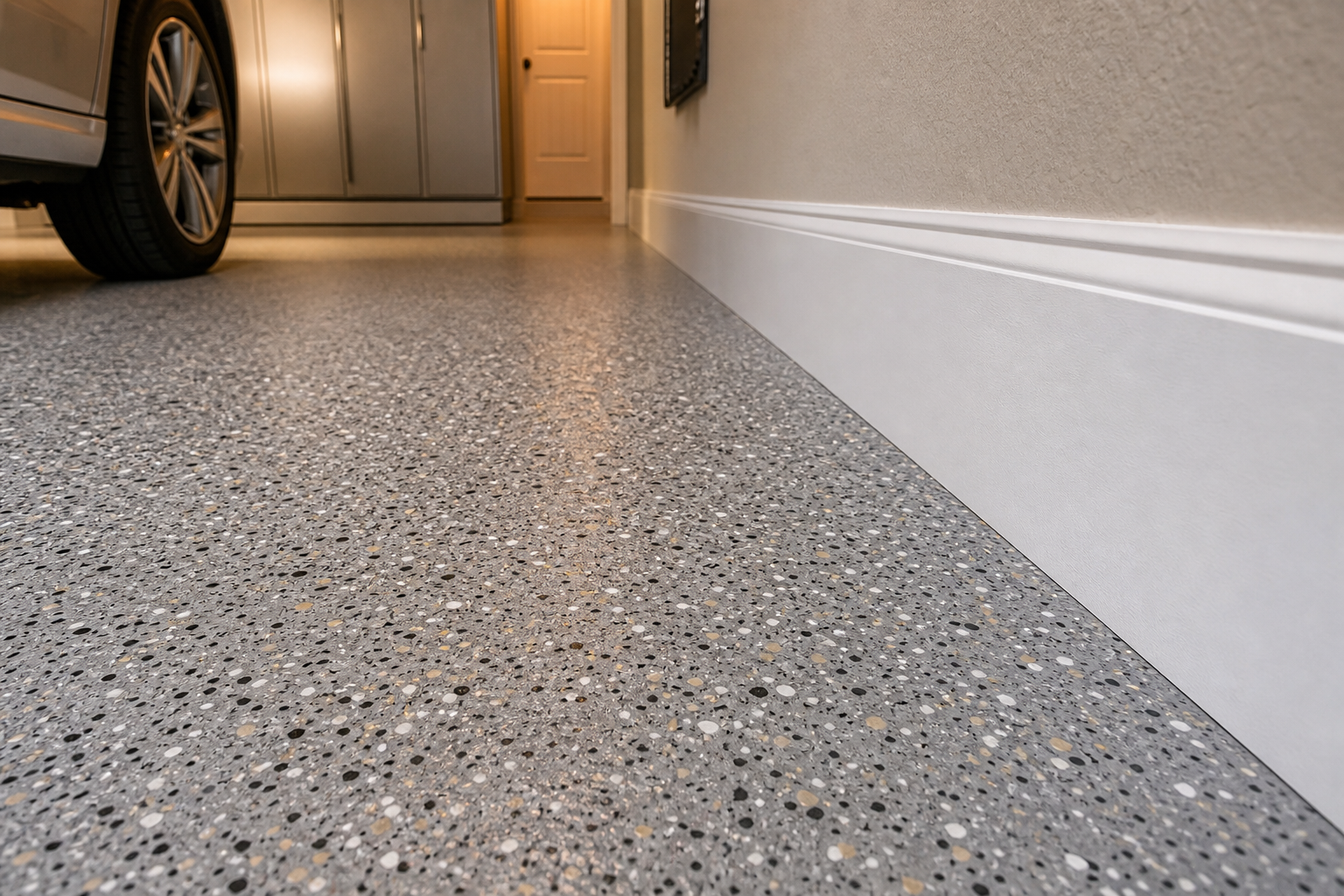
Color-flake epoxy systems are a smart pick if you want some visual texture without committing to a loud design. The scattered chips break up the monotony of a solid color and do a decent job hiding dirt and light scuffs between cleanings. This gray-tan-white blend is one of the most popular combinations I see in residential garages.
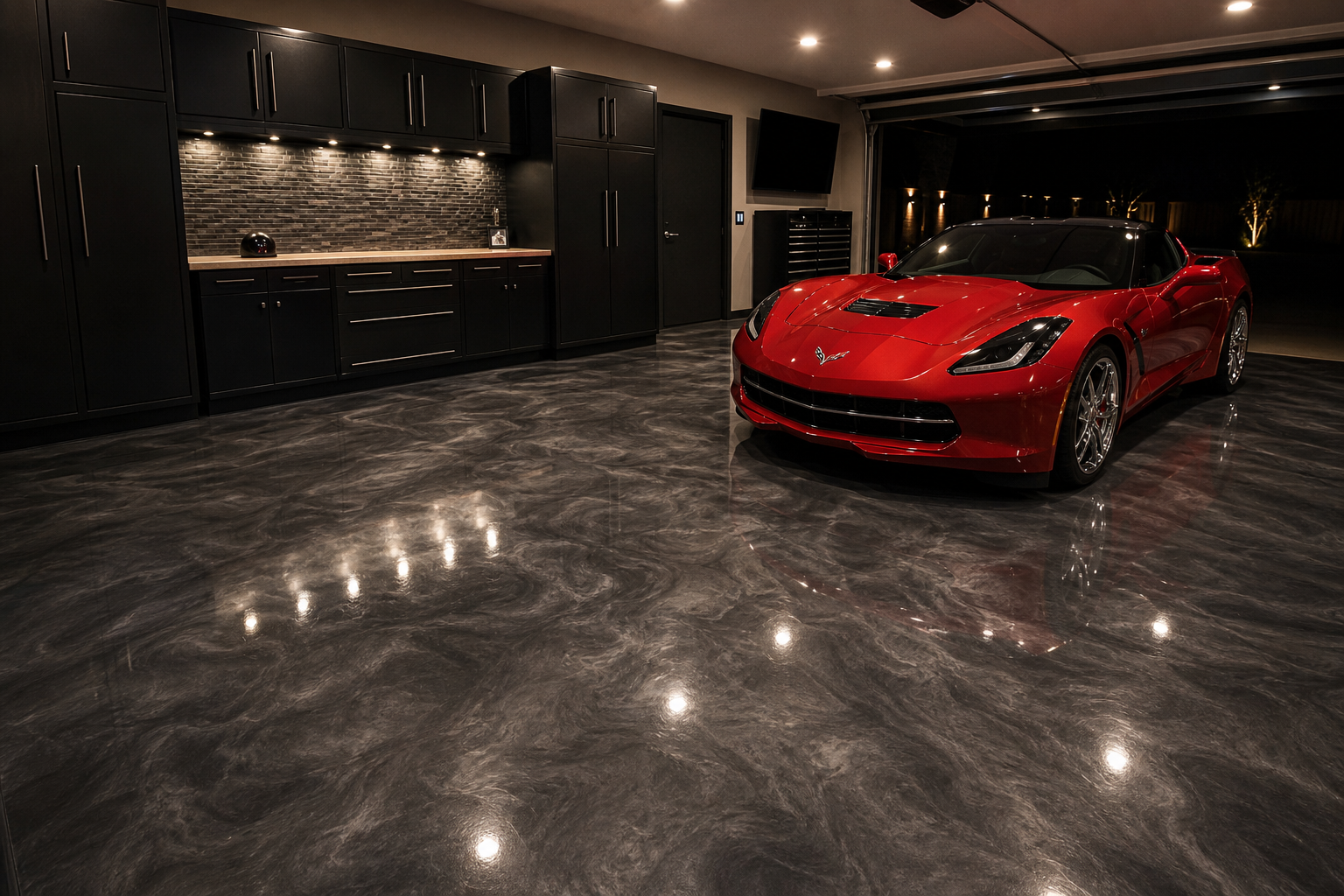
Metallic epoxy floors have a look you genuinely can’t get from any other flooring type. The swirling patterns come from manipulating the metallic pigment while the epoxy is still wet, so every floor ends up one of a kind. If you want to try this yourself, I put together a full walkthrough on how to apply a metallic epoxy floor that covers the technique in detail.
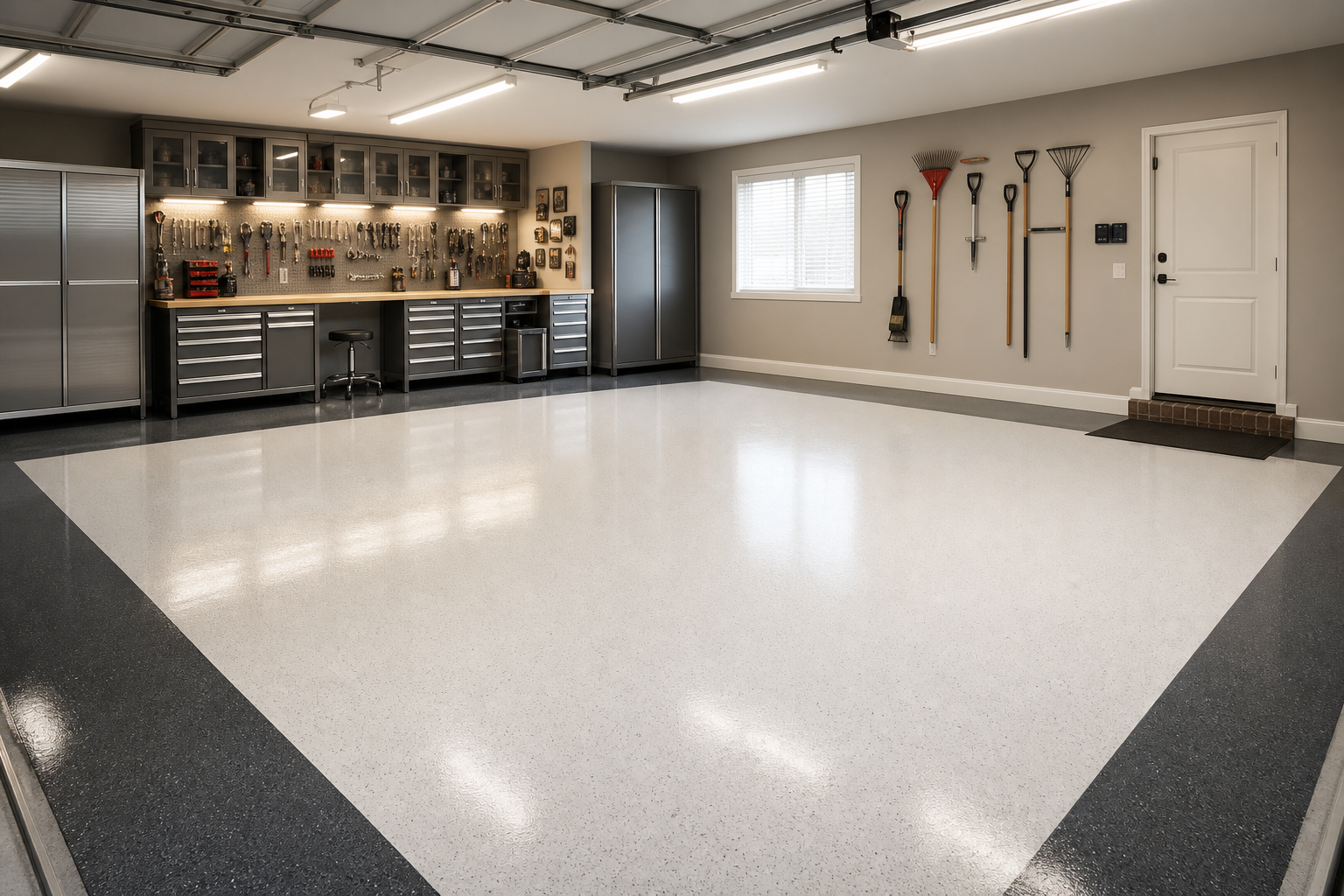
A two-tone border design adds a custom, intentional look without a ton of extra effort. The white field keeps things bright while the dark perimeter stripe frames the space and hides edge scuffs over time. This kind of detail is what separates a garage that looks finished from one that just looks coated.
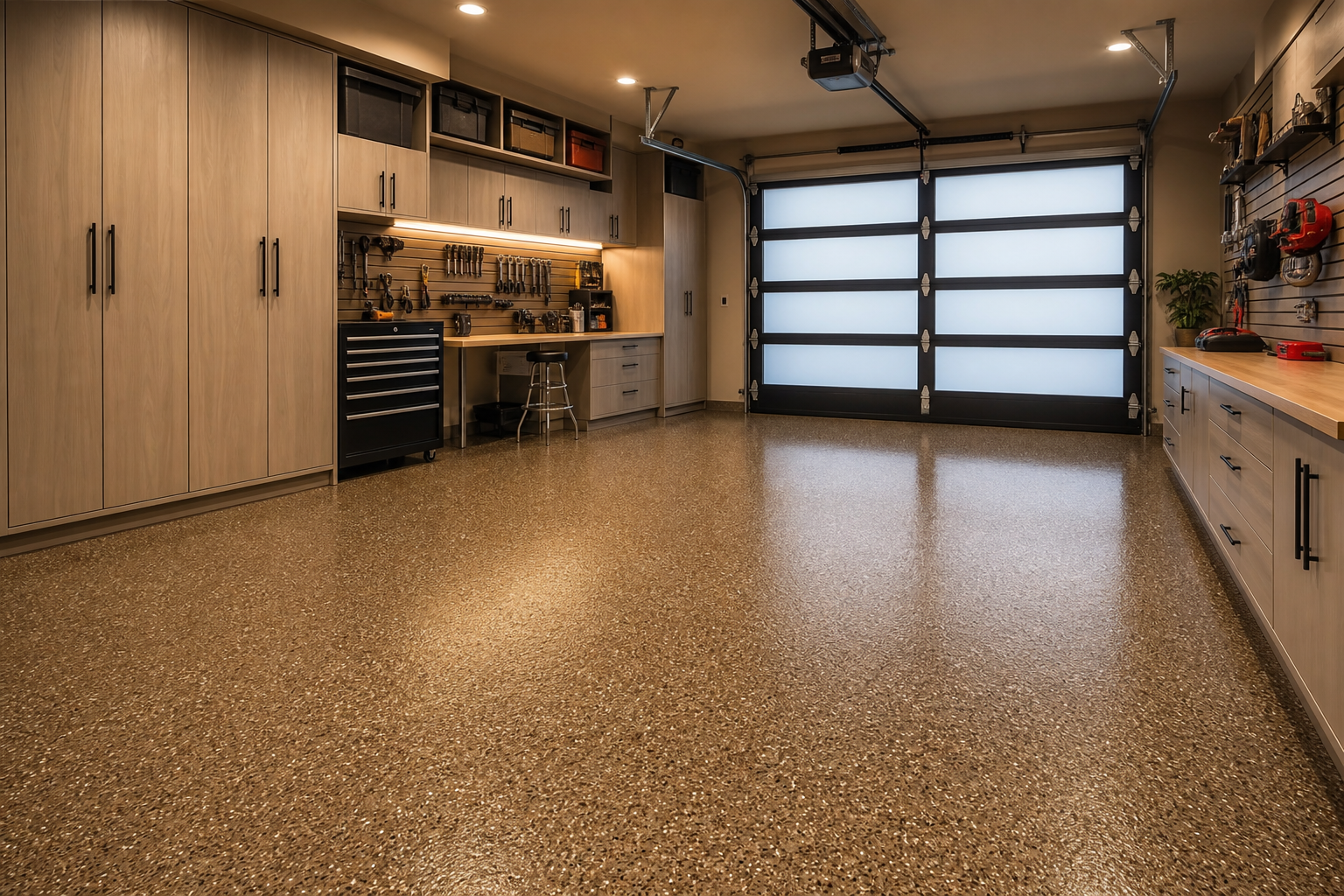
Brown and earth-tone epoxy palettes are underrated. They give a garage a warmer, more finished-room feel instead of that cold industrial look. If you’re converting your garage into a workshop or hobby space, this kind of color choice helps the floor complement wood furniture and warm-tone lighting instead of clashing with it.
Interlocking Tiles
Interlocking garage floor tiles are one of the fastest ways to get a finished-looking floor without any mixing, waiting, or cure time. You can cover a two-car garage in a few hours, and if a tile gets damaged you swap out just that piece instead of refinishing the whole floor. The material options range from rigid polypropylene to softer rubber, and the design combinations are nearly endless. I’ve covered the most popular brands in my garage floor tile ideas guide if you want to dig into specific products. One thing worth knowing upfront: tiles can separate over time depending on the brand and how the floor was prepped, but it’s usually an easy fix.
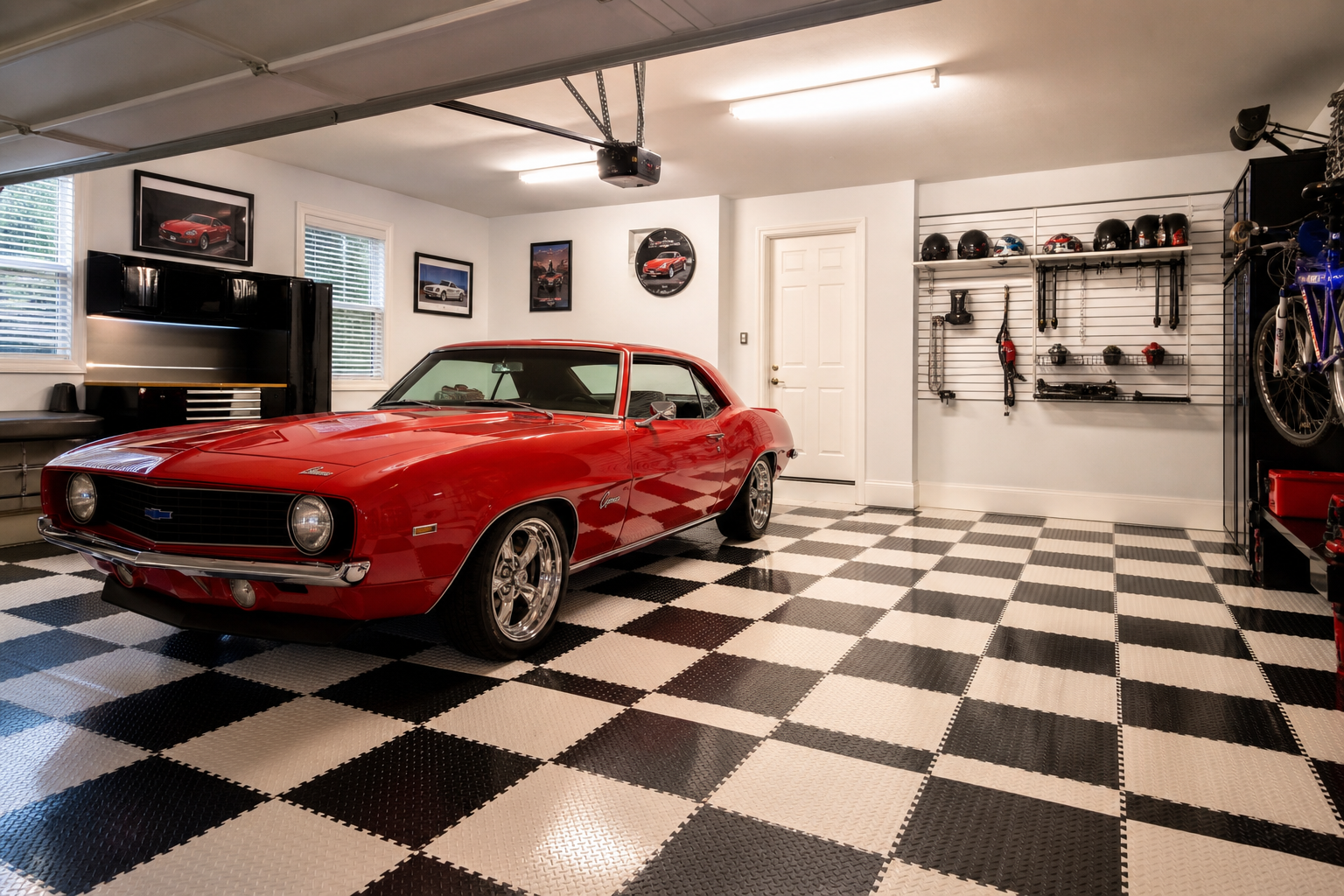
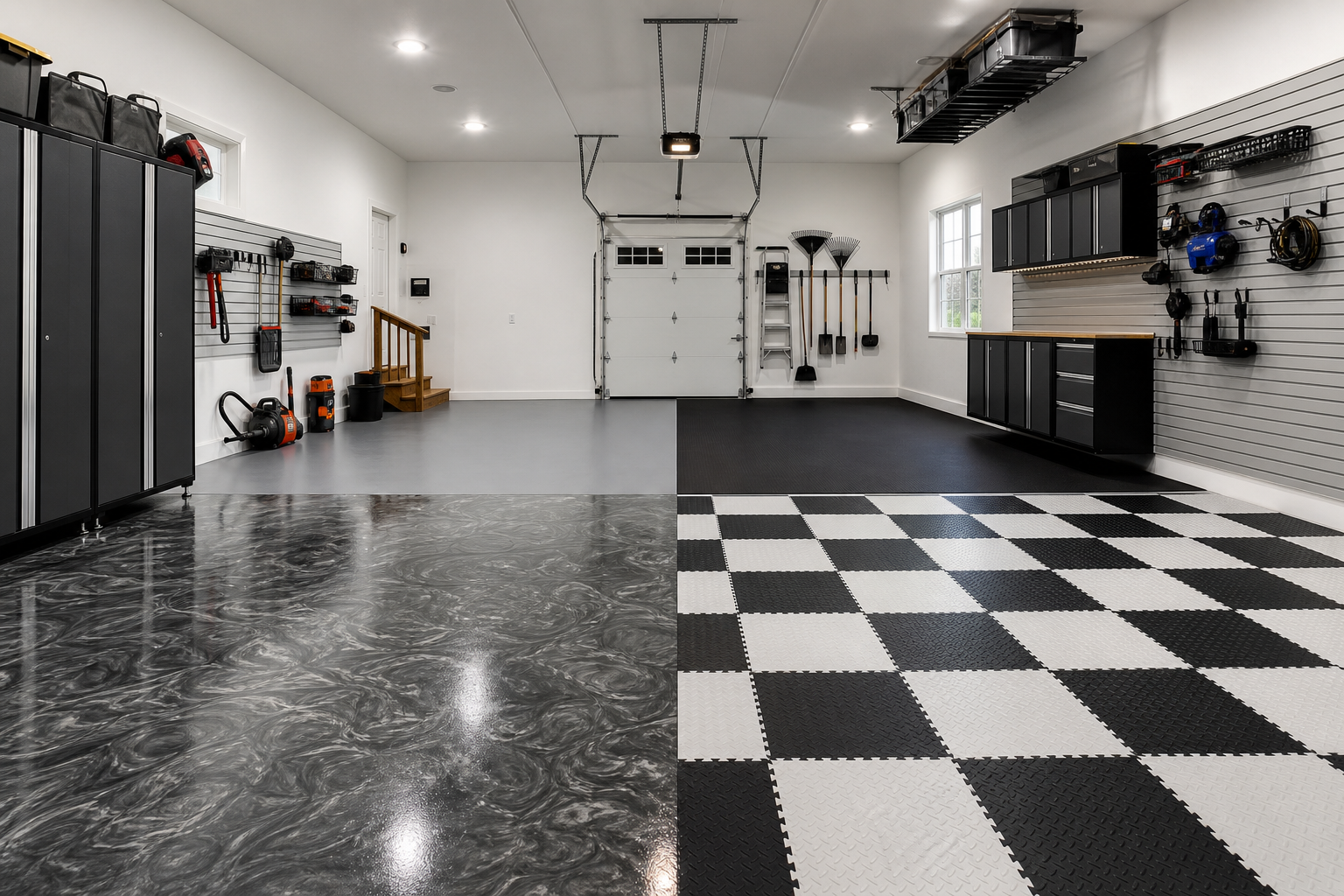
The black and white checkerboard pattern is a classic for a reason. It’s bold, it reads immediately as intentional, and it suits everything from vintage car collections to clean modern builds. These rigid polypropylene tiles click together without adhesive and sit directly on bare concrete, which makes installation genuinely easy.
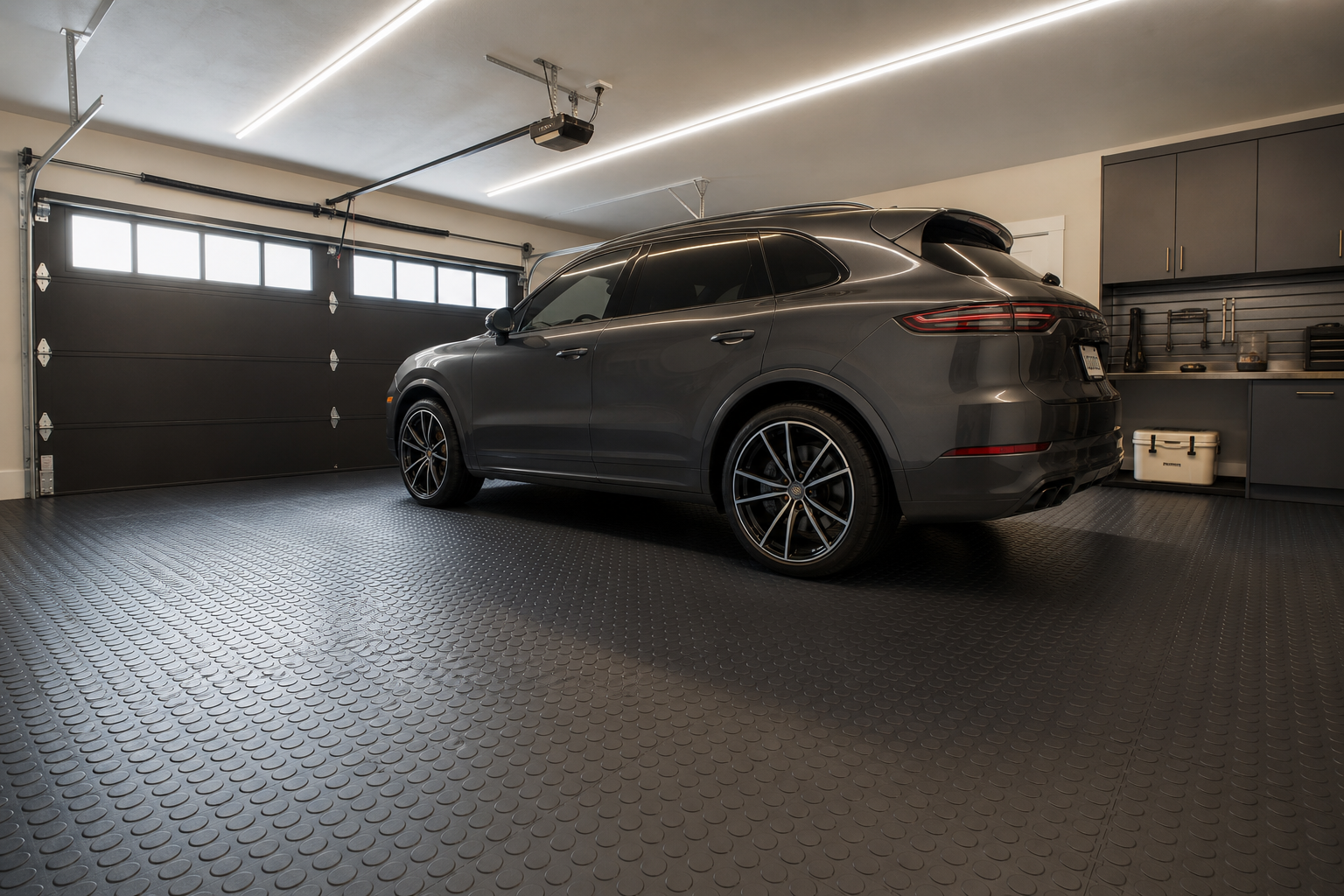
Coin-top rubber tiles offer a no-slip surface that’s noticeably more comfortable underfoot than bare concrete, which matters if you’re spending hours in the garage. The dark charcoal color disguises oil drips and tire marks better than lighter shades. If you’re building out a garage gym alongside your parking space, rubber tile and horse stall mat options are worth a look too.
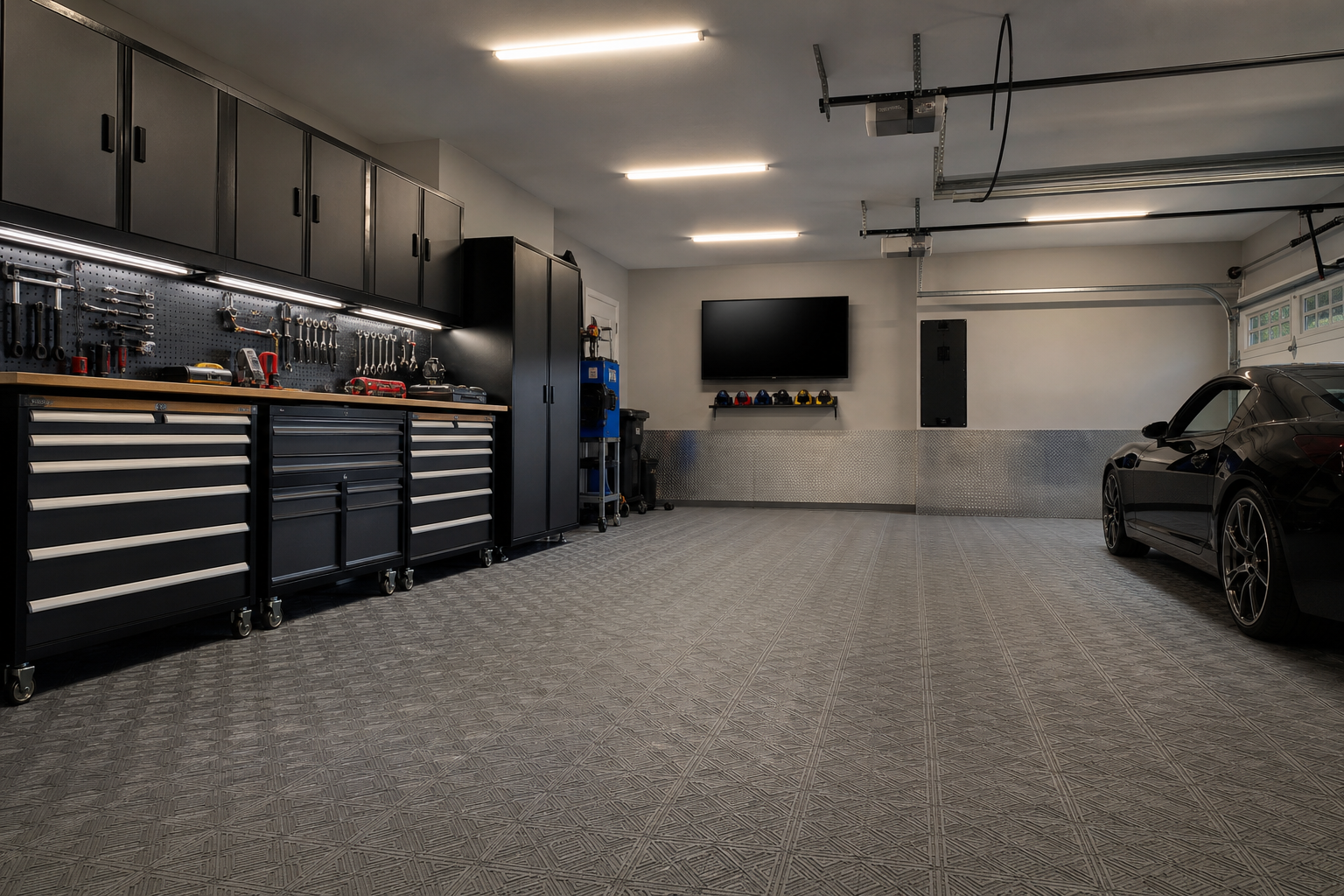
Diamond-plate texture tiles give off a decidedly shop-floor vibe that works well in working garages. The raised pattern improves traction and allows any moisture that gets underneath to drain toward the edges rather than pooling under the tile. That raised-base design is also why these tiles can go directly over slightly uneven or damp concrete without issue.
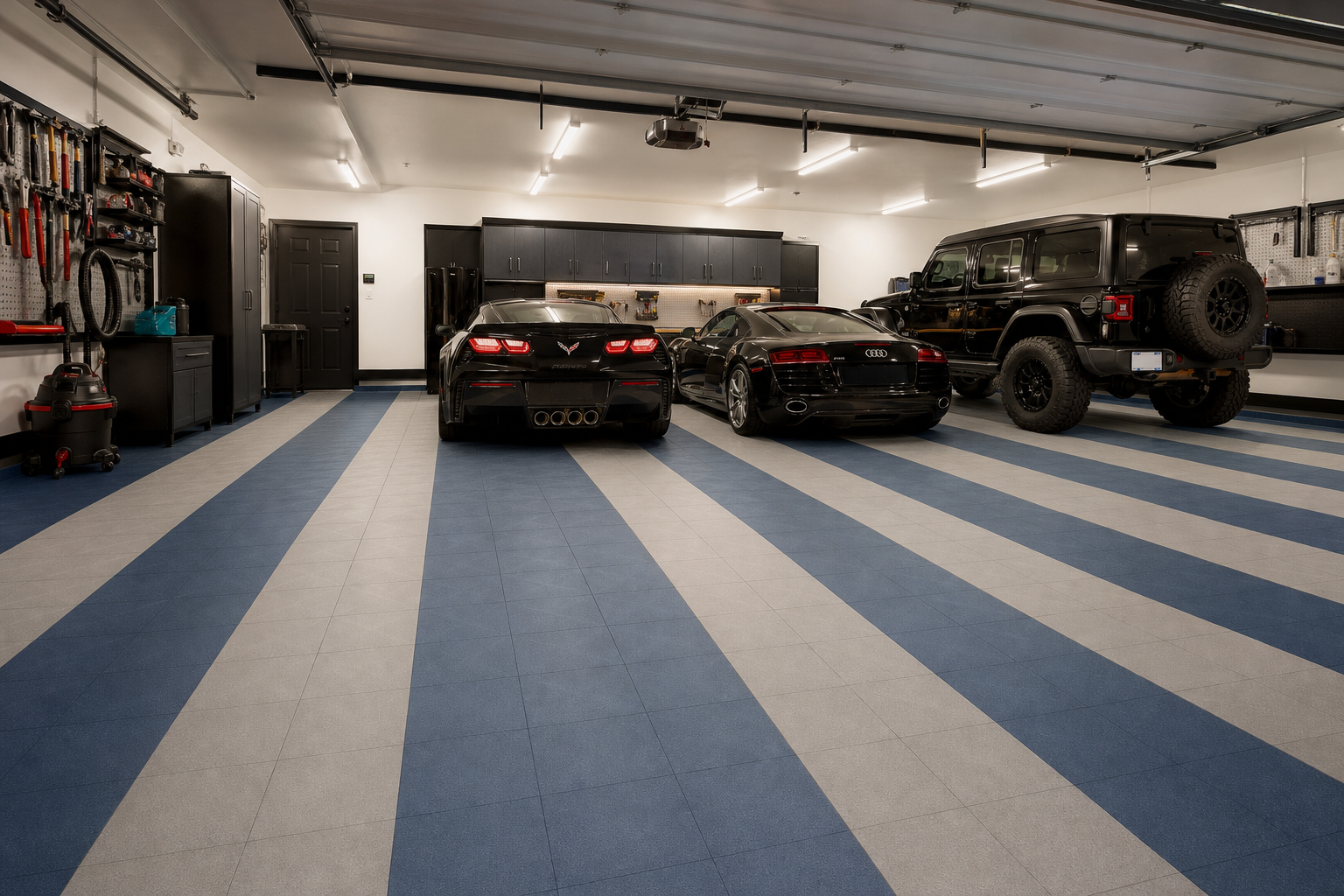
Running two tile colors in alternating rows is an easy way to create a custom-looking pattern without any complicated layout math. Slate blue and light gray pair nicely together and feel more modern than the classic black-and-white combo. If you’re weighing tiles against a coated floor, my article on garage floor tiles vs. epoxy breaks down the real differences in cost, durability, and installation.
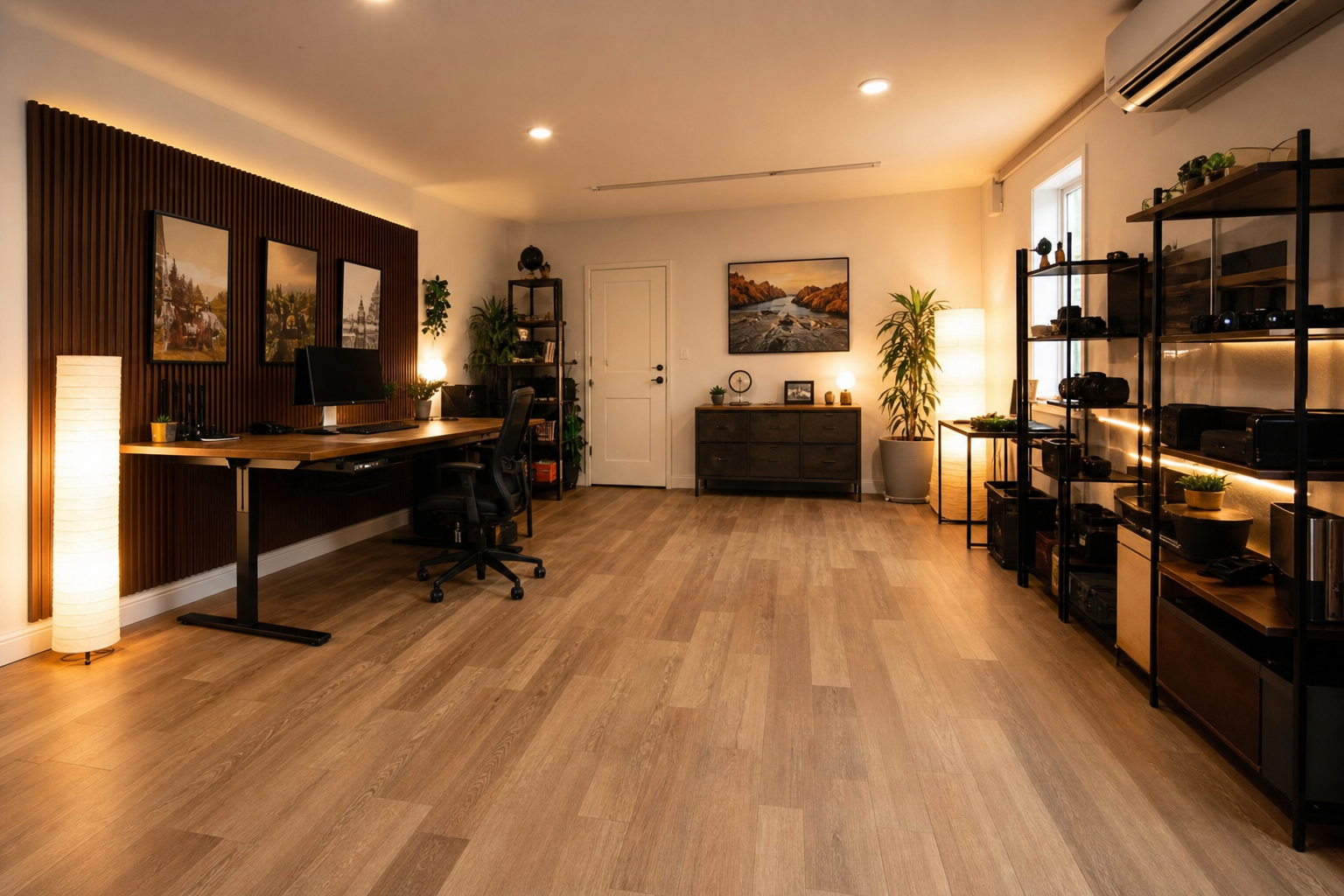
Wood-look interlocking vinyl tiles are a great option when you’re converting a garage into living or working space and want something that doesn’t scream “garage floor.” The foam backing adds a surprising amount of underfoot comfort for a hard surface. This type of floor works especially well in garage home office and studio setups where comfort and aesthetics matter more than heavy vehicle traffic.
Painted Concrete
Painting your concrete floor is one of the most budget-friendly ways to clean up a garage that looks rough and neglected. A good floor paint won’t last as long as epoxy, but it’s faster to apply, easier to touch up, and costs a fraction of the price. The key is using a product formulated specifically for concrete and knowing that prep work makes or breaks the result. I’d suggest reading up on the differences between garage floor paint and epoxy before you pick a product, because the two are very different despite what some labels suggest. Done right, a painted concrete floor can look surprisingly sharp.
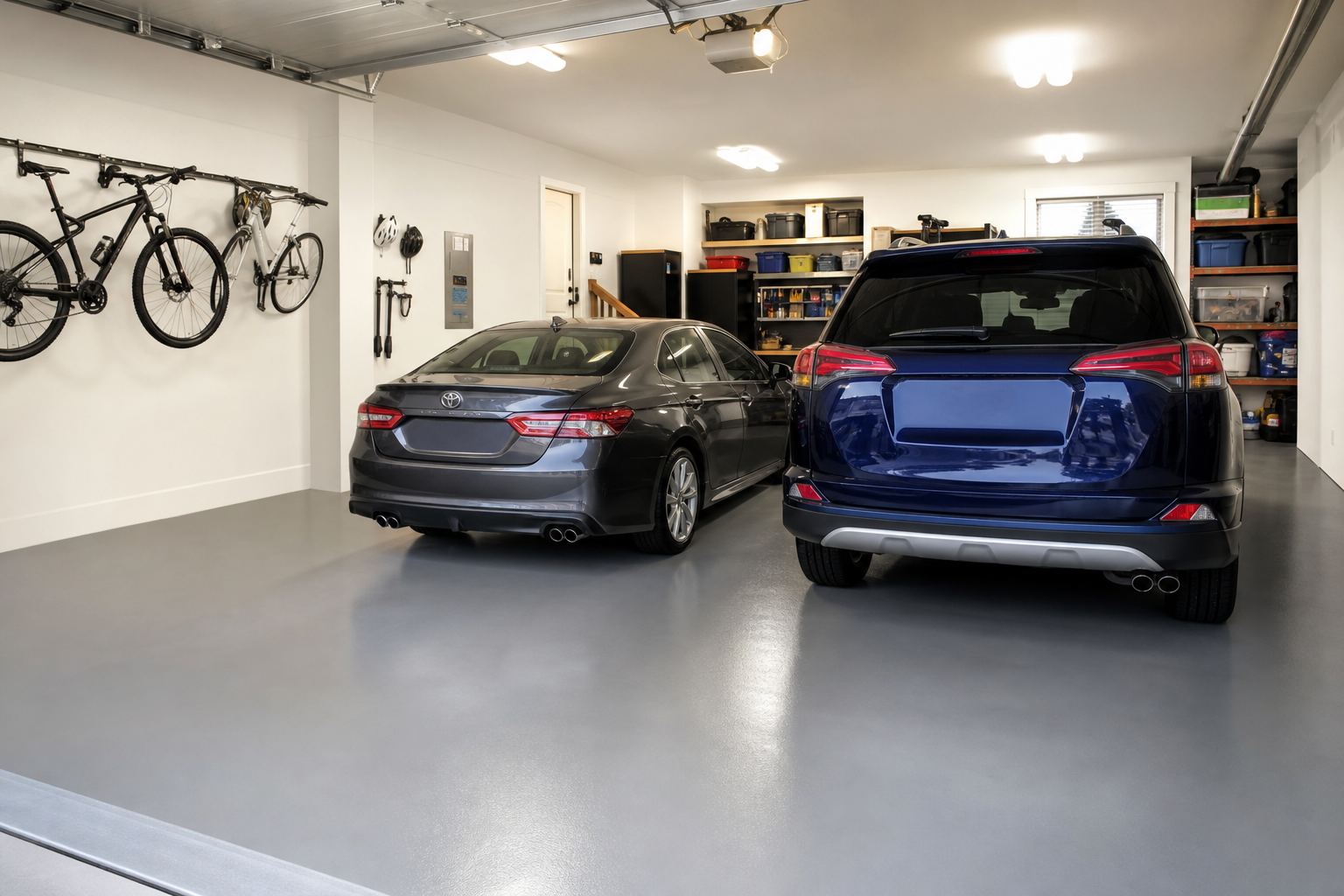
A single coat of medium gray floor paint with a clear sealer on top is the simplest upgrade you can make to a bare concrete floor. It pulls the whole space together without a big budget or a lot of skill. The sealer coat is worth the extra step since it adds durability and makes spills much easier to wipe up.
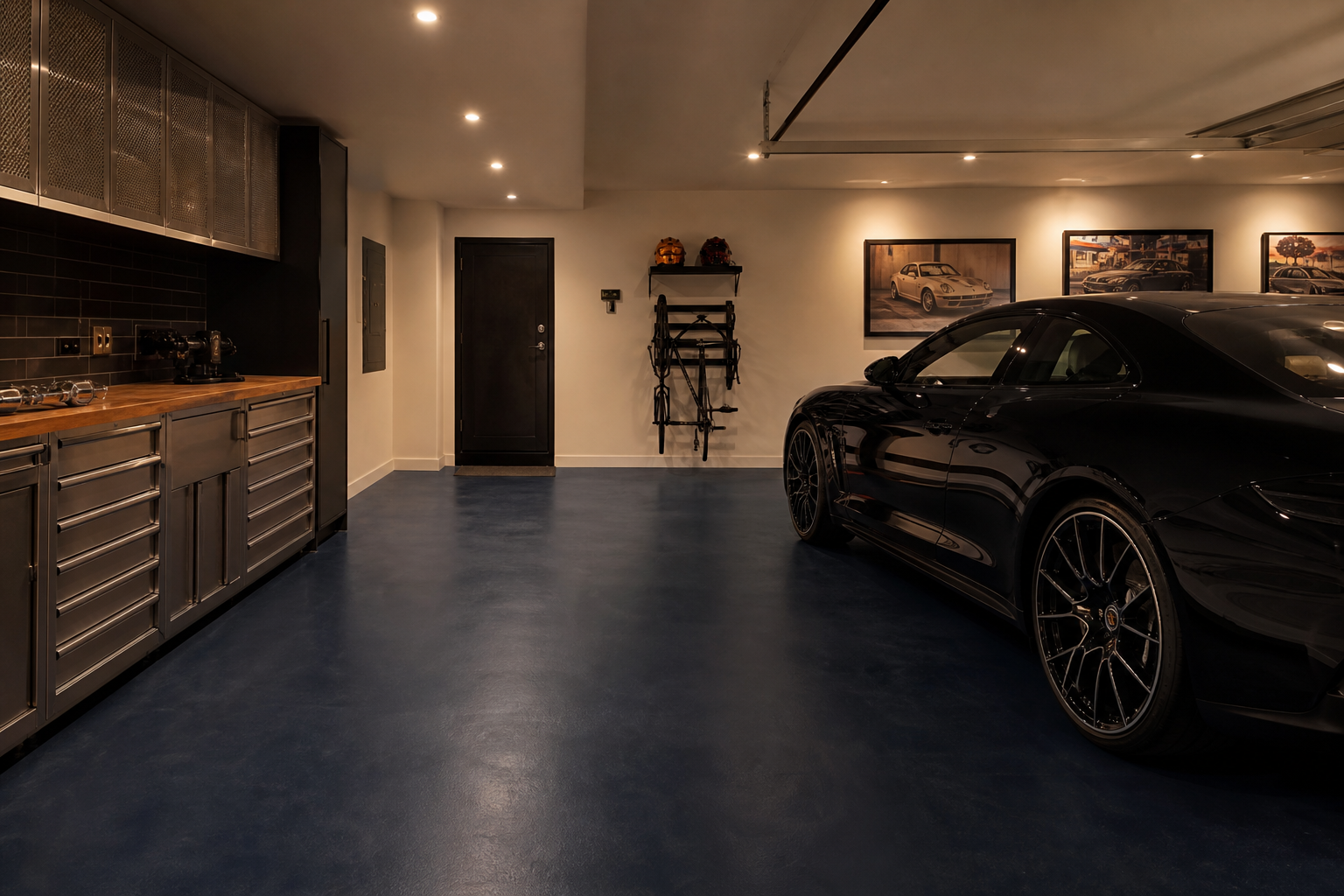
Navy blue is an unexpected but genuinely striking choice for a garage floor. It reads as intentional and upscale in a way that basic gray never quite achieves. Pair it with white walls and stainless or black metal accents and you’ve got a garage that looks like it was designed rather than just cleaned up.
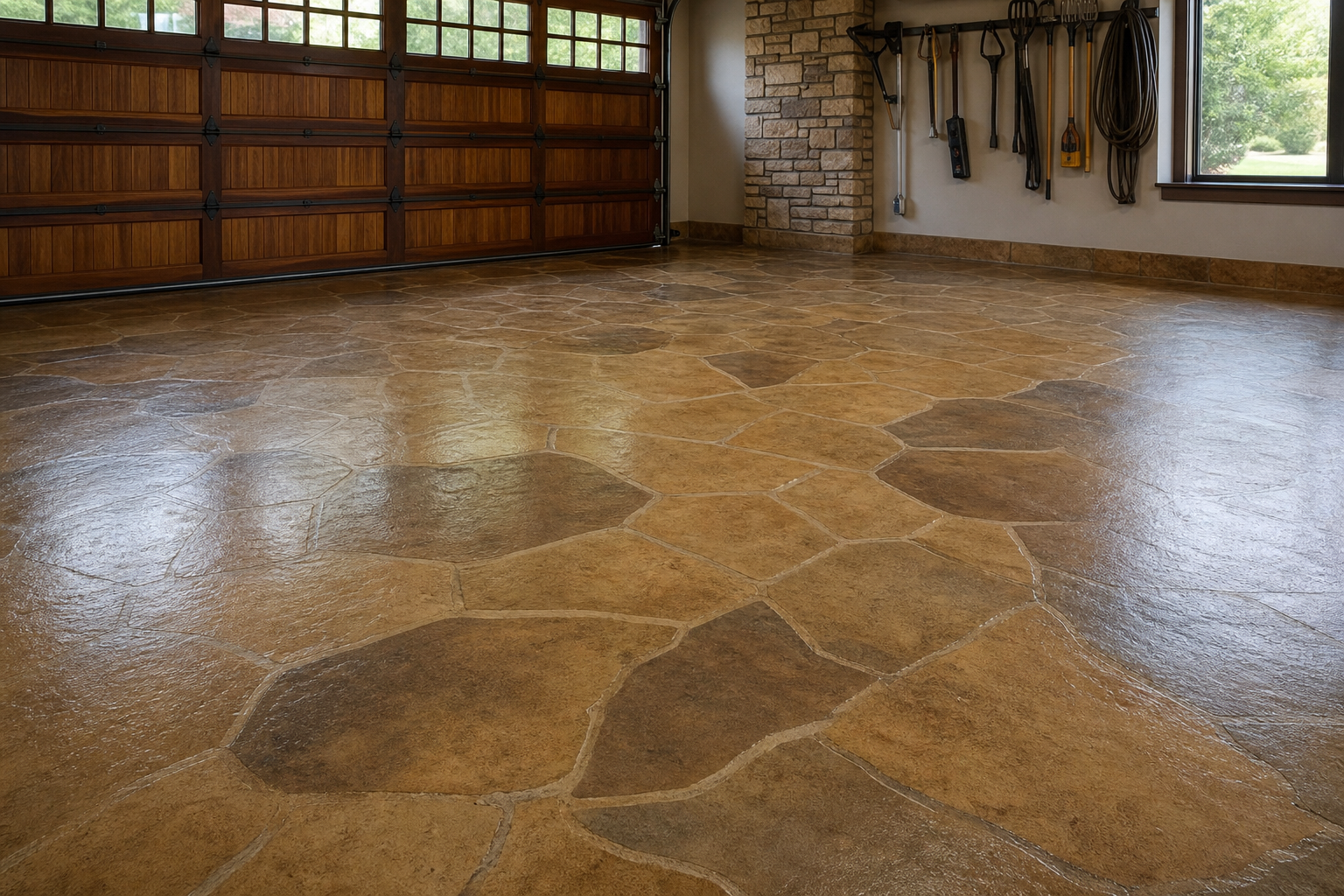
A faux flagstone or tile pattern painted onto concrete is a more involved project but the results can be genuinely impressive. The base coat goes down first, then the pattern is hand-painted using tape and a contrasting color before everything gets sealed. If you prefer the look of real stain rather than paint, the complete guide to staining and sealing concrete garage floors is worth bookmarking.
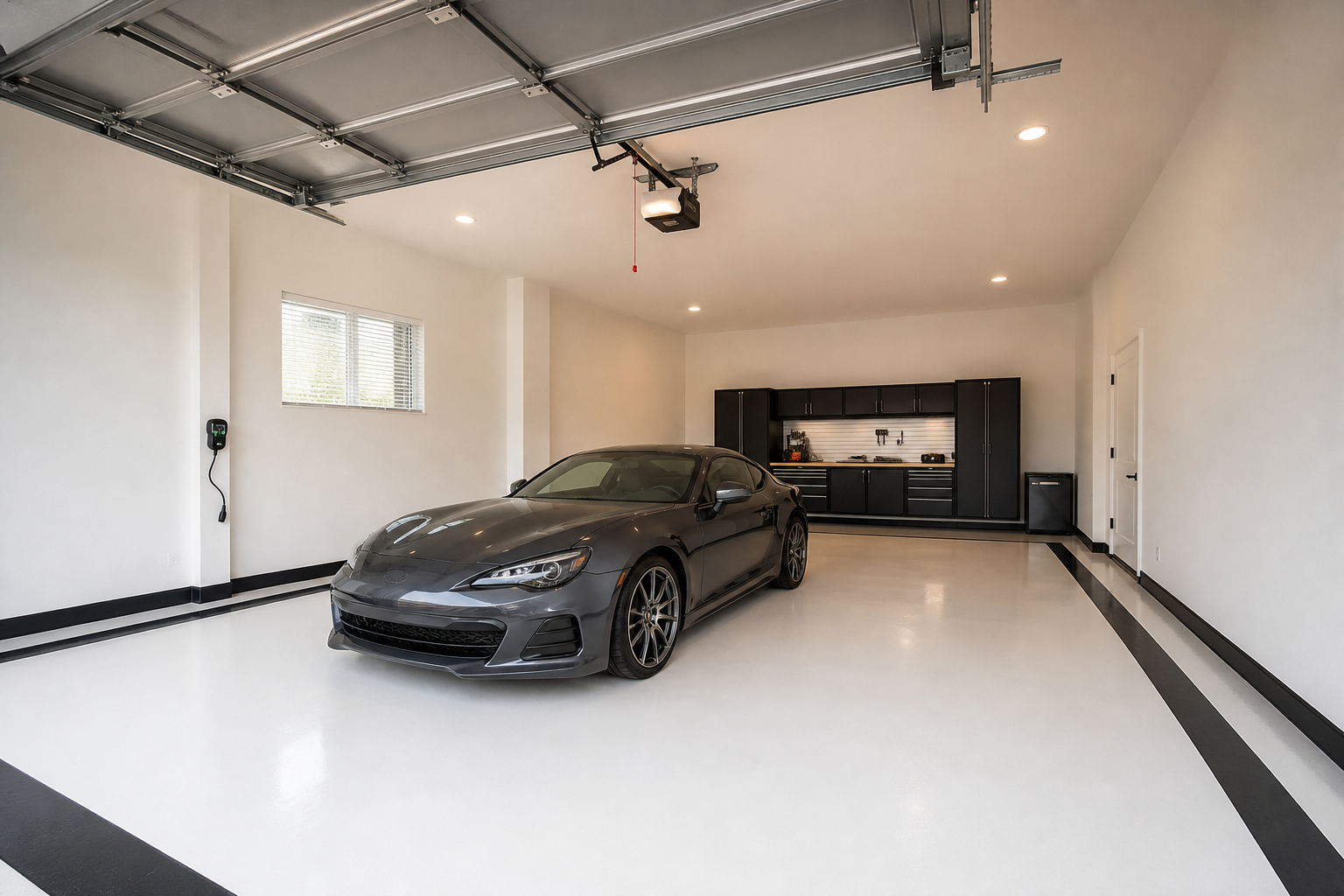
White painted concrete sounds like a maintenance nightmare but in a clean, low-traffic garage it actually looks great. The black border stripe adds definition and gives the floor a finished edge that plain white would lack. A quality high-gloss topcoat is non-negotiable here since it’s what keeps the surface wipeable and helps it resist yellowing from UV exposure.
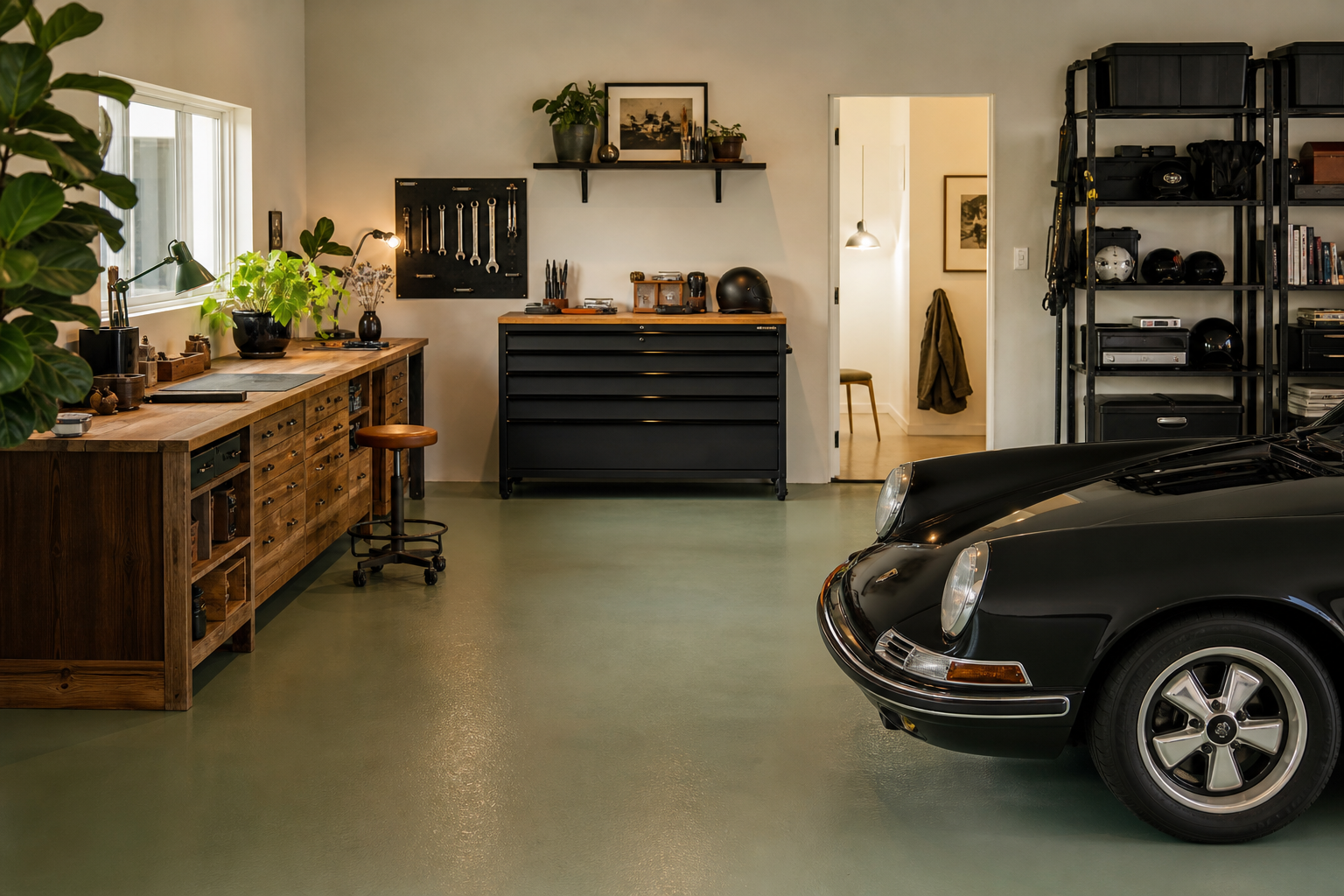
Sage green is a color I’ve been seeing more in garage makeovers lately, especially in workshop and hobby spaces where people want the room to feel like somewhere they actually want to spend time. The warm, earthy tone works well with natural wood workbenches and warm-spectrum lighting. If your floor has cracks before you paint, repairing concrete cracks before coating is a step you don’t want to skip.
Roll-Out Mats
Roll-out garage floor mats are the quickest flooring upgrade on this entire list. You unroll them, trim to fit if needed, and you’re done. No prep, no curing, no tools. They’re especially practical if you’re renting, if you want a floor that can move with you, or if you just need to protect a specific area like a parking spot or a workout zone. Vinyl and rubber are the most common materials, and both handle car traffic well. My full guide to garage floor rolls and mats covers the main product types and what to look for. The tradeoff is that edges can lift over time, especially in temperature swings, so choosing a heavier material helps.
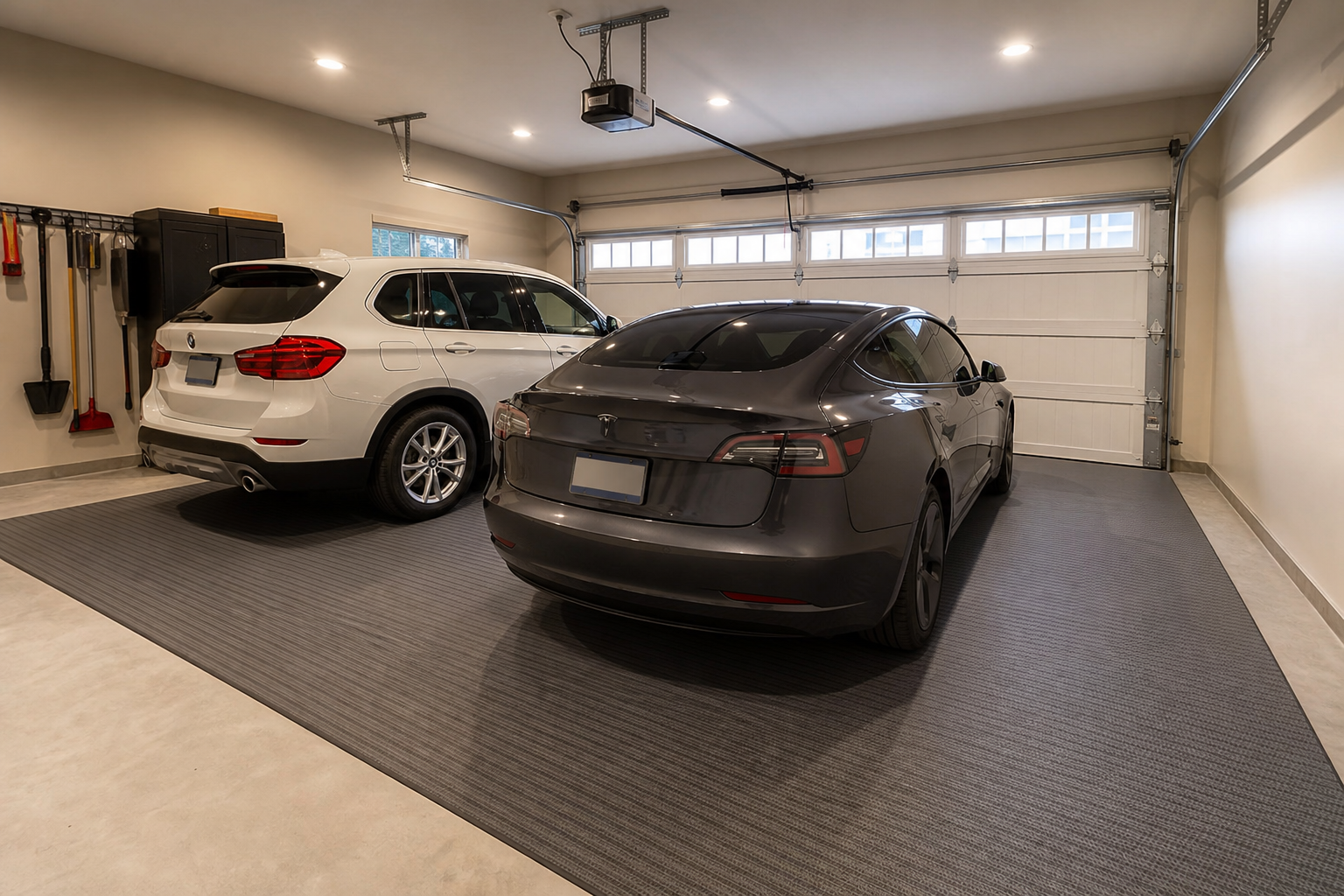
A full-bay ribbed vinyl mat is the easiest way to protect your parking area from oil, tire marks, and road salt without any permanent installation. The ribbed texture channels water and debris away from under the car and toward the edges where it’s easy to sweep out. These mats are especially popular for protecting garage floors from snow, mud, and oil in climates that see rough winters.
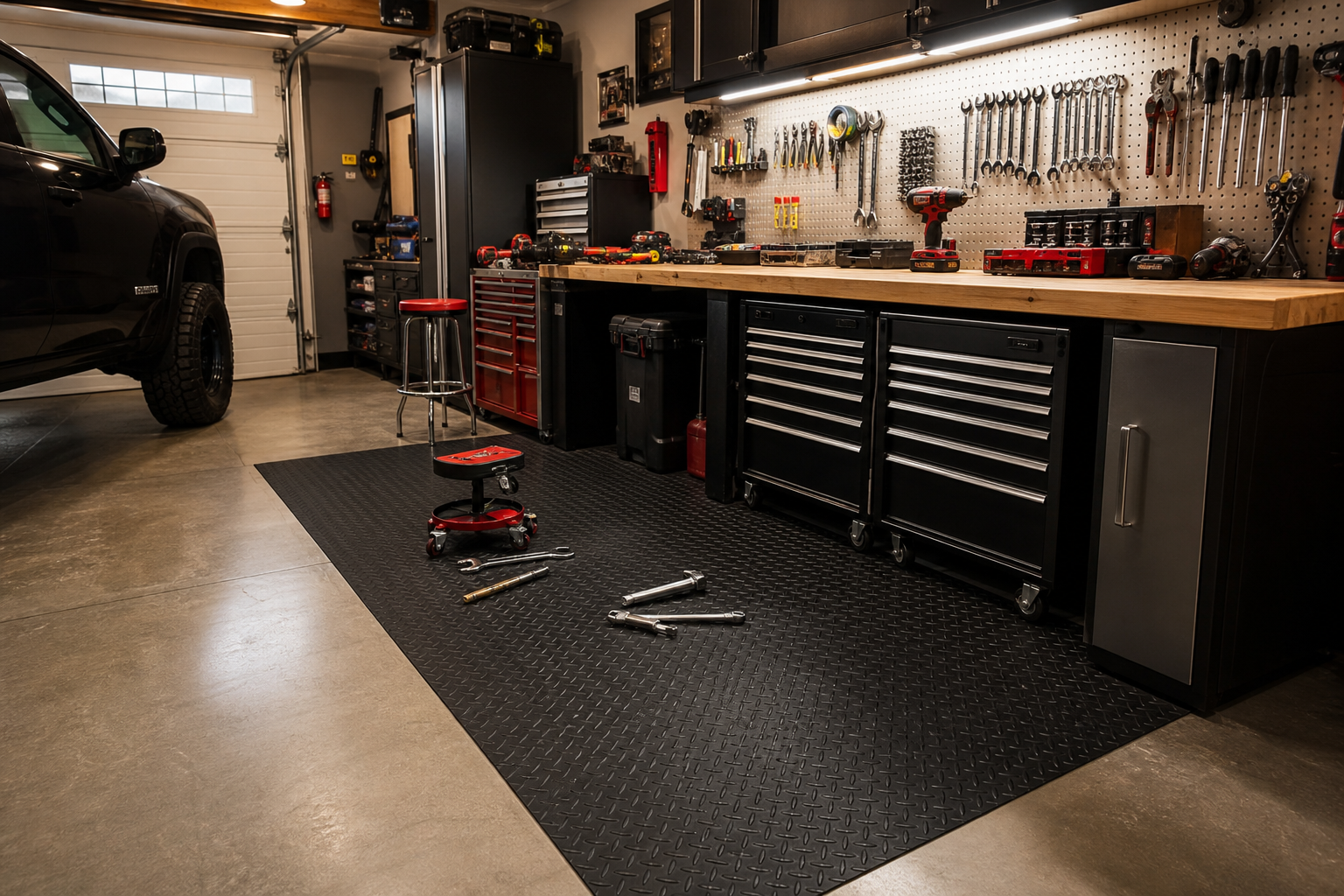
A thick rubber mat under your workbench area does double duty: it cushions your feet during long work sessions and catches dropped tools and hardware before they crack the concrete or bounce under a cabinet. The diamond-plate pattern on rubber is more grippy than it looks in photos. For anyone standing at a bench for hours at a stretch, anti-fatigue garage floor mats are worth comparing to standard rubber rolls.
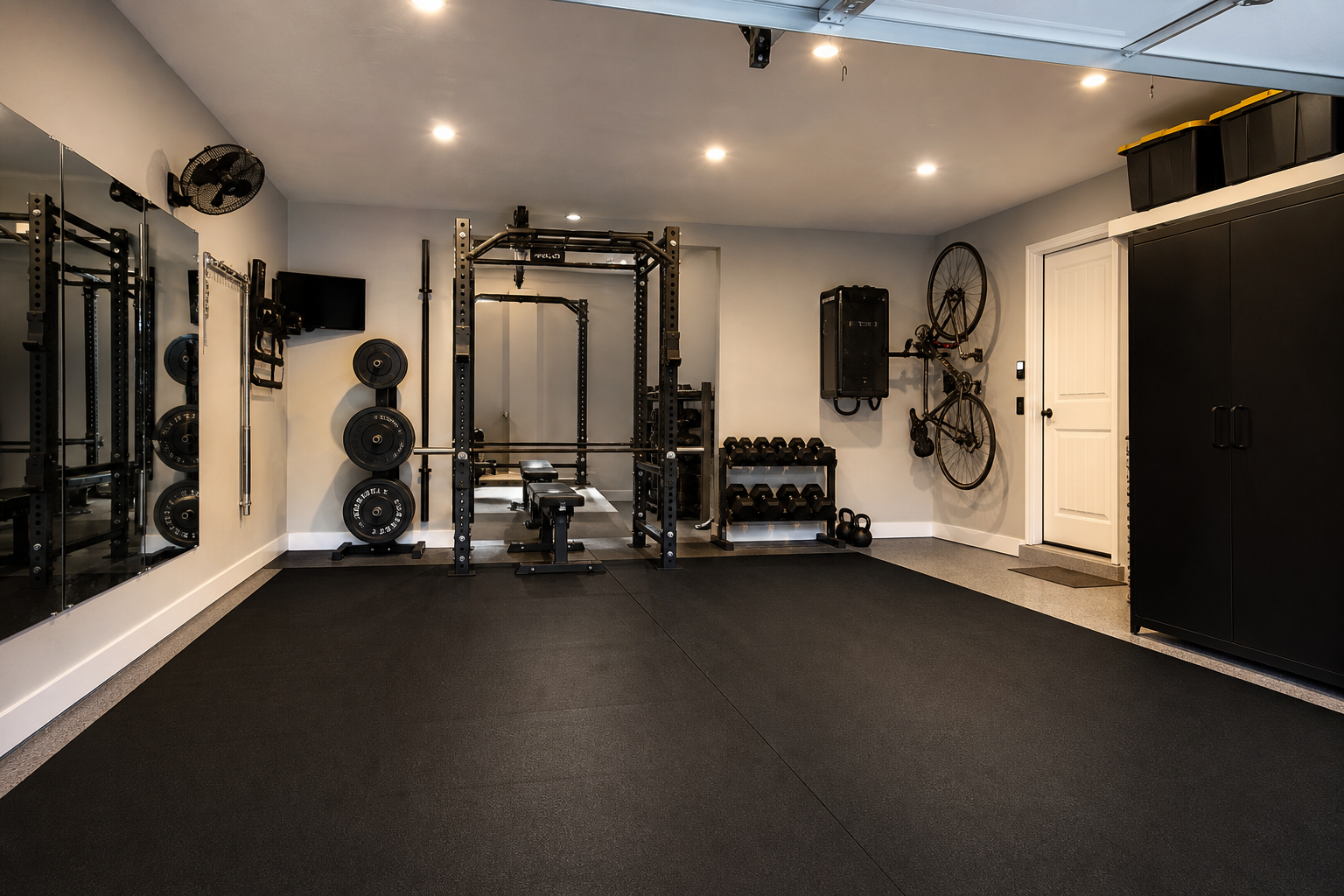
Two large rubber roll-out mats laid edge to edge can cover an entire one-car garage gym bay without any cutting or trimming. The thick rubber absorbs impact from dropped weights and reduces noise significantly, which matters if anyone is sleeping above or near the garage. This approach is one of the most cost-effective ways to floor a garage gym when you compare it to tile or coating options.
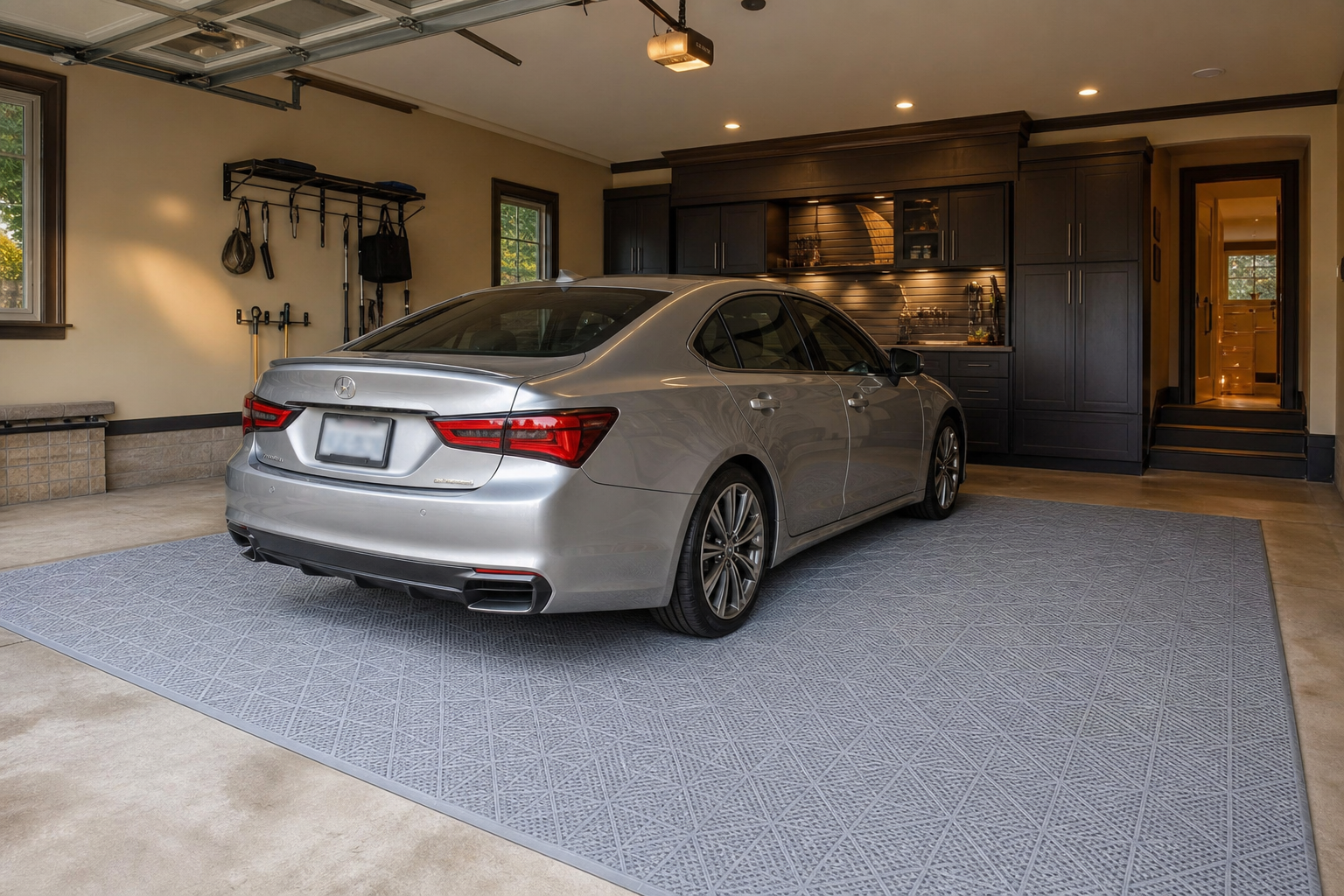
Light gray vinyl mats with a subtle grid or geometric texture offer a cleaner, more modern look than basic ribbed mats. Using one to cover just the center parking area rather than wall-to-wall keeps costs down and lets you leave the perimeter clear for cabinets and storage. If you want a budget-conscious floor solution without sacrificing the finished look, this approach fits squarely into the best cheap garage flooring options I’ve reviewed.
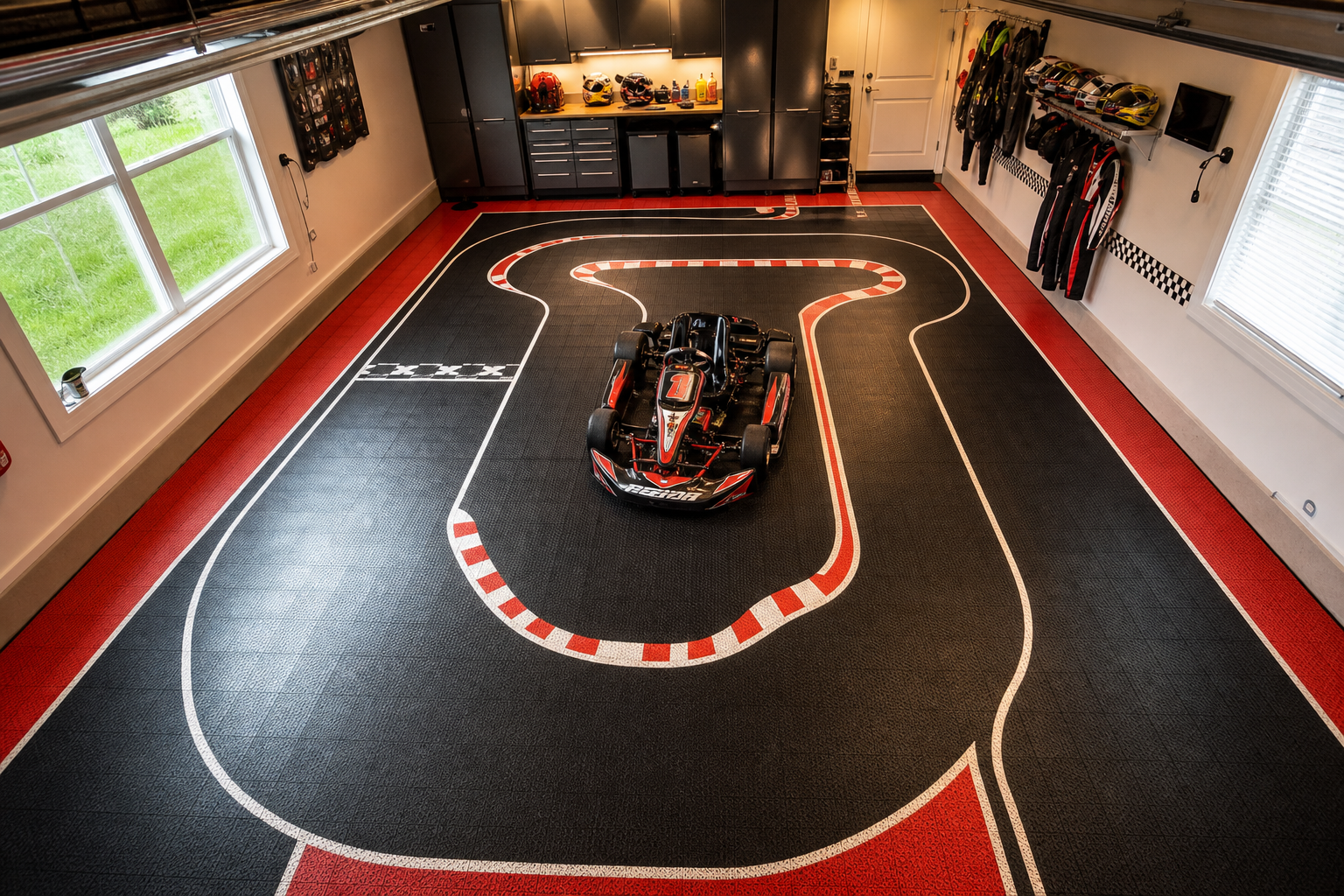
Printed graphic vinyl mats let you bring some personality into the space in a way that no coating or tile really can. Race track, pit crew, and logo mats are popular in hobby garages and spaces shared with kids. They’re not built for heavy daily vehicle traffic, but in a weekend-use space or a garage that doubles as a hangout area they’re a fun and affordable statement piece.
