

As an Amazon Associate I earn from qualifying purchases.
Setting up a dedicated car wash station in your garage is one of those projects that pays off every single weekend. Living in Central Florida, I wash my vehicles constantly, and having everything organized and plumbed properly makes the whole job faster and a lot more satisfying. In this article I cover four key areas: hose and water setups, supply wall organization, drainage and floor solutions, and foam and rinse zones.
Hose and Water Setups
A reliable water source is the foundation of any garage car wash station. Whether you tap into an existing spigot or run a dedicated hot-and-cold line into your garage, how you manage that water determines how smooth the whole process feels. Retractable hose reels, wall-mounted brackets, and ceiling-drop plumbing all serve different needs depending on how much space you have and how serious you are about the setup. If you are working with a two-car bay or larger, check out these two-car garage ideas for layout inspiration that balances wash space with parking. The ideas below range from simple weekend installs to full plumbed-in setups worth planning into a garage renovation.
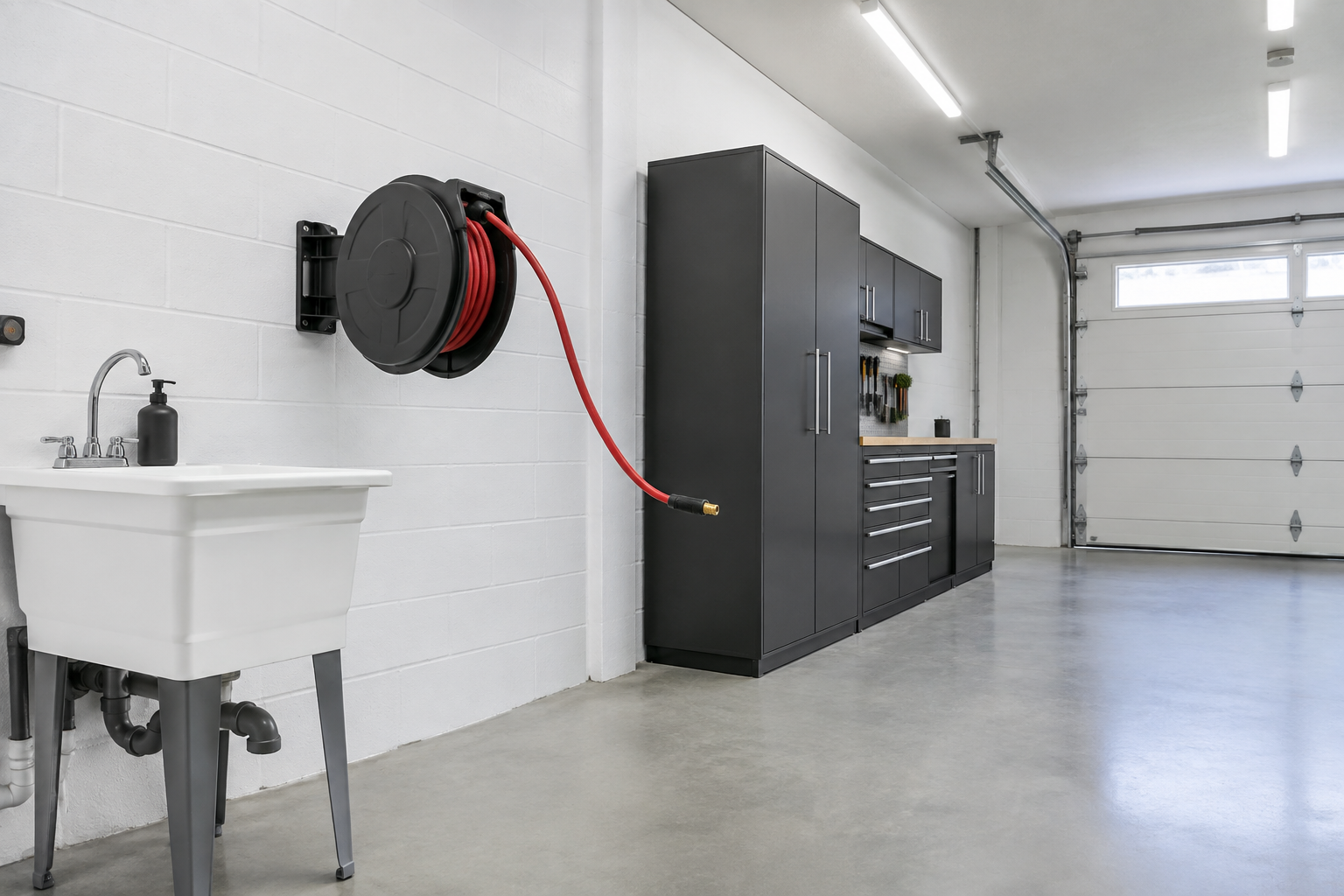
A wall-mounted retractable hose reel keeps your hose contained and tangle-free between washes. This matte black unit pairs well with white or gray painted walls and adds a polished, intentional look to the wash bay. The spring-return mechanism means the hose is always ready to pull and never piled up on the floor.
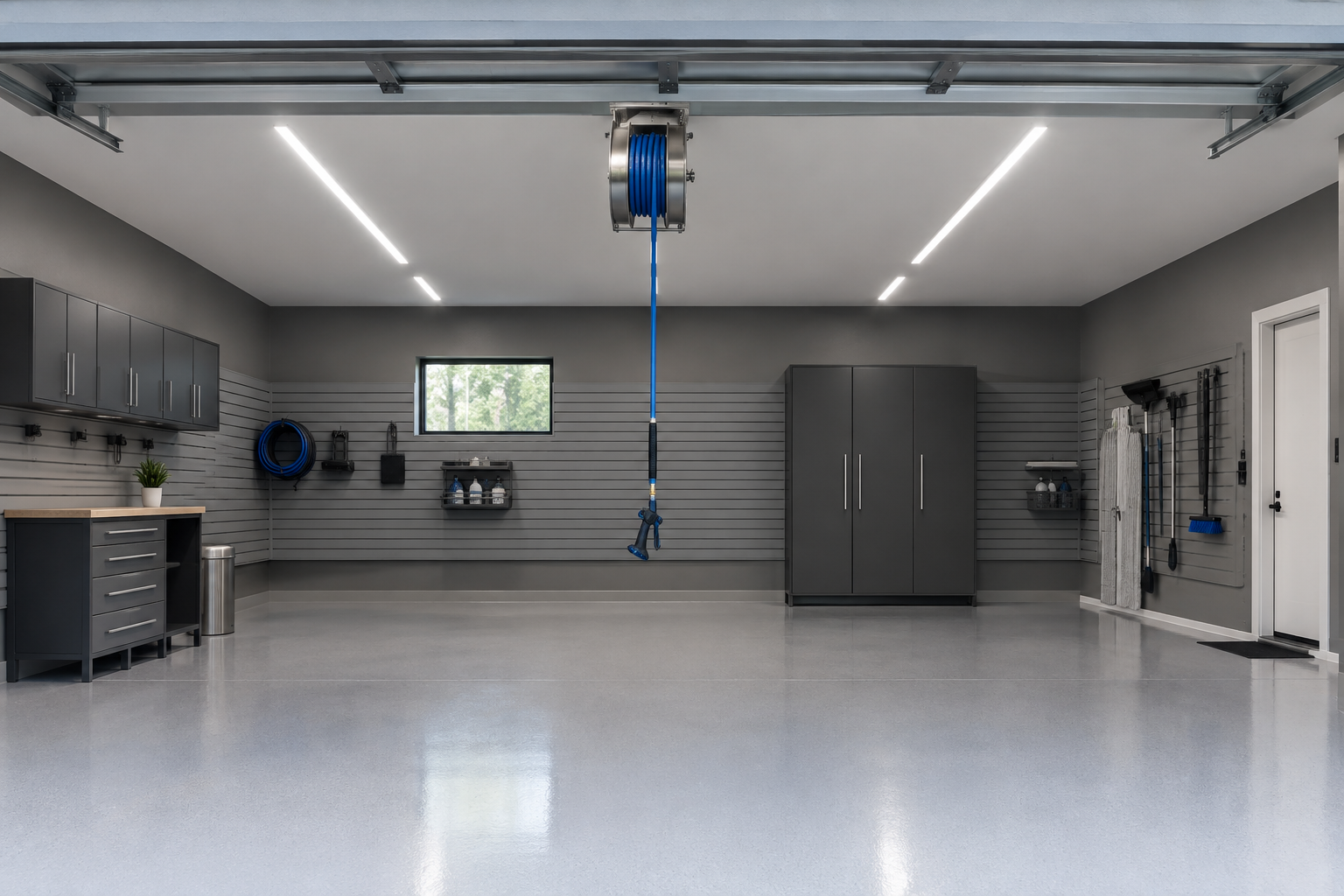
Ceiling-drop hose reels are a smart move in wider bays where a wall-mounted unit would leave you dragging the hose too far. The brushed stainless steel finish holds up well in humid environments, which matters a lot if your garage is not climate-controlled. Paired with a quality garage epoxy floor, this kind of setup feels genuinely professional.
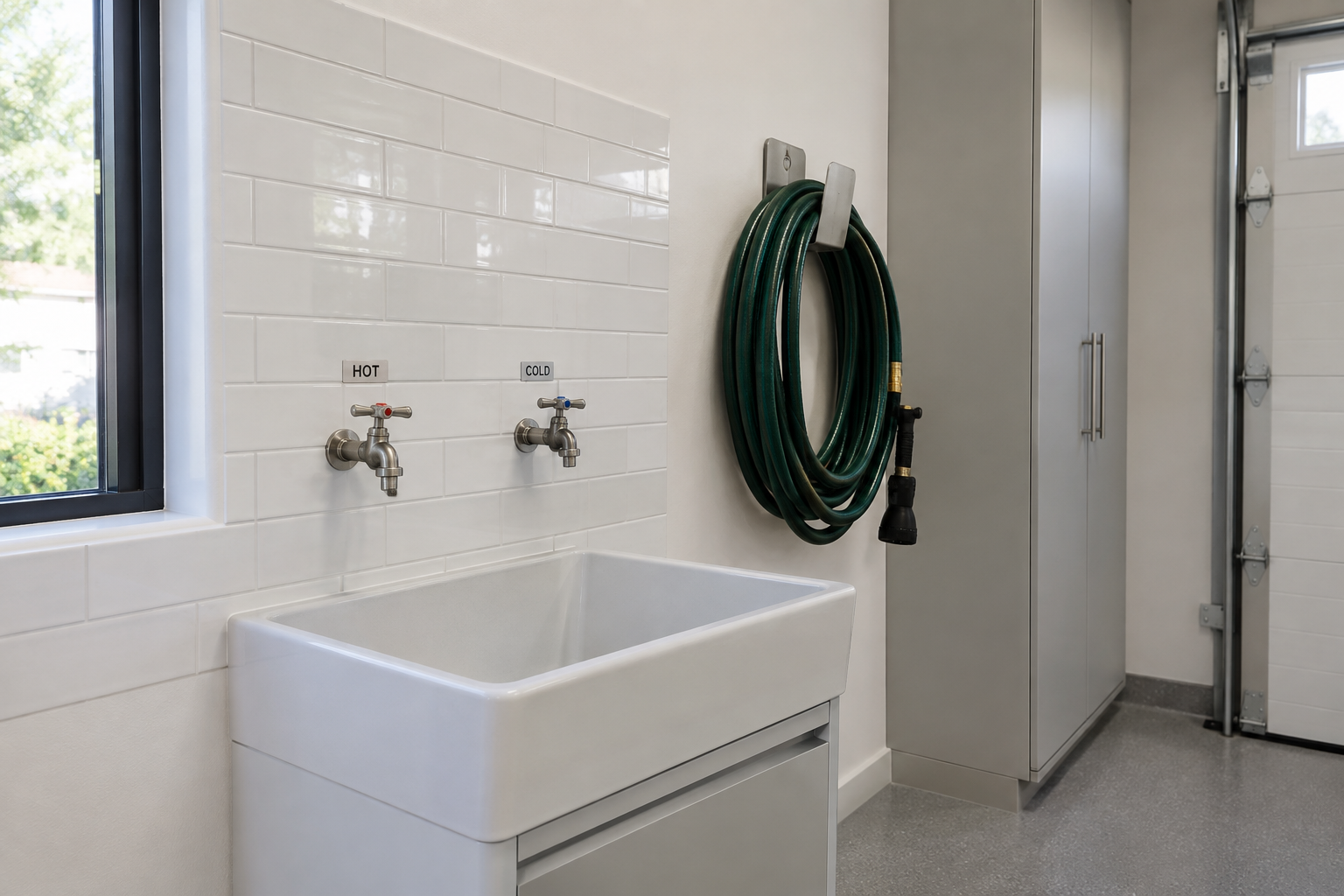
Running both a hot and cold water line into your garage opens up a lot of options, especially for degreasing wheels or rinsing in cooler months. Tiling the wall around the spigots protects the drywall from splash and keeps the area looking intentional rather than improvised. This is the kind of small upgrade that changes how you feel about washing your car every single week.
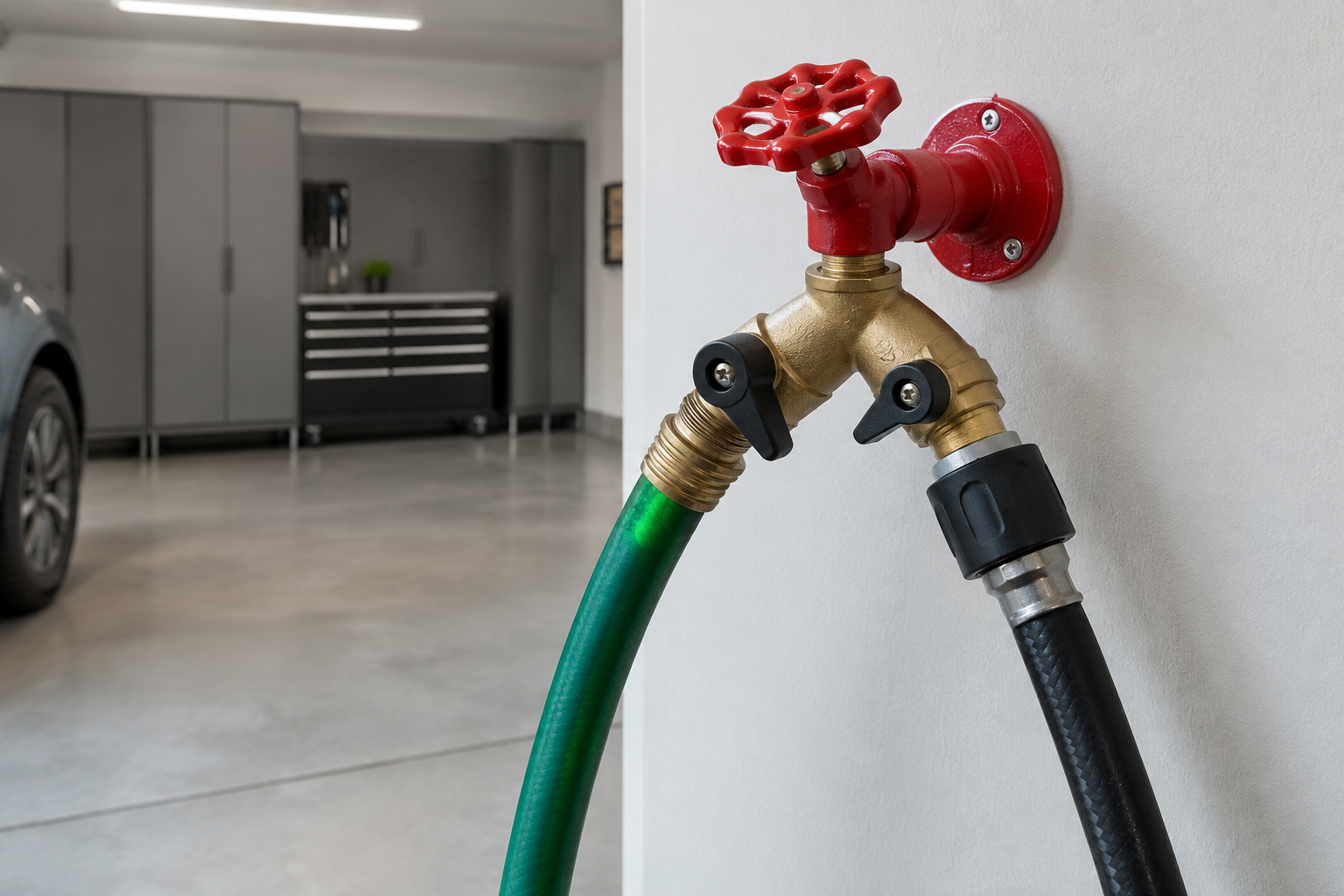
A quality brass hose splitter lets you keep your pressure washer and your regular rinse hose connected at the same time without swapping fittings mid-wash. It is a small detail, but eliminating that fumbling step makes the whole car wash routine feel more fluid. Look for a model with individual shutoff valves on each port so you can swap between the two without shutting off the water at the wall.
Supply Wall Organization
Car wash supplies have a way of taking over a garage shelf if you do not give them a proper home. Microfiber towels, spray bottles, wax, iron remover, wheel cleaner, foam cannon soap, brushes of every size, all of it needs a spot that is easy to reach and easy to put back. Wall-mounted organization systems, slatwall, pegboard, and open shelving work especially well in wash stations because you can arrange everything at arm’s reach. I have a full guide on installing garage slatwall accessories if you want to go that route. Having a dedicated zone system in your garage also helps keep car care supplies from creeping into other areas of the space.
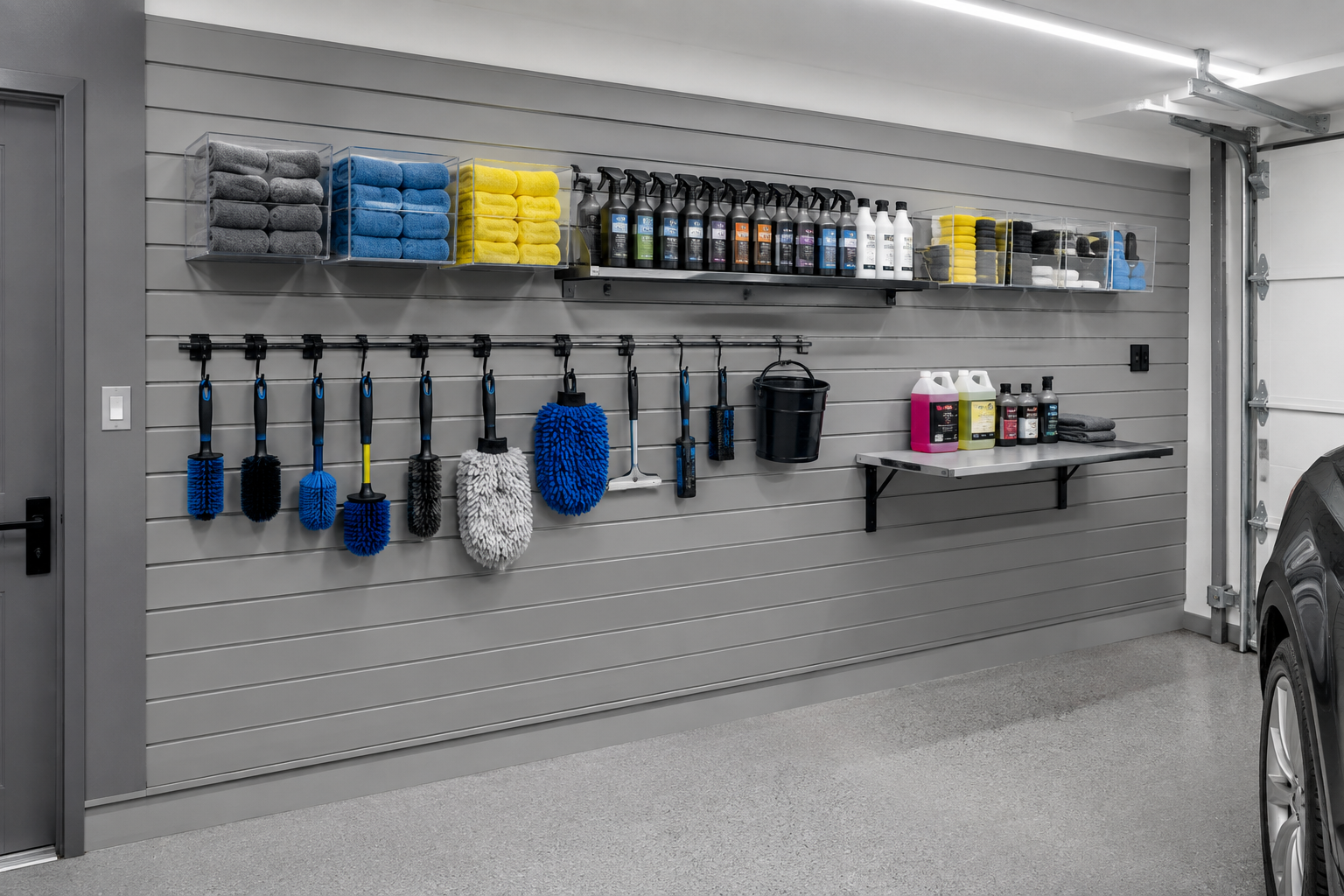
Gray slatwall panels give you a flexible grid that you can rearrange as your supply collection grows or changes. Clear acrylic bins are great for rolled microfiber towels because you can see exactly how many you have left without digging through a drawer. Labeling each bin or shelf section keeps the system usable even when you are in a hurry.
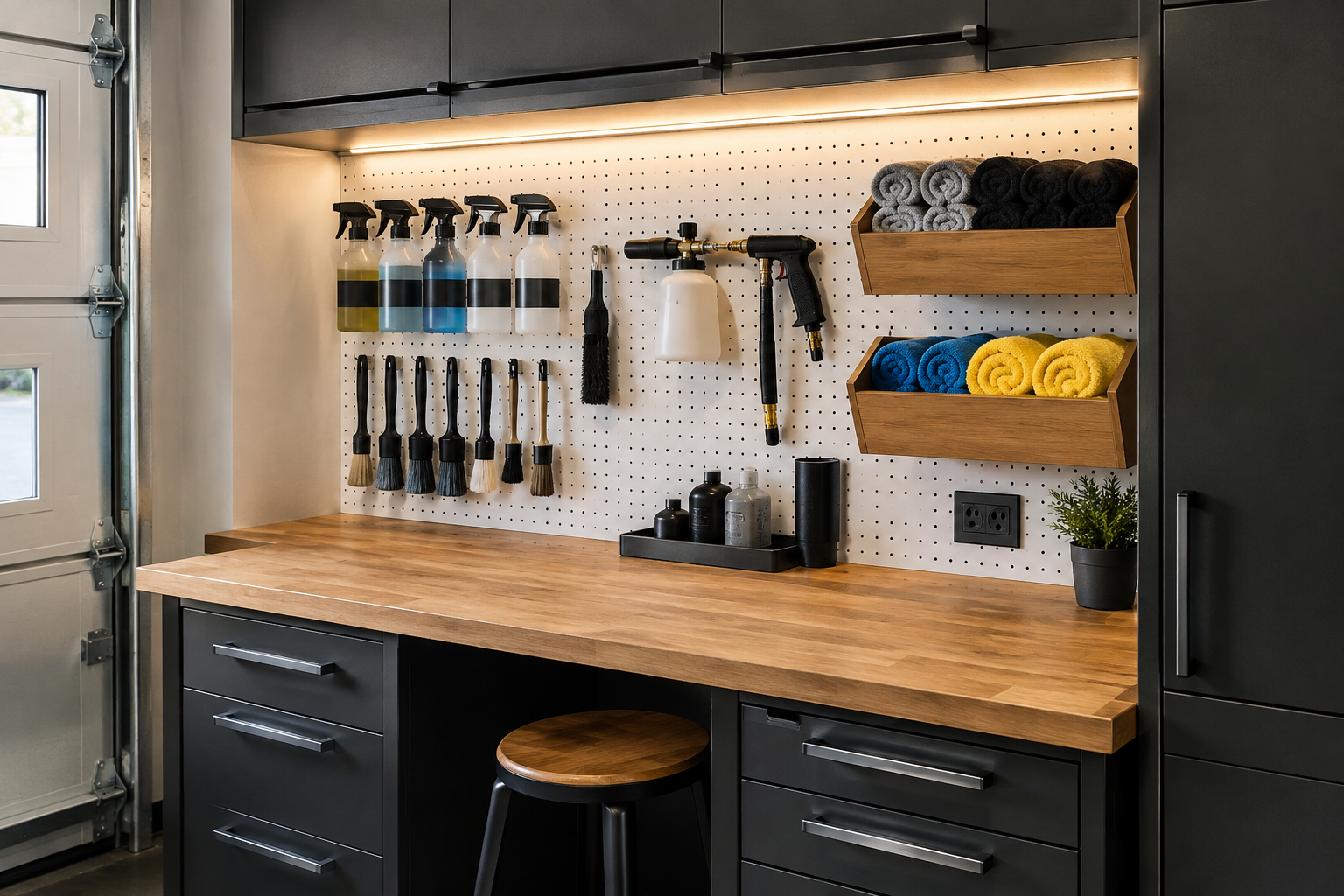
Pegboard is still one of the most affordable and adaptable wall organization systems available, and it works just as well for detailing supplies as it does for tools. Under-cabinet LED strips add task lighting right where you are mixing solutions or prepping applicators. If you already have a garage workshop setup, folding this wash supply wall into the same area keeps your footprint tight.
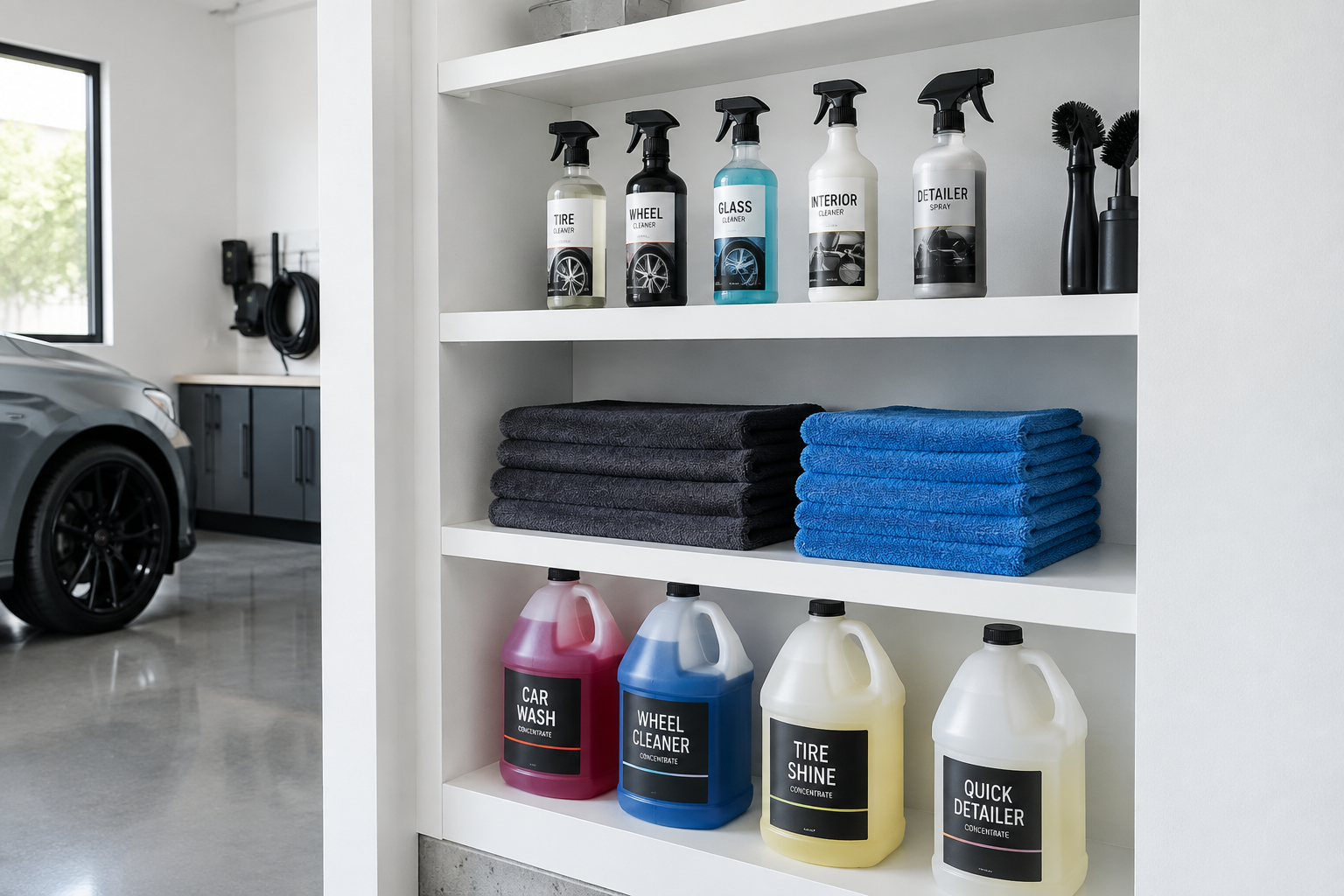
Built-in open shelving gives you more load capacity than most slatwall bins, which is important when you are storing gallon jugs of soap or chemical concentrate. Painting the unit the same white as the walls makes it feel like part of the room rather than an afterthought. Keeping the spray bottles consistently labeled with printed stickers keeps the wall looking sharp over time.
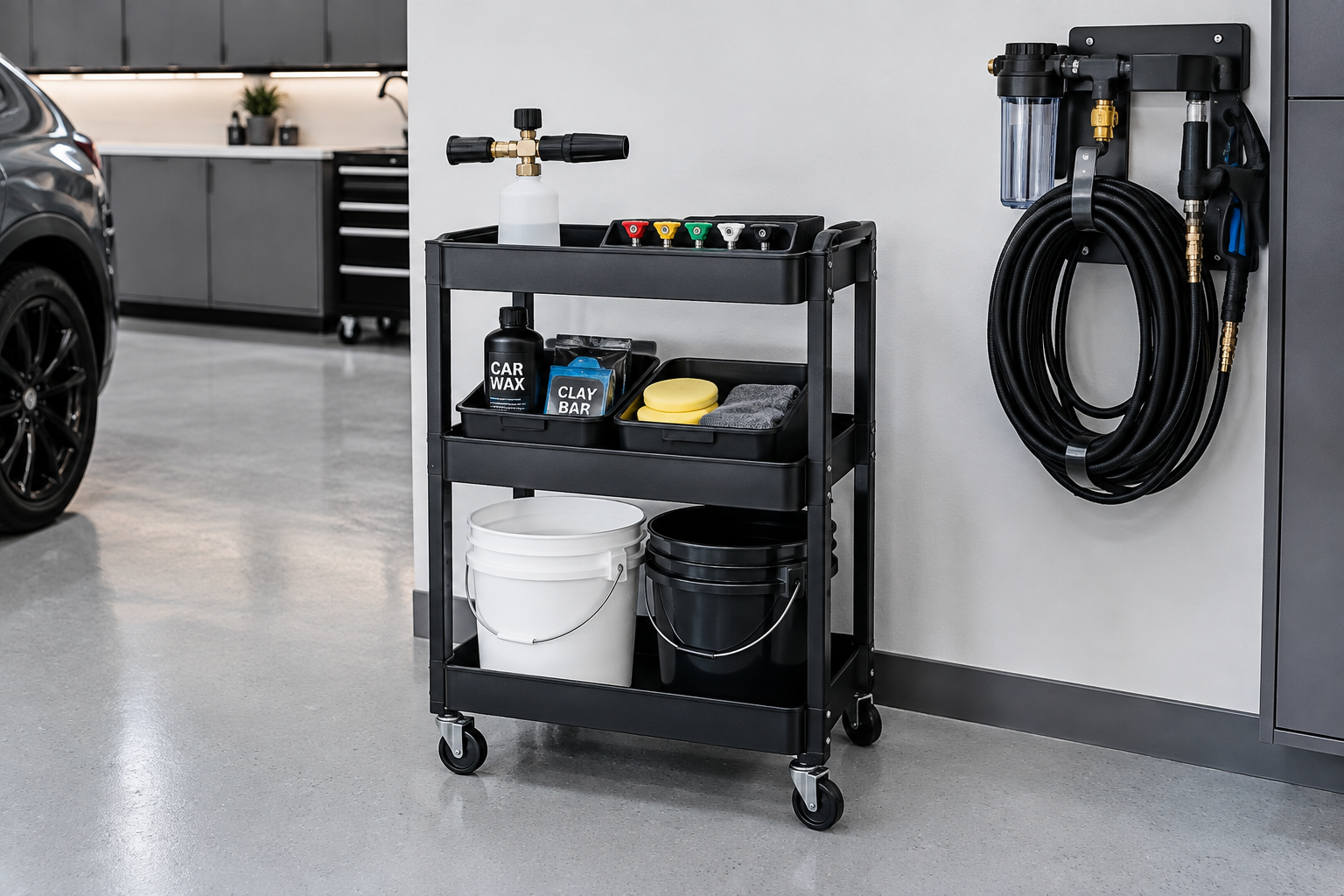
A rolling cart is a great complement to a fixed wall system because you can wheel it right to where the car is parked rather than walking back and forth. The three-tier layout here keeps the active detailing products up top and the buckets at the bottom where they are easy to grab and fill. It also doubles as portable storage if you ever want to detail a vehicle outside on the driveway.
Drainage and Floor Solutions
Getting the water off your garage floor quickly is just as important as getting the water on the car. Without a proper drainage plan, you end up with pooling water, wet tires tracking through the house, and over time, moisture problems under your floor coating. A center trench drain or a simple floor drain with a slope toward it solves most of that. I cover the full process in my guide on installing garage floor drains, and if you are considering a trench drain specifically, the trench drain installation guide walks through the steps in detail. For the floor itself, a sealed or coated surface makes cleanup dramatically easier, and you can see your best options in this breakdown of garage flooring ideas.
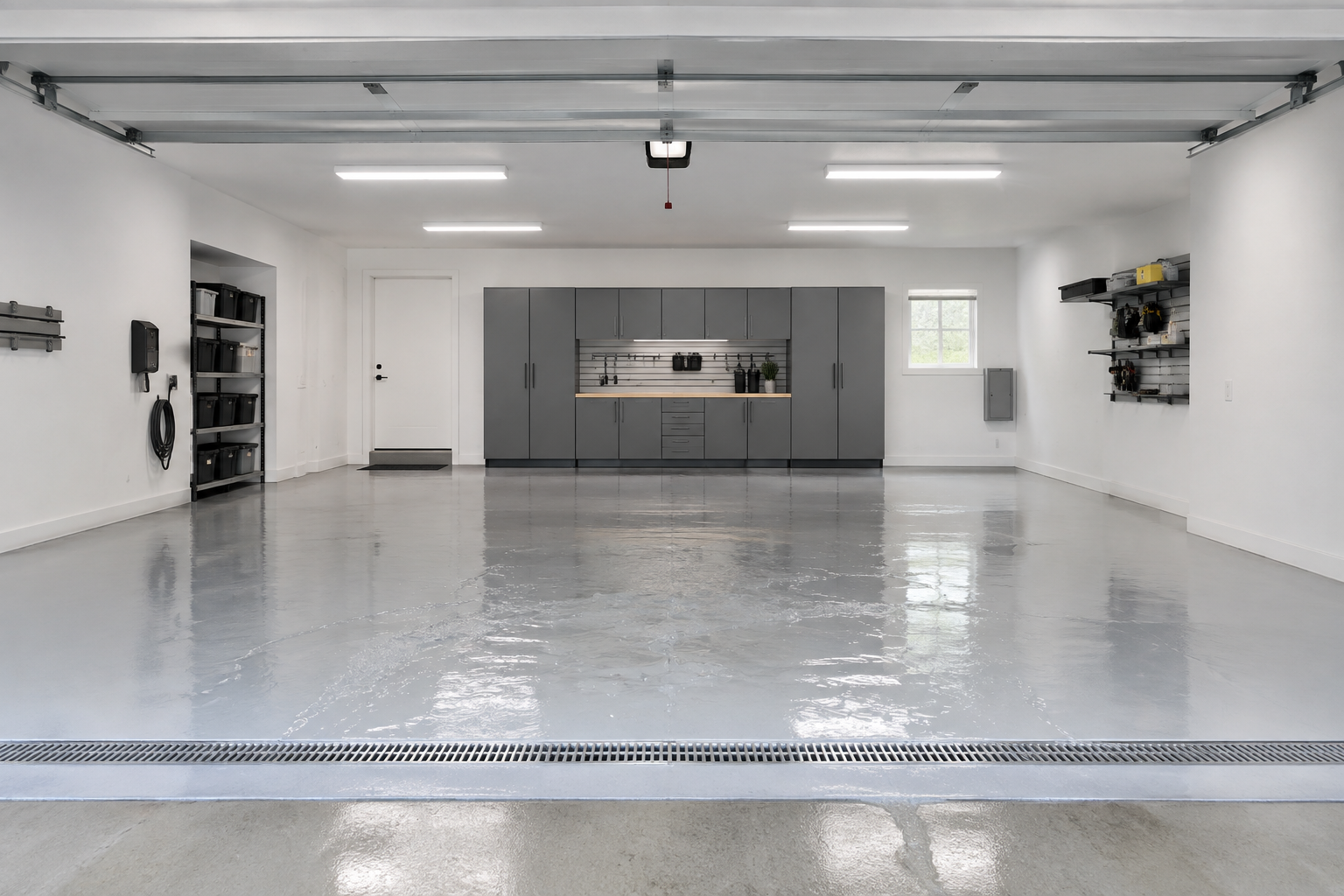
A full-width trench drain near the front of the bay catches water from all directions as it runs off the vehicle and the floor. Stainless steel grates are the right call here because they resist rust and are easy to pull out and rinse clean. Pairing this with a sloped epoxy floor means water moves on its own without any pushing with a squeegee.
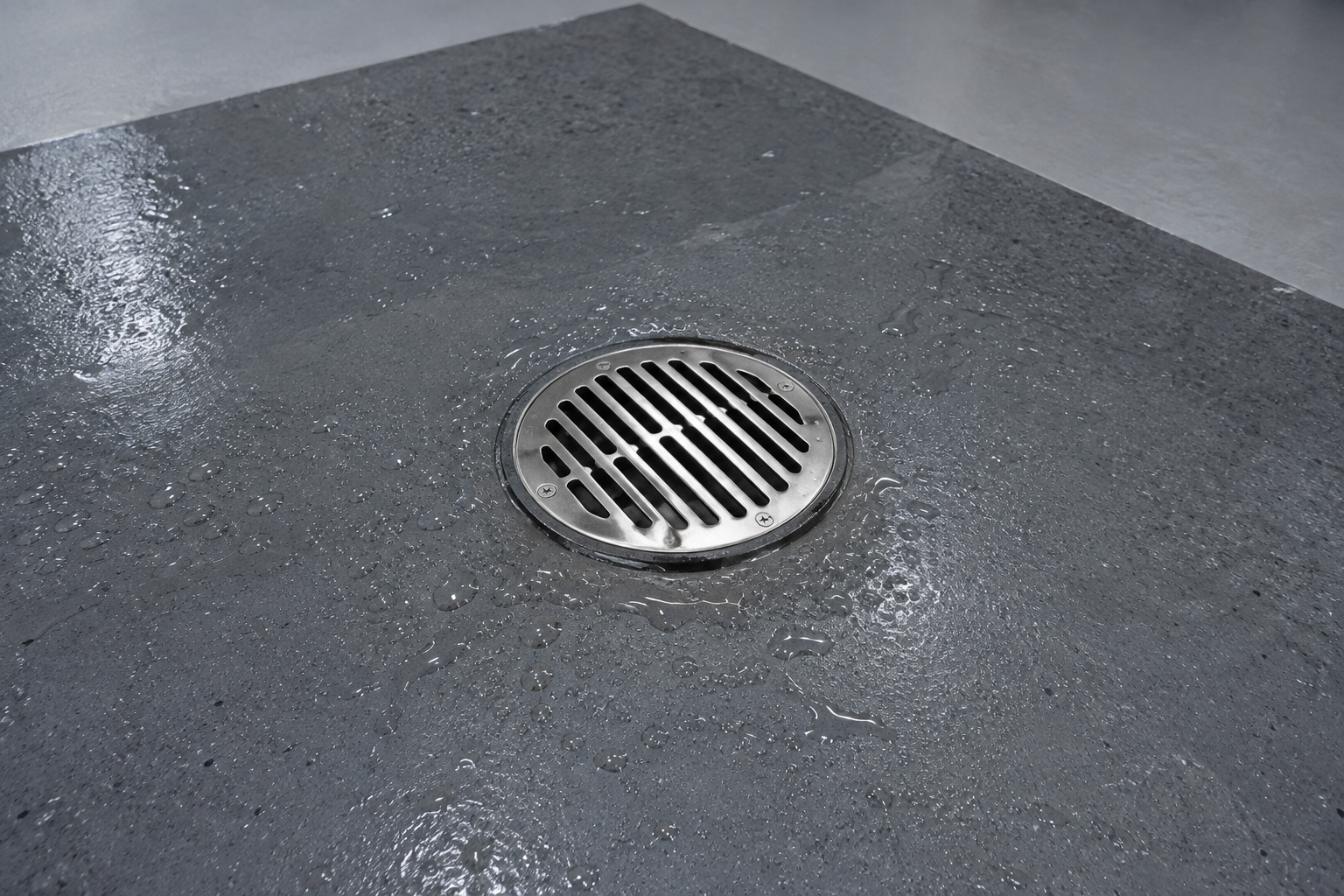
A centered point drain works well in single-car wash bays where the floor can be sloped toward a single outlet in all four directions. The charcoal epoxy surrounding it provides a subtle visual cue that this section of the garage is the active wash zone. If you are planning a new coating, read up on how to seal and waterproof your garage floor before you pour or coat over any drain hardware.
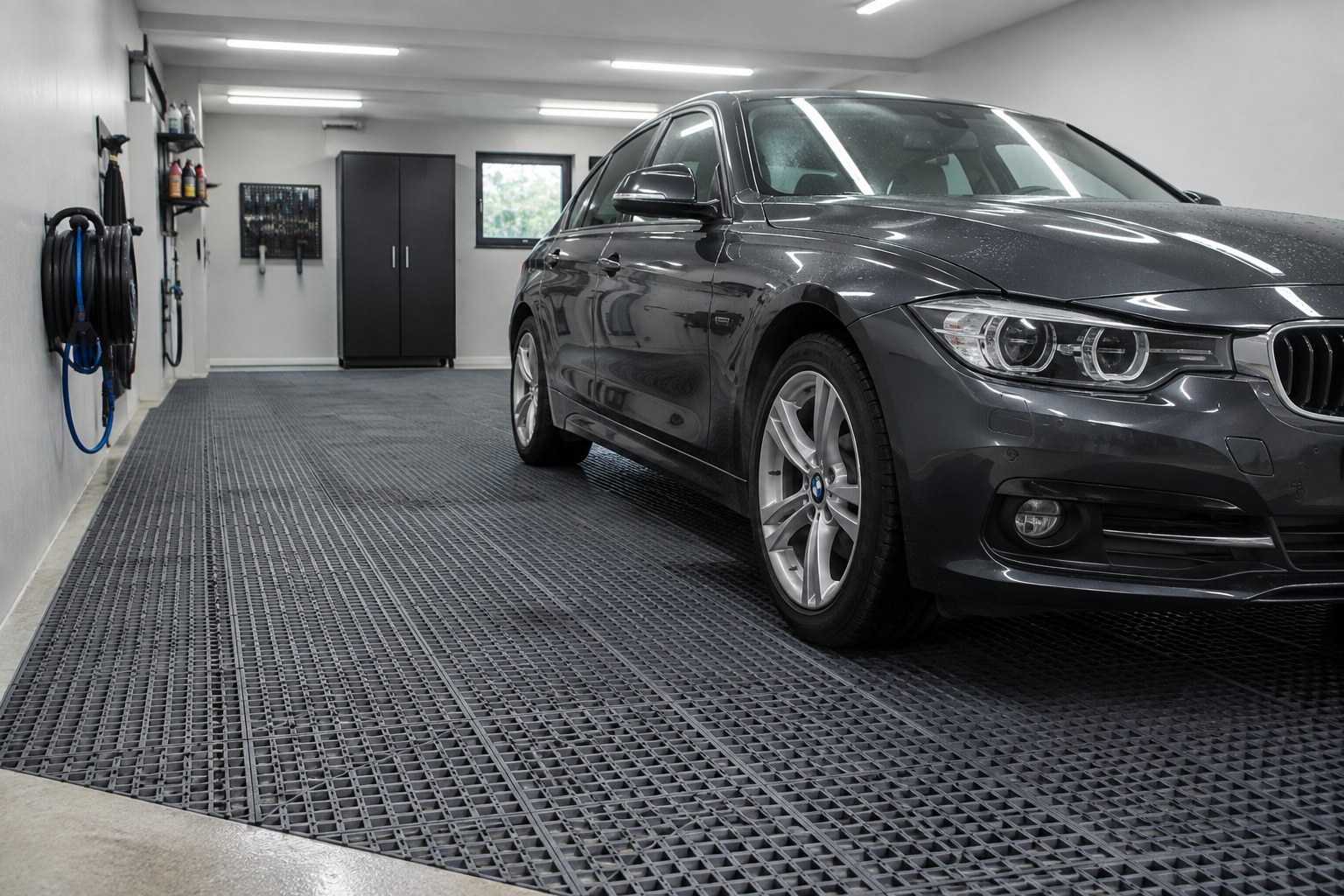
Drainage mat tiles are a no-drain solution that works by letting water pass through the surface to the bare concrete below, where it can evaporate or run to the perimeter. They are easy to install without any cutting or plumbing and can be lifted and hosed off separately. If your floor tiles ever start to shift or pop up from moisture pressure underneath, the guide to fixing lifting garage tiles is worth a read before the problem spreads.
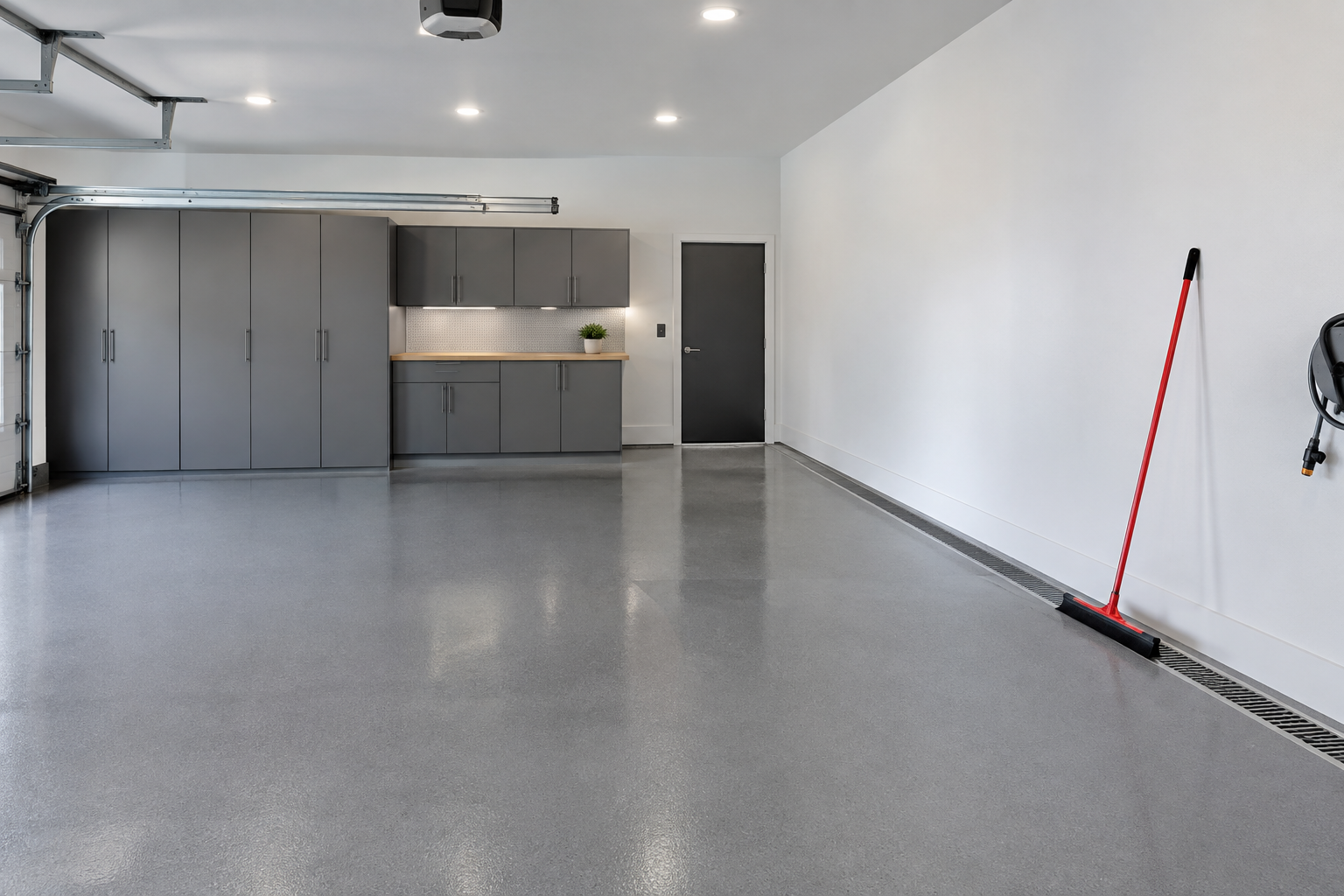
A polyurea floor coating gives you a hard, chemical-resistant surface that holds up well to wheel cleaner, iron remover, and repeated wet exposure. Combining it with a sloped floor and a wall-side channel drain creates a wash bay that drains almost completely on its own. Keep a good squeegee nearby for the last bit of water, and the floor stays looking clean with minimal effort.
Foam and Rinse Zones
If you do a proper two-bucket wash or use a foam cannon, having a defined zone for each stage of the process keeps things organized and prevents you from contaminating your clean rinse water with soapy runoff. Some setups use floor markings, different colored mats, or even a simple change in lighting to define where the foam stage ends and the rinse stage begins. It is the same zoning logic I talk about in the garage zone organization guide, just applied specifically to vehicle cleaning. A good foam and rinse zone can also double as a garage dog wash station with minimal changes, which is a nice bonus if you have pets.
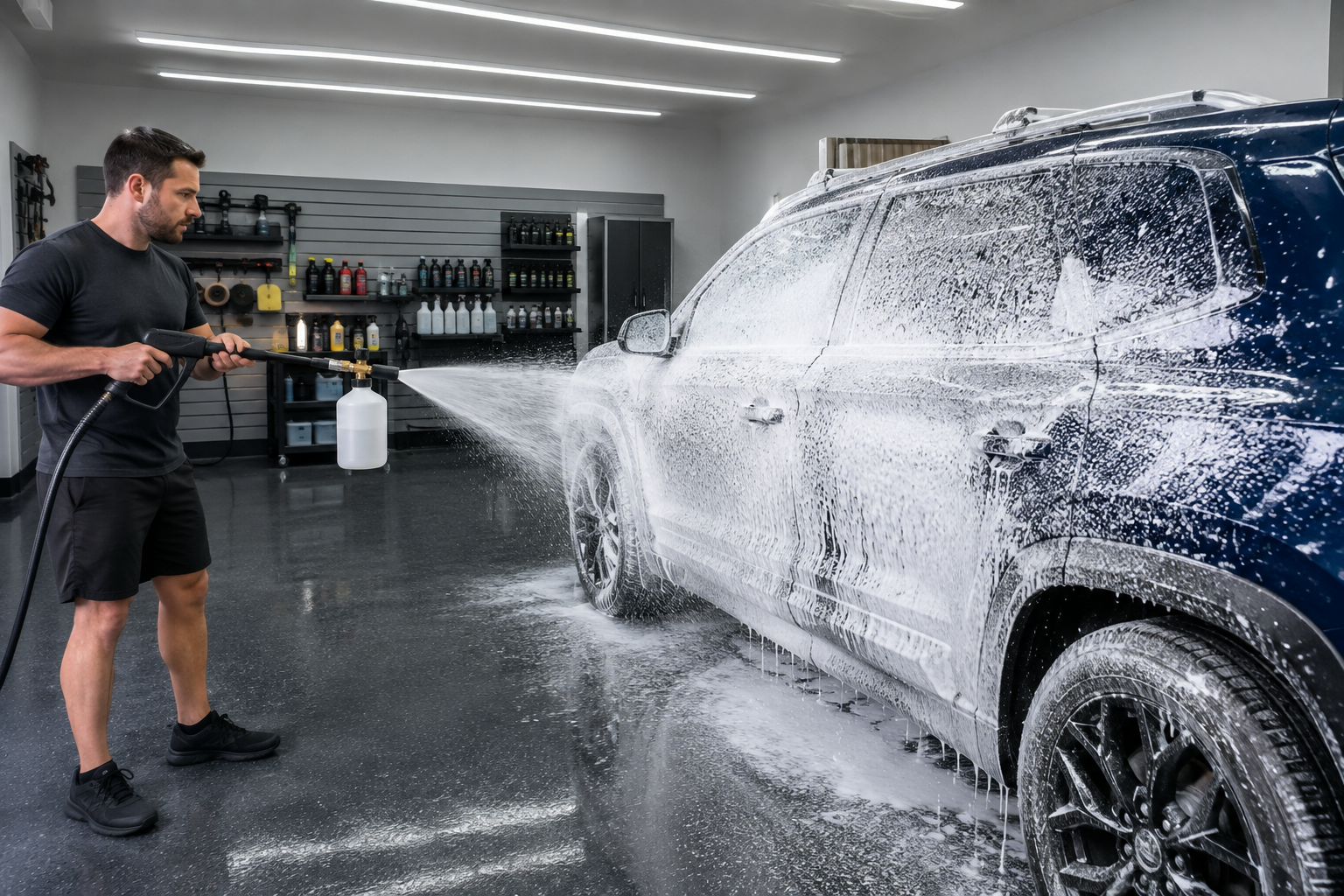
A foam cannon connected to a pressure washer lays down a thick, clinging layer of soap that breaks down dirt before you ever touch the paint. The dark blue vehicle against the charcoal floor creates a high-contrast wash zone that looks great in a modern garage build. Keeping your pressure washer and foam cannon supplies on a nearby slatwall keeps the setup clean and ready to go.
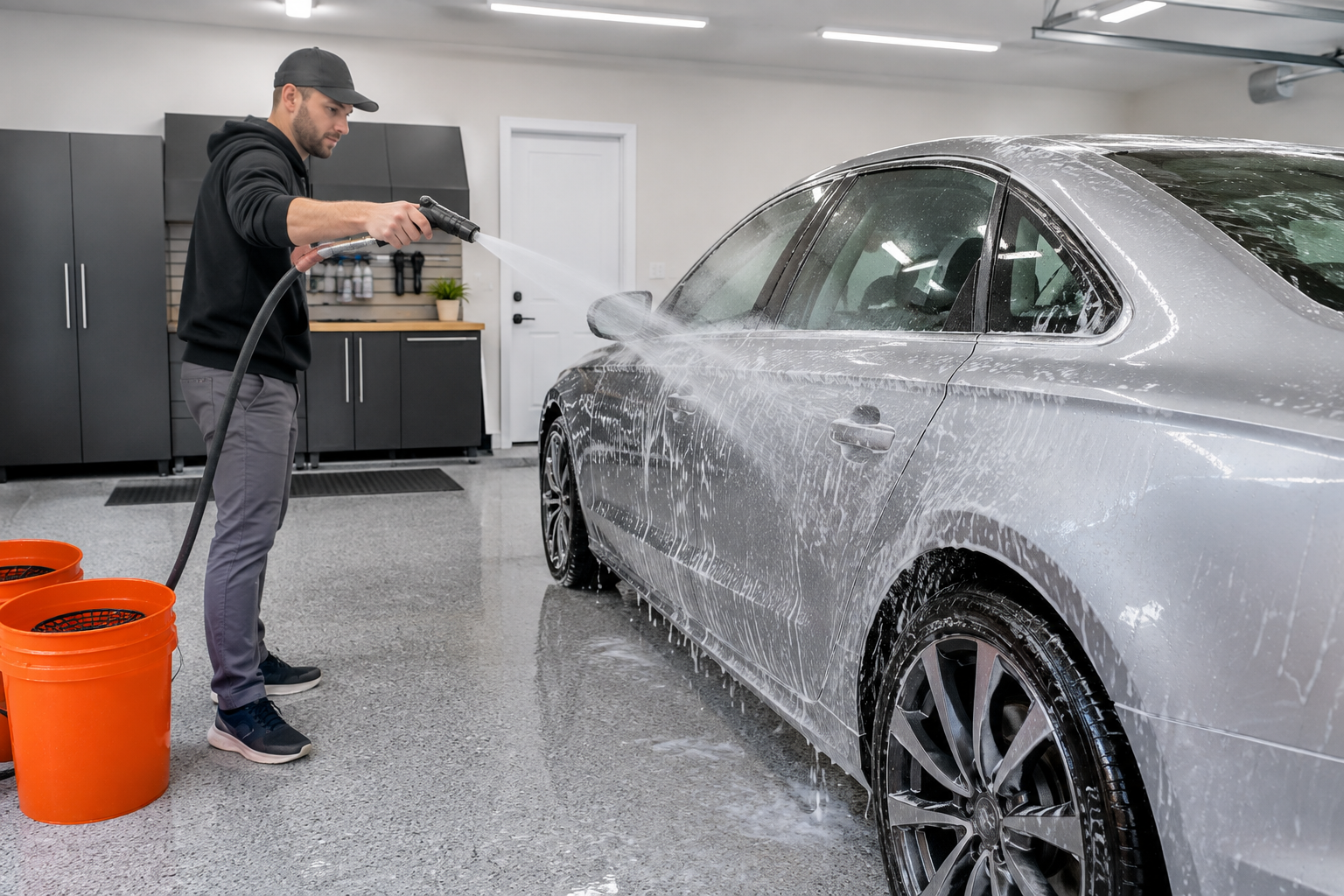
The rinse zone is where the two-bucket method pays off, and having a flat fan nozzle rather than a jet nozzle means you rinse efficiently without blasting water in every direction. Orange buckets with grit guards are a classic combination because the high-visibility color makes them easy to spot and the guard keeps contamination out of your wash water. A light gray speckled epoxy is a solid floor choice here because suds and rinse water show up clearly so you can see exactly what is left to clean.
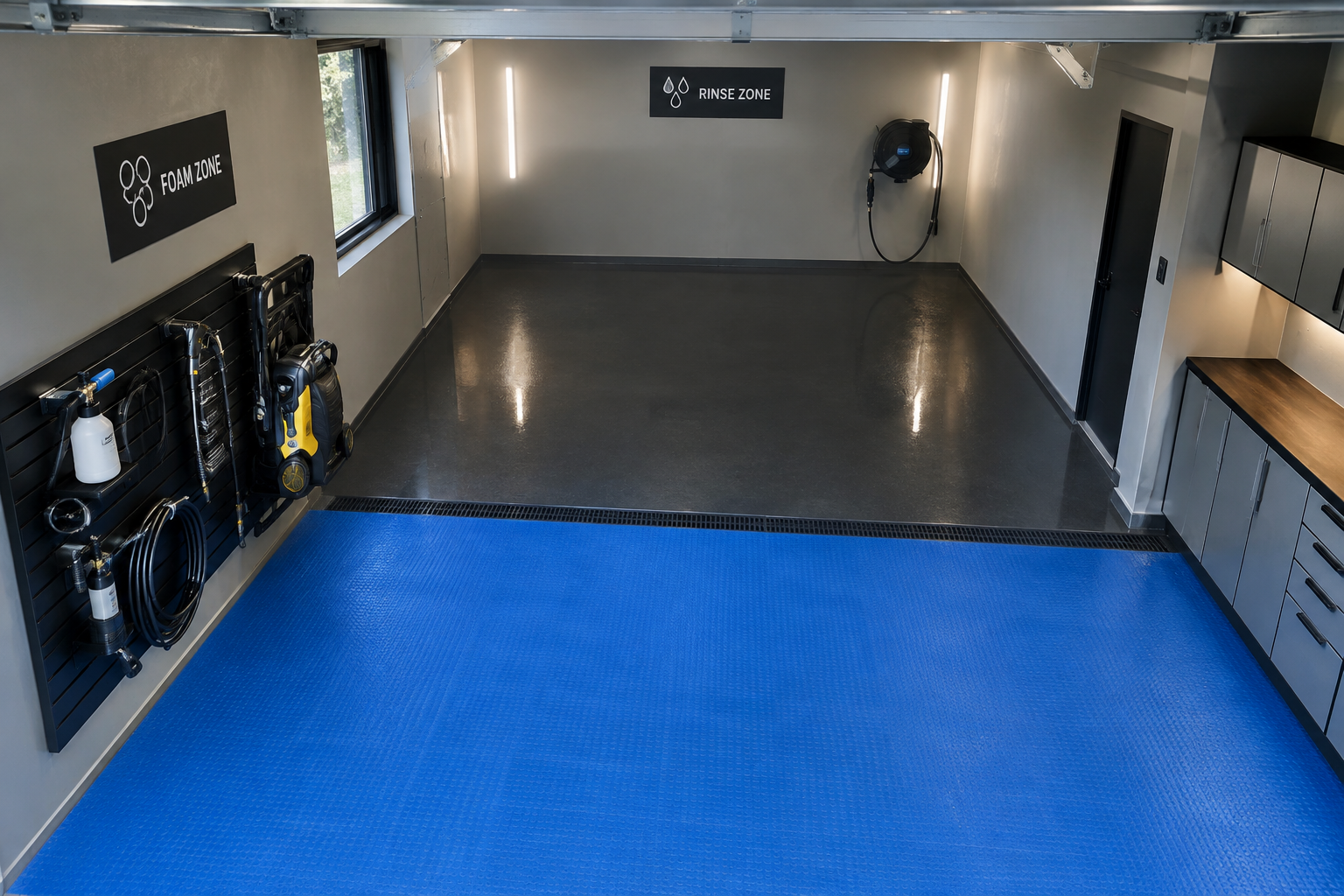
Defining your foam and rinse zones with different floor surfaces or colors is a simple trick that makes the workflow feel automatic after the first few washes. The blue anti-fatigue mat in the foam zone also helps your knees and back when you are spending time on the wheels and lower panels. If you want to think through how a full zone-based layout works across the whole garage, the garage workshop ideas section has some great examples of zoned floor planning that translate well to wash station design.
