

The market for garage exhaust fans for ventilation keeps growing, giving you more options and more chances to pick wrong. Understanding what separates quality from marketing hype saves real money and frustration.
This guide compares the leading products across the specs that actually matter, with clear recommendations at different price points.
Understanding the Basics
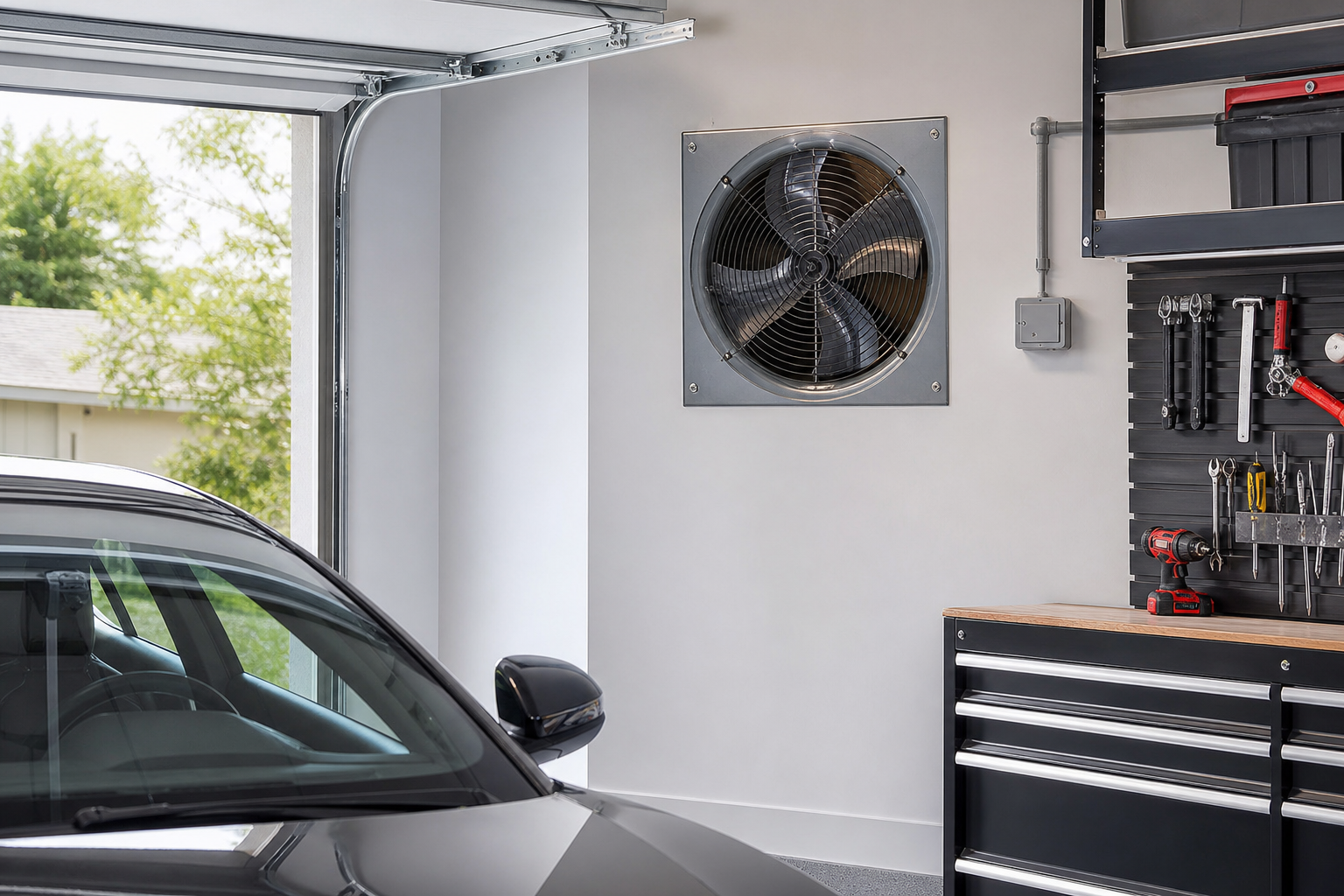
Mount an exhaust fan high on the wall opposite the garage door for heat removal. Hot air collects at the ceiling; the fan pulls it out while cooler air enters through the open door or a low intake vent. A 1,400 CFM fan exchanges air in a two-car garage every 3 to 4 minutes.
Most garages have only passive ventilation (air leaking around the door), which is inadequate for workspace use. A single wall-mounted exhaust fan creates deliberate airflow that removes heat, moisture, and fumes. The improvement is immediate and dramatic.
Whether you’re setting up a garage workshop or creating a garage home office, proper ventilation is essential for comfort and air quality.
Rodent Protection
Steel wool packed into openings and secured with expanding foam stops rodents (foam alone gets chewed through). Copper mesh is even better. For larger gaps, 1/4-inch galvanized hardware cloth screwed in place creates a permanent, chew-proof barrier.
For more comprehensive garage pest control strategies, check our detailed guide on keeping your garage bug and rodent-free.
Fan Mounting Options
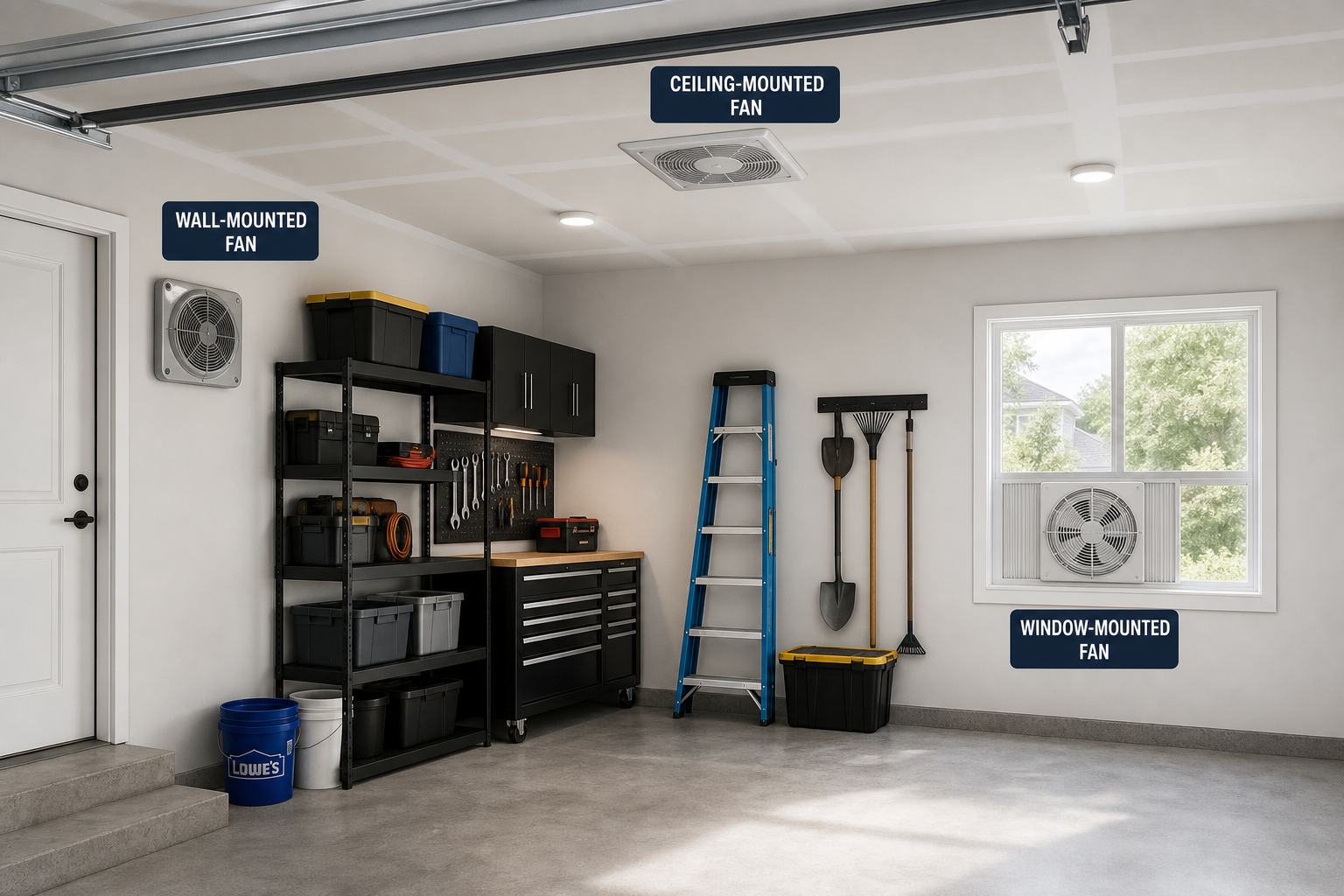
Wall-mount and gable-mount options each have their place. This is an area where cutting corners comes back to haunt you. Invest the effort upfront and you’ll save significant time and money over the next several years of use.
Work in small, manageable sections for better quality control. For floor coatings, that means strips the width of your roller from back to front. For wall systems, complete one section fully before starting the next. Rushing large areas creates inconsistencies and errors.
Wear appropriate protection throughout: safety glasses, gloves, respirator when working with chemicals or dust. Ventilate when using adhesives, paints, or solvents. These aren’t optional precautions.

Garage Ceiling Fan
Ceiling-mounted options provide excellent air movement and save wall space
Ceiling Mount vs Wall Mount
Ceiling exhaust fans from AC Infinity and iLiving offer different advantages. Understanding the specifics of your situation helps you choose the right approach. Your garage’s age, construction type, and local climate all influence what works best and what to avoid.
Check specific requirements before purchasing materials. Measure the area, note unusual conditions (extreme temps, high humidity, uneven surfaces), and read product specs carefully. A mismatch between your conditions and the product’s rated range is the most common cause of unexpected failures.
Consider how this change fits the larger garage picture. Improvements in one area can shift dynamics elsewhere. Better insulation changes humidity patterns. Heavy storage affects the floor underneath. Think about interactions.
CFM Requirements and Noise Considerations
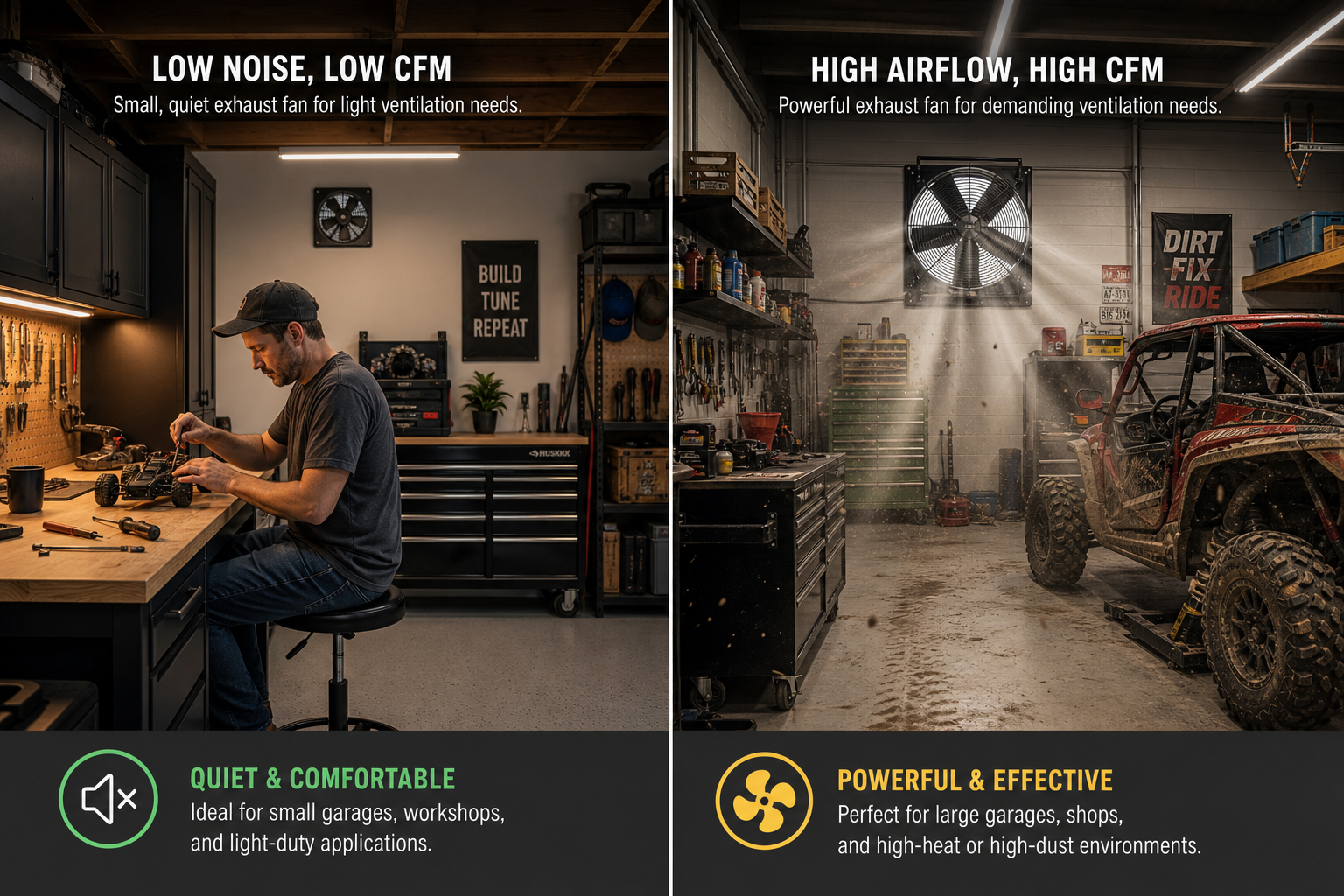
CFM ratings by garage size and noise level matter more than marketing claims. Getting this right requires matching your approach to actual conditions rather than following a generic formula. Climate, surface condition, and usage patterns all influence the best path forward.
Document every product you use: brand, color, batch number, application date. Future touch-ups need exact material matches. Tape the info inside a cabinet door or take a quick phone photo for your records.
Factor in maintenance when choosing your approach. The lowest-maintenance option isn’t always cheapest initially, but it usually wins over a 5 to 10-year window when you include touch-ups, repairs, and replacements.
Smart Controls
Thermostat controls and whether the fan can handle dust and fume environments from woodworking or painting are crucial factors. This is an area where cutting corners comes back to haunt you. Invest the effort upfront and you’ll save significant time and money over the next several years of use.
Keep the workspace organized throughout. Debris and clutter cause errors and safety issues. Clear tools and waste between major steps rather than letting mess accumulate to the end.
For first-time projects of this type, budget 50% more time than guides suggest. The learning curve is real, and careful work produces better results than rushing to meet an estimated timeline.

Garage Wall Exhaust Fan
Wall-mounted units are easier to install and provide excellent ventilation for most garages
Additional Considerations
The garage door bottom seal is the most common pest entry point. A 1/4-inch gap admits mice, insects, and spiders. Inspect the entire seal length for cracks, compressed areas, or hardened rubber that no longer contacts the ground fully.
Other entries: gaps around pipes and wires, sill plate-to-foundation spaces, unscreened vents, and deteriorated weatherstripping on side doors. Physical exclusion (sealing gaps) beats traps because it prevents entry entirely.
For comprehensive garage door maintenance, including weather stripping replacement, proper sealing improves both energy efficiency and pest control.
Practical Planning Tips
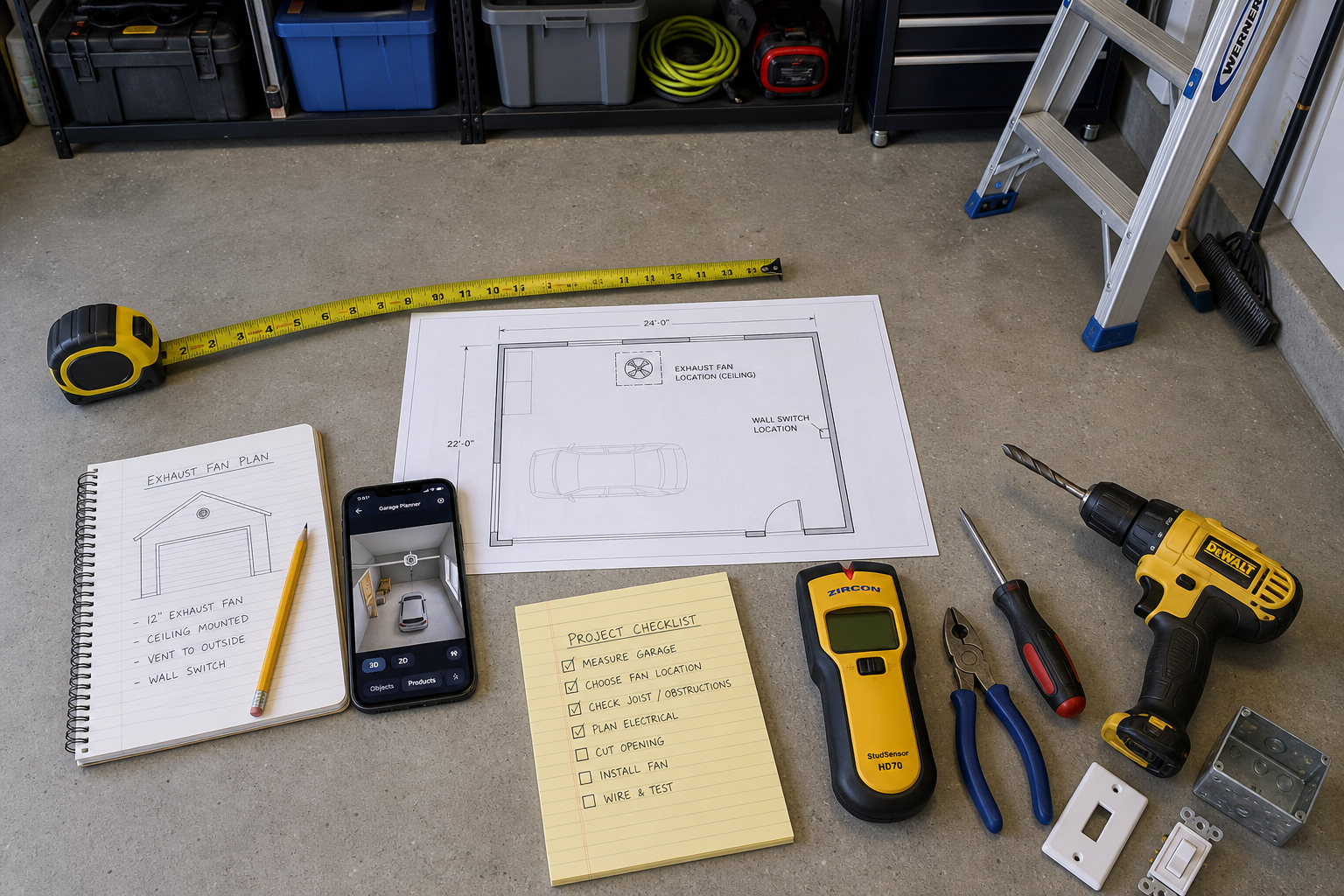
Consider the seasonal timing of your project. Floor coatings apply best in mild weather (50 to 85 degrees). Insulation projects are most motivating (and noticeable) before extreme weather hits. Electrical and plumbing work can happen year-round but should be completed before insulating or finishing walls over the wiring.
Set a realistic timeline and budget before buying anything. Most garage projects take 50% longer and cost 20% more than initial estimates, especially for first-timers. Build that buffer into your plan so unexpected discoveries don’t derail the entire project or blow the budget.
Research local building codes and permit requirements for your specific project. Electrical work, structural modifications, and HVAC installations often require permits and inspections. Working without required permits can create liability issues, insurance complications, and problems when selling the home.
What to Avoid
Knowing what to skip prevents expensive mistakes:
- “Universal” products claiming to work everywhere. Specialized products consistently outperform generalists.
- Unknown brands at rock-bottom prices. Established brands charge more for proven materials and real warranties.
- Products with vague specs or missing data sheets. When a manufacturer won’t publish details, that’s a red flag.
For comparison shopping, check out our guide to garage wall-mount fans for additional options and detailed reviews.
Frequently Asked Questions
How much should I budget for a garage exhaust fan?
Varies widely by scope and materials. DIY installation saves significantly on labor costs. Check current Amazon pricing for accurate material estimates at different quality levels.
How long will my exhaust fan last?
Years of reliable performance with quality materials and proper installation. Preparation quality is the single biggest longevity factor. Choose fans with sealed motors for dusty environments.
What mistake should I avoid above all?
Rushing preparation. Whether it’s surface prep, measuring, or reading instructions, upfront time prevents expensive do-overs. Take time to properly size the fan for your garage and usage needs.
Can I handle this as a DIY project?
Most steps are DIY-accessible with basic tools. Electrical, structural, and high-tension spring work should go to licensed professionals. Simple wall mounting is typically manageable for most homeowners.
This article contains affiliate links. We may earn a small commission at no extra cost to you.
