

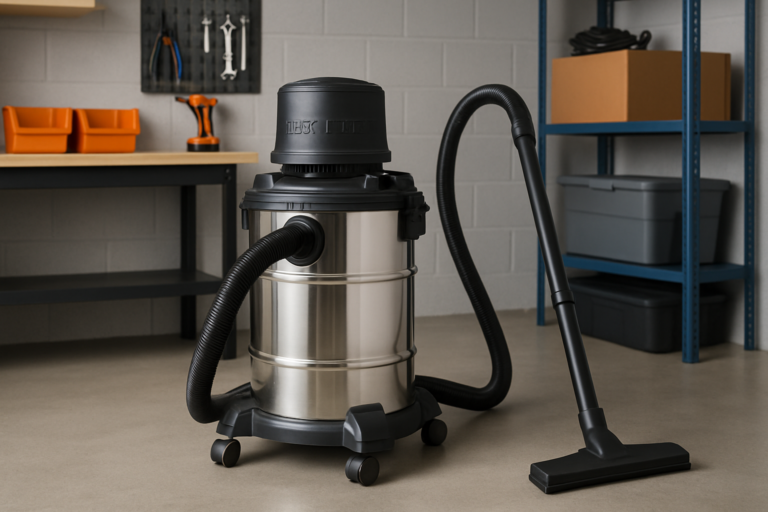
Working in a garage workshop means dealing with dust. Lots of it. Sawdust, drywall particles, concrete powder, and metal shavings don’t just make a mess. They float in the air and settle into every corner, and worse, into your lungs. A standard shop vacuum picks up the big stuff but blows fine particles right back into your workspace through its exhaust.
That’s where HEPA filtration comes in. A true HEPA filter traps 99.97% of particles as small as 0.3 microns. We’re talking about the stuff you can’t even see but definitely shouldn’t be breathing. Let’s break down what makes a good HEPA shop vacuum and which models actually deliver on their promises.
Why HEPA Filtration Matters in Your Garage
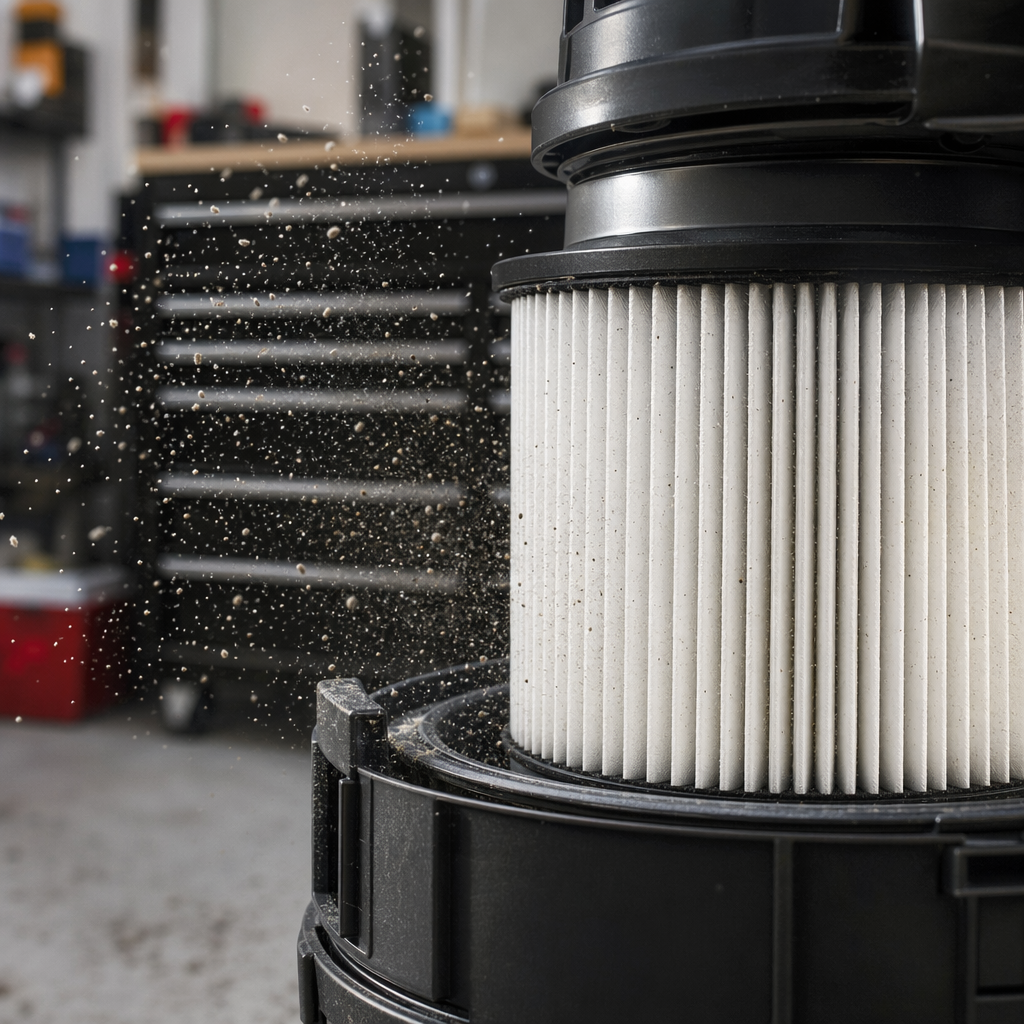
Regular shop vacs use foam or cloth filters that catch visible debris but miss the microscopic particles. These fine particles pass straight through and get blown back into the air you’re breathing. HEPA filters use dense, pleated media that captures everything from pollen and mold spores to silica dust from concrete cutting.
This matters most when you’re working with materials that create harmful dust. Drywall contains gypsum and sometimes silica. Concrete grinding releases crystalline silica, which causes serious lung damage over time. Even wood dust from common species like oak and walnut can trigger respiratory issues and allergies. A quality HEPA shop vacuum is essential for reducing garage dust and allergens that accumulate from these activities.
The difference between a standard filter and HEPA becomes obvious when you empty the canister. With HEPA filtration, the dust stays in the tank instead of coating your garage walls and settling on your workbench overnight.
Top HEPA Shop Vacuums for Garage Use
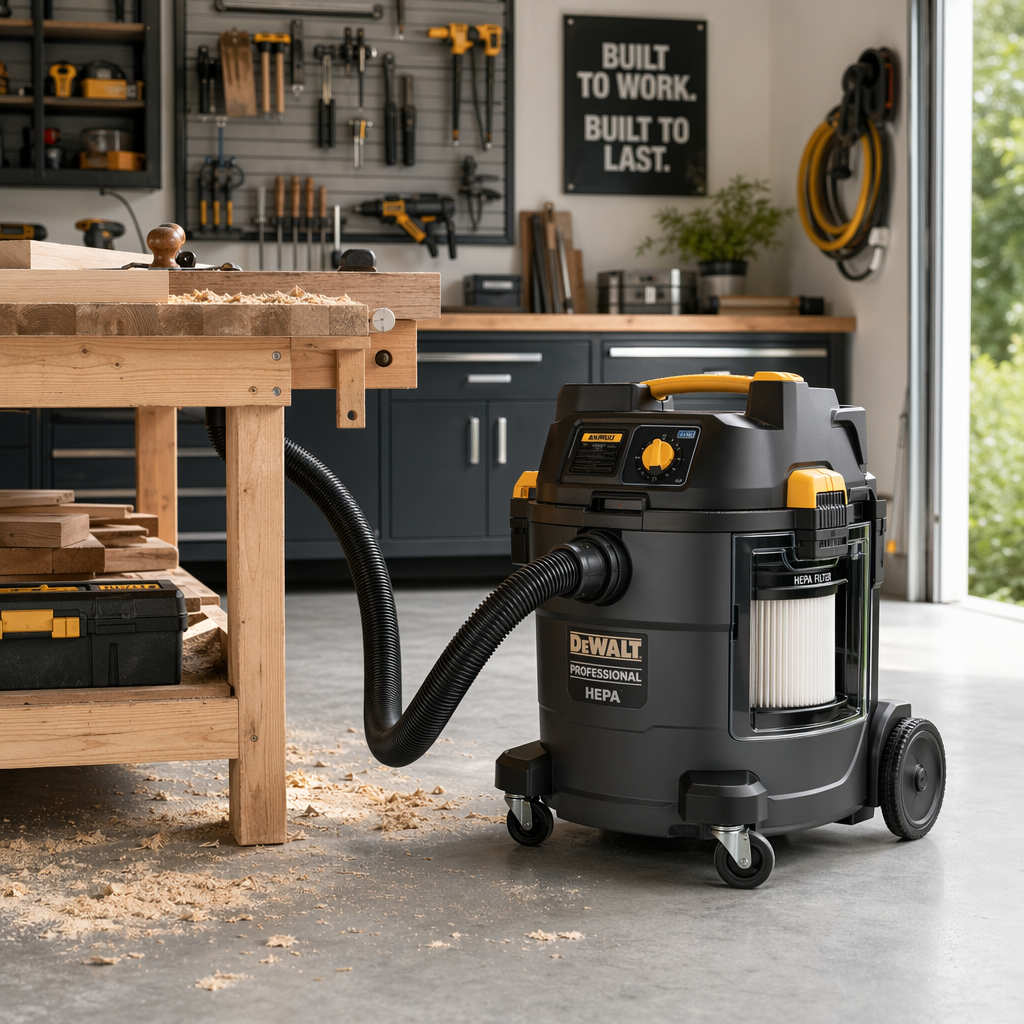
DeWalt DXV12PCA: The Heavy-Duty Choice
DeWalt’s 12-gallon model stands out for serious workshop use. It pulls 5.5 peak horsepower and moves air at 113 CFM, which means it actually picks up heavy debris instead of just moving it around. The certified HEPA filter handles everything from fine sawdust to drywall powder without clogging after 10 minutes of use.
The 12-gallon capacity means fewer trips to empty the tank when you’re doing major cleanup. The tank design includes a drain plug, which sounds minor until you’ve tried dumping wet concrete slurry from a vacuum without one. It also comes with a full accessory kit including crevice tools and extension wands.
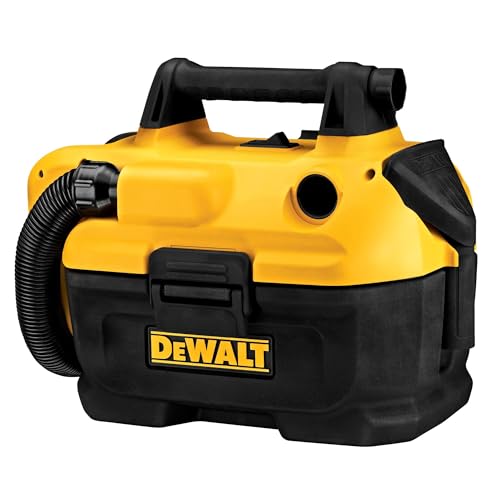
DeWalt DXV12PCA Shop Vacuum
Best overall choice for serious garage workshops that need reliable HEPA filtration and high capacity
Craftsman CMXEVBE17595: Budget-Friendly Performance
Not everyone needs a commercial-grade vacuum for weekend projects. The Craftsman 16-gallon wet/dry vac with HEPA filter gives you solid performance at a more accessible price point. It runs on 6.5 peak horsepower and includes a cartridge filter plus a HEPA filter for fine dust work.
The 16-gallon tank size works well for extended cleanup sessions, and the 2.5-inch hose diameter handles larger debris without constant clogs. Filter swaps take about 30 seconds, which matters when you’re switching between regular debris pickup and fine dust collection. You can find the Craftsman CMXEVBE17595 through most major retailers.
WORKSHOP WS1200DE: Compact but Capable
Smaller garages need vacuum power without sacrificing floor space. The Workshop 12-gallon model delivers 5.5 peak horsepower in a compact footprint. The HEPA filter certification means it meets the same 99.97% efficiency standard as larger units.
What sets this model apart is the automatic filter cleaning system. A simple switch triggers a reverse airflow pulse that cleans the filter without removing it. This keeps suction consistent during long cleanup sessions, especially when working with ultra-fine particles like sanding dust or drywall compound.

WORKSHOP Wet Dry Vacuum with HEPA Filter
Perfect for smaller garages that need HEPA filtration without a massive footprint
Filter Maintenance and Long-Term Costs
HEPA filters cost more than standard foam filters, and you need to factor this into your budget. Most HEPA filters run between moderate to premium pricing depending on the brand. The key question is how long they last before replacement.
Genuine HEPA filters typically last 6-12 months with regular garage use. The lifespan depends heavily on what you’re vacuuming. Fine drywall dust clogs filters faster than wood chips. Concrete dust is particularly brutal on filter life.
Many vacuums use a two-stage filtration system. A standard cartridge or foam pre-filter catches the bulk of debris, while the HEPA filter captures fine particles. This setup extends HEPA filter life significantly because it’s not clogging with sawdust and metal shavings.
Clean or replace pre-filters after every major project. Tap out cartridge filters over a trash can or rinse foam filters and let them dry completely. Replace HEPA filters when you notice suction drop or when the filter media looks damaged. Never wash or blow out a HEPA filter, as this destroys the filtration media.
Matching Your Vacuum to Your Dust Type
Different materials create different challenges. Drywall dust is incredibly fine and tends to cake on filters. You want a vacuum with strong CFM ratings (100+) and easy filter access for frequent cleaning. Models with filter cleaning systems work best here, especially if you’re doing work like applying knockdown texture to garage walls.
Concrete dust requires serious filtration because of silica content. This is where certified HEPA filtration is non-negotiable, not just a nice feature. Look for vacuums specifically rated for silica dust collection. Some models include cyclonic pre-separators that drop heavy particles before they reach the filter.
Wood dust varies by species and cutting method. Router work creates ultra-fine particles that HEPA filters handle easily. Table saw cleanup involves more volume but less filter-clogging dust. A mid-range HEPA vacuum handles most woodworking without issue.
For allergen control, any certified HEPA vacuum works well. The key is regular use and proper filter maintenance. A clogged filter lets particles bypass the filtration media, defeating the whole purpose of HEPA technology. Proper filtration becomes especially important when you’re dealing with safe storage of paint, gas, and chemicals, as dust can interfere with ventilation systems and contaminate storage areas.
Suction Power and CFM Ratings Explained
Peak horsepower sounds impressive in marketing but doesn’t tell you much about actual performance. A 6.5 HP motor might have terrible airflow if the fan design is poor. CFM (cubic feet per minute) measures actual air movement, which determines how well the vacuum picks up debris.
For garage use, look for at least 100 CFM. Higher numbers mean better pickup of heavy debris and less filter clogging because air moves through faster. The best high-CFM shop vacuums maintain suction even as filters load with dust.
Static lift (measured in inches of water) indicates suction strength at the hose end. Numbers above 80 inches handle fine dust well. Lower numbers struggle with carpet cleaning or picking up embedded particles from concrete floors. During colder months, maintaining your garage equipment becomes even more critical, as temperature changes can affect vacuum performance and require proper winterizing of garage plumbing to prevent freeze damage to vacuum systems that use water for wet cleanup.
Frequently Asked Questions
Can I use a HEPA shop vacuum for asbestos or lead paint dust?
Absolutely not. Asbestos and lead require specialized vacuums certified for hazardous material collection. These use different filtration systems and disposal methods. Standard HEPA shop vacuums, even high-quality models, don’t meet the legal requirements for hazmat cleanup. Hire certified professionals for any suspected asbestos or lead abatement work.
How often should I replace the HEPA filter?
Plan on replacing your HEPA filter every 6-12 months with regular garage use. Replace sooner if you notice reduced suction, visible filter damage, or if you’ve been doing particularly dusty work like extensive drywall sanding. Keep a spare filter on hand so you’re not stuck mid-project. You can find replacement HEPA filters for most major brands through Amazon.
Will a HEPA filter reduce my shop vacuum’s suction power?
Yes, slightly. HEPA filters create more airflow restriction than standard filters because of their dense media. Quality shop vacuums account for this with higher-powered motors. You’ll notice about 10-15% less suction compared to running the same vacuum with a foam filter. The tradeoff is worthwhile when you’re working with harmful dust that you shouldn’t be breathing or spreading around your workspace.
