

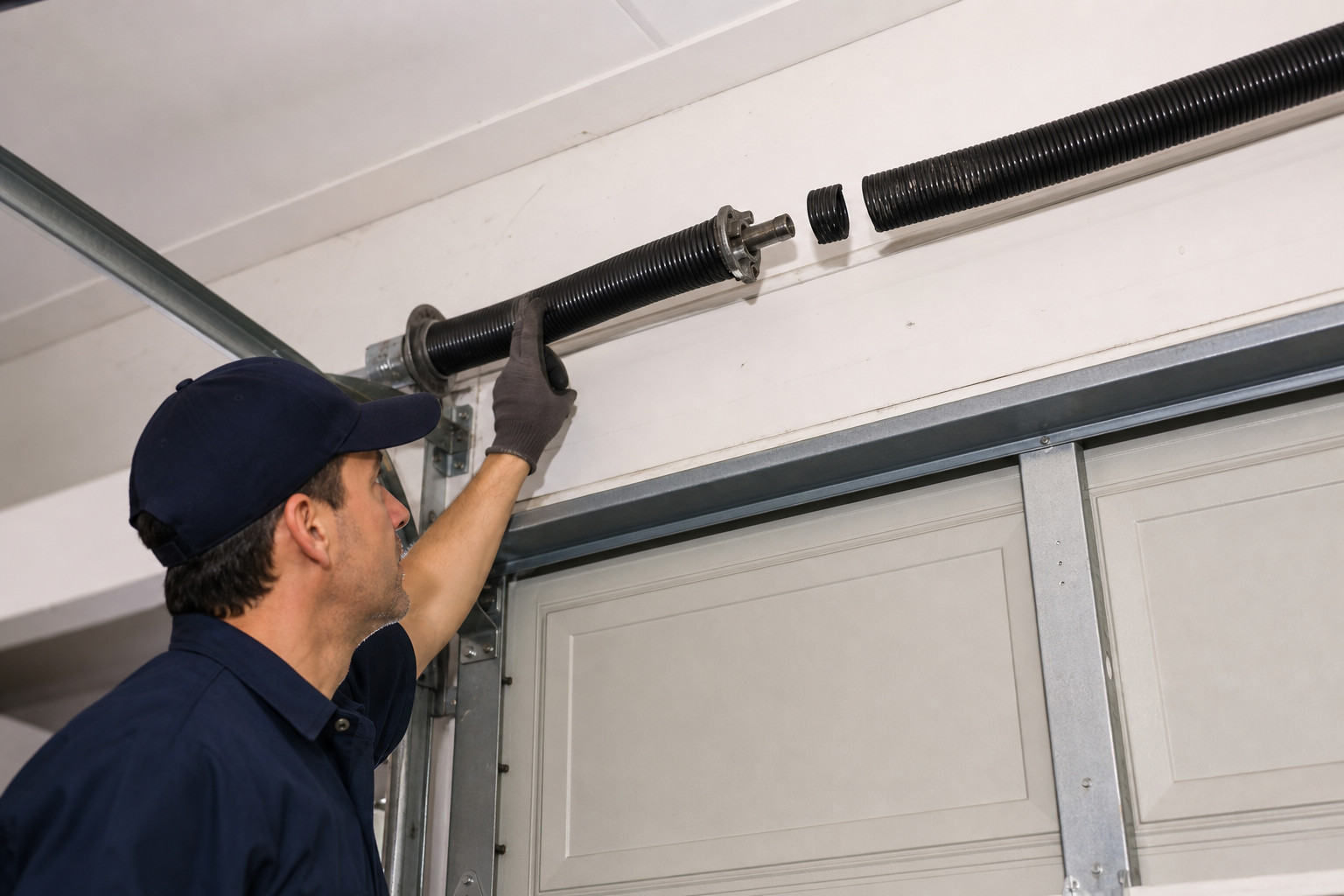
If your garage door spring is broken, you’re dealing with a genuine emergency. A broken spring makes the door unsafe to operate and leaves your garage vulnerable. Spring failure is one of the most common garage door issues homeowners face, and it happens suddenly, often with a loud bang that sounds like a firecracker going off in the middle of the night.
This guide covers what to do immediately after a spring breaks, how to identify which type of spring you have, temporary measures to secure your garage, and when professional help is non-negotiable. You’ll also get realistic cost expectations and timelines so you can plan accordingly.
Understanding Garage Door Springs and Why They Break
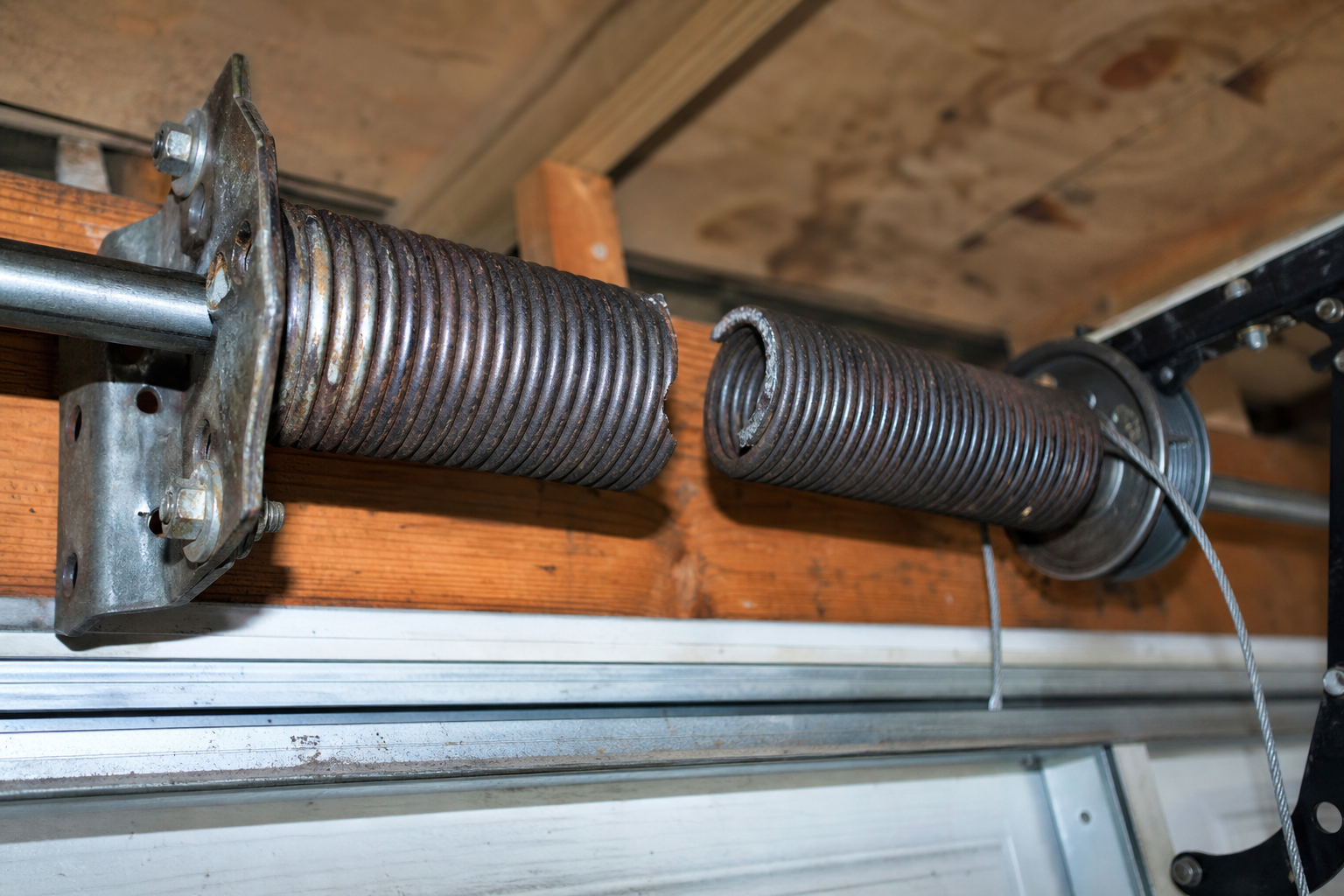
Garage door springs do all the heavy lifting. A standard two-car garage door weighs 130 to 200 pounds. The springs counterbalance that weight, making it possible for the opener motor, or you, to lift the door with minimal effort. When a spring breaks, you lose that counterbalance and the door becomes dead weight.
There are two spring types. Torsion springs mount on a metal shaft above the door opening. They twist under tension and are standard on most modern garage doors. Extension springs run along the horizontal tracks on each side of the door. They stretch and contract as the door moves.
Torsion springs are more common because they’re safer and last longer, but both types eventually fail. If you’re experiencing other issues with your door, check out our guide on common causes when garage doors stop halfway for additional troubleshooting.
Spring Lifespan and Cycle Ratings
Spring lifespan is measured in cycles. One cycle equals one complete open-and-close sequence. Standard springs are rated for 10,000 cycles, which translates to roughly seven to nine years of typical use for a family opening and closing the door three to four times daily.
High-cycle springs rated for 25,000 to 50,000 cycles cost more upfront but can last 15 to 20 years. Climate accelerates wear. Midwest garages see temperature swings from below zero in January to 90-plus in July. Metal expands and contracts with these shifts, and humidity causes rust.
Usage patterns matter too. If you’re running a home business out of your garage or have teenagers driving in and out multiple times a day, you’ll burn through cycles faster. Large, heavy doors, especially insulated steel models, put more strain on springs than lightweight single-panel doors.
Signs of Spring Failure
You’ll know a spring broke when the door won’t open more than a few inches, the opener motor strains and stops, or the door slams down unexpectedly. Torsion spring breaks leave a visible gap in the coil. Extension spring breaks often result in one side of the door hanging lower than the other.
Sometimes a spring breaks while the door is open. When you try to close it, it drops fast and hard. This is extremely dangerous and requires immediate professional attention.
Immediate Safety Steps After a Spring Breaks
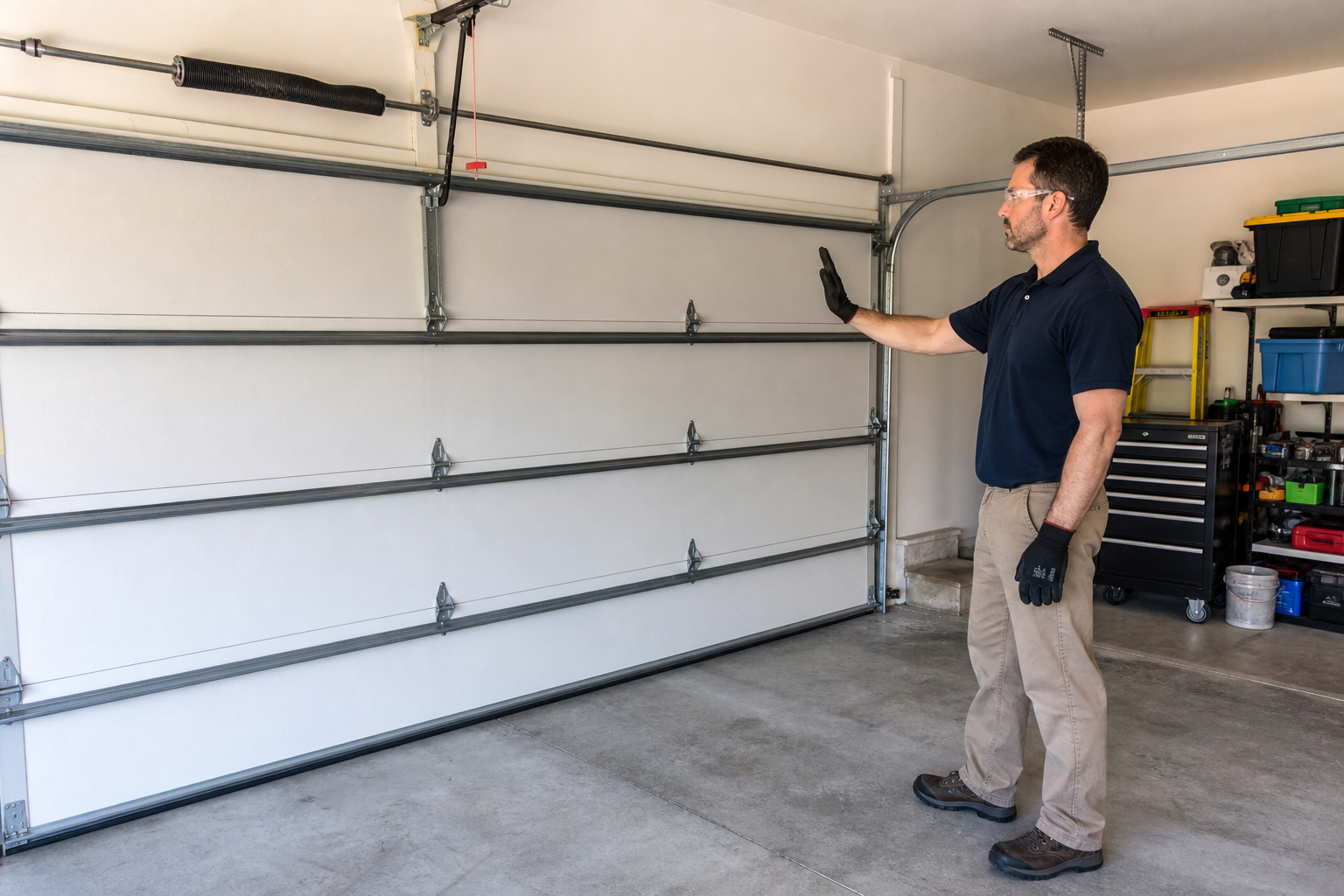
Stop using the door immediately. Do not attempt to open or close it manually or with the opener. A door without spring counterbalance is dangerous. If it’s open when the spring breaks and you release it, it can drop violently and cause serious injury or damage anything underneath.
Disconnect the Opener
Pull the red emergency release cord to disengage the trolley from the opener rail. This prevents the motor from trying to lift a door it can’t handle. Garage door openers are designed to lift 50 to 70 pounds max. Without springs, the motor is trying to lift the door’s full weight, which burns out the motor and strips gears.
Secure the Door If It’s Open
If the door is up when the spring fails, prop it with sawhorses, C-clamps on the tracks, or locking pliers clamped to the track below the bottom roller. Do not trust the opener to hold it. The motor brake isn’t designed to support full door weight for extended periods.
Clear the area. Keep kids, pets, and vehicles away from the door until it’s repaired. A door propped open can still shift or fall if the supports aren’t positioned correctly.
Temporary Manual Operation (If Absolutely Necessary)
Sometimes you need to get a vehicle out before the repair happens. Manual operation is possible but requires two adults and extreme caution. This is a last-resort measure, not a long-term solution.
Check the Door Balance First
With the opener disconnected, try lifting the door a foot off the ground. If it stays in place, you might have enough residual tension in the remaining spring (if only one of two broke) to make this semi-safe. If the door immediately tries to drop, do not proceed.
Use Proper Lifting Technique
Two people, one on each side, gripping the bottom edge or handles. Lift together in a smooth motion. Do not jerk or rush. The door will be much heavier than you expect.
Secure it once open using the same methods as above: sawhorses under the door or clamps on the track. Do not leave it unsupported.
Closing Is Riskier Than Opening
The door will want to drop fast. Lower it slowly with both people maintaining control. Guide it down rather than trying to hold back its full weight. If it starts to get away from you, let go and step back. Better a dented panel than a crushed hand.
This manual method works once or twice in an emergency. Do not make it your routine. Every manual lift without spring support risks injury, damages door panels, bends tracks, and stresses the opener even with the trolley disconnected.
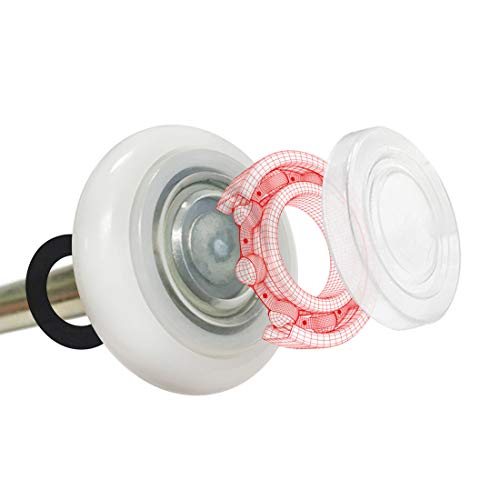
Nylon Garage Door Rollers
Quality rollers reduce door weight and friction, making manual operation slightly easier in emergencies
Why This Is Not a DIY Repair
Garage door spring replacement is the one garage repair that belongs on the “hire a pro” list. Torsion springs store enormous tension. A typical torsion spring for a two-car door holds 200 to 300 pounds of force. Releasing that tension requires winding bars and a specific process.
One mistake, stripped winding cone, slipped bar, or wrong turn count sends the bar flying or causes the spring to snap loose. People lose eyes, break bones, and worse. Extension springs are slightly less dangerous but still hazardous. They’re under tension even when the door is closed.
Precise Measurements Required
Matching the spring requires precise measurements. You need the wire diameter, inside diameter, and length. Get one measurement wrong and the door won’t balance correctly. An under-wound spring leaves the door too heavy and the opener struggles and burns out. An over-wound spring makes the door fly up and potentially off the tracks.
Specialized Tools Needed
The tools aren’t common household items. Winding bars must be the right size and material. Using a screwdriver or pry bar substitutes causes exactly the accidents mentioned above. You also need a ladder, socket wrenches, clamps, and sometimes a helper to stabilize the door.
Even experienced DIYers who follow YouTube videos run into trouble because garage doors aren’t standardized. Track configurations, cable routing, and mounting hardware vary between manufacturers and installation years.
What to Expect From a Professional Repair
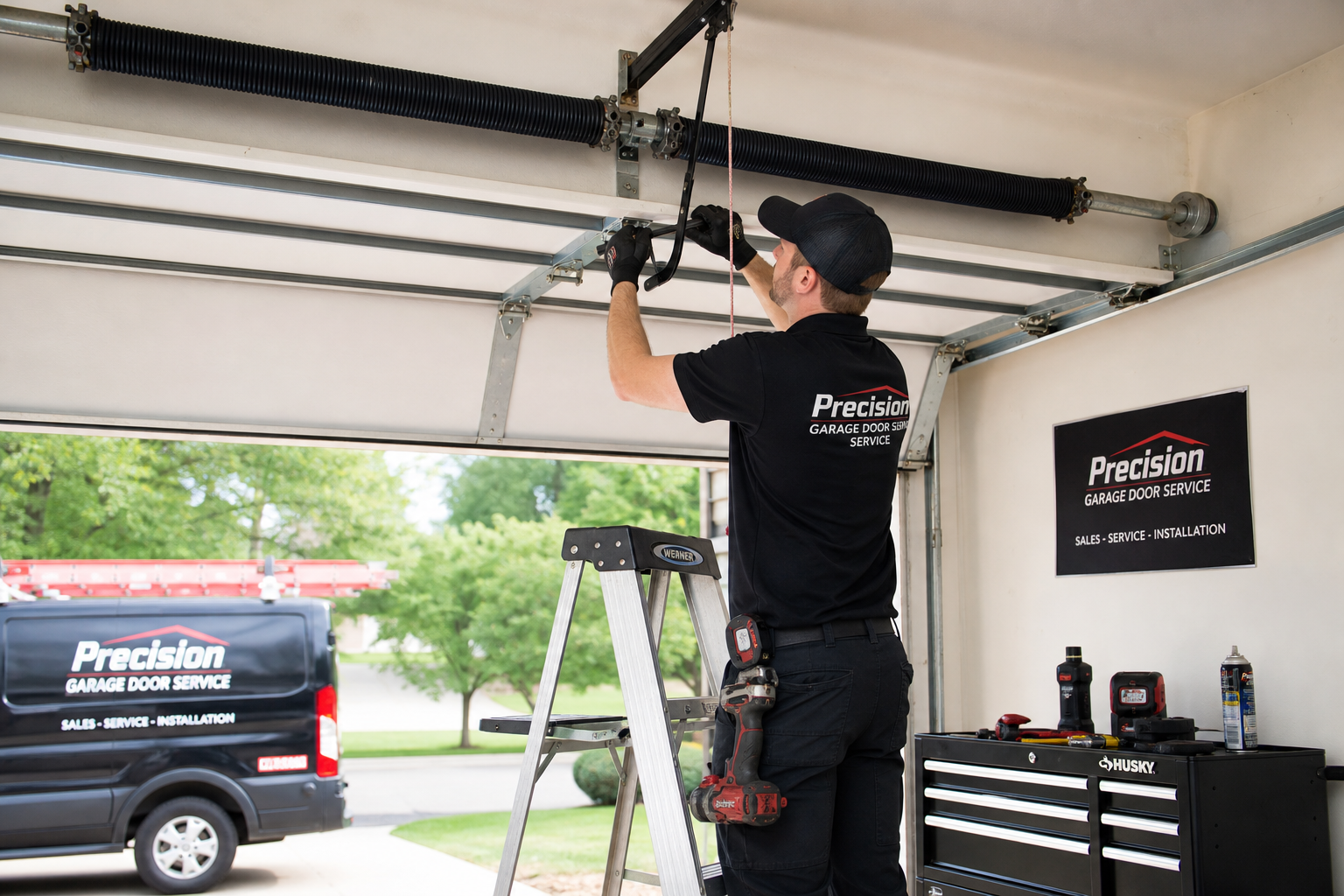
A certified garage door technician brings the right tools, matched replacement springs, and liability insurance. Most companies offer same-day or next-day service for broken springs because they know it’s an emergency.
The repair process takes one to two hours for a standard two-car door. The tech secures the door, releases the old spring tension safely, removes the broken spring, installs the new spring (often replacing both even if only one broke), winds it to the correct tension, tests the balance, and reconnects the opener.
Why Replace Both Springs
Replacing both springs at once is standard practice even if only one failed. If one spring broke, the other is the same age and has the same cycle count. It’ll fail soon. Replacing both now prevents a second service call in six months.
For doors with panel damage from spring failures, you might also need panel replacement services to restore full functionality.
Cost Expectations
Costs run competitively priced to competitively priced for a standard spring replacement on a two-car door. Single-car doors cost slightly less. Oversized or custom doors cost more. High-cycle springs add competitively priced to competitively priced to the total. Expect to pay more for emergency or after-hours service.
Get an estimate before work starts. Reputable companies provide upfront pricing and won’t tack on surprise charges. They should also offer a warranty on parts and labor, typically one year minimum.
Ask about high-cycle springs. Spending an extra competitively priced now for 25,000-cycle springs instead of standard 10,000-cycle springs pays for itself over time. You’ll get twice the lifespan and avoid another replacement call for 15-plus years.
Preventing Future Spring Failures
Regular lubrication extends spring life. Spray garage door lubricant on the springs, hinges, and rollers twice a year, once before winter, once before summer. This reduces friction and prevents rust.

Garage Door Lubricant
Silicone or lithium-based lubricants designed specifically for garage doors provide long-term protection
Use a silicone-based or lithium-based lubricant designed for garage doors. WD-40 is a cleaner, not a lubricant, and doesn’t provide long-term protection.
Annual Balance Checks
Keep the door balanced. Once a year, disconnect the opener and manually lift the door halfway. It should stay in place. If it drops or rises on its own, the springs need adjustment. Call a tech before they break completely.
Replace Worn Components
Replace worn rollers. Metal rollers with worn bearings create drag and force the springs to work harder. Nylon rollers last longer, run quieter, and reduce spring wear.
Avoid slamming. Hitting the close button and letting the door bang shut puts stress on every component. Let the door close gently.
Climate Control Benefits
Insulate if you haven’t already. Insulated doors weigh more, but they also reduce temperature swings inside the garage. Stable temperatures mean less expansion-contraction cycling in the springs.
Schedule a professional tune-up every few years. A tech will check spring tension, lubricate moving parts, tighten hardware, and catch problems before they become emergencies. Tune-ups competitively priced to competitively priced and prevent bigger repair bills down the road.
Alternative Access Options During Repairs
If you need garage access while waiting for a repair, use the side door if you have one. Most attached garages have a person door leading into the house or yard. Make sure it’s secure and lock it when you’re not actively using it.
If you don’t have a side door and need to move a vehicle, the manual method described earlier works once in a controlled situation. After that, park outside until the springs are replaced.
Security Considerations
For security, don’t leave the door propped open overnight. If the door is stuck open and you can’t lower it safely, close off the garage from the house (lock the interior door), move valuables out of the garage, and consider a temporary fix like screwing a board across the opening.
This isn’t a real security measure, but it’s better than an open invitation. Consider upgrading to smart garage door locks after repairs for enhanced security.
What About Just Replacing the Opener Instead?
If your opener is old and the spring just broke, you might wonder if replacing the whole system makes sense. It depends. If the opener is 15-plus years old, lacks safety sensors, or has been struggling even before the spring broke, replacing both the opener and springs at once can be cost-effective.
You’ll pay for one service call instead of two. Modern openers are quieter, faster, and include features like Wi-Fi connectivity and battery backup. They also have better safety mechanisms.
But a working opener doesn’t need replacing just because a spring broke. Springs are wear items. Openers, when maintained, last 15 to 20 years. When choosing between different horsepower options, consider your door size and weight.
Getting Multiple Quotes
Get a quote for spring replacement first. Then ask what a full opener-and-spring package would cost. Compare the numbers. If the opener replacement adds competitively priced to competitively priced to the spring job and your opener is nearing end-of-life anyway, the upgrade might make sense.
Frequently Asked Questions
Can I handle this as a DIY project?
No. Garage door spring replacement is one of the few garage repairs that genuinely requires a professional. The tension stored in these springs is dangerous, and the tools and techniques required aren’t typical DIY territory. Hiring a certified technician competitively priced to competitively priced and keeps you out of the emergency room.
How long does a repair take?
A professional spring replacement takes one to two hours for a standard residential door. The tech will secure the door, release tension from the broken spring, install new springs, wind them to the correct tension, test the balance, and reconnect the opener.
Should I replace both springs or just the broken one?
Replace both. If one spring broke, the other has the same age and cycle count and will fail soon. Replacing both now costs slightly more upfront but prevents a second service call in six months.
How much should I budget for a spring replacement?
Plan on competitively priced to competitively priced for a standard two-car garage door spring replacement. Single-car doors cost slightly less. High-cycle springs that last longer add competitively priced to competitively priced. Emergency or after-hours service increases the price.
This article contains affiliate links. We may earn a small commission at no extra cost to you.
