

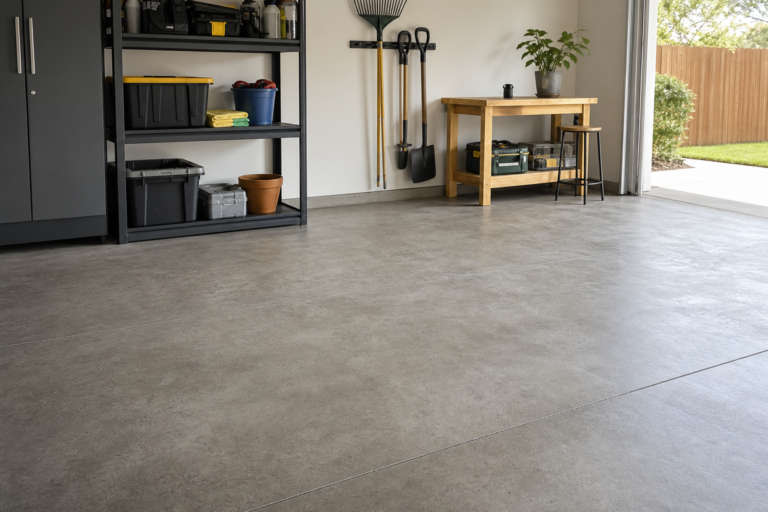
Picking the right budget garage floor options when epoxy isn’t in your budget isn’t about finding the highest star rating. It’s about matching product strengths to your needs: durability, ease of installation, or budget constraints.
Below, you’ll find honest assessments of top contenders, what separates them, and which ones fall short of their marketing. Check Amazon for current pricing.
Understanding the Basics
True two-part systems create a cross-linked film that’s dramatically harder and more chemical-resistant. Application demands more prep and timing attention, but the durability gap is enormous and visible within the first year of use.
Latex garage paint and one-part “epoxy” paint are fundamentally different from true two-part systems. One-part products are acrylic paint with a small amount of epoxy resin added for marketing. They go on easily but wear through in high-traffic spots within 6 to 12 months.
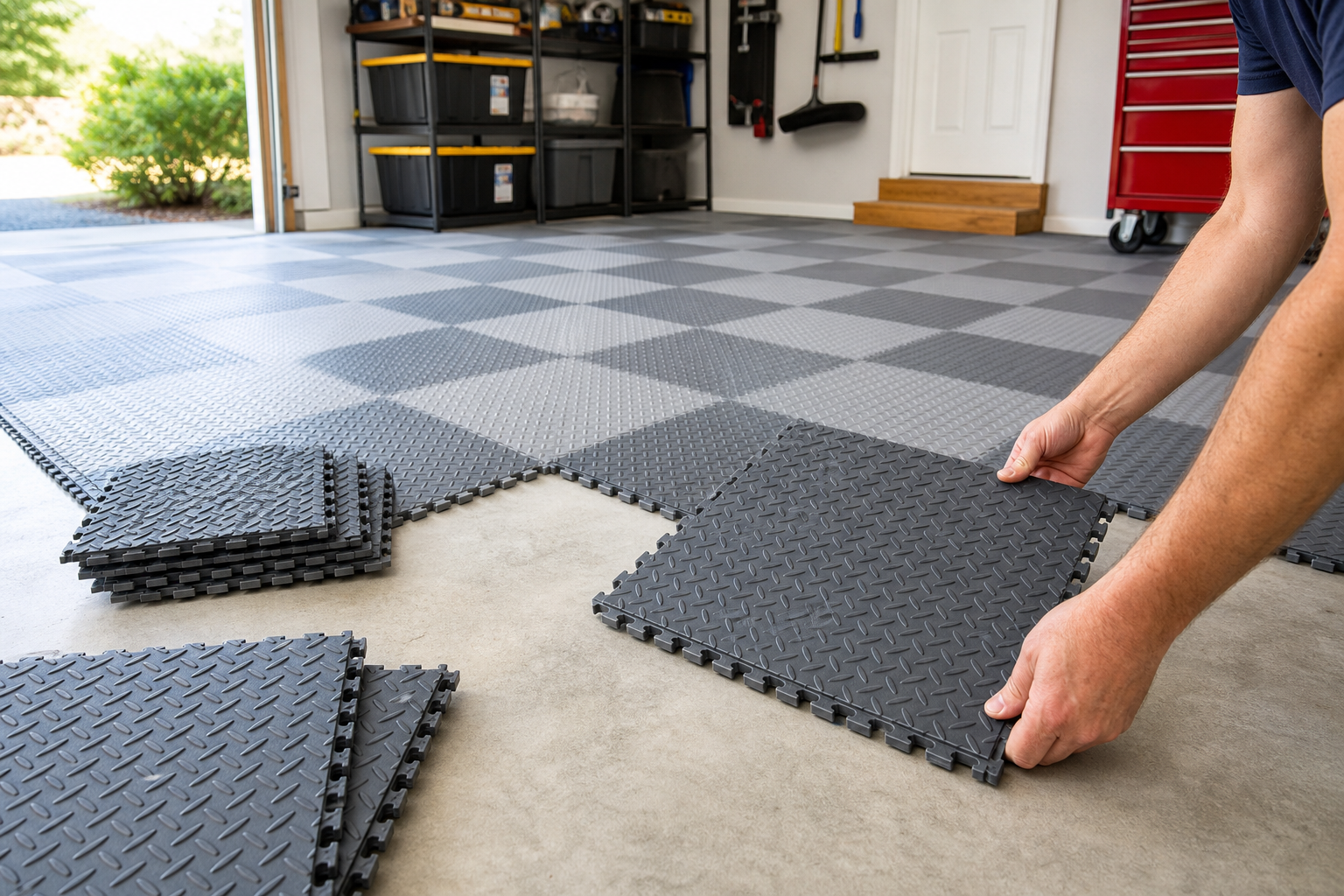
Rigid interlocking tiles (polypropylene like RaceDeck and Swisstrax) snap together firmly for a floating floor that handles vehicles. Flexible PVC tiles are more comfortable underfoot but may separate under heavy loads or sharp turns.
Concrete Sealers
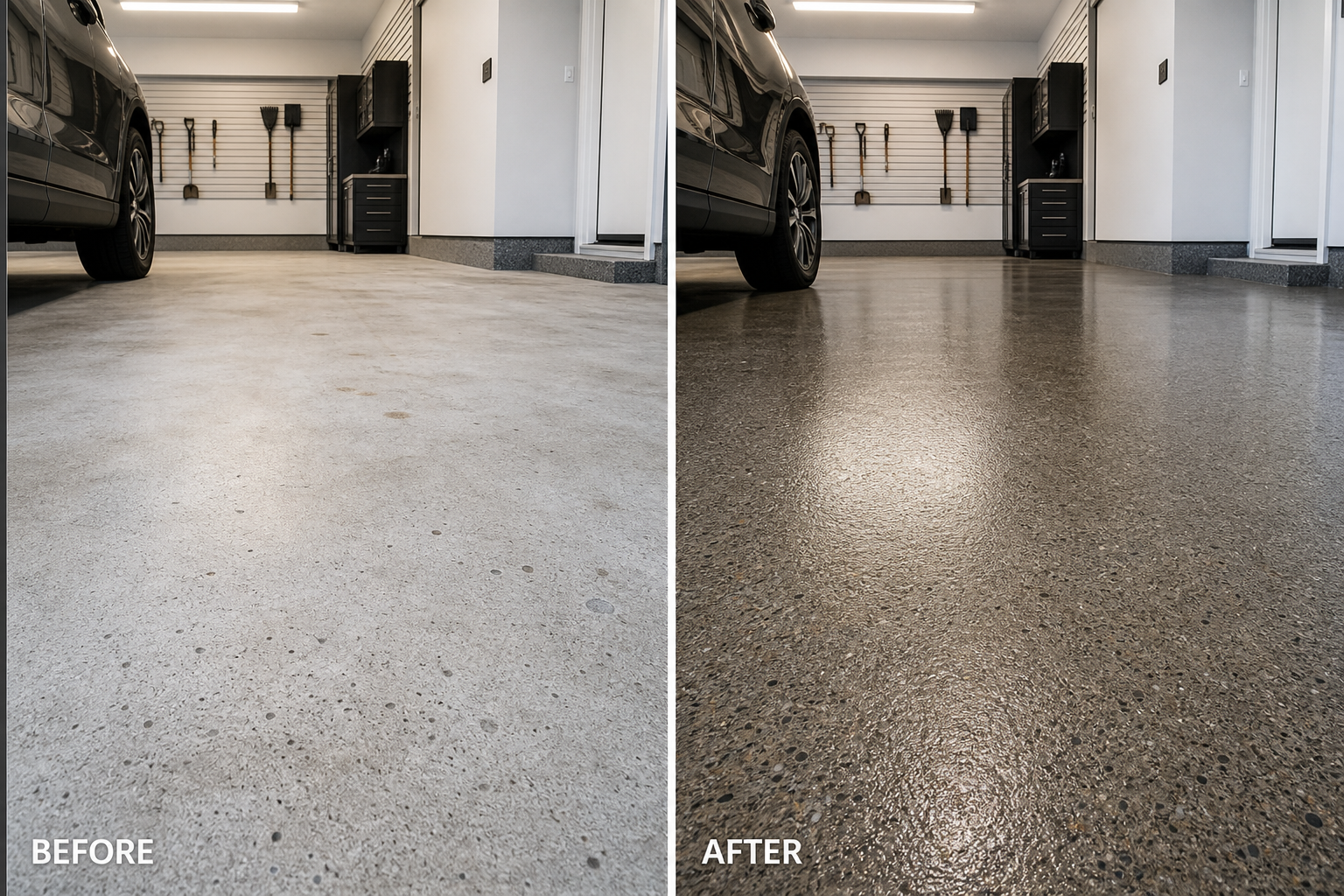
Understanding the specifics of your situation helps you choose the right approach with concrete sealers and floor paint. Your garage’s age, construction type, and local climate all influence what works best and what to avoid.
Measure twice and commit once. A tape measure and five minutes of verification prevent the mistakes that take hours to fix. This applies doubly to cuts, holes, and any irreversible step.
Quality preparation makes the difference between a coating that lasts and one that peels within months. If your garage floor needs sealing before applying any coating, learn the proper sealing technique to ensure maximum adhesion.

Interlocking Tiles
Getting interlocking tiles right requires matching your approach to actual conditions rather than following a generic formula. Climate, surface condition, and usage patterns all influence the best path forward.
Document every product you use: brand, color, batch number, application date. Future touch-ups need exact material matches. Tape the info inside a cabinet door or take a quick phone photo for your records.
Temperature expansion causes most tile separation issues. A 20-foot polypropylene span can shift 1/4 to 1/2 inch across a 60-degree temperature swing. Leave 1/4-inch gaps at walls and fixed objects. Without expansion room, tiles buckle in summer.

Interlocking Garage Floor Tiles
Polypropylene tiles offer the best balance of durability and vehicle weight support
Floor Paints and Coatings
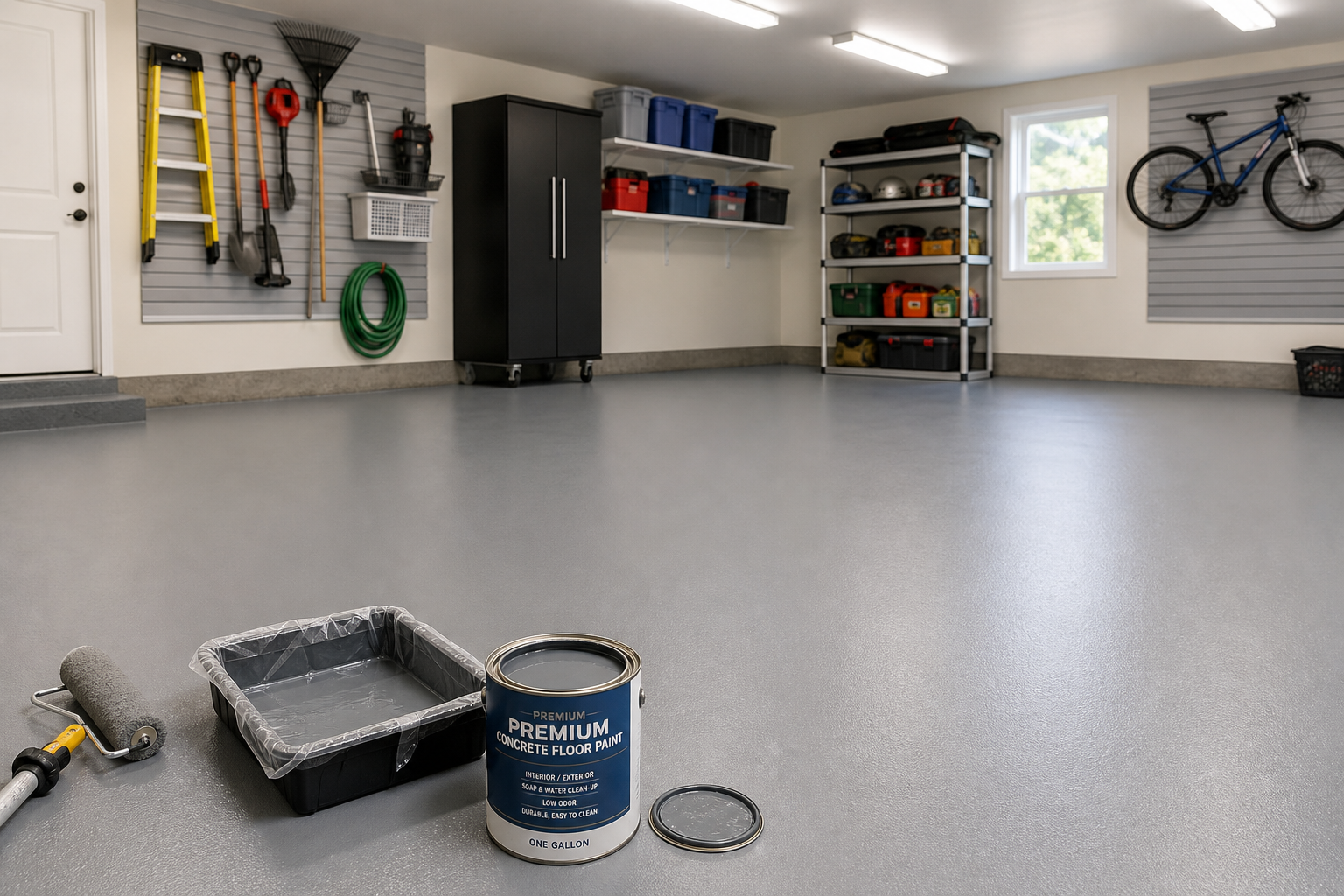
The details here make the difference between a result that lasts and one that needs redoing within a year. Take the time to assess your conditions before committing to a method or product.
Check specific requirements before purchasing materials. Measure the area, note unusual conditions (extreme temps, high humidity, uneven surfaces), and read product specs carefully. A mismatch between your conditions and the product’s rated range is the most common cause of unexpected failures.
Consider using a garage floor primer before applying paint coatings. The primer creates better adhesion and extends the life of budget-friendly paint options.
For application, proper tools matter. Quality rollers designed for floor coatings distribute paint evenly and reduce visible roller marks in the finished surface.

Floor Paint Roller Kit
Designed specifically for floor applications with proper nap length
Installation Planning and Tips
If this is your first project of this type, budget 50% more time than guides suggest. The learning curve is real, and careful work produces better results than rushing to meet an estimated timeline.
Consider the seasonal timing of your project. Floor coatings apply best in mild weather (50 to 85 degrees). Insulation projects are most motivating (and noticeable) before extreme weather hits. Electrical and plumbing work can happen year-round but should be completed before insulating or finishing walls over the wiring.
Prioritize your projects based on impact and urgency. Safety issues (faulty wiring, CO risk, structural problems) come first. Comfort improvements (insulation, lighting, climate control) come second. Cosmetic upgrades (floor coatings, paint, organization systems) come last.
Invest in quality tools for tasks you’ll repeat. A reliable stud finder, a good level, a quality tape measure, and proper safety gear (eye protection, hearing protection, respirator) make every project easier and safer. These tools pay for themselves across multiple projects over the years.
Research local building codes and permit requirements for your specific project. Electrical work, structural modifications, and HVAC installations often require permits and inspections. Working without required permits can create liability issues, insurance complications, and problems when selling the home.
What to Avoid
Knowing what to skip prevents expensive mistakes:
- Unknown brands at rock-bottom prices. Established brands charge more for proven materials and real warranties.
- Suspiciously cheap deals from unauthorized sellers. Counterfeit products are a real issue on major platforms.
- Products with vague specs or missing data sheets. If a manufacturer won’t publish details, that’s a red flag.
Dealing with Floor Issues
Before applying any coating or installing tiles, address existing floor problems. Small cracks and stains are manageable, but larger issues need attention first.
If you’re dealing with rust stains from metal items, remove rust stains properly before applying any coating. These stains can bleed through thin paint layers if not treated.
For garages with drainage concerns, consider whether you need better water management. Poor drainage can undermine even the best floor treatments.
Frequently Asked Questions
Are hairline garage floor cracks normal?
Yes. Nearly all slabs develop them during curing. Under 1/8 inch and stable? Cosmetic only. Easy to fill before coating.
When are floor cracks a concern?
Wider than 1/4 inch, one side higher than the other, or visibly growing. These may indicate settlement requiring professional assessment.
How long will budget floor treatments last?
Years of reliable performance with quality materials and proper installation. Preparation quality is the single biggest longevity factor. One-part paints typically need refreshing every 1-2 years, while quality tiles can last 10+ years.
Can I install interlocking tiles over painted concrete?
Yes, as long as the paint is well-adhered and not peeling. Clean the surface thoroughly and ensure it’s level. Loose or flaking paint should be removed first.
This article contains affiliate links. We may earn a small commission at no extra cost to you.
