

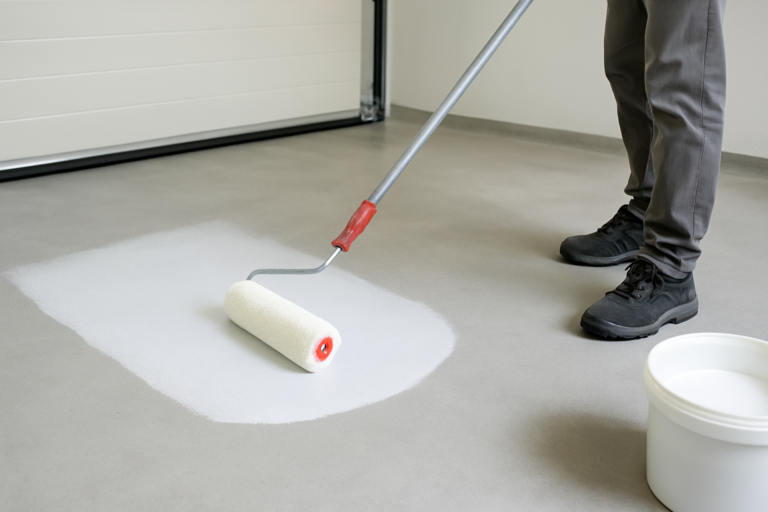
You’ve spent hours grinding, cleaning, and prepping your garage floor. You’ve picked out the perfect epoxy coating. But before you crack open that first can, there’s one question you need to answer: does your concrete need primer first?
Skipping primer when you actually need it can lead to peeling, bubbling, and a coating that fails within months. But applying primer when it’s not necessary just adds time and cost to your project. Let’s figure out exactly when you need it and how to do it right.
When Primer Is Actually Necessary
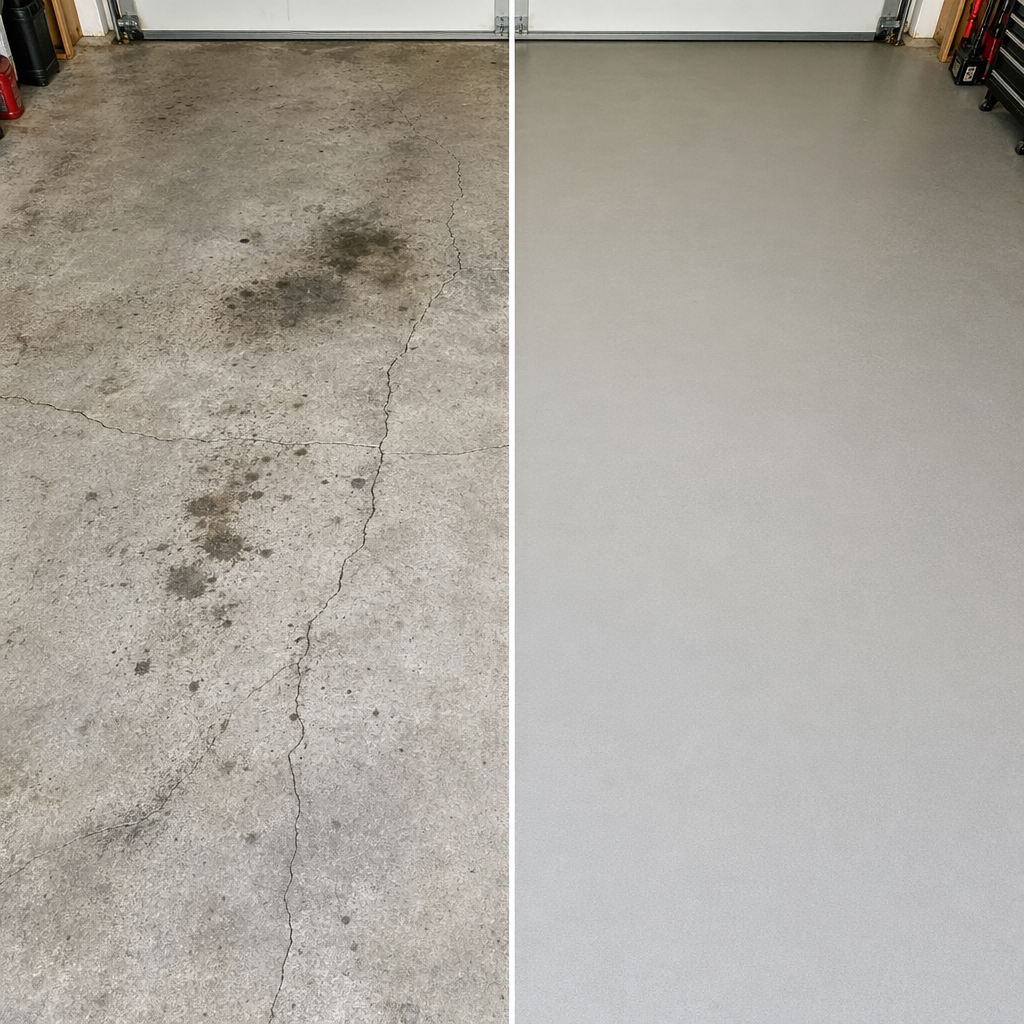
Not every garage floor needs primer before coating. New concrete less than a year old with good porosity usually accepts epoxy or paint just fine on its own. But several situations make primer absolutely essential.
Older concrete that’s been sealed or treated is the most common culprit. Previous sealers create a barrier that prevents proper adhesion. Even if you can’t see the sealer, it might be there. A simple water test tells you everything: pour some water on the floor and see if it soaks in within a few minutes. If it beads up or sits on the surface, you’ve got a sealer issue and need primer.
Dusty or chalky concrete is another prime candidate. When you run your hand across the floor and get a powdery residue, that’s concrete dust that will prevent any coating from bonding properly. Primer seals this dust and creates a solid foundation.
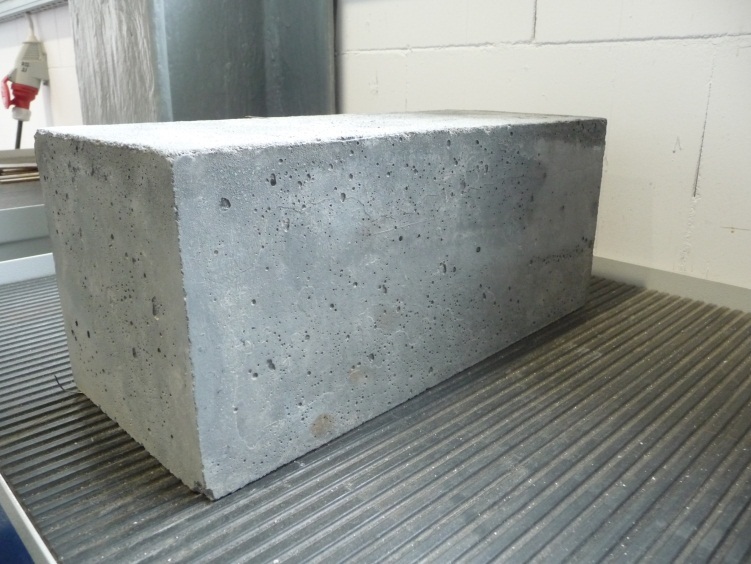
Smooth, dense concrete with low porosity also benefits from primer. Some concrete mixes cure extremely hard with minimal surface pores. This happens more often with garage floors poured in the last 15 years using modern mix designs. Without enough texture for mechanical adhesion, your coating needs a primer to grab onto.
Types of Concrete Primers and When to Use Each
Walk into any home improvement store and you’ll find several types of concrete primers. Each one solves specific problems, so matching the primer to your situation matters.
Epoxy primers provide the strongest bond and work best under epoxy coatings. They penetrate deep into the concrete, lock down any remaining dust, and create an extremely hard surface for your topcoat. These are your best choice for high-traffic garage floors or when you’re dealing with marginal concrete quality. Products like epoxy concrete primers typically come in two-part formulas that you mix before application.

Rust-Oleum EpoxyShield Concrete Floor Primer
Designed specifically to work under epoxy coatings and handles problematic concrete surfaces well
Acrylic primers dry faster and work well under both epoxy and latex paint. They’re easier to clean up with water and less fussy about application conditions. These primers excel at sealing dusty concrete and can be applied in cooler temperatures than epoxy versions. They don’t provide quite the same bond strength, but for residential garages with normal use, they’re more than adequate.
Bonding primers contain sand or other aggregates to create texture on smooth concrete. If your floor is slick and dense, a bonding primer gives the topcoat something to grip. You can also add your own sand to regular primer, but pre-mixed bonding primers distribute the aggregate more evenly.
Water-based primers offer the easiest application and fastest dry times. They work best on moderately porous concrete that just needs a little extra help with adhesion. Don’t use these on heavily sealed concrete or floors with moisture issues.
Proper Application Techniques
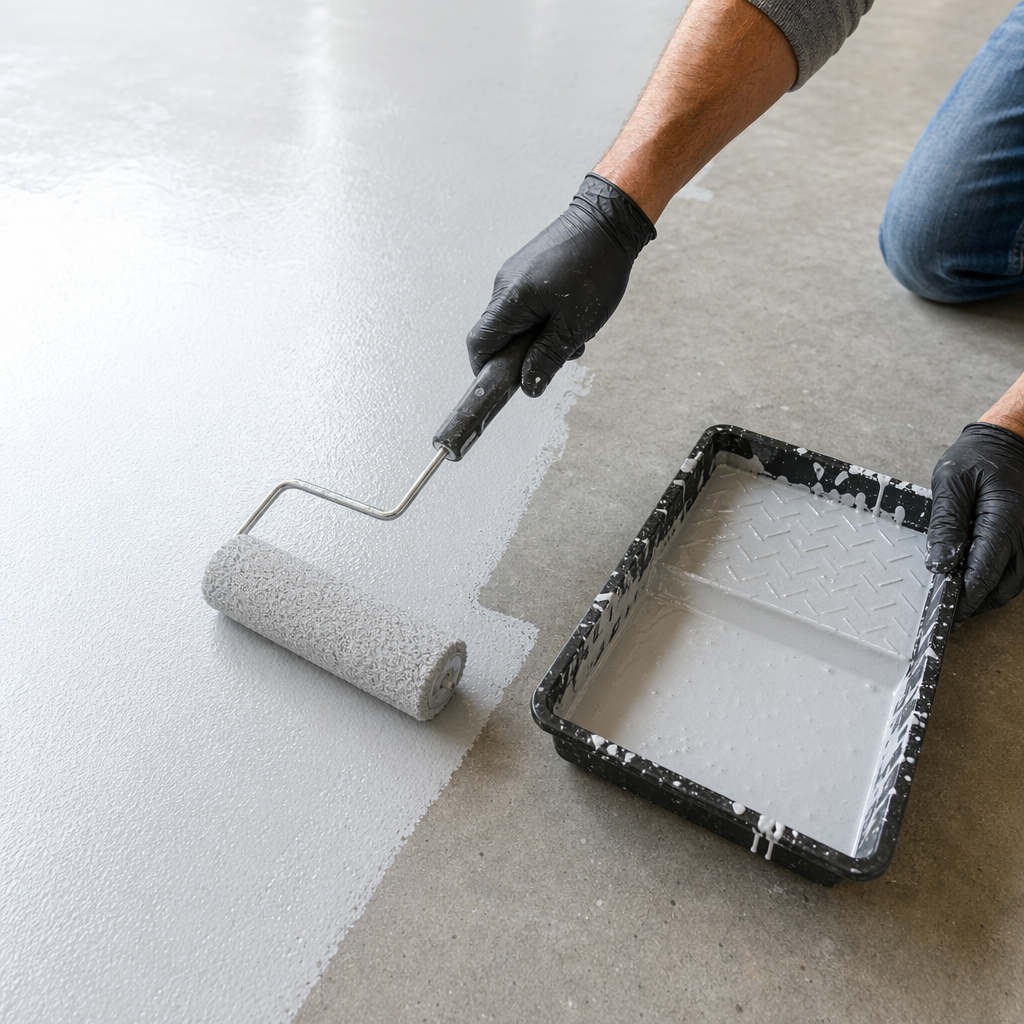
Applying primer correctly makes all the difference between a floor that lasts decades and one that fails in months. Start with a completely clean surface. Sweep thoroughly, then vacuum to remove every bit of dust and debris. Any contamination trapped under the primer will create a weak spot.
Temperature matters more than most people realize. Apply primer when the concrete temperature is between 50 and 90 degrees Fahrenheit. Too cold and the primer won’t flow or cure properly. Too hot and it’ll dry before penetrating the concrete. Check the concrete itself, not just the air temperature. Concrete holds temperature differently than the surrounding air.
Pour your primer into a paint tray and use a quality 3/8-inch nap roller for application. Start at the back corner farthest from your exit and work your way out. Apply the primer in thin, even coats. You want complete coverage without puddles or thick spots.

Wagner paint sprayer
For larger garage floors, a sprayer applies primer much faster and more evenly than rolling
Cut in along the edges with a brush first, then roll the main floor area. Work in 4×4 foot sections to maintain a wet edge. Don’t go back over areas that have started to dry or you’ll leave roller marks that show through your topcoat.
Most primers need two coats for optimal performance. Apply the second coat perpendicular to the first. This crosshatching technique ensures complete coverage and fills any spots you might have missed.
Drying and Cure Times
Drying time and cure time are two different things, and understanding the difference prevents problems. Dry time is when the primer feels dry to the touch and you can walk on it. Cure time is when it’s chemically hardened enough to accept a topcoat.
Water-based primers typically dry in 2 to 4 hours and cure enough for recoating in 4 to 6 hours. Epoxy primers take longer, usually 4 to 6 hours to dry and 12 to 24 hours before you can apply your topcoat. Always check the manufacturer’s specifications because formulations vary.
Temperature and humidity affect both drying and curing. High humidity slows everything down. Low temperatures can double or triple cure times. Plan your project around the weather forecast and give yourself buffer time.
Many primers have a recoat window, meaning you need to apply your topcoat within a certain timeframe. Miss that window and you’ll need to scuff sand the primer before coating. This usually ranges from 24 to 72 hours depending on the product.
Common Mistakes to Avoid
The biggest mistake is skipping proper surface prep before priming. Primer isn’t magic. It can’t bond to dirt, oil, or loose concrete. You still need to etch or grind the floor, remove all stains, and ensure the surface is sound. Think of primer as insurance that improves adhesion, not as a substitute for proper preparation.
Applying primer too thick causes its own problems. Heavy coats take forever to dry, may never cure properly, and can actually reduce bond strength. Three thin coats always outperform one thick coat.
Using the wrong primer for your topcoat creates compatibility issues. Always use primer and coating from the same manufacturer when possible. At minimum, make sure they’re chemically compatible. An epoxy coating over water-based latex primer won’t bond well regardless of how carefully you apply it.
Ignoring moisture issues is a recipe for failure. Primer won’t stop moisture vapor from pushing up through the concrete. Test for moisture problems before you start and address them with proper vapor barriers or moisture-blocking products if necessary.
FAQ
Can I use regular paint primer on my garage floor?
Don’t use wall paint primer on concrete floors. Wall primers aren’t designed for the alkalinity of concrete or the mechanical stress of foot and vehicle traffic. They’ll peel off quickly. Use only primers specifically formulated for concrete floors. The packaging will clearly state it’s for concrete, masonry, or garage floors.
How do I know if my old garage floor coating is compatible with primer?
Test adhesion by scoring a small X through the existing coating and pressing duct tape firmly over it. If the coating pulls off with the tape, it needs to be removed completely before priming. If the coating stays put, you can likely prime over it after cleaning and light sanding. When in doubt, remove the old coating entirely to avoid future problems.
Is primer necessary if I’m using a high-quality epoxy?
Premium epoxy coatings bond better than cheap ones, but they still can’t overcome sealed, smooth, or dusty concrete on their own. Run that water absorption test. If water beads up or your concrete is exceptionally smooth, use primer even with the best epoxy. The extra cost and time beats having to strip and recoat a failed floor.
This article contains affiliate links. We may earn a small commission at no extra cost to you.
