

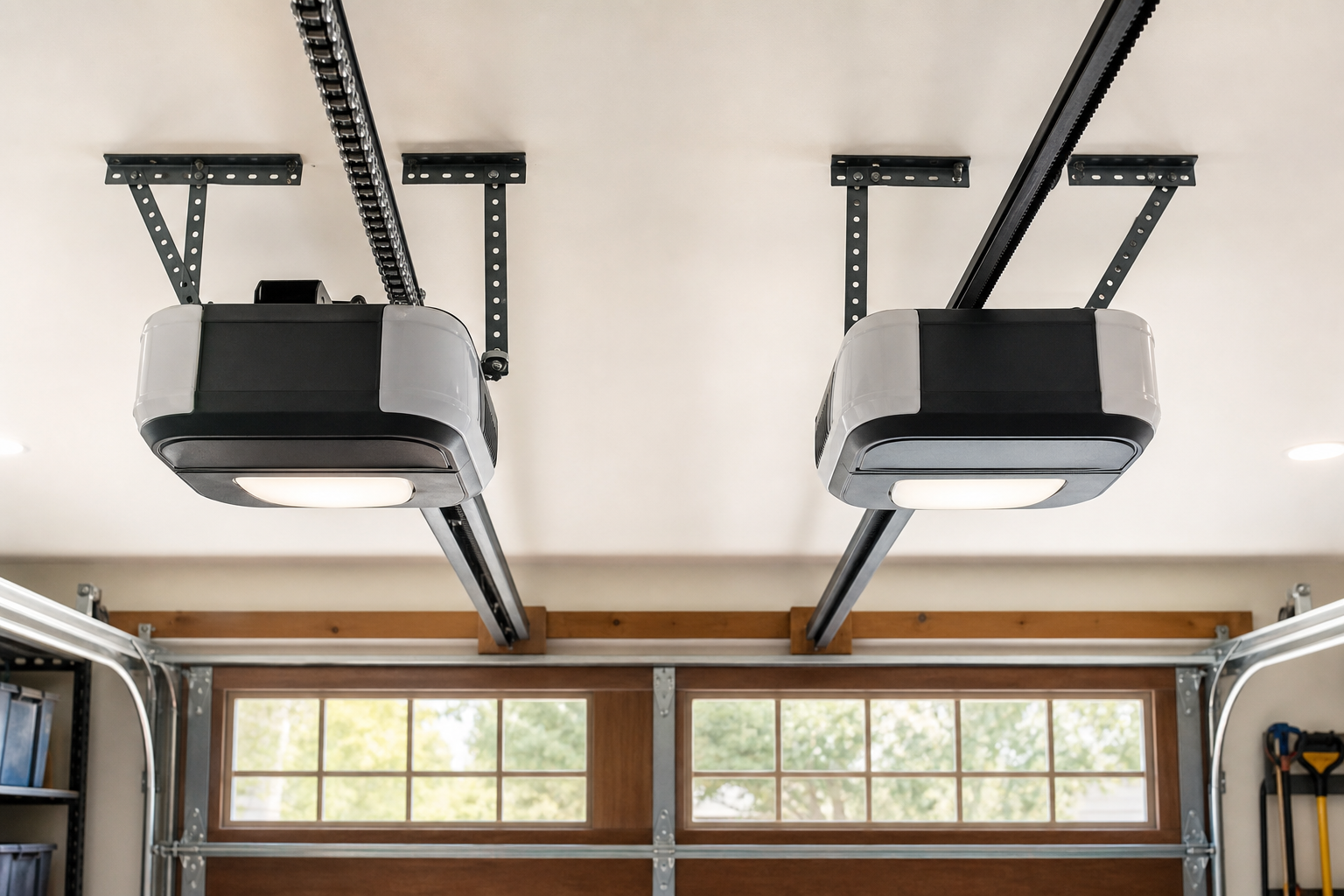
The chain drive vs. belt drive garage door openers decision comes up constantly, and both sides have passionate advocates. Marketing claims from each camp are hard to verify without hands-on experience.
This comparison cuts through the noise with a side-by-side look at what actually matters: performance, cost, durability, installation, and maintenance. The right choice for your situation should be clear by the end.
Noise Level Comparison
Noise level and durability make the difference between a result that lasts and one that needs replacing within a year. Take the time to assess your conditions before committing to a specific drive system.
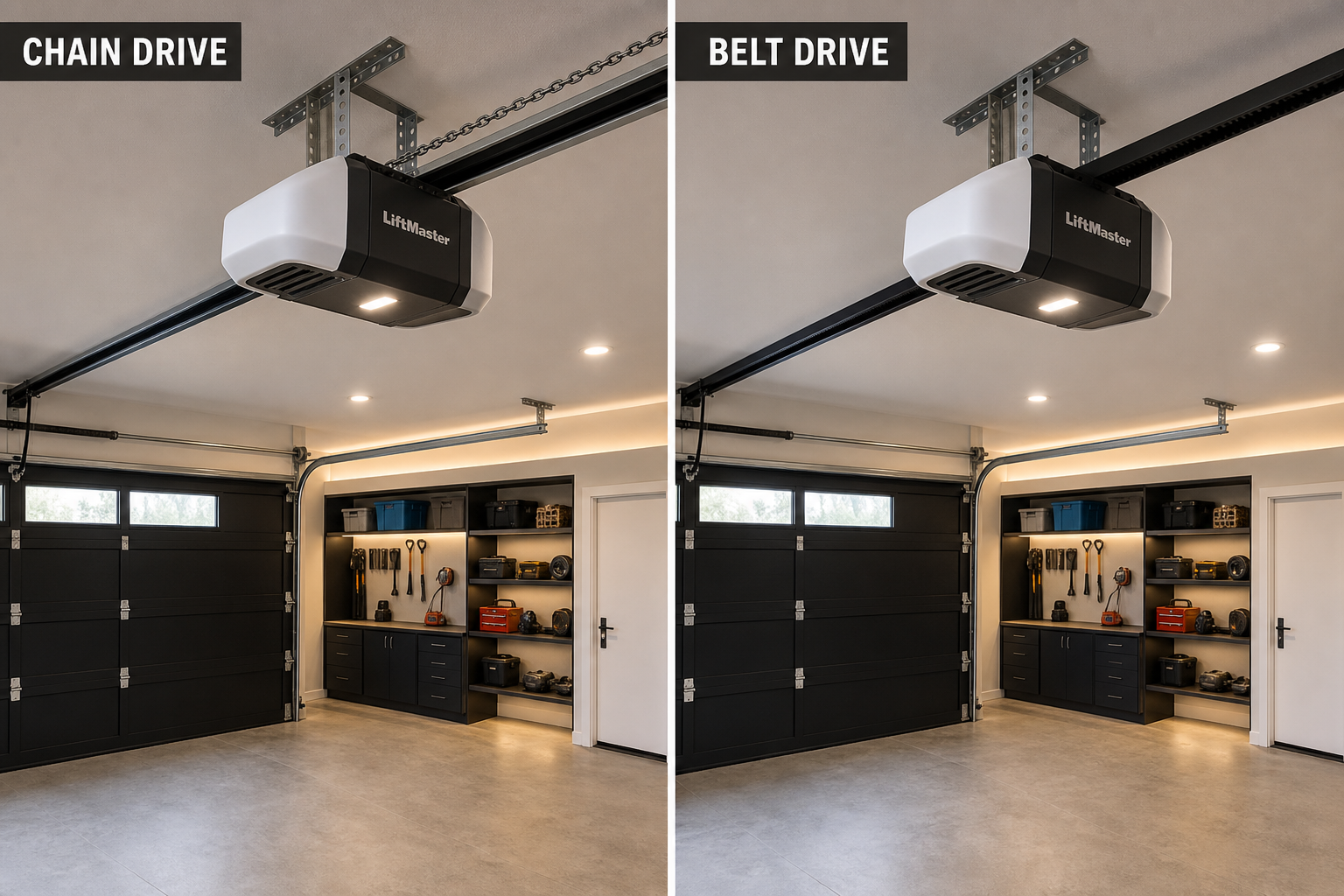
Belt drive openers run significantly quieter than chain drive models. The rubber belt eliminates the metal-on-metal contact that creates the grinding and rattling sounds common with chain systems. If your garage shares a wall with living spaces or bedrooms, this difference is substantial.
Chain drive systems produce more operational noise, but they’re perfectly acceptable for detached garages or homes where the garage doesn’t adjoin occupied rooms. The noise isn’t excessive, just noticeably louder than belt alternatives.
Maintenance Requirements
Maintenance needs differ significantly between chain and belt drive systems. This is an area where cutting corners comes back to haunt you. Invest the effort upfront and you’ll save significant time and money over the next several years of use.
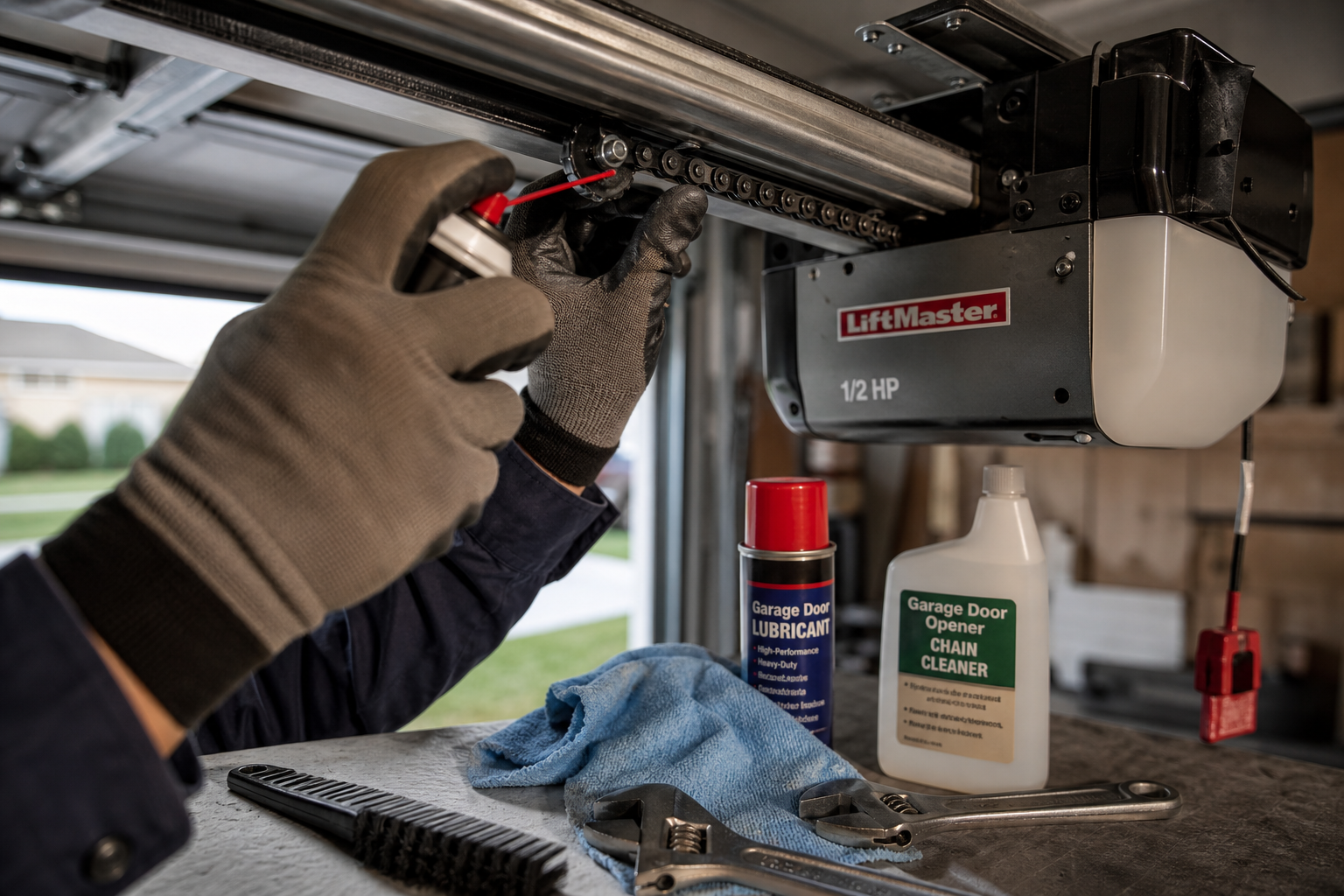
Chain drives require periodic lubrication to prevent wear and reduce noise. You’ll need to clean and oil the chain every six months, checking for proper tension and alignment. The metal components can rust in humid climates without regular maintenance.
Belt drives need minimal maintenance beyond basic safety inspections. The reinforced rubber belt doesn’t require lubrication and resists stretching better than older belt designs. Check the belt annually for cracks or fraying, but expect several years between replacements.
Document every maintenance task: date, products used, and any observations about wear patterns. Future service needs exact records to identify problems early.
A quality spring winding bar set makes maintenance tasks safer and more precise. Check current options and reviews for the right match for your garage door system.
Cost Analysis: Initial Investment vs Long-Term Value
Belt drive systems cost more upfront but often provide better long-term value for attached garages. Understanding the specifics of your situation helps you choose the right approach. Your garage’s age, construction type, and local climate all influence what works best.
Chain drive openers typically cost 20-30% less initially. For detached garages or budget-conscious installations, this price difference makes chain drives attractive. The lower purchase price doesn’t necessarily mean lower quality, just different design priorities.
Belt drives justify their premium pricing through reduced noise, lower maintenance requirements, and smoother operation. Over a 10-year window, the maintenance savings often offset the higher initial investment, especially when you factor in the convenience of quieter operation.
Factor in maintenance costs when choosing your approach. The lowest-maintenance option isn’t always cheapest initially, but it usually wins over a 5 to 10-year window when you include touch-ups, repairs, and replacements.
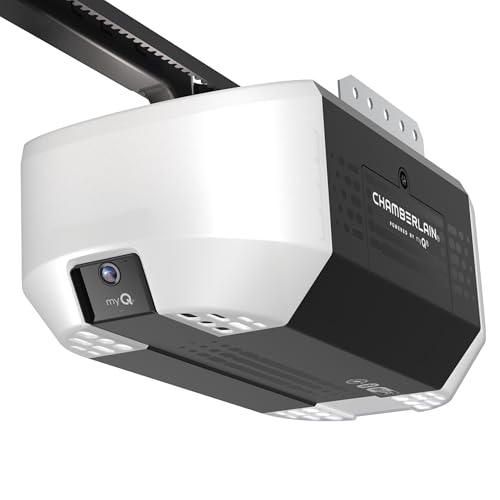
Belt Drive Garage Door Opener
Top choice for attached garages where quiet operation matters
Alternative Drive Systems
Screw-drive and direct-drive alternatives offer different benefits worth considering. This is an area where understanding your specific needs prevents costly mistakes down the road.
Screw-drive systems use a threaded steel rod to move the door carriage. They operate faster than chain or belt drives and require minimal maintenance since there’s no chain or belt to service. However, they can be sensitive to temperature changes that cause the metal rod to expand and contract.
Direct-drive openers move the entire motor along a stationary chain track. This design eliminates most moving parts, creating an extremely quiet system with minimal maintenance needs. The higher initial cost reflects the advanced engineering, but reliability is excellent.
Check specific requirements before purchasing materials. Measure your garage ceiling height, note unusual conditions like extreme temperatures or high humidity, and read product specs carefully. A mismatch between your conditions and the opener’s rated range is the most common cause of unexpected failures.
Installation Considerations
Consider the seasonal timing of your installation project. Garage door opener installation works best in mild weather when you can safely leave the garage door disconnected during setup. Extreme cold can make materials brittle, while extreme heat creates safety concerns for extended work periods.
Most installations are DIY-accessible with basic tools and mechanical aptitude. However, high-tension spring work and electrical connections to existing circuits should go to licensed professionals. The safety risks and potential code violations aren’t worth the modest savings.
Invest in quality tools for installation tasks. A reliable stud finder, a good level, a quality tape measure, and proper safety gear make every project easier and safer. These tools pay for themselves across multiple projects over the years.
For opener installations, you’ll likely need to ensure proper safety sensor alignment and may need to adjust travel limits for optimal performance.
Durability and Reliability
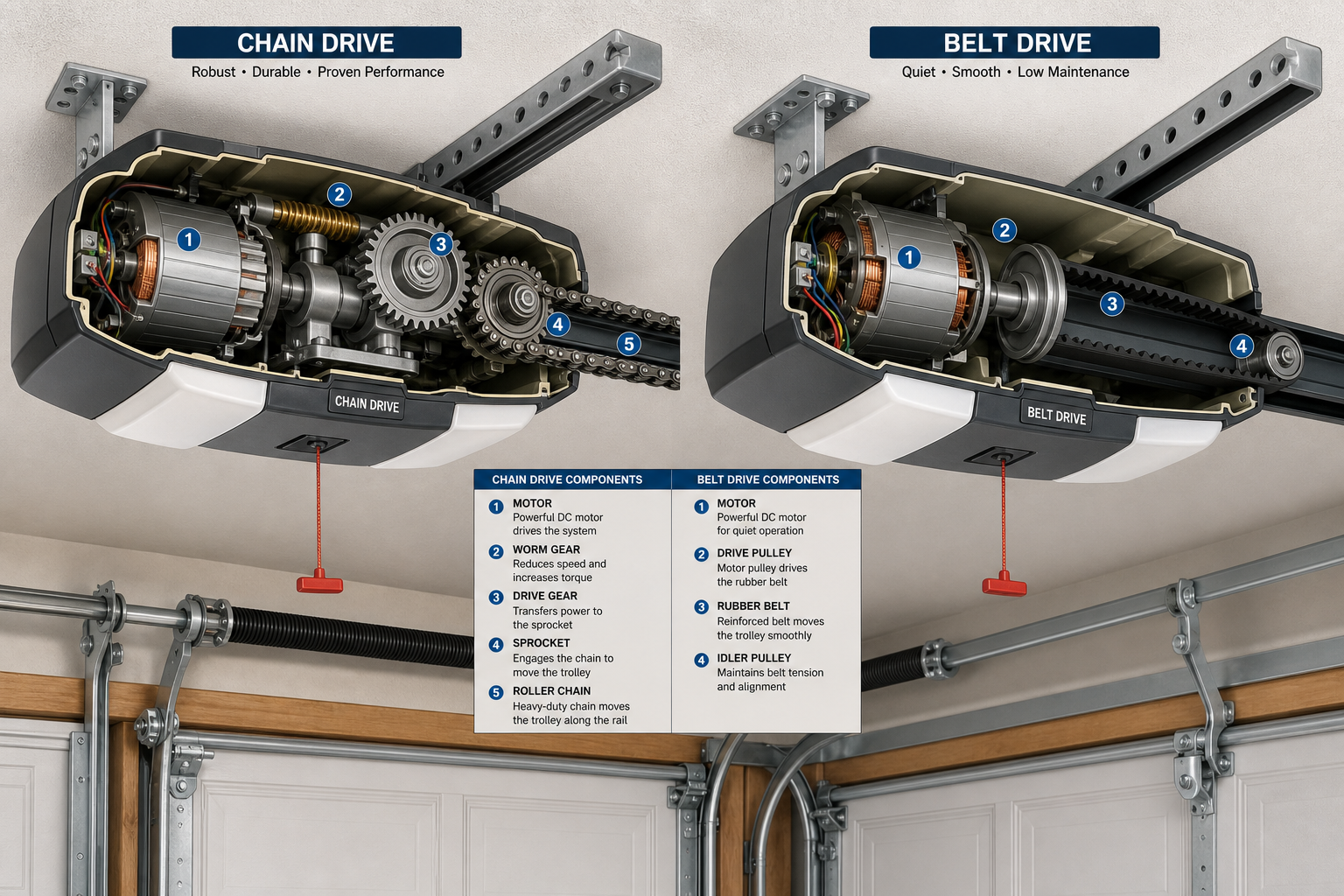
Both drive types deliver reliable service when properly installed and maintained. Chain drives have a longer track record and simpler mechanical design that many technicians can service. Parts availability is excellent, and repairs are typically less expensive.
Belt drives use more advanced materials and engineering, but this complexity can mean higher repair costs if problems develop. However, quality belt systems experience fewer mechanical failures due to their simpler load distribution and reduced wear points.
Climate affects both systems differently. Chain drives can rust in humid coastal areas but handle temperature extremes well. Belt drives resist corrosion but may be affected by extreme cold that makes rubber components less flexible.
If your garage door currently has issues like stopping halfway through operation, address these problems before installing a new opener to prevent premature wear.
Making Your Decision
Both options have real strengths, and neither is universally superior. Your budget, timeline, climate, and usage patterns determine the better fit. Pick whichever checks more of your boxes and commit confidently.
Choose belt drive if your garage shares walls with living spaces, you want minimal maintenance, or you’re planning a garage home office, garage gym, or workshop space where noise matters. The extra cost pays dividends in daily convenience.
Choose chain drive for detached garages, budget-focused projects, or situations where you prioritize lower initial cost over noise reduction. Chain drives deliver reliable service at an attractive price point.
Still undecided? Start with the lower-cost or more reversible option. You can always upgrade later once you have firsthand experience with the trade-offs in your specific setup.

Garage Door Safety Sensor
Essential safety upgrade that works with any opener type
Frequently Asked Questions
What mistake should I avoid above all?
Rushing the decision without considering your specific garage setup. Whether it’s attached vs detached, ceiling height, or local climate, upfront assessment prevents expensive mismatches between your needs and the opener’s capabilities.
Can I handle this as a DIY project?
Most installation steps are DIY-accessible with basic tools and mechanical skills. However, electrical connections to existing circuits, structural modifications, and high-tension spring work should go to licensed professionals for safety and code compliance.
How long will each system last?
Both systems typically provide 10-15 years of reliable service with proper installation and maintenance. Chain drives may need more frequent lubrication and adjustments, while belt drives often run longer between service intervals. Quality of installation and regular maintenance affect longevity more than drive type.
Which is better for extreme climates?
Chain drives handle temperature extremes better due to their metal construction, while belt drives resist humidity and corrosion more effectively. Choose based on your primary climate challenges: extreme temperatures favor chain drives, while high humidity or salt air environments favor belt systems.
This article contains affiliate links. We may earn a small commission at no extra cost to you.
