

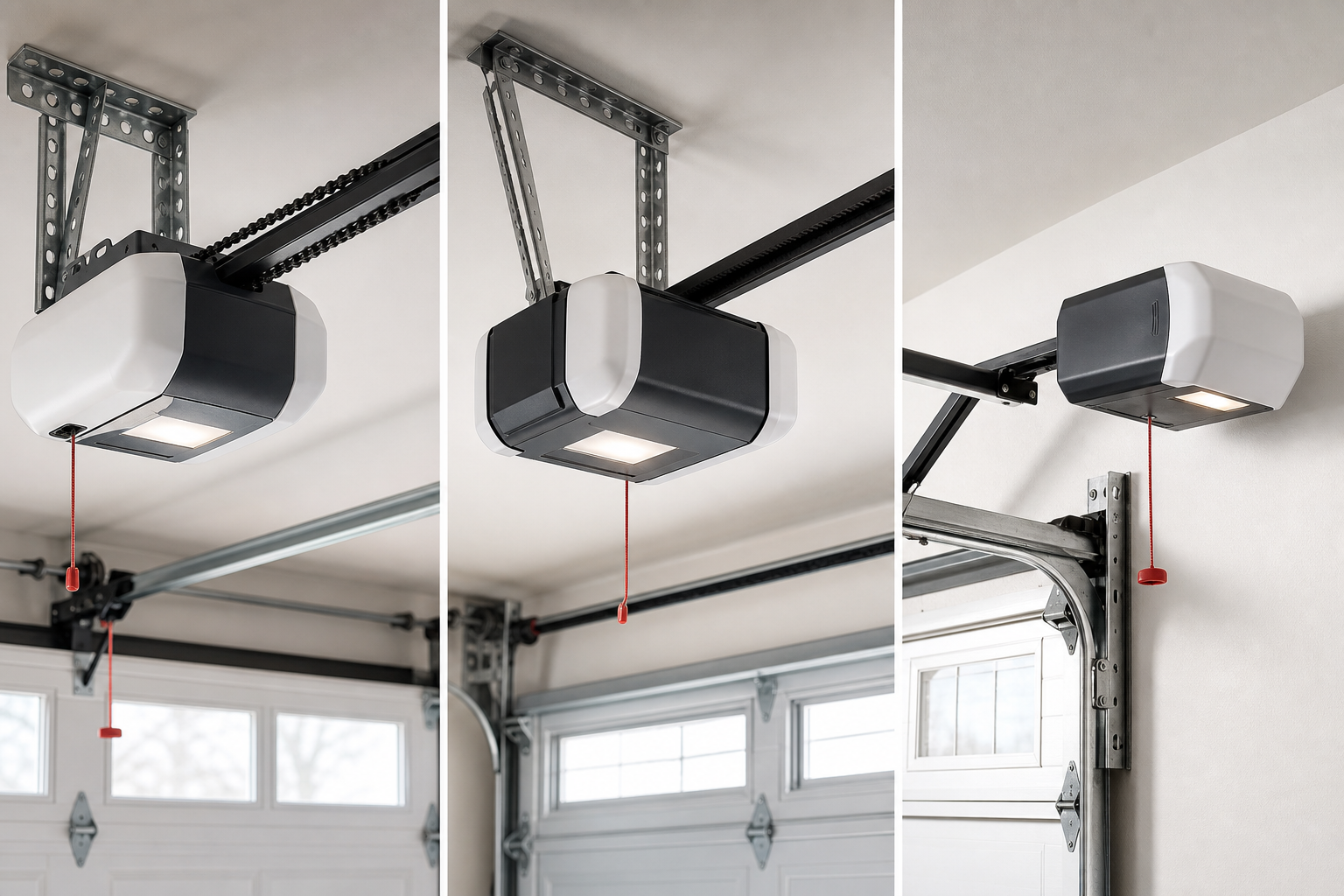
The chain vs belt vs wall-mount openers decision comes up constantly, and both sides have passionate advocates. Marketing claims from each camp are hard to verify without hands-on experience.
This comparison cuts through the noise with a side-by-side look at what actually matters: performance, cost, durability, installation, and maintenance. The right choice for your situation should be clear by the end.
Noise Levels
Noise levels and maintenance considerations require matching your approach to actual conditions rather than following a generic formula. Climate, surface condition, and usage patterns all influence the best path forward.
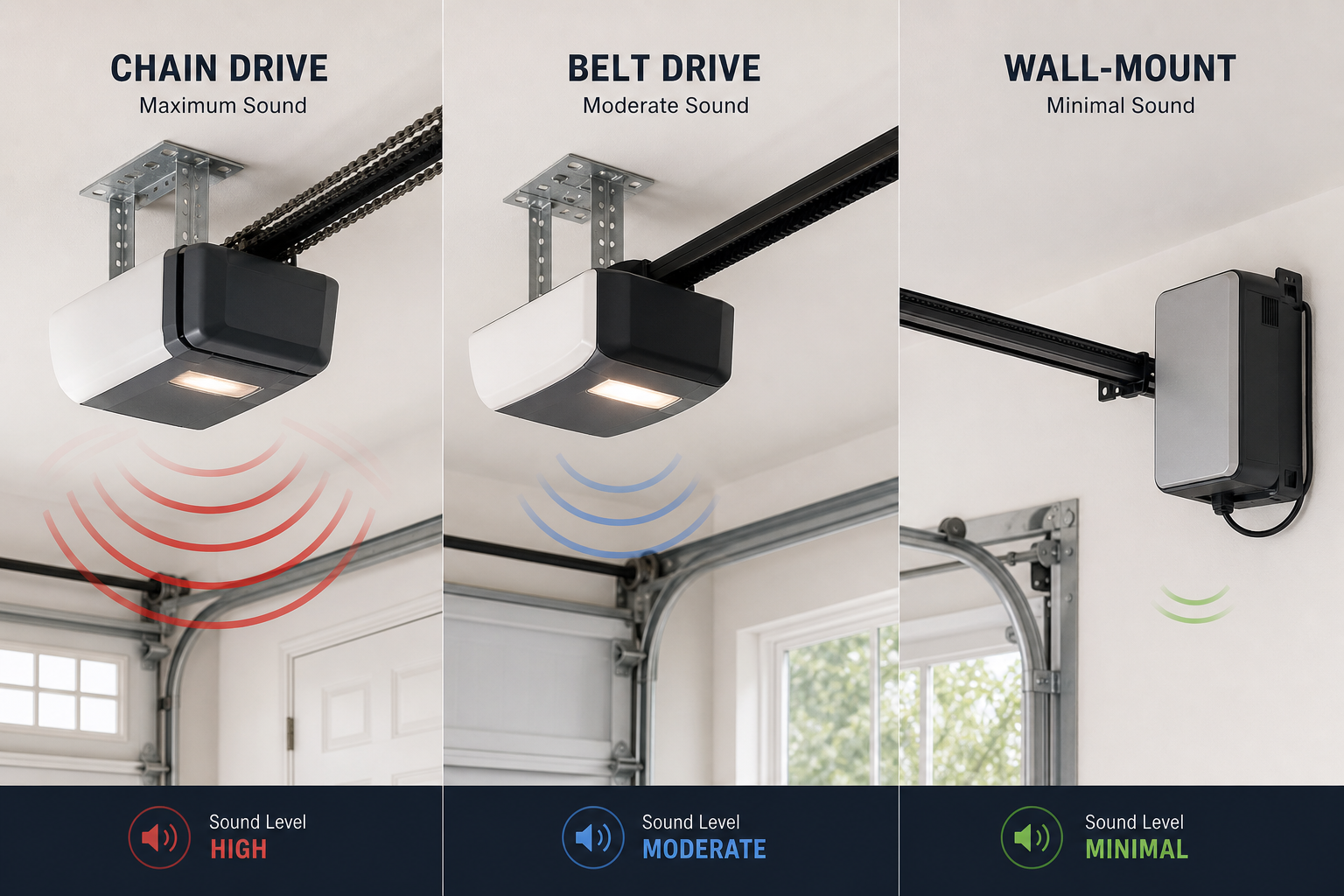
Chain drive openers are the loudest option, creating a rhythmic metallic sound as the chain moves along the rail. If your garage sits directly below bedrooms or living spaces, this noise can be disruptive during early morning or late evening use.
Belt drive systems operate much more quietly, using a reinforced belt instead of a metal chain. The rubber or polyurethane belt glides smoothly along the track with minimal noise. This makes them ideal for attached garages where noise matters.
Wall-mount openers eliminate most noise issues by mounting directly to the wall beside the door rather than overhead. Without a long rail system, there’s less vibration and mechanical noise transmitted through the garage structure.
Keep the workspace organized throughout installation. Debris and clutter cause errors and safety issues. Clear tools and waste between major steps rather than letting mess accumulate to the end.
Factor in maintenance when choosing your approach. The lowest-maintenance option isn’t always cheapest initially, but it usually wins over a 5 to 10-year window when you include touch-ups, repairs, and replacements.

Headroom Requirements
Headroom needs and installation complexity vary significantly for each drive type. This is an area where cutting corners comes back to haunt you. Invest the effort upfront and you’ll save significant time and money over the next several years of use.
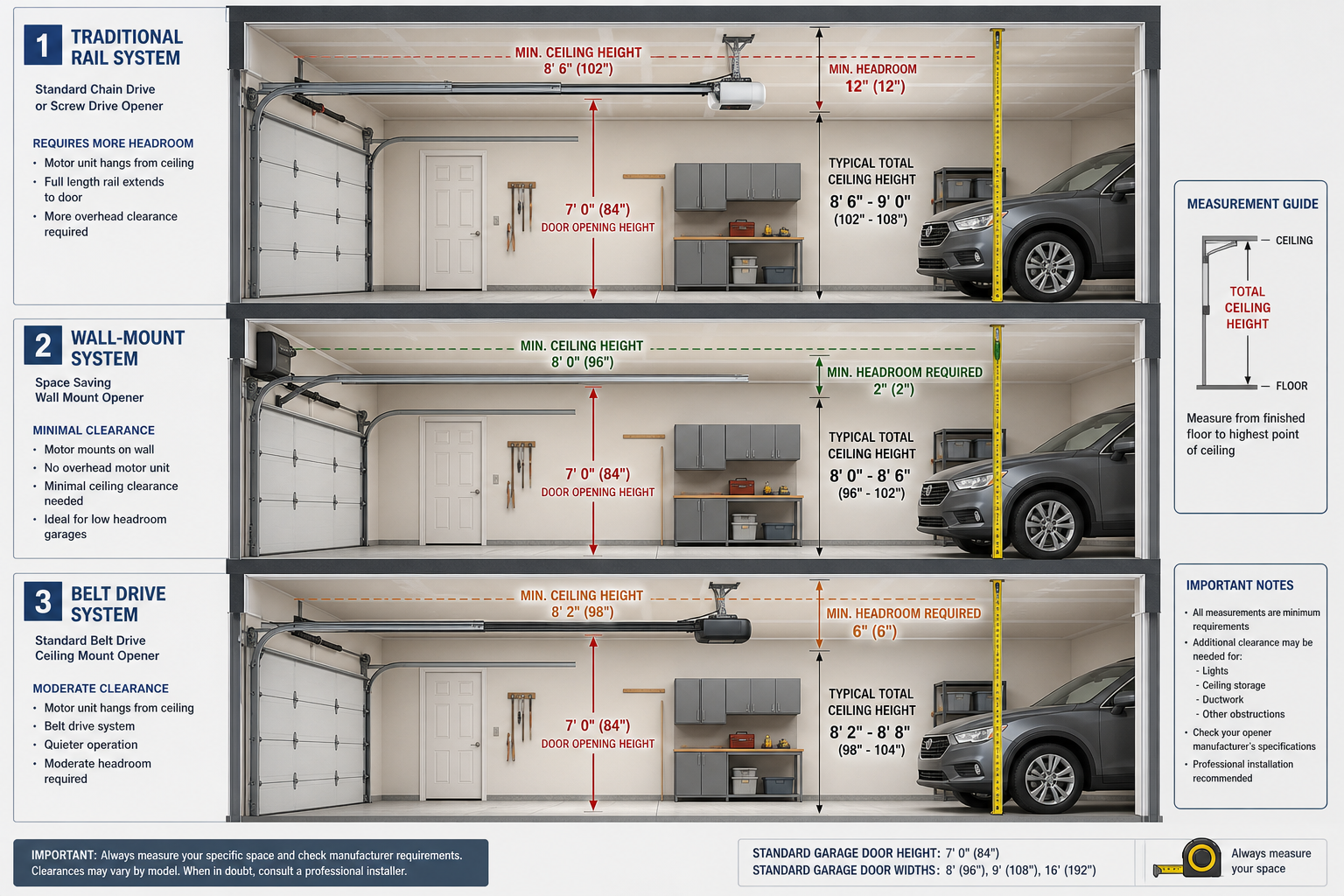
Chain and belt drive systems require substantial overhead clearance. You need at least 6 inches above the highest point of the door’s travel path for the motor unit and rail assembly. Many installations need 8-12 inches to accommodate the opener and allow proper door movement.
Wall-mount openers shine in low-headroom situations. Since they mount beside the door opening instead of overhead, you can install them in garages with as little as 2 inches of headroom above the door. This makes them perfect for older garages or converted spaces with low ceilings.
Document every product you use: brand, color, batch number, application date. Future touch-ups need exact material matches. Tape the info inside a cabinet door or take a quick phone photo for your records.
Expect at least one surprise during the project. Hidden moisture, non-standard dimensions, or outdated wiring are common discoveries. Having backup materials and a flexible timeline reduces the stress when they appear.
For garages with weather stripping issues, proper sealing becomes even more critical with different opener types.
Matching Mechanisms to Garage Conditions
Match the mechanism to garages under bedrooms, low ceilings, or high-lift doors. The details here make the difference between a result that lasts and one that needs redoing within a year. Take the time to assess your conditions before committing to a method or product.
Chain drives work best in detached garages where noise isn’t a concern. They handle heavy doors reliably and cost less than belt systems. The metal chain provides excellent durability and can lift substantial weight without stretching or wearing prematurely.
Belt drives excel in attached garages where quiet operation matters. They’re particularly valuable for homes with converted garage spaces or bedrooms above the garage. The smooth operation and reduced vibration make them worth the extra cost.
Wall-mount systems solve specific problems that overhead units can’t address. Low headroom, unusual door configurations, or interference with ceiling storage all favor wall-mount installation. They’re also easier to service since all components are accessible from ground level.
Check specific requirements before purchasing materials. Measure the area, note unusual conditions like extreme temps, high humidity, or uneven surfaces, and read product specs carefully. A mismatch between your conditions and the product’s rated range is the most common cause of unexpected failures.
Consider how this change fits the larger garage picture. Improvements in one area can shift dynamics elsewhere. Better insulation changes humidity patterns. Heavy storage affects the floor underneath. Think about interactions.
Installation Complexity and Costs
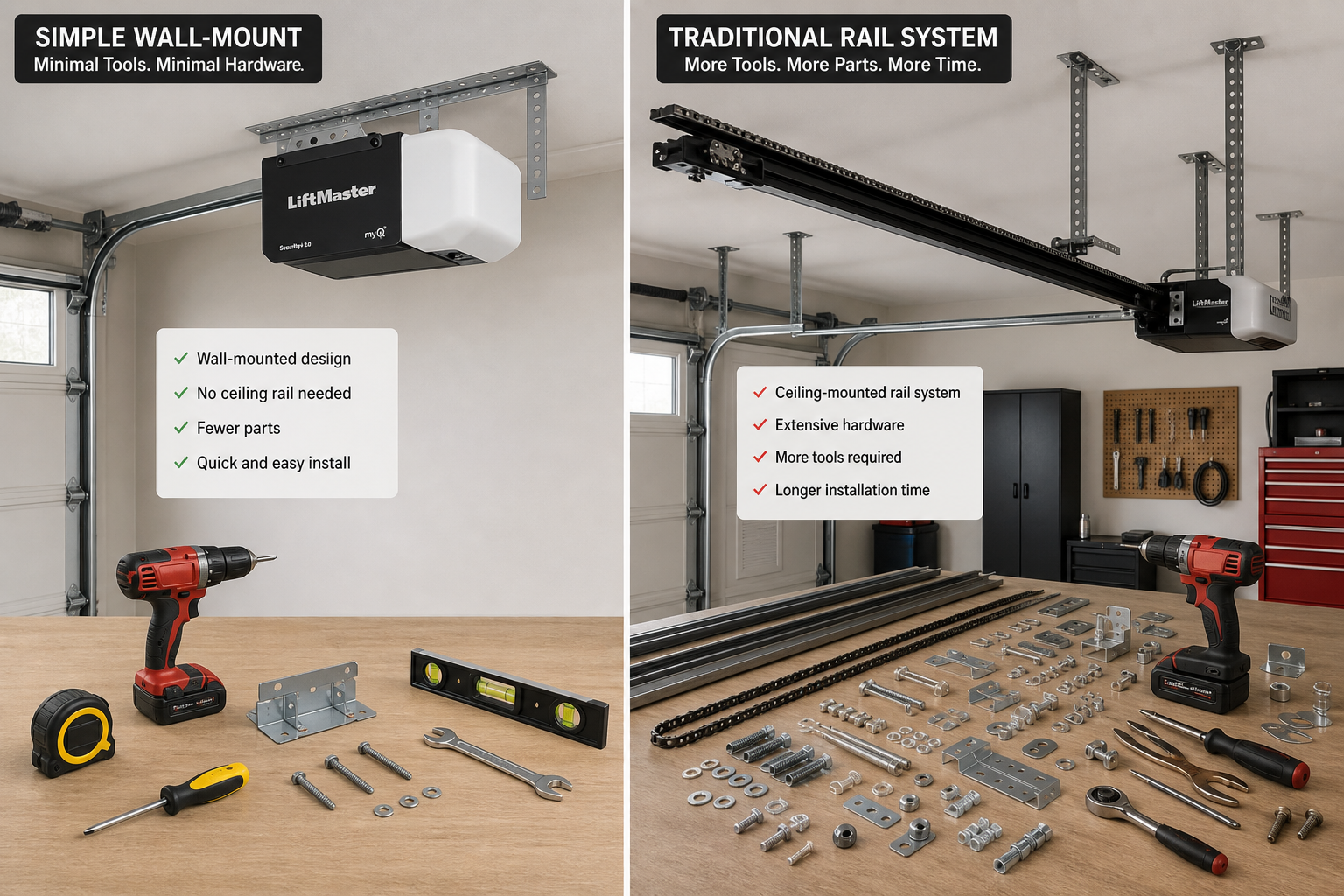
Chain drive systems offer the most DIY-friendly installation. The components are straightforward, replacement parts are widely available, and most homeowners can handle the installation with basic tools. The rail assembly mounts to standard ceiling joists using included hardware.
Belt drive installation follows similar steps to chain systems but requires more precision. The belt tension must be adjusted correctly to prevent slipping or premature wear. Professional installation often makes sense to ensure proper setup and warranty coverage.
Wall-mount openers require different mounting considerations. You need a solid wall beside the door opening that can support the motor unit and handle the lateral forces during operation. Electrical routing may also be more complex depending on your garage layout.
If your garage door has been stopping halfway or showing other issues, address those problems before installing a new opener.
Practical Planning Tips
Prioritize your projects based on impact and urgency. Safety issues like faulty wiring, CO risk, or structural problems come first. Comfort improvements such as insulation, lighting, and climate control come second. Cosmetic upgrades like floor coatings, paint, and organization systems come last. Following this order ensures you’re building each improvement on a solid foundation.
Before starting any garage project, take stock of what you have and what you need. Walk the space with a tape measure and a notepad. Record dimensions, note existing electrical outlets and their amperage, check for moisture issues, and photograph anything you want to change. This baseline assessment prevents surprises mid-project and helps you budget materials accurately.
Invest in quality tools for tasks you’ll repeat. A reliable stud finder, a good level, a quality tape measure, and proper safety gear make every project easier and safer. These tools pay for themselves across multiple projects over the years.
Set a realistic timeline and budget before buying anything. Most garage projects take 50% longer and cost 20% more than initial estimates, especially for first-timers. Build that buffer into your plan so unexpected discoveries don’t derail the entire project or blow the budget.
For garages being converted to workshop spaces, opener choice affects the overall functionality and noise levels of your work environment.
Maintenance and Longevity
Chain drives require regular lubrication and occasional adjustment. The metal chain stretches over time and needs periodic tightening. Monthly lubrication with white lithium grease keeps the system running smoothly and extends component life.
Belt systems need less frequent maintenance but require attention to belt tension and condition. Inspect the belt quarterly for cracking, fraying, or stretching. Most quality belts last 10-15 years with proper care, but environmental factors can shorten this lifespan.
Wall-mount openers typically require the least maintenance since they have fewer moving parts exposed to dust and temperature variations. Annual inspection and basic lubrication of pivot points usually suffices for reliable operation.
Which Type Should You Choose?
Choose chain drive if you have a detached garage, heavy door, or tight budget. The noise won’t matter in a detached setting, and chain systems offer excellent value and reliability. They’re also the easiest to service yourself.
Pick belt drive for attached garages where quiet operation justifies the higher cost. If your garage shares walls with living spaces or sits below bedrooms, the smooth, quiet operation makes daily use much more pleasant.
Go with wall-mount if you have low headroom, unusual door configurations, or want the quietest possible operation. They’re particularly good for converted spaces where ceiling clearance is limited.
Both options have real strengths, and none is universally superior. Your budget, timeline, climate, and usage patterns determine the better fit. Pick whichever checks more of your boxes and commit confidently.
Still undecided? Start with the lower-cost or more reversible option. You can always upgrade later once you have firsthand experience with the trade-offs in your specific setup.
Frequently Asked Questions
How much should I budget for a garage door opener?
Costs vary widely by type and features. Chain drives are the most budget-friendly option, while belt drives and wall-mount systems cost more. DIY installation saves significantly on labor costs. Check current Amazon pricing for accurate material estimates based on your specific needs.
Can I handle opener installation as a DIY project?
Most installation steps are DIY-accessible with basic tools and mechanical skills. However, electrical connections, structural mounting, and high-tension spring work should go to licensed professionals. Always check local codes and manufacturer requirements before starting.
What’s the biggest mistake to avoid during installation?
Rushing preparation is the most costly error. Whether it’s surface prep, measuring, or reading instructions thoroughly, upfront time prevents expensive do-overs. Take accurate measurements, verify electrical requirements, and test door operation before installing the opener.
How long will my garage door opener last?
Quality openers provide years of reliable performance with proper installation and maintenance. Chain drives typically last 15-20 years, belt drives 10-15 years, and wall-mount systems 12-18 years. Preparation quality and regular maintenance are the biggest longevity factors.
This article contains affiliate links. We may earn a small commission at no extra cost to you.
