

As an Amazon Associate I earn from qualifying purchases.
A fresh coat of paint is one of the fastest ways to make a garage floor look like a completely different space. Whether you want something clean and minimal or bold and custom, there are more options than most people realize. This article covers four approaches: single color coatings, two-tone patterns, speckled and textured finishes, and striping and zones.
Single Color Coatings
Sometimes the simplest choice makes the biggest impact. A single solid color across the entire floor creates a clean, unified look that makes the whole garage feel larger and more intentional. It’s also the easiest approach to DIY, which is one reason it’s the most popular starting point for first-time garage floor projects. If you’re still weighing your options before committing to paint, it’s worth reading through this breakdown of whether painting your garage floor is the right move for your situation. For color ideas beyond what’s shown here, I’ve also put together a full garage floor paint color list you can browse.
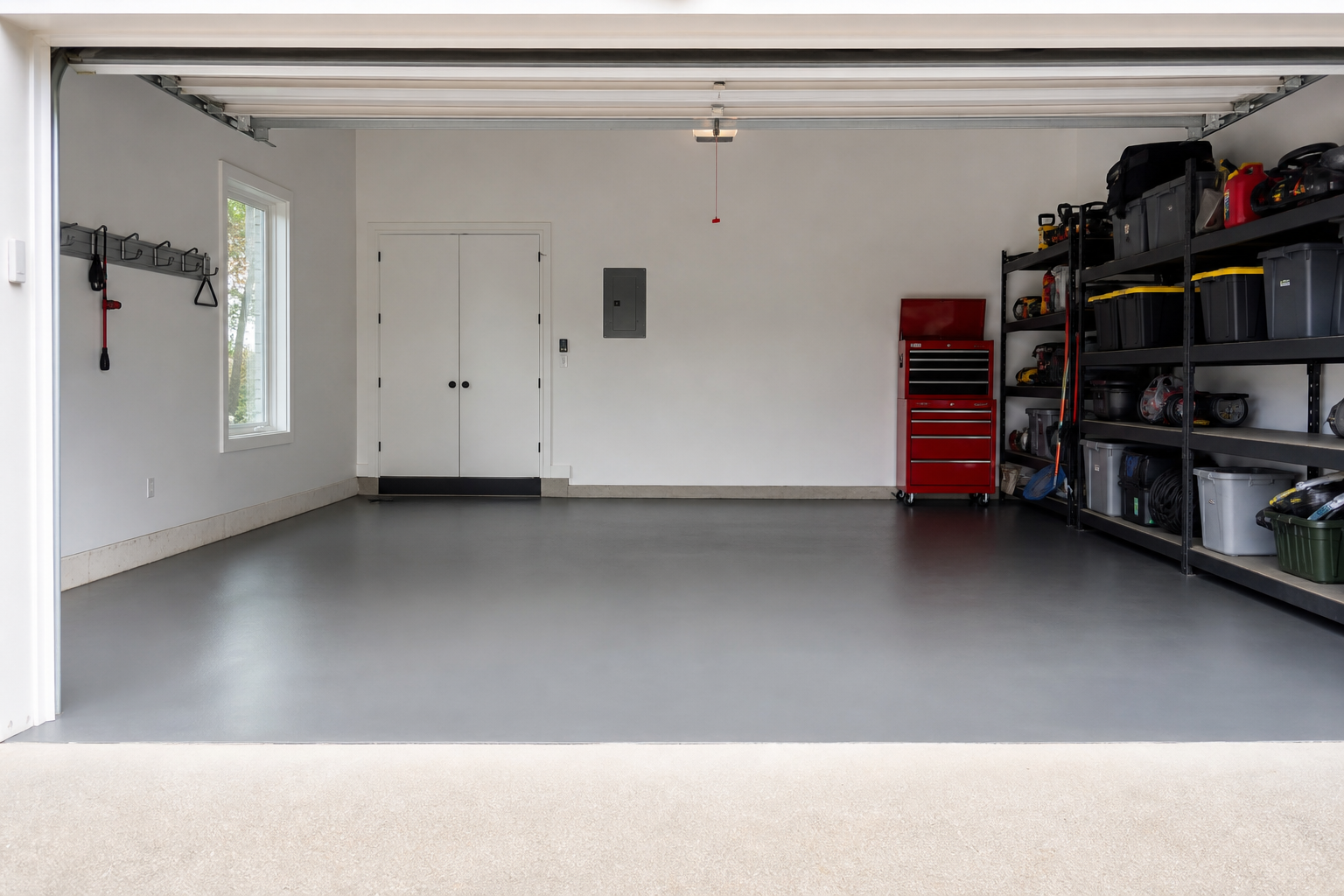
Medium gray is the go-to single-color choice for a reason. It hides tire marks and dust better than lighter shades and pairs cleanly with white or light gray walls. A satin finish like this one adds just enough sheen without looking slick or industrial.
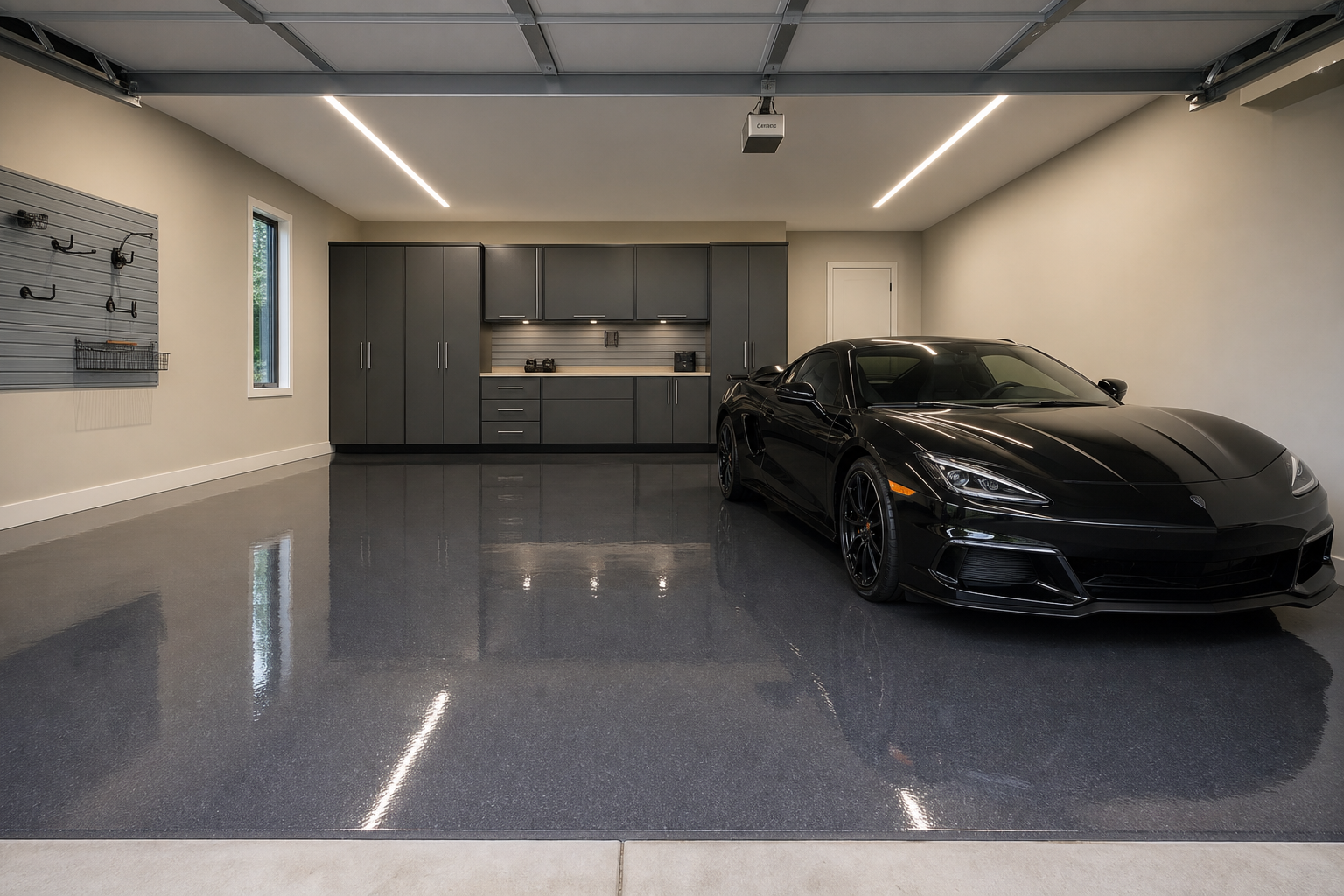
Charcoal gray with a high-gloss finish gives the garage a dramatic, almost showroom quality. The dark floor makes lighter-colored vehicles pop and reflects overhead LED lighting beautifully. If you’re going this route, check out how garage lighting color temperature affects how dark floors actually look once everything is installed.
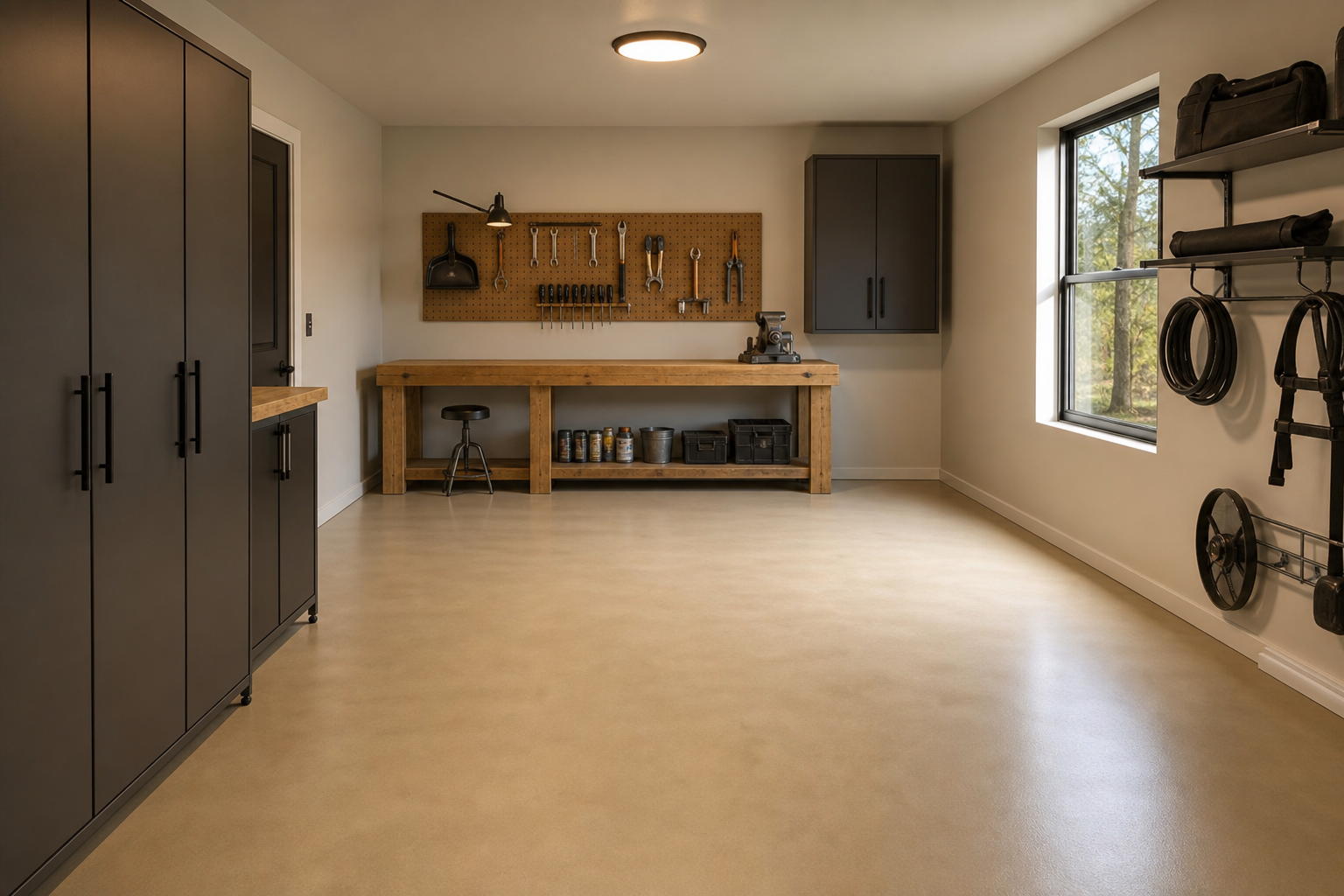
A warm tan or beige floor softens the garage and makes it feel less like a utility space and more like a workshop you actually want to spend time in. The matte finish is forgiving on surface imperfections, which is useful on older concrete. It reads especially warm under natural light coming through windows or a glass garage door.
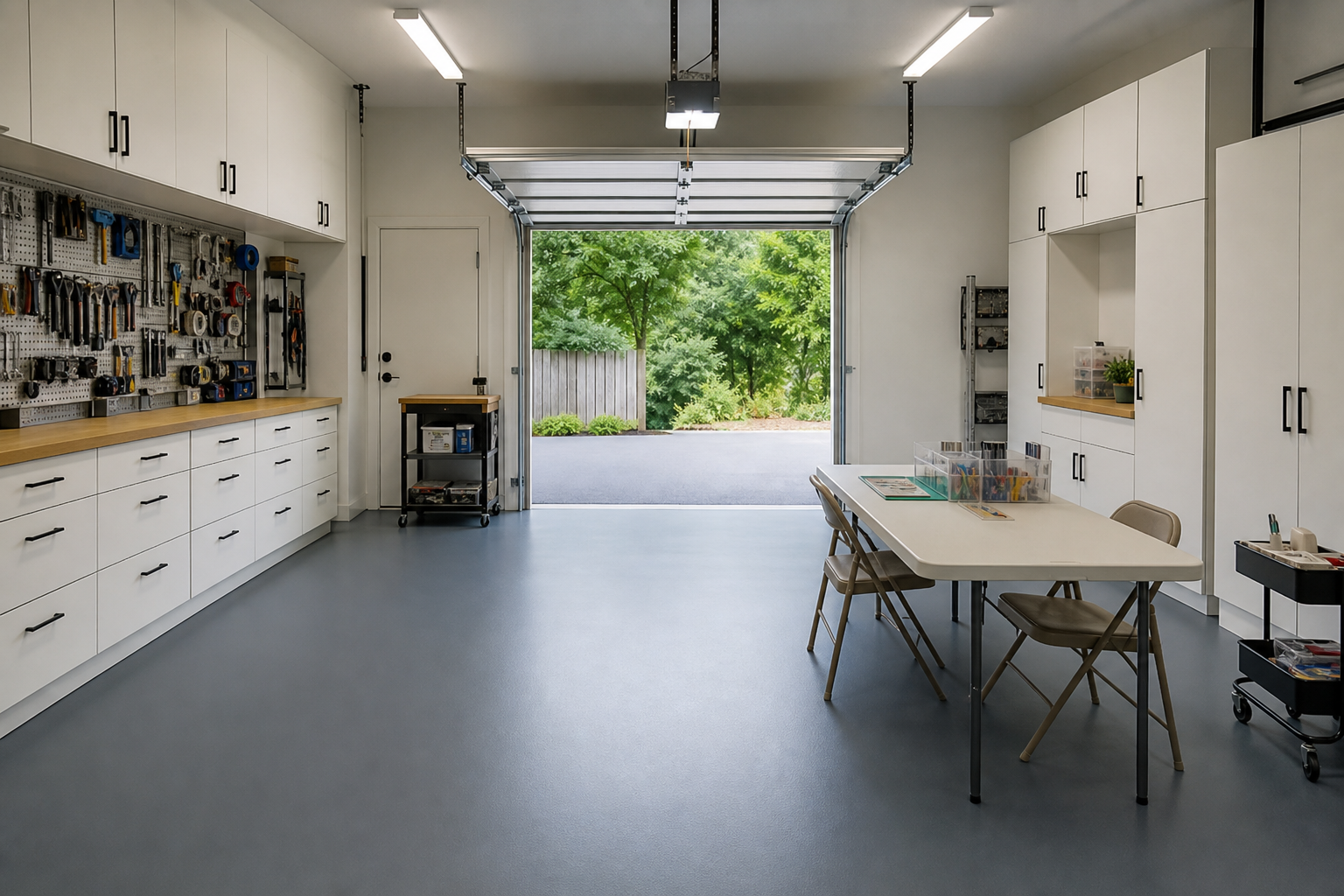
Slate blue-gray is an underused color that works especially well in garages converted into workshops or hobby rooms. It reads as neutral but has just enough color to make the space feel designed rather than default. Pair it with white cabinets and pegboard storage for a look that’s organized and easy on the eyes.
Two-Tone Patterns
Two-tone garage floors take a bit more planning but the results are worth it. Using two complementary colors, you can create checkerboard grids, bordered perimeters, or split-zone designs that add real visual interest to an otherwise flat surface. The key is prep work and tape lines: clean edges make or break this kind of project. If you’re planning to use epoxy for a two-tone look, I’d recommend checking out these epoxy garage floor ideas for inspiration on what’s possible with layered coatings. You’ll also want to understand the difference between products before you buy, so this comparison of garage floor paint vs epoxy is a good place to start.
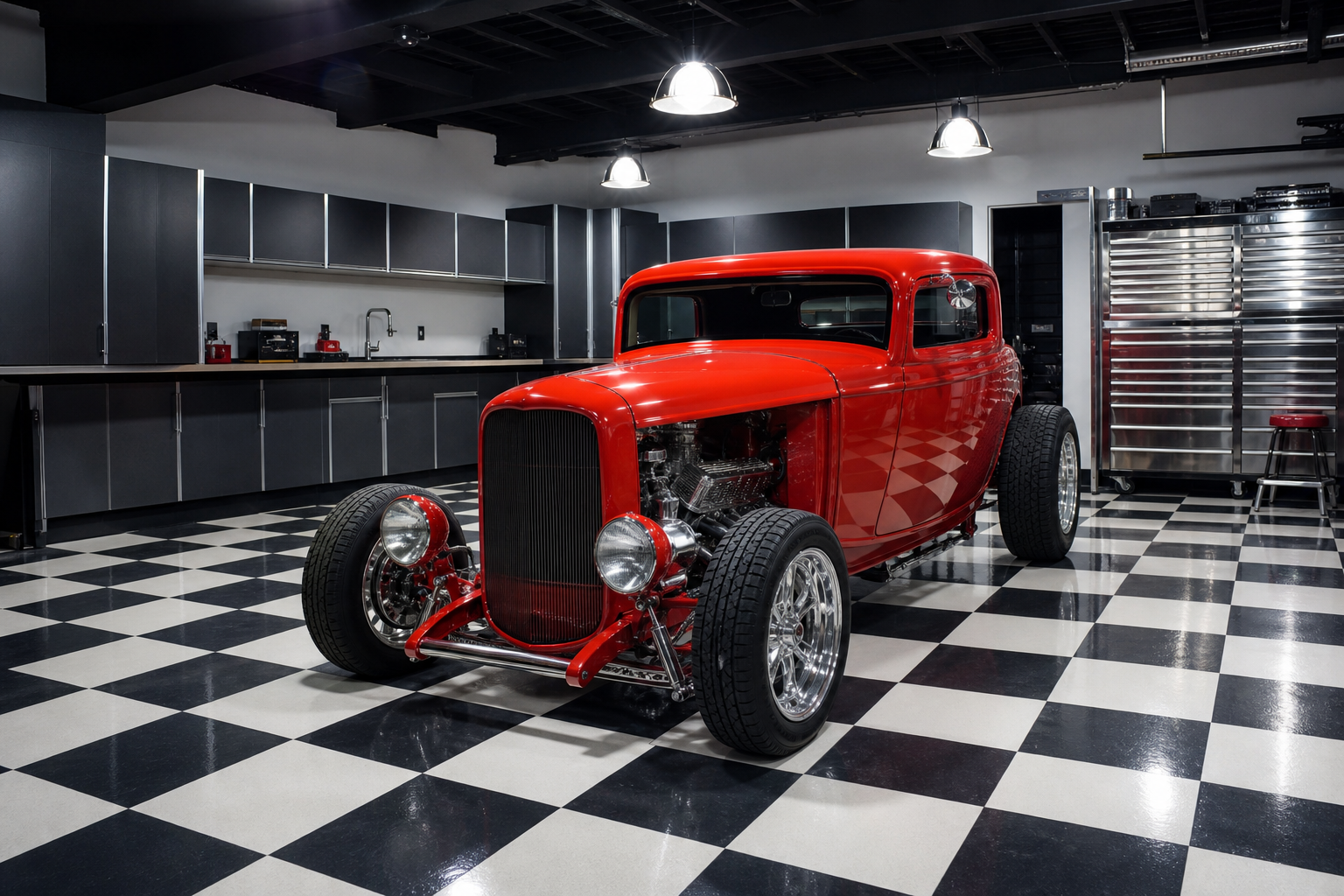
The black and white checkerboard is a classic for garage workshops and car enthusiasts and it never really goes out of style. High-gloss epoxy in both colors gives the pattern a bold, crisp look that photographs well and holds up to heavy use. The 24-inch squares work well in a standard two-car garage without making the pattern feel overwhelming.
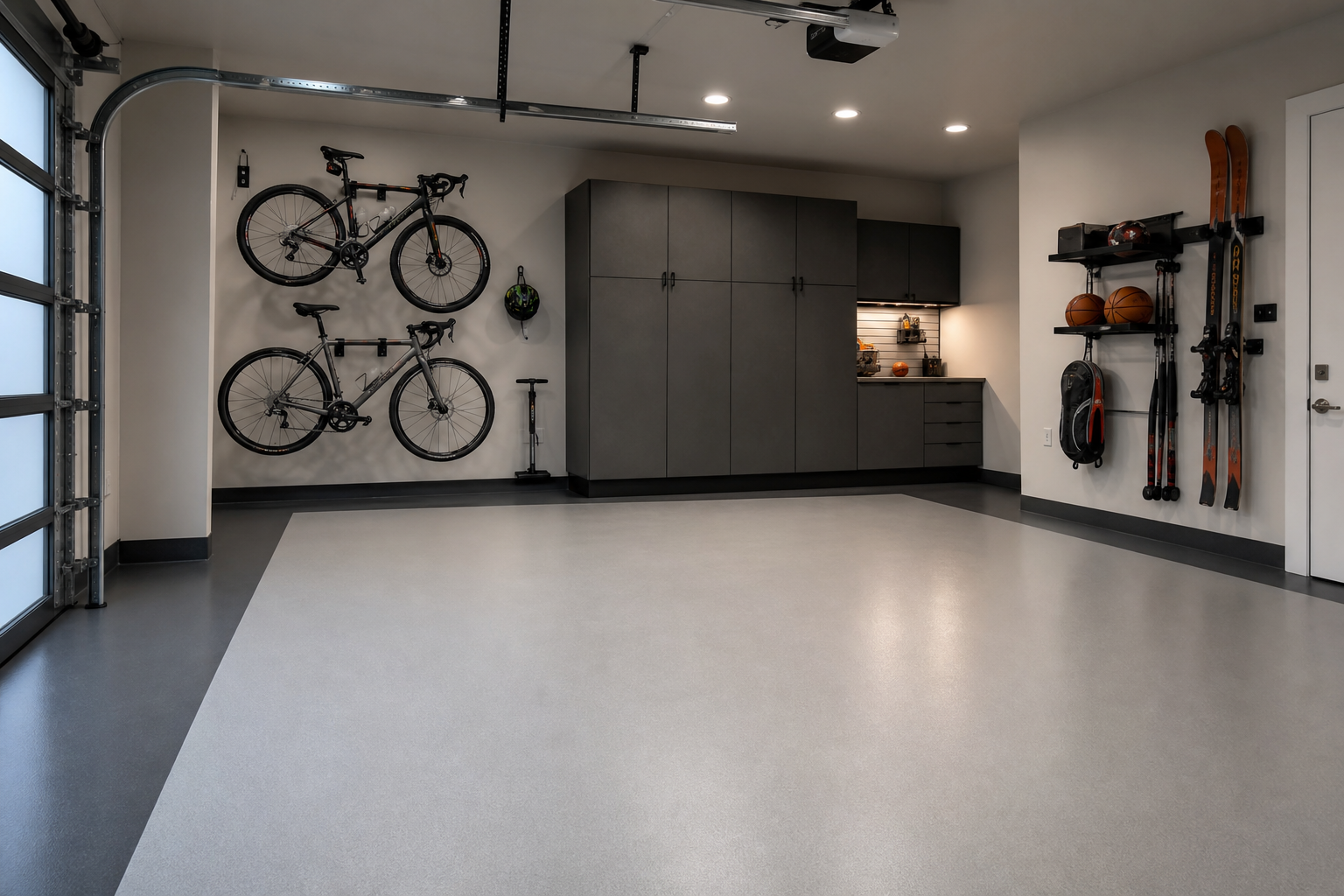
A perimeter border is one of the most underrated two-tone ideas because it looks custom without being complicated to execute. The darker border frames the floor and gives the space a more finished, intentional appearance. This style works especially well if you’re using the garage as a gym or hobby room where the floor is a focal point.
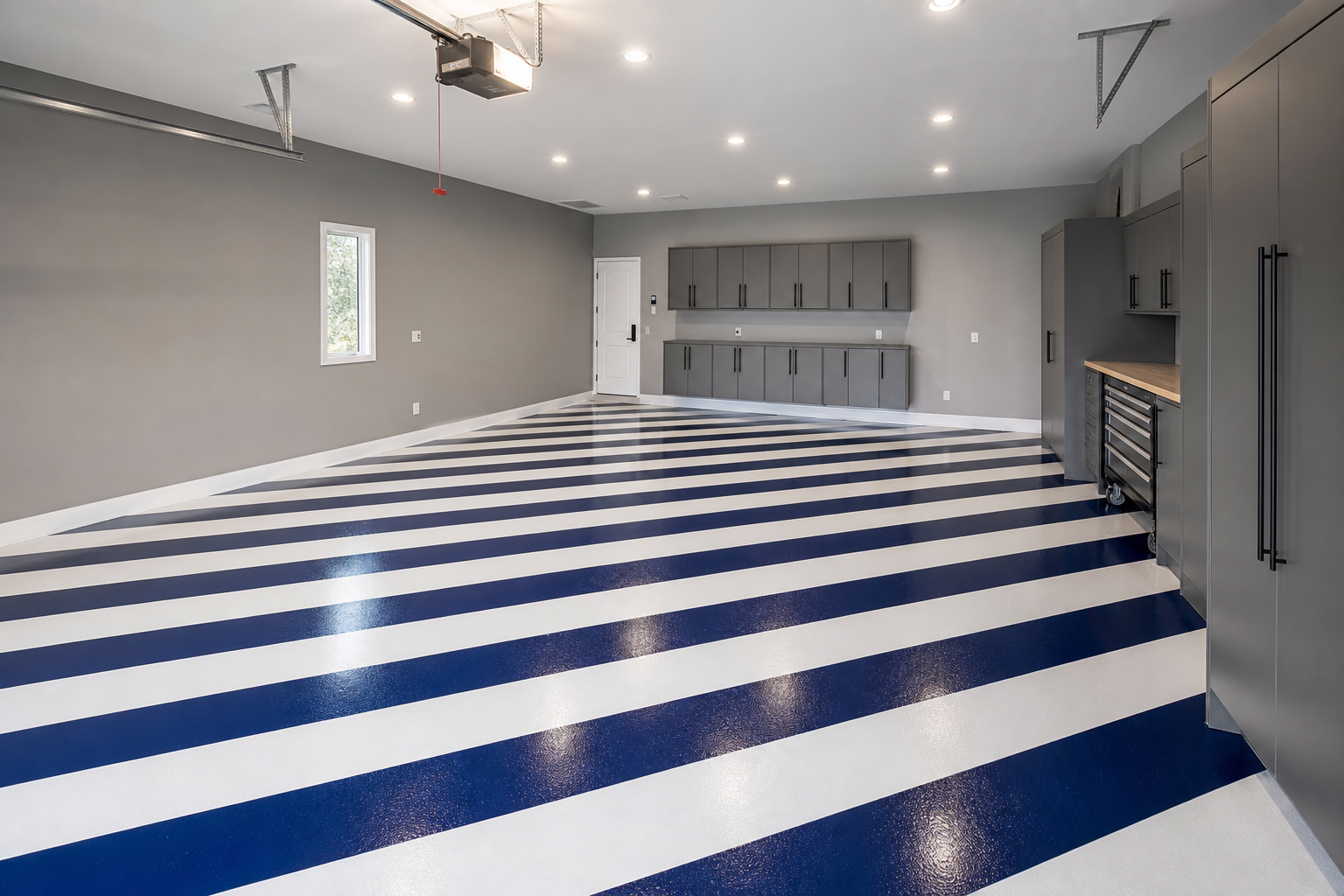
Diagonal stripes add energy and movement to a garage floor in a way that straight lines simply don’t. Navy blue and white is a bold pairing that suits automotive-themed garages particularly well. The glossy finish makes the color contrast even sharper and reflects light across the diagonal lines for a dynamic effect.
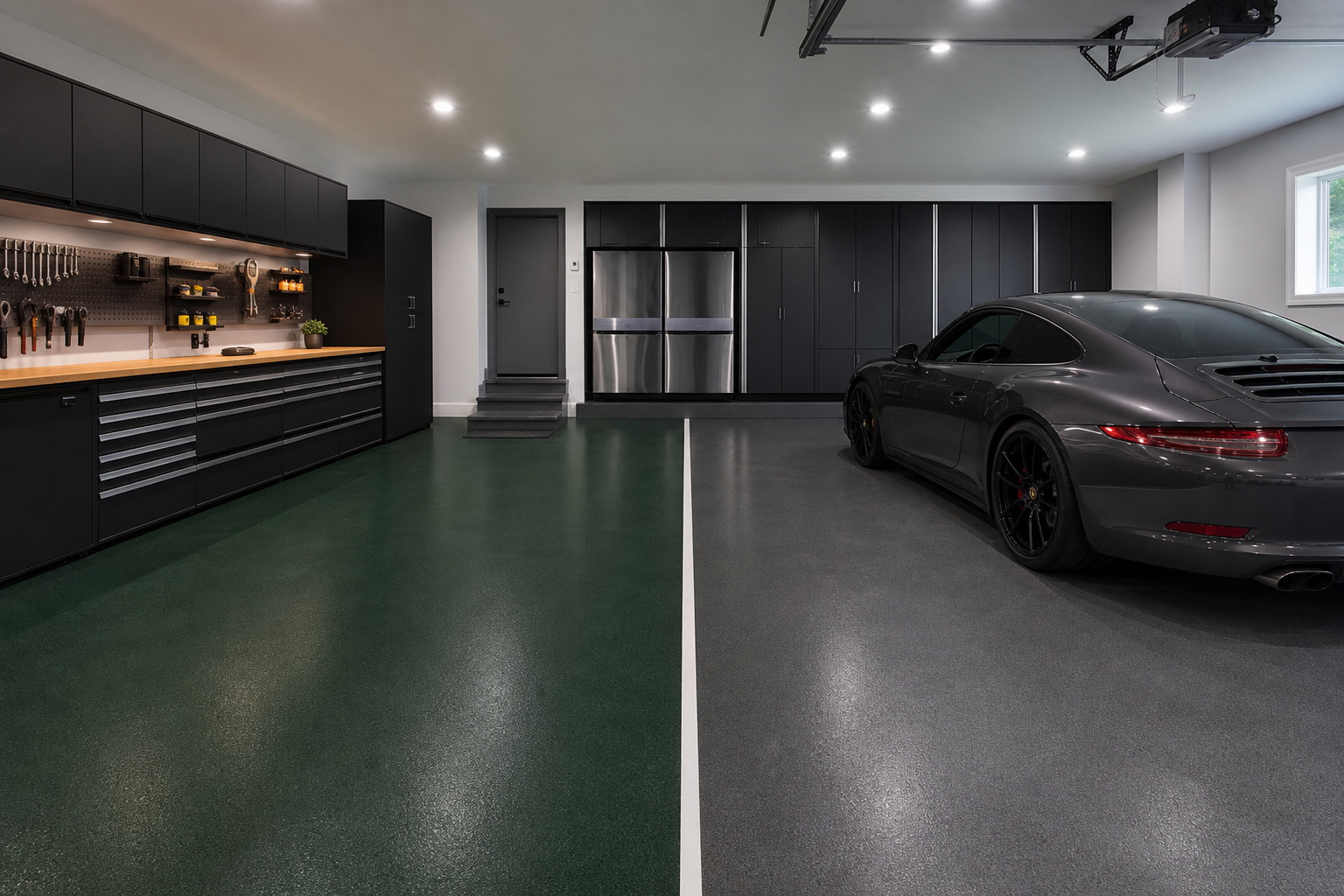
A split two-tone floor is a smart way to visually separate functional zones without using mats or tiles. Here the green side signals the work area and the gray side handles parking, and the thin white dividing line keeps the transition clean. If you want to get more intentional about separating your garage into activity areas, this guide on creating organized garage zones covers layout strategies worth considering.
Speckled and Textured Finishes
Speckled finishes, most commonly achieved with paint chips or broadcast flakes mixed into an epoxy base coat, are probably the most popular garage floor look right now. They disguise imperfections, hide everyday dirt and grit, and give the floor a finished look that holds up well over years of use. The color chip options have also expanded significantly, so you’re not limited to the old tan-and-brown combinations that used to define this style. I’ve written a dedicated guide on how to choose the right flake color for your garage floor if you want to dig into that decision. These finishes often look similar to full epoxy systems, so if you’re comparing product types, the garage floor coatings ranked guide gives a clear breakdown of how they stack up.
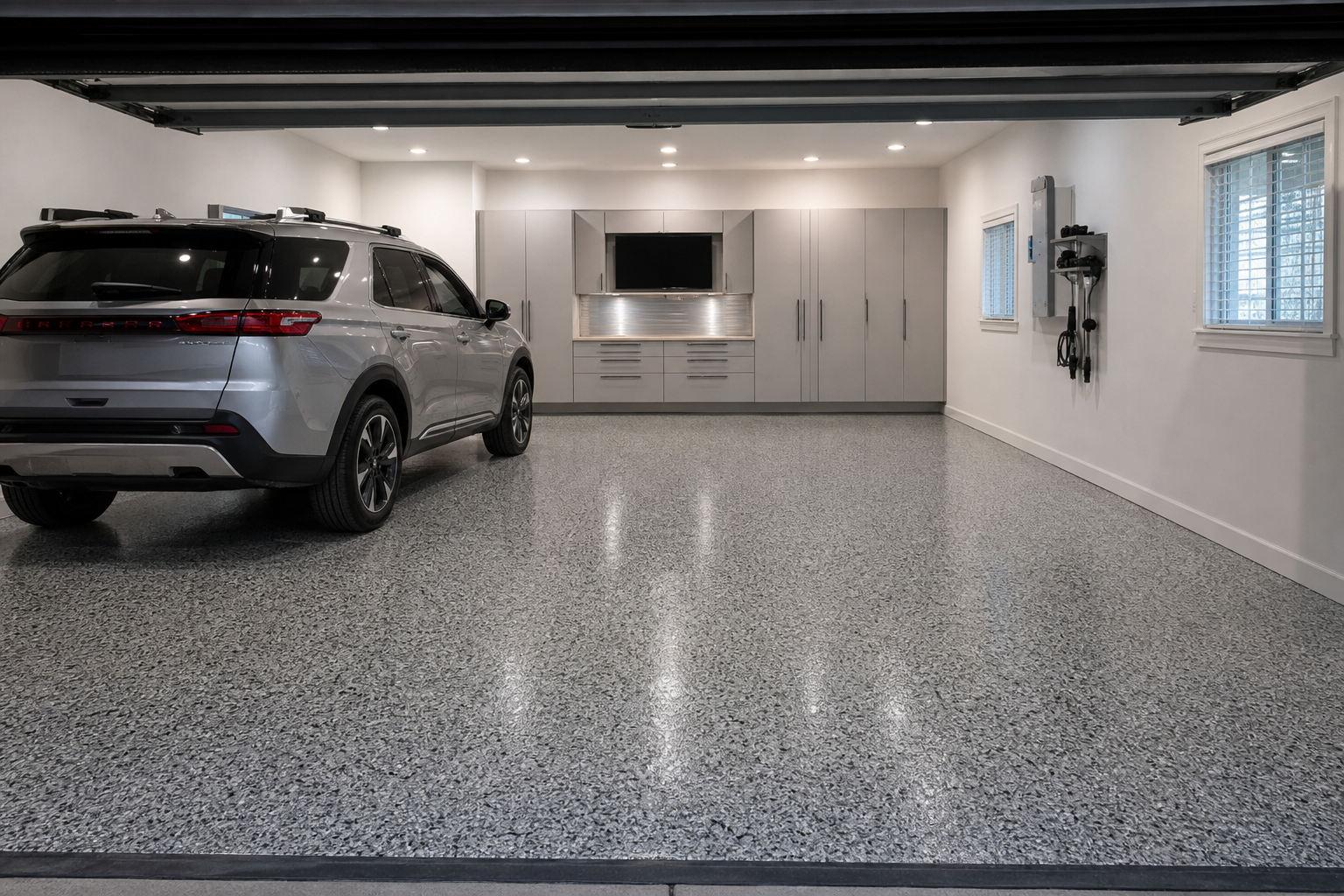
The gray, white, and black chip blend is the most versatile speckled finish you can choose because it matches almost any wall color and doesn’t compete with vehicles or storage. A full broadcast application, where the chips completely cover the base coat, gives you the most durable and visually consistent result. The high-gloss topcoat seals everything in and makes the floor easy to sweep clean.
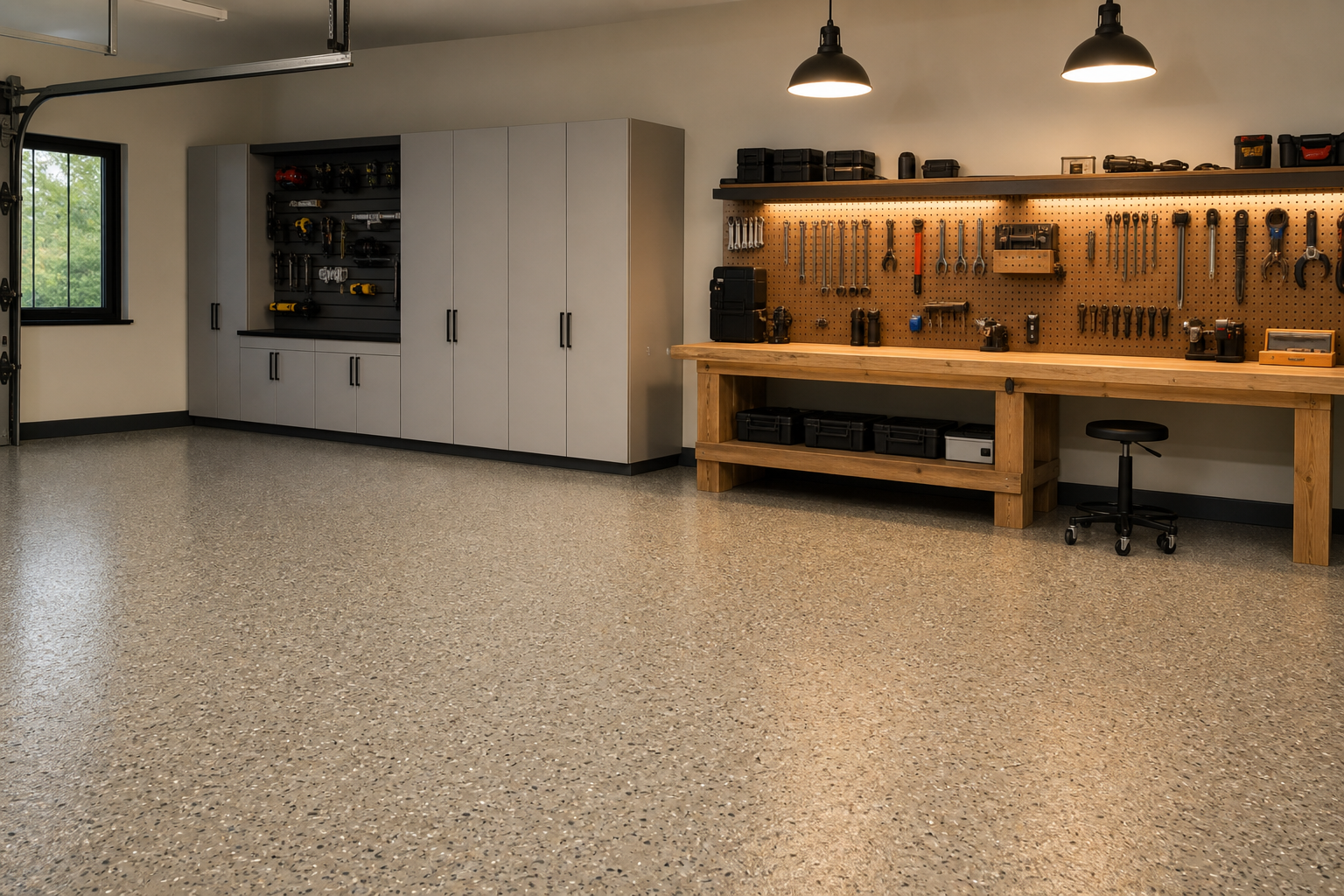
Warm-toned chip blends are a natural fit for workshop garages with wood elements and warm lighting. The partial broadcast here lets some of the base coat show through, giving the floor a more textured, organic look compared to a full coverage application. Beige and tan chips age gracefully and don’t show yellowing the way some lighter coatings can over time.
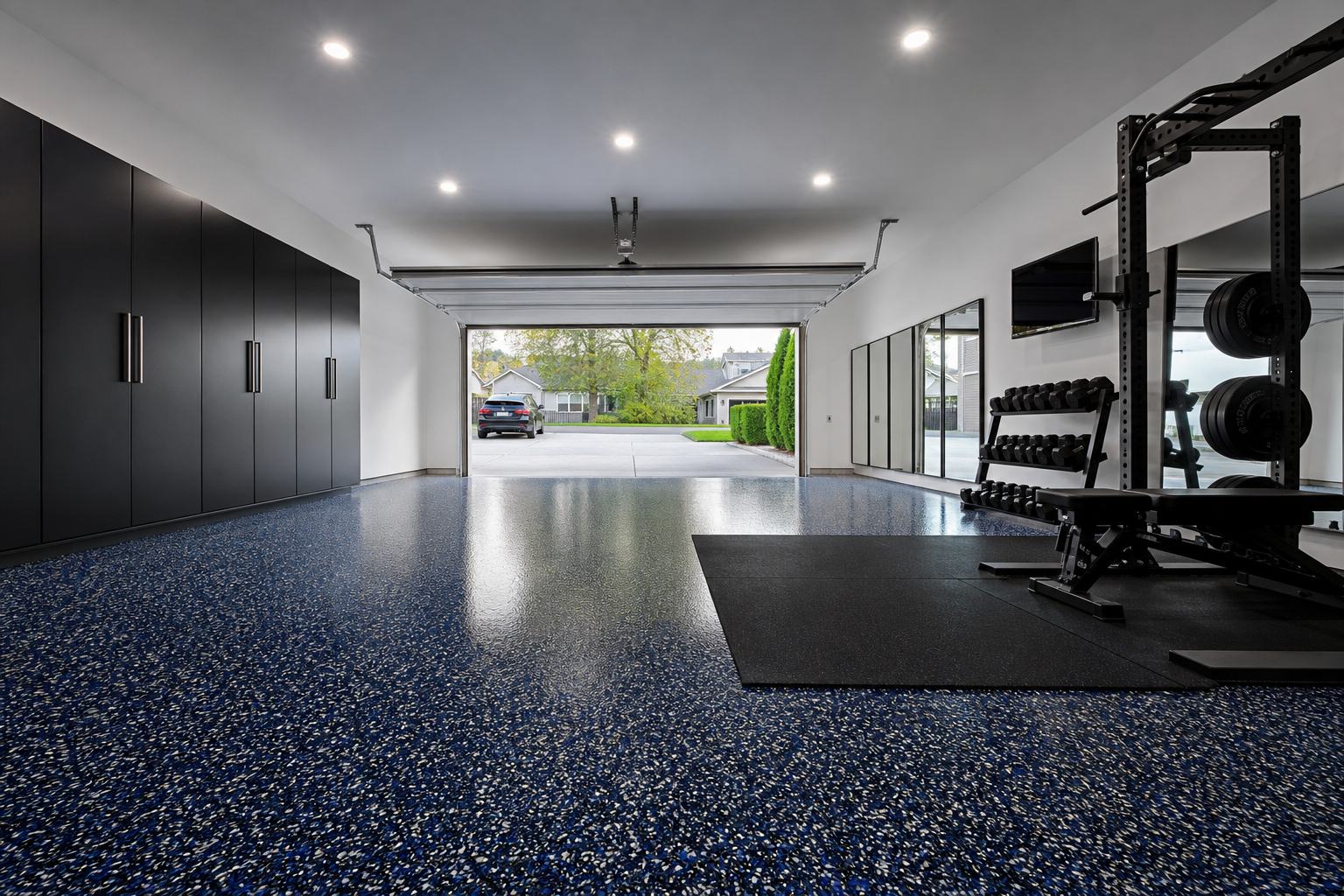
A bold blue and silver chip blend over a dark navy base turns a garage gym floor into something that feels purpose-built. The high-gloss topcoat makes the blue tones really saturate and reflects the overhead LED lights for a bright, energetic atmosphere. This kind of finish also holds up well under dropped weights and rolling equipment without showing damage.
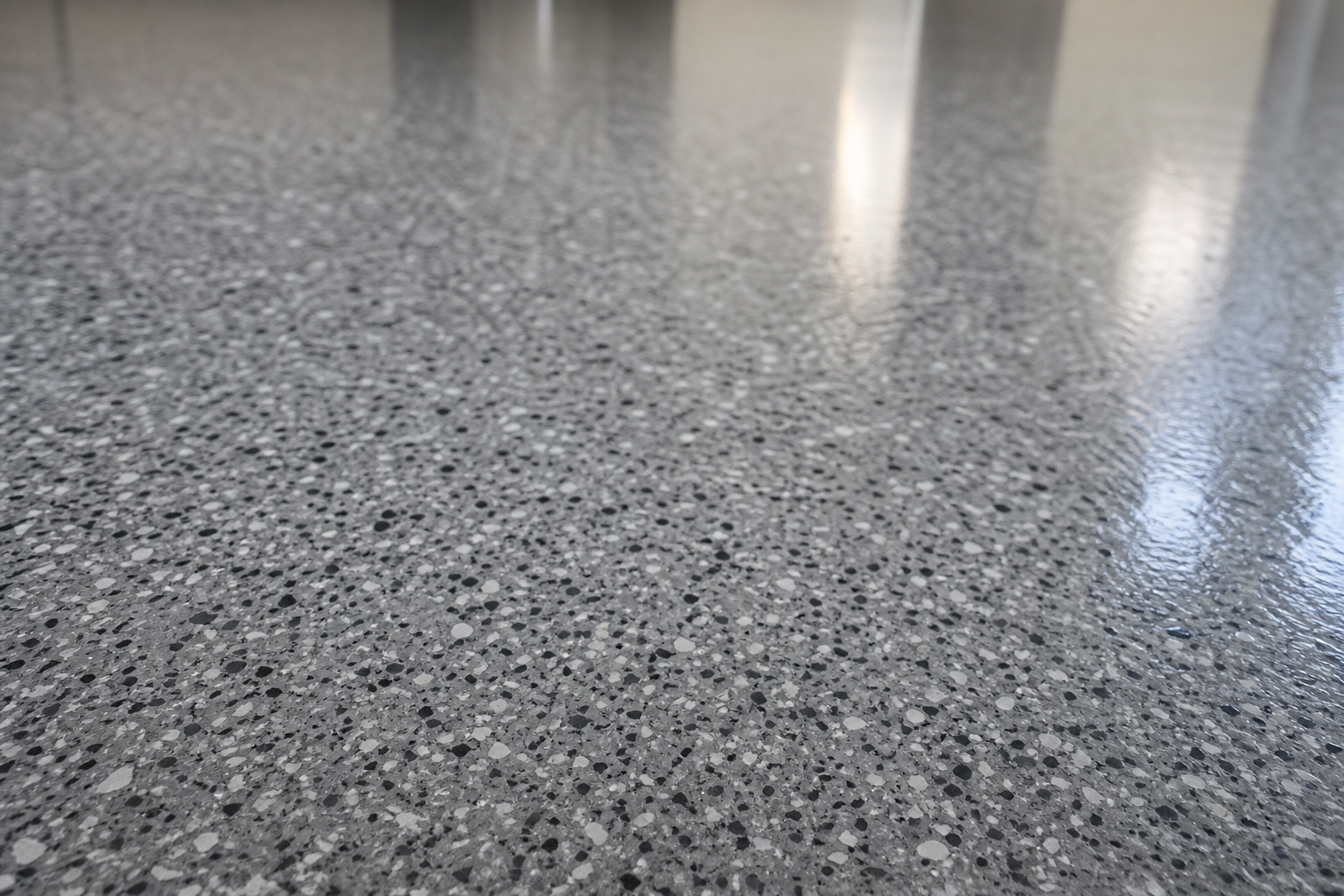
Fine chip or micro-flake blends create a granite or terrazzo effect that looks closer to natural stone than a traditional painted floor. The smaller chips produce a smoother surface texture, which some people prefer both visually and underfoot. This style pairs especially well with upscale garage design ideas where you want the floor to look like it belongs in a showroom rather than a utility space.
Striping and Zones
Painted stripes and zoning lines serve a practical purpose as much as a visual one. They direct traffic, mark parking spots, separate work areas, and create a sense of order that makes the garage easier to use day to day. Safety yellow and white are the traditional stripe colors, but plenty of homeowners are branching out with bolder colors that match their overall garage aesthetic. If you’re working through a larger garage renovation, thinking about your floor zones early in the process helps everything else fall into place. A good companion read is this guide on single vs double vs tandem garage dimensions, which covers how layout affects how much usable floor space you’re actually working with.
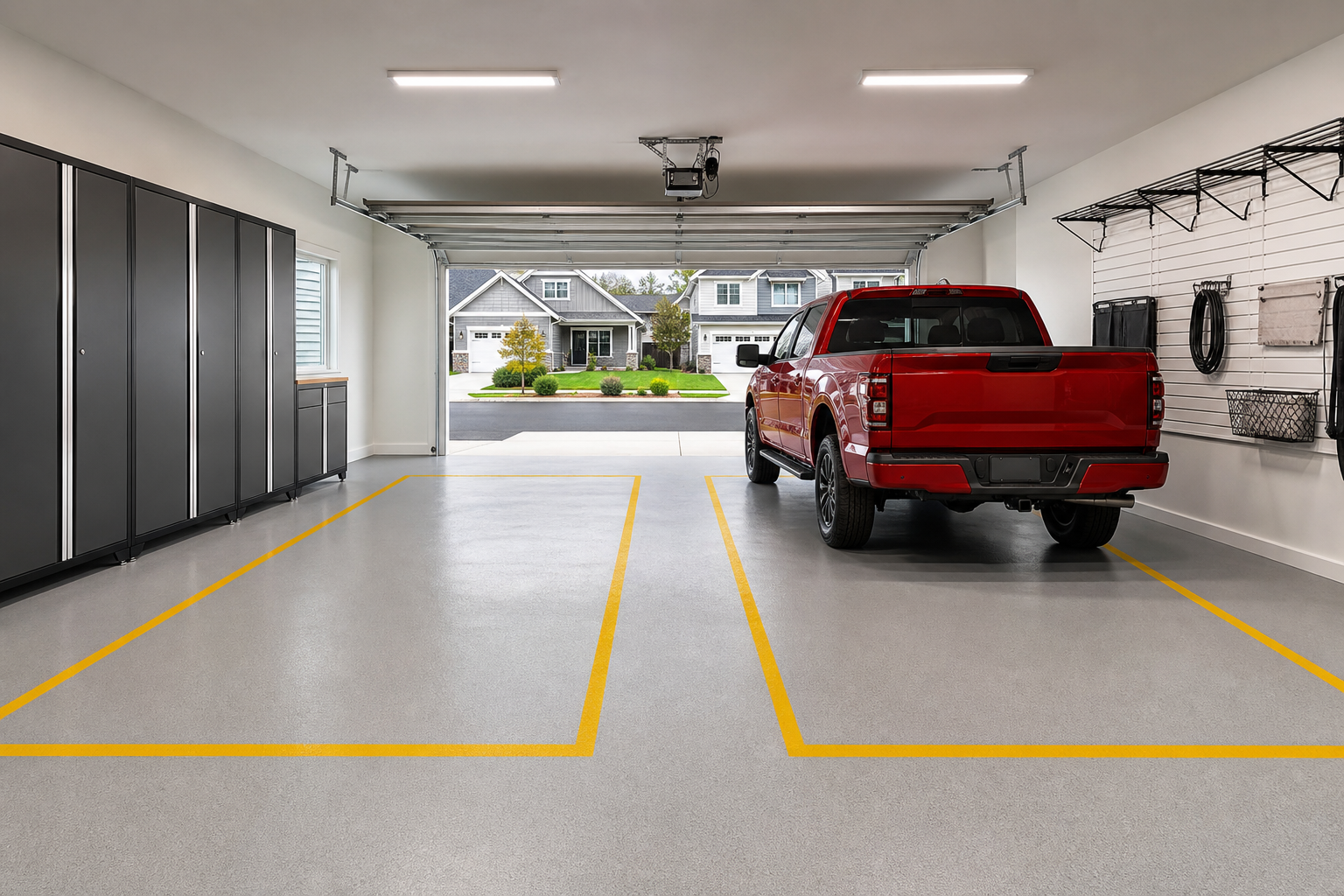
Yellow parking zone outlines on a gray floor are a clean, functional addition that makes it immediately clear where each vehicle belongs. The bright yellow contrasts sharply against the gray base without being distracting when you’re just moving around the space. This kind of striping also makes it easier to spot when bikes, bins, or other items are creeping into the parking area.
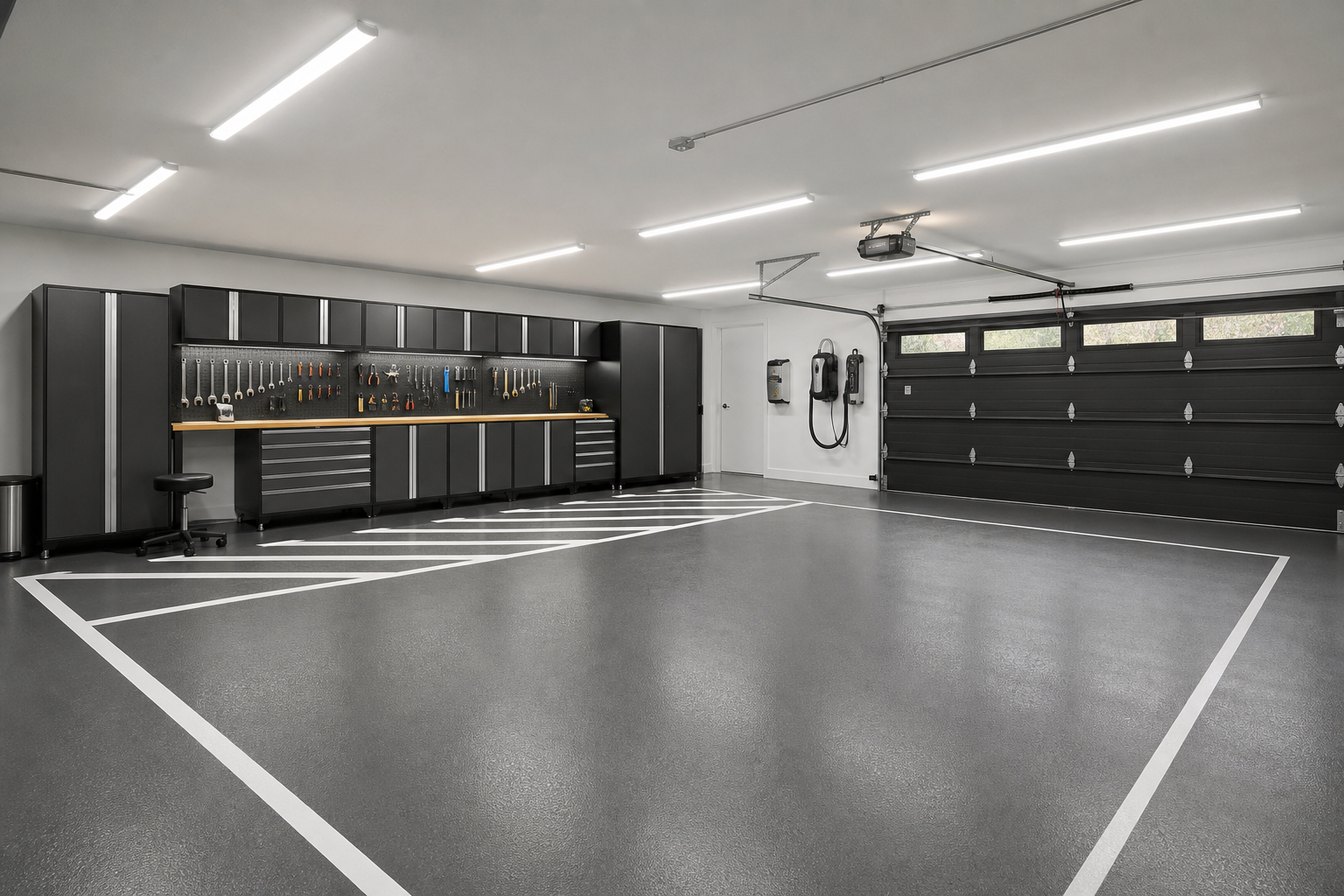
White zone lines with diagonal hash marks inside are a practical way to mark areas that should stay clear or that have a specific function. It’s the same language used in commercial workshops and auto shops, and it translates well into a home garage that doubles as a serious workspace. The dark gray base keeps everything from looking too busy while still letting the white lines read clearly from across the room.
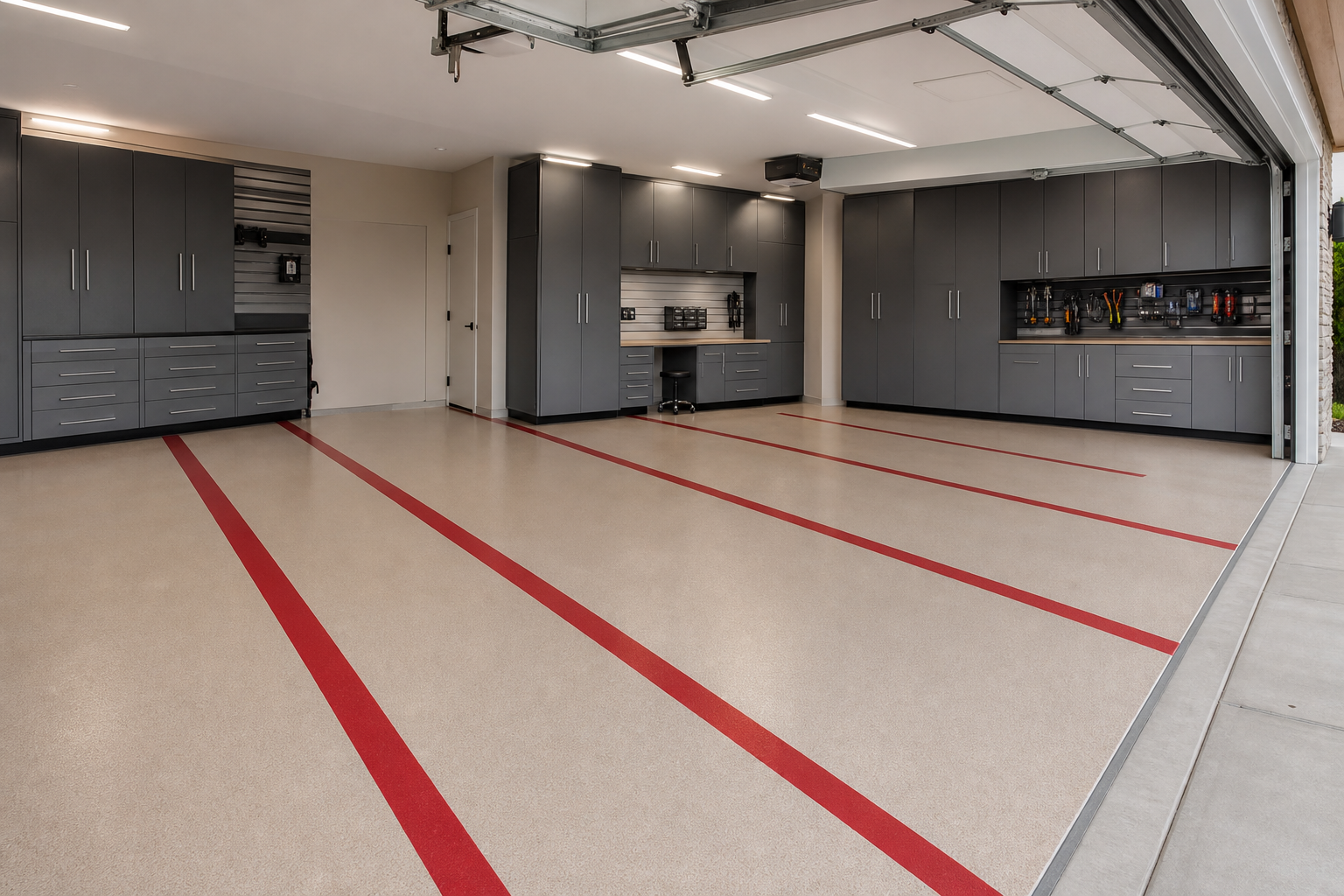
Bold longitudinal stripes running the length of the garage create a sense of depth and direction that makes even a large three-car space feel organized and intentional. Red on beige is an unexpectedly striking combination that stops just short of feeling aggressive. The stripes also serve as a subtle visual guide for parking, keeping vehicles centered in their bays without needing formal zone outlines.
