

As an Amazon Associate I earn from qualifying purchases.
A dedicated garage recycling station makes sorting feel less like a chore and more like a system that actually works. Whether you have a two-car garage with room to spread out or a tight single-bay space where every square foot counts, there are setups here that will fit your situation. This article covers four approaches: multi-bin sorting systems, labeled container setups, compact corner stations, and crushing and prep zones.
Multi-Bin Sorting Systems
A multi-bin sorting system is the backbone of any efficient garage recycling station. The idea is simple: give each material type its own dedicated bin so nothing gets mixed up and collection day takes minutes instead of a frantic scramble. These setups work especially well in garages where the family generates a high volume of recyclables, like ours does with four kids and what feels like a thousand juice boxes a week. If you’re already working on creating organized garage zones for tools, lawn gear, and kids’ stuff, adding a recycling zone to that plan is a natural next step. The bins themselves can be freestanding, mounted to a wall frame, or slotted into a rolling cart depending on how much floor space you’re willing to dedicate.
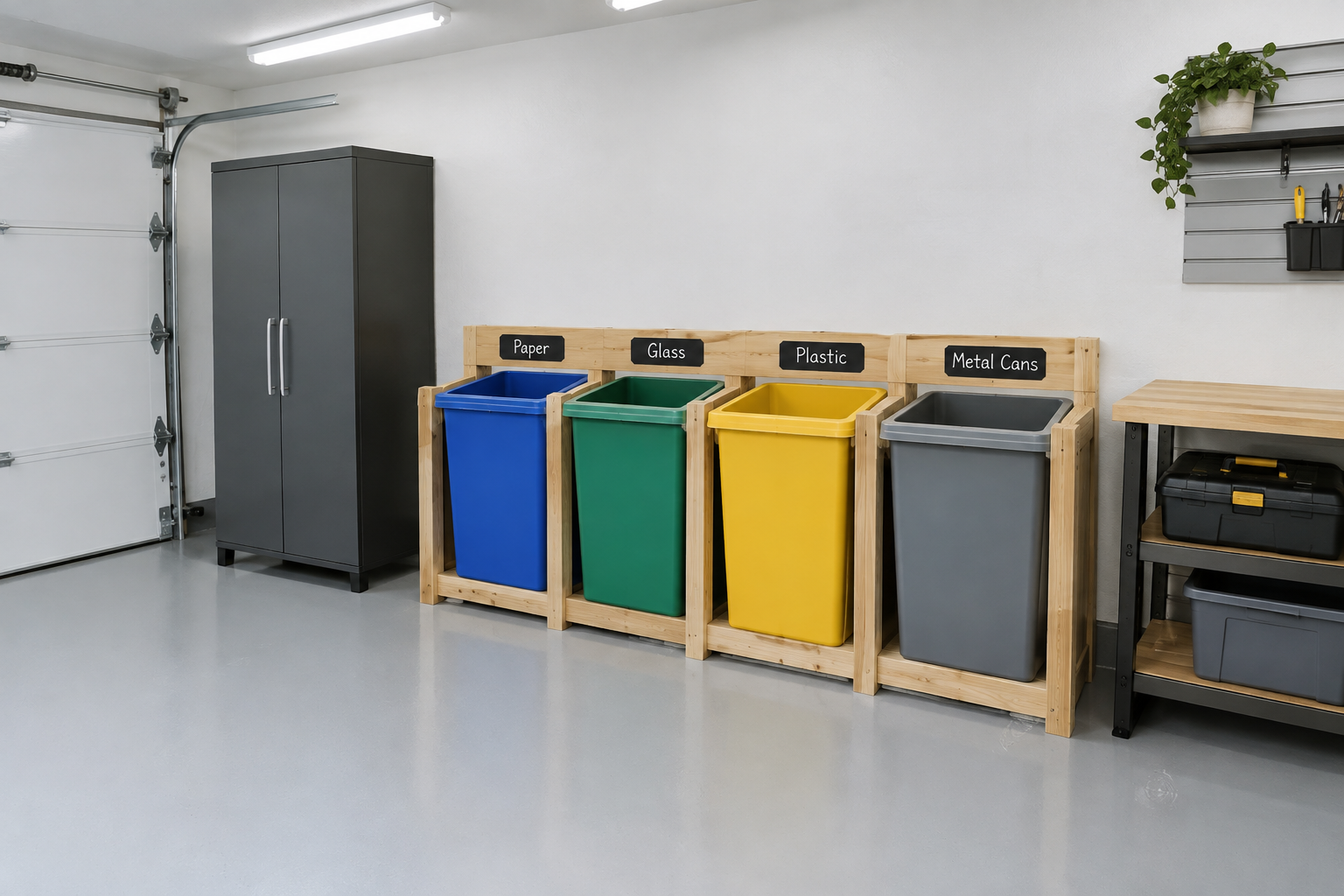
This four-slot pine frame holds large open-top bins in blue, green, yellow, and gray, one for each main material category. The natural wood stain keeps the unit looking intentional rather than utilitarian, which matters when your garage doubles as living space. The light gray epoxy floor ties the whole setup together without competing with the colors of the bins.
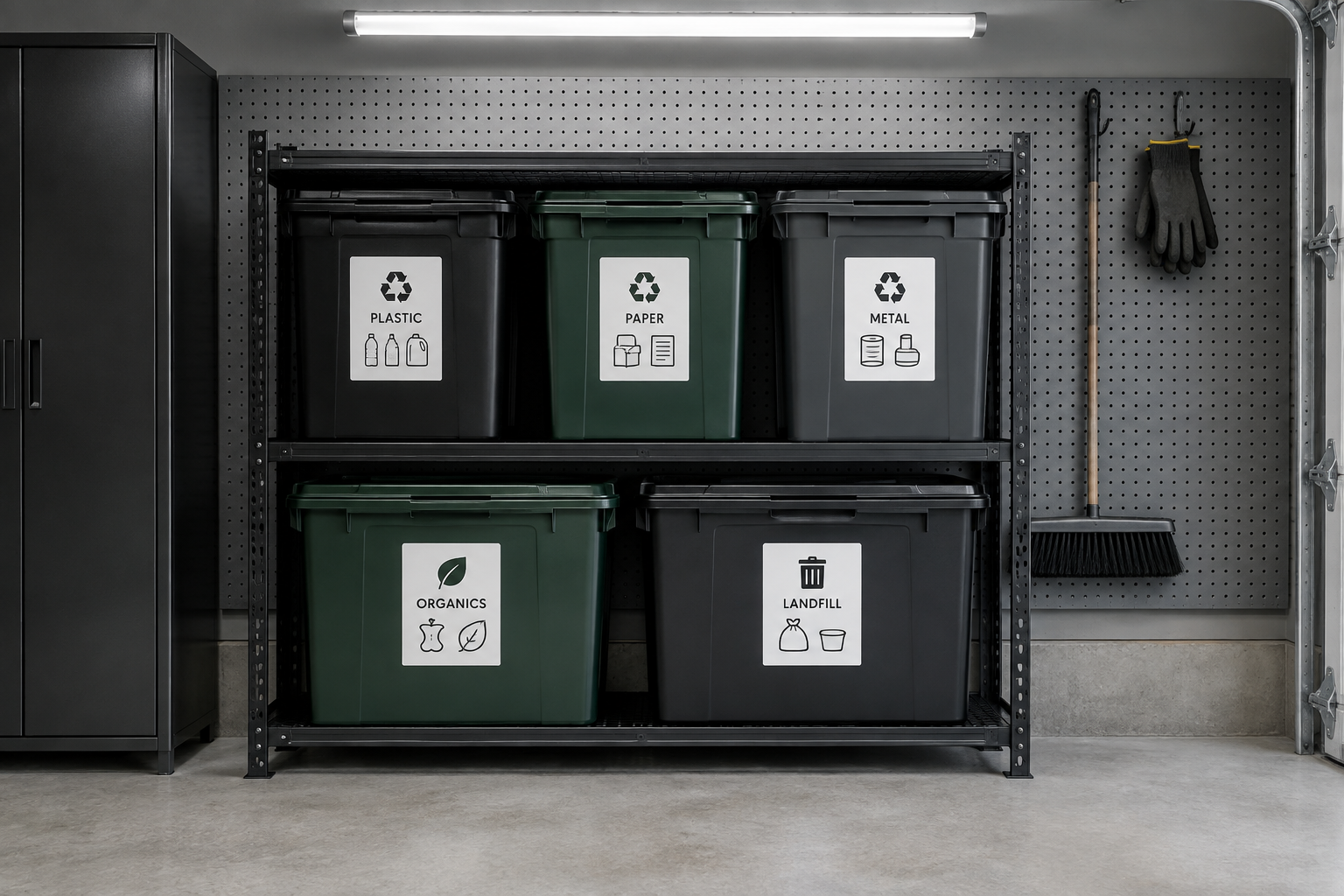
Heavy-duty metal shelving gives this setup an industrial edge, with five matte-finish bins in black, charcoal, and dark green arranged across two rows. White icon labels make sorting fast even for guests who aren’t sure what goes where. If you want to extend this kind of wall-mounted organization further, check out these garage shelving ideas for setups that go well beyond recycling storage.
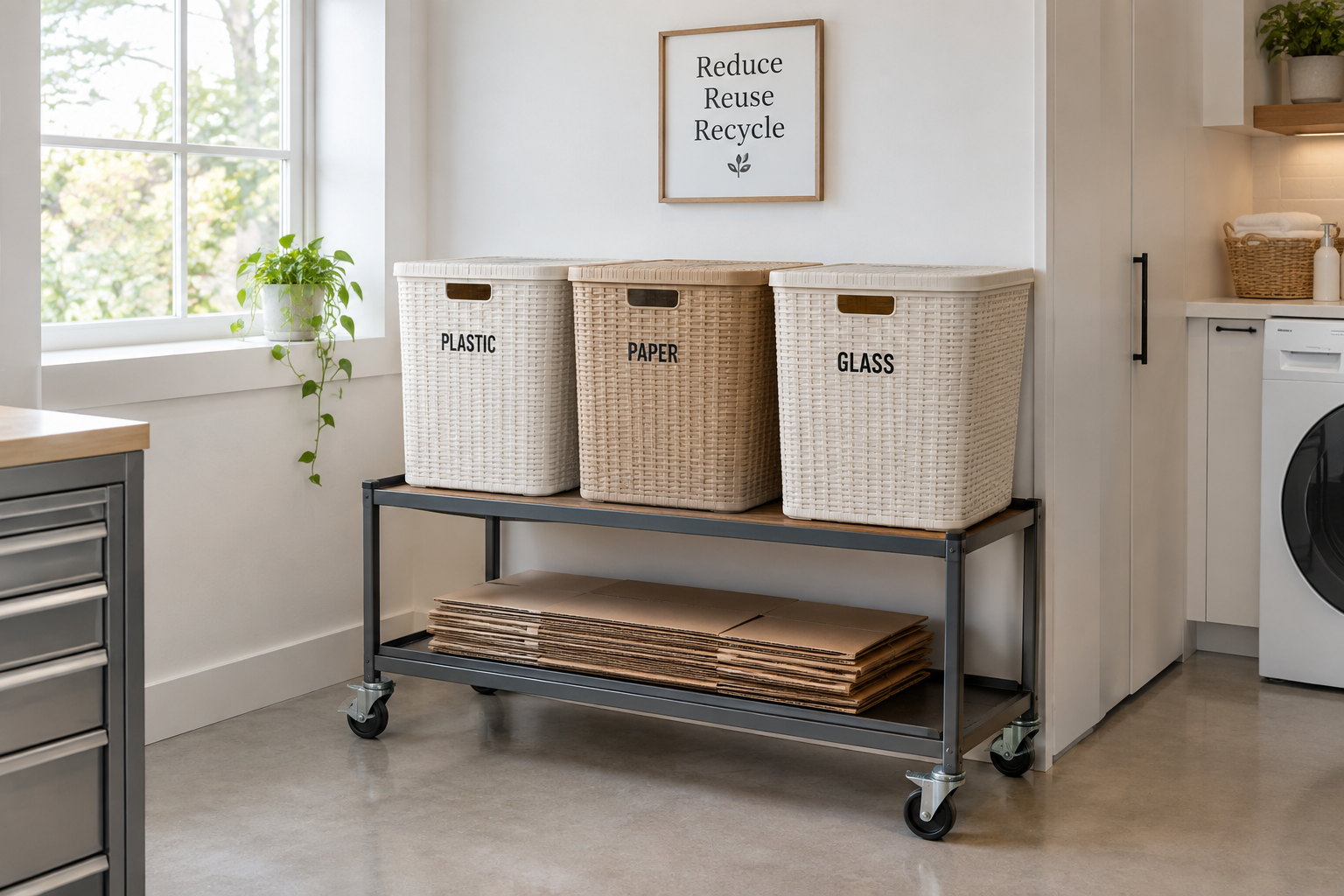
A rolling cart with locking wheels makes this three-bin setup completely portable, which is handy if you need to wheel everything to the curb on collection day. The cream and natural-tone wicker-style bins look almost too good for a garage, giving the space a softer, more finished feel. The bottom shelf does double duty as a flat storage zone for broken-down cardboard boxes.
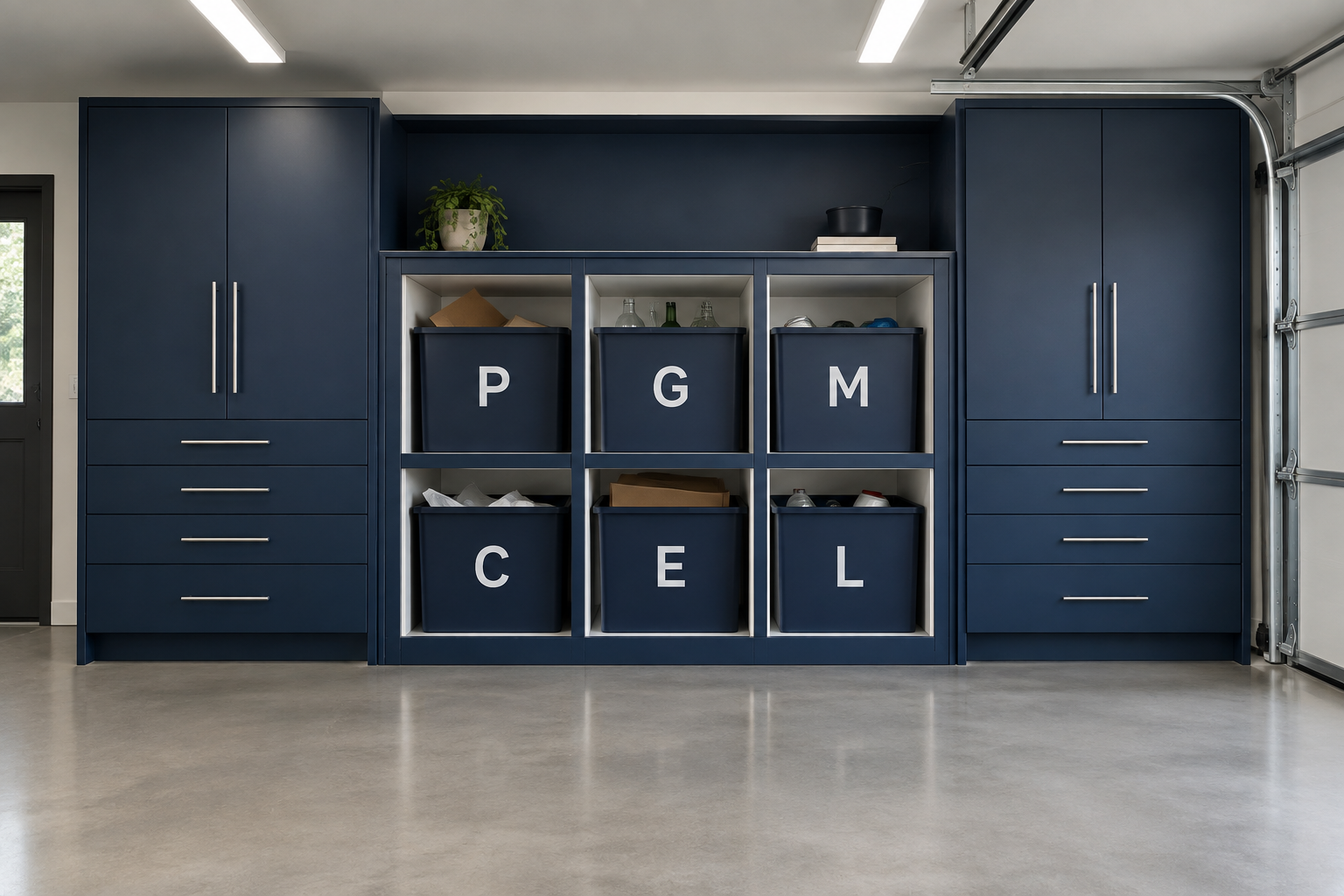
This custom built-in cabinet in deep navy blue houses six open-front bins in a 2×3 grid, each marked with a bold painted letter for fast sorting. The white interior dividers create a clean contrast that makes the labels pop even from across the garage. A setup like this pairs naturally with full garage storage system ideas if you want the rest of the space to match this level of polish.
Labeled Container Setups
Labels are what turn a pile of random bins into an actual system. When every container is clearly marked, the whole family knows where things go without being told, and that consistency is what makes a recycling station stick long-term. The labels themselves can range from simple masking tape and a marker to printed vinyl decals or chalkboard paint panels, depending on how permanent you want the setup to be. If you’re already investing in organizing your garage with slatwall or pegboard systems, adding labeled recycling containers to that wall layout is an easy win. The containers in this section cover everything from matching sets of lidded bins to open-top buckets with handmade signs.
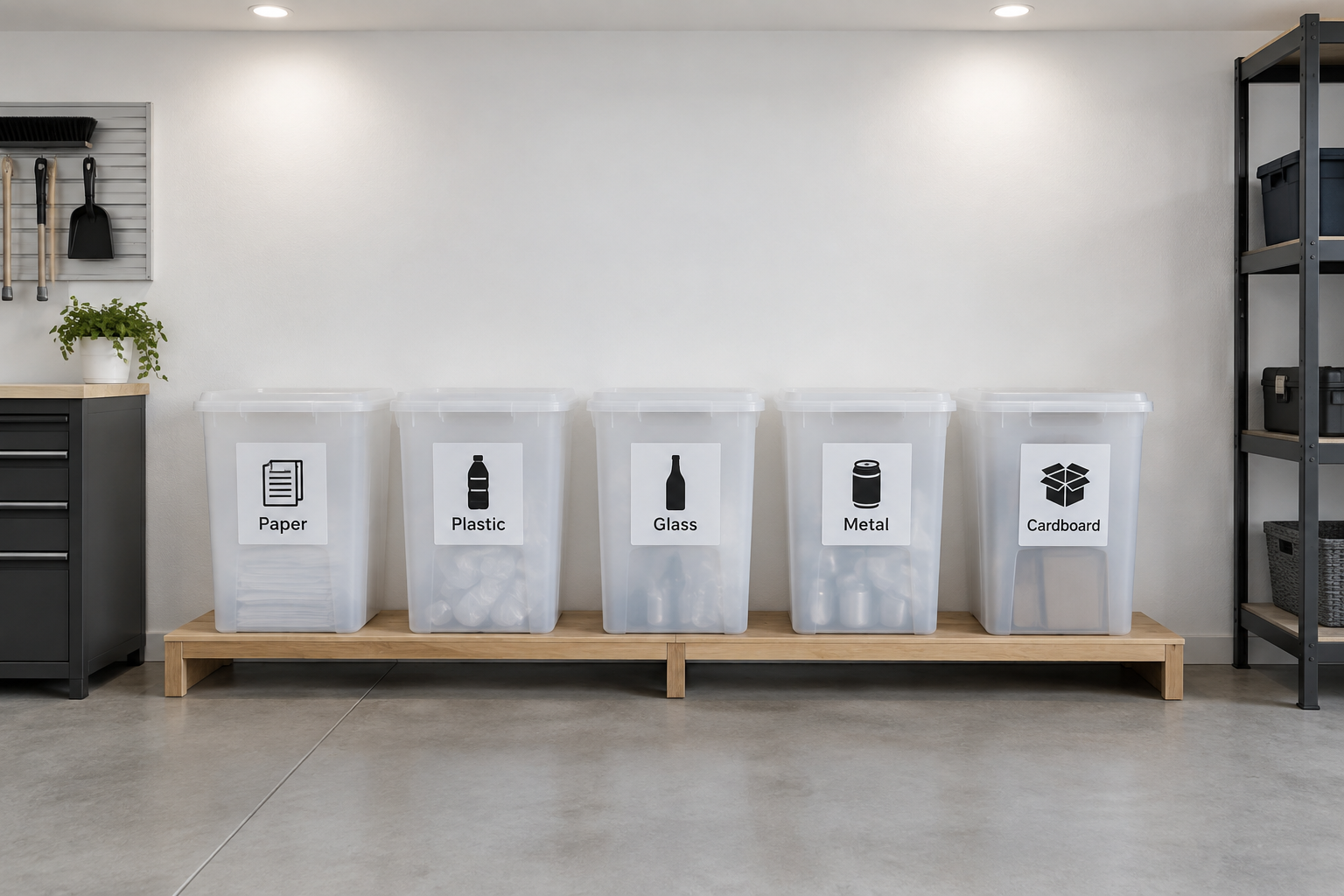
Matching frosted white lidded bins lined up on a low wooden bench create a clean, uniform look that feels intentional and calm. The large printed vinyl labels with icons mean anyone can sort correctly without guessing, which matters when the kids are helping. The lids are a practical choice for a garage in Central Florida where bugs and humidity are always a factor.
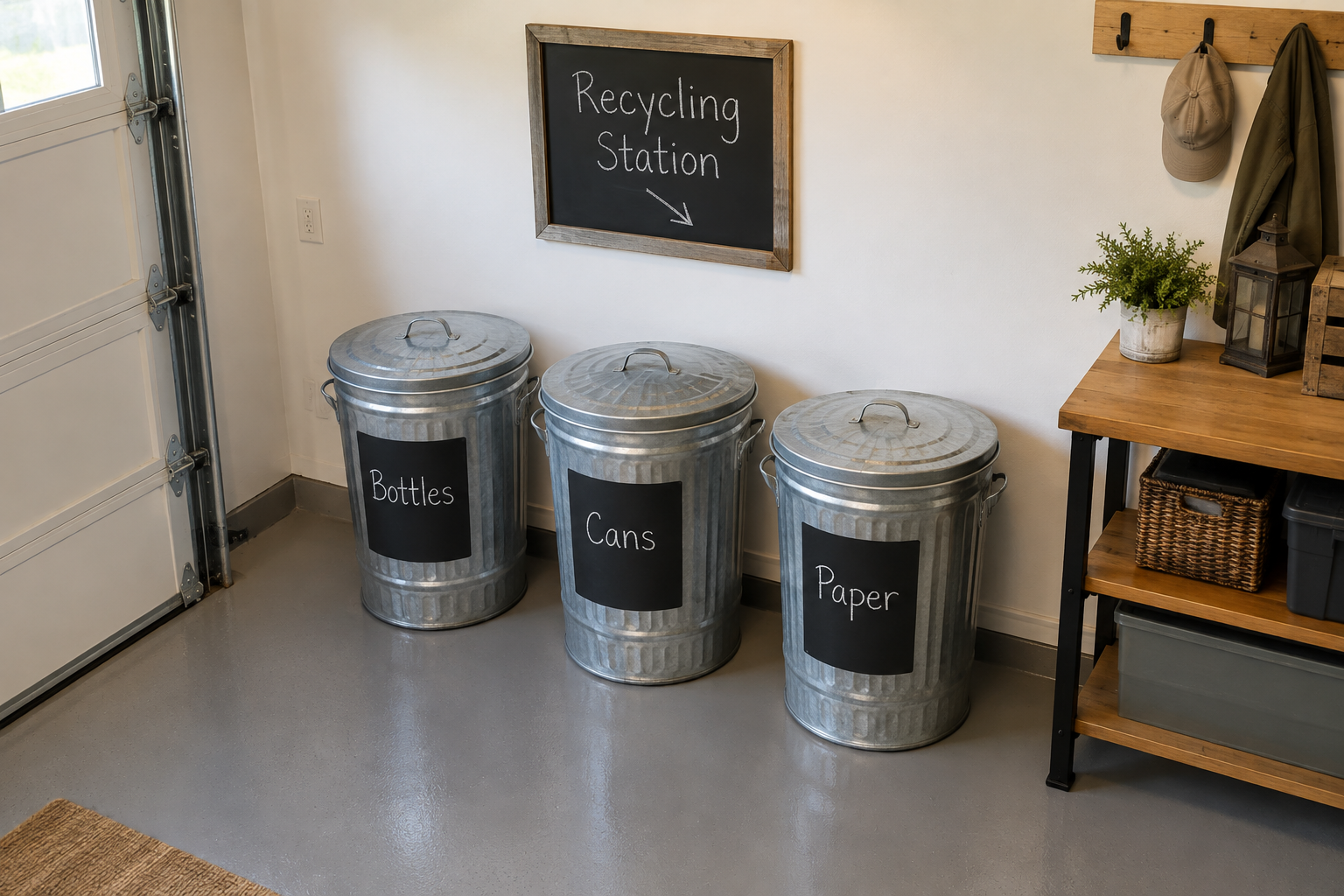
Galvanized metal trash cans get a farmhouse upgrade with chalkboard paint panels on the front, making it easy to relabel containers if your sorting categories change over time. The handwritten chalk script gives the setup a personal, lived-in feel without looking sloppy. A small chalkboard sign mounted above ties the whole corner together as a defined station rather than just a row of cans.
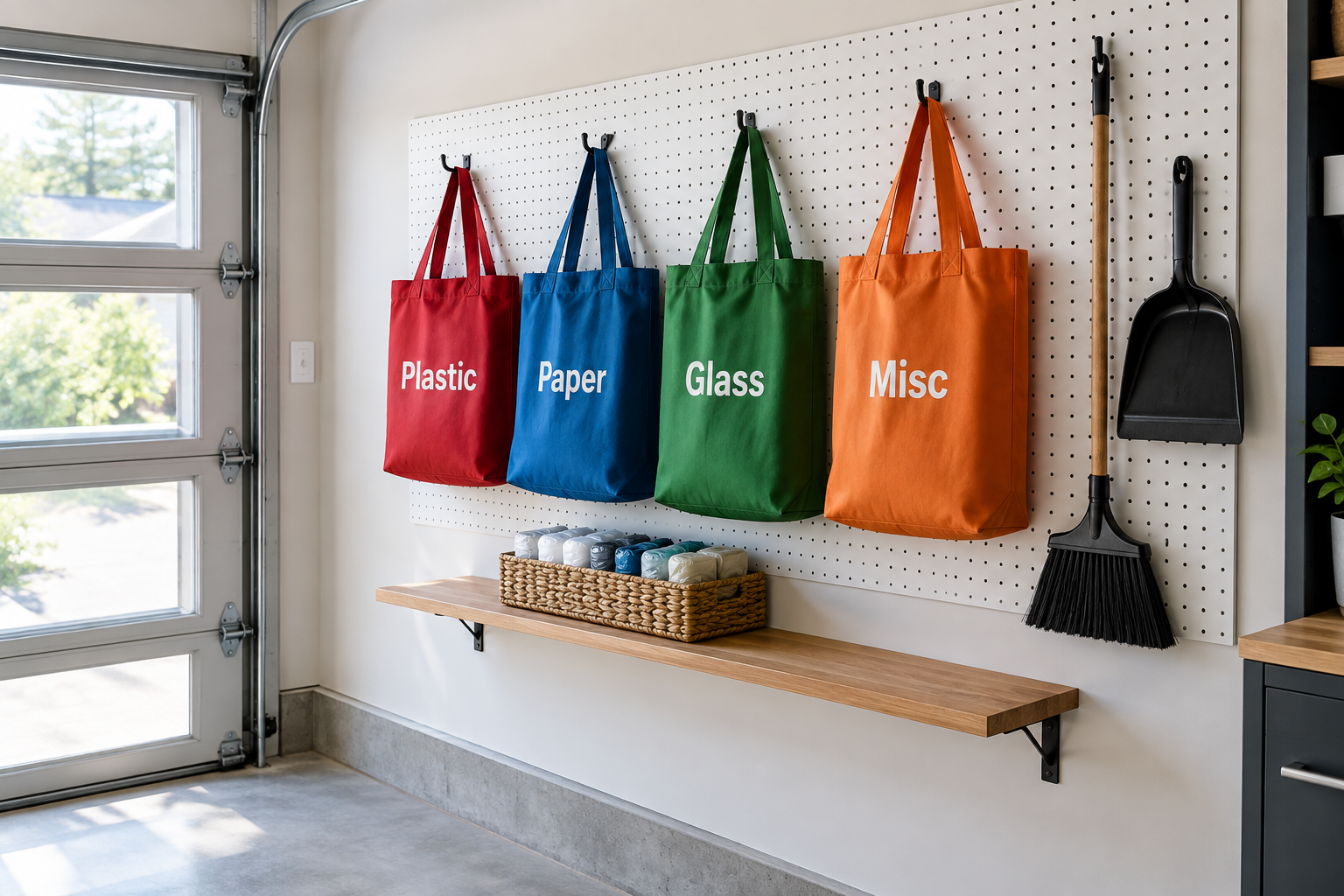
Canvas tote bags in four solid colors hang from heavy-duty pegboard hooks, offering a zero-cost upgrade for anyone who already has the bags and the board. The iron-on text labels are permanent enough to survive regular use but the bags themselves can be tossed in the wash when things get grimy. If you’re building out the pegboard wall beyond just the recycling bags, this guide to the best garage pegboard systems covers the hardware worth buying.
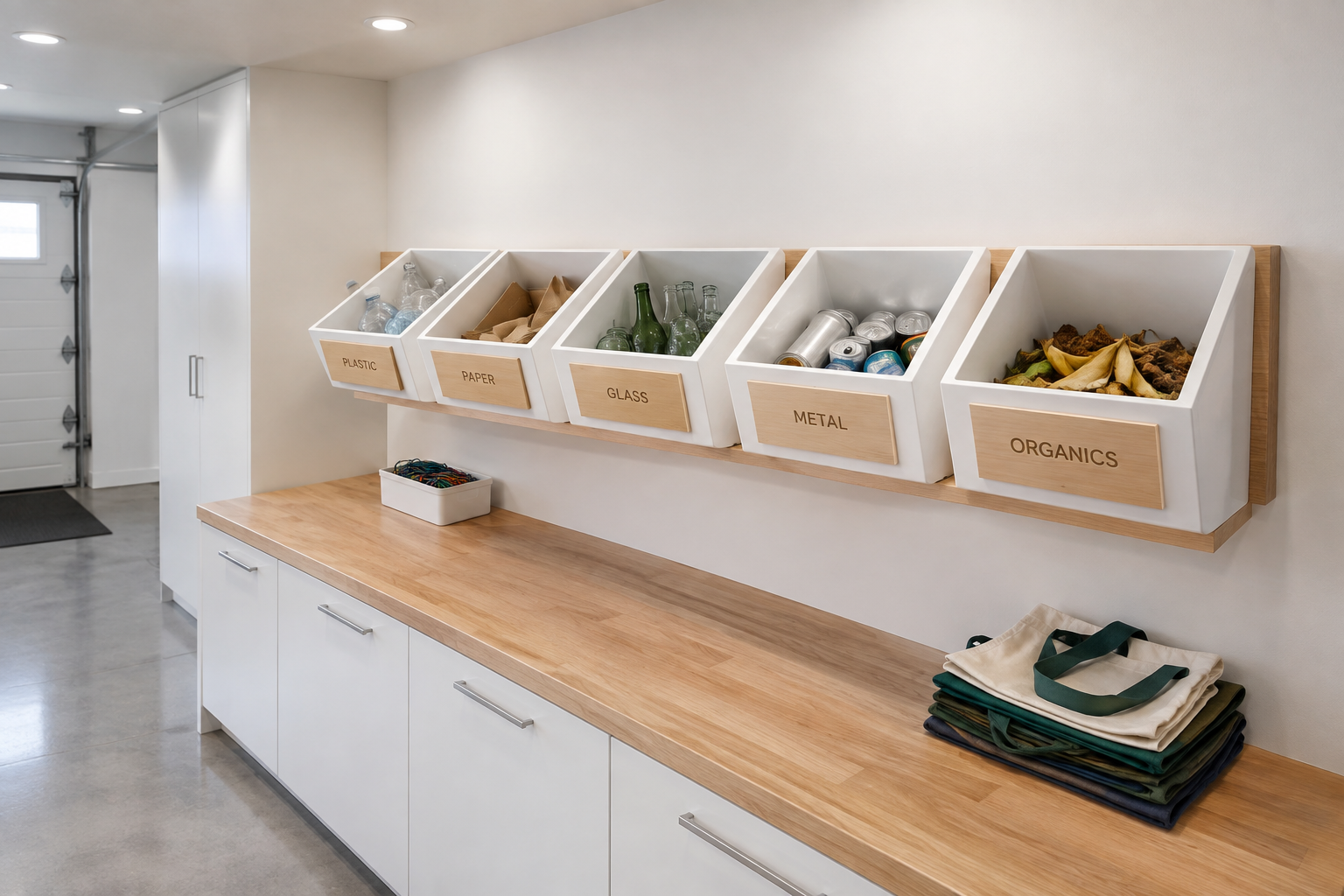
This wall-mounted wooden rack holds five angled white bins at counter height, making it easy to toss items in without bending down. The laser-engraved wooden placards on each bin look like something from a high-end kitchen organization boutique, which feels right for a garage that’s been seriously renovated. The continuous countertop below adds a prep surface for breaking down boxes or rinsing containers before they go in.
Compact Corner Stations
Not every garage has a spare wall to dedicate to recycling. Sometimes a corner is all you’ve got, and that’s enough. A well-designed corner recycling station can handle three to five categories in a surprisingly small footprint if you think vertically and use the corner geometry to your advantage. This is especially relevant if you’re working through small garage organization strategies where every inch of floor space is a negotiation. The three setups in this section show how to make corners work without cramping the rest of the garage.
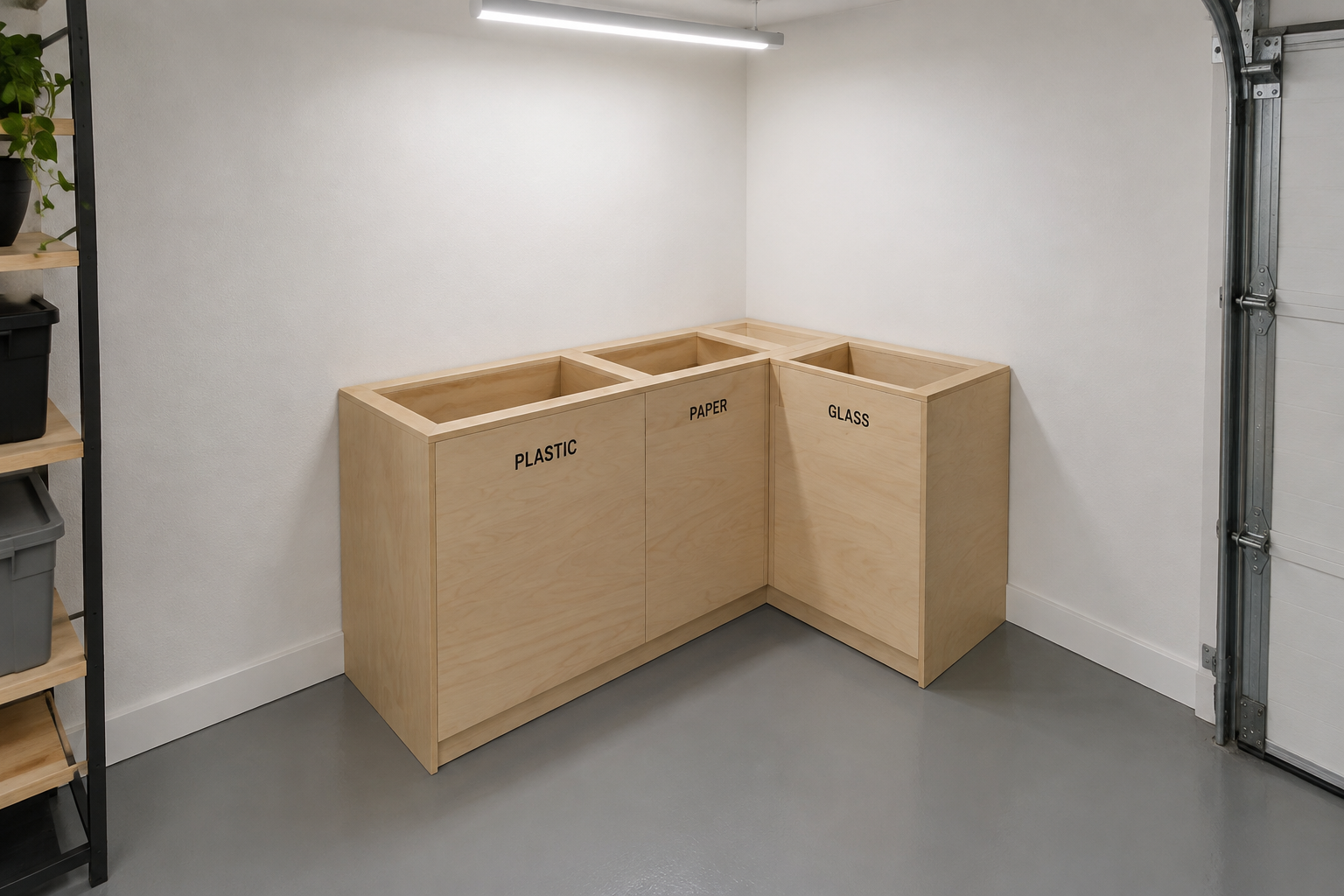
This L-shaped birch wood unit is built specifically to fill the dead space in a 90-degree garage corner, turning wasted square footage into a three-category sorting station. The consistent light wood finish and black stenciled labels keep the look clean even though the unit is tucked away. It’s the kind of DIY build that costs almost nothing in materials but adds real daily-use value.
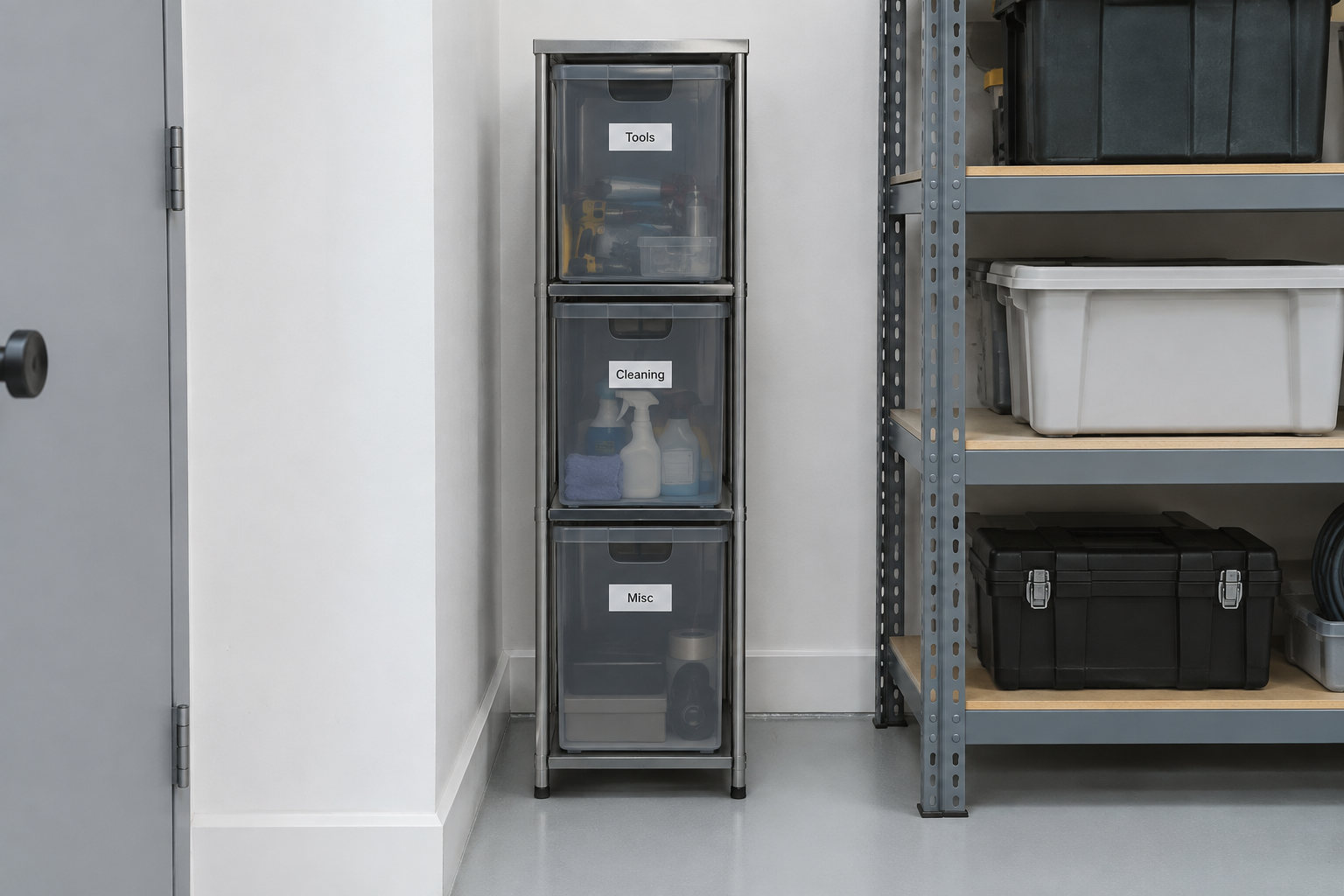
A slim metal tower unit with three stacked pull-out drawers solves the floor space problem by going vertical, all in a footprint barely 18 inches wide. The translucent gray drawers let you see at a glance how full each category is without pulling them open. This kind of vertical thinking applies just as well to the rest of your garage shelving setup if you’re trying to free up floor space across the board.
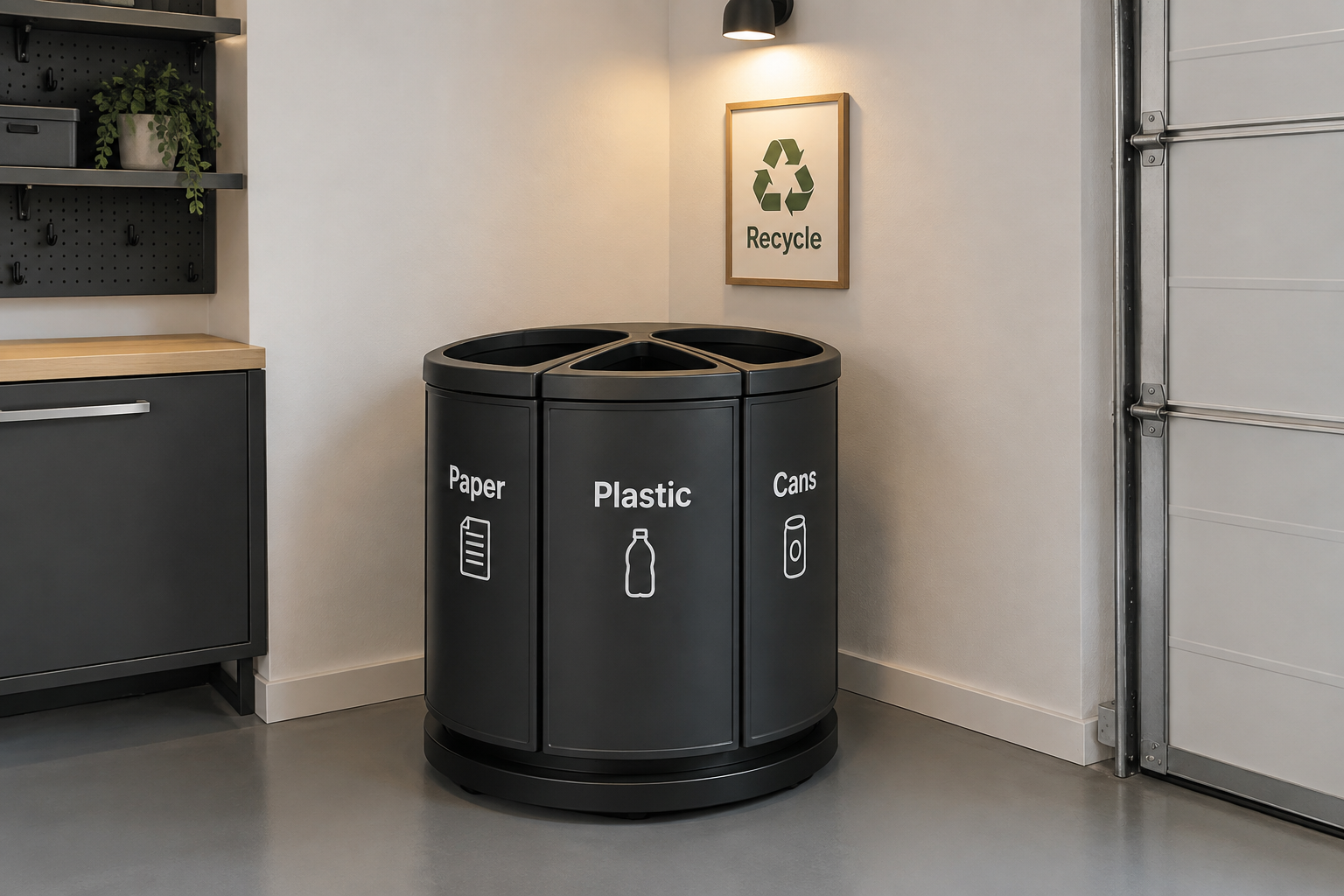
A rotating three-section sorter on a lazy-susan base is one of the smartest solutions for a tight corner because you can spin it to access any compartment without awkward reaching. The dark charcoal plastic finish gives it a modern, finished look rather than the usual utility-bin aesthetic. It handles paper, plastic, and cans without taking up more floor space than a single large trash can.
Crushing and Prep Zones
Crushing cans and breaking down cardboard before they go in the bin is one of those habits that dramatically reduces how often you need to empty your recycling station. A dedicated prep zone gives you a surface to do that work and keeps the tools you need, like a can crusher, box cutter, and bag twisties, right where you’ll use them. It also keeps the area around the bins clean, which matters in a garage where organization tends to unravel the moment there’s no clear place for something to go. These three setups show how to combine a prep surface with your sorting bins into one cohesive station. If you’re thinking bigger and want the recycling zone to be part of a fully organized garage, the article on creating garage zones is a good place to start planning.
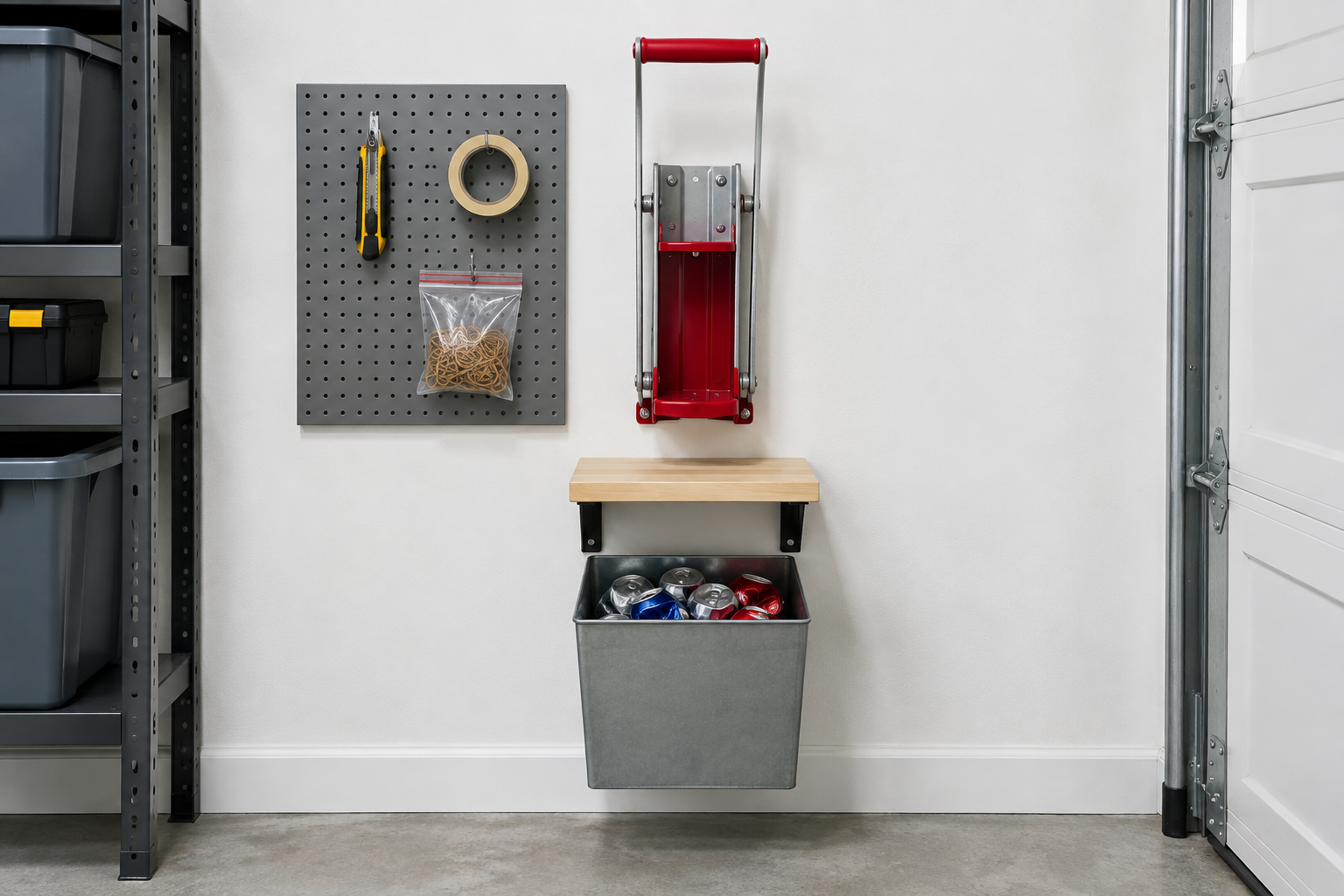
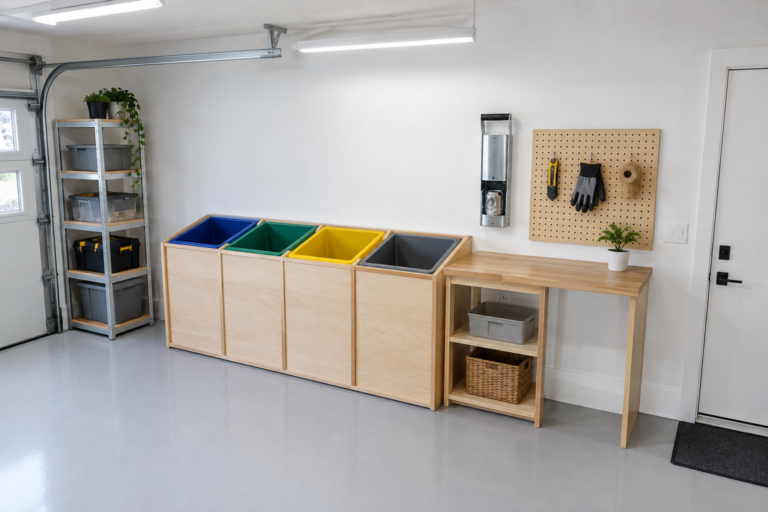
A wall-mounted can crusher in silver and red does the heavy lifting here, mounted at a comfortable height above a small wooden shelf that catches the flattened cans in a dedicated metal bin below. The pegboard panel beside it keeps a box cutter, tape, and rubber bands right at hand for cardboard prep. This kind of focused, tool-specific wall zone is exactly what separates a functional garage from one where good intentions slowly pile up on the floor.
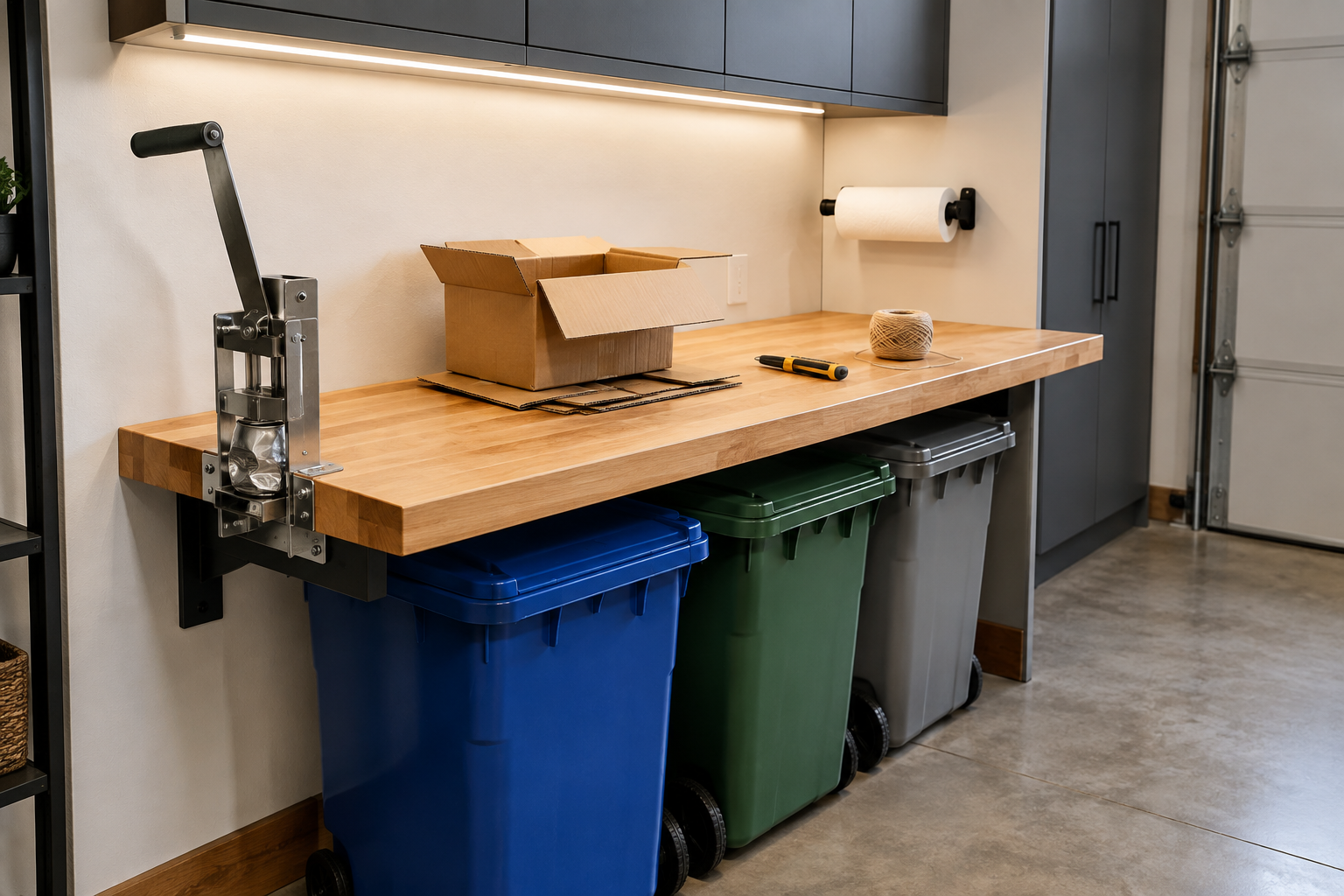
This setup pairs a full-width butcher-block countertop with a stainless steel can crusher bolted to one end, creating a dedicated prep surface for everything that needs attention before it gets sorted. Three large rolling bins underneath, in blue, green, and gray, catch the processed materials and roll out to the curb when it’s collection day. The under-cabinet LED strip above the counter keeps the work surface well-lit without needing an overhead fixture directly above.
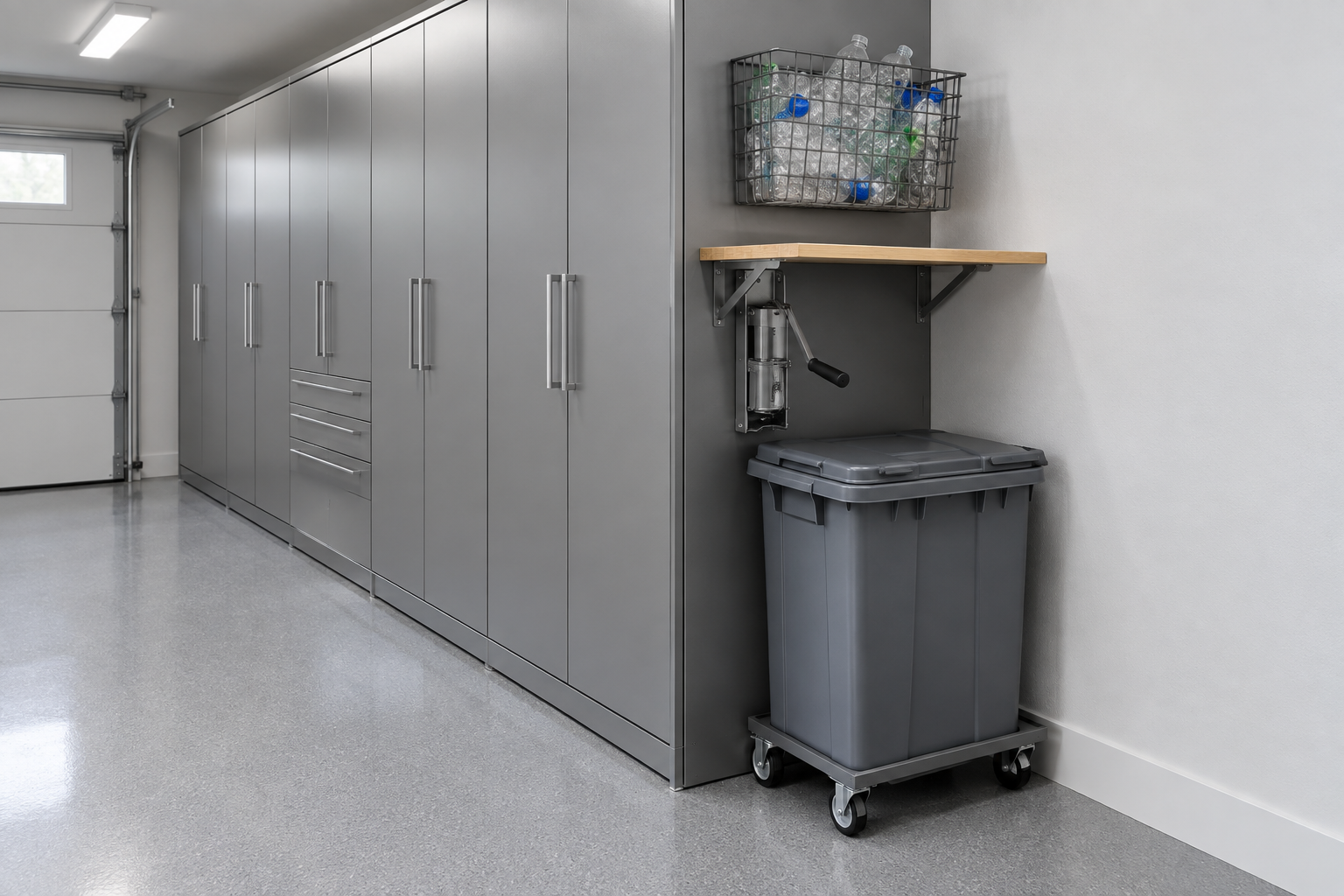
This integrated prep nook tucks a fold-down shelf and hand-crank can crusher onto the end panel of an existing cabinet run, so it doesn’t need any dedicated floor space of its own. A wire basket on the cabinet side catches flattened plastic bottles while the lidded wheeled bin below handles crushed cans. If you’re shopping for the cabinet units that anchor a setup like this, the steel vs. modular garage cabinet guide breaks down which systems are actually worth the investment.
