

Understanding garage accessibility upgrades for seniors in detail gives you a real advantage, whether you’re planning a project, troubleshooting, or making smarter decisions about your space. The specifics matter more than most people expect.
This guide covers everything you need to know in practical terms, with actionable takeaways you can use right away.
Understanding the Basics
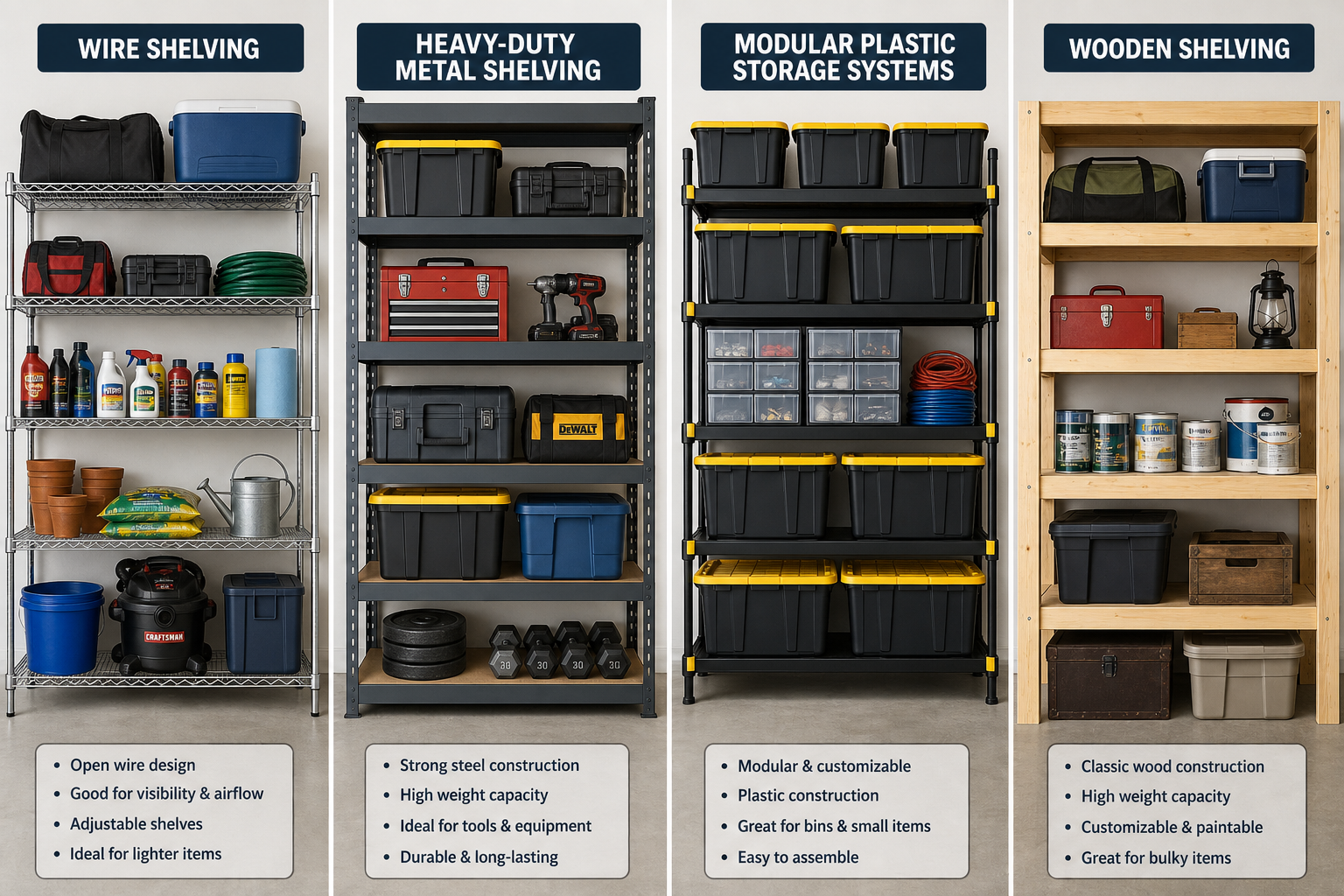
Clear plastic bins beat cardboard for garage storage in every way: moisture resistance, pest resistance, visibility, and stackability. Label each bin on the front for easy identification. A label maker and 20 minutes of work saves hours of searching over the coming years.
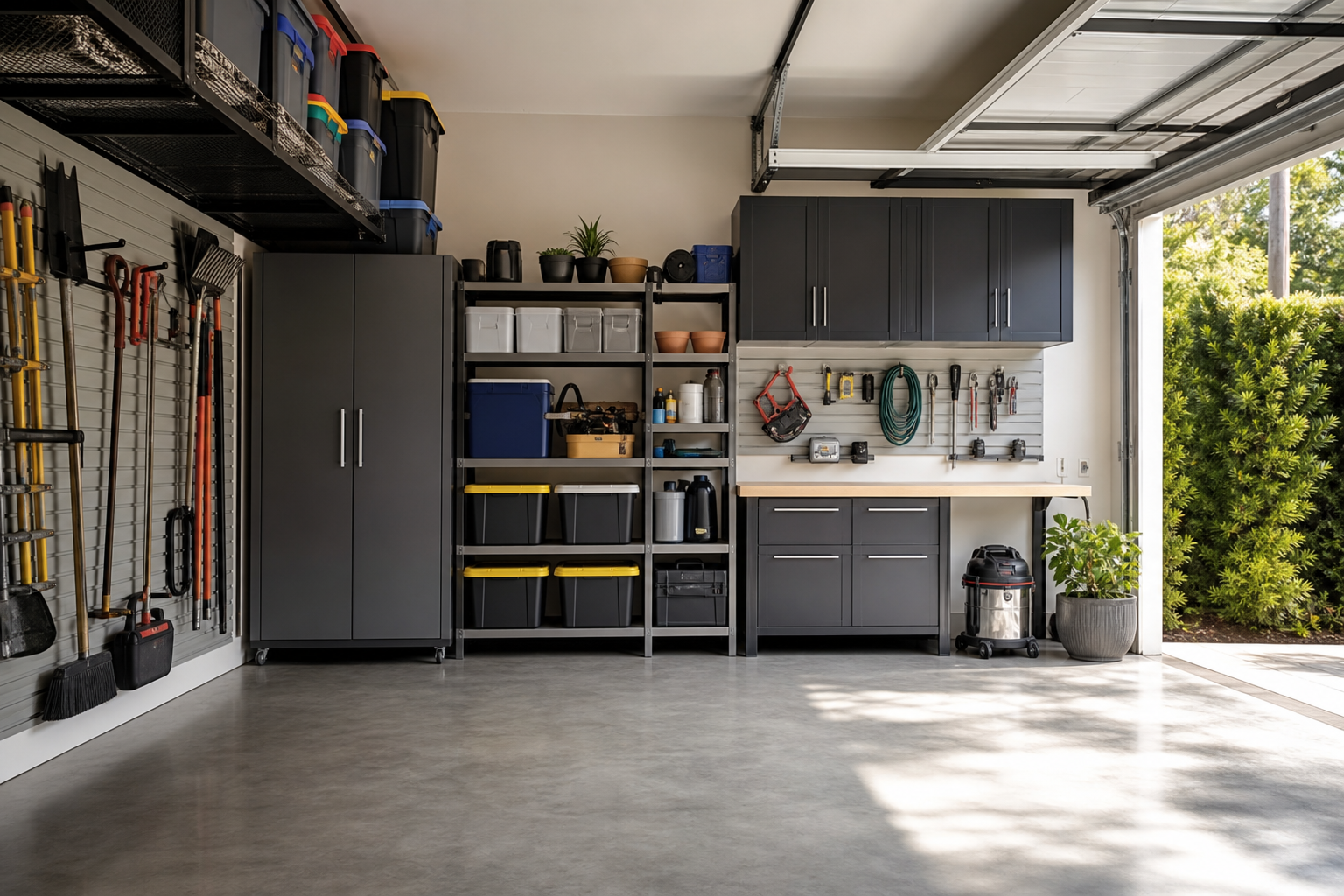
Zone your garage before buying products. Common zones include tools and workbench areas, automotive supplies, seasonal items, sports gear, lawn and garden equipment, and household overflow. Each zone stays self-contained so everything for a given task lives in one spot.
Weight capacity is critical and often misunderstood. Wall systems anchored in studs hold 50 to 75 pounds per linear foot. On drywall alone, that drops to 15 to 25 pounds before failure. Ceiling racks rated for 600 pounds assume even distribution; concentrating weight in one area can cause failure well under the total limit.
Maximizing Vertical Storage Space
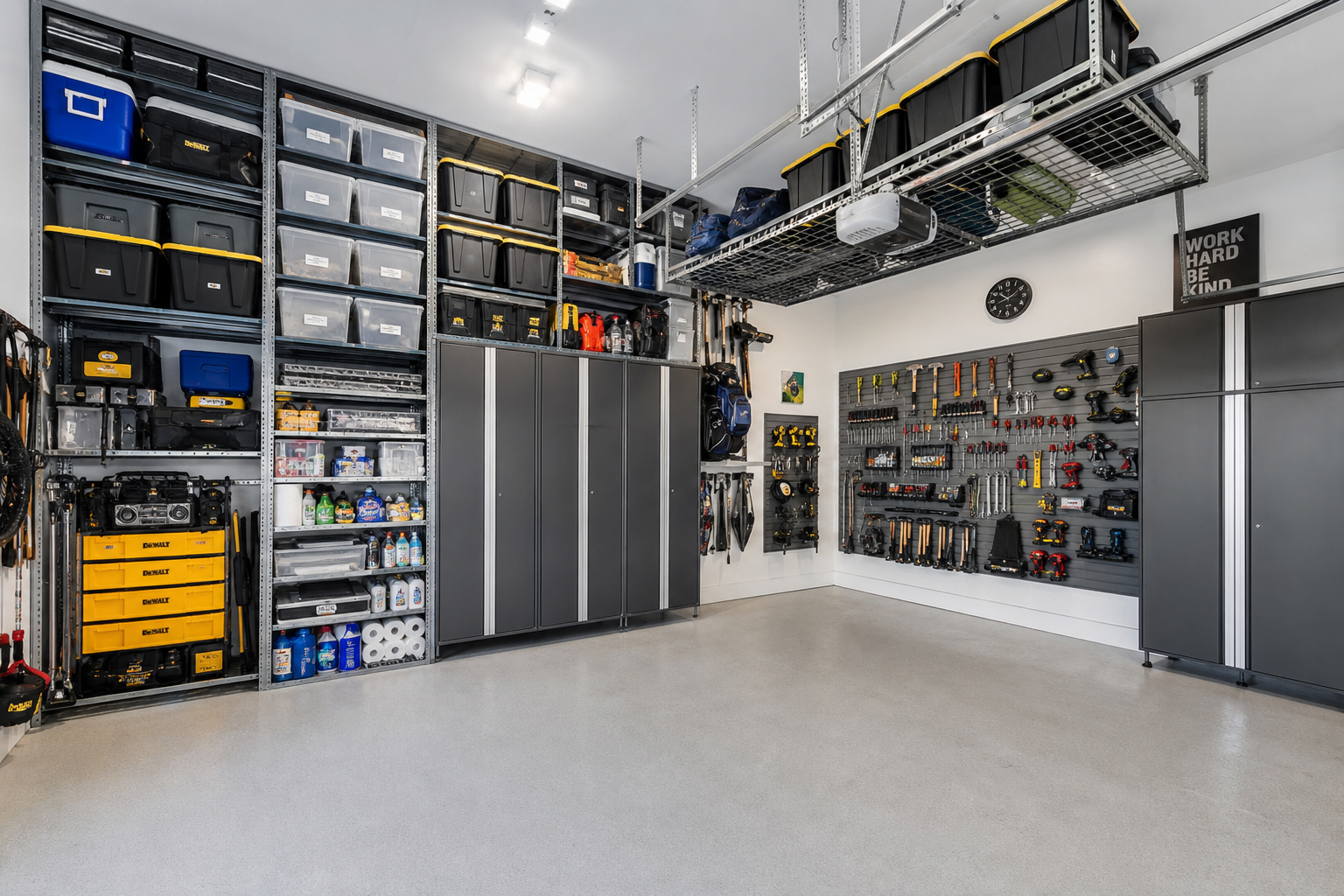
Effective garage storage uses walls and ceiling as primary surfaces, keeping the floor clear for vehicles and work. Wall-mounted track systems, overhead ceiling racks, and sturdy cabinets provide organized access without eating into parking or workspace.

Ceiling Storage Rack
Makes efficient use of overhead space for seasonal items and bulky gear
When installing bike storage systems or other wall-mounted solutions, proper weight distribution becomes even more important. Always locate wall studs and use appropriate hardware for the load you’re planning to store.
Electrical Considerations for Your Garage
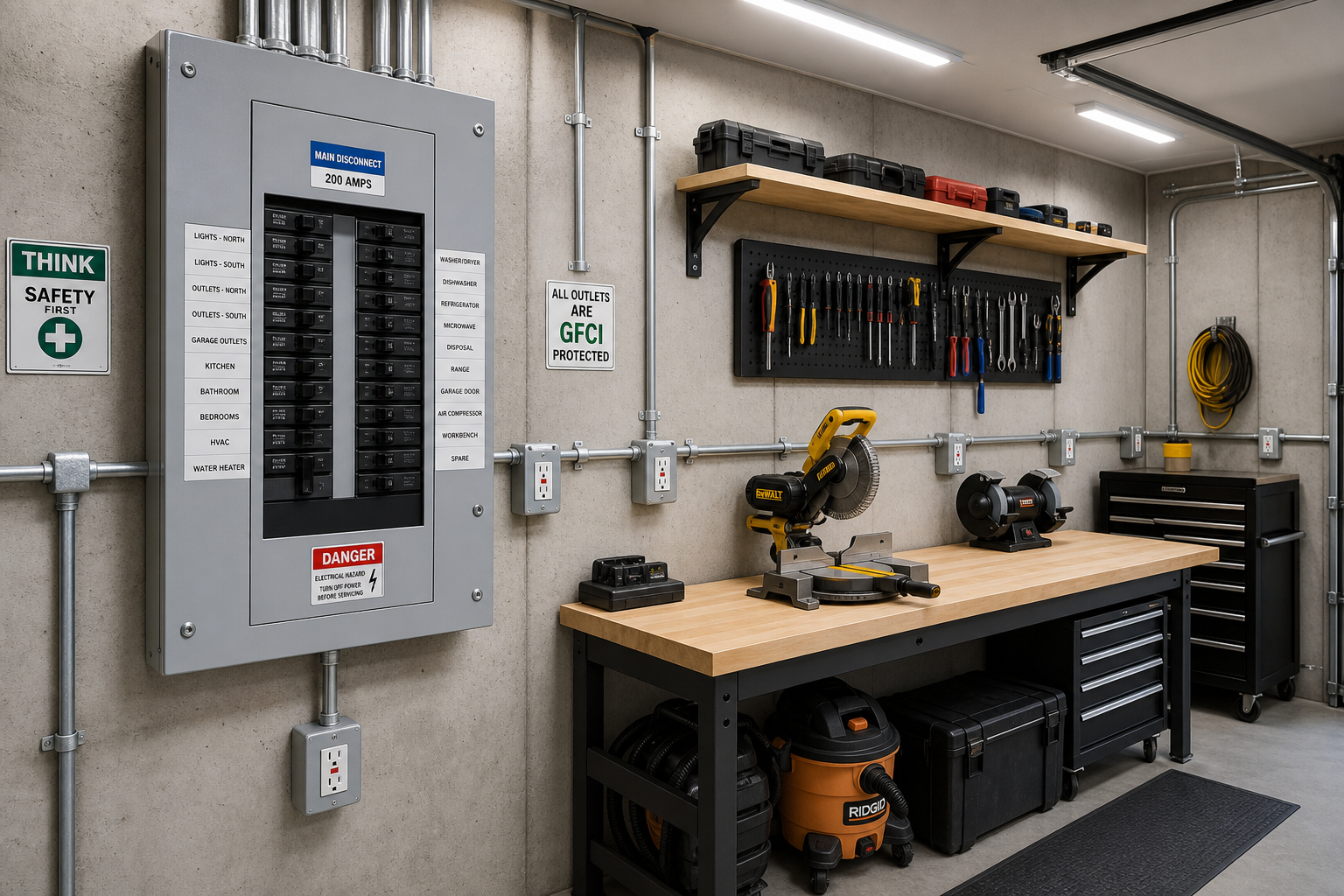
A 20-amp, 120V circuit safely delivers about 1,920 watts continuously (80% of 2,400W max). If your table saw pulls 1,800 watts and the shop vac draws 1,200 watts, they can’t run on the same circuit simultaneously without tripping the breaker.
For power tool organization, consider dedicated circuits for high-draw equipment. Our guide on power tool organizers covers storage solutions that work well with proper electrical planning.
Practical Planning Tips
Set a realistic timeline and budget before buying anything. Most garage projects take 50% longer and cost 20% more than initial estimates, especially for first-timers. Build that buffer into your plan so unexpected discoveries don’t derail the entire project or blow the budget.
Invest in quality tools for tasks you’ll repeat. A reliable stud finder, a good level, a quality tape measure, and proper safety gear (eye protection, hearing protection, respirator) make every project easier and safer. These tools pay for themselves across multiple projects over the years.
Project Priority Framework
Prioritize your projects based on impact and urgency. Safety issues (faulty wiring, CO risk, structural problems) come first. Comfort improvements (insulation, lighting, climate control) come second. Cosmetic upgrades (floor coatings, paint, organization systems) come last.
Following this order ensures you’re building each improvement on a solid foundation. For example, if you’re planning a workshop space, address electrical and structural needs before focusing on storage solutions.
Code and Permit Requirements
Research local building codes and permit requirements for your specific project. Electrical work, structural modifications, and HVAC installations often require permits and inspections. Working without required permits can create liability issues, insurance complications, and problems when selling the home.

Steel Garage Cabinet
Durable storage solution that handles heavy items while maintaining organization
For wall-mounted storage systems, learning how to install slat wall accessories properly can save money and ensure safe installation within code requirements.
Storage System Comparisons
Slatwall vs. Pegboard
Slatwall holds more weight, looks cleaner, and accepts more accessories. Pegboard is cheaper upfront but limited in capacity. For heavy workshop tools, slatwall is the better investment. Magnetic tool holders work well with both systems for frequently used items.
Consider your long-term storage needs when making this choice. Slatwall systems can grow with your tool collection, while pegboard may require replacement as your storage needs increase.
Frequently Asked Questions
How do I maintain garage organization long-term?
Designated zones, clear labeled bins, and the discipline to return items to their zone after each use. The system only works if you maintain it consistently.
Which is better: slatwall or pegboard?
Slatwall holds more weight, looks cleaner, and accepts more accessories. Pegboard costs less initially. For heavy workshop tools, slatwall is the better investment.
How much weight can wall-mounted storage hold?
Wall systems anchored into studs support 50 to 75 pounds per linear foot. Drywall-only mounting fails above 15 to 25 pounds. Always use studs for heavy storage.
What’s the best way to zone a garage for accessibility?
Create distinct zones for tools and workbench, automotive supplies, seasonal items, sports gear, lawn and garden equipment, and household overflow. Keep each zone self-contained so related items stay together for easy access.
This article contains affiliate links. We may earn a small commission at no extra cost to you.
