

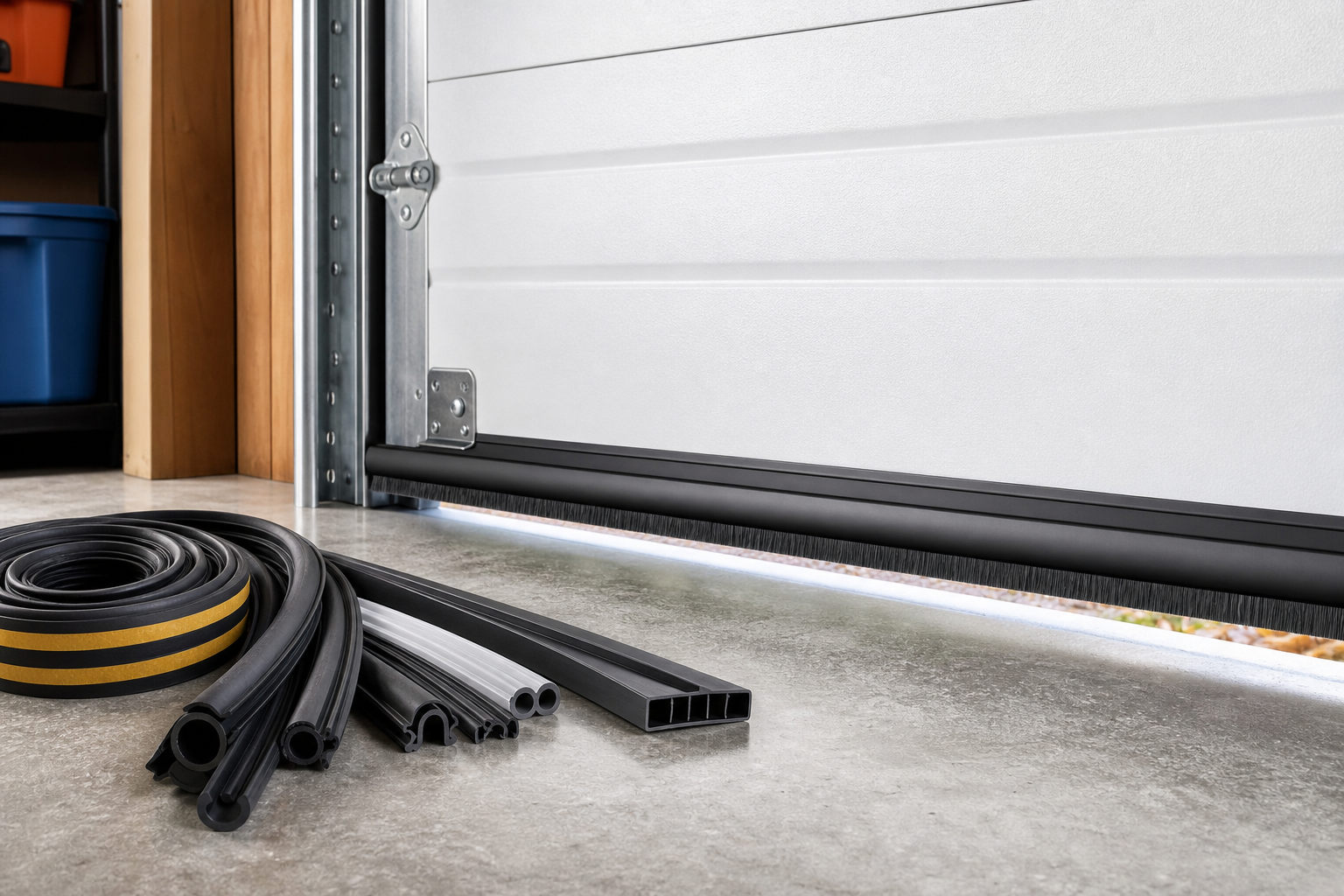
Picking the right garage door weatherstripping kits isn’t about finding the highest star rating. It’s about matching product strengths to your needs: durability, ease of installation, or budget constraints.
Below, you’ll find honest assessments of top contenders, what separates them, and which ones fall short of their marketing. Check Amazon for current pricing.
Understanding the Basics
Bottom seals come in T-shaped, bulb, beaded, and J-type profiles. Match the profile to your existing retainer channel (usually 3 or 4 inches wide). Measure channel width and height before ordering to avoid modification headaches.
EPDM rubber is the most durable material. It resists UV, stays flexible below freezing (unlike vinyl, which cracks), and bounces back after compression. PVC seals cost less but need more frequent replacement in extreme climates.
Garage doors use three seal types: bottom, side (jamb), and header (top). Replacing all three gives the best results. If budgeting, start with the bottom seal, which takes the most abuse and makes the biggest difference.
For comprehensive installation guidance, check out our detailed garage door weather stripping replacement guide.
Bottom Seals
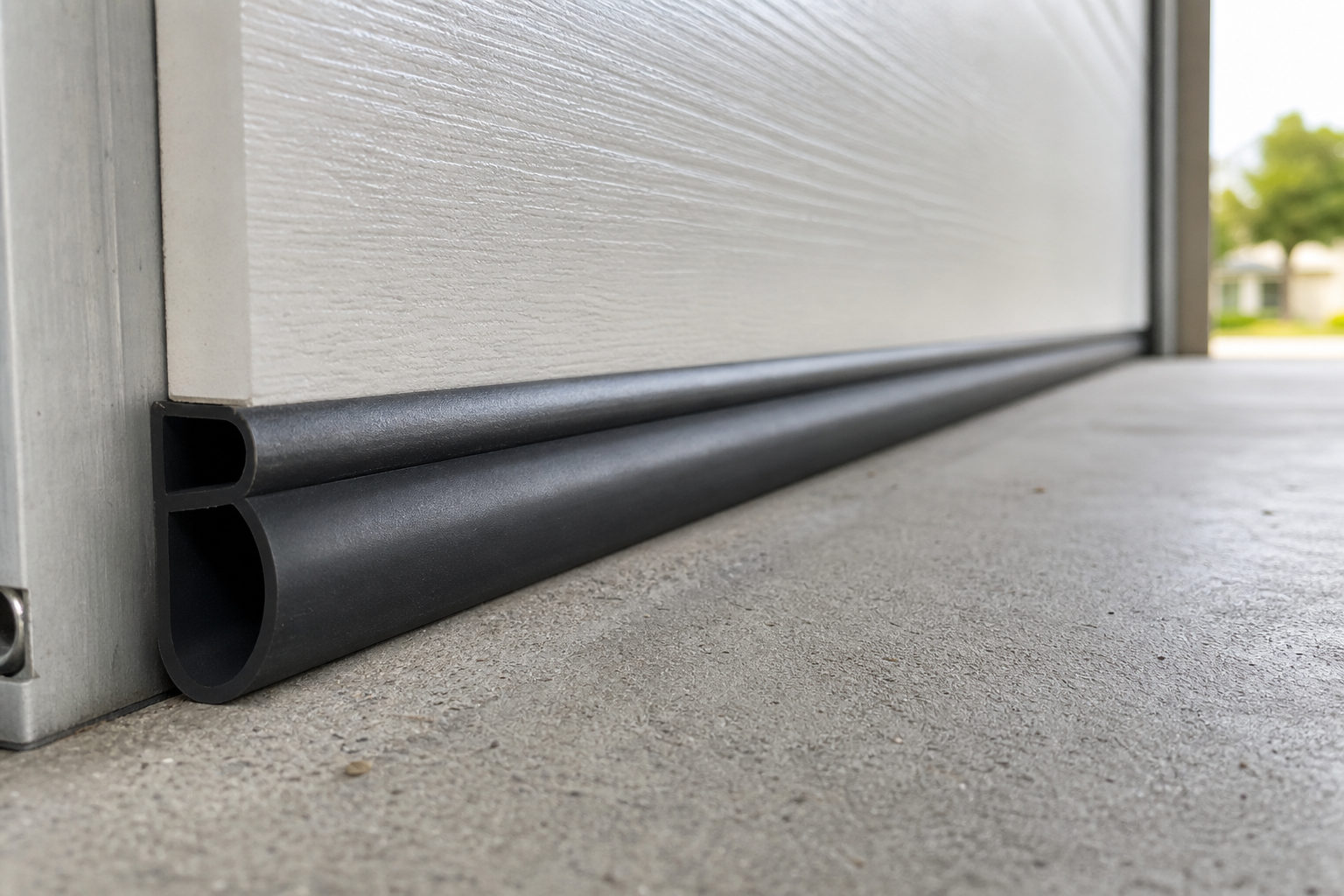
Bottom seals (T-end and beaded) make the difference between a result that lasts and one that needs redoing within a year. Take the time to assess your conditions before committing to a method or product.
Check specific requirements before purchasing materials. Measure the area, note unusual conditions (extreme temps, high humidity, uneven surfaces), and read product specs carefully. A mismatch between your conditions and the product’s rated range is the most common cause of unexpected failures. In particularly cold climates, you may encounter issues with seals freezing to the ground, which requires special consideration during product selection.

Frost King Garage Door Bottom Seal
Solid reputation among homeowners with proven durability
For this application, Frost King products have a solid reputation among homeowners. Check current selection and pricing on Amazon, and read recent reviews from buyers with conditions similar to yours.
Expect at least one surprise during the project. Hidden moisture, non-standard dimensions, or outdated wiring are common discoveries. Having backup materials and a flexible timeline reduces the stress when they appear.
Side Jamb Seals
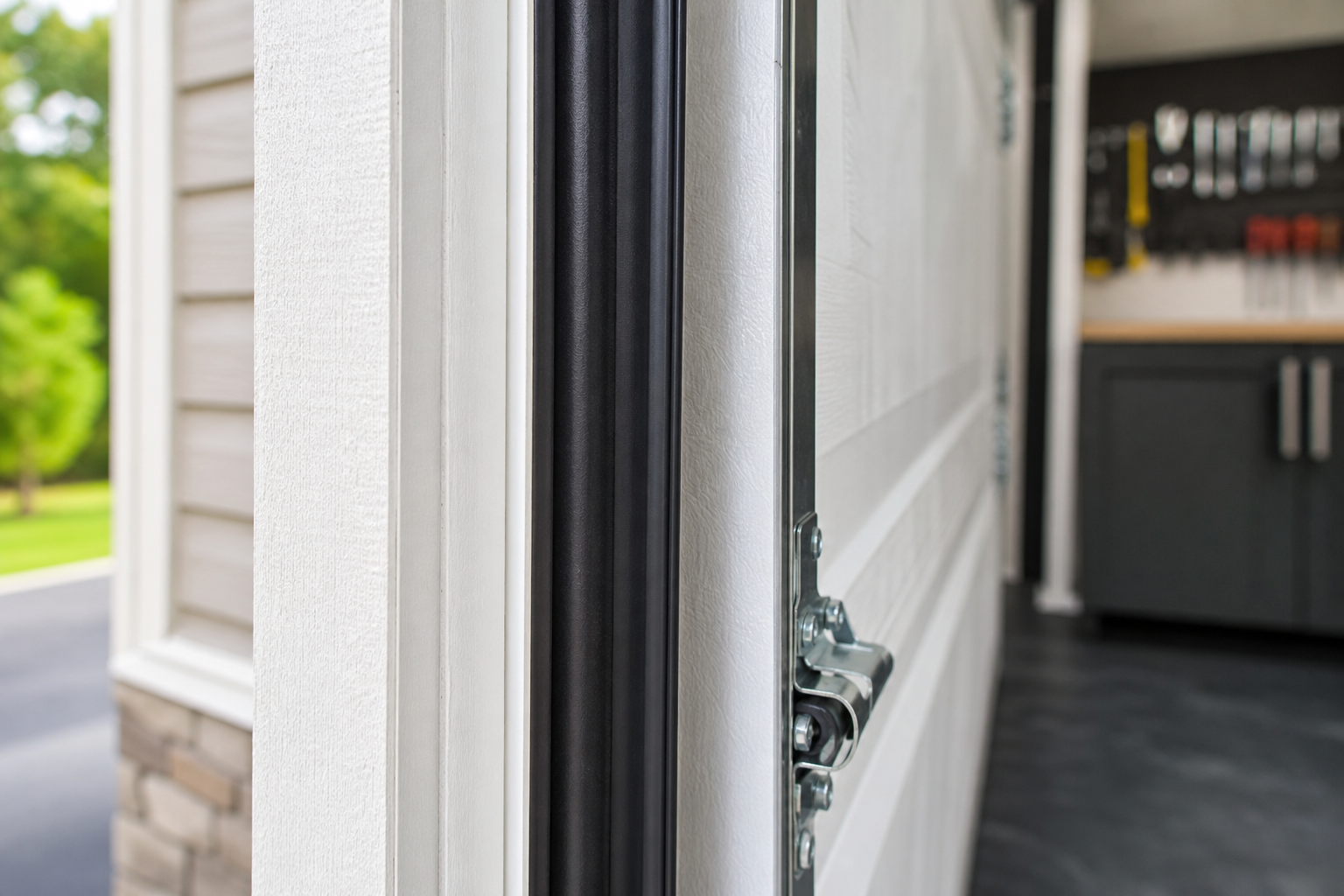
Side jamb seals and header seals require careful attention to detail. This is an area where cutting corners comes back to haunt you. Invest the effort upfront and you’ll save significant time and money over the next several years of use.
Start with a small test area if you’re uncertain. A 4 by 4-foot section in an inconspicuous spot lets you evaluate adhesion, appearance, and workability without committing to the full project. Troubleshooting a small test area is far easier than redoing everything.
Products from Frost King are worth adding to your shortlist. They balance performance and value well, and replacement parts or accessories are readily available if needed. Proper side seal installation can significantly reduce water infiltration issues that many homeowners experience.
Consider how this change fits the larger garage picture. Improvements in one area can shift dynamics elsewhere. Better insulation changes humidity patterns. Heavy storage affects the floor underneath. Think about interactions.
M-D Building Products
M-D Building Products and Duck Brand offer reliable alternatives. The details here make the difference between a result that lasts and one that needs redoing within a year. Take the time to assess your conditions before committing to a method or product.
Follow manufacturer instructions exactly, even when online tutorials suggest shortcuts. Formulations differ between brands; what works for one product can cause failure with another. If the data sheet says 4 hours between coats at 60 degrees minimum, those numbers aren’t suggestions.
Wear appropriate protection throughout: safety glasses, gloves, respirator when working with chemicals or dust. Ventilate when using adhesives, paints, or solvents. These aren’t optional precautions. Regular maintenance, including proper lubrication of door mechanisms, will help preserve your weatherstripping investment longer.

M-D Building Products Weatherstrip
Offers reliable options with proven long-term durability
Material Durability: Vinyl vs. Rubber vs. EPDM
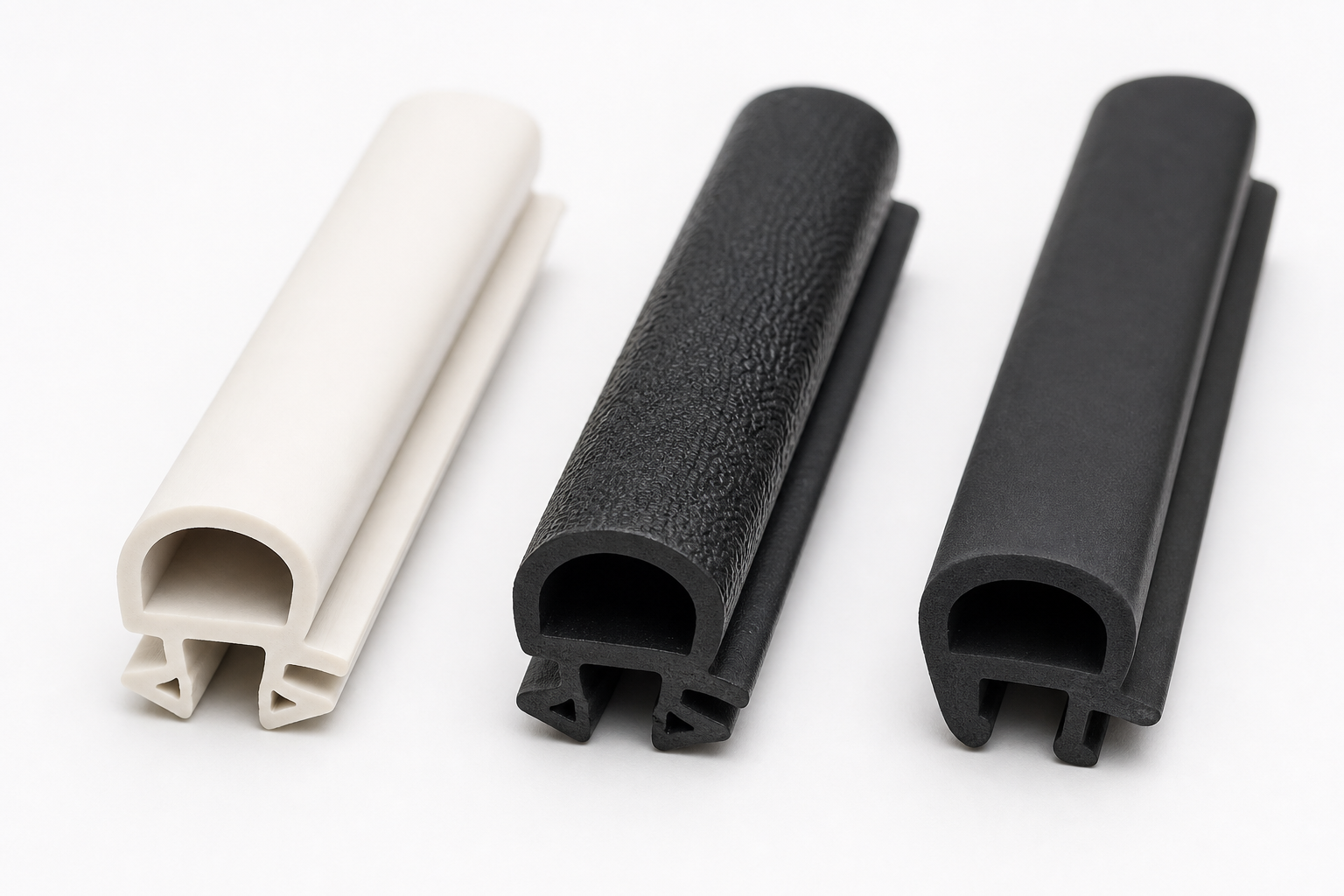
Material choice determines longevity. This is an area where cutting corners comes back to haunt you. Invest the effort upfront and you’ll save significant time and money over the next several years of use.
Keep the workspace organized throughout. Debris and clutter cause errors and safety issues. Clear tools and waste between major steps rather than letting mess accumulate to the end.
Factor in maintenance when choosing your approach. The lowest-maintenance option isn’t always cheapest initially, but it usually wins over a 5 to 10-year window when you include touch-ups, repairs, and replacements.
Rubber vs. Vinyl Performance
Getting this right requires matching your approach to actual conditions rather than following a generic formula. Climate, surface condition, and usage patterns all influence the best path forward.
Measure twice and commit once. A tape measure and five minutes of verification prevent the mistakes that take hours to fix. This applies doubly to cuts, holes, and any irreversible step.
For this application, Duck Brand products have a solid reputation among homeowners. Check current selection and pricing on Amazon, and read recent reviews from buyers with conditions similar to yours.
If this is your first project of this type, budget 50% more time than guides suggest. The learning curve is real, and careful work produces better results than rushing to meet an estimated timeline. In homes with attached garages, consider investing in quieter garage door openers to complement your weatherstripping improvements.
EPDM Sizing and Cold-Weather Performance
EPDM sizing by door width and cold-weather flexibility ratings matter most. Understanding the specifics of your situation helps you choose the right approach. Your garage’s age, construction type, and local climate all influence what works best and what to avoid.
Work in small, manageable sections for better quality control. For floor coatings, that means strips the width of your roller from back to front. For wall systems, complete one section fully before starting the next. Rushing large areas creates inconsistencies and errors.
M-D Building Products offers reliable options in this category. Look past overall star ratings and focus on detailed reviews discussing long-term durability rather than just first impressions.
Additional Considerations
Other problem areas include gaps around pipes and wires, sill plate-to-foundation spaces, unscreened vents, and deteriorated weatherstripping on side doors. Physical exclusion (sealing gaps) beats traps because it prevents entry entirely.
Steel wool packed into openings and secured with expanding foam stops rodents (foam alone gets chewed through). Copper mesh is even better. For larger gaps, 1/4-inch galvanized hardware cloth screwed in place creates a permanent, chew-proof barrier.
If you’re dealing with persistent garage door issues beyond weatherstripping, our guide on common garage door problems and DIY solutions covers mechanical issues that might affect your seal performance.
What to Avoid
Knowing what to skip prevents expensive mistakes:
- Products with vague specs or missing data sheets. If a manufacturer won’t publish details, that’s a red flag.
- Suspiciously cheap deals from unauthorized sellers. Counterfeit products are a real issue on major platforms.
- Unknown brands at rock-bottom prices. Established brands charge more for proven materials and real warranties.
Frequently Asked Questions
What’s the most impactful garage insulation upgrade?
The garage door. An insulation kit alone can make a 10 to 15-degree temperature difference. Then seal air gaps around the frame for the next biggest improvement.
Can I heat an uninsulated garage?
A heater will run nonstop without reaching comfort. Even basic insulation (door kit plus air sealing) makes any heater dramatically more efficient.
Will insulating my garage lower energy bills?
If it shares a wall with heated living space, yes. The insulated garage buffers heat loss from adjacent rooms. Most noticeable in cold-climate attached garages.
How often should garage door weatherstripping be replaced?
EPDM rubber seals typically last 5-7 years in moderate climates, while vinyl may need replacement every 2-3 years. Inspect annually for cracks, hardening, or gaps that allow drafts.
This article contains affiliate links. We may earn a small commission at no extra cost to you.
