

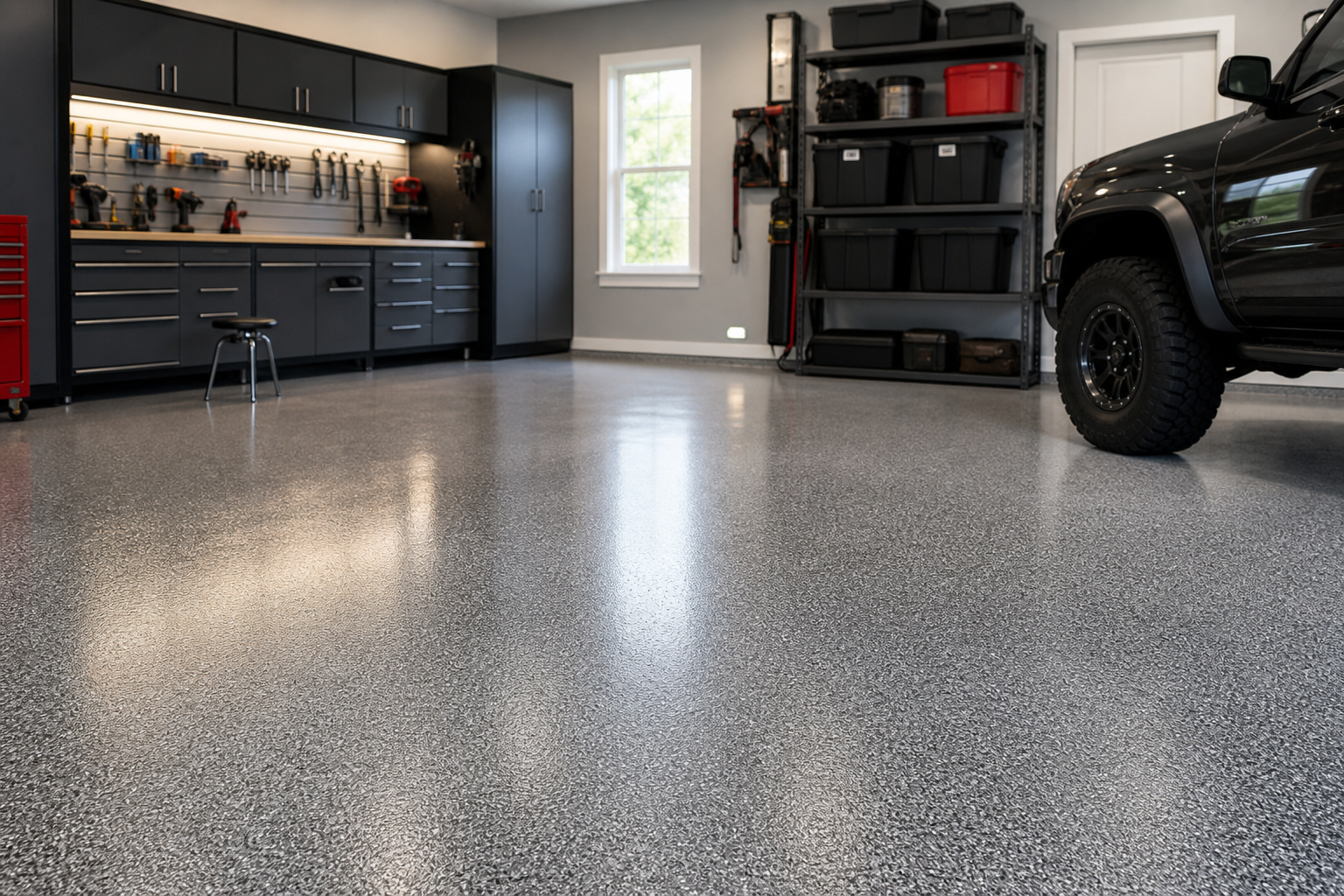
Picking the right heavy-duty garage floor coatings beyond epoxy isn’t about finding the highest star rating. It’s about matching product strengths to your needs: durability, ease of installation, or budget constraints.
Below, you’ll find honest assessments of top contenders, what separates them, and which ones fall short of their marketing. Check Amazon for current pricing.
Understanding the Basics
Apply coatings when temperatures are falling, not rising. Warming concrete expels trapped air through the wet coating (outgassing), creating bubbles. Evening application avoids this. Most epoxies perform best between 55 and 85 degrees Fahrenheit with the slab surface in the same range.
Never shortcut cure time. Most two-part epoxies need 24 hours for foot traffic, 72 hours for heavy use, and 7 days before vehicle parking. Polyaspartic systems cure faster, often allowing vehicles within 24 hours. Parking too early causes tire marks, soft spots, or full sheet delamination.
Pot life varies by product: 30 to 60 minutes for standard epoxies, as little as 10 to 15 minutes for polyaspartic coatings. Plan your approach before mixing and work in manageable sections so you never feel rushed near the end of a batch.
Durability Testing and Performance
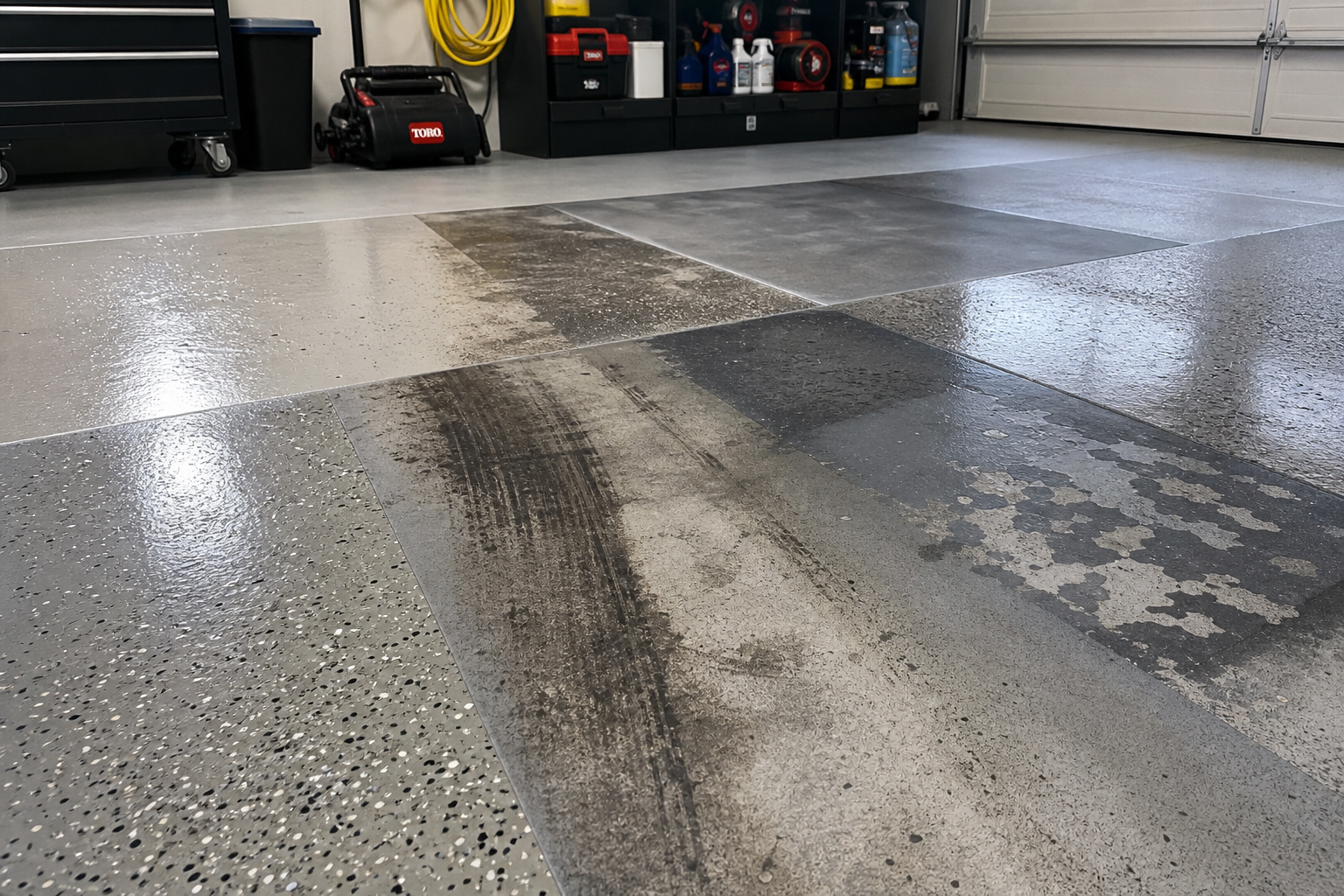
Understanding the specifics of your situation helps you choose the right approach. Your garage’s age, construction type, and local climate all influence what works best and what to avoid.
Start with a small test area if you’re uncertain. A 4 by 4-foot section in an inconspicuous spot lets you evaluate adhesion, appearance, and workability without committing to the full project. Troubleshooting a small test area is far easier than redoing everything.
Consider how this change fits the larger garage picture. Improvements in one area can shift dynamics elsewhere. Better insulation changes humidity patterns. Heavy storage affects the floor underneath. Think about interactions.
A quality concrete moisture test kit makes a noticeable difference in results. Check current options and reviews on Amazon to find the right match for your project and budget.
Surface Preparation and Application
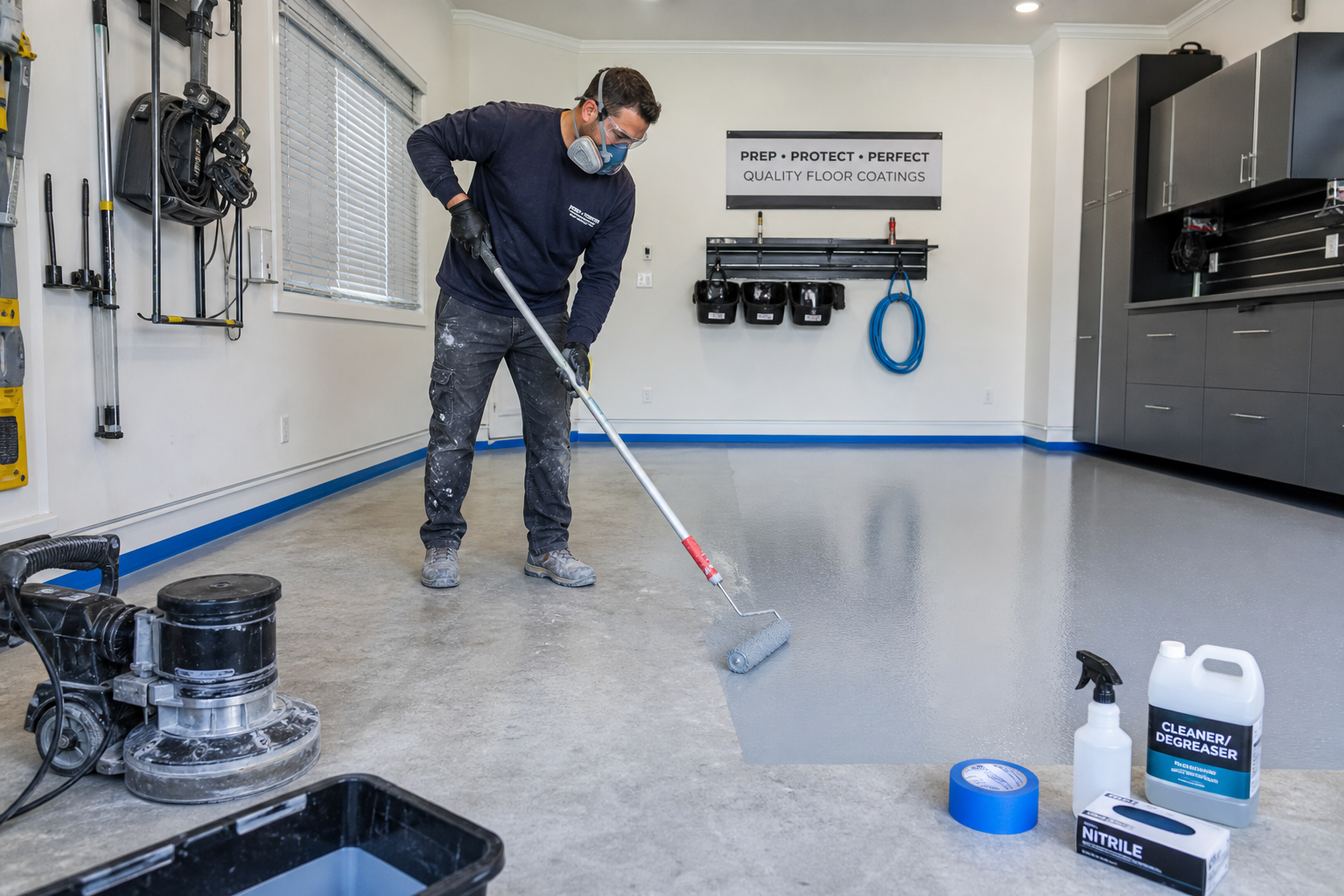
Surface preparation drives roughly 80% of a coating’s long-term performance. Concrete needs a CSP 2 to 3 surface profile for proper adhesion. Diamond grinding achieves this reliably. Acid etching is a budget alternative on clean, unsealed concrete but creates a lighter profile that’s less durable in high-traffic areas.
Two-part epoxy creates a chemical bond far stronger than any single-can product. When resin and hardener mix, cross-linking produces a dense, chemical-resistant surface. This reaction is sensitive to temperature, humidity, and mixing ratios, making adherence to the data sheet critical.
For detailed guidance on preparing your concrete surface properly, check out our guide on how to seal garage floor before epoxy. The techniques apply to other heavy-duty coatings as well.

Polyaspartic Garage Floor Coating
Fast cure times and superior durability over traditional epoxy
Practical Planning Tips
Set a realistic timeline and budget before buying anything. Most garage projects take 50% longer and cost 20% more than initial estimates, especially for first-timers. Build that buffer into your plan so unexpected discoveries don’t derail the entire project or blow the budget.
Invest in quality tools for tasks you’ll repeat. A reliable stud finder, a good level, a quality tape measure, and proper safety gear (eye protection, hearing protection, respirator) make every project easier and safer. These tools pay for themselves across multiple projects over the years.
Research local building codes and permit requirements for your specific project. Electrical work, structural modifications, and HVAC installations often require permits and inspections. Working without required permits can create liability issues, insurance complications, and problems when selling the home.
Prioritize your projects based on impact and urgency. Safety issues (faulty wiring, CO risk, structural problems) come first. Comfort improvements (insulation, lighting, climate control) come second. Cosmetic upgrades (floor coatings, paint, organization systems) come last. Following this order ensures you’re building each improvement on a solid foundation.
If you’re planning a complete garage makeover, our garage workshop ideas guide can help you design a space that works with your new floor coating.
What to Avoid
Knowing what to skip prevents expensive mistakes:
- Products with vague specs or missing data sheets. If a manufacturer won’t publish details, consider that a warning.
- “Universal” products claiming to work everywhere. Specialized products consistently outperform generalists.
- Unknown brands at rock-bottom prices. Established brands charge more for proven materials and real warranties.
A reliable epoxy floor roller kit is well-reviewed by garage owners. Browse the latest selection on Amazon for current pricing and availability.

Concrete Diamond Grinder
Essential for proper surface preparation and long-lasting adhesion
Common Issues and Solutions
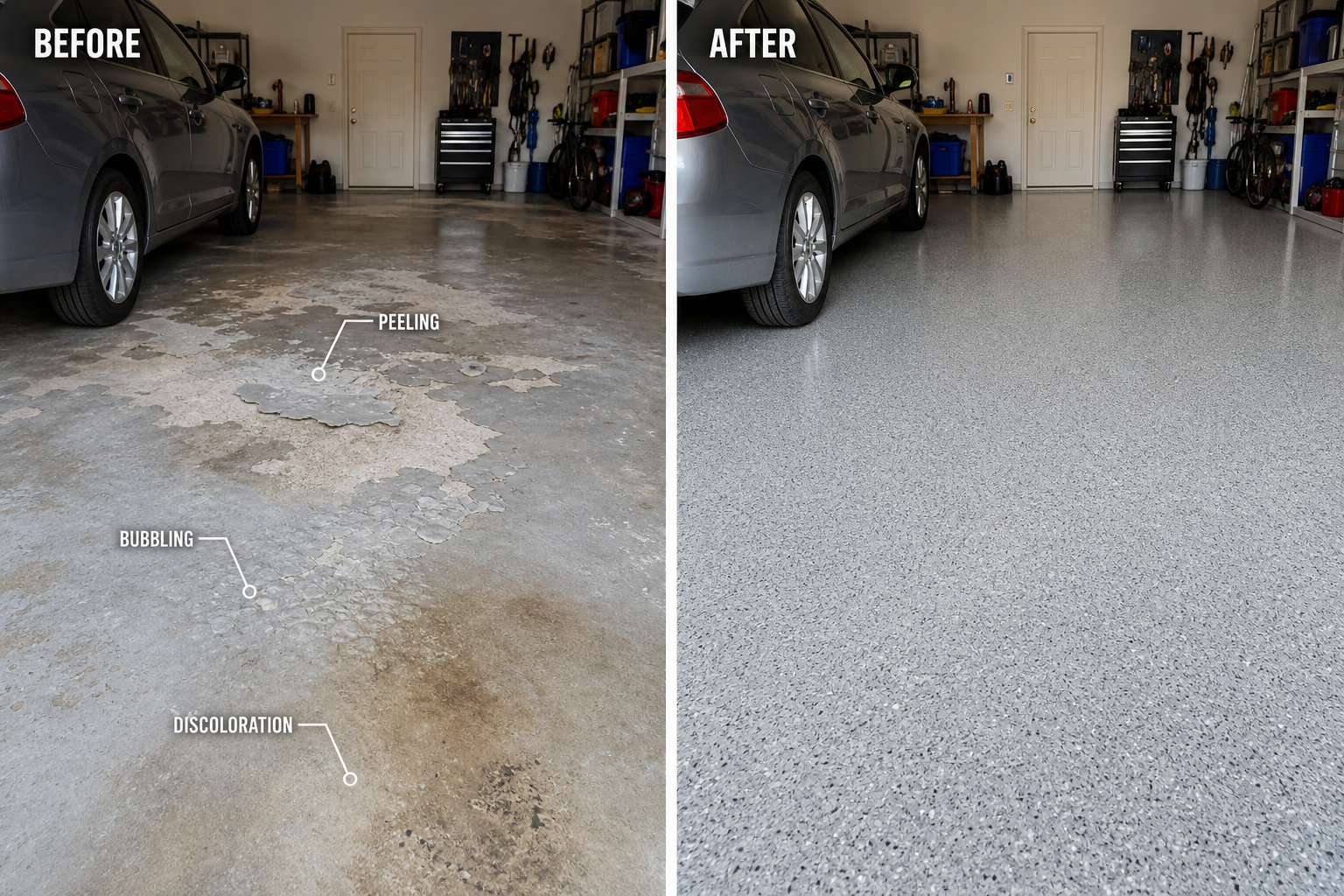
Even with proper preparation, issues can arise. Poor adhesion usually traces back to insufficient surface preparation or applying over contaminated concrete. Oil stains, grease, and previous sealers must be completely removed before coating.
Temperature and humidity swings during application cause most coating failures. Don’t rush the process to beat weather changes. Wait for stable conditions that will last through the entire cure period.
For garage floors with existing drainage issues, consider installing proper drainage before applying any coating. Our guide on how to install garage floor drains covers the process thoroughly.
If you’re dealing with rust stains before coating, our article on removing rust stains from garage floors provides effective solutions.
Frequently Asked Questions
How long does a garage floor coating last?
A properly applied two-part epoxy lasts 5 to 10 years. Polyaspartic coatings can go 15+ years. Surface prep quality is the biggest factor in how long the coating holds up.
What temperature is best for floor coating application?
Between 50 and 85 degrees Fahrenheit with humidity below 85%. Apply in the evening when temperatures are falling to avoid outgassing bubbles.
Can I coat over an existing floor finish?
If the old coating is well-adhered and just worn thin, scuff-sand it and apply a new topcoat. If it’s peeling or bubbling, strip it completely first.
Do I need primer before applying a heavy-duty coating?
Many polyaspartic and high-end epoxy systems are self-priming on properly prepared concrete. However, porous or problematic surfaces may benefit from a primer. Check our garage floor primer guide for detailed guidance on when primers are necessary.
This article contains affiliate links. We may earn a small commission at no extra cost to you.
