

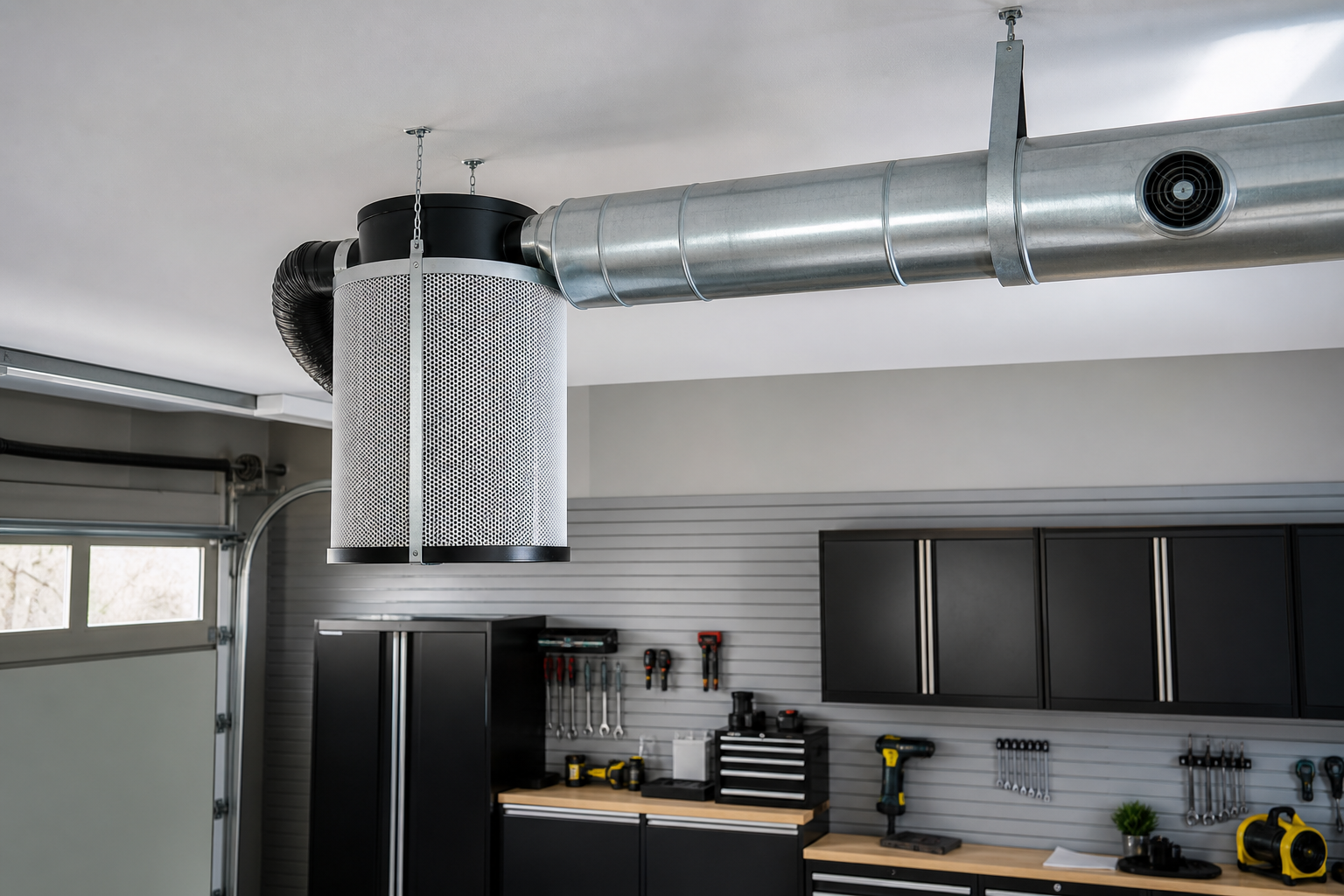
The market for garage carbon filters for smell control keeps growing, giving you more options and more chances to pick wrong. Understanding what separates quality from marketing hype saves real money and frustration.
This guide compares the leading products across the specs that actually matter, with clear recommendations at different price points.
Understanding the Basics
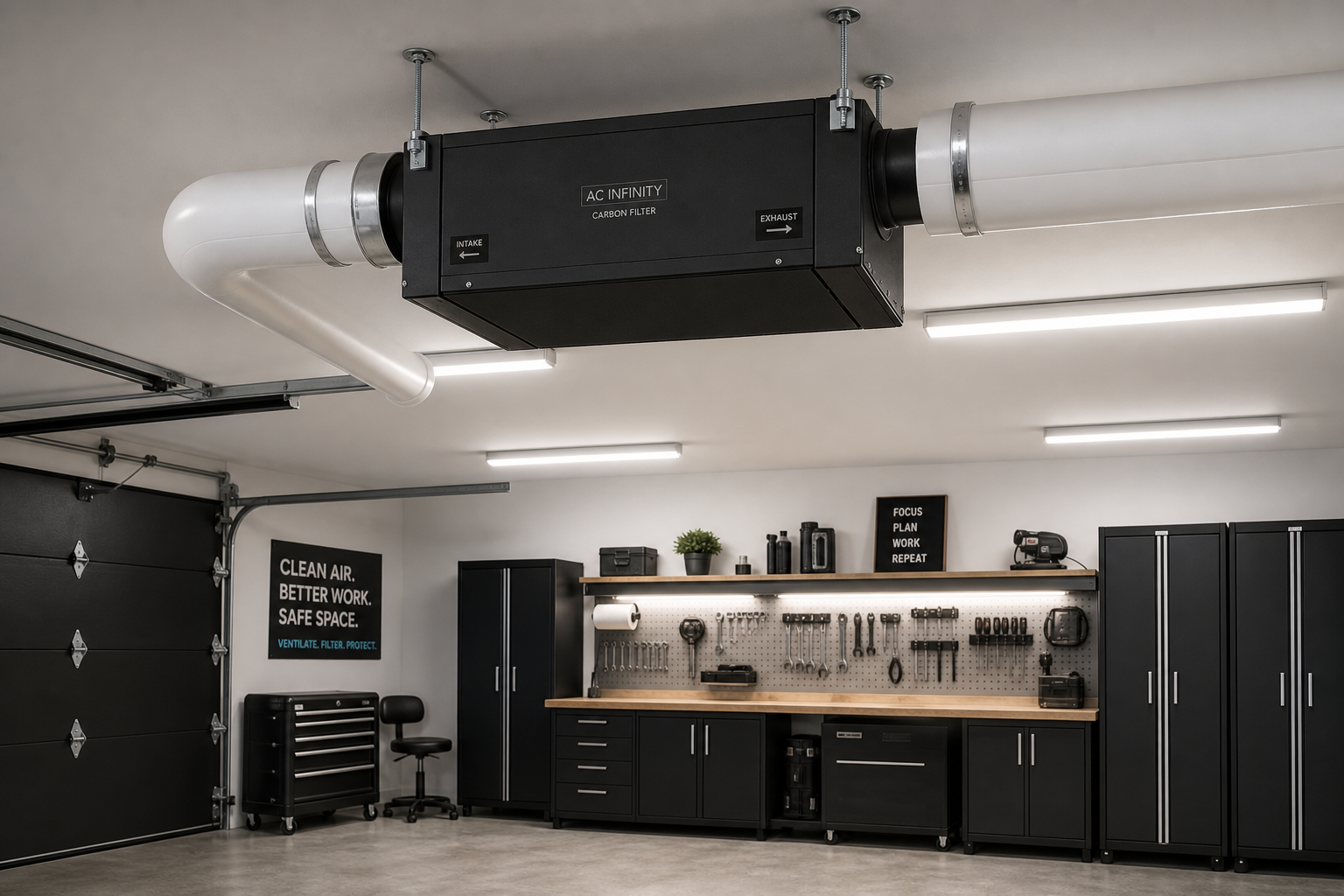
Most garages have only passive ventilation (air leaking around the door), which is inadequate for workspace use. A single wall-mounted exhaust fan creates deliberate airflow that removes heat, moisture, and fumes. The improvement is immediate and dramatic.
Mount an exhaust fan high on the wall opposite the garage door for heat removal. Hot air collects at the ceiling; the fan pulls it out while cooler air enters through the open door or a low intake vent. A 1,400 CFM fan exchanges air in a two-car garage every 3 to 4 minutes.

Carbon Filter Exhaust Fan
Combines ventilation with odor filtering for multi-purpose garage spaces
Proper ventilation becomes essential when you’re using your garage for projects like a workshop setup or converting it into a home office space. These applications generate heat, moisture, and fumes that need active removal.
Floor Coating Considerations
Latex garage paint and one-part “epoxy” paint are fundamentally different from true two-part systems. One-part products are acrylic paint with a small amount of epoxy resin added for marketing. They go on easily but wear through in high-traffic spots within 6 to 12 months.
True two-part systems create a cross-linked film that’s dramatically harder and more chemical-resistant. Application demands more prep and timing attention, but the durability gap is enormous and visible within the first year of use.
Before applying any floor coating, proper preparation is crucial. Check out our guide on sealing garage floors before epoxy application for best results.
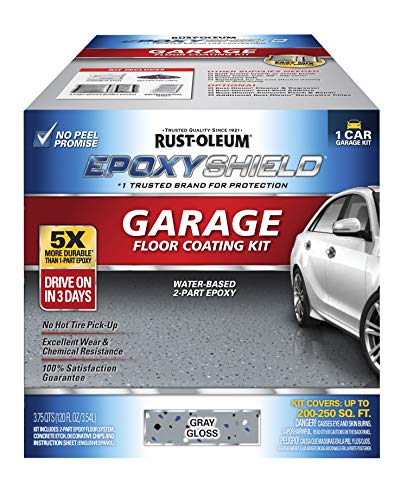
Garage Floor Paint
Two-part epoxy systems provide superior durability for high-traffic areas
Practical Planning Tips
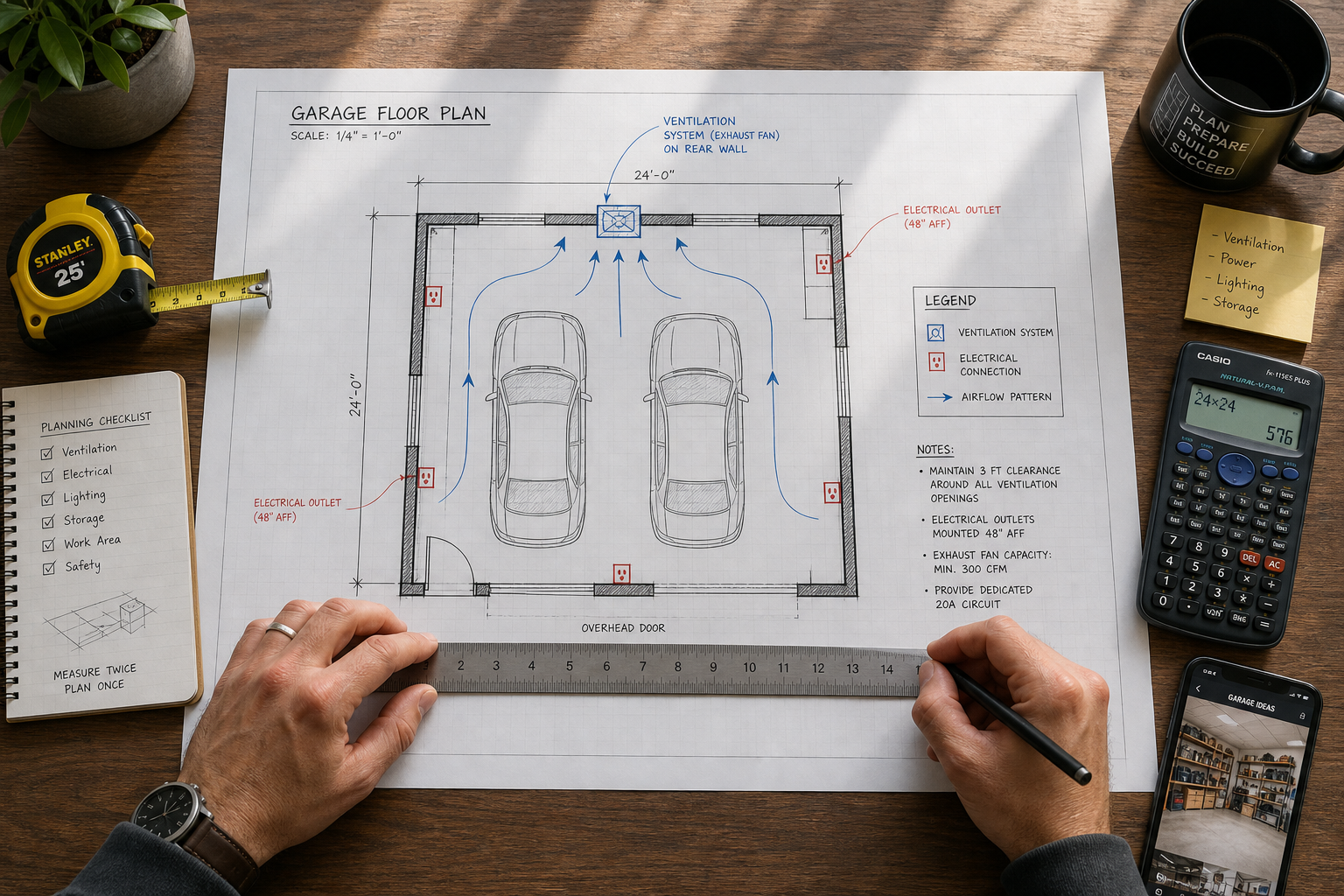
Research local building codes and permit requirements for your specific project. Electrical work, structural modifications, and HVAC installations often require permits and inspections. Working without required permits can create liability issues, insurance complications, and problems when selling the home.
Consider the seasonal timing of your project. Floor coatings apply best in mild weather (50 to 85 degrees). Insulation projects are most motivating (and noticeable) before extreme weather hits. Electrical and plumbing work can happen year-round but should be completed before insulating or finishing walls over the wiring.
For electrical considerations, especially if you’re installing EV charging stations, professional installation ensures code compliance and safety.
Tool and Equipment Recommendations
Invest in quality tools for tasks you’ll repeat. A reliable stud finder, a good level, a quality tape measure, and proper safety gear (eye protection, hearing protection, respirator) make every project easier and safer. These tools pay for themselves across multiple projects over the years.
Set a realistic timeline and budget before buying anything. Most garage projects take 50% longer and cost 20% more than initial estimates, especially for first-timers. Build that buffer into your plan so unexpected discoveries don’t derail the entire project or blow the budget.

Floor Paint Roller Kit
Professional-grade applicators ensure smooth, even coating coverage
What to Avoid
Knowing what to skip prevents expensive mistakes:
- Products with vague specs or missing data sheets. When a manufacturer won’t publish details, that’s a red flag.
- “Universal” products claiming to work everywhere. Specialized products consistently outperform generalists.
- Suspiciously cheap deals from unauthorized sellers. Counterfeit products are a real issue on major platforms.
Quality matters especially for ventilation components. Poor-quality fans fail prematurely, and inadequate carbon filters become expensive to replace frequently.
Installation and Maintenance
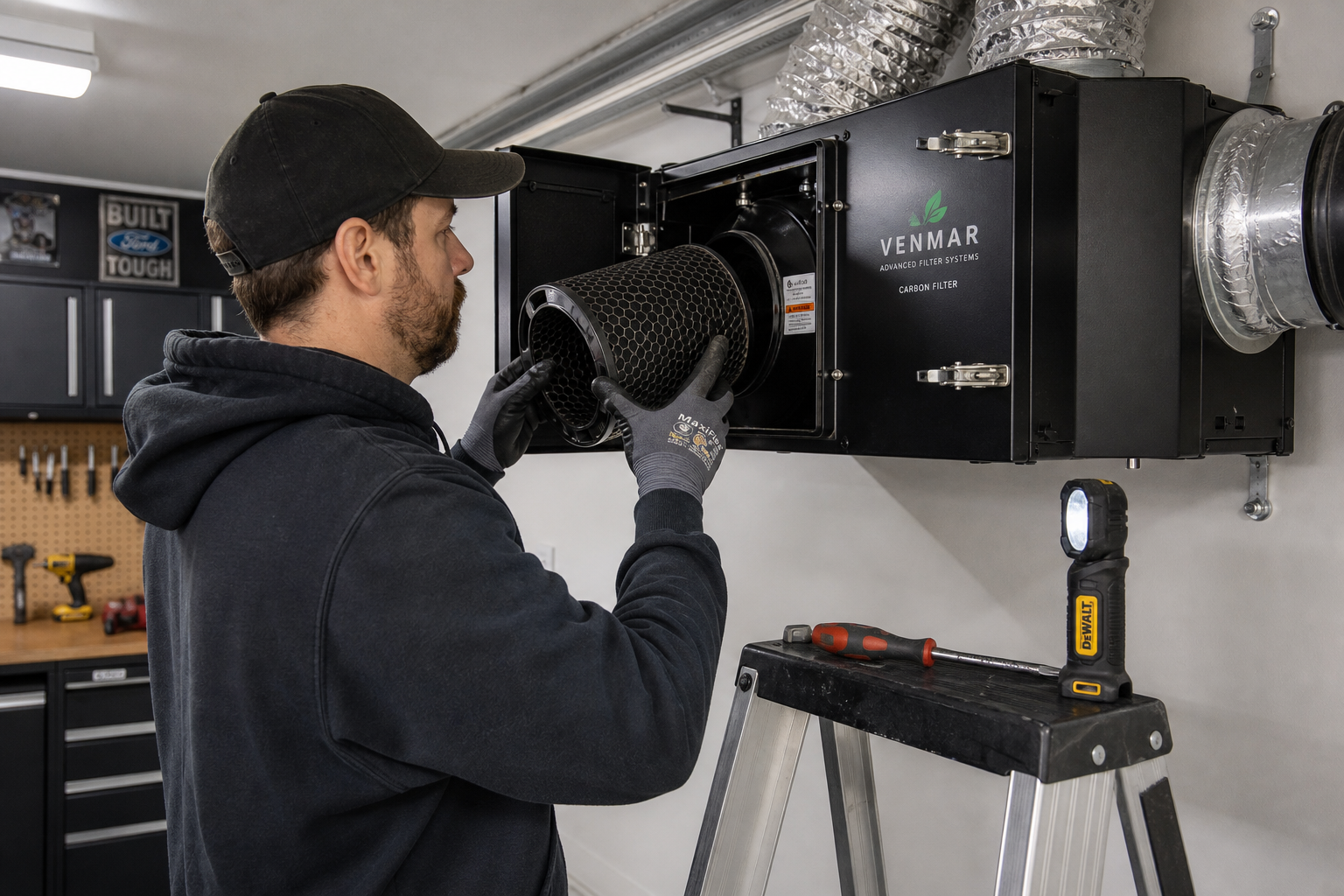
Most ventilation installations benefit from proper planning. For comprehensive ventilation improvements, consider adding roof vents to create better airflow patterns throughout the space.
Carbon filters require periodic replacement, typically every 6 to 12 months depending on usage. Mark replacement dates on your calendar to maintain optimal performance. Clean pre-filters monthly to extend carbon filter life.
Wall-mounted fans need occasional cleaning and lubrication. Check manufacturer specifications for maintenance schedules. Most quality units run maintenance-free for years with basic care.

Wall Mount Garage Fan
High-CFM models provide powerful air exchange for large garage spaces
Frequently Asked Questions
Can I handle this as a DIY project?
Most ventilation and filter installations are DIY-accessible with basic tools. Electrical work, structural modifications, and high-tension spring work should go to licensed professionals. Simple wall mounting and ductwork typically fall within DIY capabilities.
How long will the results last?
Quality ventilation systems provide years of reliable performance with proper installation and maintenance. Carbon filters need regular replacement, but the fan units themselves can run for decades. Preparation quality is the single biggest longevity factor for any garage improvement.
How much should I budget for a complete ventilation system?
Budget varies widely by scope and materials chosen. DIY installation saves significantly on labor costs. Check current Amazon pricing for accurate material estimates, as costs fluctuate based on seasonal demand and supply chain factors.
Do carbon filters really make a difference for garage odors?
Quality carbon filters effectively remove most organic odors, paint fumes, and chemical vapors. They’re particularly effective when combined with proper air circulation. The key is matching filter capacity to your garage size and usage patterns.
This article contains affiliate links. We may earn a small commission at no extra cost to you.
