

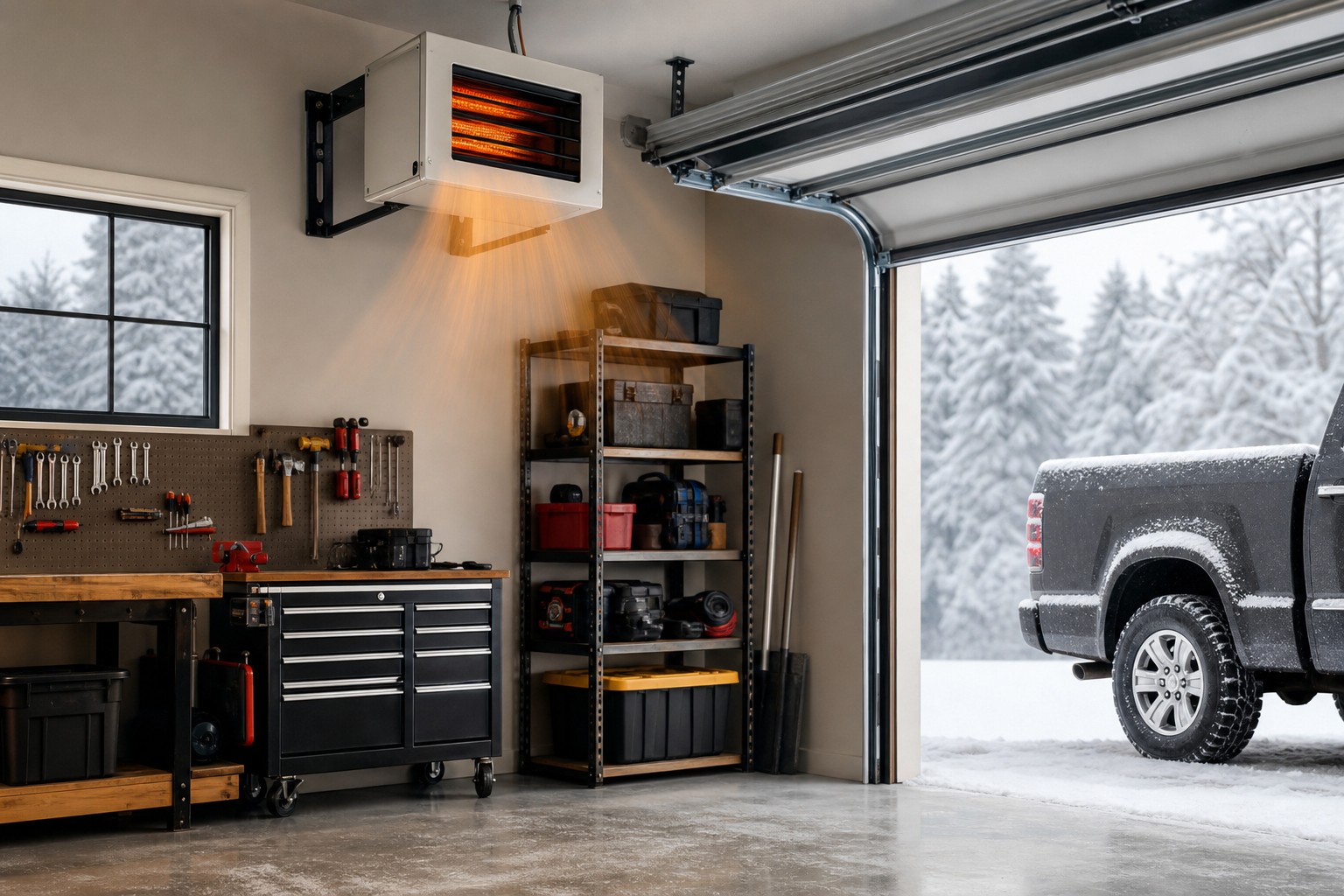
Shopping for garage heaters for winter means sifting through dozens of options that all claim to be the best. Marketing language is unreliable, and Amazon reviews can be misleading with incentivized ratings mixed in.
This guide focuses on specs and features that matter for real-world garage use. Every recommendation is based on performance, durability, and value, not advertising budgets.
Understanding Garage Heater Basics
Natural gas and propane heaters deliver the most BTUs per dollar. They require proper exterior venting (never run unvented combustion heaters in enclosed garages) and a gas line. Higher install cost, but lowest operating cost for daily use in cold climates.
BTU output must match your space. Multiply square footage by ceiling height, then by 3 to 5 BTUs based on insulation quality and climate. A well-insulated 500 sq ft, 10-foot-ceiling garage needs roughly 15,000 to 25,000 BTUs.
Electric forced-air heaters need no venting or fuel lines. A 5,000-watt 240V unit produces about 17,000 BTUs. Quick to heat, consistent temperature. Downside: higher operating cost than gas, especially where electricity is expensive.

Types of Garage Heaters
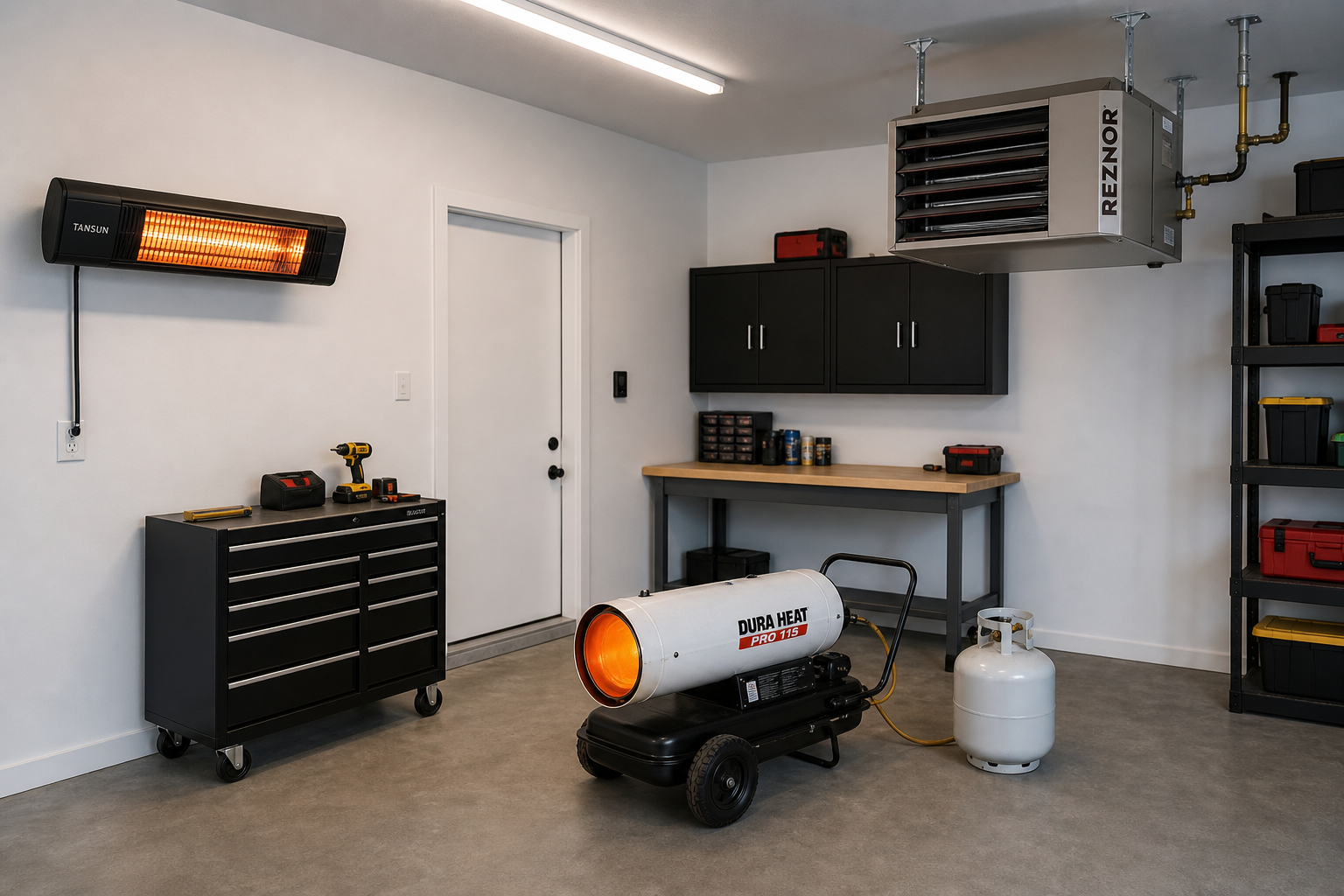
Electric Infrared Heaters
Infrared radiant heaters warm objects and surfaces directly instead of heating air. Efficient in drafty spaces since warmth doesn’t dissipate as quickly. The trade-off is uneven heating: direct-path areas get warm while corners stay cool.
These work best when you’re working in one spot for extended periods. If you need to move around the garage frequently, forced-air units provide more even coverage.
Propane Heaters
Portable propane heaters offer flexibility for temporary heating. Most models include safety features like tip-over protection and oxygen depletion sensors. Check for certification from recognized testing labs before purchasing.
Follow manufacturer instructions exactly, even when online tutorials suggest shortcuts. Formulations differ between brands; what works for one product can cause failure with another. If the data sheet says 4 hours between coats at 60 degrees minimum, those numbers aren’t suggestions.
Ceiling-Mounted Units
Wall and ceiling-mounted heaters save floor space and distribute heat more evenly. Electric units require 240V circuits in most cases. Gas units need both electrical connections for controls and proper venting to the exterior.
Safety Considerations and Heating Capacity
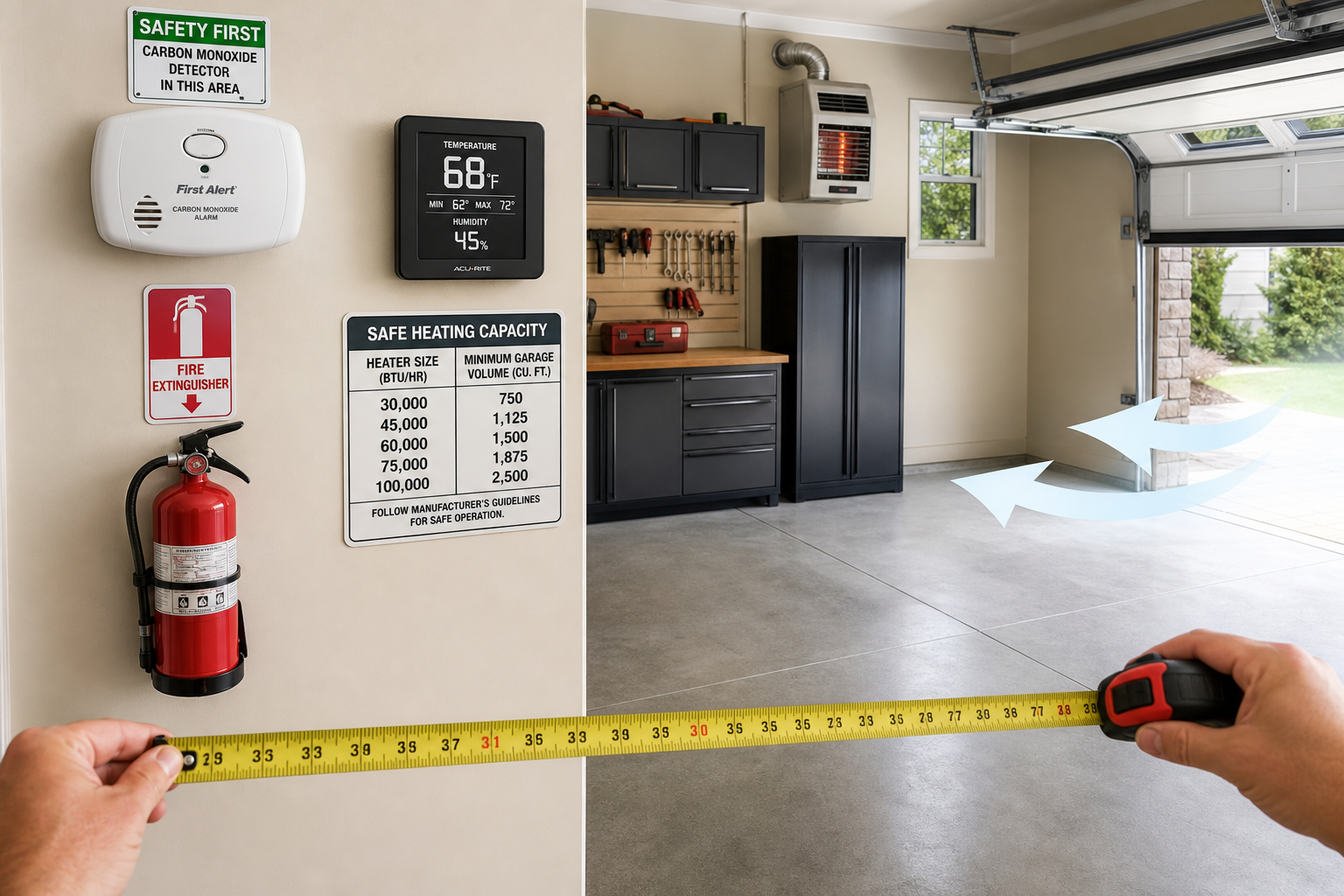
Safety considerations, heating capacity, and installation requirements require matching your approach to actual conditions rather than following a generic formula. Climate, surface condition, and usage patterns all influence the best path forward.
Check specific requirements before purchasing materials. Measure the area, note unusual conditions (extreme temps, high humidity, uneven surfaces), and read product specs carefully. A mismatch between your conditions and the product’s rated range is the most common cause of unexpected failures.
If this is your first project of this type, budget 50% more time than guides suggest. The learning curve is real, and careful work produces better results than rushing to meet an estimated timeline.
Ventilation Requirements
Steel wool packed into openings and secured with expanding foam stops rodents (foam alone gets chewed through). Copper mesh is even better. For larger gaps, 1/4-inch galvanized hardware cloth screwed in place creates a permanent, chew-proof barrier.
Proper ventilation prevents carbon monoxide buildup and moisture issues. Even electric heaters benefit from air circulation to prevent condensation problems on cold surfaces.

Garage Thermostat
Essential for maintaining consistent temperatures and energy efficiency
Practical Planning Tips
Prioritize your projects based on impact and urgency. Safety issues (faulty wiring, CO risk, structural problems) come first. Comfort improvements (insulation, lighting, climate control) come second. Cosmetic upgrades (floor coatings, paint, organization systems) come last. Following this order ensures you’re building each improvement on a solid foundation.
Invest in quality tools for tasks you’ll repeat. A reliable stud finder, a good level, a quality tape measure, and proper safety gear (eye protection, hearing protection, respirator) make every project easier and safer. These tools pay for themselves across multiple projects over the years.
Consider the seasonal timing of your project. Floor coatings apply best in mild weather (50 to 85 degrees). Insulation projects are most motivating (and noticeable) before extreme weather hits. Electrical and plumbing work can happen year-round but should be completed before installing garage radiant barrier or finishing walls over the wiring.
Before starting any garage project, take stock of what you have and what you need. Walk the space with a tape measure and a notepad. Record dimensions, note existing electrical outlets and their amperage, check for moisture issues, and photograph anything you want to change. This baseline assessment prevents surprises mid-project and helps you budget materials accurately.
What to Avoid
Knowing what to skip prevents expensive mistakes:
- Suspiciously cheap deals from unauthorized sellers. Counterfeit products are a real issue on major platforms.
- Unknown brands at rock-bottom prices. Established brands charge more for proven materials and real warranties.
- Products with vague specs or missing data sheets. If a manufacturer won’t publish details, that’s a red flag.
Before making major heating decisions, consider addressing basic insulation first. Replacing garage door weather stripping and sealing air gaps can reduce your heating requirements significantly.
Installation and Maintenance
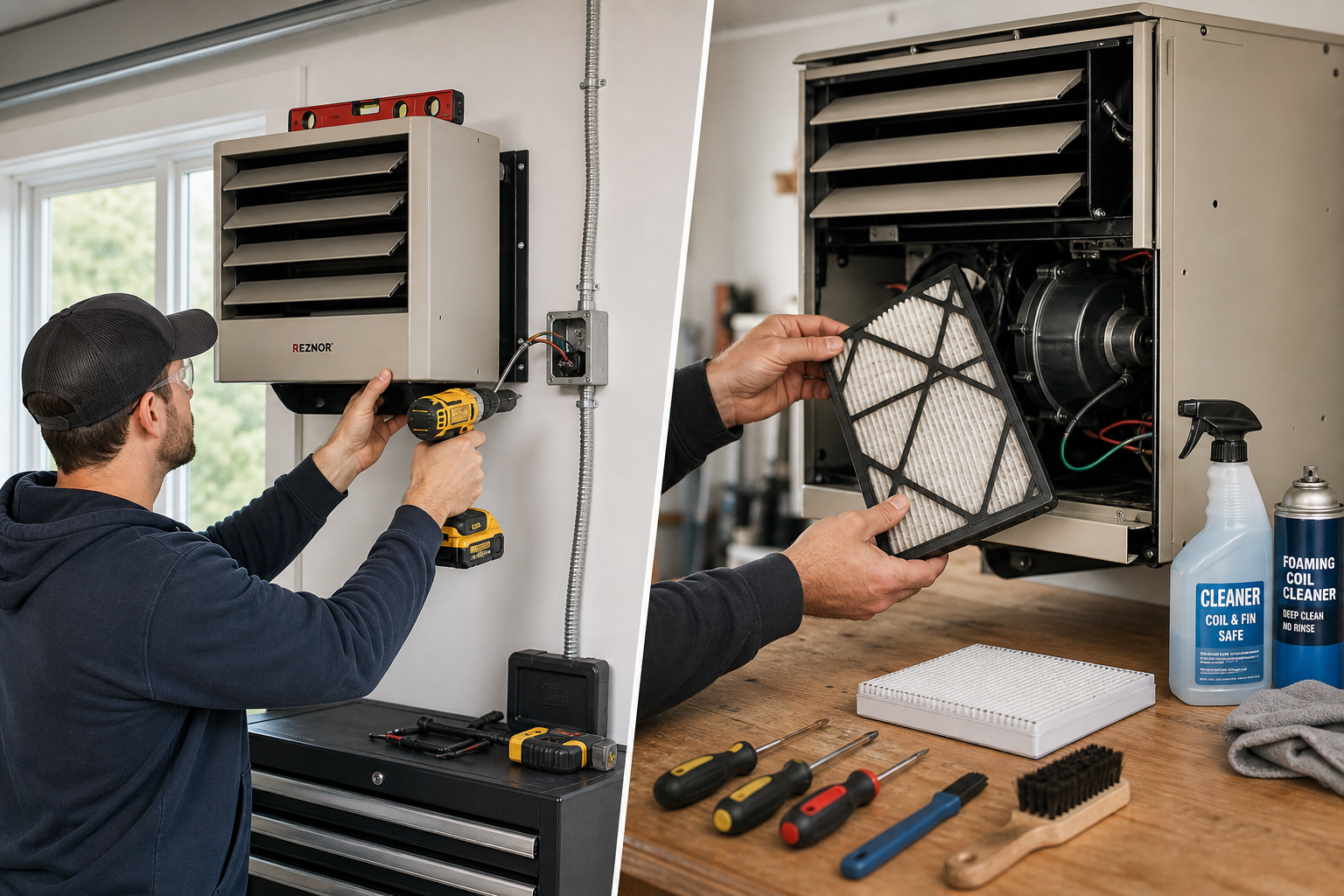
Most electric heaters require dedicated 240V circuits. Don’t attempt electrical work beyond your skill level. The cost of professional installation is worth it compared to fire risks from improper wiring.
Gas heaters need annual maintenance including cleaning burners, checking gas connections, and inspecting venting. Carbon monoxide detectors are mandatory with any combustion heating system.
For year-round garage use, consider combining heating with other comfort improvements. Installing garage roof vents helps with summer cooling and prevents moisture buildup that can interfere with heating efficiency.
Frequently Asked Questions
Can I heat an uninsulated garage?
A heater will run nonstop without reaching comfort levels. Even basic insulation (door kit plus air sealing) makes any heater dramatically more efficient. The energy savings often pay for insulation costs within one heating season.
What’s the most impactful garage insulation upgrade?
The garage door. An insulation kit alone can make a 10 to 15-degree temperature difference. Then seal air gaps around the frame for the next biggest improvement. This simple upgrade reduces heating costs significantly.
Will insulating my garage lower energy bills?
If it shares a wall with heated living space, yes. The insulated garage buffers heat loss from adjacent rooms. Most noticeable in cold-climate attached garages where the temperature difference creates significant heat transfer.
What size heater do I need for a two-car garage?
A typical two-car garage (400-500 square feet) with 8-foot ceilings needs 12,000 to 20,000 BTUs depending on insulation and climate. Start with the lower number if well-insulated, higher if uninsulated or in extreme climates.
This article contains affiliate links. We may earn a small commission at no extra cost to you.
