

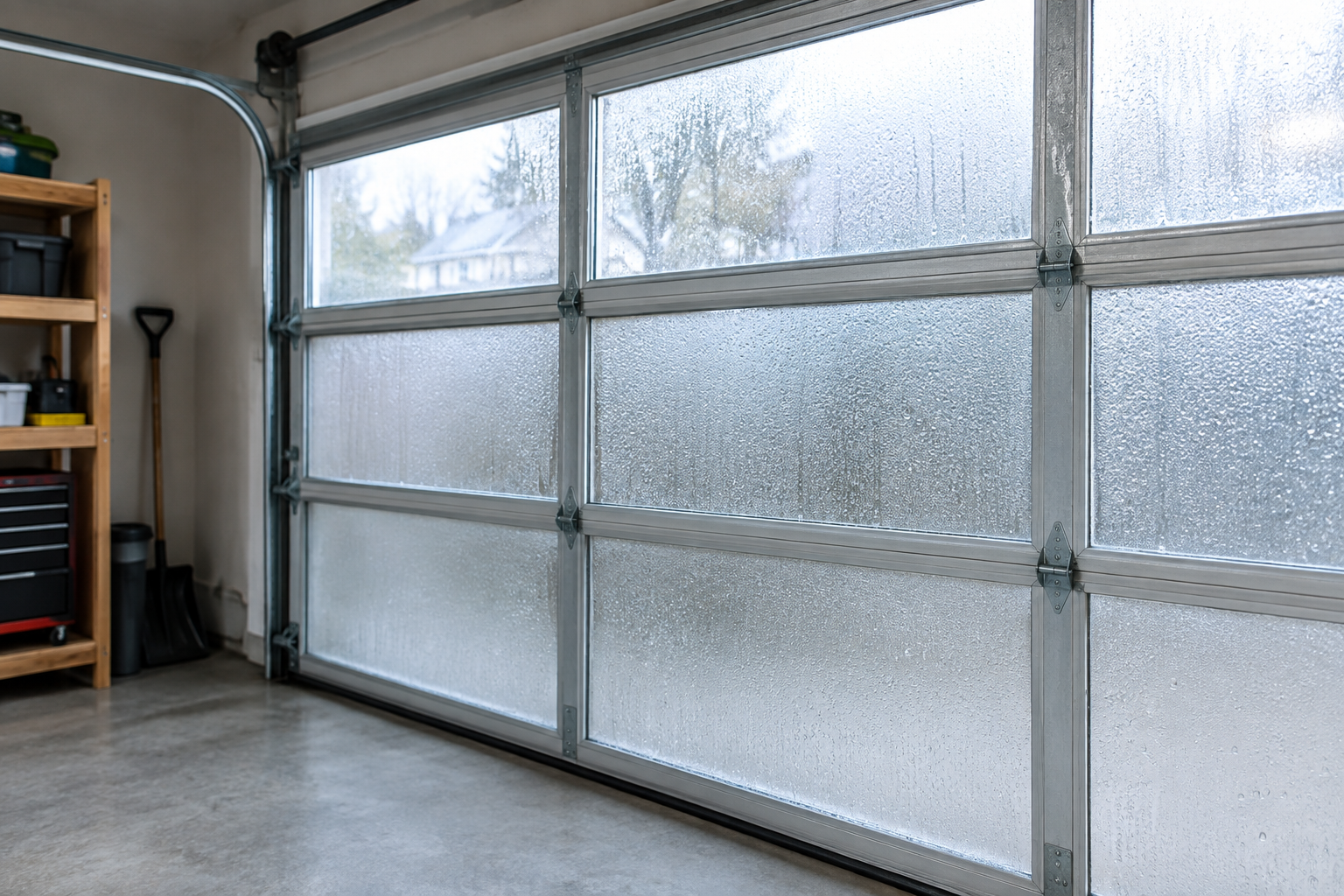
Walk into your garage on a cold morning and find water beading up on the inside of your garage door, dripping down onto the floor below. It’s not a leak. It’s not rain getting in. It’s condensation, and it happens because your garage door is one of the coldest surfaces in the entire space.
This is different from a garage that just feels damp or smells musty. Condensation on a garage door is a specific physics problem involving temperature and moisture meeting on a cold metal or wood surface. Once you understand what’s actually happening, fixing it gets a lot easier.
Why Condensation Forms on Garage Doors Specifically
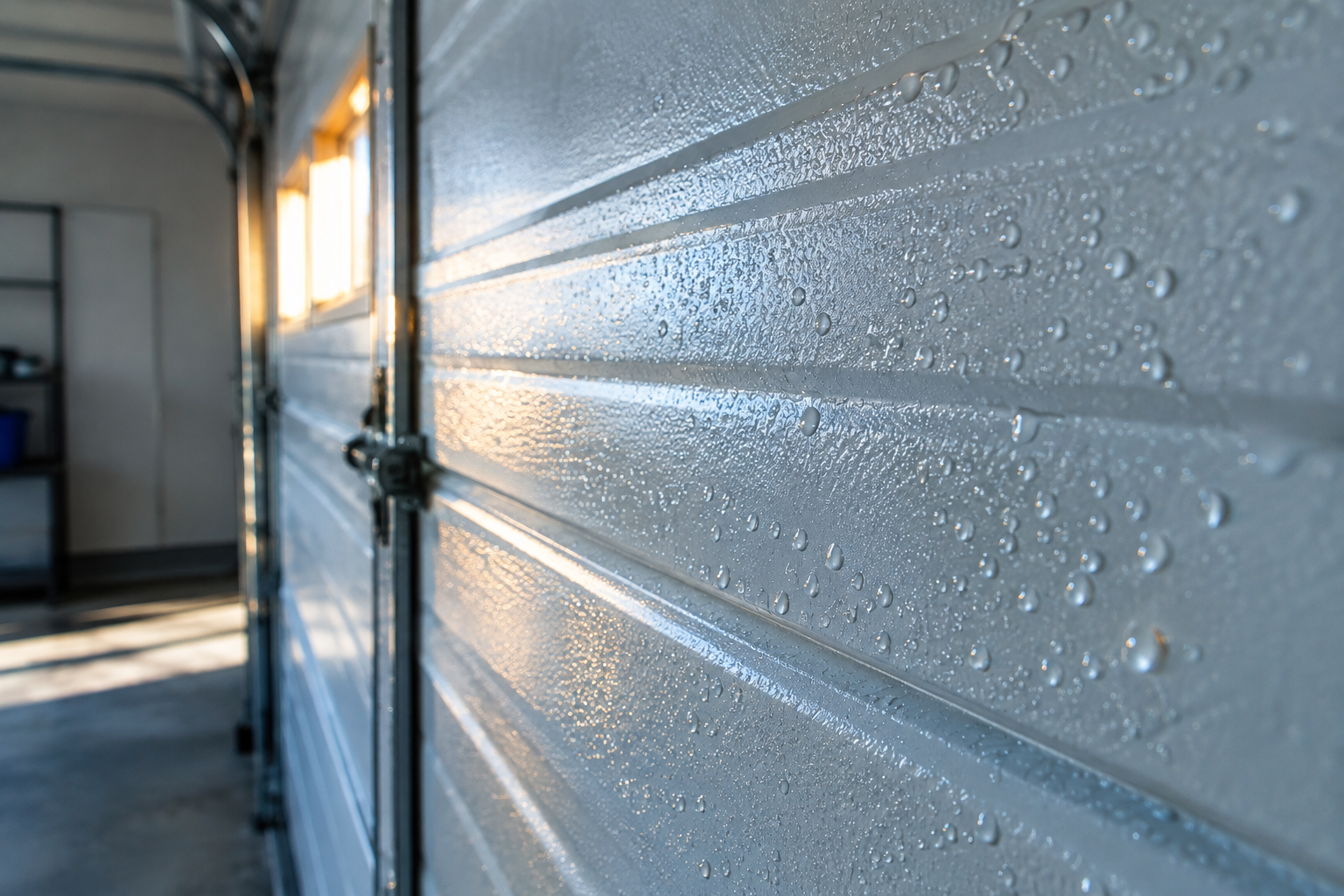
Condensation happens when moist air touches a surface that’s colder than the air’s dew point. The dew point is the temperature at which air can no longer hold its moisture as vapor, so that moisture turns into liquid water on whatever surface it touches.
Your garage door is usually the coldest surface in the garage because it’s thin, it faces the outside directly, and on most homes it’s uninsulated steel or aluminum. Metal conducts cold extremely well, so the interior face of the door often sits close to the outdoor temperature even when the rest of the garage is warmer. Warm, humid air inside the garage hits that cold metal skin and condenses instantly, just like a cold soda can sweating on a summer day.
You’ll usually see this worst in spring and fall, when temperature swings between day and night are largest, and during winter cold snaps when the door surface can be 20 or 30 degrees colder than the air around it.
Insulated vs Uninsulated Doors: Why It Matters So Much
An uninsulated steel garage door is basically a giant single-pane window made of metal. It has almost no resistance to temperature transfer, so its interior surface temperature tracks closely with the outdoor temperature. That makes it a prime target for condensation any time there’s humidity in the garage air.
An insulated door, even a basic one with a thin layer of polystyrene, behaves completely differently. The insulation acts as a thermal break, keeping the interior surface of the door closer to room temperature instead of outdoor temperature. That alone can eliminate most condensation problems without touching humidity levels at all.
If you’re dealing with constant sweating panels and you still have the original uninsulated steel door that came with the house, upgrading is often the single most effective fix. It’s not cheap, but a lot of homeowners install a garage door insulation kit as a middle step first, adding rigid foam or reflective insulation panels to the back of the existing door. This won’t perform as well as a factory-insulated door, but it raises the interior surface temperature enough to stop most condensation in moderate climates.
Indoor Humidity Is the Other Half of the Equation
A cold door alone doesn’t cause condensation. You need moisture in the air to meet that cold surface. Garages pick up humidity from a surprising number of sources: wet vehicles pulling in after rain or snow, washing machines or utility sinks, damp concrete floors, firewood storage, and even just humid outdoor air leaking in through gaps.
Parking a wet car inside overnight is one of the biggest contributors homeowners overlook. A car covered in rain or melting snow can release a surprising amount of water vapor into an enclosed space over several hours. If you can let vehicles drip dry outside or in a driveway for a few minutes before pulling them in, you’ll cut down on a lot of that moisture load.
If your garage runs consistently humid for reasons beyond just the door sweating, it’s worth reading through our full guide on how to fix high garage humidity, which covers whole-space moisture sources in more depth. And if you’re noticing musty smells along with the condensation, especially after storms, check out our guide on fixing a musty garage after rain.
How to Tell If It’s Condensation and Not a Leak
Before you assume condensation, rule out an actual water leak. Condensation typically forms as a fine, even layer of droplets across the whole door surface, especially in the mornings, and it dries up on its own as the day warms. A leak tends to show up as a concentrated wet spot, a trickle pattern, or staining in one specific location, usually near the top seal or along one side.
Run your hand along the weatherstripping and the bottom seal after a rainstorm. If you find water actually seeping through rather than beading on the interior surface, you’re dealing with a seal failure, not condensation. Our guide on fixing garage door seals that let water in walks through diagnosing and repairing that specific problem.
It’s also worth checking your tracks and hardware while you’re at it. Condensation that drips down can pool near the track hardware and cause rust over time, and if the door has ever been slightly out of alignment, moisture tends to collect unevenly along one side. If you notice grinding, sticking, or uneven movement, take a look at our guide on fixing bent or misaligned garage door tracks before the rust makes things worse.
Ventilation and Air Sealing Fixes That Actually Help
Improving airflow around the garage door area helps in two ways. It moves humid air away from the cold surface before it has time to condense, and it helps even out the temperature difference between the door and the surrounding air.
A few practical steps make a real difference:
- Crack a window or run an exhaust fan for 15 to 20 minutes after pulling a wet car in, especially in winter.
- Seal gaps around the garage door frame and bottom weatherstripping so outdoor humid air isn’t constantly feeding the problem.
- Keep vents or louvers, if your garage has them, clear of storage boxes and clutter so air can actually circulate.
- Avoid stacking cardboard or fabric-covered storage directly against the garage door, since it traps moist air right against the cold surface.
For a broader rundown of ventilation strategies beyond just the door area, our guide on how to ventilate your garage covers exhaust fans, vents, and airflow patterns that work well in attached and detached garages alike.
When a Dehumidifier Is the Right Tool
If you’ve already got a reasonably insulated door and you’re still seeing condensation, a dehumidifier is usually the next move. Lowering the overall moisture content of the garage air raises the dew point threshold needed for condensation to form, which means the door surface can be colder before sweating starts.
A mid-size, garage-rated dehumidifier that can handle a few hundred square feet is usually enough for a single or double garage. Look for one with a built-in pump or a hose drain option so you’re not emptying a bucket every day, especially if you’re running it through humid seasons.
Frigidaire 50-Pint Dehumidifier
A solid mid-range option with enough capacity for most single and double-car garages, and it works well in cooler garage temperatures where some smaller units struggle.
Before you buy anything, it helps to actually measure what you’re dealing with. A cheap digital hygrometer placed near the garage door will tell you the humidity level and let you track whether your fixes are actually working over time. Most units also show temperature, so you can watch how close the air gets to dew point on cold mornings.
If you’re also fighting a cold garage in general, not just condensation on the door, it’s worth reading our guide on fixing a cold garage with insulation and weatherproofing, since a lot of the same fixes overlap.
Protecting Hardware and Tracks From Moisture Damage
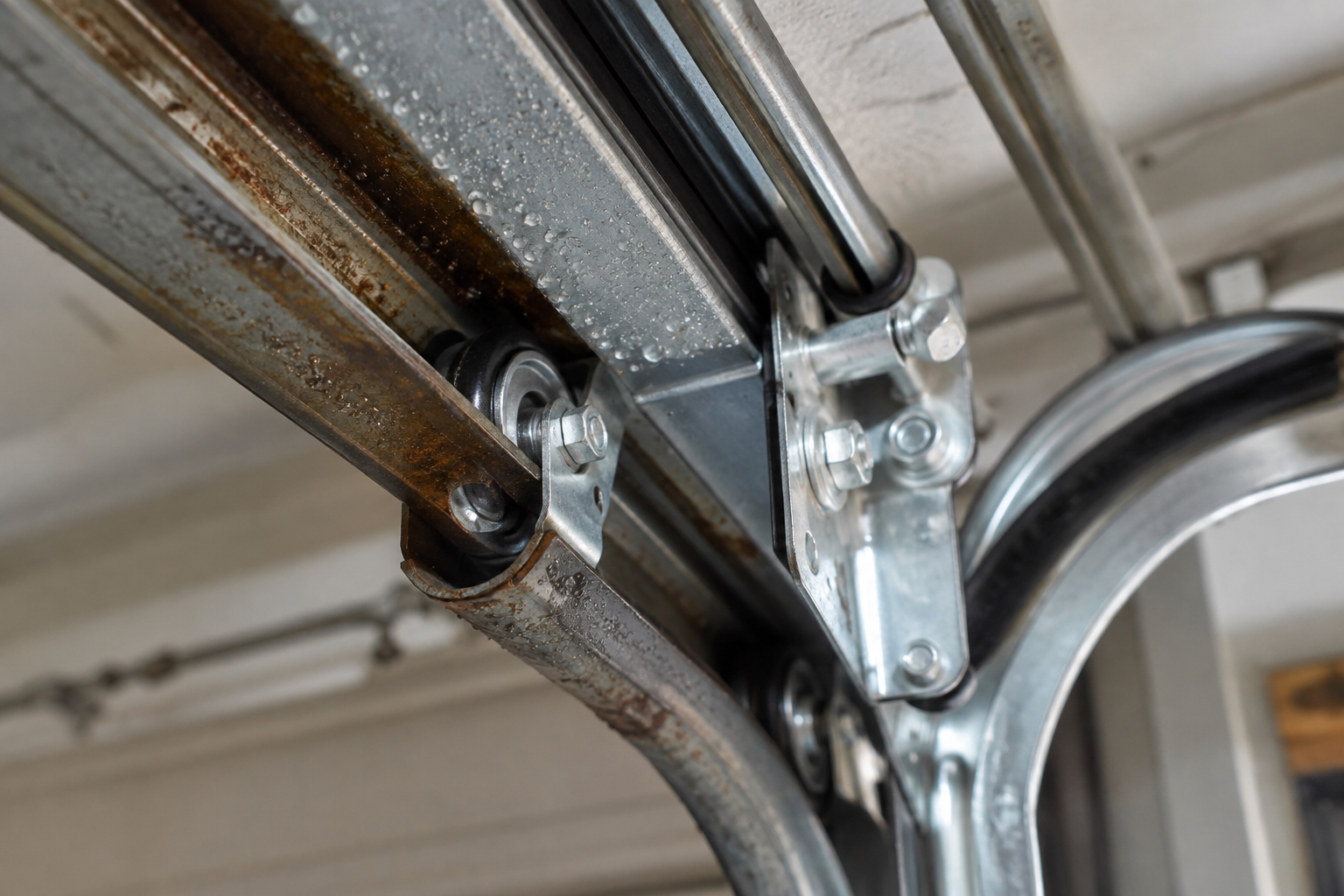
Condensation that’s allowed to sit will eventually cause rust on the tracks, hinges, rollers, and springs. This is one of the more overlooked long-term costs of ignoring a sweating door. Wipe down visible moisture on hardware after cold mornings when you notice heavy condensation, and apply a light coat of garage door lubricant to tracks and rollers every few months to keep rust from taking hold.
White Lithium Grease Garage Door Lubricant
An affordable way to protect rollers and tracks from moisture-related rust, and it holds up better than household oils in humid conditions.
If you’re already noticing a broken spring or hardware that’s seized up from rust, don’t wait on it. Springs under tension that have started corroding are a safety issue, and our guide on handling a broken garage door spring covers what to do safely.
Frequently Asked Questions
Will insulating my garage door completely stop condensation?
Insulation dramatically reduces condensation by keeping the interior surface warmer, but it won’t eliminate it entirely if your garage air is extremely humid. Pair an insulated door with reasonable ventilation and you’ll see the biggest improvement.
Is condensation on my garage door bad for the door itself?
Occasional light condensation that dries off isn’t a major problem for the door panel itself, but repeated moisture exposure speeds up rust on steel doors, especially around edges, hinges, and hardware. Long term, it’s worth addressing rather than ignoring.
Does running my car heater warm up before pulling into the garage help?
It doesn’t help much with the door specifically, but letting a wet car sit outside for a few minutes to drip dry before pulling in reduces the amount of moisture you’re introducing into the garage air. That’s a bigger factor than the car’s temperature.
Can I use a space heater instead of a dehumidifier to stop condensation?
A space heater can raise the surface temperature of the door enough to prevent condensation, but it doesn’t address the actual moisture in the air, and it’s not an efficient long-term solution for most garages. A dehumidifier combined with some air sealing is usually more effective and safer for unattended use.
This article contains affiliate links. We may earn a small commission at no extra cost to you.
