

As an Amazon Associate I earn from qualifying purchases.
A garage freezer is one of the best investments a household can make, but only if the space around it is actually set up to work. These 16 garage freezer storage ideas cover chest freezer placement, upright freezer zones, inventory and labeling systems, and shelving and bin pairings to help you build a setup that keeps your food stockpile under control.
Chest Freezer Placement
Where you put a chest freezer matters more than most people think. Push it into the wrong corner and you end up with wasted floor space, poor airflow, and a lid that bangs against a shelf every time you open it. Good placement means thinking about clearance, outlet access, and how the freezer fits into the rest of your organized garage zone layout. In Central Florida, I also think about heat exposure, so I try to keep my chest freezer away from south-facing walls that bake in the afternoon sun. Get the placement right first and everything else falls into place.
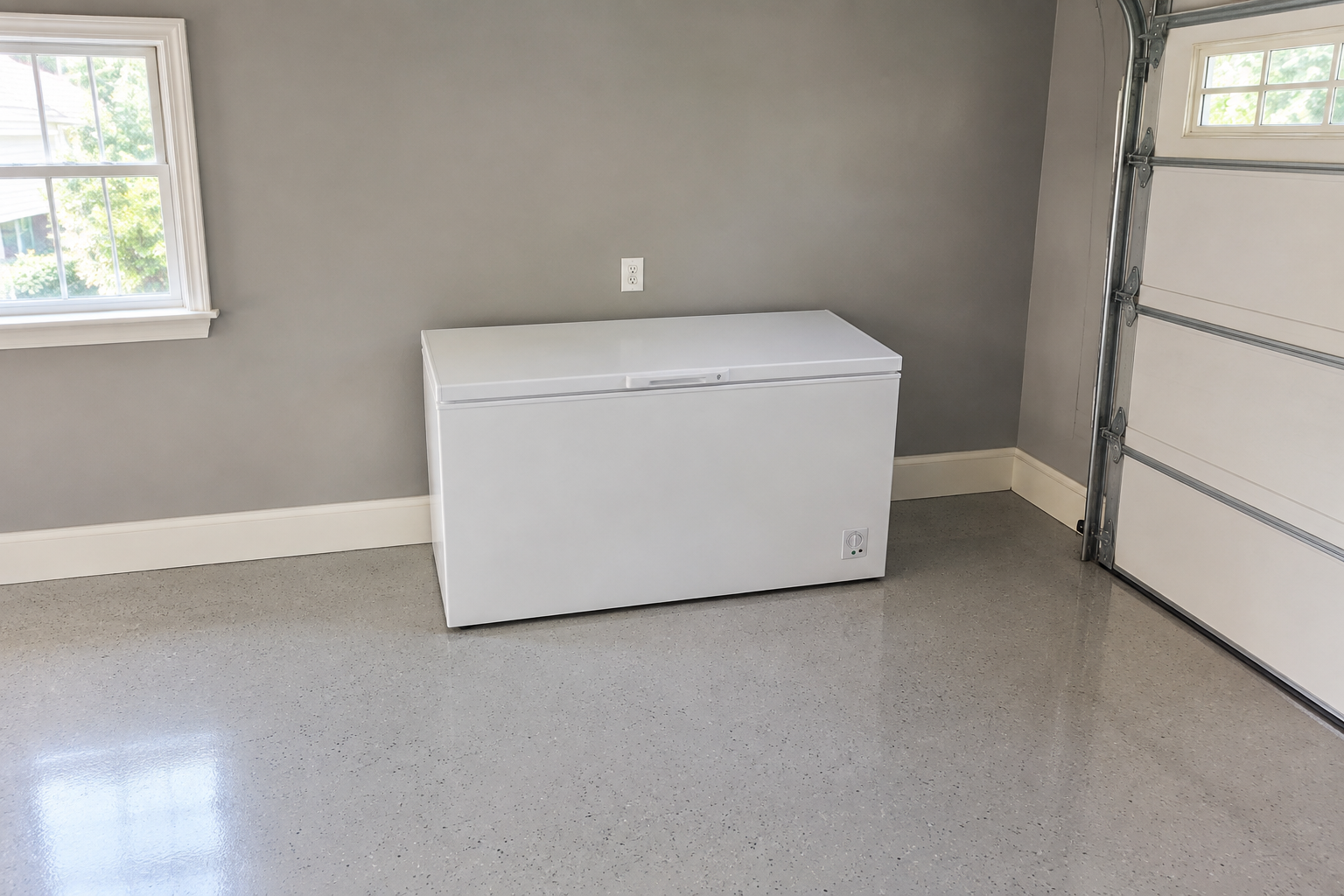
Placing a chest freezer directly against an exterior wall with a dedicated outlet behind it keeps cords short and safe. The light epoxy floor makes cleaning spills fast, and the open clearance on both sides lets the compressor breathe. If you’re ever unsure why your freezer trips the outlet breaker, check out this guide to garage GFCI trips when a freezer turns on.
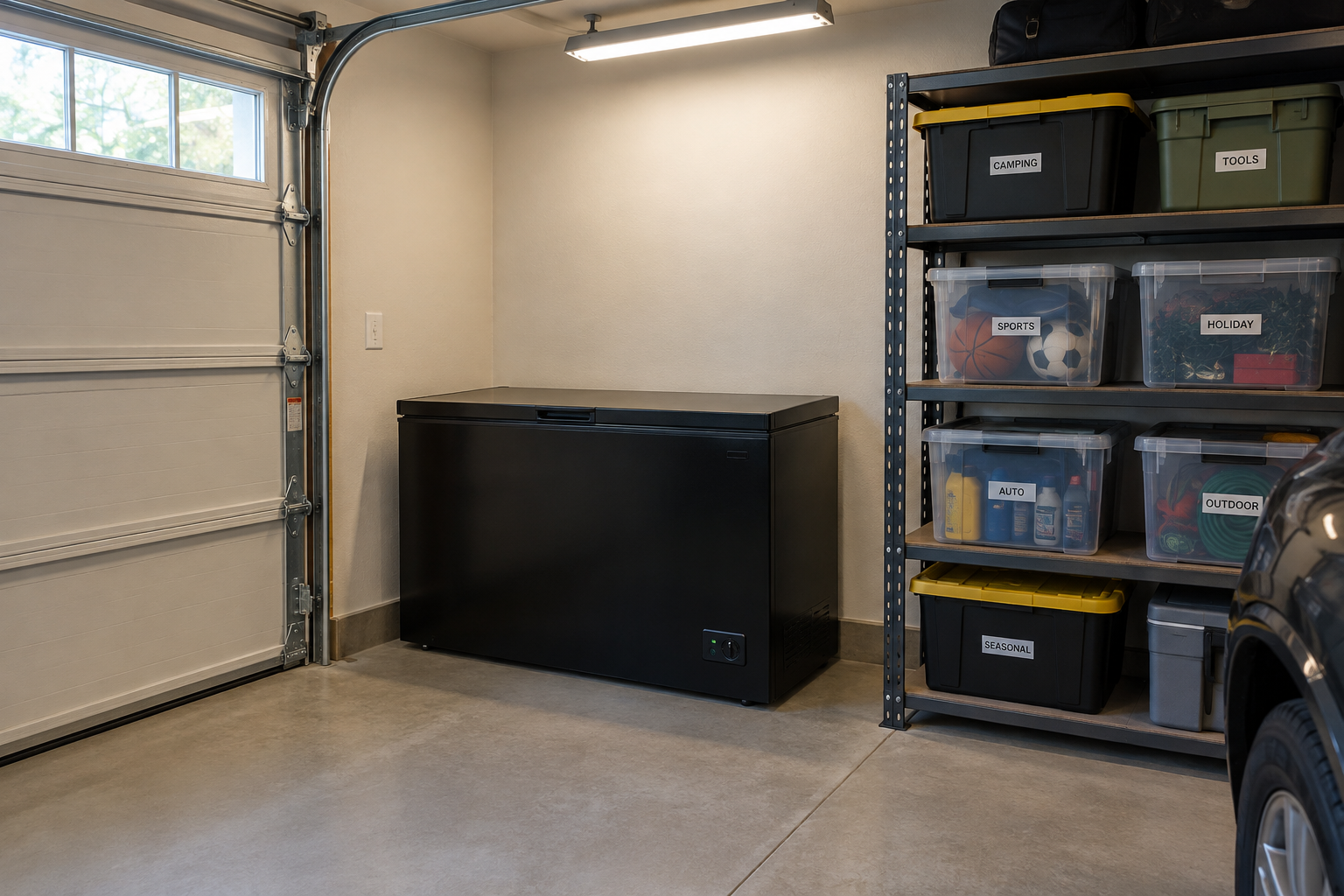
Tucking the chest freezer into a corner works well when the lid hinge is oriented toward open floor space so the lid swings freely. Pairing it immediately with a heavy-duty garage shelving unit alongside it keeps related pantry items within arm’s reach. The black finish hides scuffs and gives the corner a more intentional, finished look.
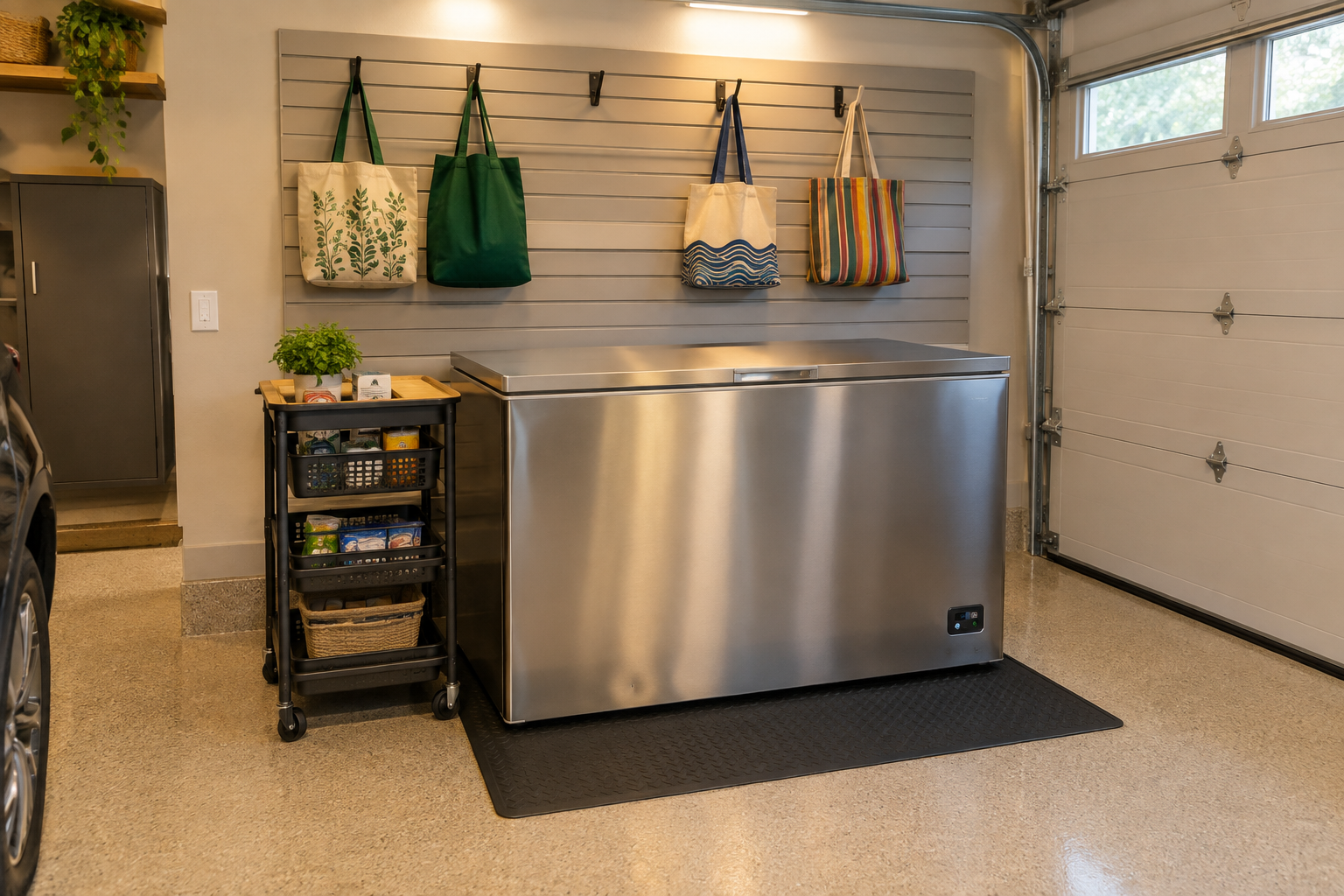
A rubber mat under the freezer protects the epoxy floor from compressor vibration and makes it easier to slide the unit out for cleaning. The small rolling cart beside it acts as a staging area when you’re digging through the freezer, so bags of frozen meat don’t end up on the floor. It’s a small detail that makes a real difference when you’re unloading groceries solo.
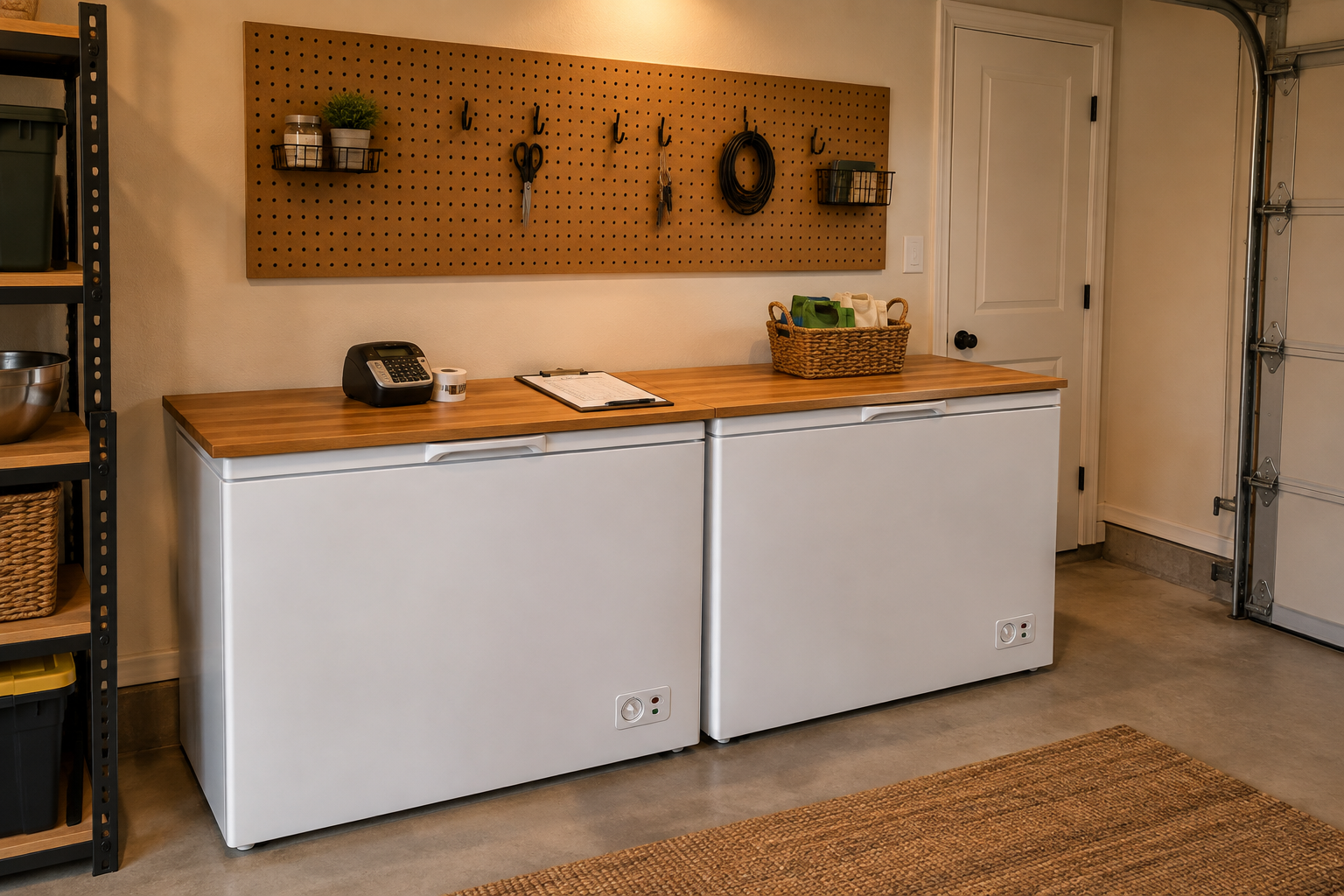
Running a countertop across two chest freezers turns dead lid space into a proper work surface for sorting and labeling food. This setup is especially useful for households that do bulk buying or share freezer space with extended family. It also gives you a natural home for your inventory clipboard, which ties directly into a solid garage food storage system.
Upright Freezer Zones
An upright freezer gives you something a chest freezer never will: vertical organization. Each shelf is its own zone, and when you assign categories to specific shelves, you stop hunting for things every time you open the door. I think of it the same way I think about creating garage zones for tools or sports gear. The key is keeping those zones consistent and making sure the whole family knows the system. A little planning upfront saves a lot of frustration later.
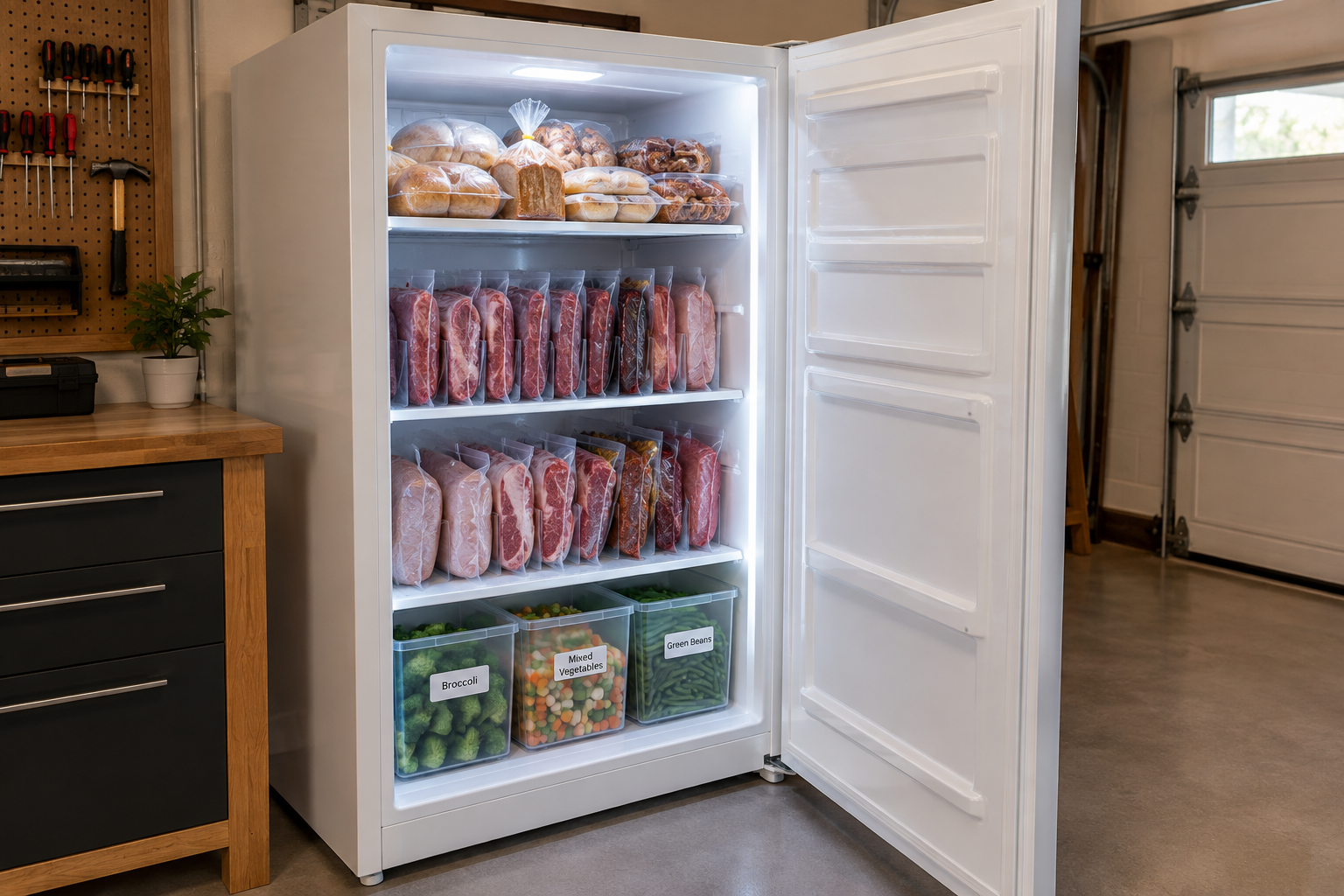
Organizing an upright freezer by food category on each shelf makes it fast to find what you need and easier to spot when a category is running low. Vacuum-sealed meat packages stand upright on the middle shelves like books, which maximizes space and keeps things visible. This kind of zone-based thinking is exactly what separates a functional freezer setup from a chaotic one.
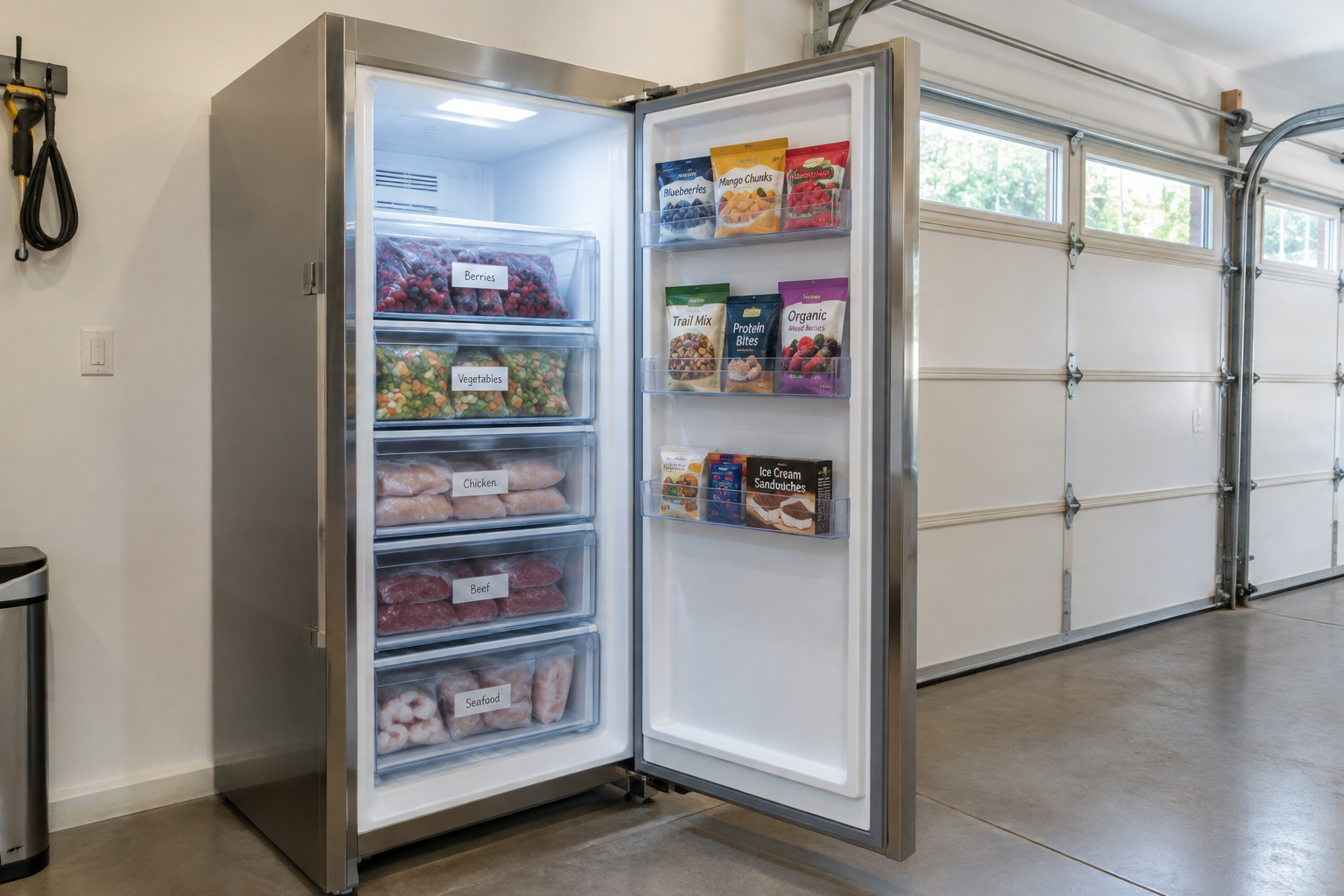
Clear acrylic pull-out bins on the lower shelves let you see exactly what’s inside without moving everything around. Labeling each bin by category keeps the system self-explanatory, especially if multiple people are pulling food out throughout the week. This pairs naturally with the labeling strategies covered in our guide to labeling and inventorying garage storage.
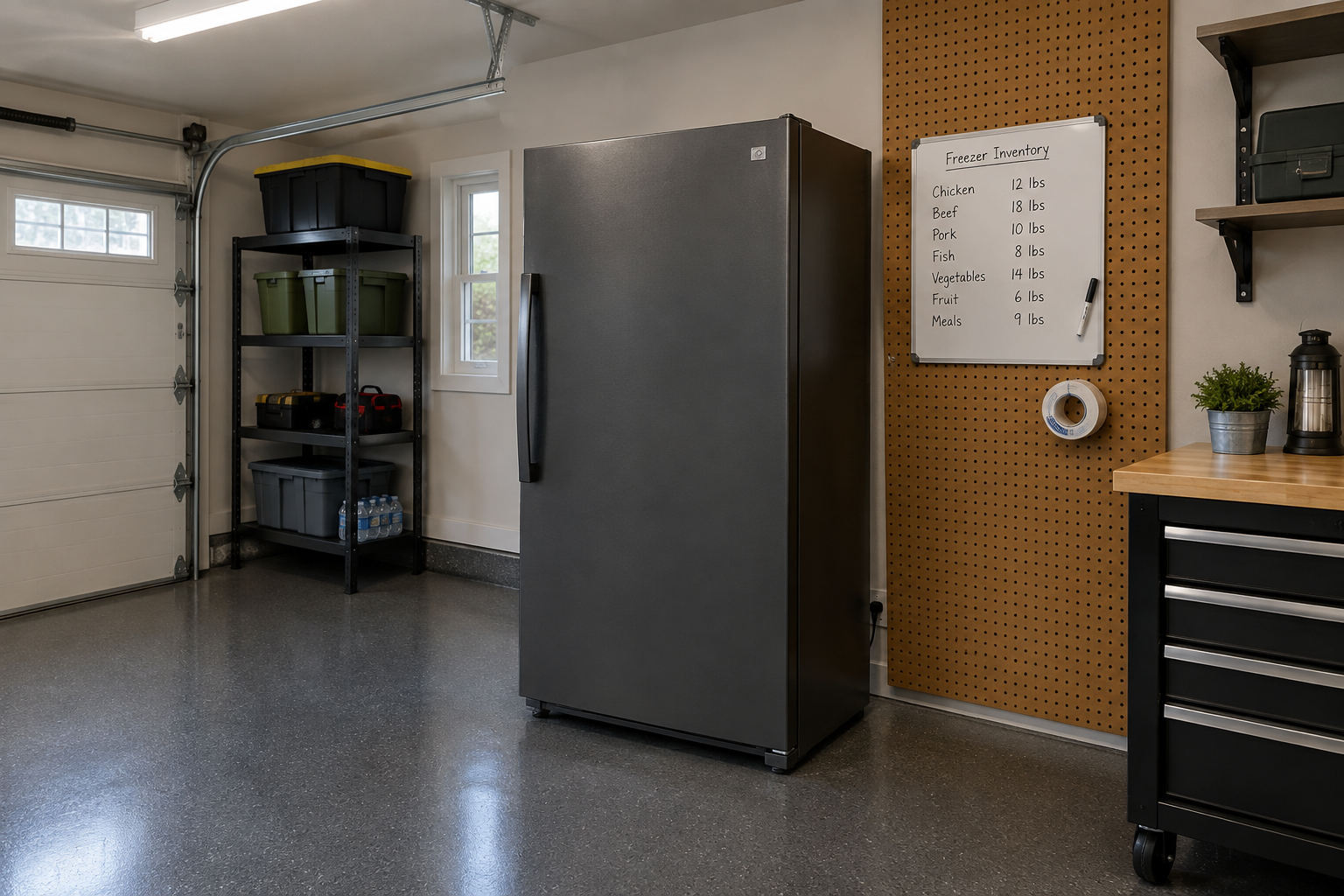
Mounting a dry-erase board on the pegboard directly beside the freezer makes it easy to update your food inventory in real time without walking across the garage for a notebook. A roll of freezer tape and a marker hung on the same panel keeps the labeling supplies exactly where you need them. Small organizational habits like this are what keep a freezer from turning into a mystery box over time.
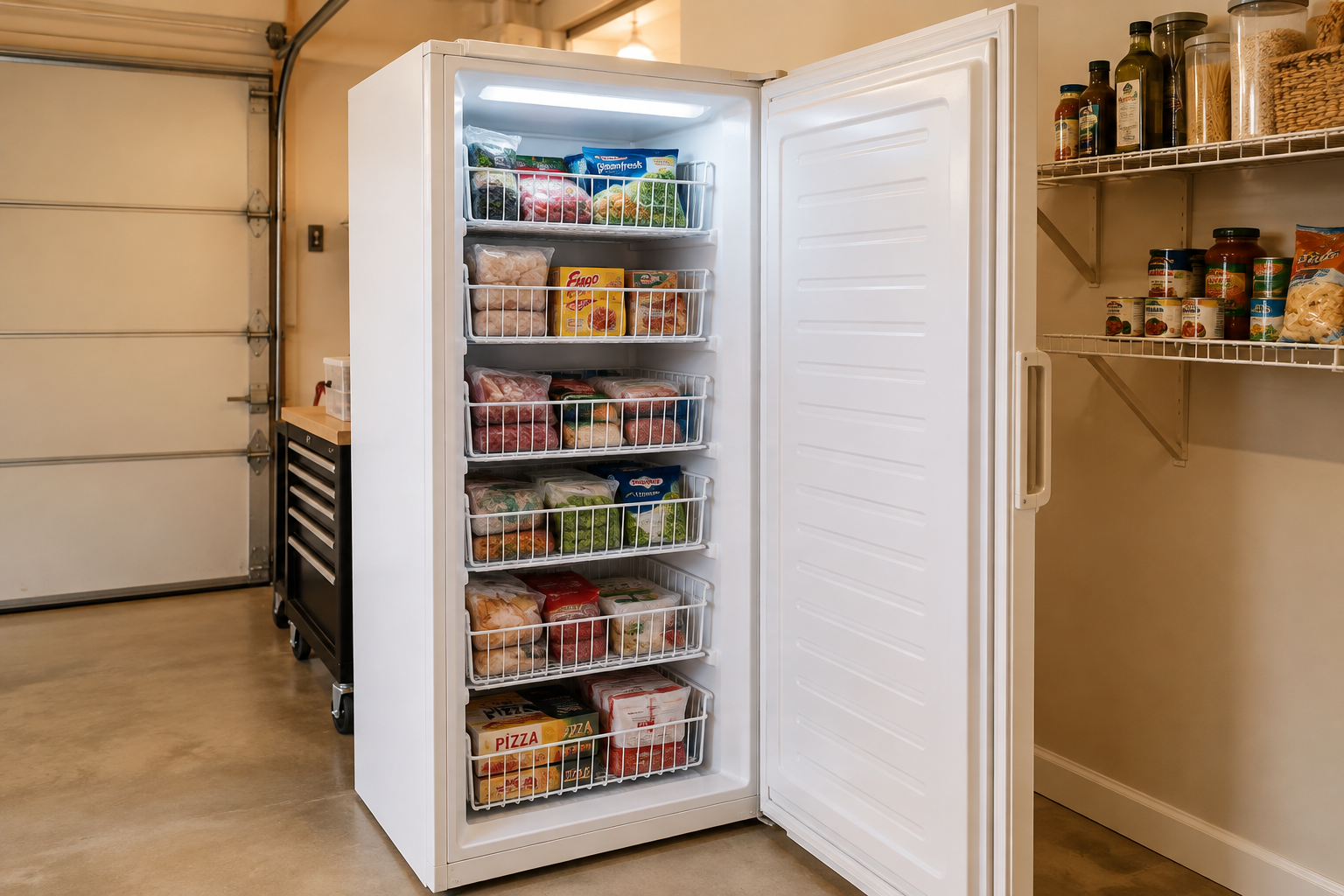
Adding a stick-on LED strip inside an upright freezer that has dim built-in lighting is a simple upgrade that makes a real difference. Wire baskets on each shelf allow cold air to circulate freely while keeping food grouped by type. If you’re building out the shelving beside the freezer for pantry overflow, our garage pantry ideas are worth a look before you buy anything.
Inventory and Labeling Systems
A well-stocked freezer is only useful if you know what’s in it and when it expires. Without a labeling and inventory system, food gets buried, forgotten, and eventually thrown out. I’ve wasted more freezer bags of pulled pork than I care to admit. A good system doesn’t have to be complicated. Even a simple clipboard hung near the freezer with a printed inventory sheet beats nothing. For a deeper look at how to set this up across your whole garage, our guide to labeling garage bins and shelves has solid practical steps worth following.
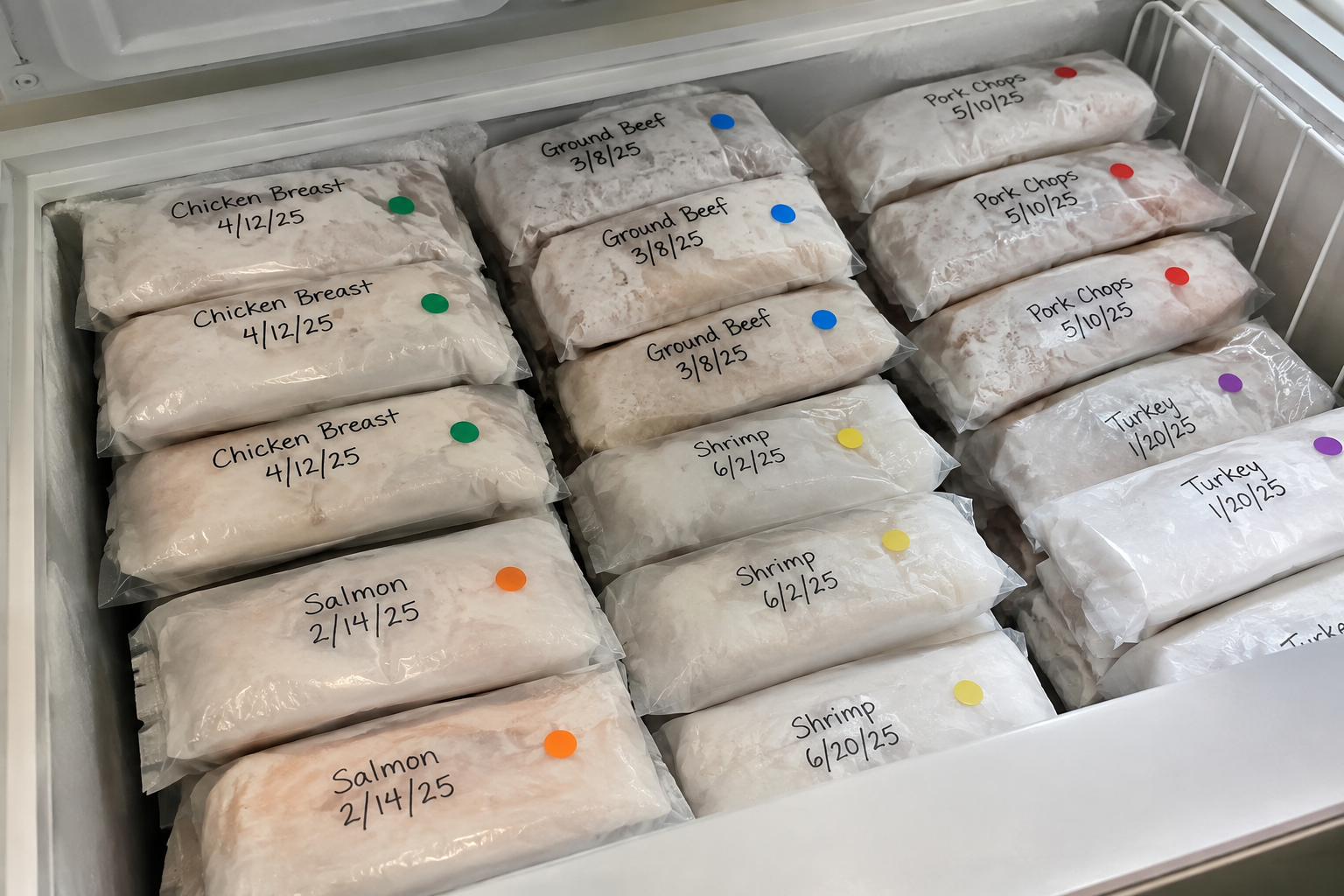
Writing the contents and freeze date directly on each bag with a black permanent marker is the simplest labeling system you can use and it works. Adding a color-coded dot sticker for the month frozen gives you a visual cue at a glance so the oldest food rises to the top of your rotation. No app required, no special printer, just a marker and a pack of sticker dots.
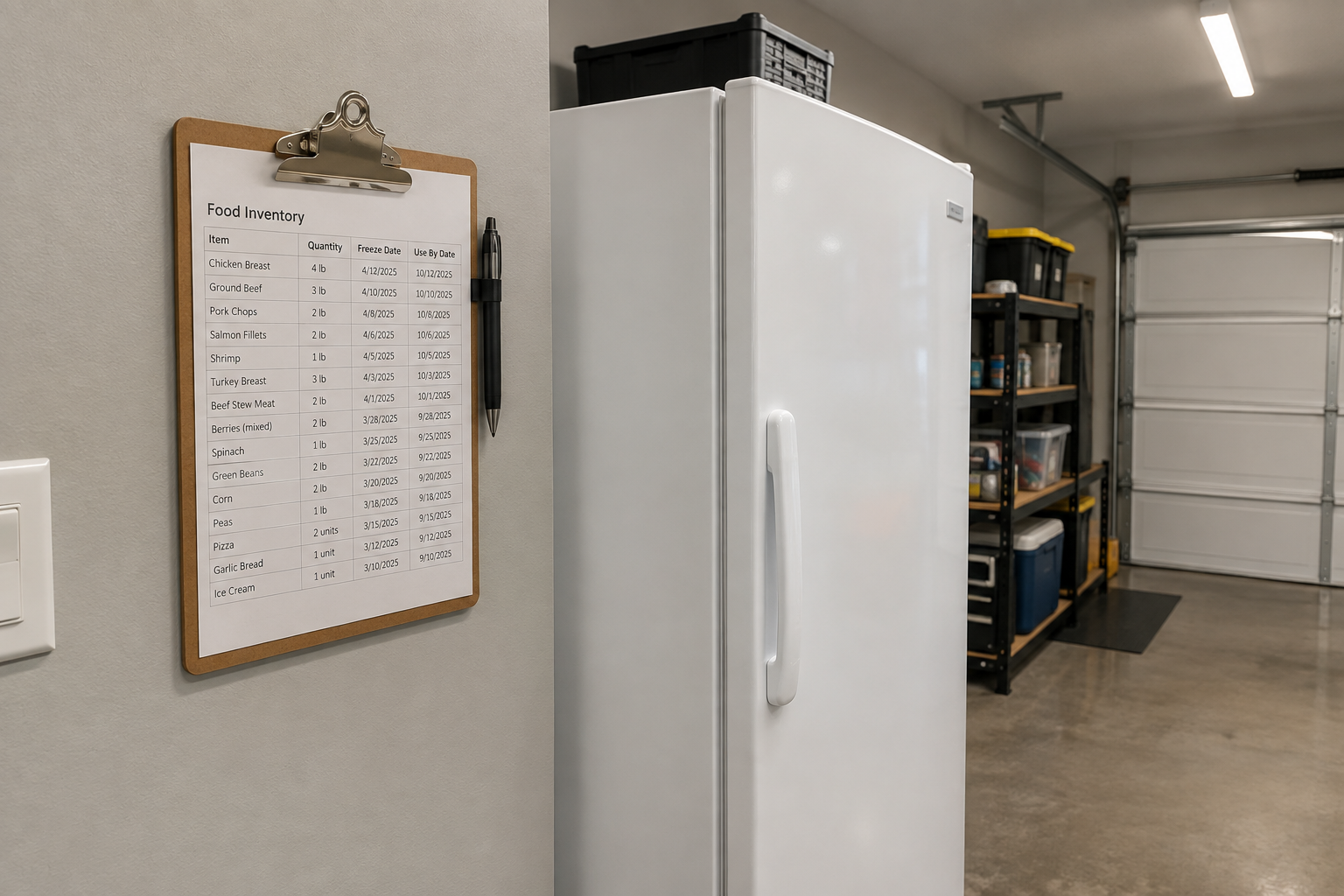
A printed inventory sheet on a clipboard hung right beside the freezer takes about five seconds to update each time you add or pull something. Columns for quantity and use-by date help you plan meals around what needs to be used first. It’s low-tech, but it’s the system that actually gets used because there’s no friction.
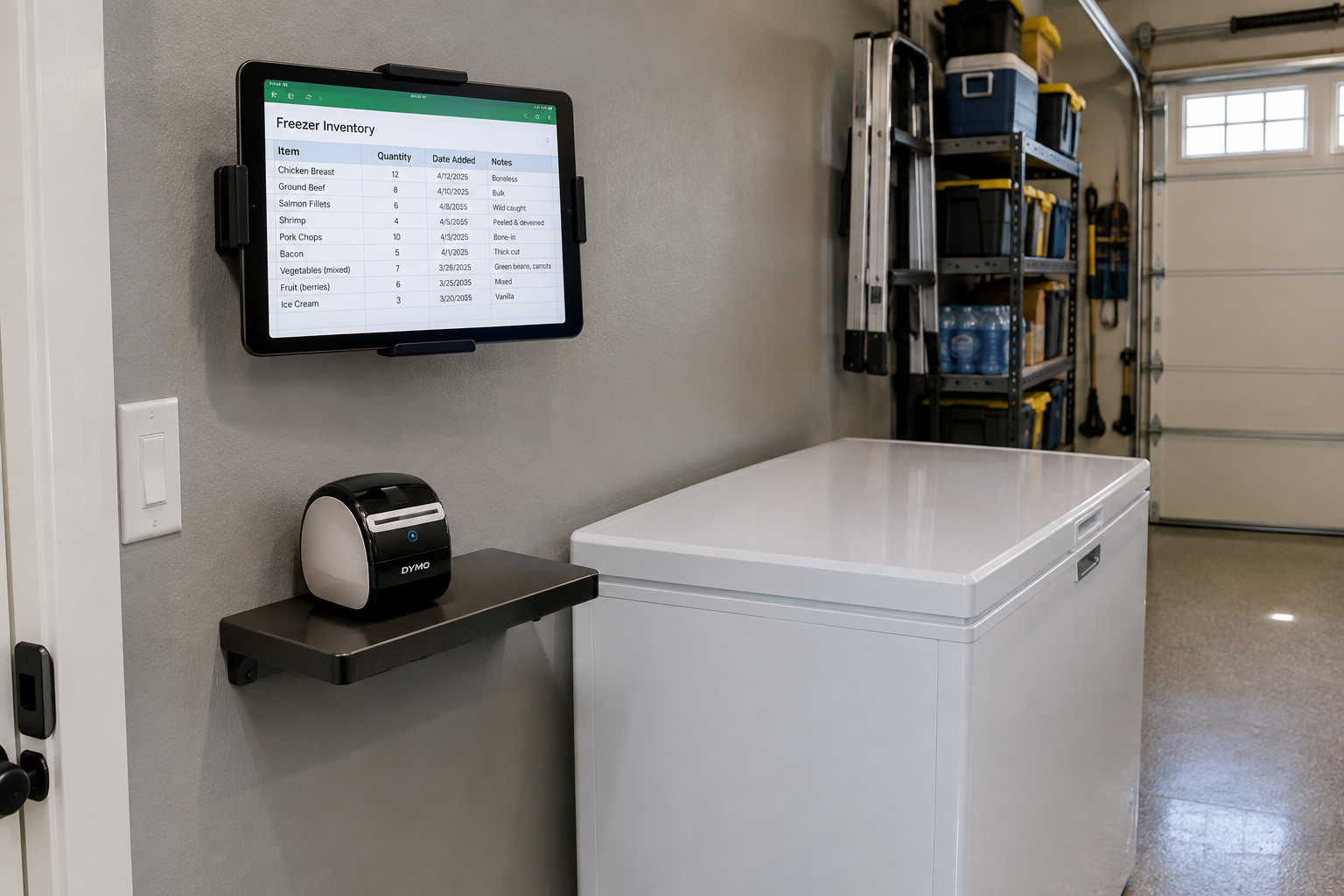
Mounting an old tablet on the wall beside the freezer with a spreadsheet inventory app turns the space into a mini command center for your food stockpile. A small Bluetooth label printer on the shelf below lets you print clean, consistent labels for every bag or container before it goes in. This kind of setup works especially well for households that do large monthly bulk purchases.
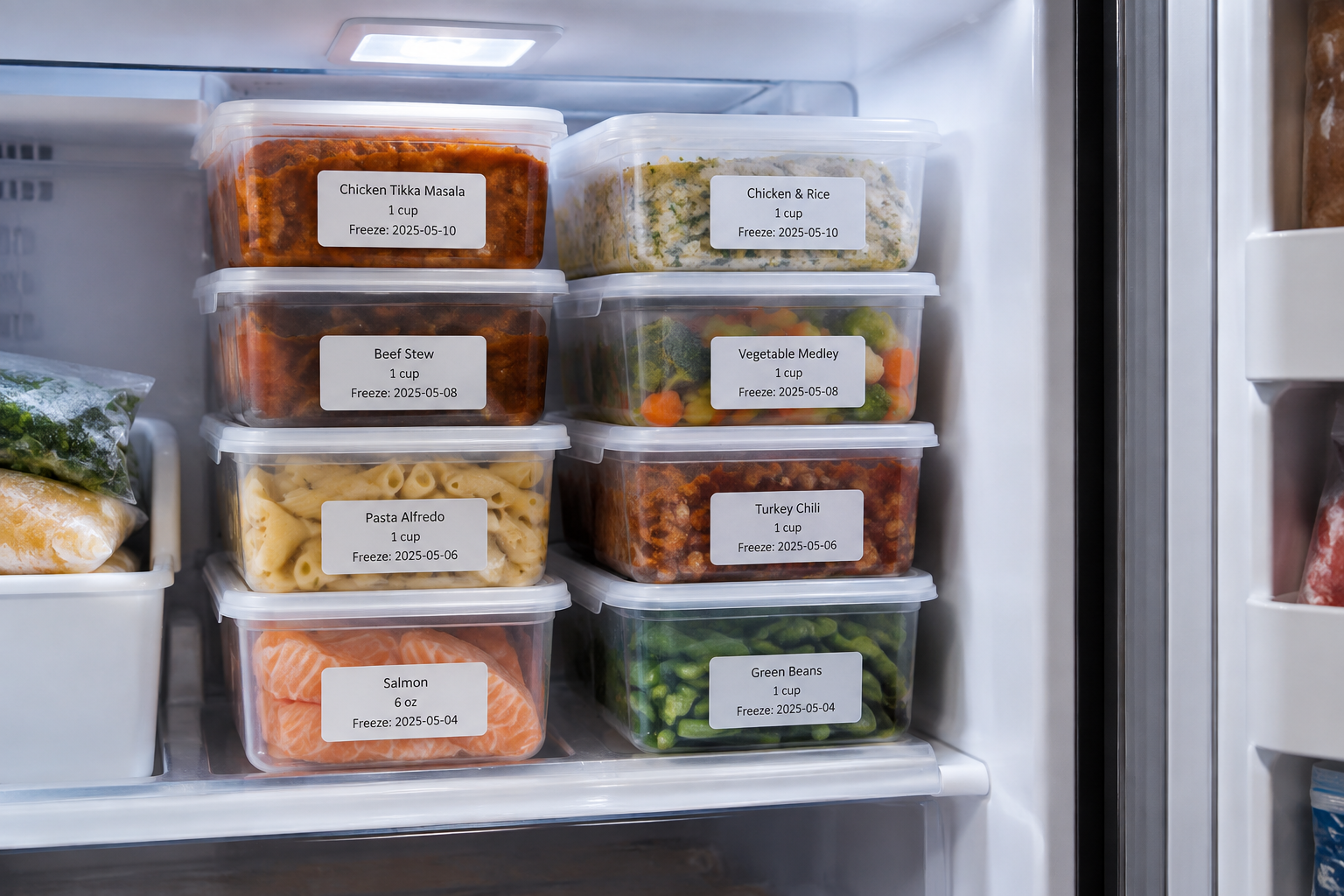
Using uniform printed labels on clear freezer containers gives the inside of your freezer a clean, consistent look that’s easy to scan quickly. Printing labels rather than handwriting them means every label is readable and follows the same format, which matters when you’re trying to read a date in poor light. Square or rectangular containers also stack far more efficiently than round ones, giving you noticeably more usable space.
Shelving and Bin Pairings
The shelving around your garage freezer is just as important as the freezer itself. A freezer surrounded by bare walls is a missed opportunity. Adding the right shelving and bins nearby creates a complete food storage station where you can keep freezer bags, wraps, extra pantry stock, and overflow supplies within easy reach. Think about weight capacity first, especially if you plan to store canned goods or bulk dry food nearby. Our breakdown of the best garage shelving systems under $500 is a good place to start if you’re shopping for new units.
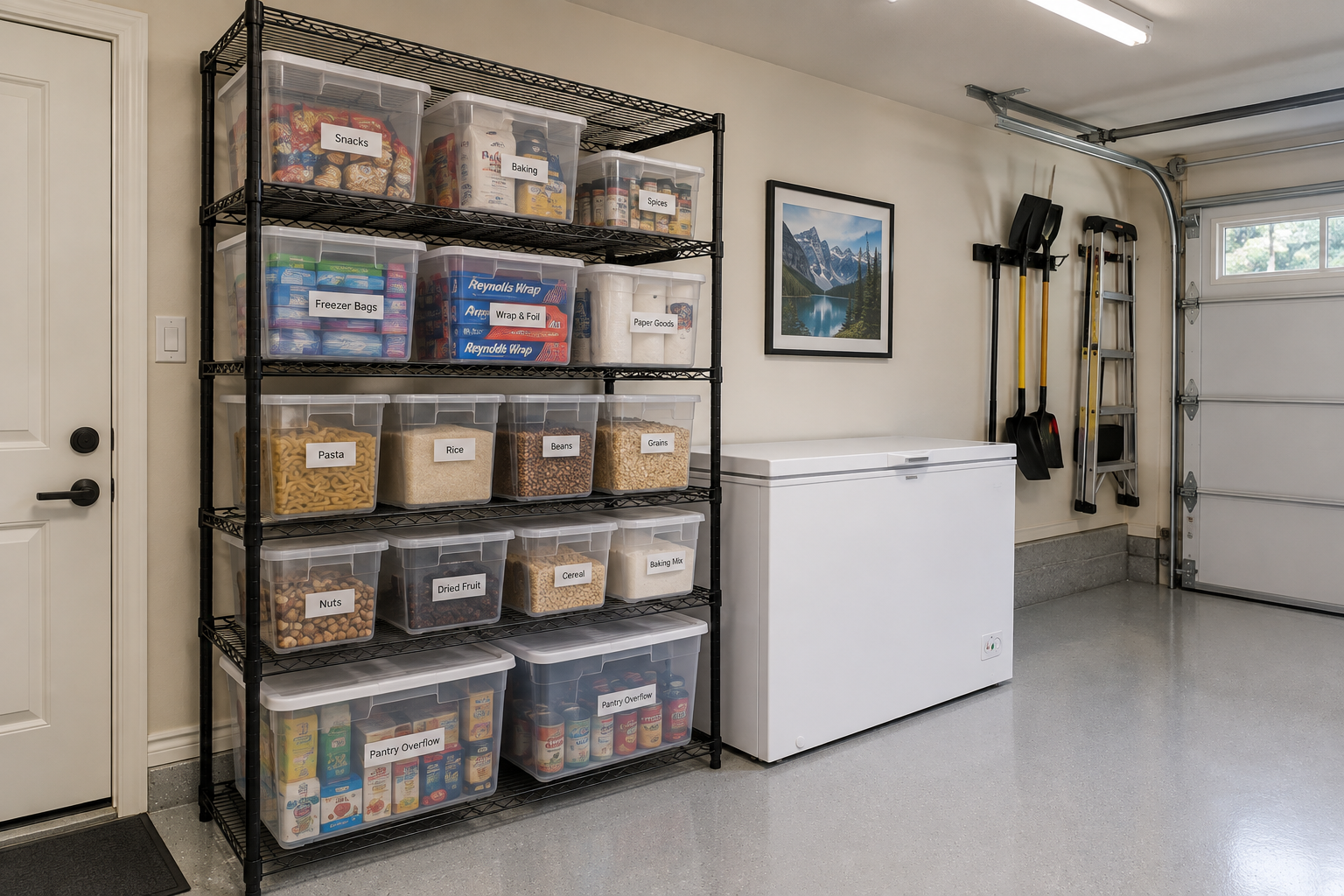
A wire shelving unit positioned directly beside a chest freezer turns what would be dead wall space into a fully stocked food station. Clear bins on each shelf make the contents visible at a glance, and labeling each bin keeps the system organized even after a busy shopping trip. Wire shelves also allow airflow, which matters in a garage where humidity and temperature can fluctuate.
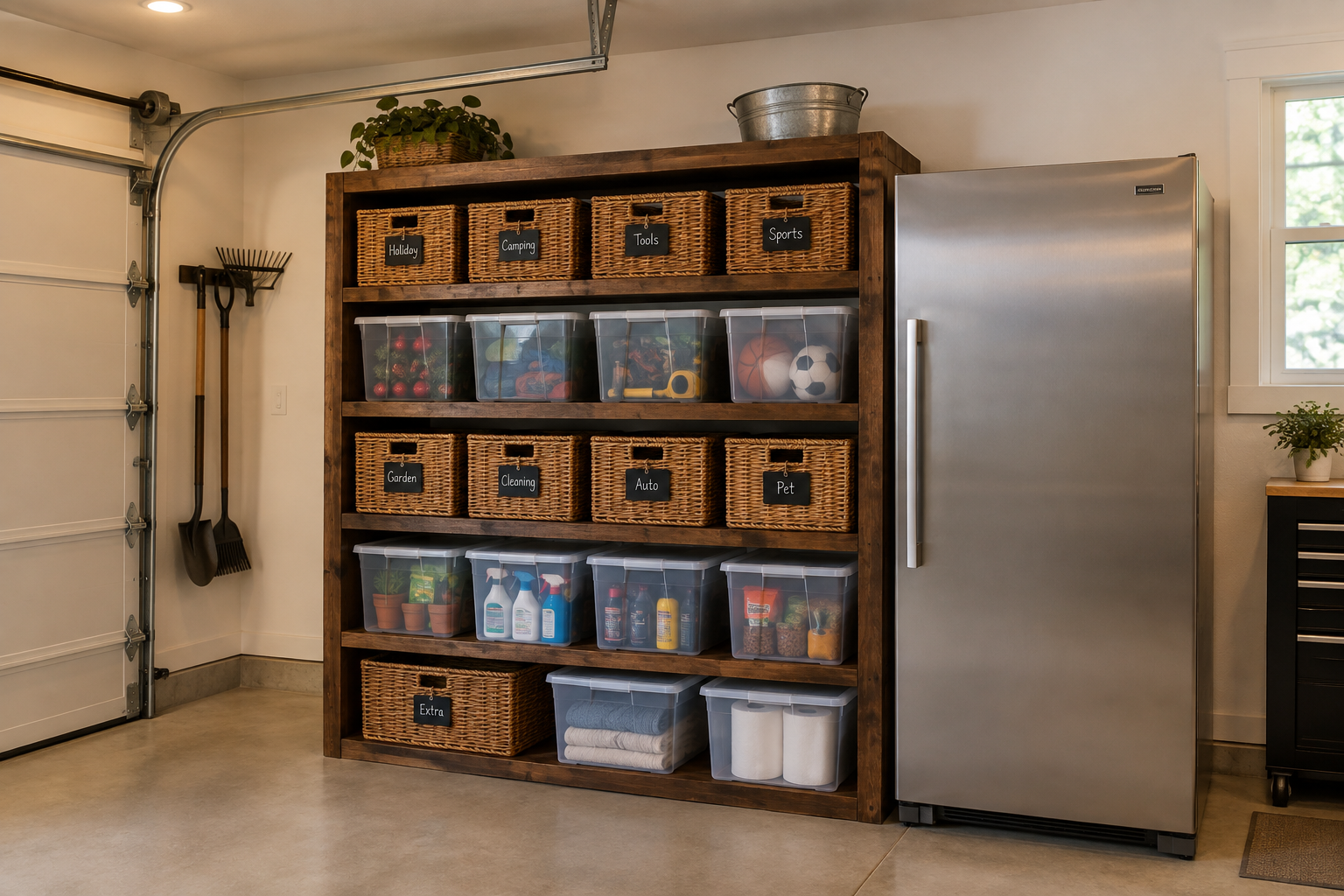
Building a custom wood shelving unit beside an upright freezer lets you match shelf height to the exact bins and baskets you want to use. A dark walnut stain gives the wood a finished look that feels less like a utility corner and more like an intentional pantry space. If you enjoy building your own storage, our weekend DIY garage shelving build guide walks through the full process.
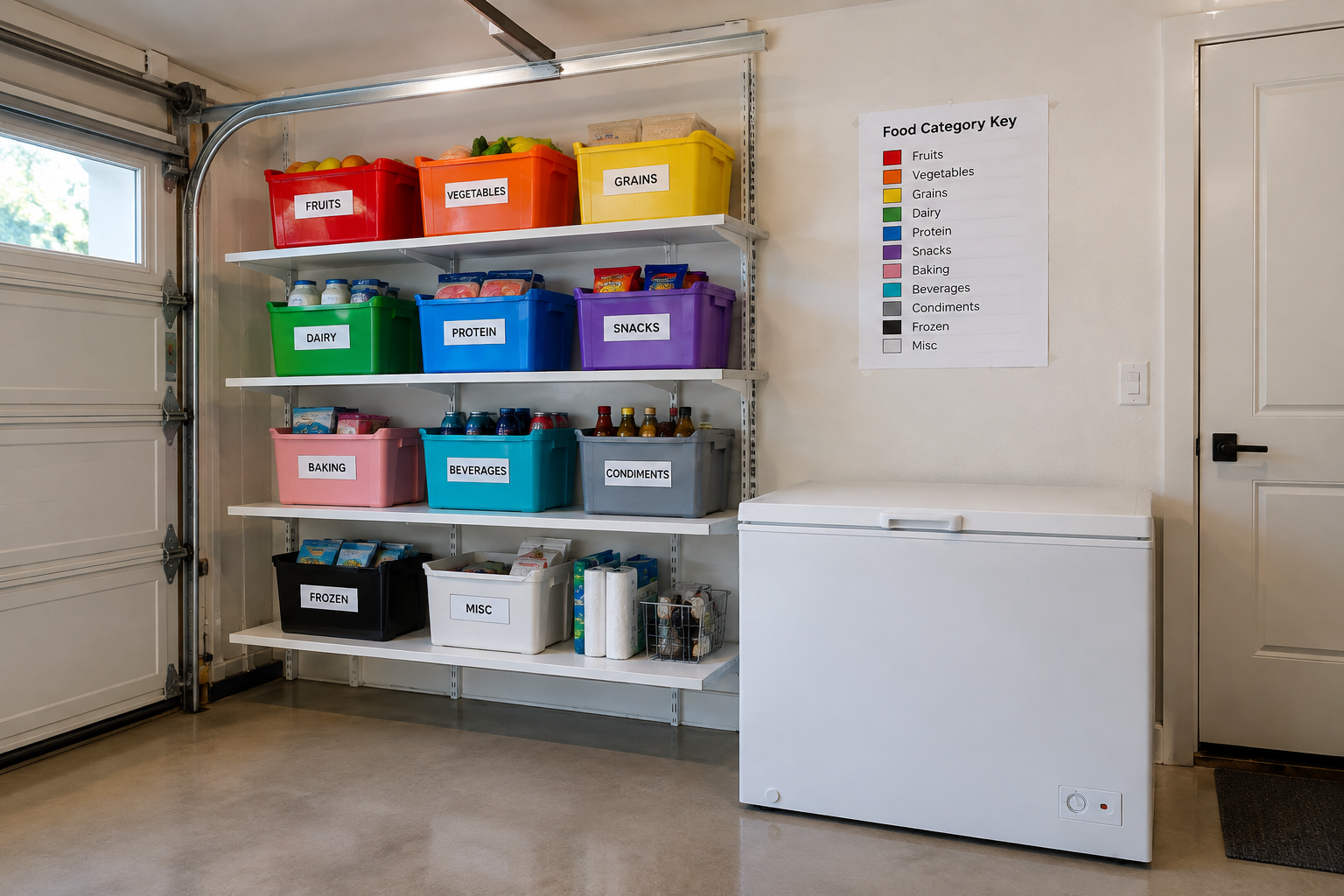
Wall-mounted adjustable shelving next to a chest freezer keeps floor space open and lets you reconfigure shelf heights as your storage needs change. Color-coded bins by food category, proteins in red, vegetables in green, baked goods in yellow, give you a visual system that works even when the bins aren’t labeled. This approach fits naturally into a broader garage storage system strategy for the whole space.
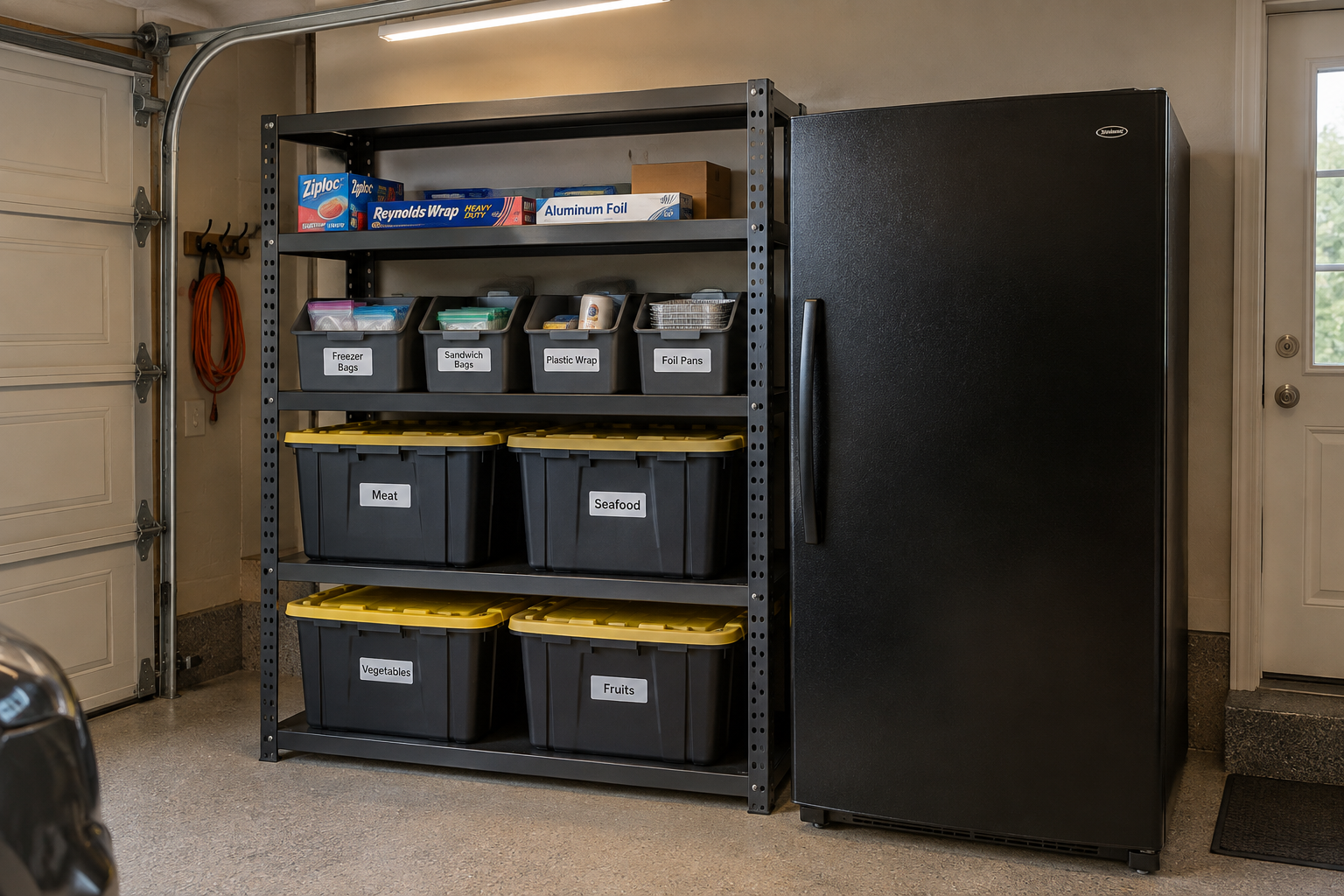
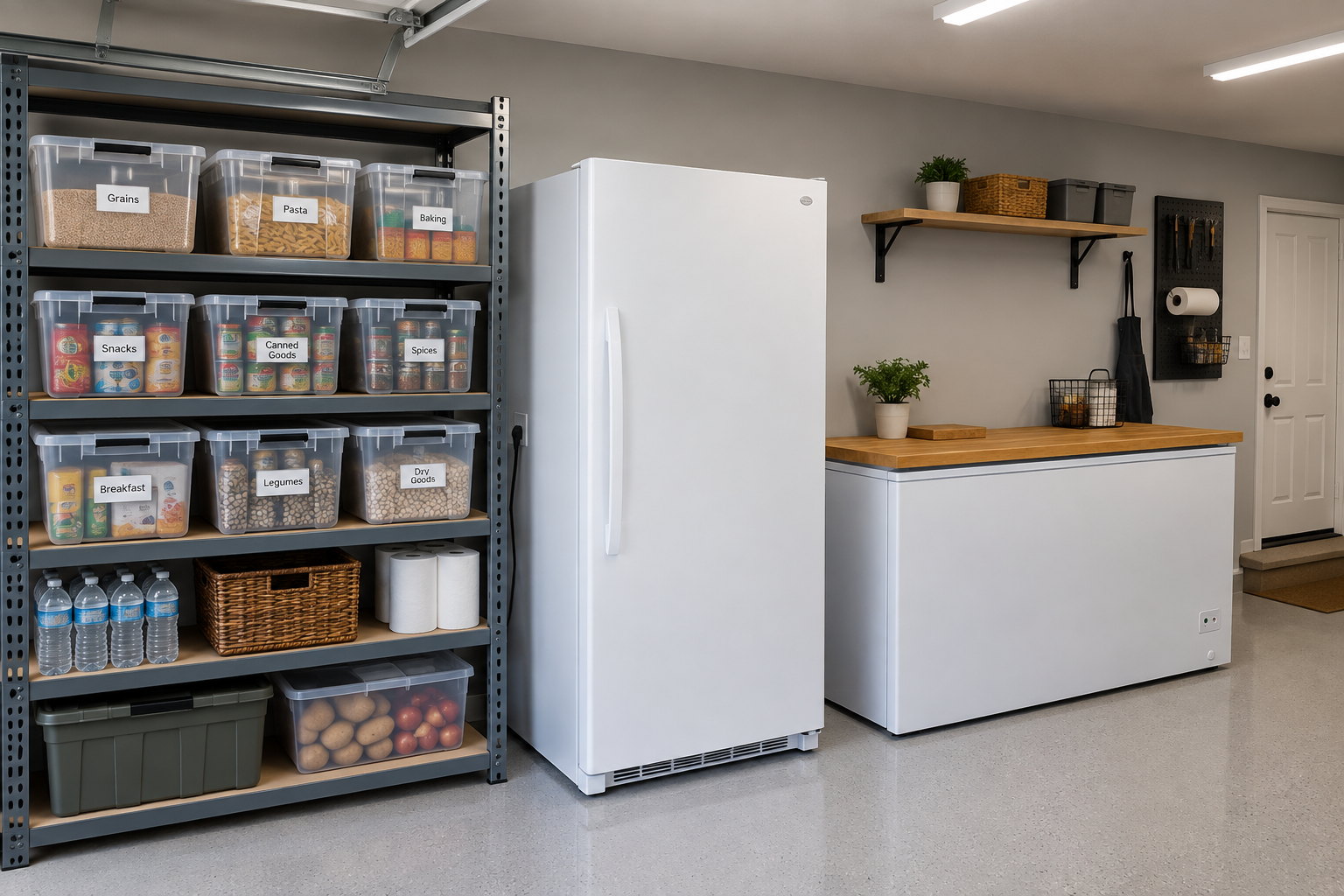
Heavy-duty steel shelving with solid deck shelves handles the weight of large stackable totes without flexing, which matters when you’re storing dense frozen goods or canned overflow. Locking-lid totes on the lower shelves keep rodents and pests out of dry food stored near the freezer floor level. For more on keeping pests out of your garage food storage area, the guide to rodent-proof garage storage covers the topic thoroughly.
