

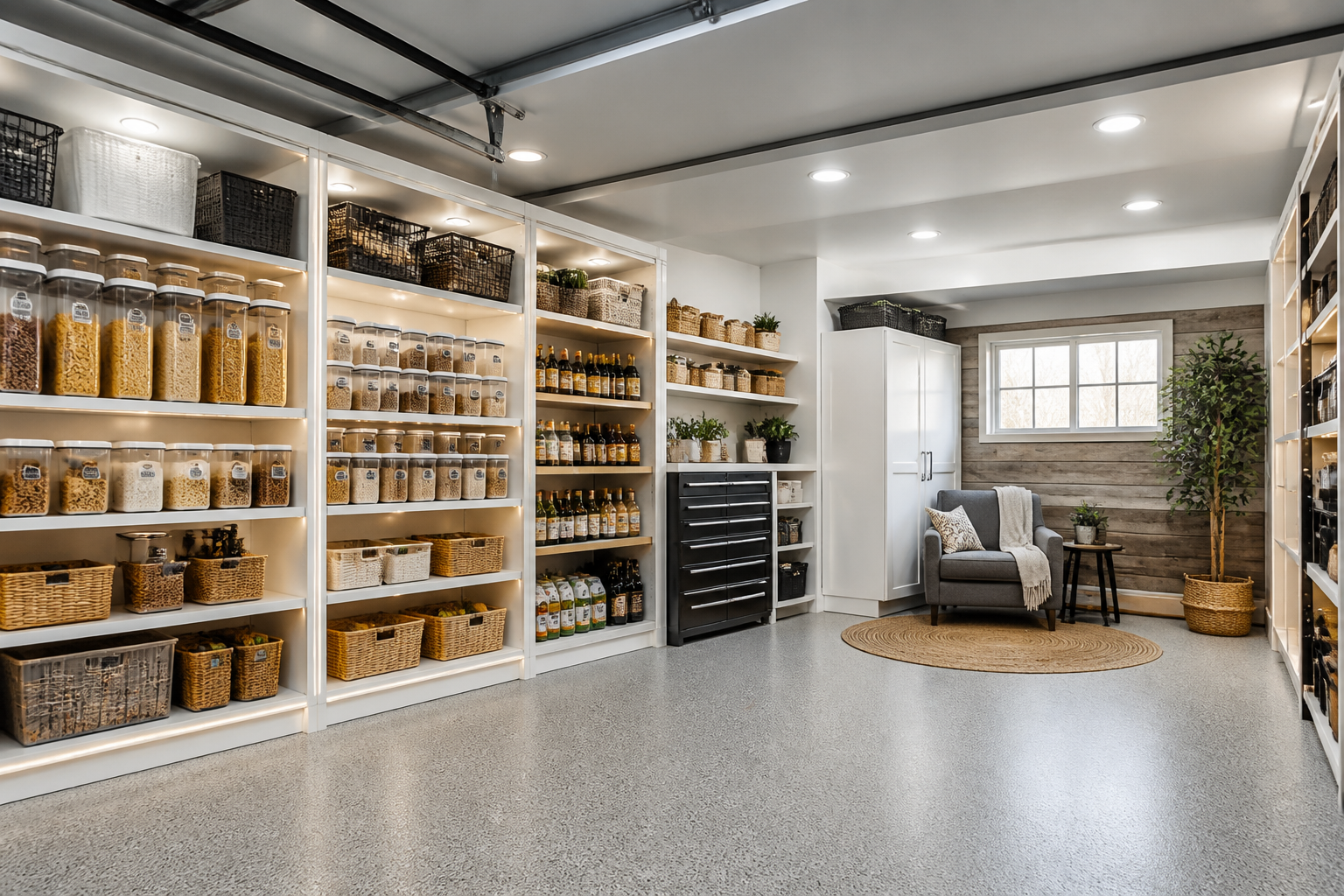
Running out of kitchen storage is frustrating, but your garage might be the perfect overflow solution. I’ve helped dozens of homeowners create functional garage pantries that keep bulk items, appliances, and seasonal supplies organized and accessible. This guide covers shelving systems, food storage areas, and cozy nooks to inspire your own setup.
Shelving Systems
The backbone of any garage pantry is solid shelving that can handle heavy loads without sagging. Metal wire racks work great for ventilation, while wood shelving adds warmth and can be customized to fit your exact dimensions. I recommend starting with heavy-duty shelving units rated for at least 200 pounds per shelf, especially if you’re storing bulk canned goods or beverage cases. The right shelving transforms wasted wall space into organized storage that makes meal planning easier.
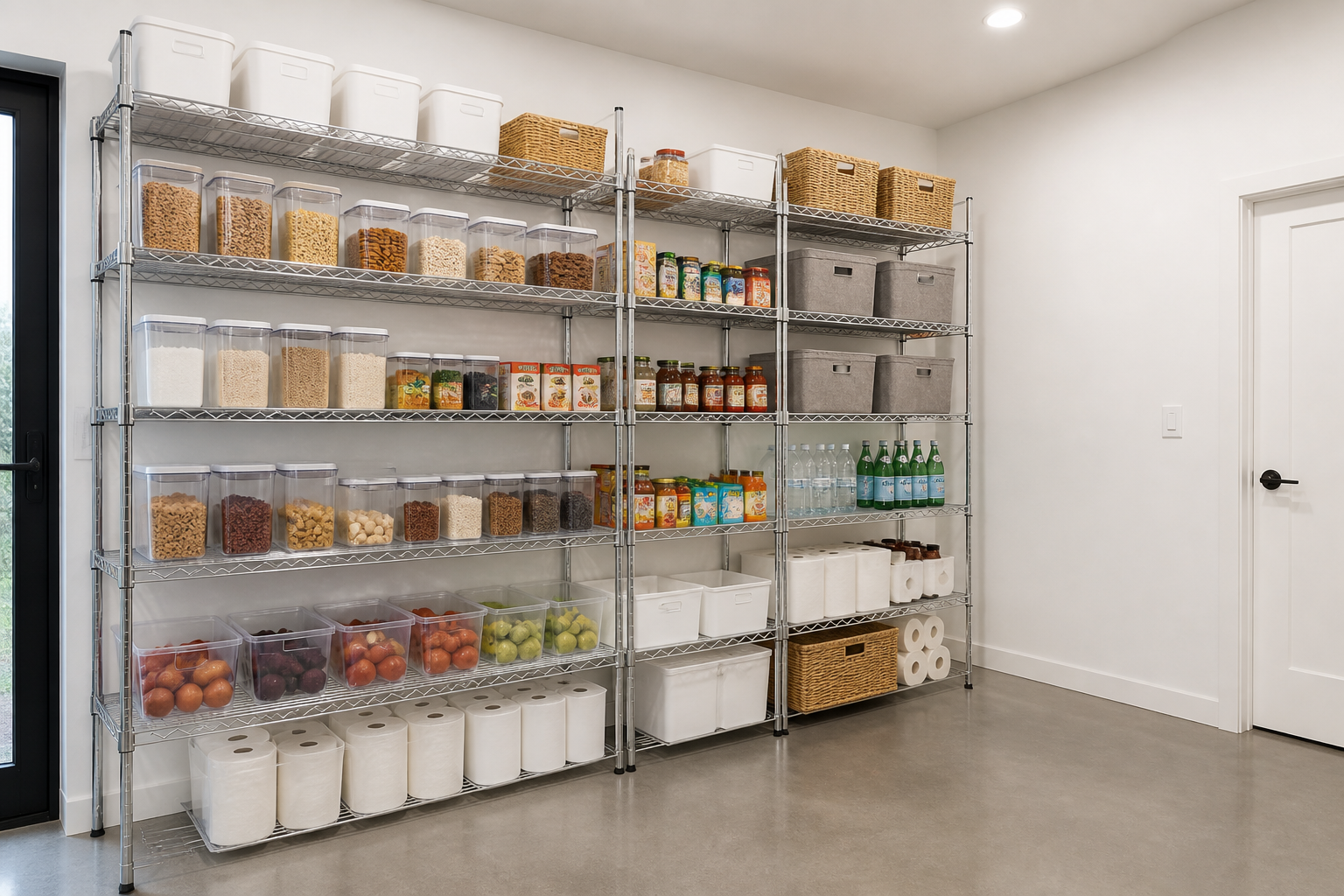
Chrome wire shelving offers excellent visibility and air circulation for pantry items. The open design prevents moisture buildup and makes it easy to spot what you need at a glance.
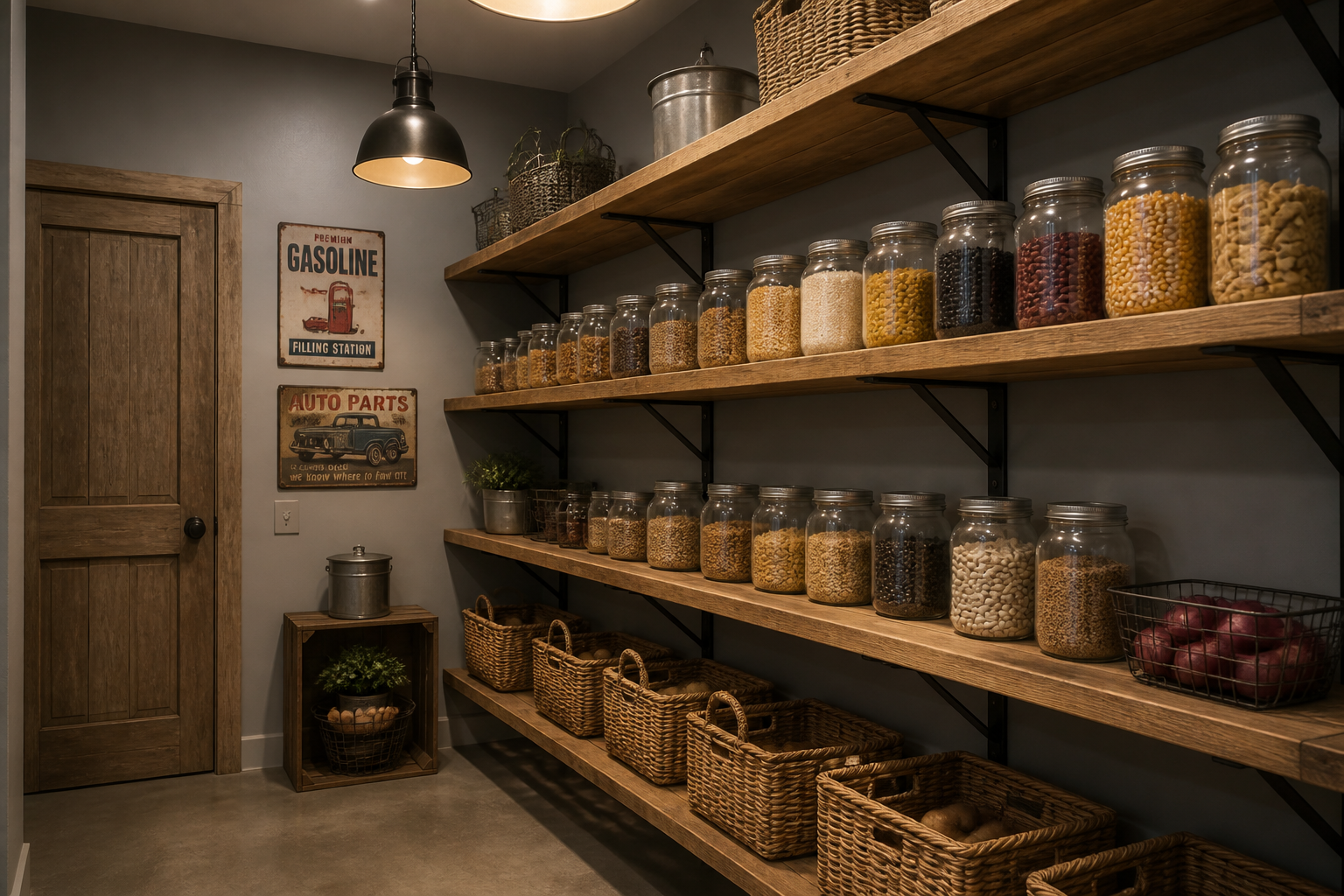
Wood shelving brings warmth to a garage pantry and can be cut to fit awkward spaces. These thick pine planks on heavy-duty brackets create a farmhouse aesthetic while supporting serious weight.
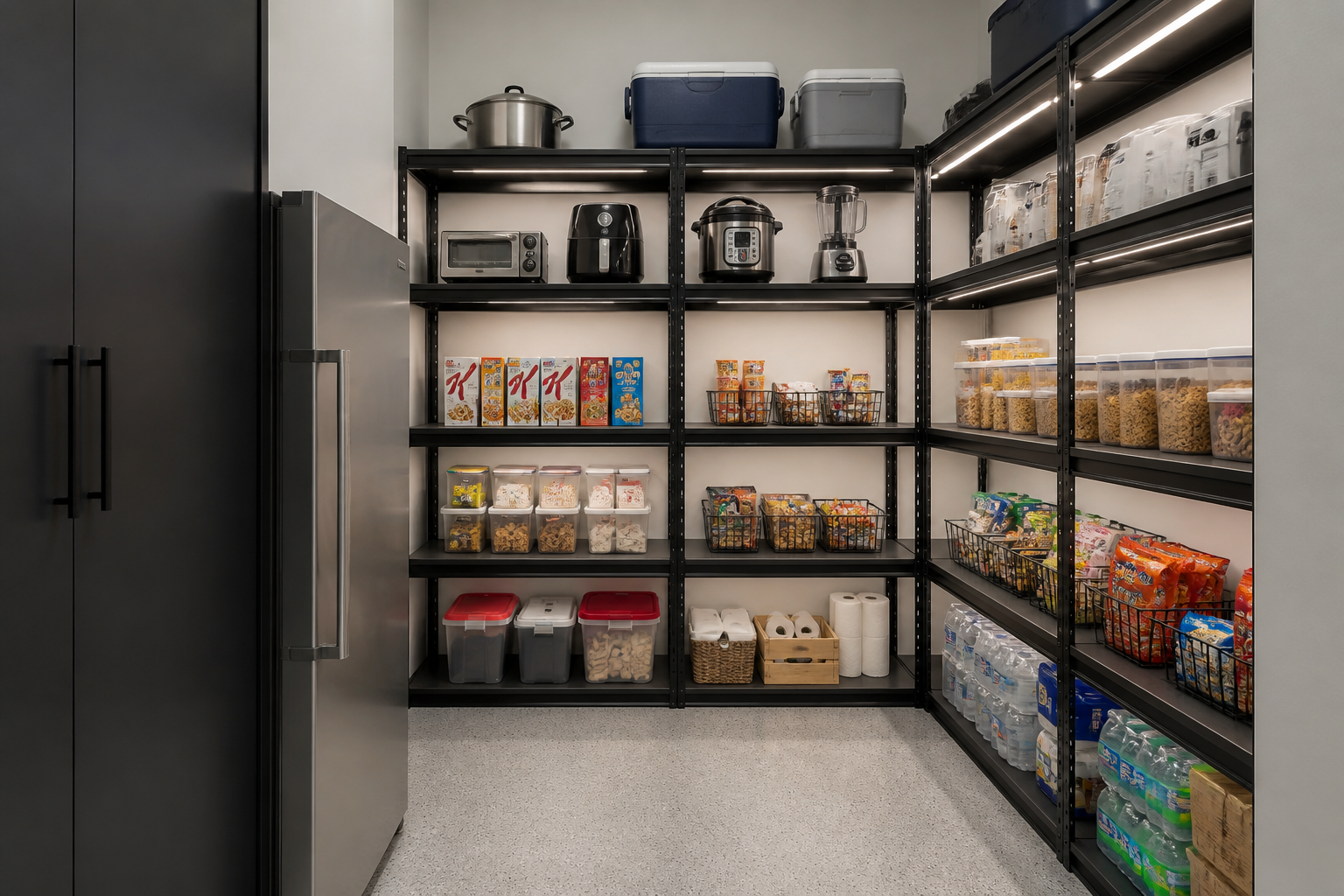
Industrial metal shelving maximizes corner space with an L-shaped configuration. The adjustable shelves let you accommodate everything from tall cereal boxes to countertop appliances you don’t use daily.
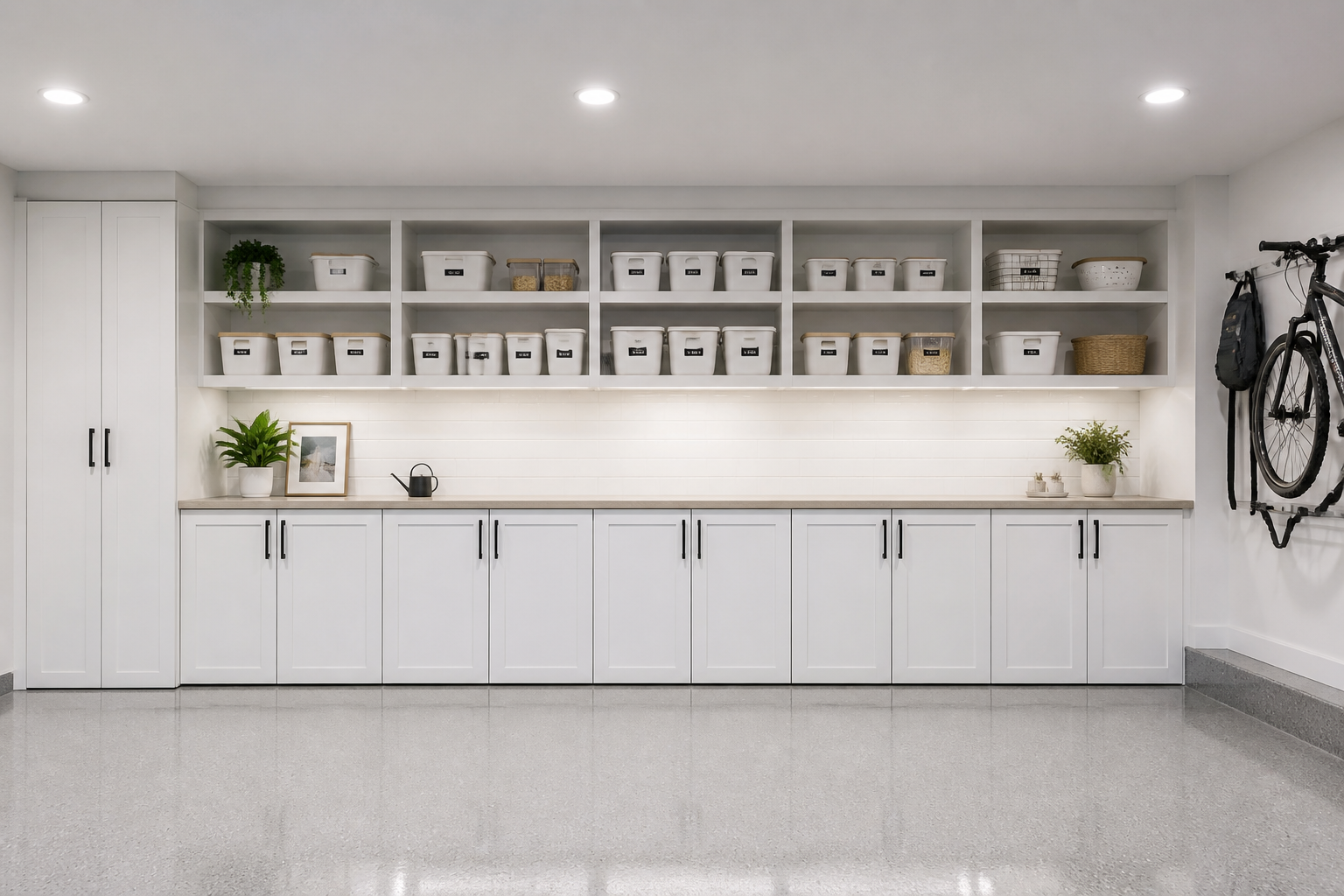
Combining open shelves with closed cabinets gives you flexibility in what you display. This setup works well when you need to store items that aren’t pretty but want quick access to everyday staples on the open shelves. Consider wall panel systems behind shelving for easier installation and a finished look.
Food Storage Areas
Creating dedicated zones for different food categories makes your garage pantry genuinely useful instead of just extra clutter. Temperature control matters here, especially if you live in a climate with extreme heat or cold. I always recommend keeping a thermometer in your garage pantry and avoiding storing items that are sensitive to temperature fluctuations. For detailed guidance on what’s safe to store and how to organize it, check out my complete garage food storage guide. Proper containers, labels, and rotation systems keep everything fresh and accessible.
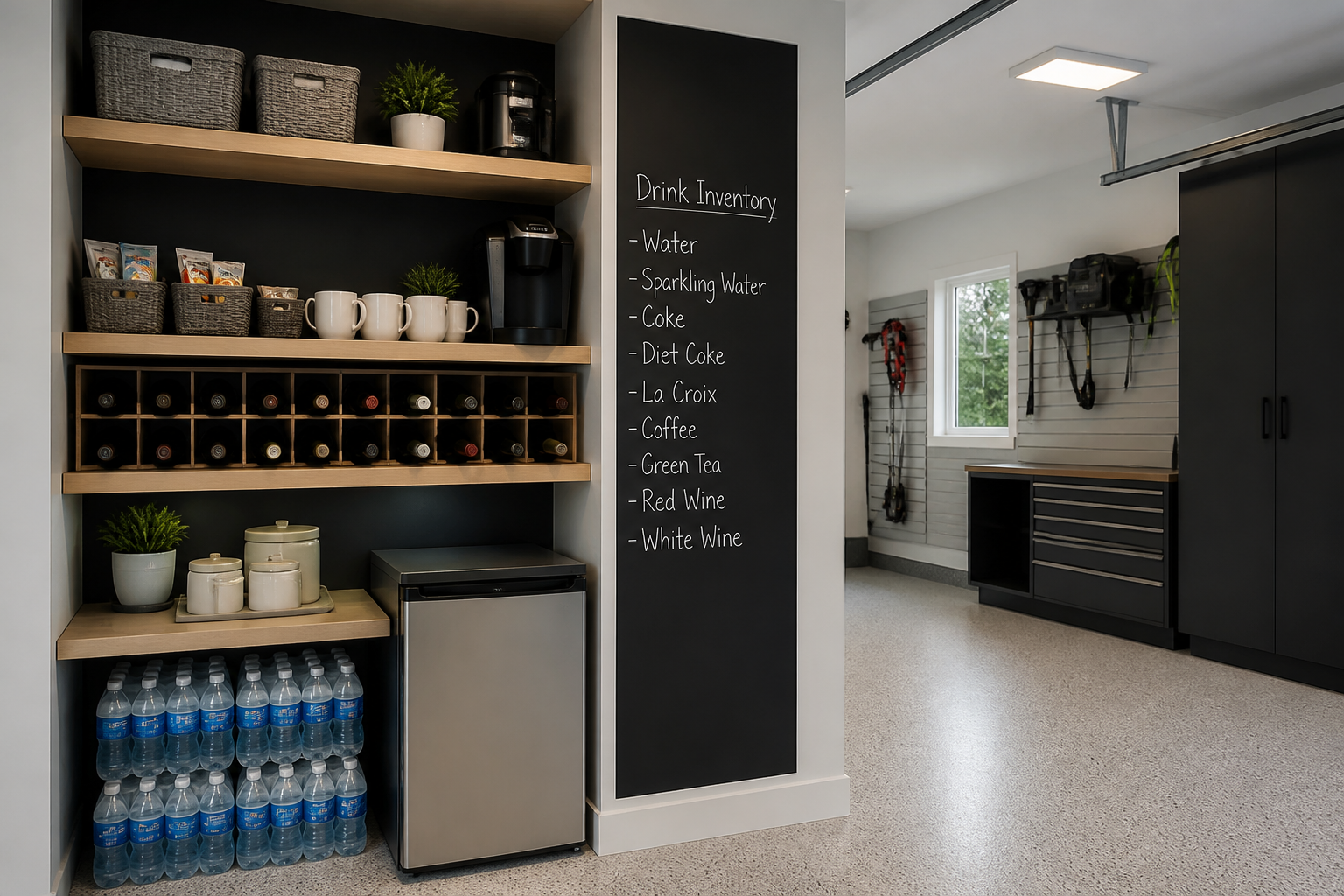
A dedicated beverage zone keeps cases of water, soda, and wine organized in one spot. The mini fridge adds cold storage without taking up valuable kitchen space, perfect for overflow party supplies.
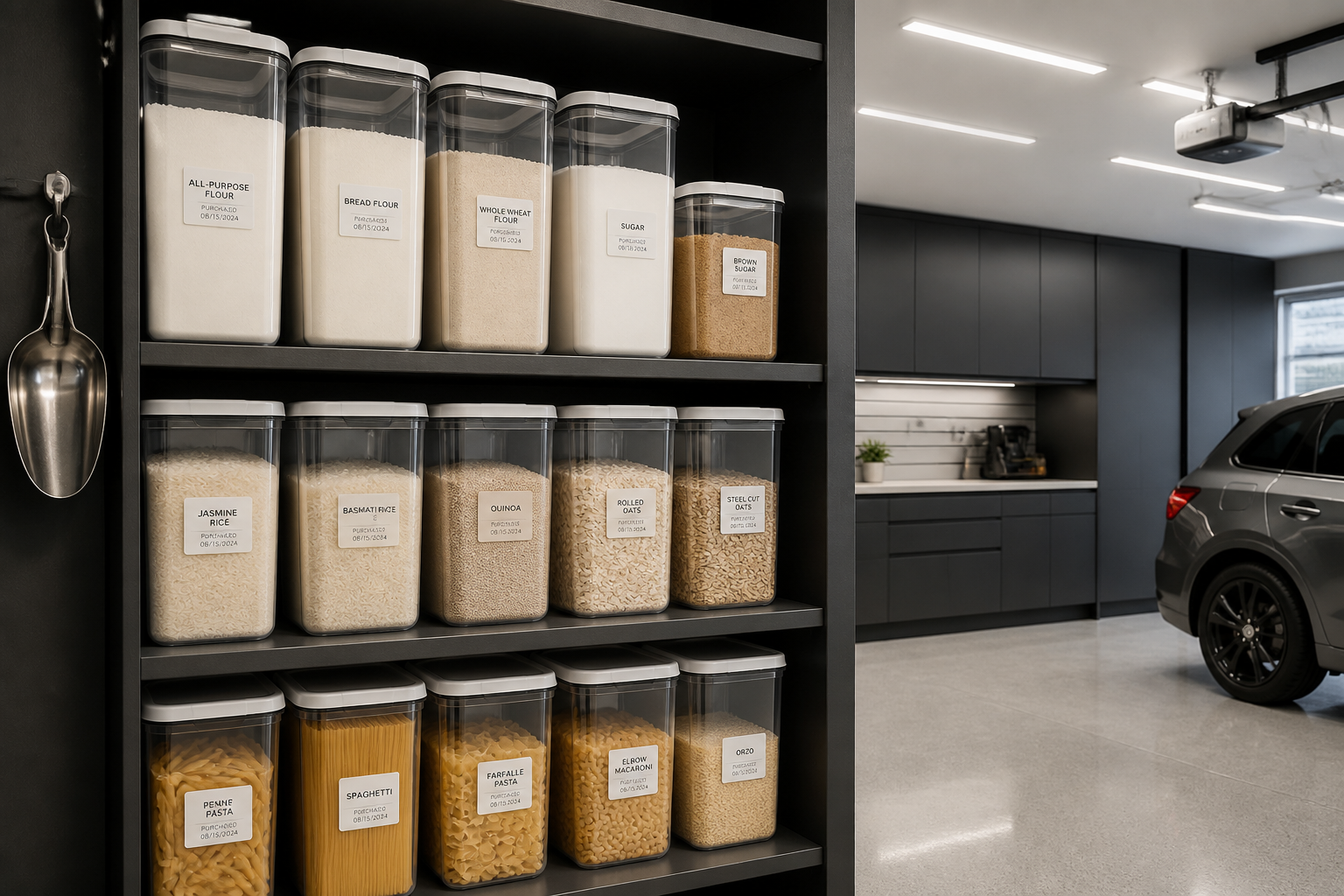
Clear airtight containers protect bulk dry goods from pests and moisture while making inventory checks simple. Label makers create professional-looking tags that help you track purchase dates and maintain proper rotation. Pairing this setup with rodent-proof storage strategies ensures your food stays safe.
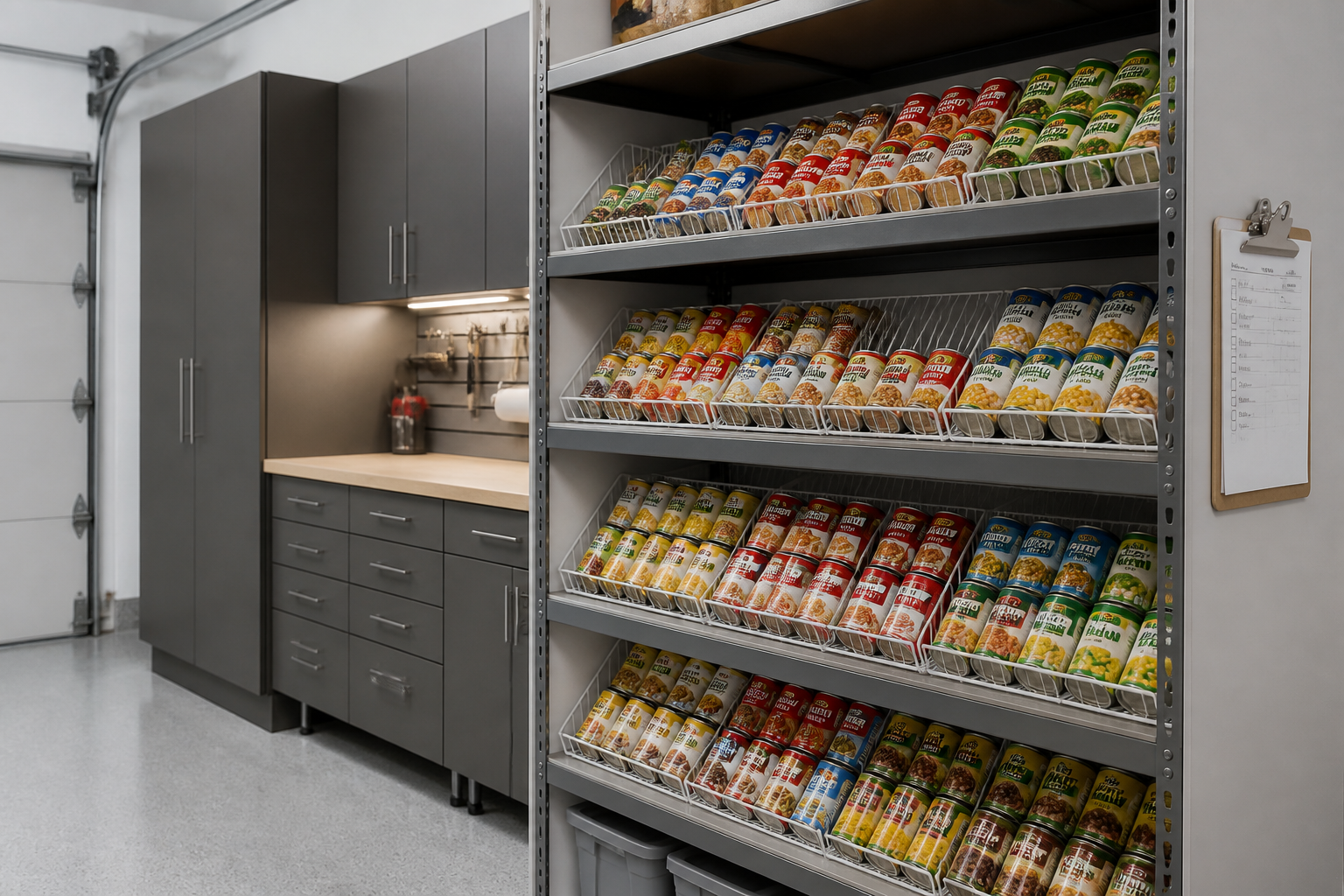
Slanted can racks create automatic first-in-first-out rotation and show you exactly what you have. These dispensers make grabbing a can easy while ensuring older items get used before they expire.
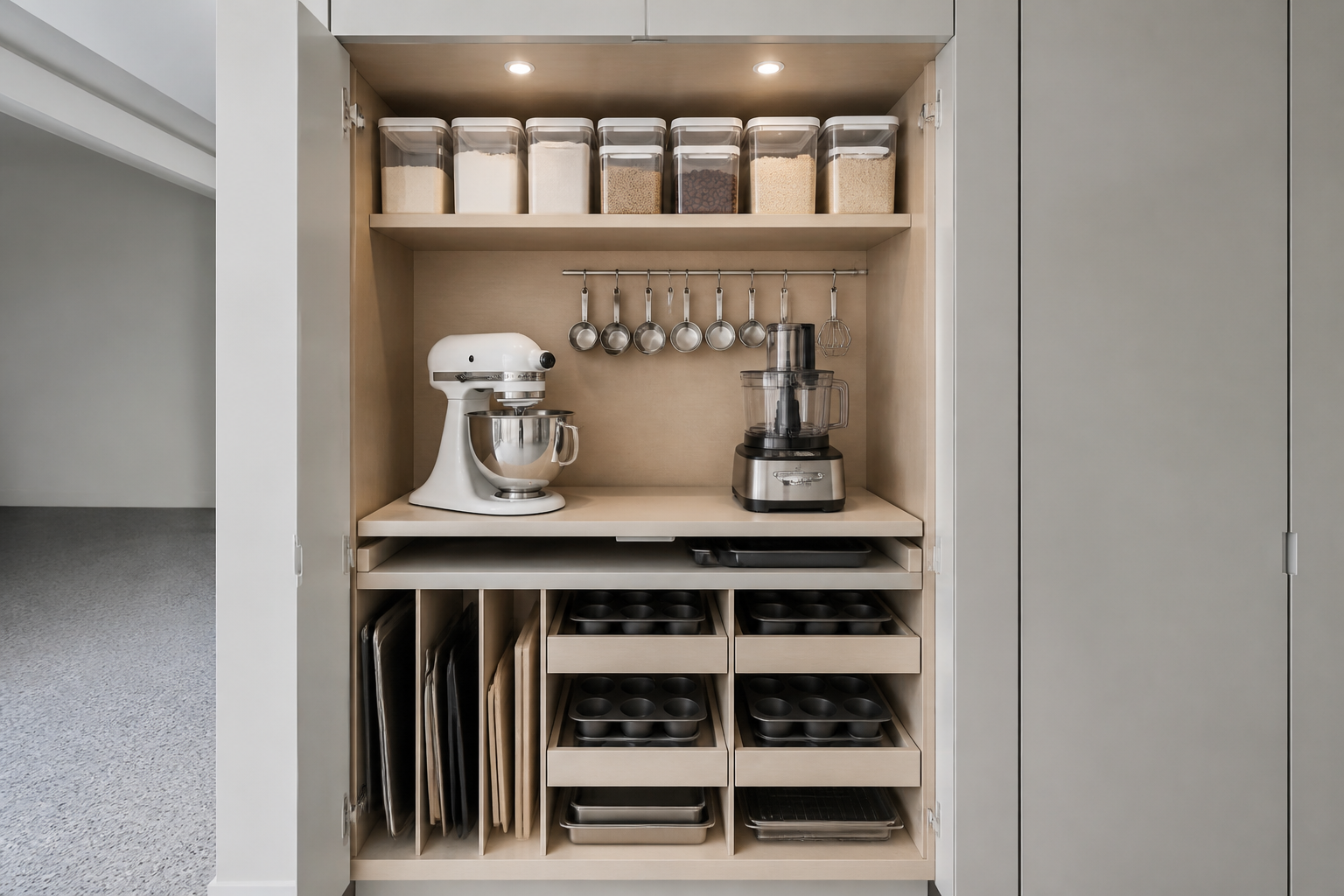
Vertical dividers keep baking sheets and muffin tins from becoming a jumbled mess. Storing your less-frequently-used appliances here frees up prime kitchen real estate for daily cooking tools.
Cozy Nooks
A garage pantry doesn’t have to feel utilitarian and cold. Adding comfortable touches turns a purely functional space into somewhere you actually enjoy spending time. I’ve seen homeowners create reading nooks where they plan meals, coffee bars for morning routines, and even small workstations for recipe testing. The key is good lighting, a bit of comfortable seating, and personal touches that make the space feel intentional. If you’re working with a smaller garage, these cozy elements can do double duty as functional storage.
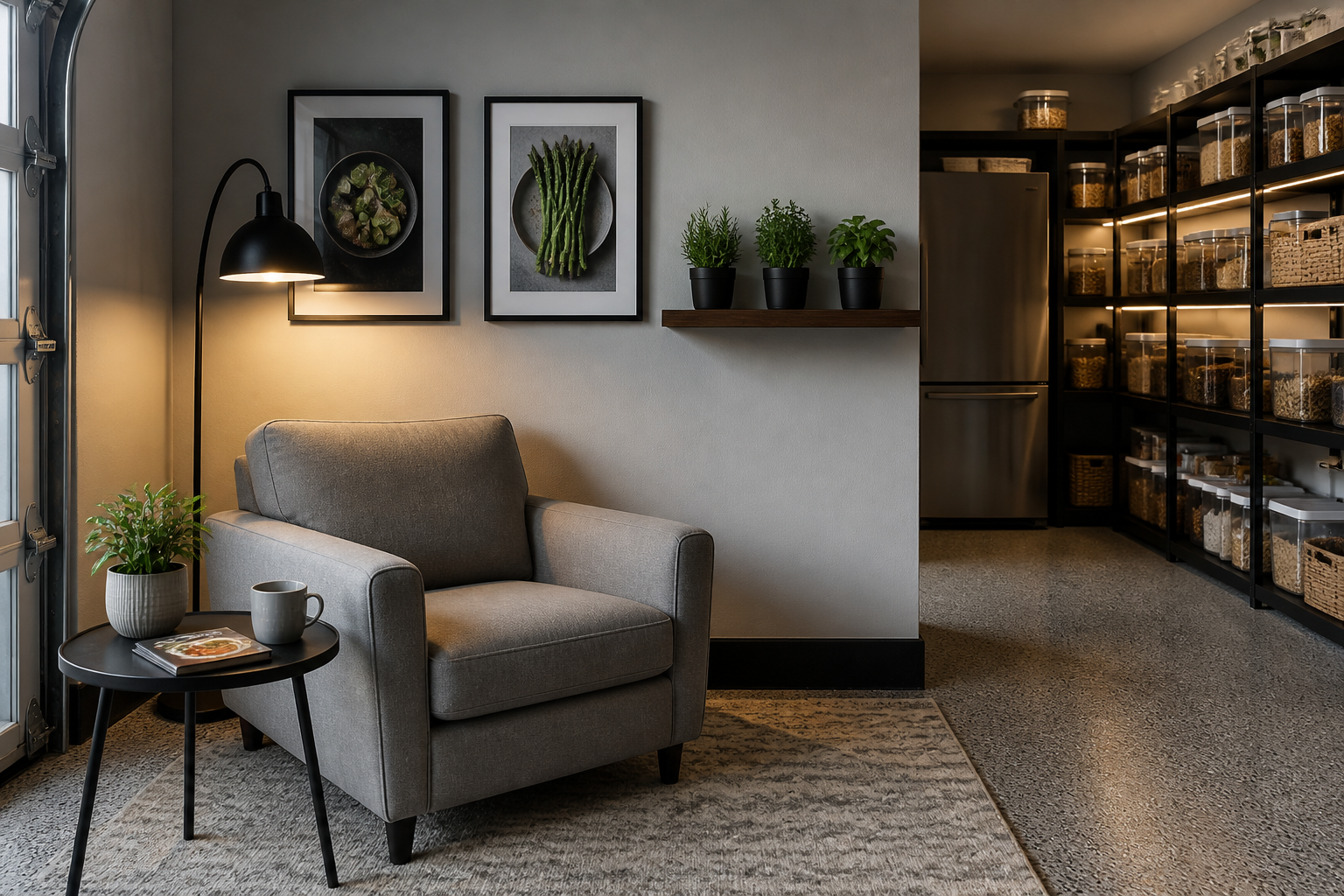
A comfortable chair and good lighting transform a pantry corner into a meal planning station. This setup gives you a quiet spot to browse cookbooks and make grocery lists while surrounded by your actual inventory.
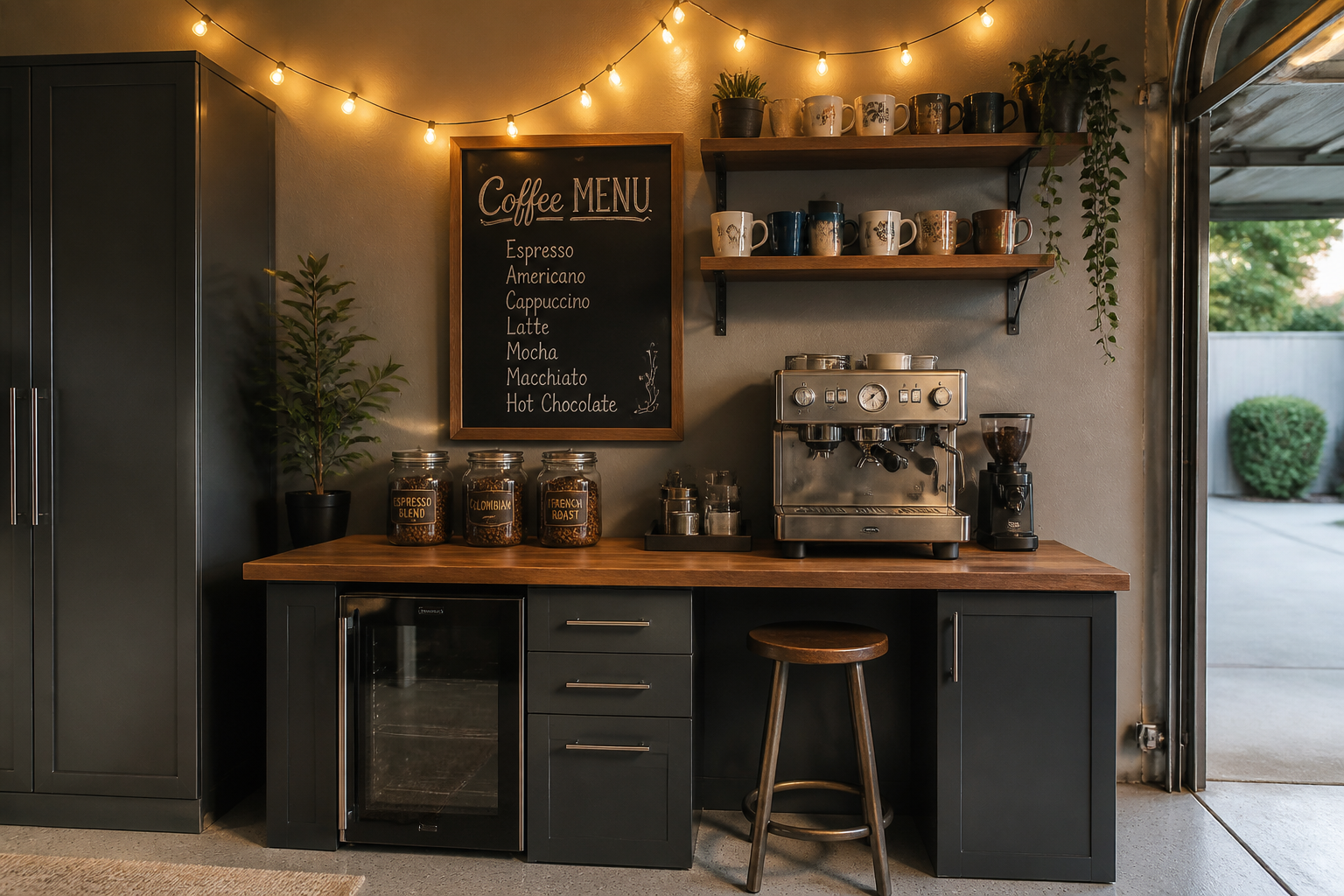
A dedicated coffee bar keeps your morning routine organized and your countertops clear. String lights and a mug collection add personality while keeping everything within easy reach.
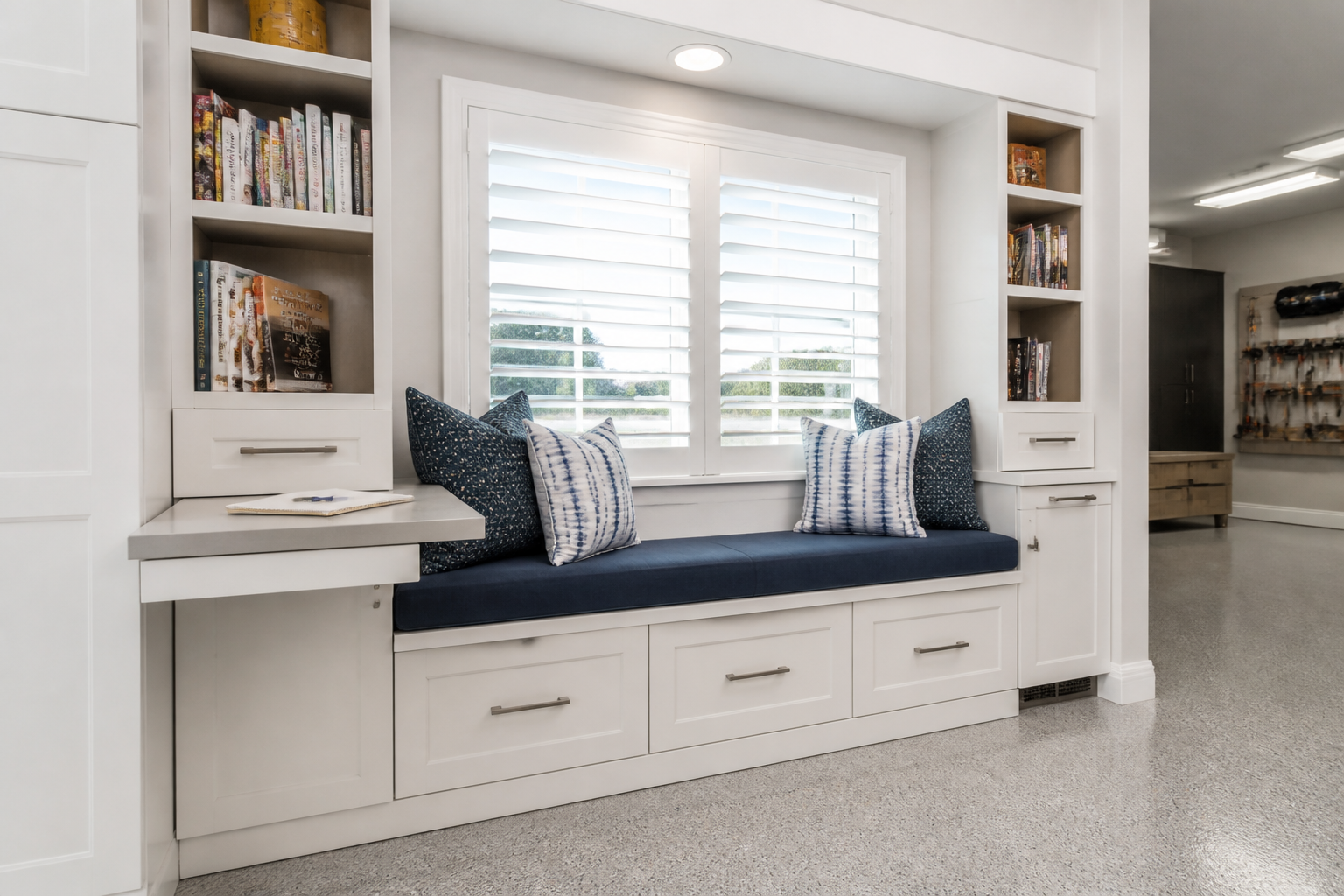
A window seat with hidden storage underneath maximizes every inch while creating a bright, inviting spot. The built-in cubbies keep cookbooks organized and the cushioned bench makes list-making more pleasant. This approach works especially well when you’re trying to maximize vertical and overhead storage in the rest of your garage.
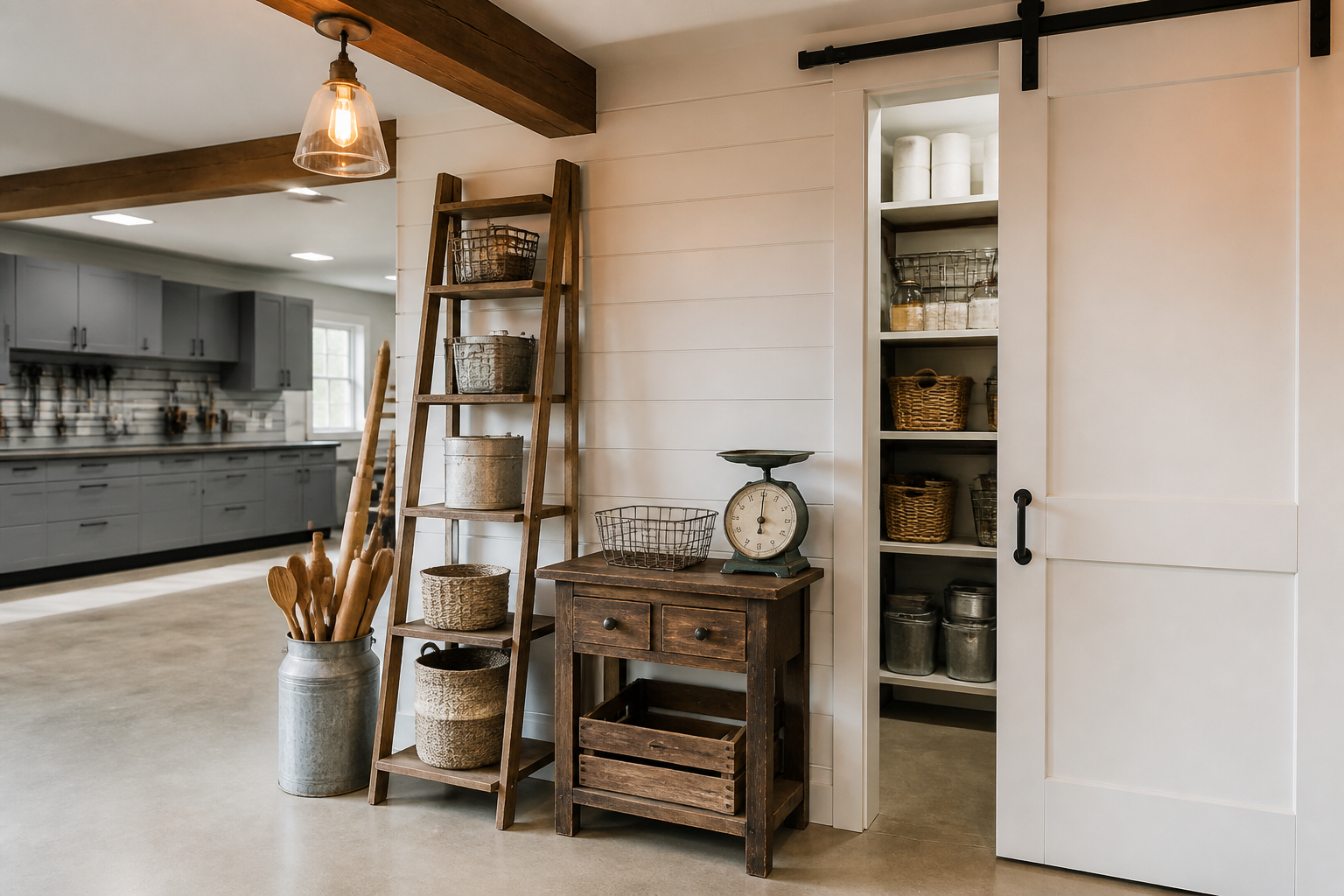
Repurposed vintage pieces like this ladder create character while providing functional storage. The farmhouse aesthetic softens the garage setting and makes the space feel more like an extension of your kitchen than a storage afterthought.
