

As an Amazon Associate I earn from qualifying purchases.
Strollers are bulky, awkward, and somehow always end up right where you need to pull the car in. If you’re tired of tripping over yours every time you head out, these 12 garage stroller storage ideas are worth a look. I’ve grouped them into four approaches that work for different garages and different family situations: wall hook systems, fold-and-park corners, multi-kid gear zones, and entry-adjacent layouts.
Wall Hook Systems
Mounting a stroller on the wall is one of the best moves you can make in a tight garage. It gets the stroller completely off the floor, which frees up prime parking real estate and makes the whole space feel less cluttered. The key is choosing a hook rated for the weight of your specific stroller since joggers and travel systems can run 30 pounds or more. I usually recommend pairing a stroller hook with a broader wall storage system so you’re solving the whole wall at once rather than just one problem at a time. Slatwall and pegboard panels both work well here and give you flexibility to rearrange as your gear changes.
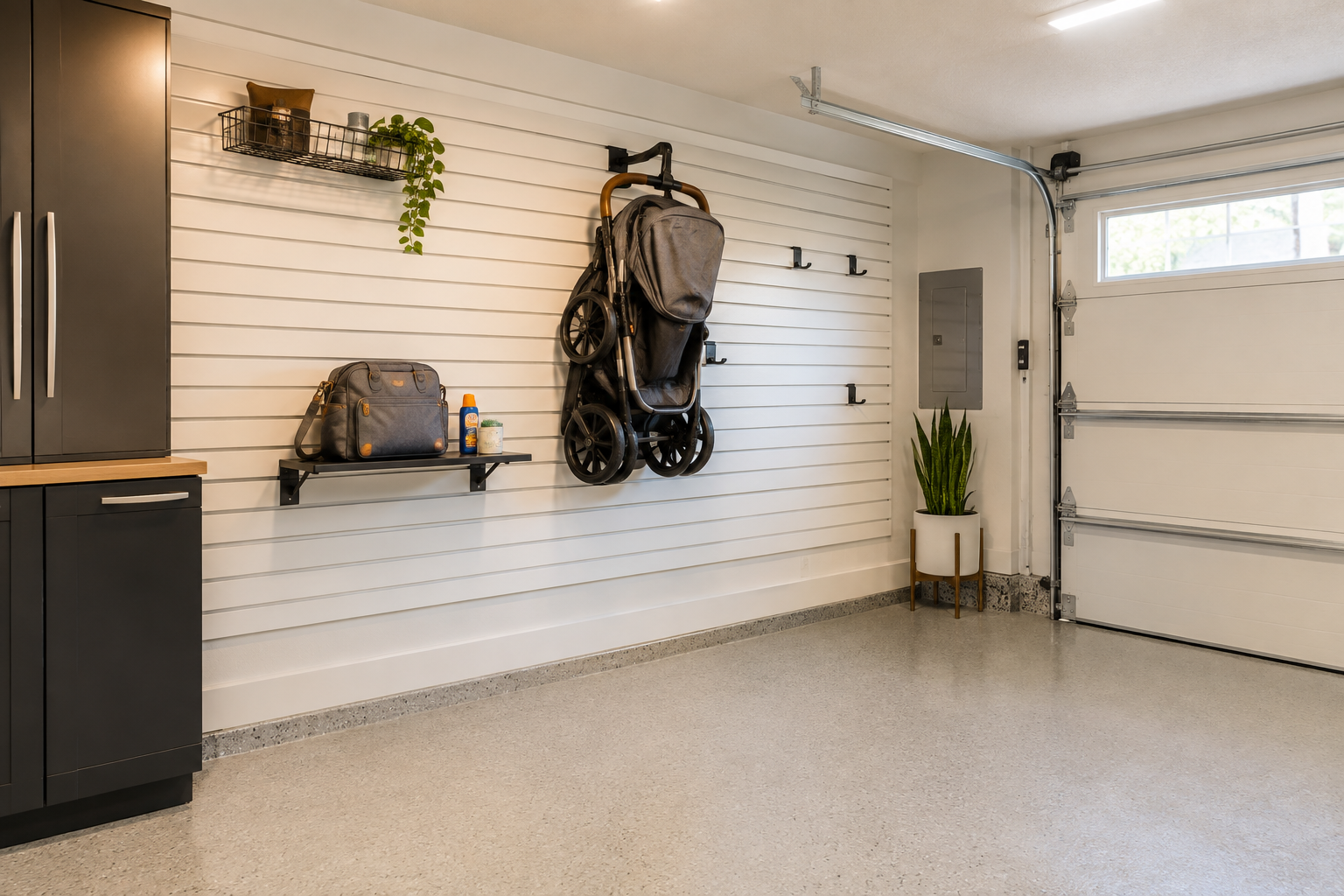
White slatwall panels give this setup a polished, showroom feel while keeping everything adjustable. The heavy-duty black hook holds a folded jogger at chest height, and the shelf below makes good use of the dead space underneath. If you want the full picture on setting up a wall like this, my slatwall accessories installation guide walks through the process step by step.
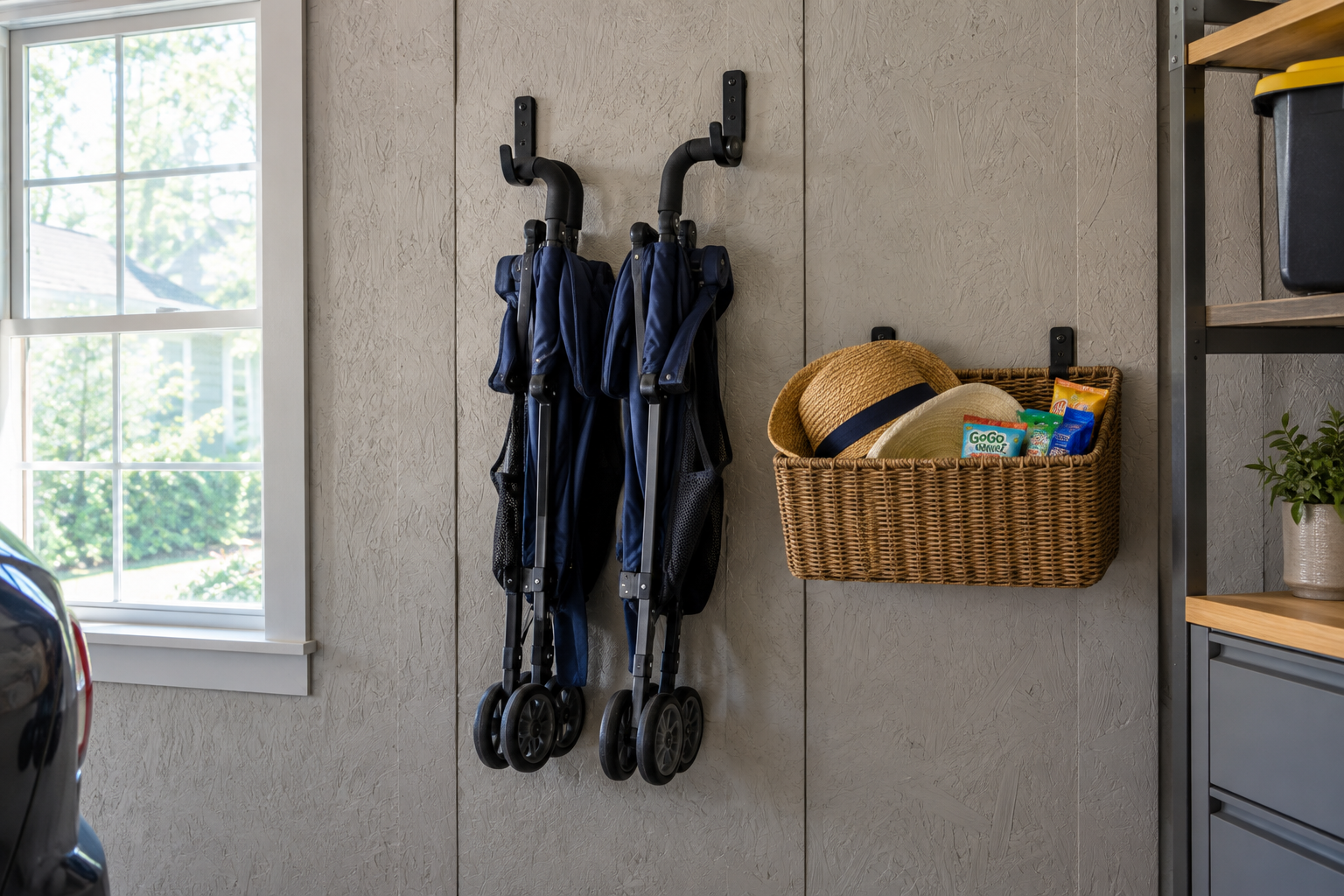
Using two hooks spaced apart distributes the weight evenly and keeps the stroller frame from twisting on the wall. The gray-painted OSB gives this garage a finished look without the cost of drywall. If you’re weighing your wall finish options, I compared garage drywall versus OSB in detail so you can pick what makes sense for your build.
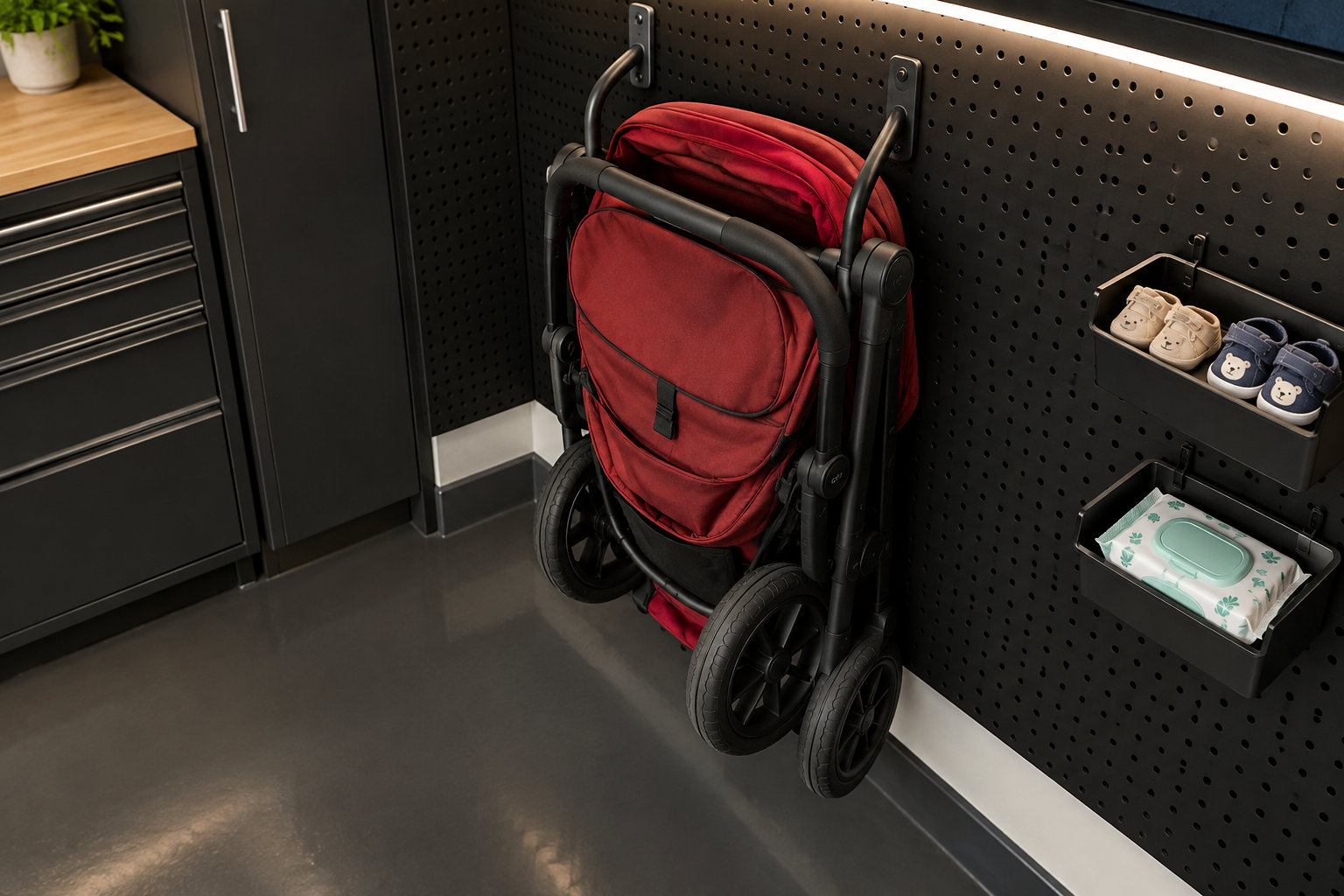
Matte black pegboard gives this wall a sharp, intentional look that feels less like a utility space and more like a real storage system. The J-hooks work well with travel systems because the wider hook opening accommodates bulkier folded frames. Pegboard is incredibly versatile for family gear, and my guide to the best garage pegboard systems covers which panels and hardware hold up best over time.
Fold-and-Park Corners
Not every stroller hangs on a wall easily, especially full-size travel systems with thick frames or strollers that don’t fold flat. For those, a dedicated fold-and-park corner is the smarter move. The idea is simple: you carve out a small footprint in a low-traffic corner of the garage, add a bit of structure to keep the stroller upright and contained, and stop it from wandering into your parking path. A corner spot keeps it out of the main flow while still being easy to grab on the way out. If your garage is already running tight on floor space, pairing this approach with some small garage organization strategies can help you find the room without giving anything else up.
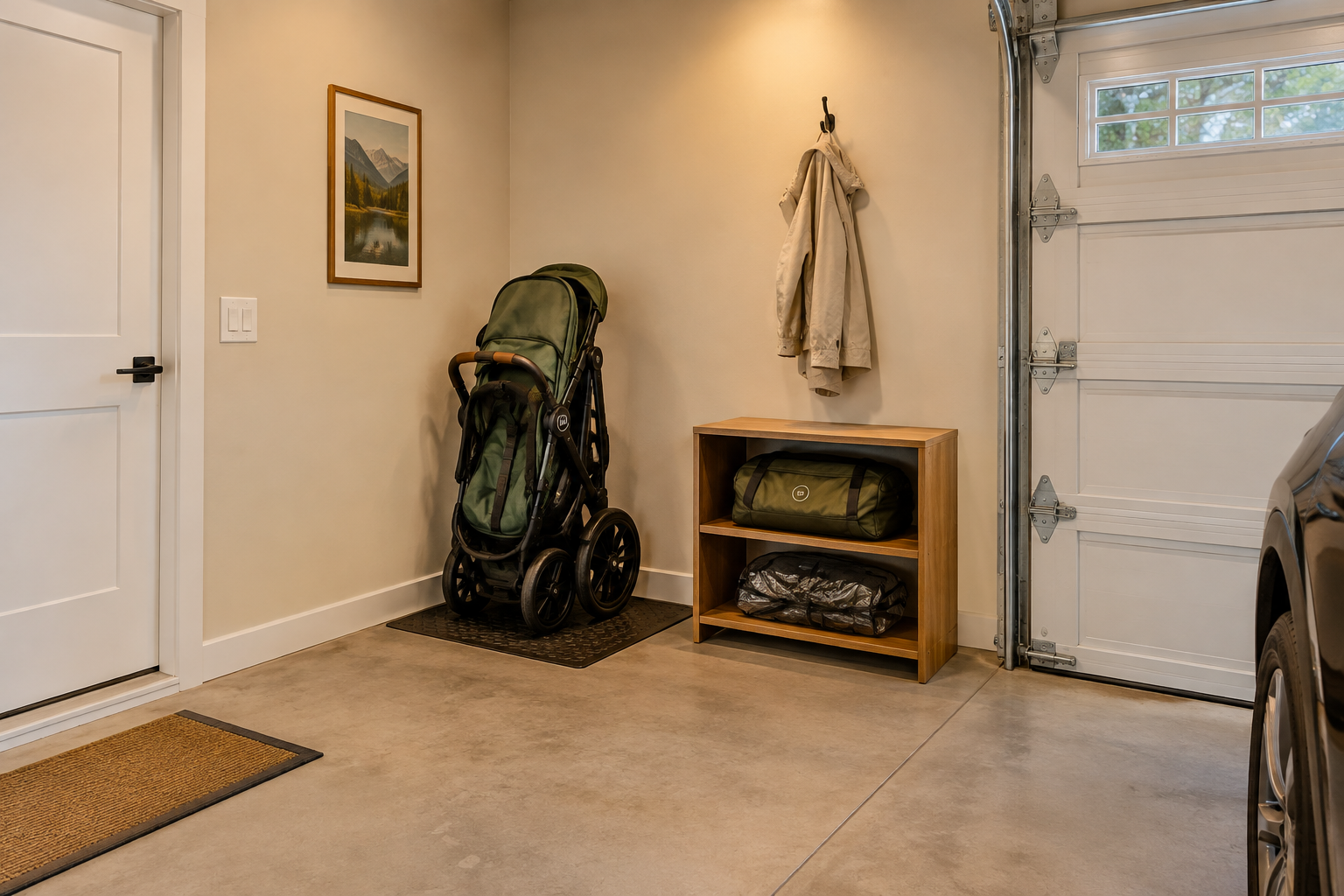
The rubberized mat keeps the stroller from sliding and protects the floor from wet or muddy wheels. A compact shelf right next to it turns this corner into a small stroller station rather than just a dumping spot. The warm overhead lighting makes the corner feel intentional instead of forgotten.
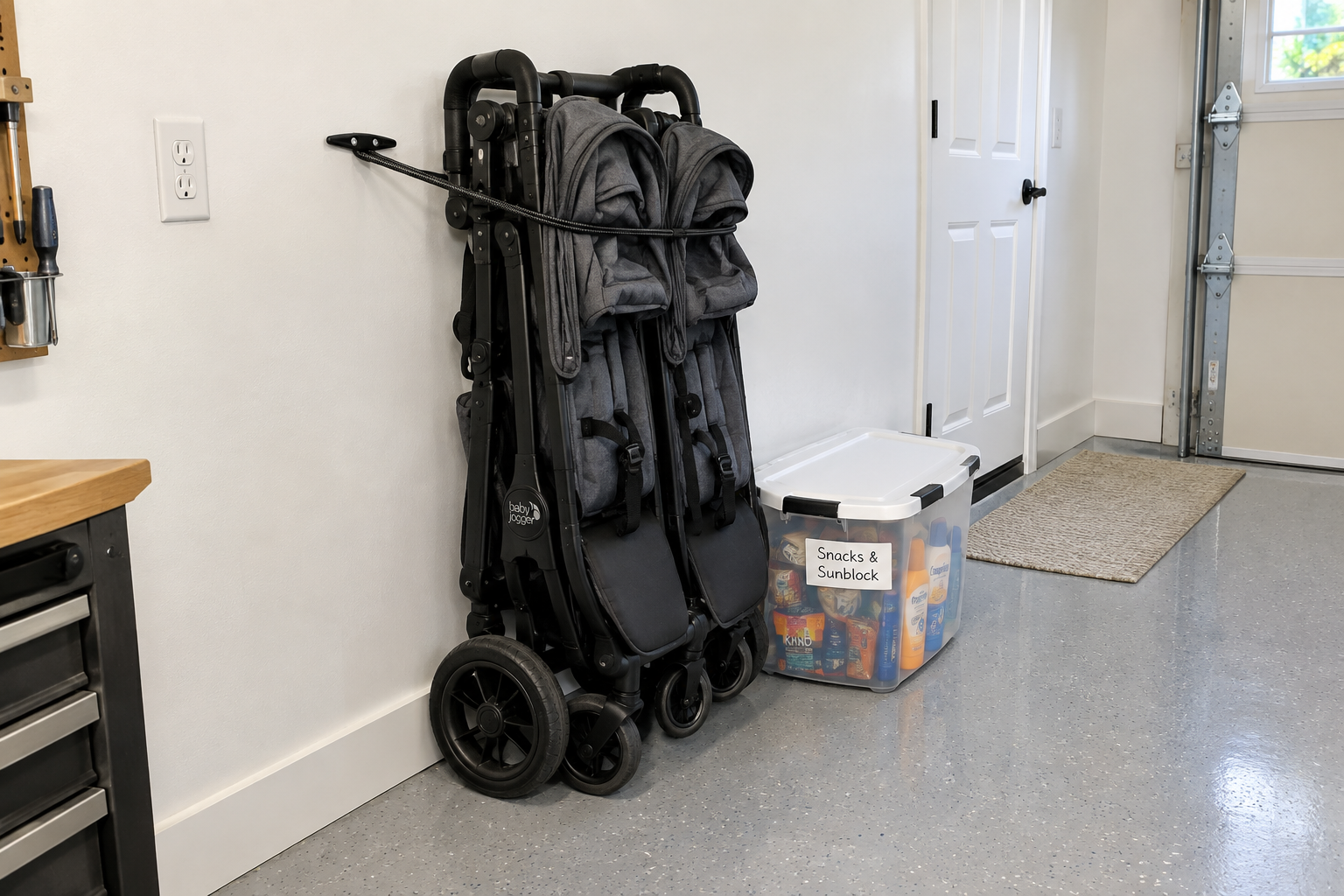
A bungee cord on a wall cleat is one of the cheapest and most effective ways to keep a heavy double stroller from tipping over when the garage door opens. The labeled bin next to it means you’re not hunting for supplies on the way out the door. This kind of simple, zone-based thinking is at the heart of creating organized garage zones that actually hold up over time.
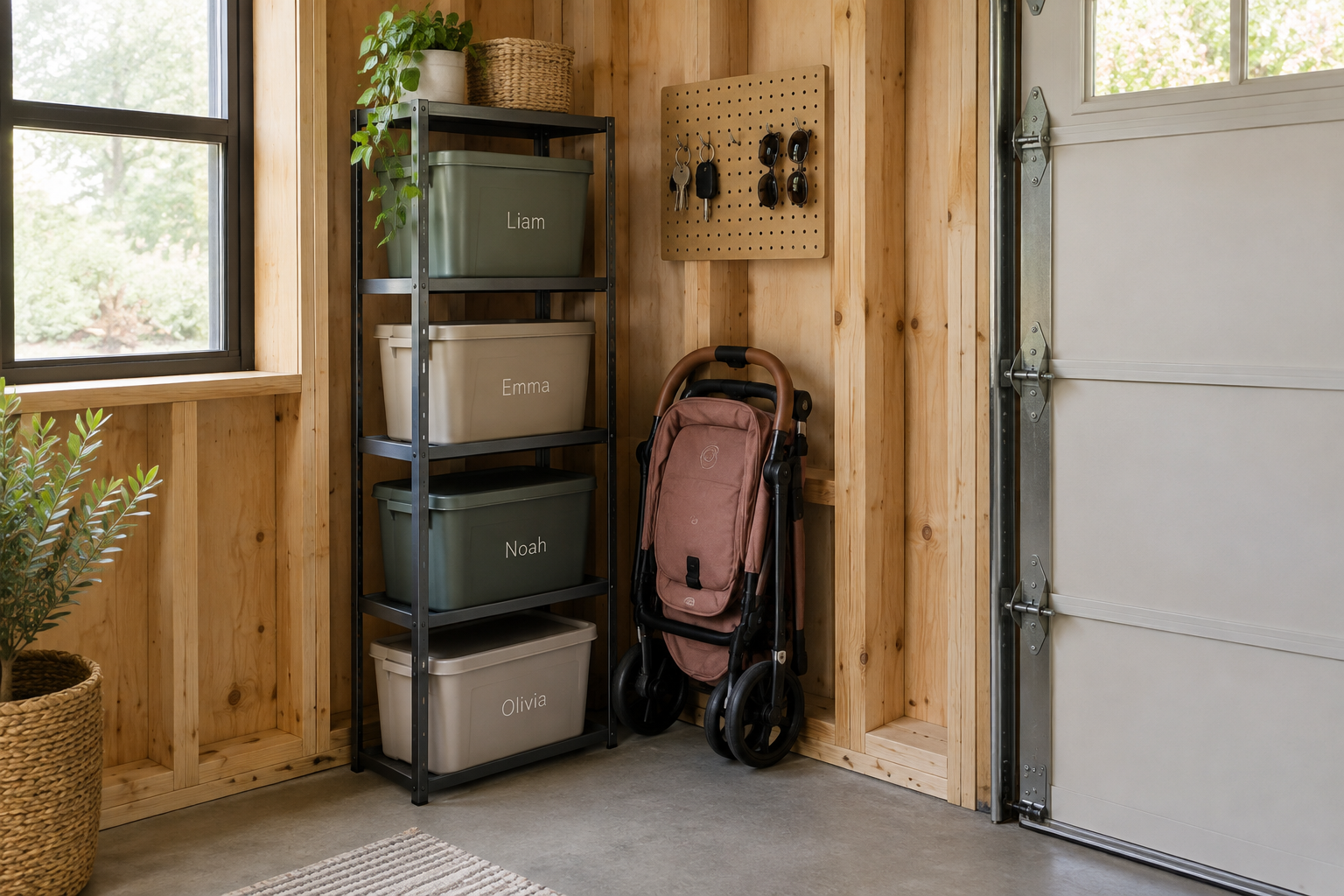
The narrow freestanding shelf beside the stroller makes the most of a corner that would otherwise go unused. Labeling bins by kid is a small habit that saves real time when you’re rushing out the door. The pegboard square above adds a spot for everyday grab-and-go items without taking up any extra floor space.
Multi-Kid Gear Zones
When you have more than one kid, stroller storage gets complicated fast. You might be storing a jogger, a double stroller, and a lightweight umbrella stroller all at the same time, and that’s before you add bikes, helmets, and all the other gear that comes with a bigger family. A dedicated multi-kid gear zone pulls everything together into one section of the garage so the chaos has a home. It takes a bit more planning upfront, but once it’s set up, you stop spending ten minutes rearranging things every time you need to leave. Families dealing with this level of gear often find that the ideas in my garage kids playroom post overlap nicely since the zone-building approach is the same.
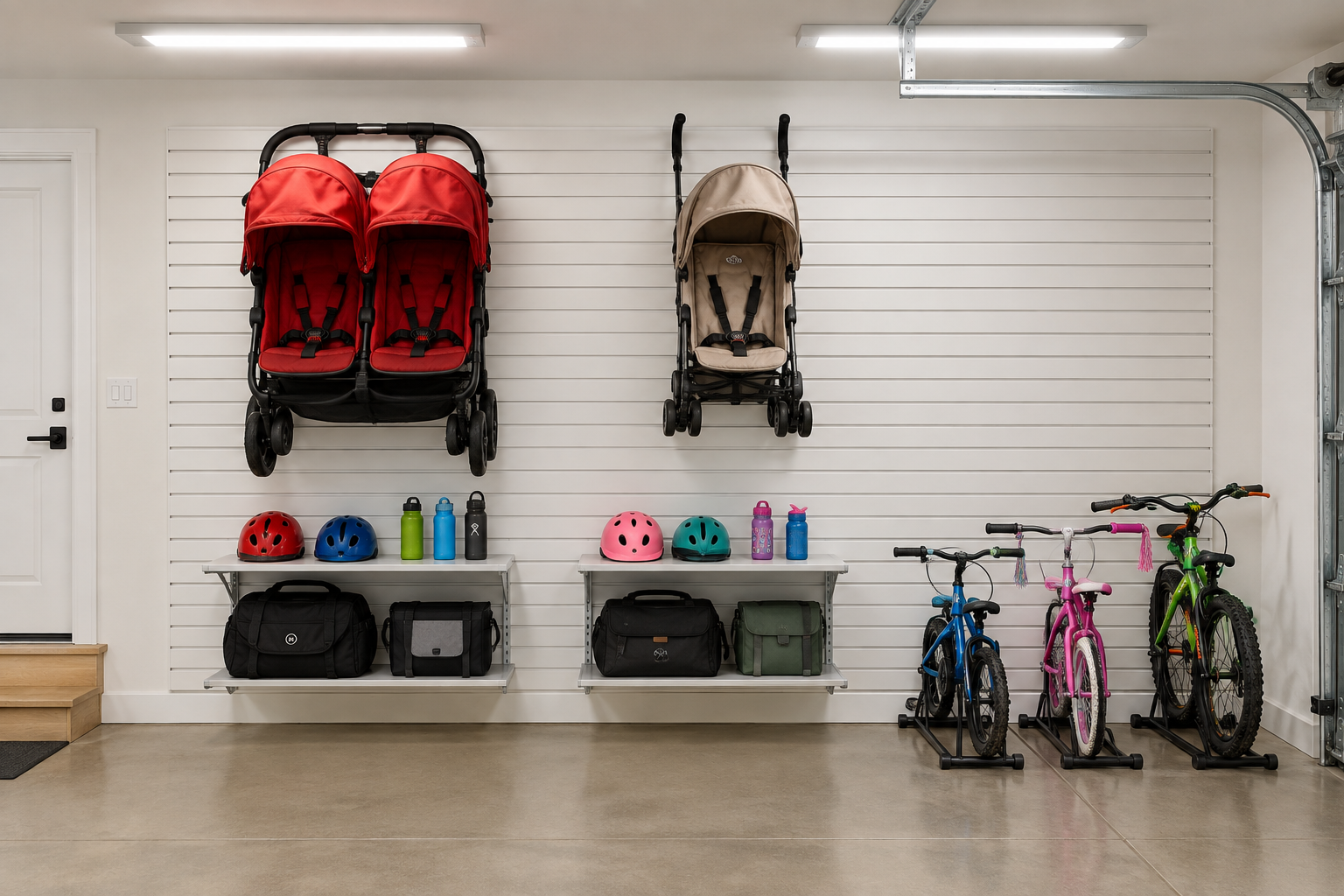
Hanging both strollers on the same slatwall run keeps the family’s main gear in one place and completely off the floor. Adjustable shelves below each stroller create per-stroller storage so accessories don’t get mixed up. If you’re also sorting out the bike side of this equation, my roundup of the best garage bike storage systems covers hooks, stands, and wall mounts worth considering.
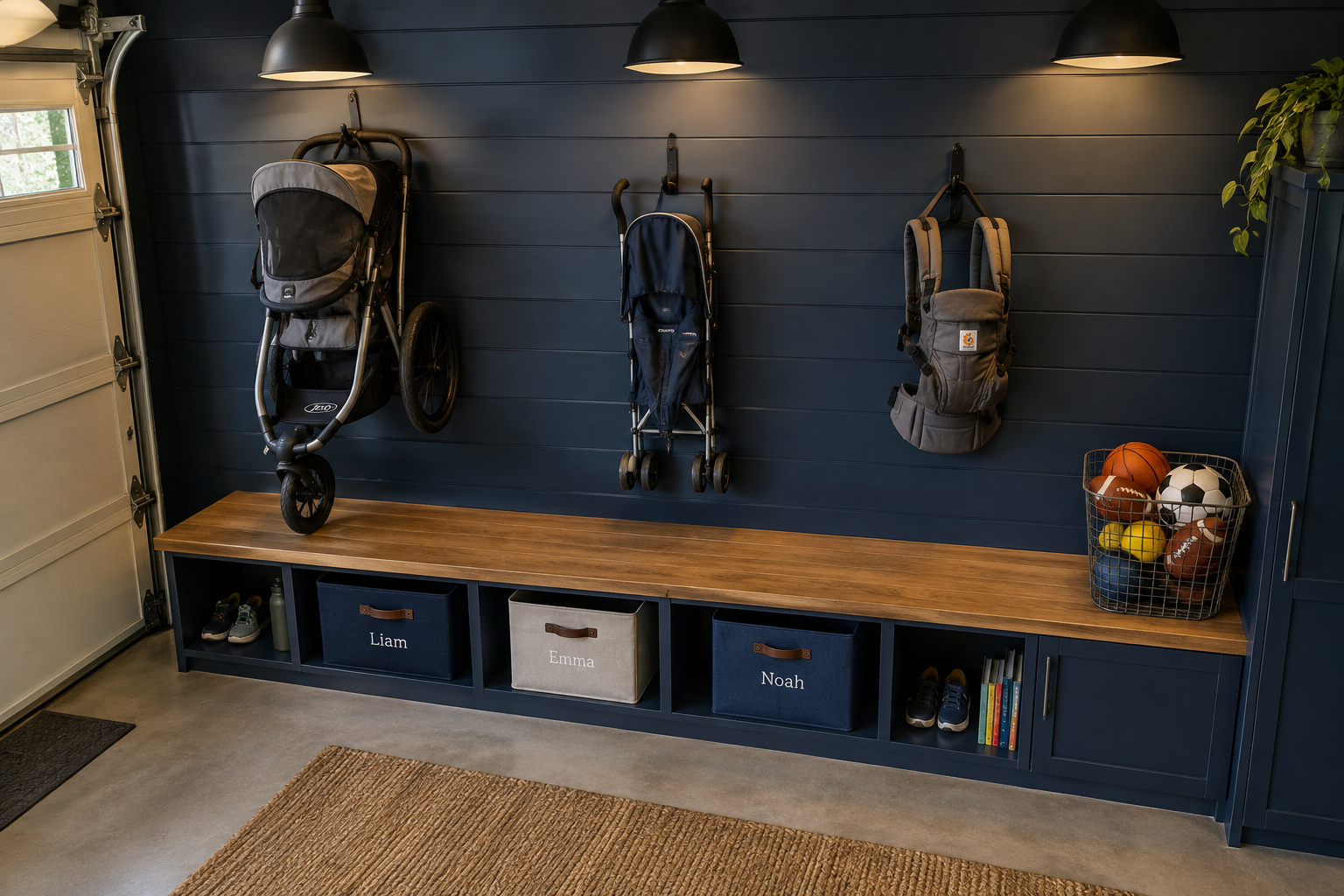
Navy wall panels give this gear wall a bold, cohesive look that doesn’t feel utilitarian. The bench with cubbies underneath does double duty as a seat for putting on shoes and a storage zone for each kid’s individual bin. Corralling sports balls in a wire bin at the end of the bench keeps them from rolling all over the garage floor, which is one of the small wins that makes a big difference day to day.
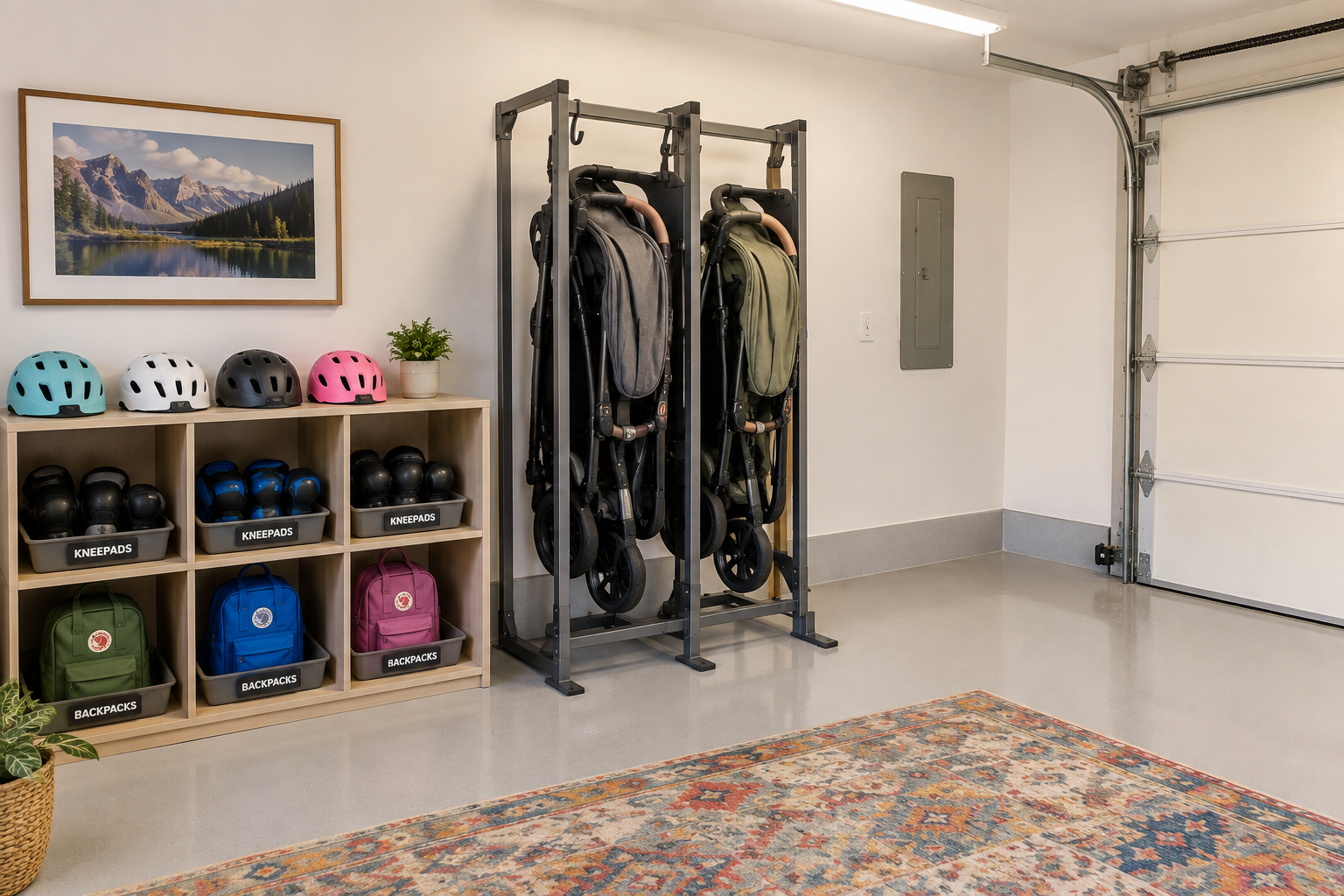
A freestanding stroller rack is a great option if you’re renting or don’t want to put holes in the walls. The vertical slots keep each stroller independent so you can pull one without disturbing the other. Defining the zone with a rug is a simple visual trick that tells everyone in the family exactly where this stuff belongs.
Entry-Adjacent Layouts
The most functional stroller storage is storage you’ll actually use consistently, and that usually means keeping the stroller close to the door you use every day. Entry-adjacent layouts treat the garage door or the interior house door as the anchor point and build the storage right around it. When the stroller lives within a few steps of where you enter and exit, loading up and heading out stops feeling like a production. This kind of thinking connects directly to how a garage mudroom setup works, and the two ideas pair really well together. A good entry zone handles coats, shoes, bags, and the stroller all in one hit.
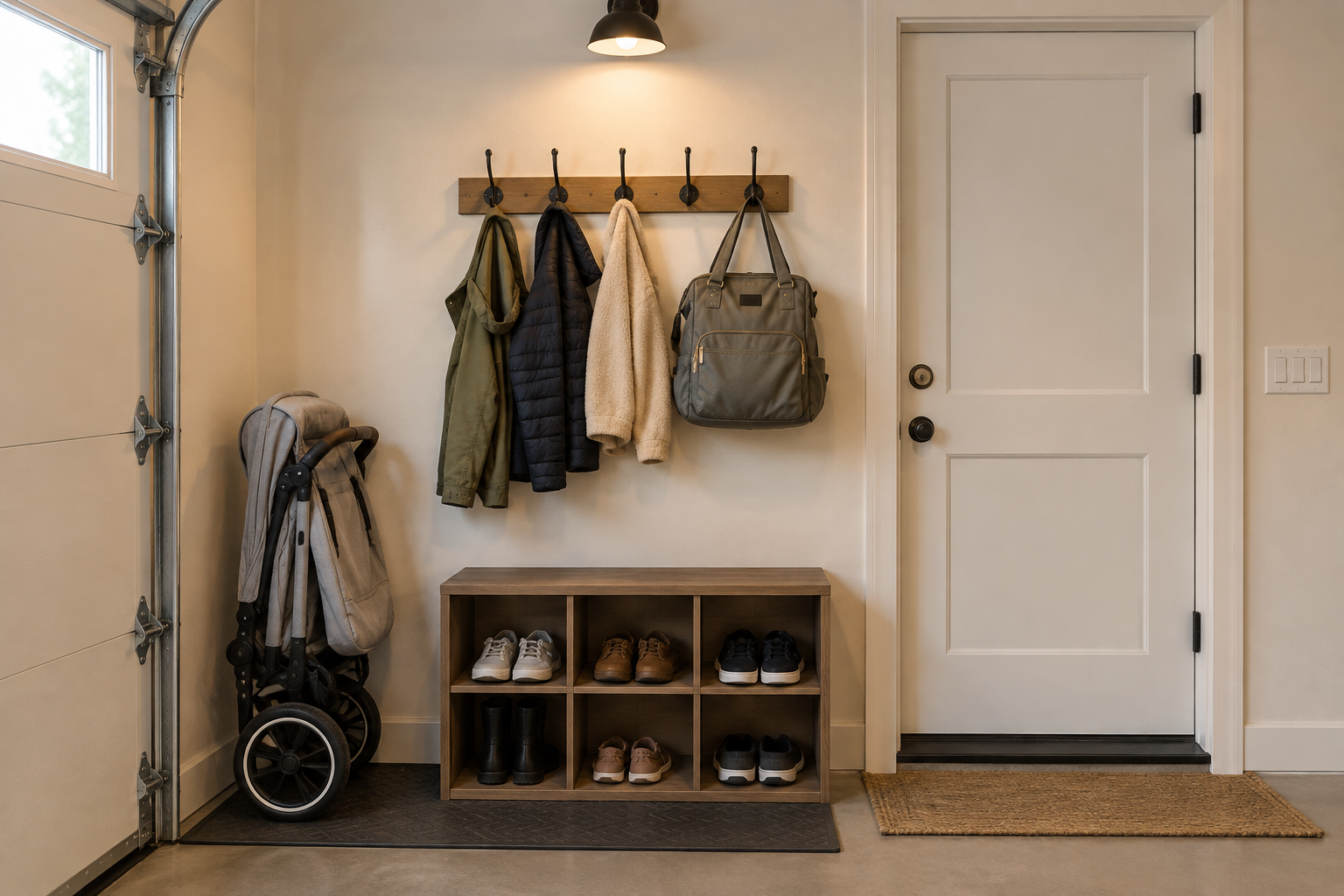
Positioning the stroller right next to the coat rack means everything you grab on the way out lives in the same two feet of wall. The rubber mat underneath protects the floor and signals exactly where the stroller belongs when it comes back in. This is the simplest version of an entry-adjacent layout and it works in even the smallest garages.
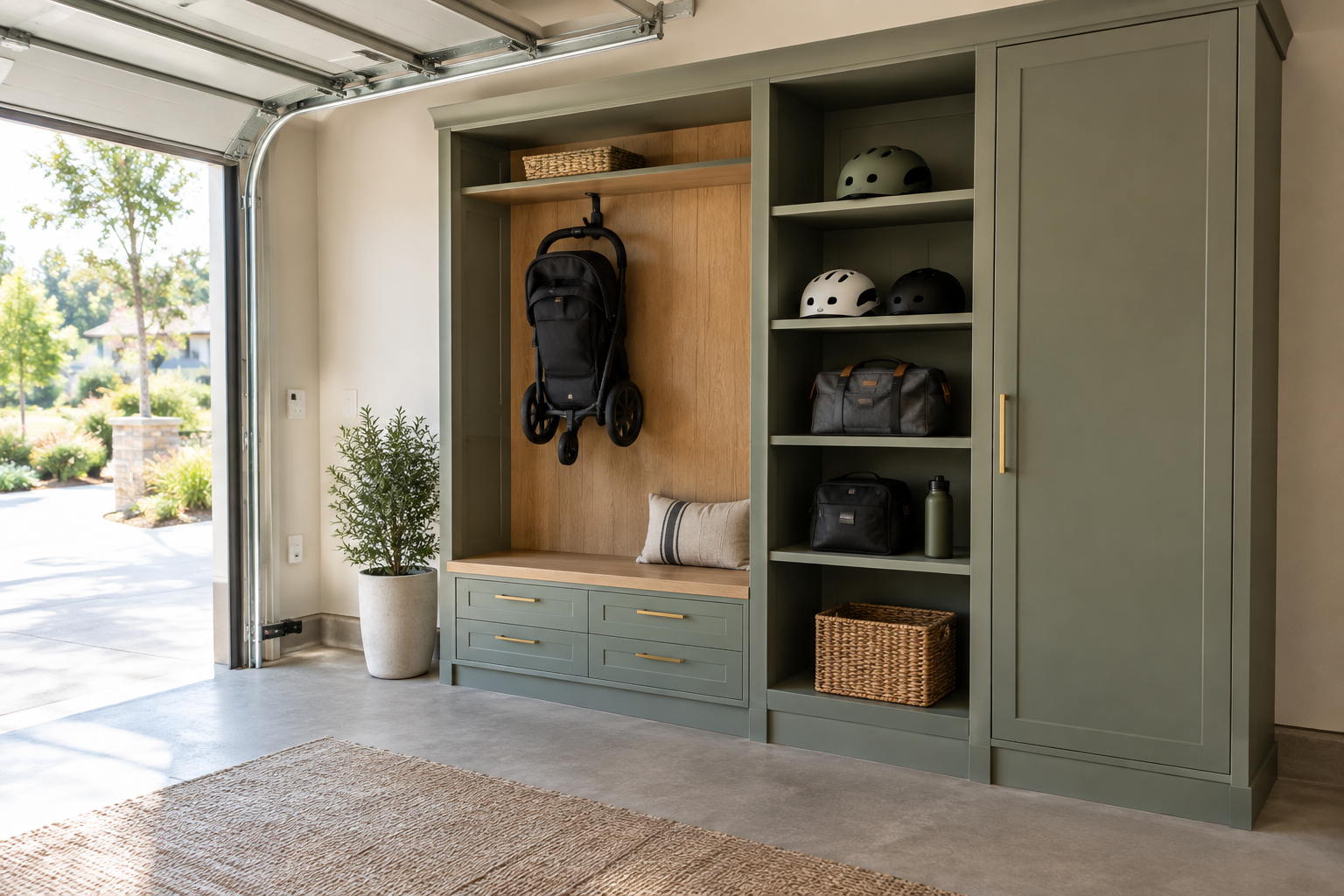
Built-in locker units like this one give the entry zone a custom, intentional look and pack in an impressive amount of storage for the footprint they take up. Sage green with light oak accents is a color combination that feels current without being trendy. If you’re planning a bigger entry build like this, the ideas in my garage mudroom ideas post will give you a solid starting framework.
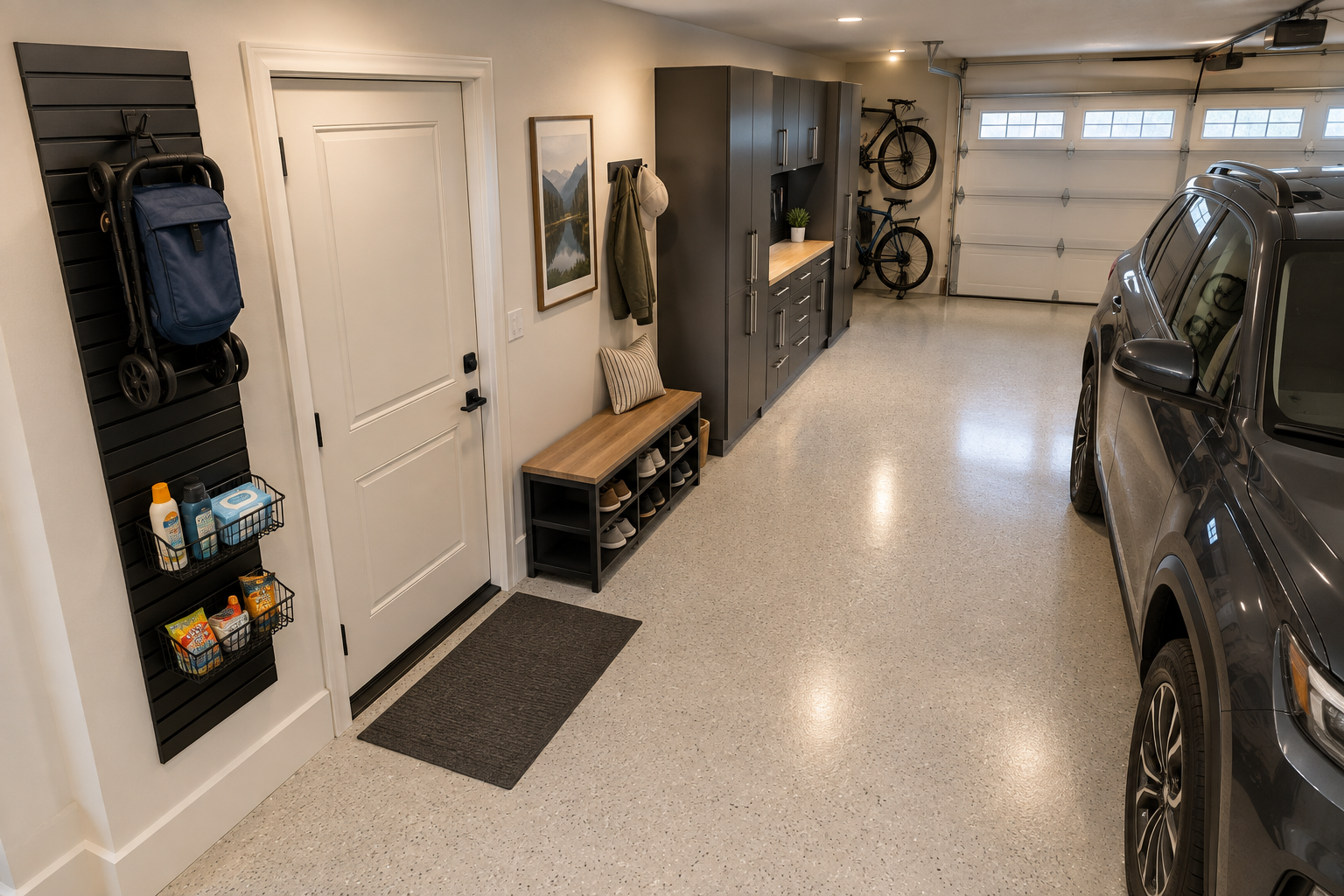
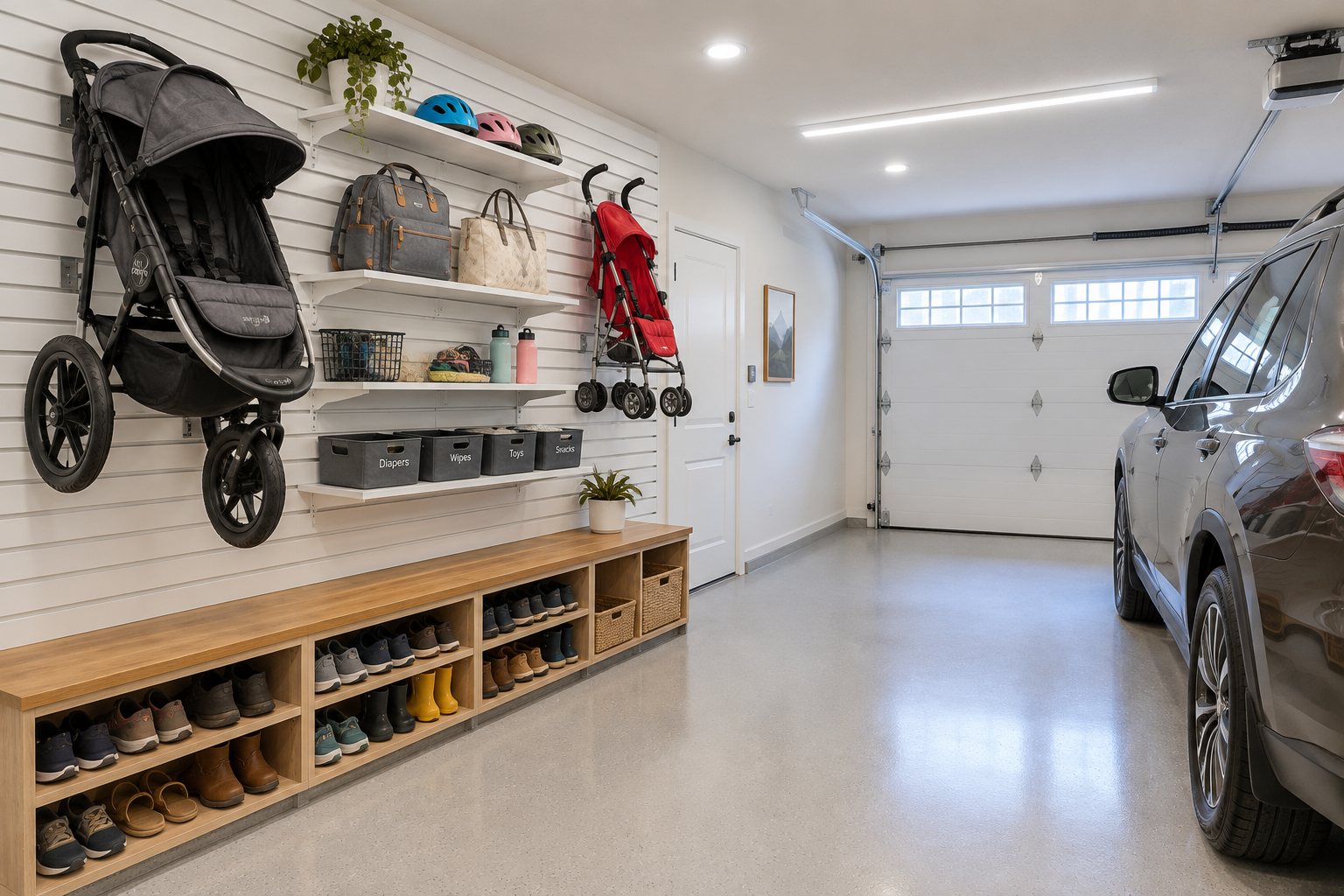
A narrow slatwall strip beside a side-entry door is one of the most space-efficient setups going since it uses a wall section that’s often ignored. Keeping snacks, wipes, and sunscreen in labeled baskets right below the stroller means you’re not searching the house before every outing. Good lighting at the entry point matters more than people expect, and if you’re updating that side of your garage, my post on LED garage wall lights has some solid options for exactly this kind of spot.
