

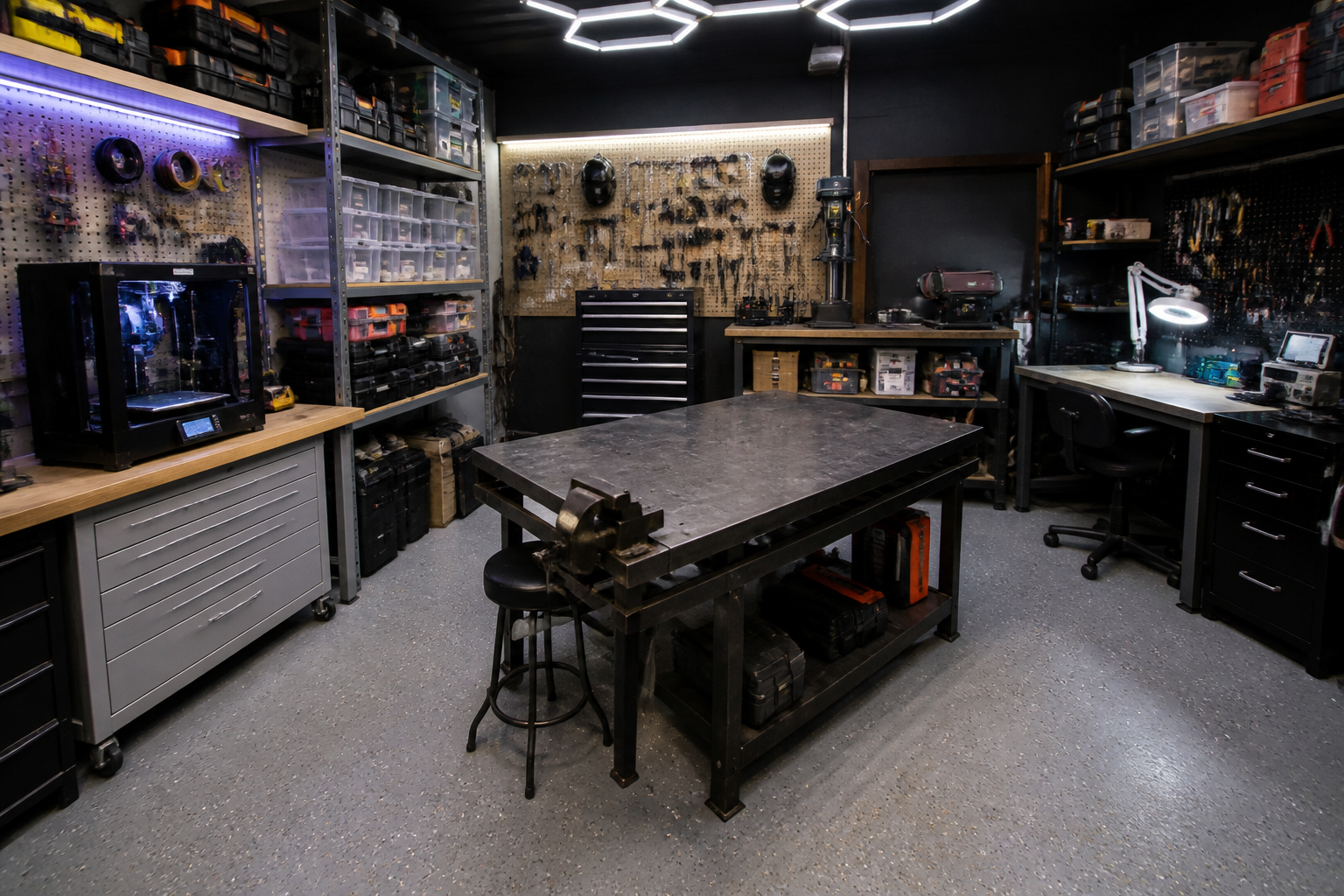
Transforming your garage into an industrial maker space gives you dedicated room for the projects that matter. I’ve put together 15 setups that cover everything from precision electronics work to heavy fabrication and additive manufacturing. You’ll find inspiration across 3D printing hubs, heavy-duty fabrication benches, and electronic repair stations.
3D Printing Hubs
A dedicated 3D printing zone keeps your machines running smoothly while containing the inevitable filament dust and PLA smell. I’ve learned that climate control and vibration isolation make a real difference in print quality. Good small garage organization helps when you’re storing rolls of filament in a humid Florida climate. These setups show how to create a clean printing environment with proper ventilation and monitoring stations. Most include modular shelving for spools, failed prints, and post-processing supplies.
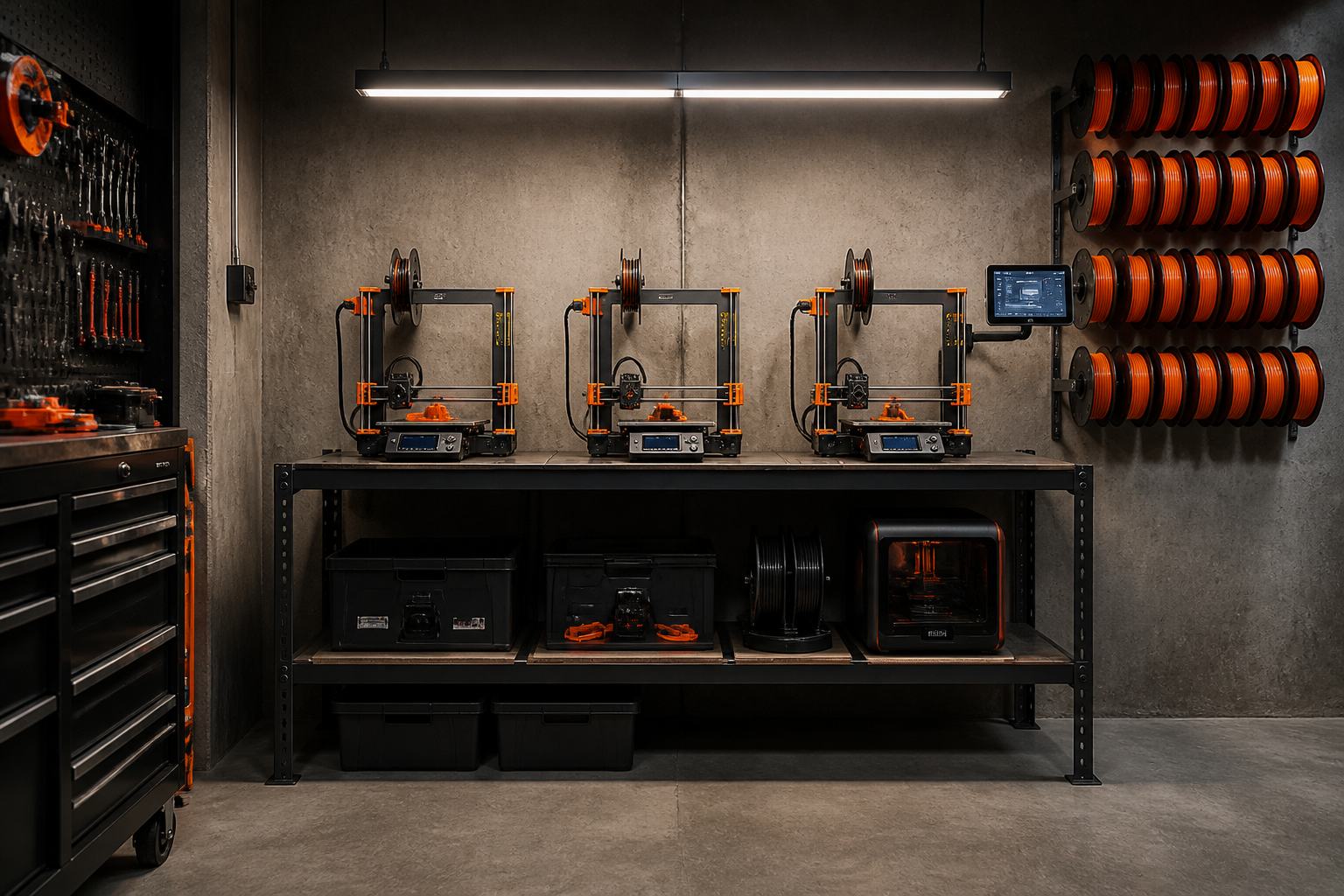
This triple-printer setup uses a commercial metal shelving rack to isolate each machine on its own level. The wall-mounted spool storage keeps filament visible and accessible while a dedicated dryer runs on the bottom shelf. LED strips provide consistent lighting for monitoring prints without opening the garage door.
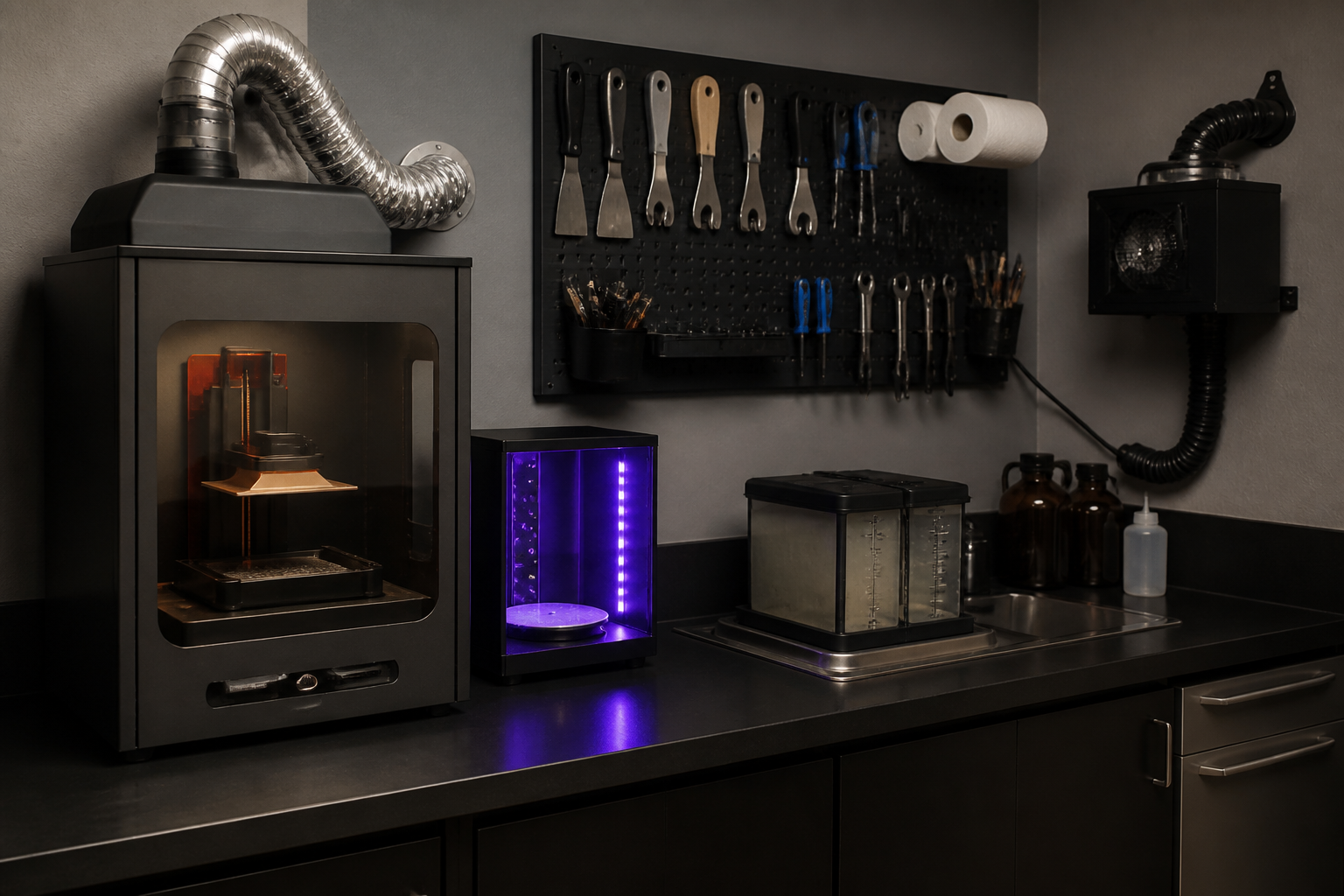
Resin printing demands better ventilation than FDM, and this corner setup handles it with a custom enclosure and activated charcoal filtration. The pegboard tool storage keeps scrapers and spatulas within arm’s reach. A dedicated washing and curing station completes the workflow without tracking resin across the garage.
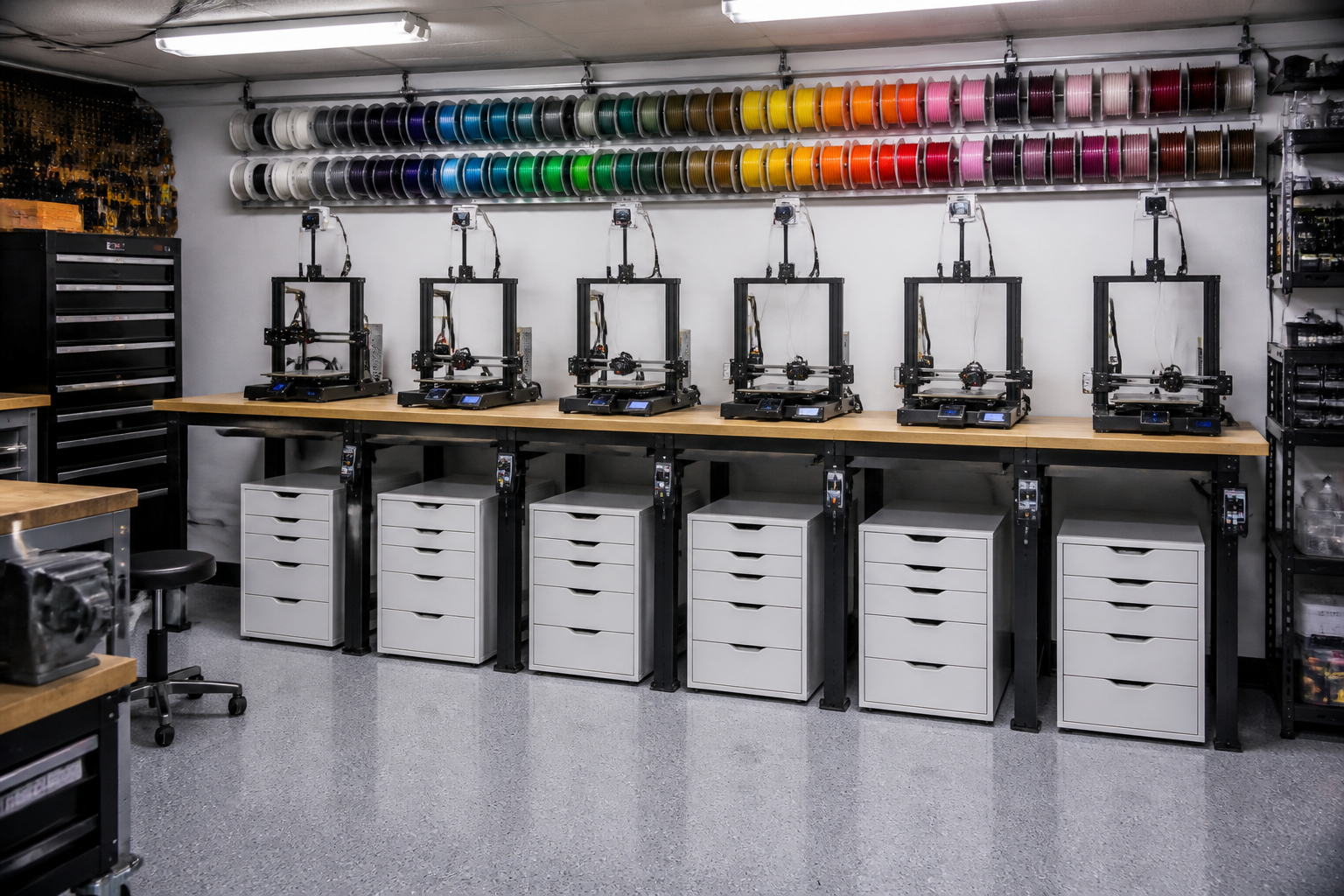
Running multiple printers simultaneously requires remote monitoring, and this farm uses individual Pi cameras for each machine. The adjustable workbench brings all printers to comfortable viewing height while white storage drawers below organize completed parts by project. Color-coded filament bins prevent loading the wrong material mid-print.
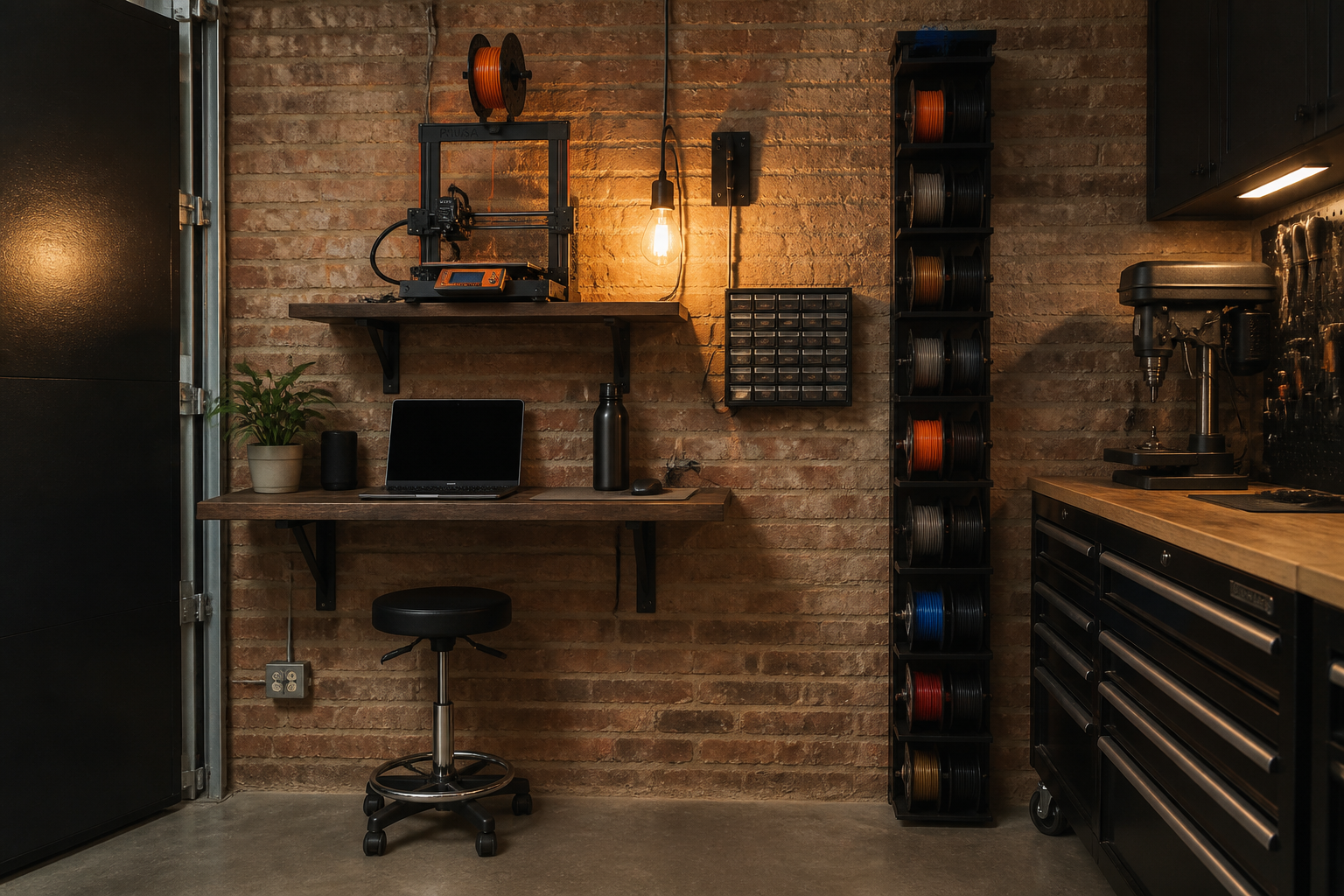
When floor space is tight, this wall-mounted approach keeps a single printer elevated and stable. The floating shelf design reduces vibration transfer while the laptop station below handles slicing and monitoring. A narrow vertical tower stores a dozen filament spools without eating up valuable square footage.
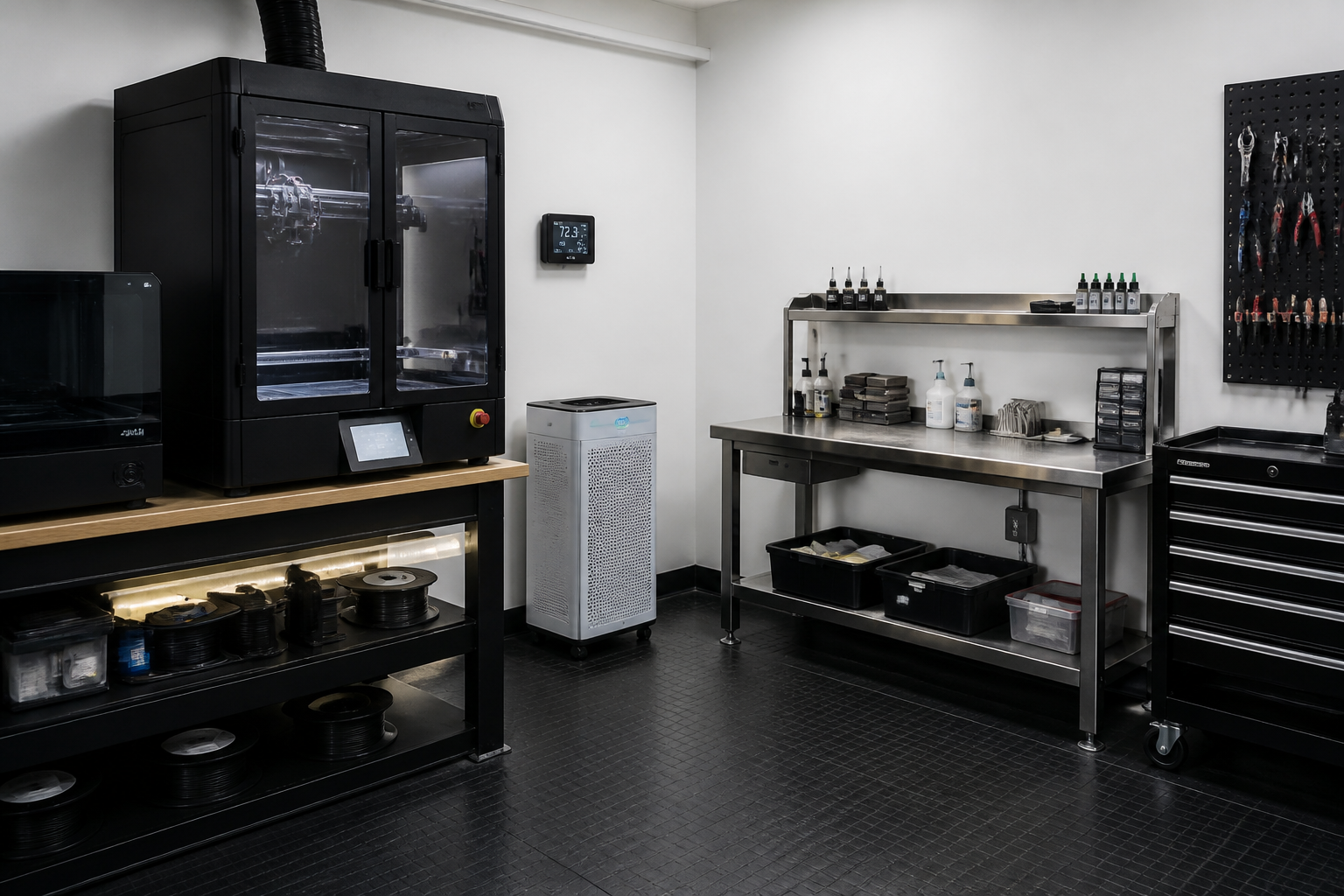
High-temperature materials like nylon and polycarbonate need environmental stability, which this enclosed chamber setup provides. Wall-mounted sensors track temperature and humidity while a HEPA filtration system clears ultrafine particles. The stainless post-processing bench handles sanding, priming, and acetone smoothing with proper ventilation.
Heavy-Duty Fabrication Benches
Serious metalworking and woodworking demand benches that won’t flex, wobble, or complain when you’re beating on something with a hammer. I built my first fabrication bench from 2×6 lumber and regretted it within a month when the surface started sagging. Steel-framed benches with hardwood or metal tops handle the abuse without breaking your budget. These designs include integrated vises, tool storage, and power distribution that keeps your workflow efficient. If you’re building your own, check out the DIY garage workbench guide for construction tips that actually hold up.
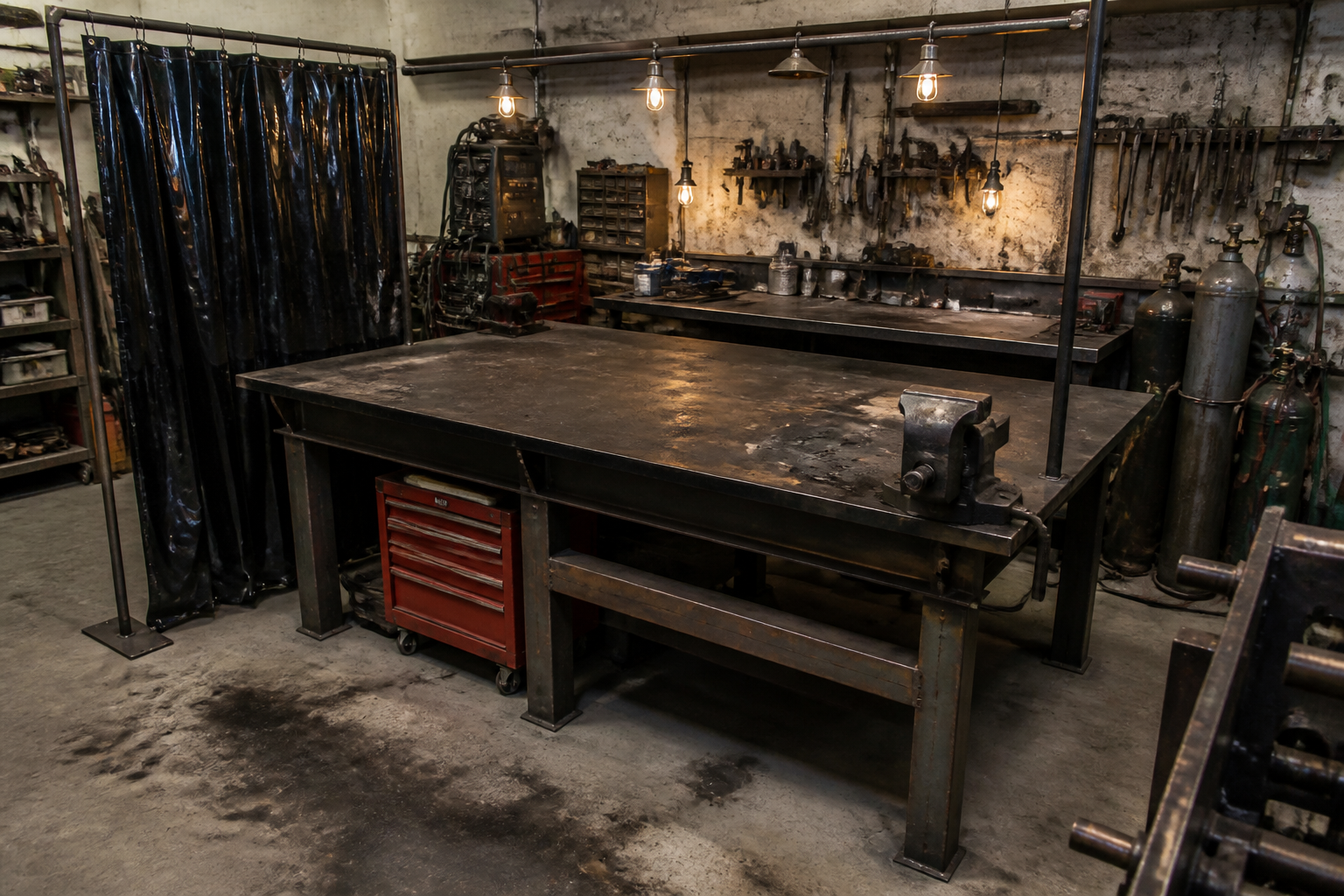
This welding table’s 3/8-inch steel top takes direct torch work without warping or damage. The built-in vise mounts flush with the surface, and the overhead curtain rod system protects nearby tools from spatter. Rolling toolboxes underneath keep consumables and clamps accessible without cluttering the work surface.
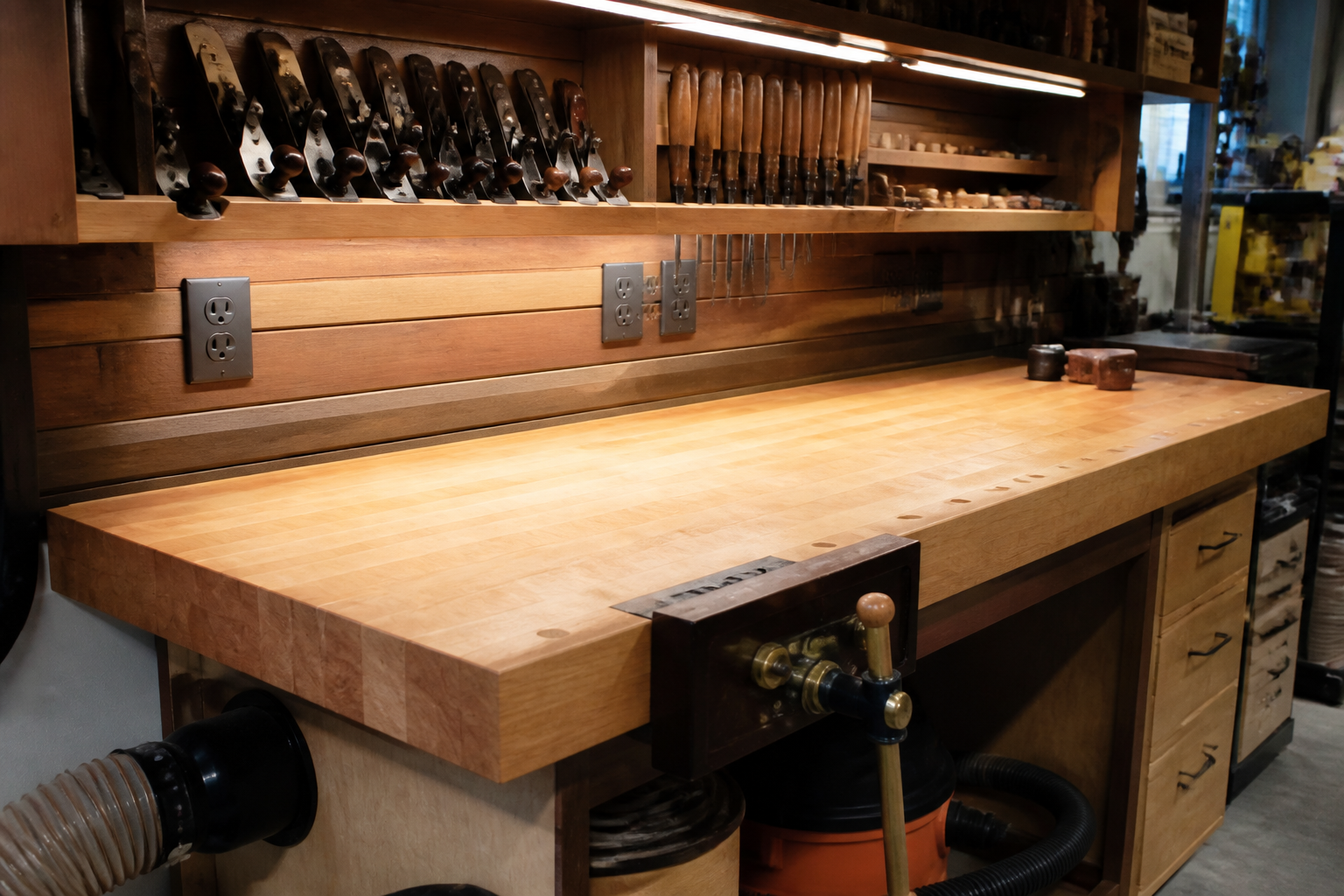
Thick butcher block absorbs vibration during hand tool work while resisting dents from dropped parts. The front-mounted vise handles everything from dovetailing to metalwork, and integrated power outlets eliminate extension cord chaos. French cleat storage keeps hand tools organized and visible on the wall behind the bench.
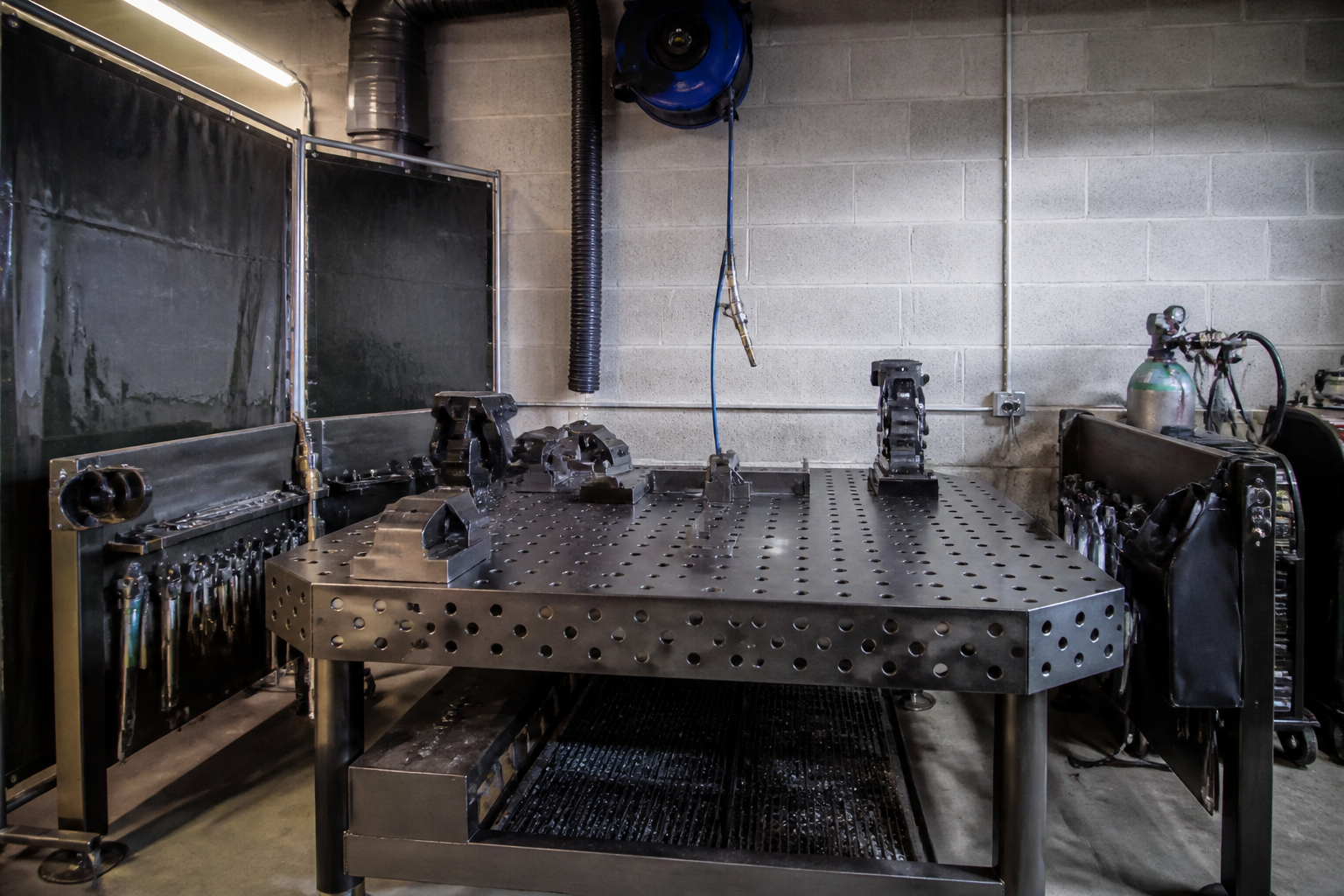
The perforated top on this bench lets you clamp work anywhere using dog holes and quick-release vises. Overhead pneumatic reels keep air tools ready without floor-level hose tangles. Magnetic strips on the side panels grab drill bits, taps, and small tools while a collection tray underneath catches metal shavings before they reach the floor.
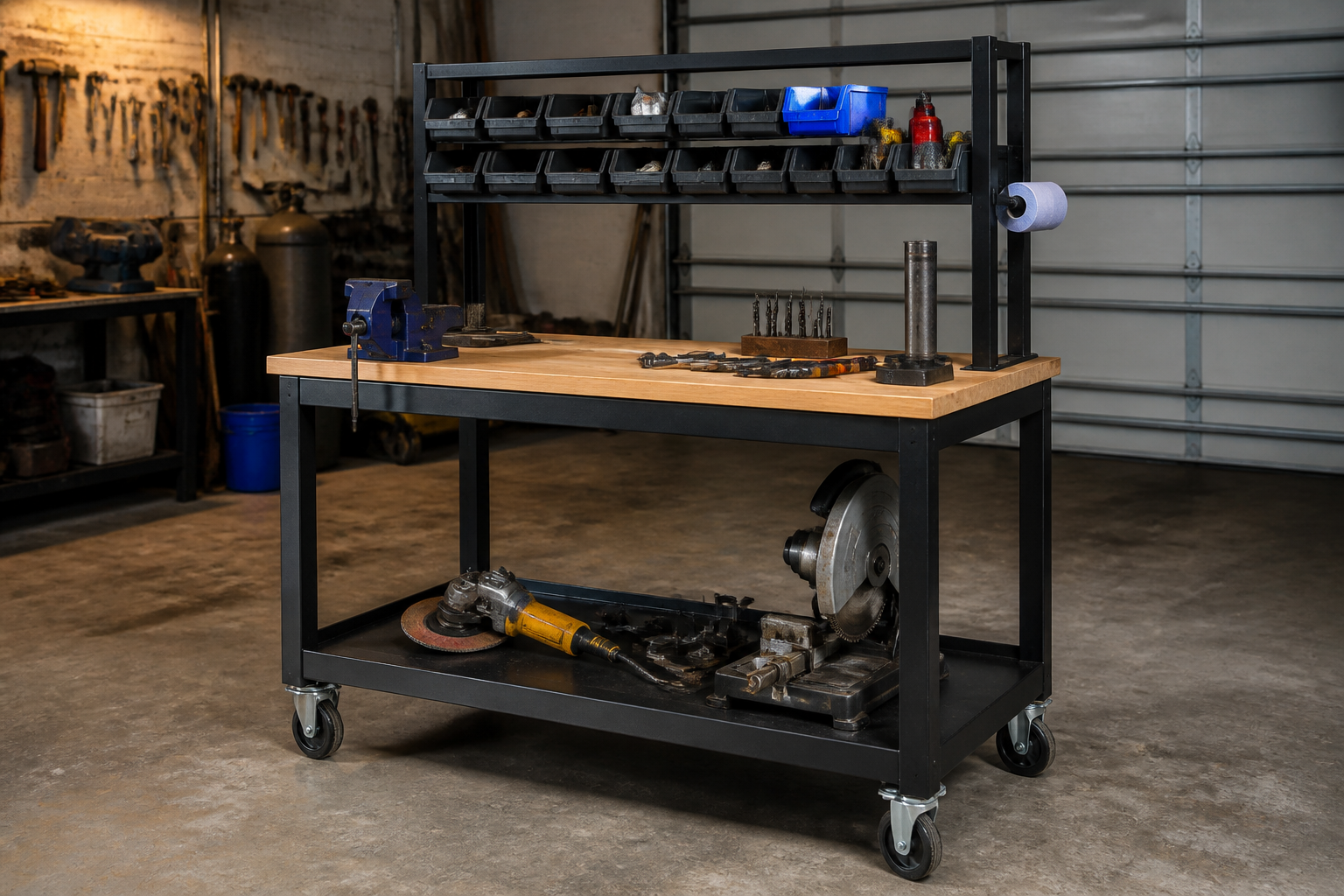
Locking casters give this bench the flexibility to move wherever the project demands, then lock solid when you need stability. The rolling cart design stacks three working levels for active projects, power tools, and small parts. Heavy-duty wheels handle the weight of a full metal vise and loaded tool shelves.
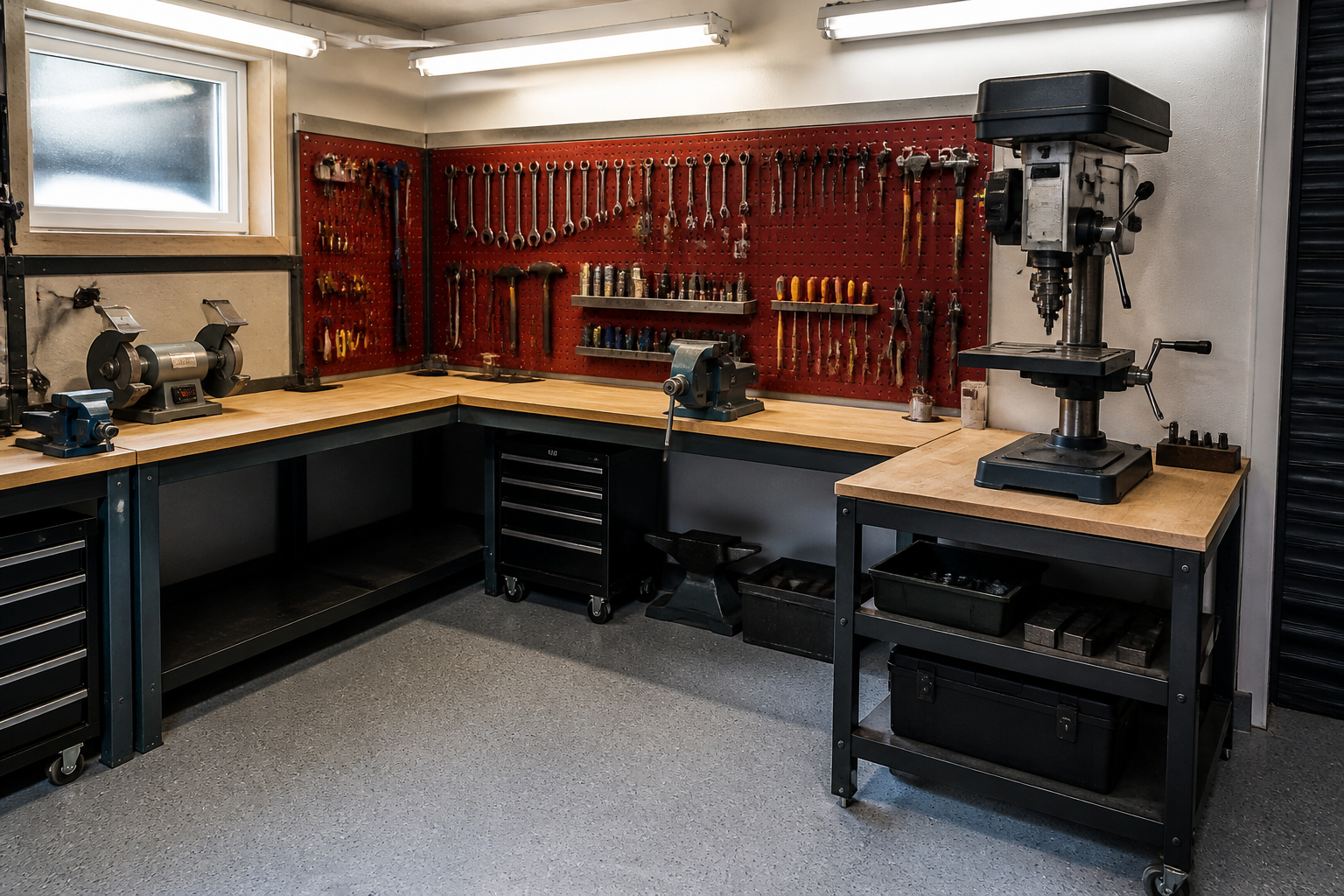
L-shaped benches make efficient use of corner space while giving you dedicated zones for different operations. This setup permanently mounts a drill press and bench grinder at the ends while keeping the center clear for assembly and layout work. The continuous work surface eliminates the gaps you get with separate benches pushed together.
Electronic Repair Stations
Electronics work demands good lighting, ESD protection, and organized component storage that won’t make you crazy searching for a single resistor. I’ve repaired everything from vintage guitar amps to circuit boards in my garage, and the right station setup cuts troubleshooting time in half. Proper magnification, fume extraction for soldering, and compartmentalized storage turn frustrating repairs into manageable projects. These stations range from compact SMD rework areas to full bench setups for larger equipment. Most incorporate power supplies, oscilloscopes, and multimeters in fixed positions so you’re not constantly hunting for test equipment.
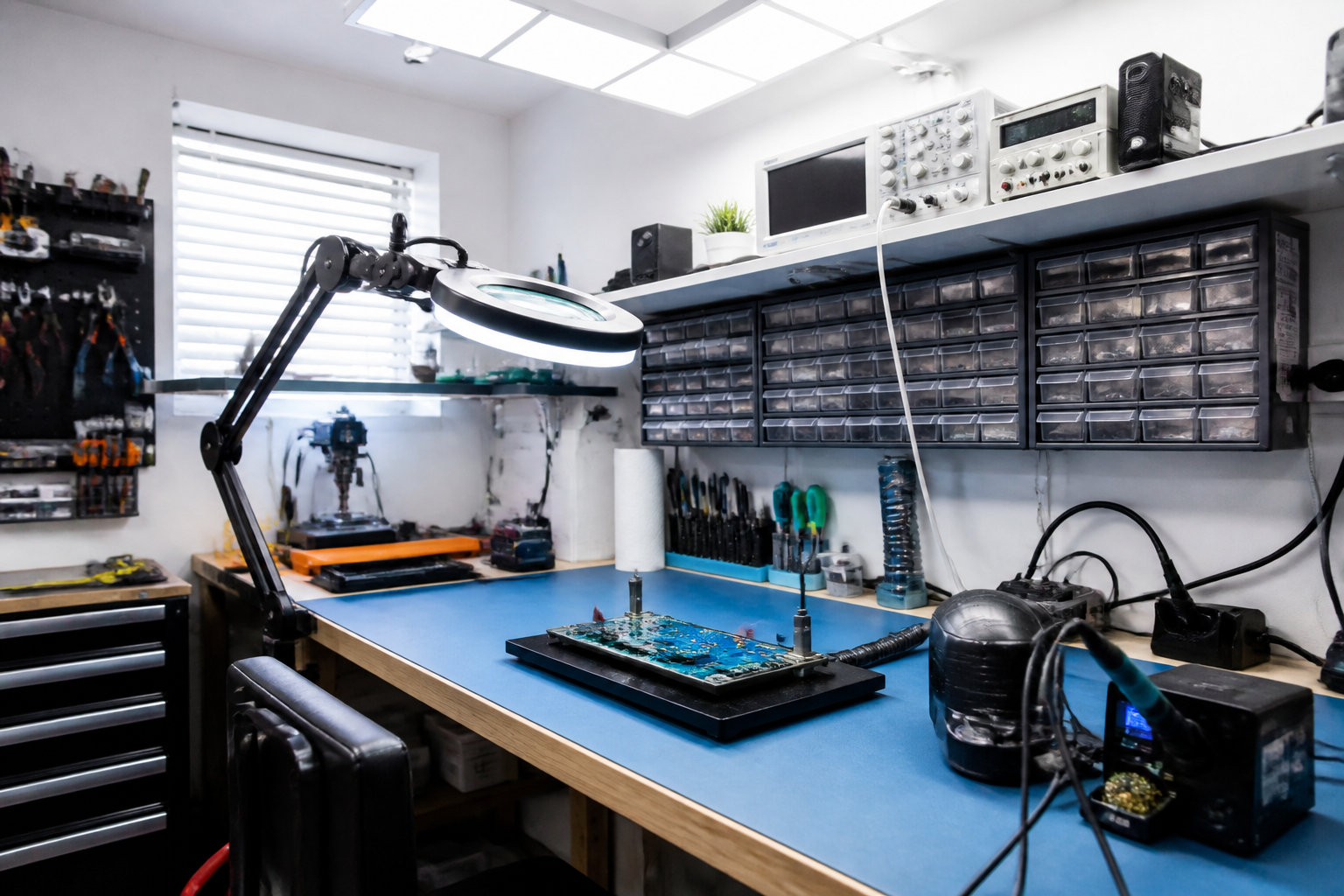
This station centers around a quality magnifying lamp that makes SMD work possible without eye strain. The fume extractor pulls solder smoke away from your face while the ESD mat protects sensitive components. Wall-mounted organizers keep resistors, capacitors, and ICs sorted by value where you can actually find them.
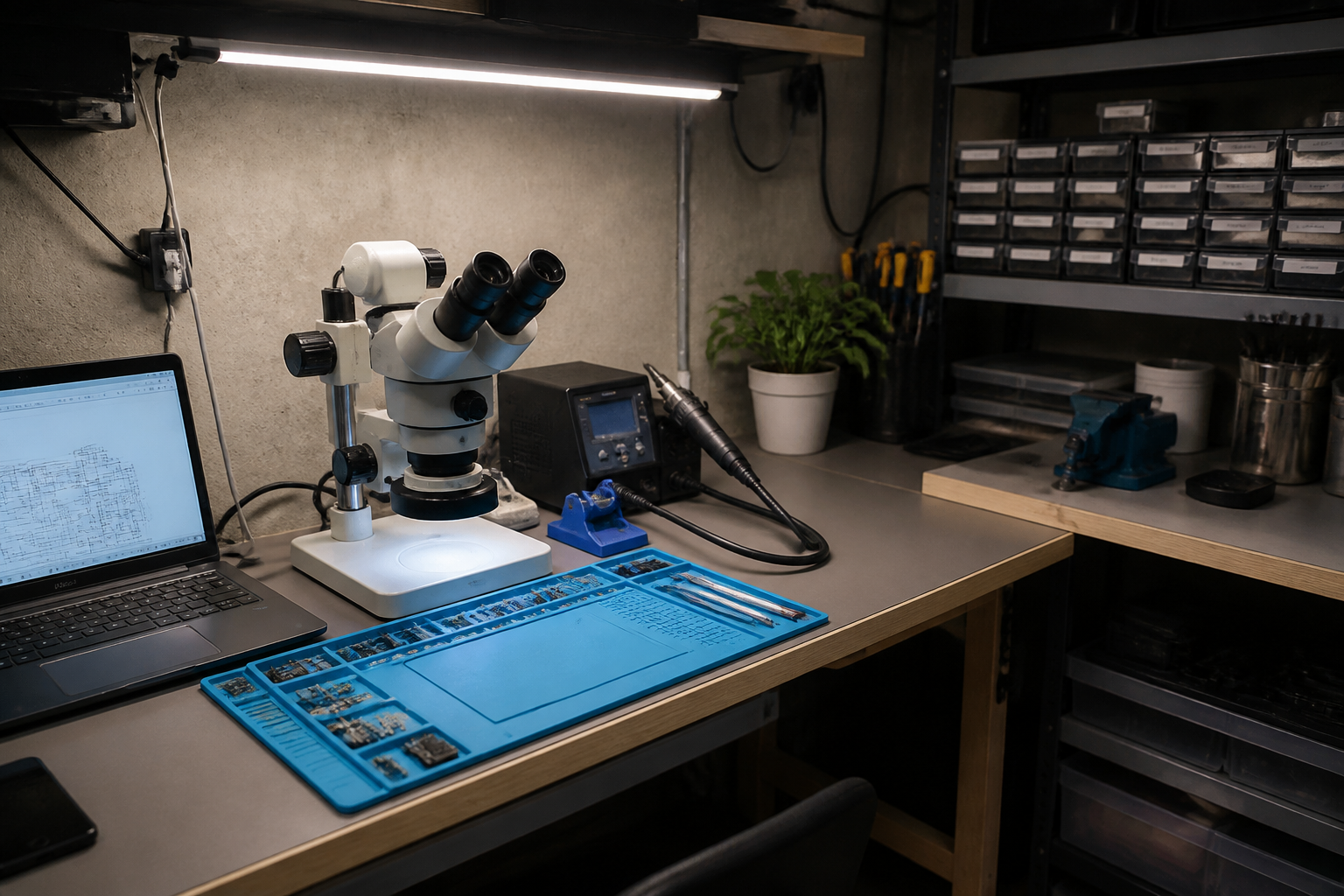
Modern surface-mount work requires magnification beyond what a lamp provides, which is where this microscope setup shines. The hot air rework station handles chip removal and installation while silicone mats prevent components from rolling away. A laptop displaying schematics eliminates printing dozens of pages for each repair.
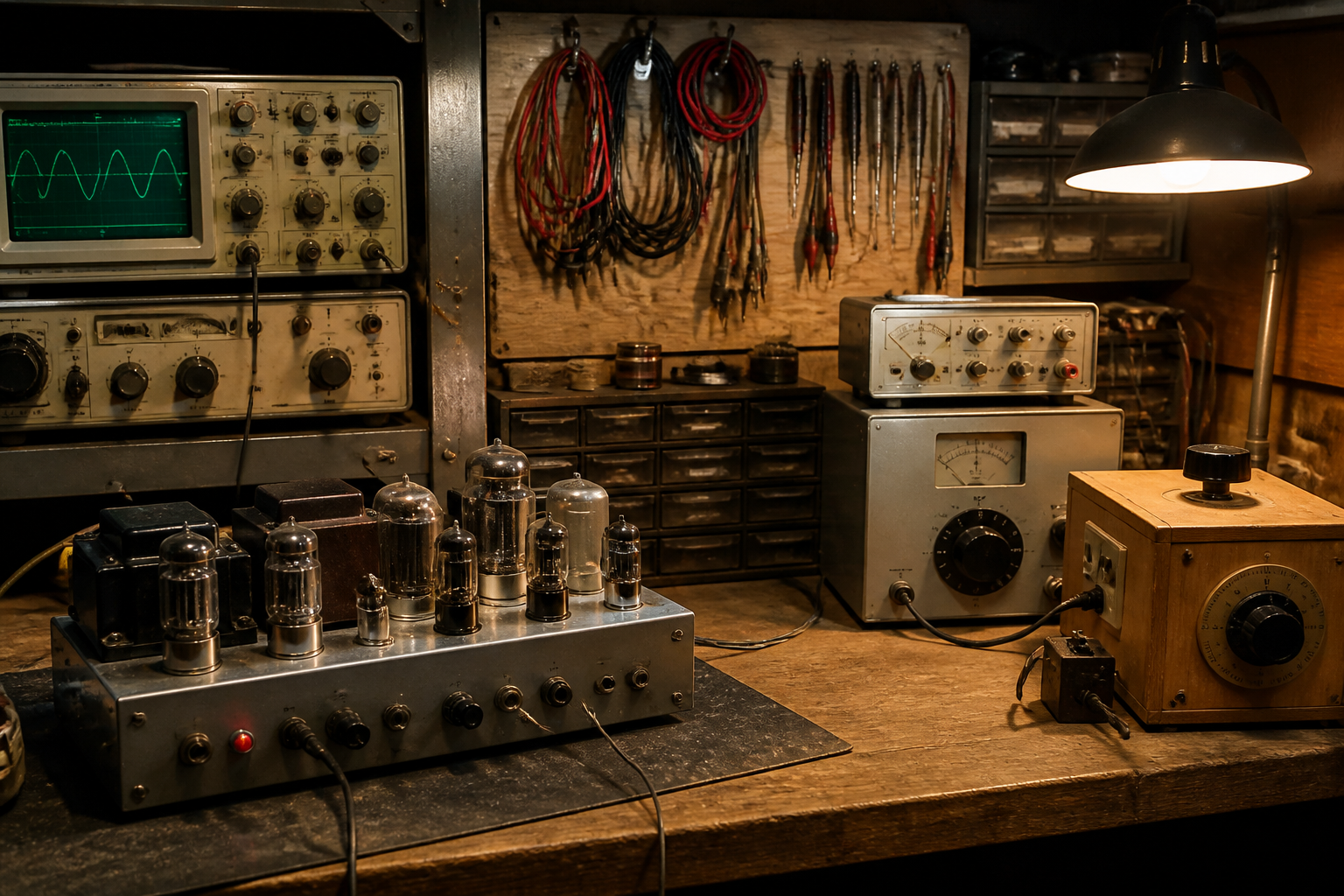
Repairing vintage gear demands period-appropriate test equipment that won’t damage sensitive tube circuits. This bench keeps an isolation transformer and variac permanently wired for safe high-voltage work. Analog scopes and signal generators match the era of the equipment being serviced while hooks keep test leads untangled.
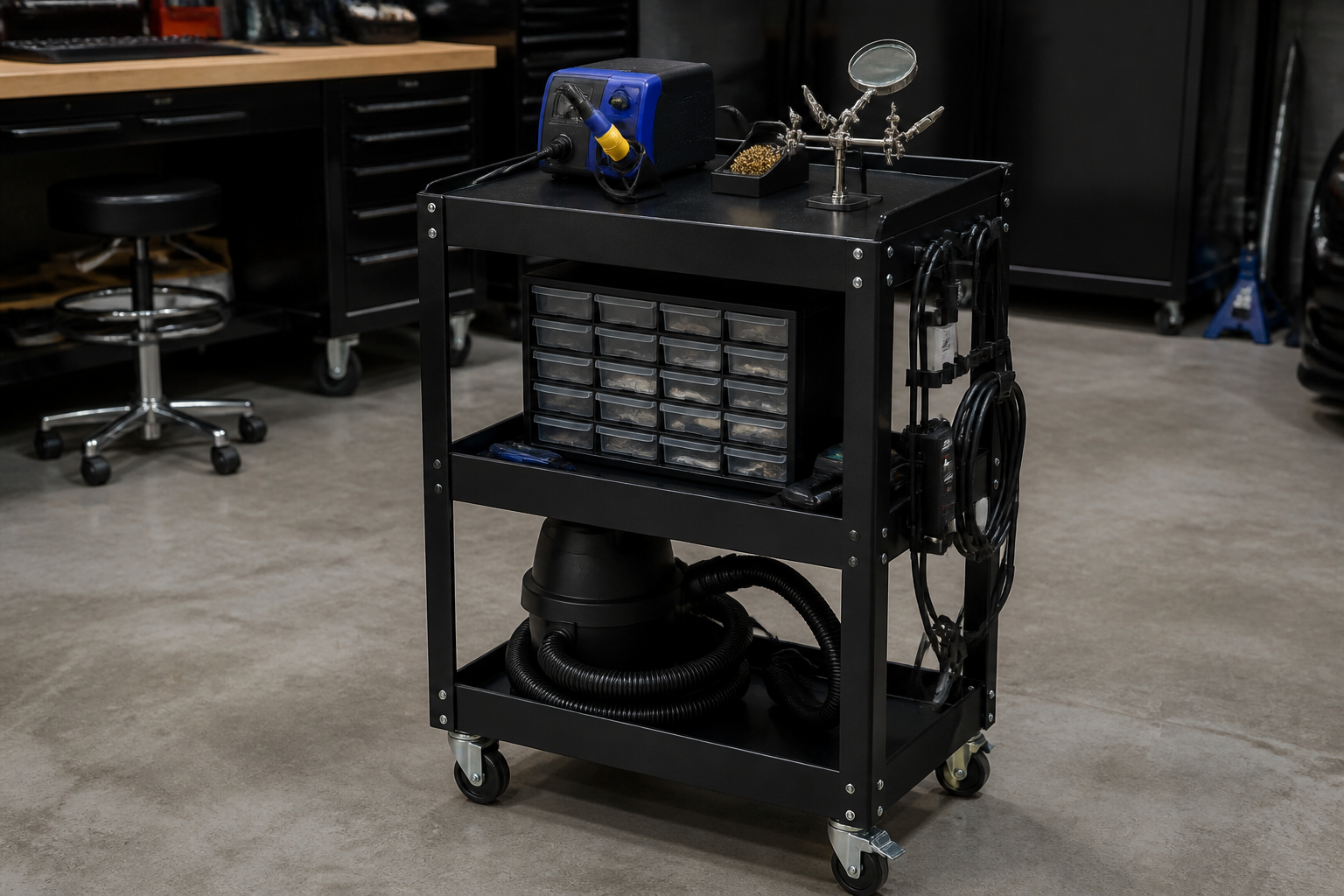
A mobile cart brings your entire repair station to wherever the broken equipment sits instead of hauling heavy amplifiers across the garage. Three tiers separate active work, component storage, and cleanup tools. The pegboard tool organization principle works great on the cart sides for frequently-grabbed items like flush cutters and tweezers.
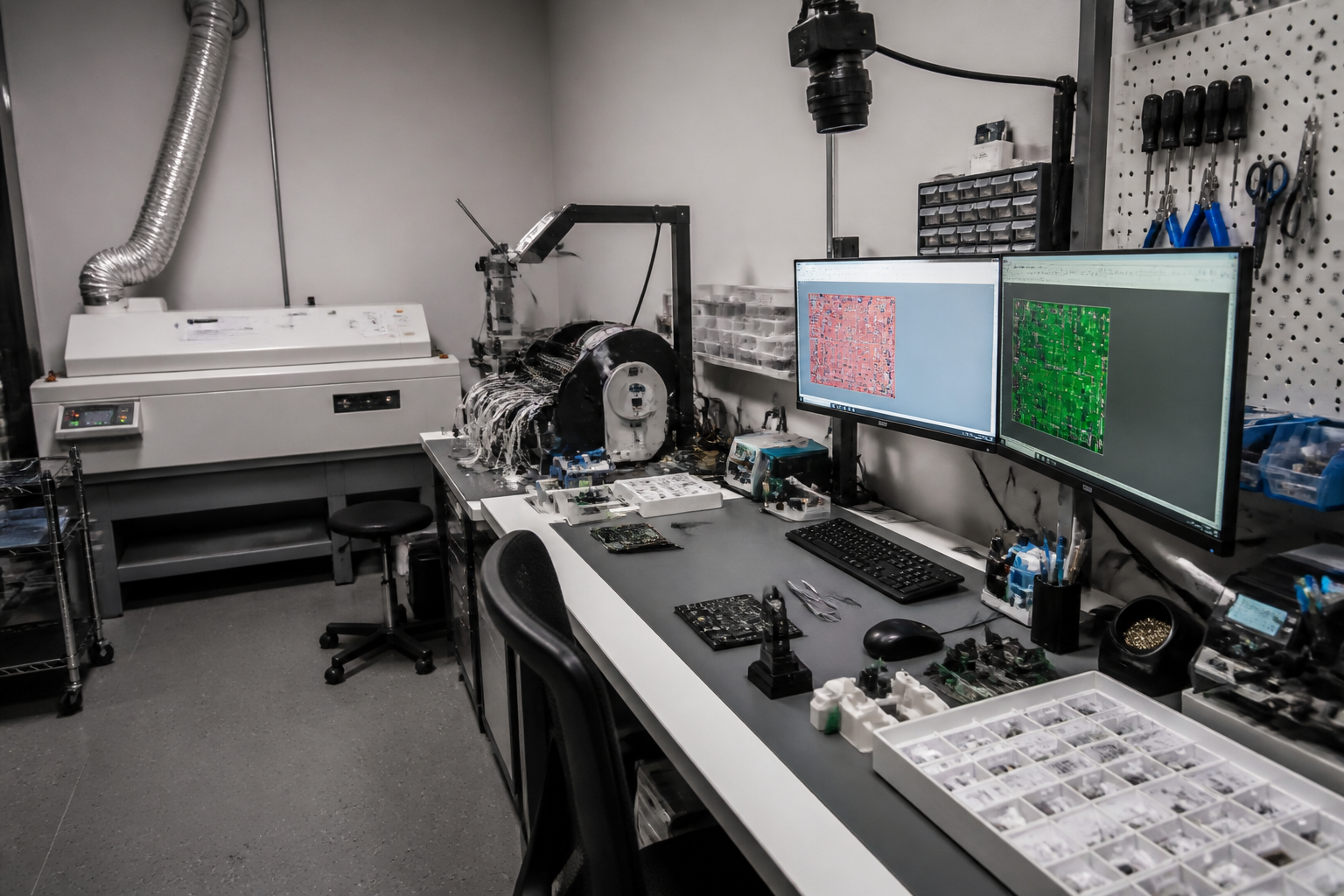
Production-level prototyping moves beyond hand soldering into reflow and automated placement territory. This setup handles everything from initial breadboarding through small production runs with proper SMD reflow equipment. Dual monitors let you reference layouts while positioning components, and an overhead camera documents each build step for repeatable results.
