

As an Amazon Associate I earn from qualifying purchases.
Pegboards are one of the best things you can add to a garage wall. They keep tools visible, accessible, and off the floor without eating up floor space. In this article I’m covering 16 garage pegboard ideas grouped into four sub-themes: tool wall layouts, color-coded systems, metal vs wood pegboards, and accessory and hook setups.
Tool Wall Layouts
How you arrange your pegboard matters just as much as which tools you hang on it. A well-planned tool wall layout puts the things you reach for most within arm’s reach and groups related items so you’re not hunting around mid-project. I always recommend sketching a rough layout before you start drilling hooks in place. If you’re starting from scratch and want a step-by-step walkthrough, my guide on how to install pegboard for tool organization in your garage covers everything from stud spacing to standoff hardware. The four layouts below show different approaches depending on your garage size and the types of tools you’re working with.
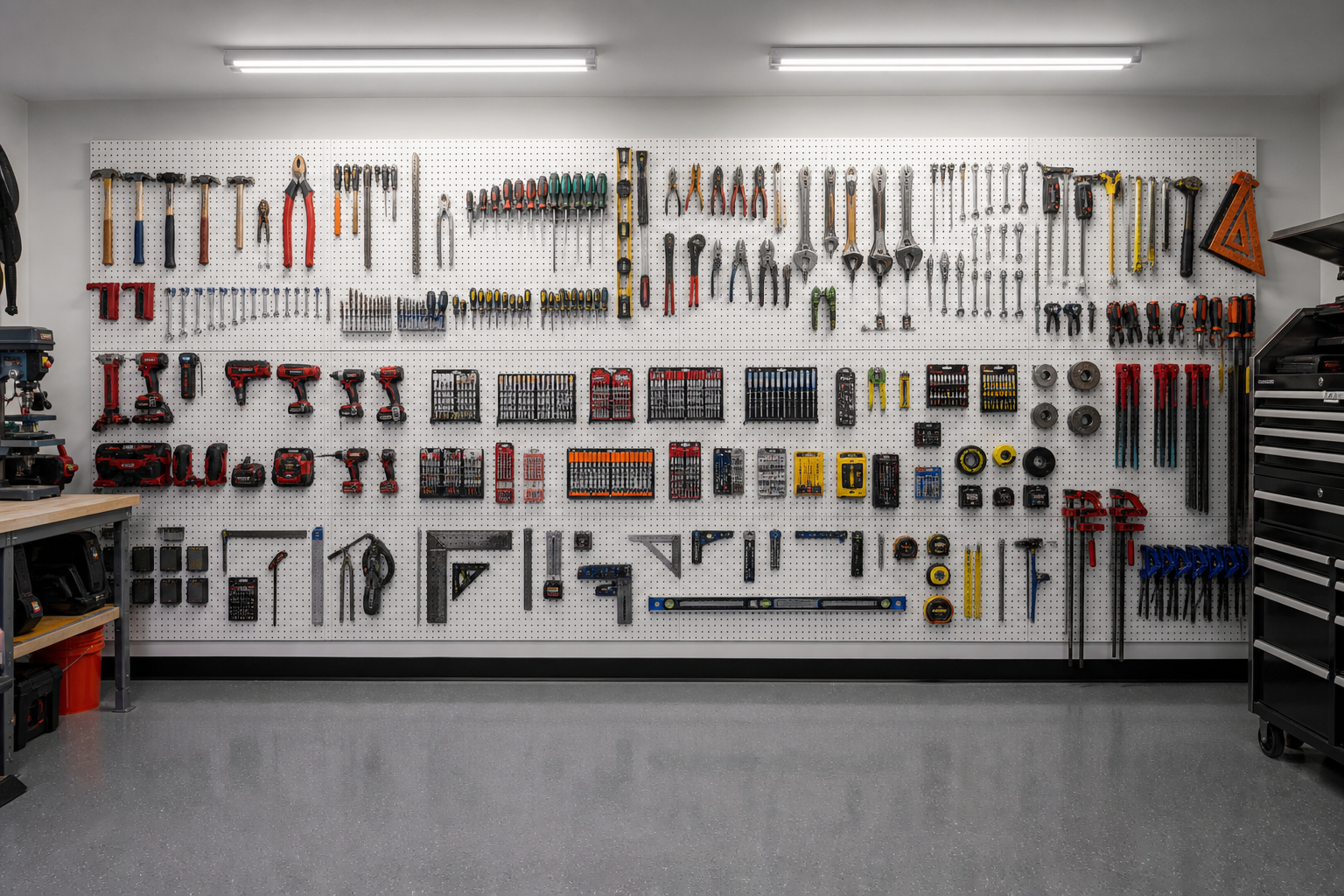
Horizontal zoning is one of the most practical layouts for a large pegboard wall. You assign each row or band to a category, so your hand tools are always at eye level and smaller accessories stay grouped below. Good garage lighting design makes a big difference here since every tool needs to be visible at a glance.
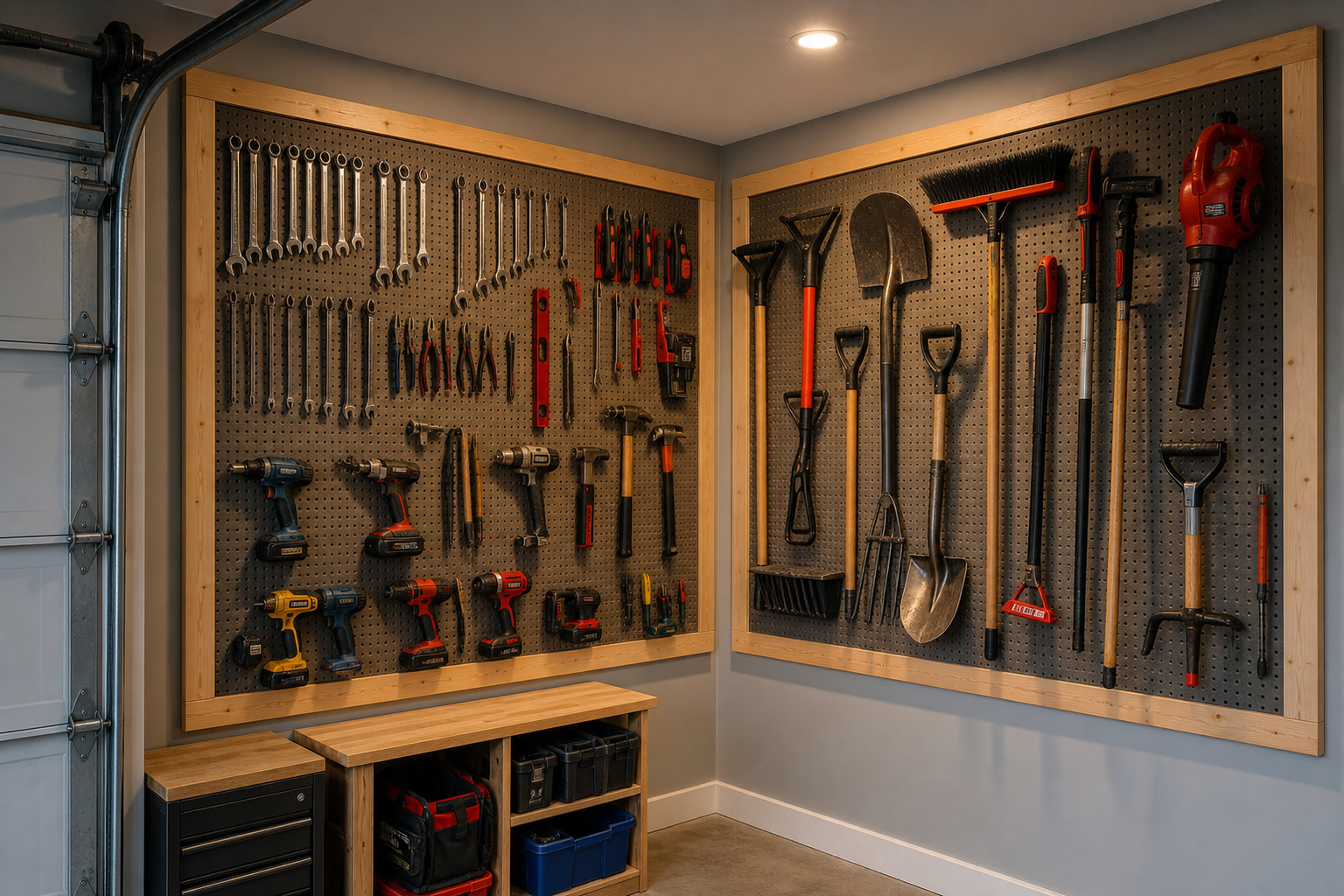
Corner layouts make use of wall space that often goes completely wasted in most garages. Two panels meeting at a right angle let you separate tool categories cleanly without mixing them together on one crowded board. This kind of setup pairs well with a broader garage zoning strategy where each wall serves a specific purpose.
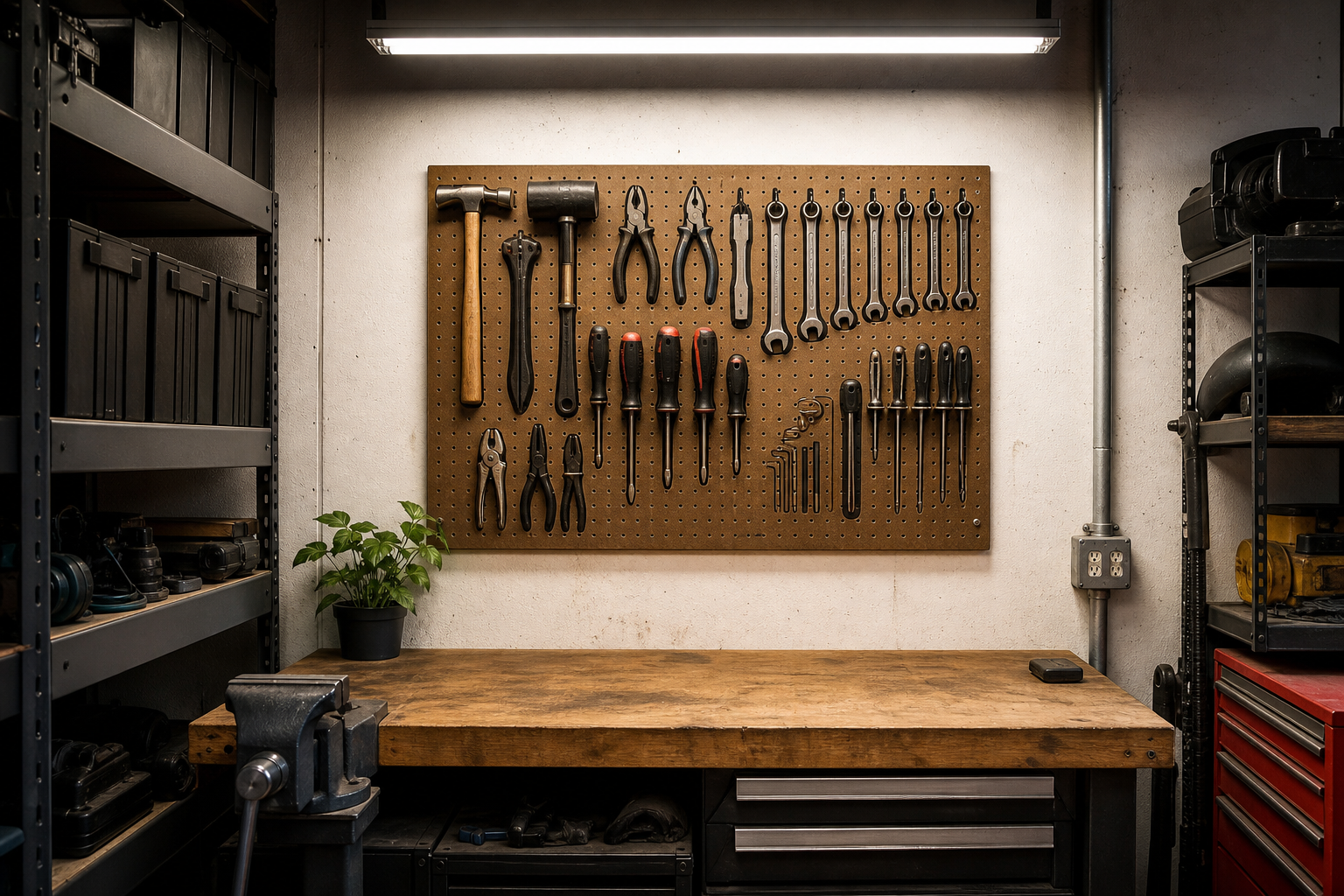
Above-the-workbench layouts work especially well when you only have a limited wall section to work with. Painting silhouettes behind each tool takes a few extra minutes but makes it instantly obvious when something is missing or put back in the wrong spot. If your garage is on the smaller side, there are more space-saving strategies worth exploring in this guide to small garage organization.
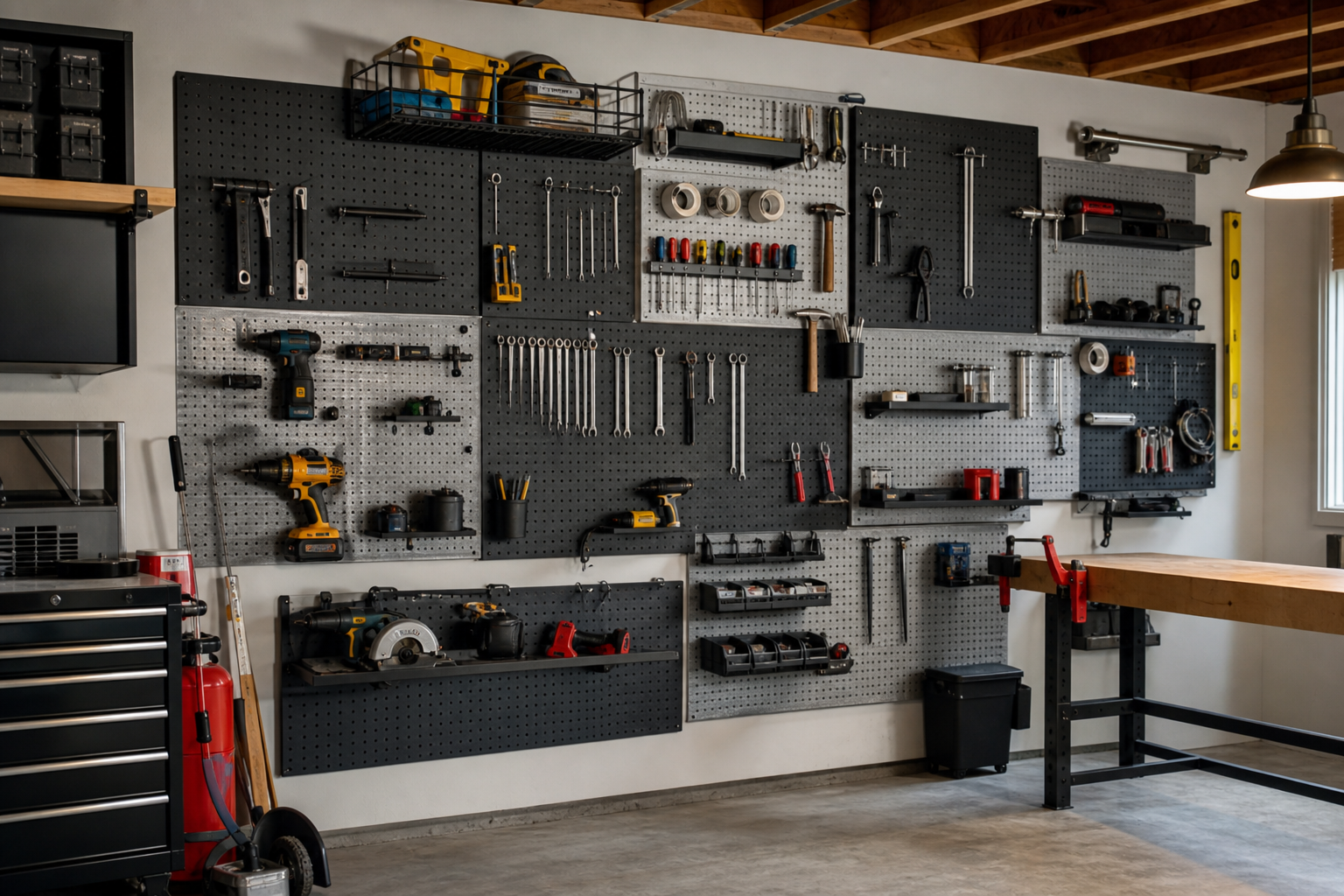
Staggered modular panels give you flexibility that a single large board doesn’t. You can add, move, or replace individual sections as your tool collection grows without redoing the whole wall. The mix of panel heights also creates visual interest and lets you tailor each section’s hook density to the tools it holds.
Color-Coded Systems
Color coding a pegboard system sounds like extra work, but once it’s done it genuinely speeds up how fast you can find and return tools. The most common approach is to paint the pegboard itself in a background color and then use colored hooks or tape to mark where each tool category lives. Some people go further and color-code the tools themselves with colored tape on the handles. I’ve seen this work especially well in shared garages or shops where more than one person is putting tools back . If you want to explore more ways to use color and visual systems across your whole garage, there are some great ideas in this pegboard ideas guide that covers the home as well as the garage.
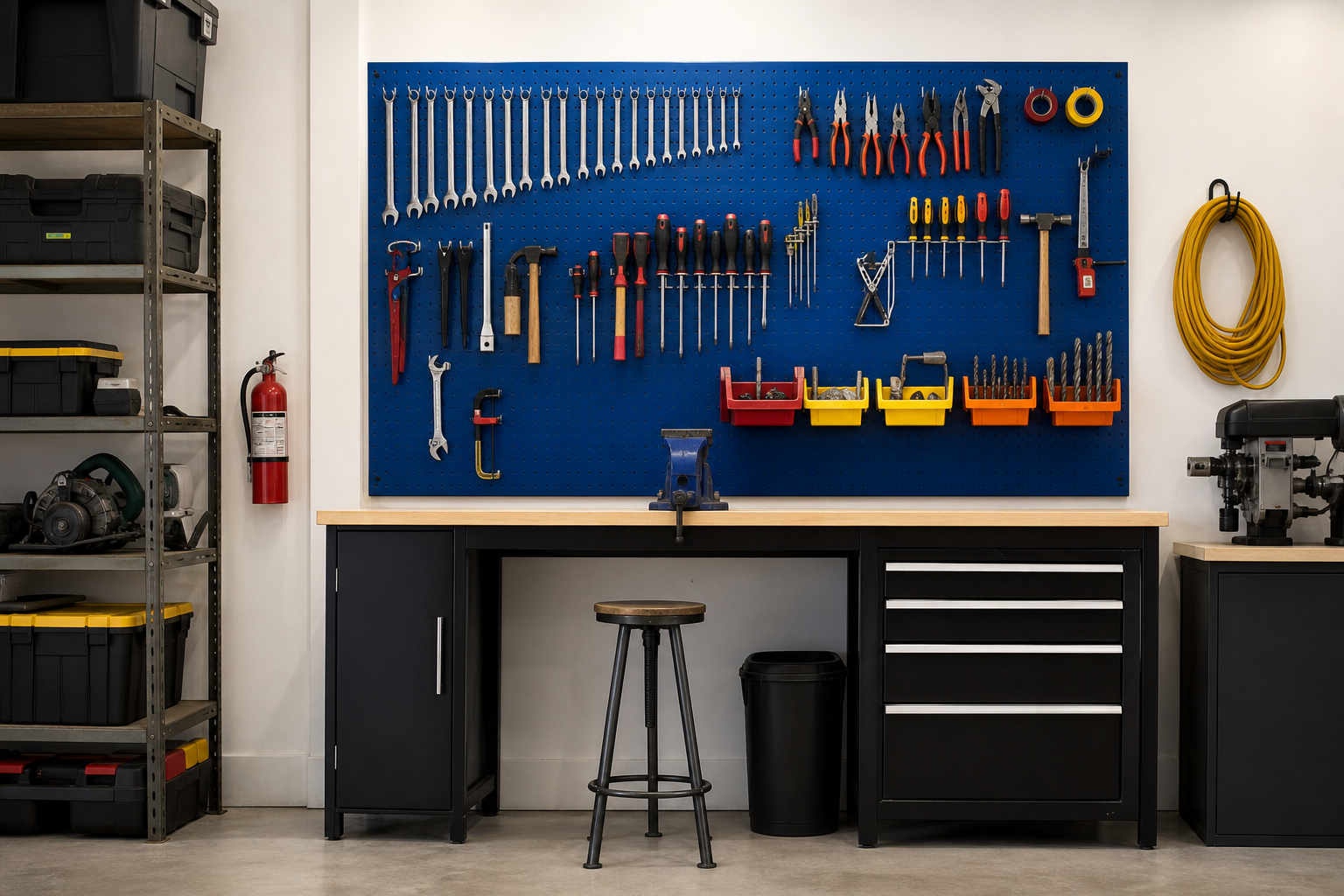
A bold blue background makes every tool pop visually and gives the whole wall a crisp, intentional look. Matching colored bins to the tape on each tool’s handle means anyone in the household can sort tools without having to memorize a system. The contrast between the blue board and the bright tool handles is both functional and genuinely good-looking.
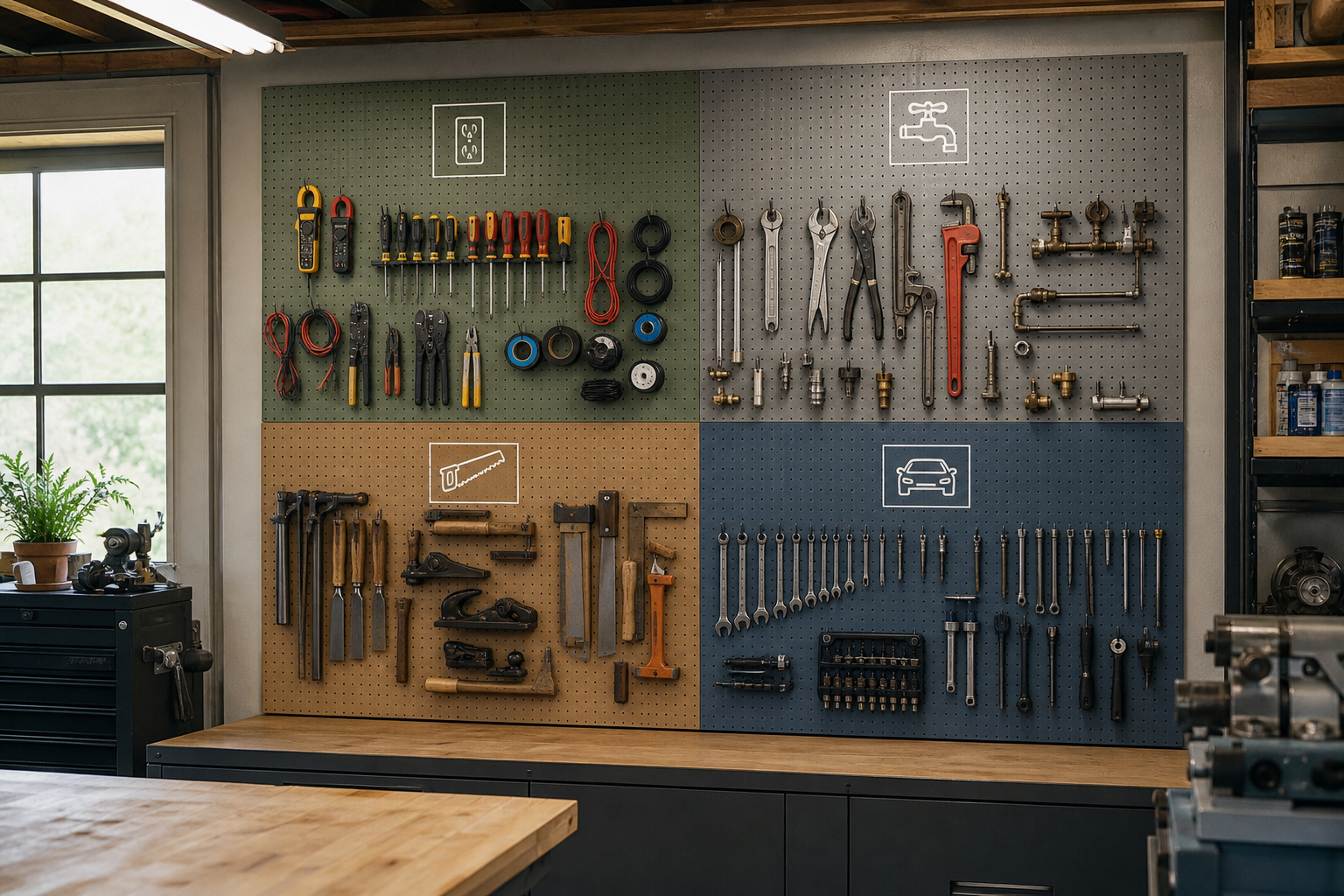
Dividing a single large pegboard into color-blocked quadrants is a smart way to visually separate tool categories without needing multiple boards. The muted palette keeps it looking calm and organized rather than chaotic. Each zone functions almost like its own mini-station, which makes the board easy to scan when you’re in the middle of a project.
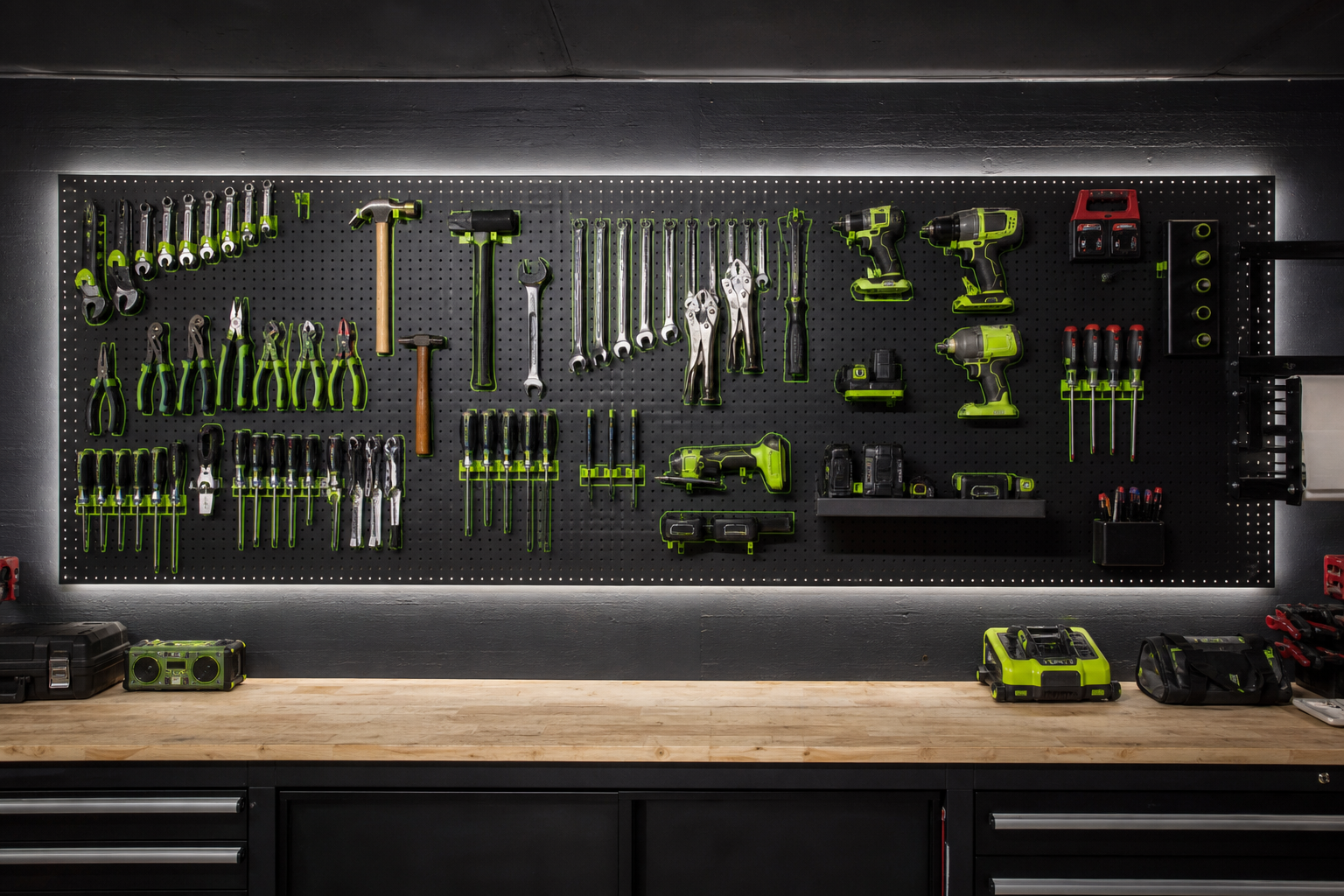
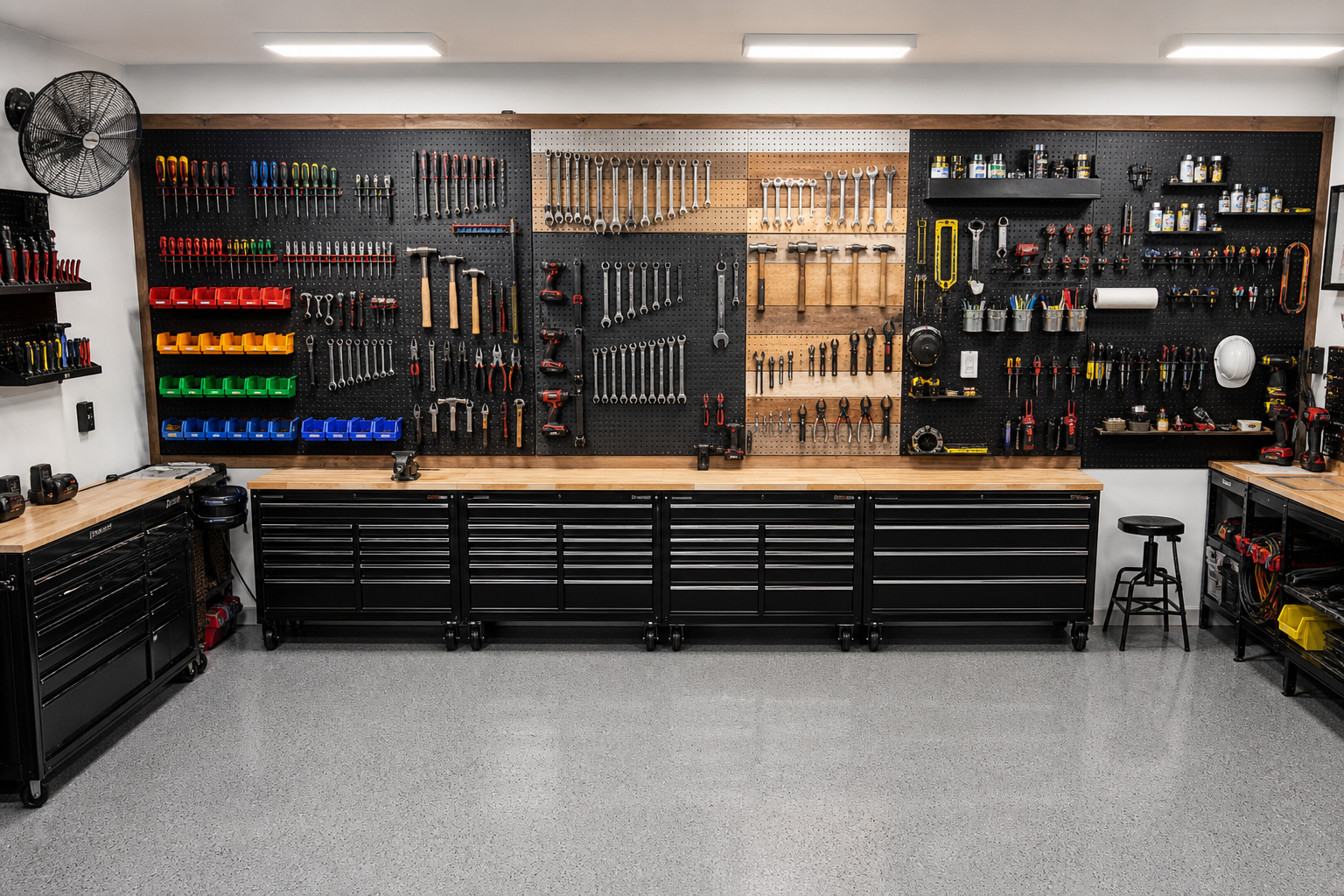
Black boards with neon accents have become popular in workshop and garage makeover content, and it’s easy to see why. The high contrast makes outlines and labels legible from across the room. Pairing this look with LED garage wall lighting behind or around the board adds depth and keeps the whole wall well-lit even in a darker garage.
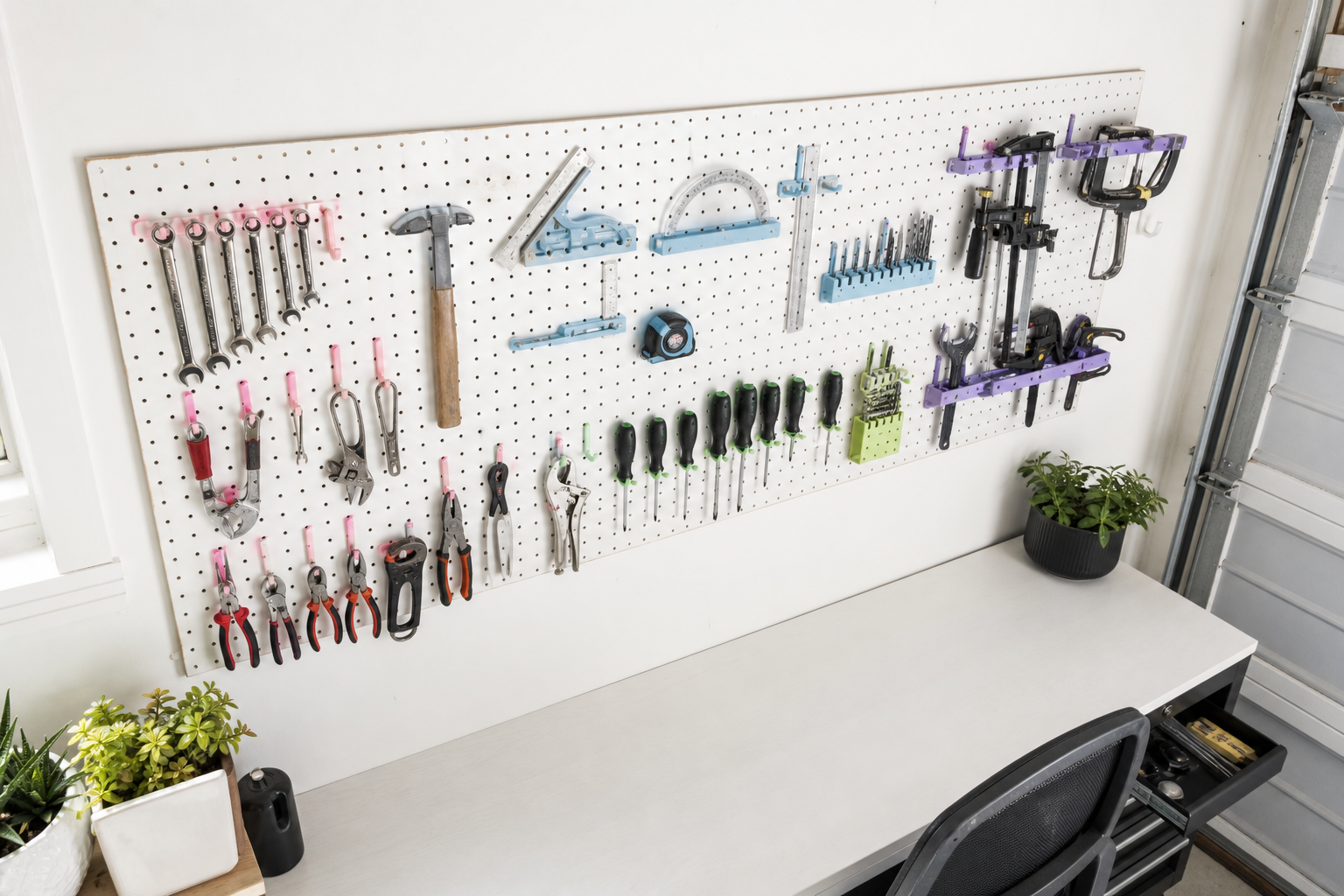
Pastel hook colors on a white board create a clean, low-key system that works well in a finished or multi-use garage where you don’t want the tool wall to feel overwhelming. The colors are subtle enough that the space still feels polished, but distinct enough to use as a real organizational guide. It’s the kind of setup that makes a shared garage feel a lot more approachable for everyone using it.
Metal vs Wood Pegboards
The board material you choose affects how your garage looks, how much weight your setup can hold, and how long it will last. Metal pegboards, usually steel, are stronger, moisture-resistant, and tend to give off a more industrial or professional workshop vibe. Wood pegboards are warmer-looking, easier to cut to size, and simple to paint or stain to match the rest of your garage. Both have real advantages depending on your situation. I’ve done a deeper comparison of these materials and others in my garage pegboard systems buying guide if you want to get into the specifics before committing. The four ideas below show how each material can look in a real garage setting.
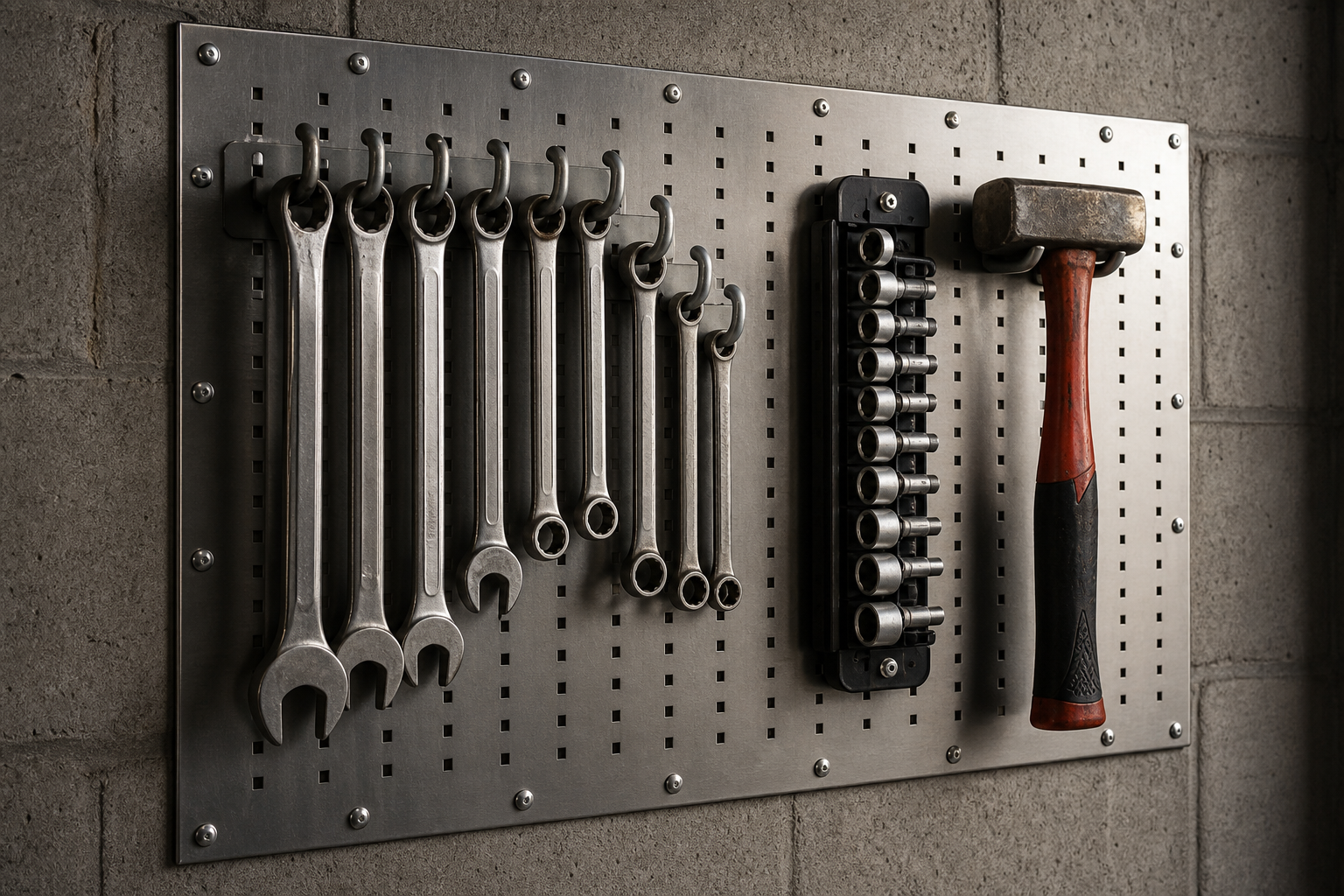
Steel pegboards handle heavy tools without flexing or bowing, which is a real limitation you can run into with standard hardboard over time. The brushed silver finish here gives the wall a professional shop look that holds up in a working garage. If you’re storing a full set of mechanics tools, metal is hard to beat for sheer holding strength and long-term durability.
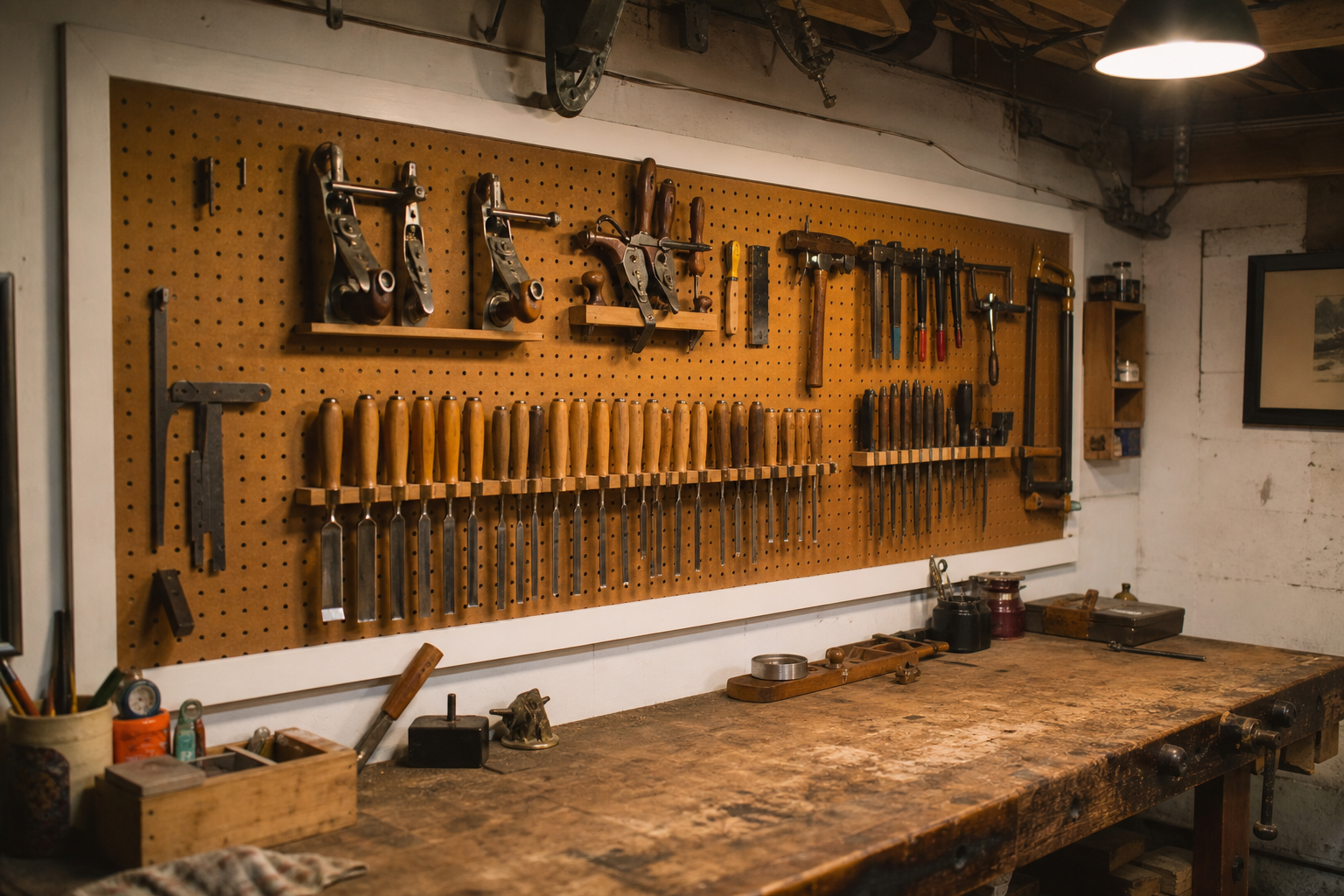
Plywood pegboard is a popular DIY choice because you can drill the holes exactly where you want them and cut the board to any shape. Staining it in a warm oak tone turns a functional tool wall into something that actually looks like it belongs in a finished space. This approach works especially well in a woodworking shop where the warm wood tones match the materials you’re already working with.
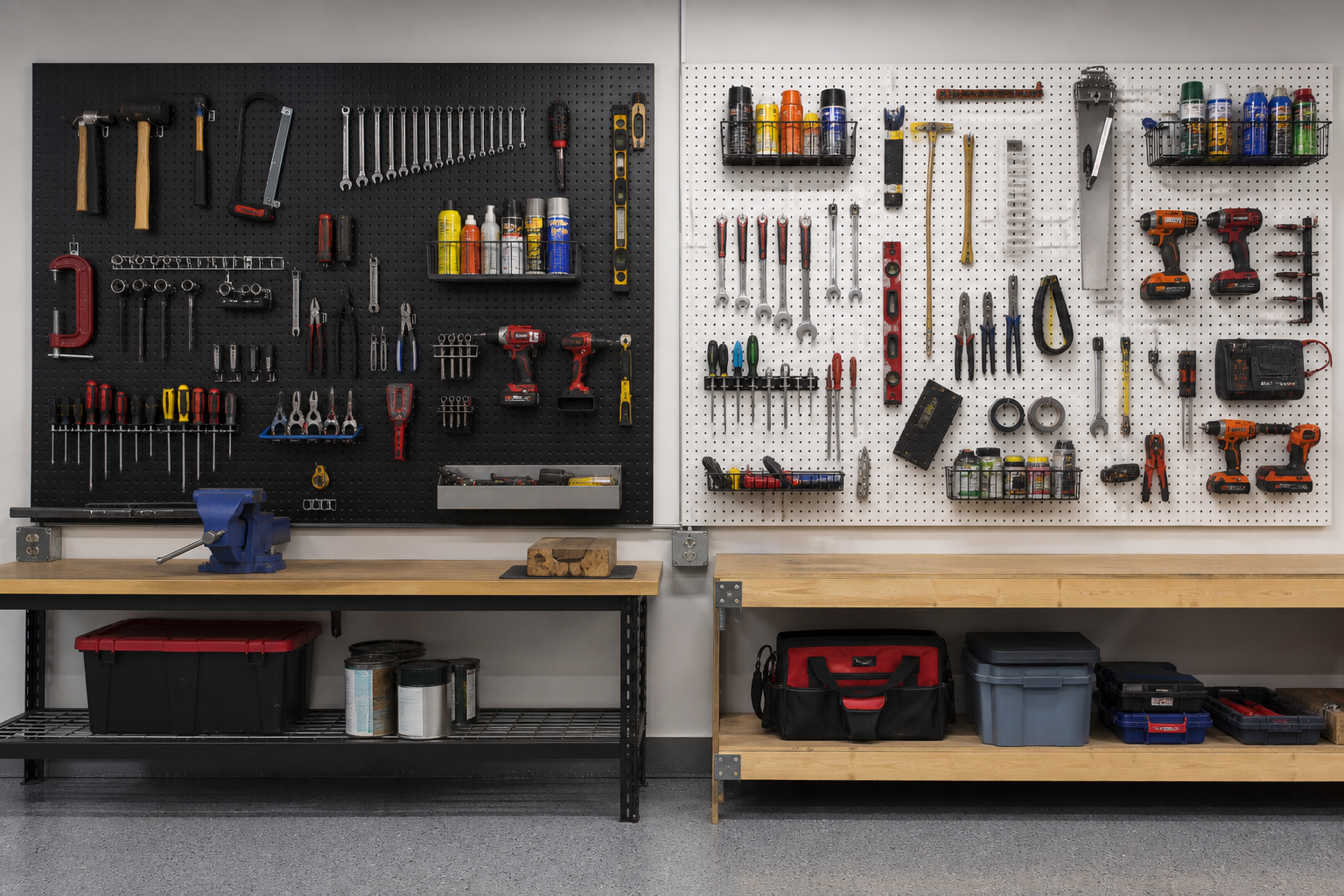
Seeing both materials next to each other makes the differences clear at a glance. The steel side looks denser and more industrial while the hardboard side feels lighter and more approachable. If you’re still deciding between the two, the Wall Control pegboard review on this site goes into detail on one of the most popular metal panel systems available right now.
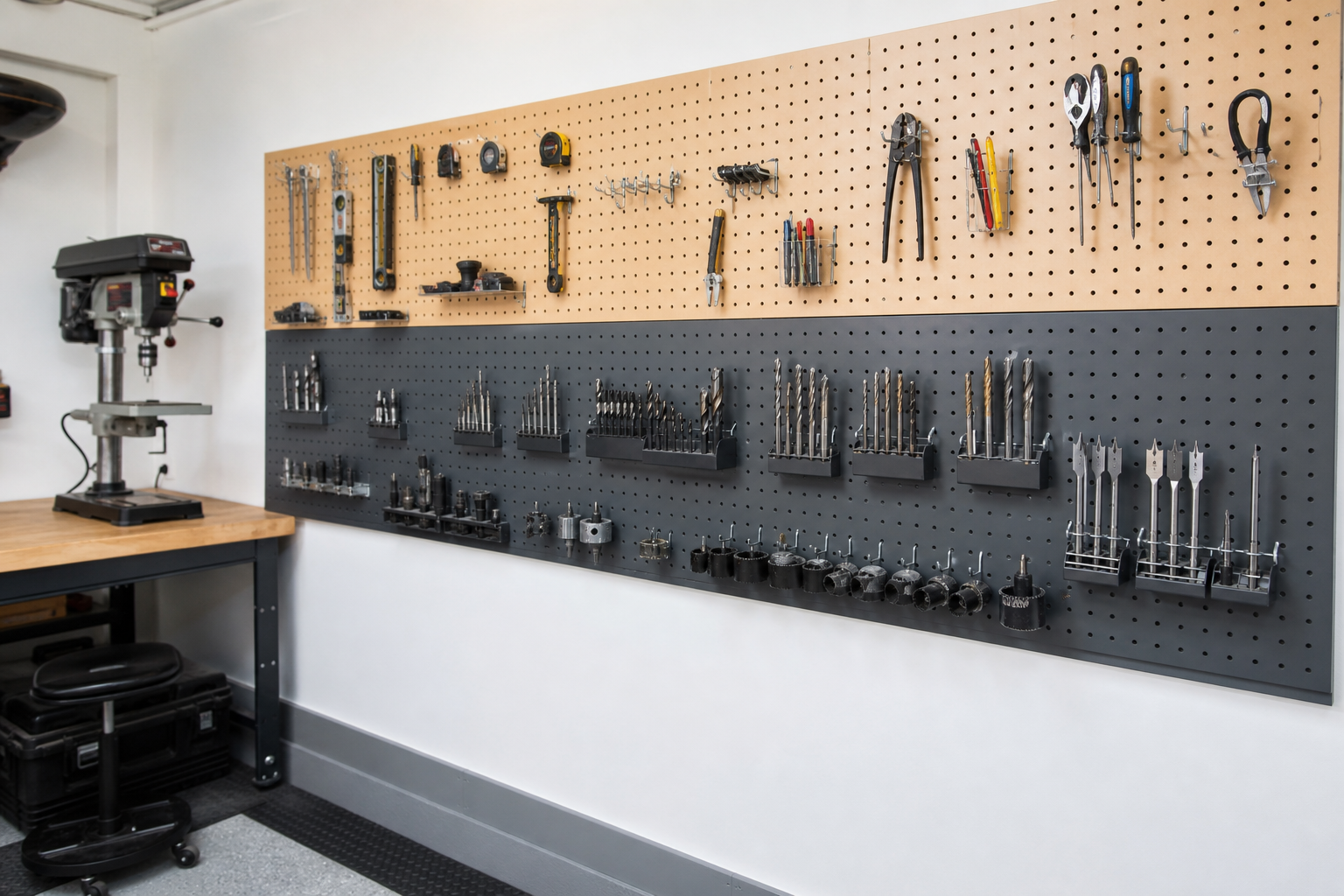
Combining metal and wood on the same wall is a practical and good-looking solution if you want the strength of steel for your heaviest tools and the warmth of wood for the lighter everyday items. The dark-on-bottom, light-on-top arrangement also follows natural visual weight principles, which makes the wall feel balanced. Paired with the right garage wall paint color, a two-tone pegboard wall can become one of the best-looking features in the whole space.
Accessory and Hook Setups
The hooks, bins, shelves, and rails you attach to your pegboard determine how useful it actually is day-to-day. Standard single hooks are fine for light tools, but there’s a whole range of accessories that can dramatically expand what a pegboard can hold. Dual hooks handle heavier items without tipping. Bins and cups keep loose fasteners and small parts contained. Shelves add a whole new storage dimension without taking up extra wall space. If you’re looking at dedicated systems with a full accessory ecosystem, the comparison in my slatwall and pegboard systems guide is worth a look. The four setups below show what’s possible when you go beyond basic hooks.
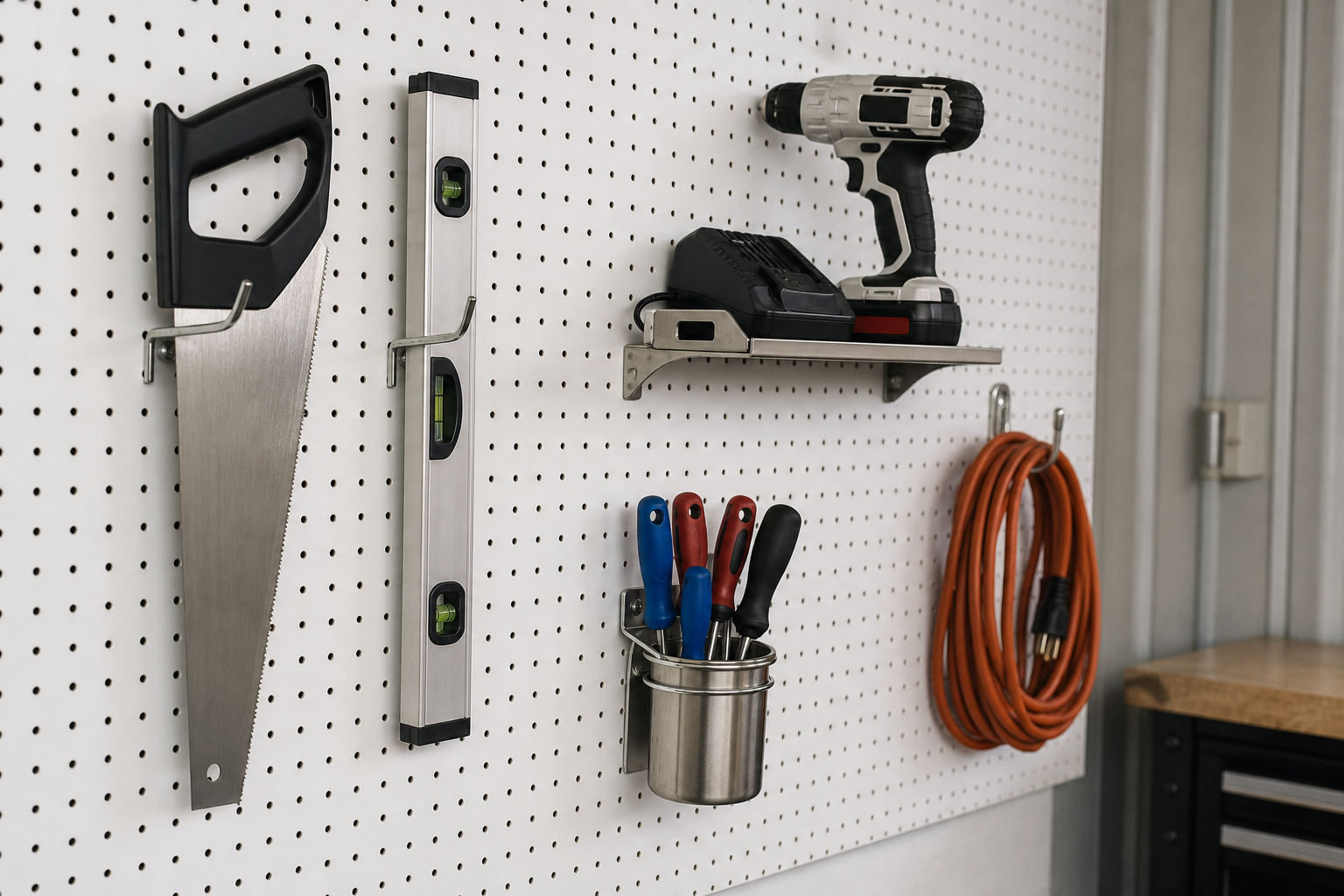
Mixing accessory types on one board is the most efficient way to use every inch of available space. Cups for small tools, shelves for power tools, and loops for cords each solve a specific storage problem that a plain hook can’t. If you’re building out a full tool storage setup, this kind of accessory variety pairs naturally with a rolling tool cart parked nearby for anything that doesn’t belong on the wall.
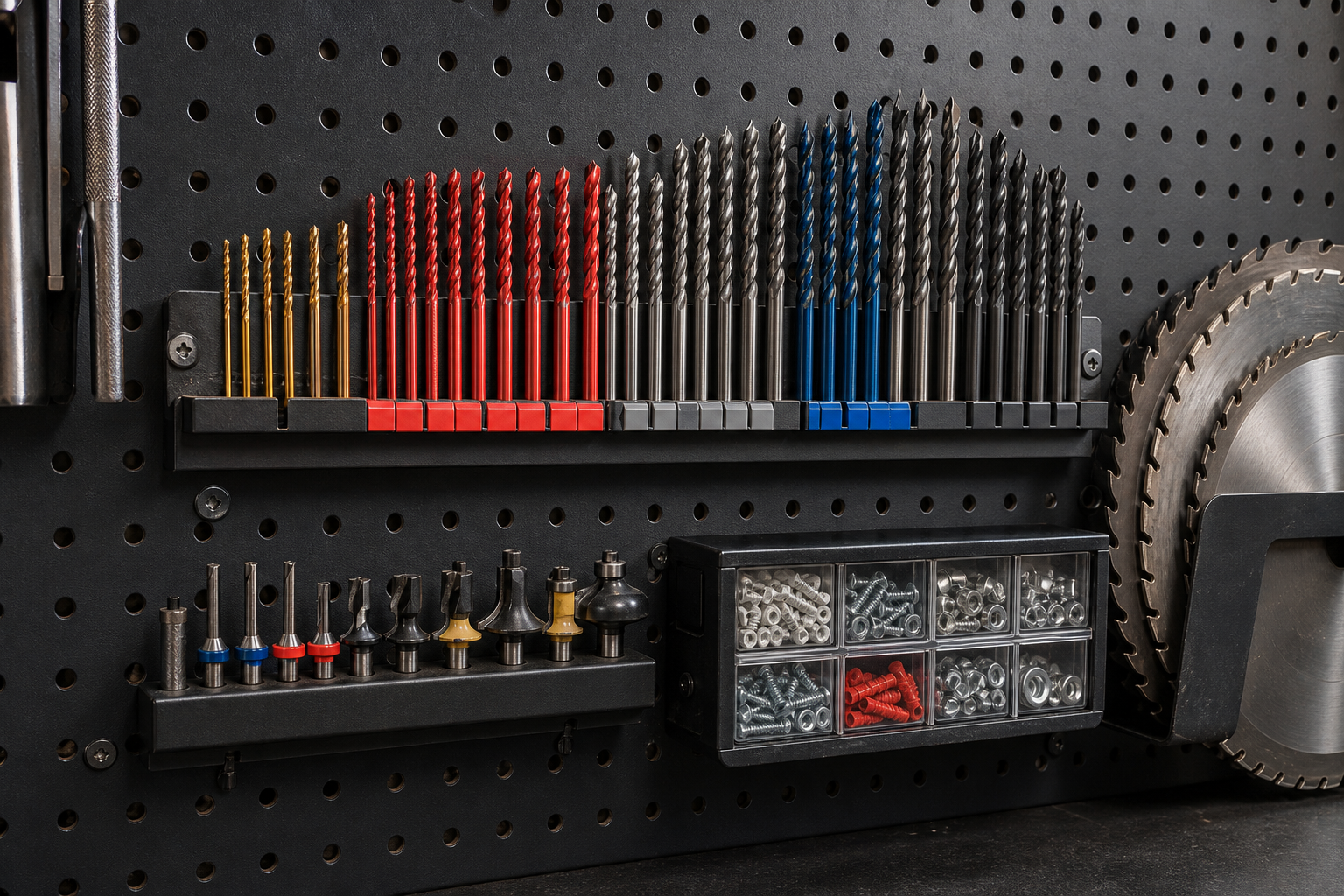
Dedicated accessory sections for power tool bits and blades keep the items that are easiest to lose right in plain sight. Sorting drill bits by size on a rail mount means no more digging through a drawer to find the right size. Pairing this kind of setup with a quality power tool organizer for the tools themselves makes the whole station work as a single cohesive unit.
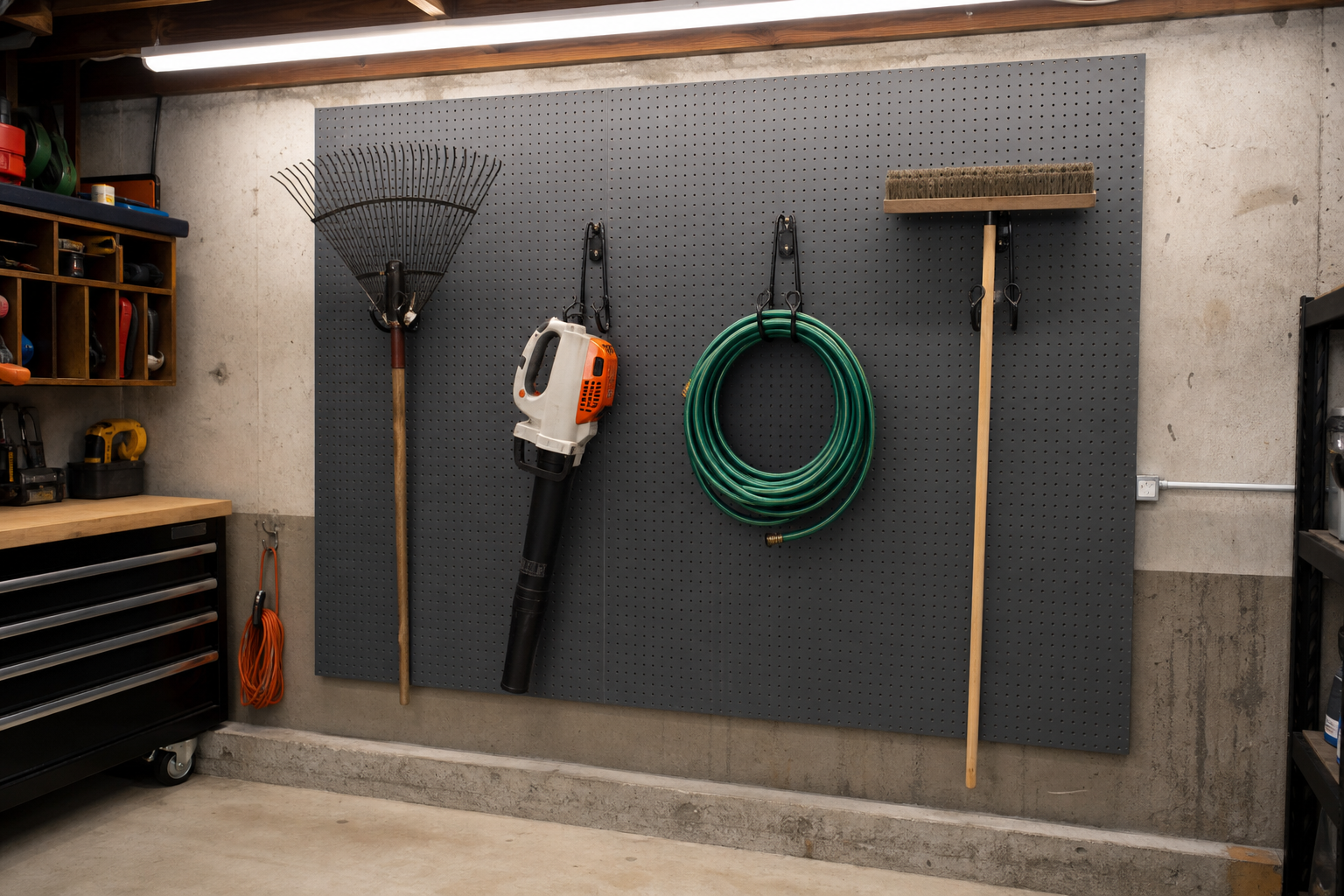
Heavy-duty double-arm hooks are the right choice when you’re hanging anything with real weight or awkward length. They distribute load across two anchor points instead of one, which reduces the chance of the hook pulling out or tipping under stress. For really large or unwieldy items that pegboard can’t handle, there are good options covered in this guide to wall hooks and hangers for heavy tools.
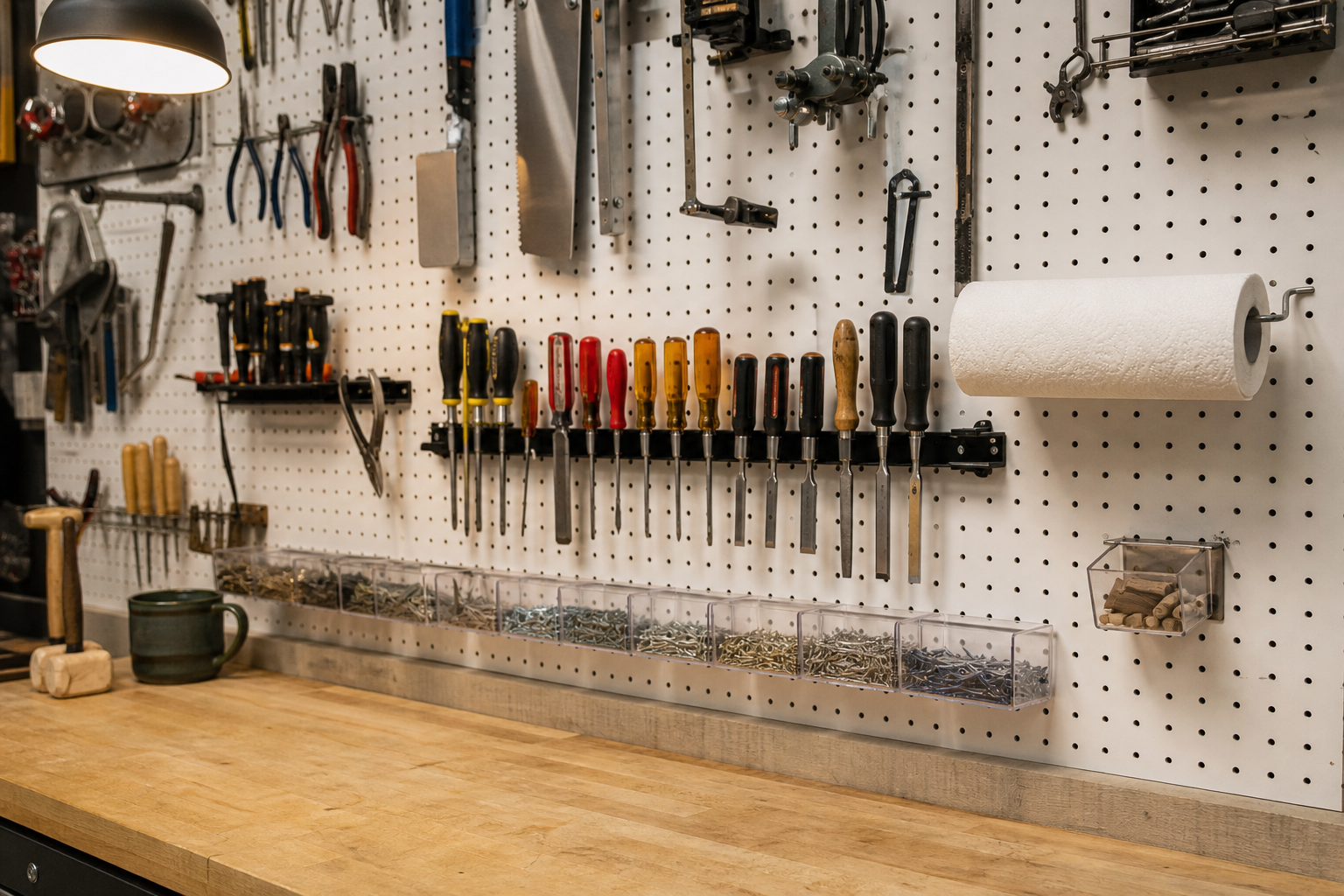
Integrating a magnetic strip directly into a pegboard layout is a creative way to hold metal-handled tools without using hooks at all. Clear acrylic bins at eye level mean you can see exactly how many fasteners you have left without pulling anything out. If you want to go deeper on magnetic storage options, I’ve put together a full roundup of the best garage magnetic tool holders that covers everything from strip mounts to standalone bars.
