

As an Amazon Associate I earn from qualifying purchases.
Lawn equipment takes up more garage space than almost anything else, and without a real plan, mowers and yard tools turn into an obstacle course you fight every weekend. This article covers 16 storage ideas across four areas: mower parking zones, trimmer and blower racks, fuel and supply cabinets, and seasonal rotation systems. Whether you run a single push mower or a full lineup of outdoor power equipment, there’s something here worth stealing.
Mower Parking Zones
Designating a dedicated parking zone for your mower is the single biggest thing you can do to reclaim floor space in a busy garage. Most people just roll the mower in wherever it fits, and then spend the next six months working around it. A defined zone, even if it’s just painted lines on the floor, changes how you think about the whole space. If you’re planning a full garage layout and aren’t sure where the mower fits in, this guide on how to plan a garage storage layout that works walks through the whole zoning process. I’d also recommend reading up on how to store a lawn mower in a garage before you commit to a spot, since fuel draining, blade safety, and clearance all play into placement.
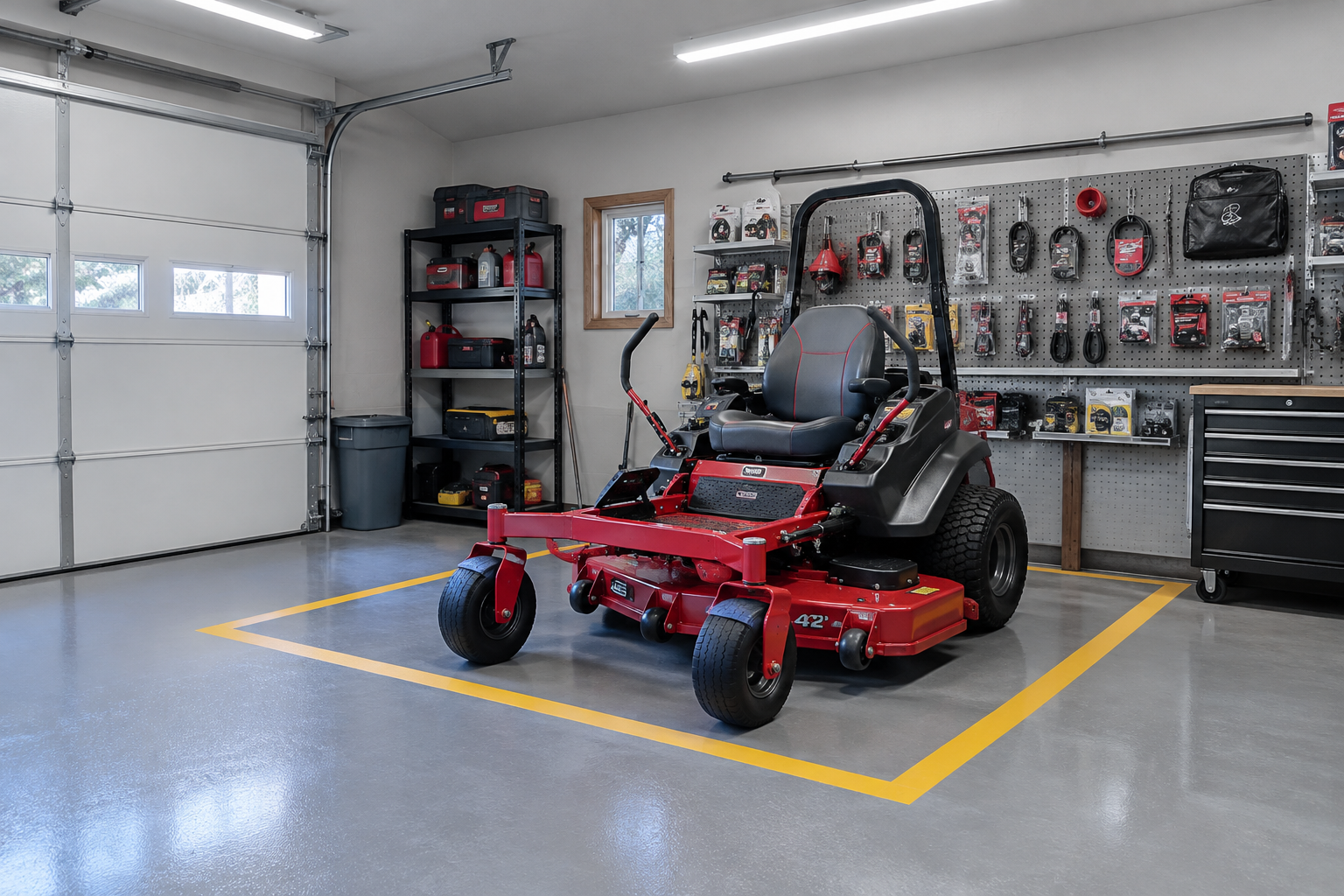
Bright yellow floor lines on an epoxy-coated slab create a no-confusion parking zone for a full-size zero-turn mower. The contrast between the red mower and the gray floor gives the space a clean, almost showroom feel. Keeping the surrounding wall clear except for a pegboard accessory panel makes the zone feel intentional rather than crammed.
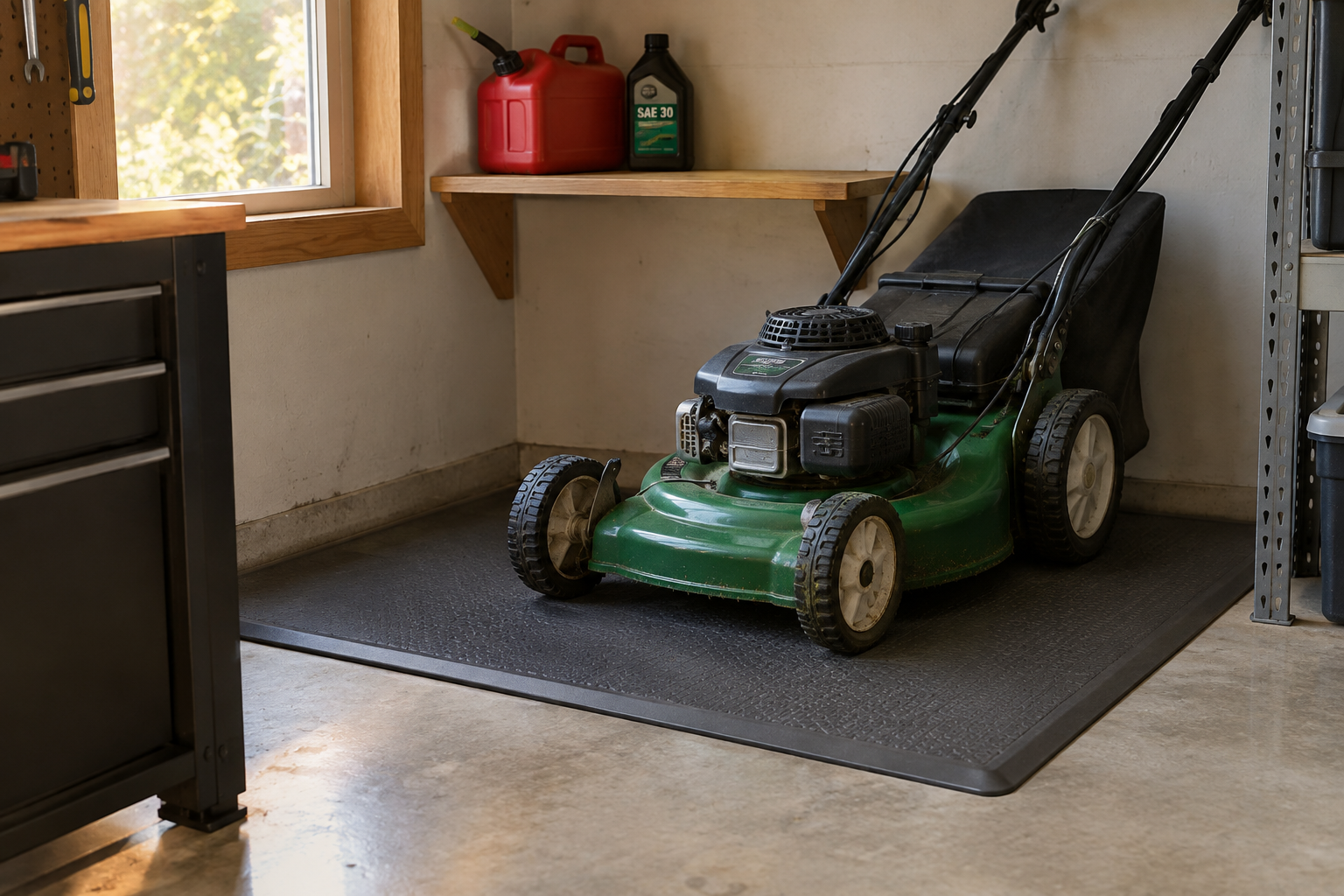
A thick rubber parking mat with a beveled edge protects the floor and anchors the mower in one consistent spot. The mat reads as a visual boundary even without painted lines, which works well in rented spaces or garages where floor coating isn’t an option. A narrow wooden shelf directly above keeps the fuel can and spare oil within arm’s reach of the mower.
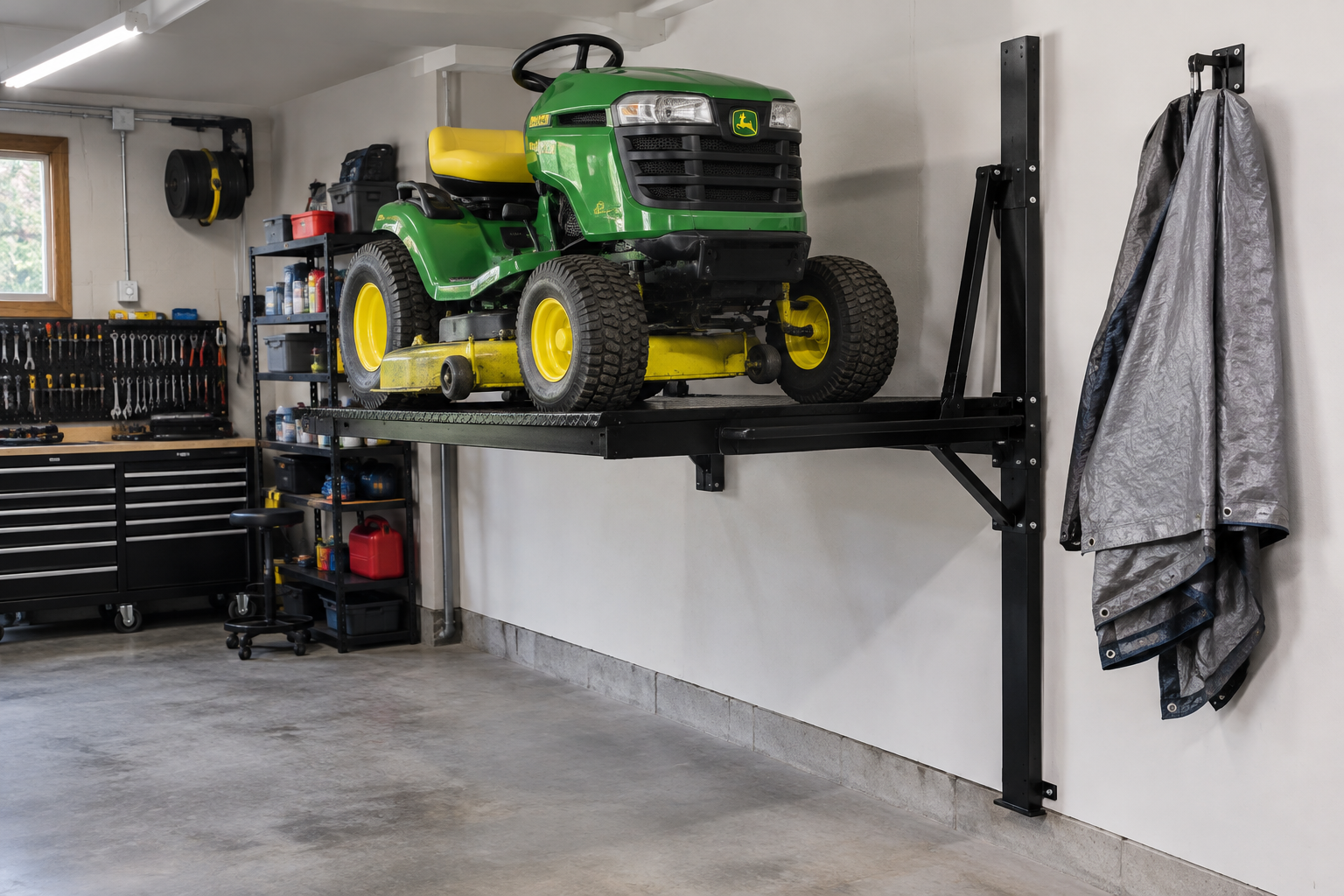
This low-profile mower lift platform raises a riding tractor just enough off the concrete to allow easier blade maintenance and to protect the deck from floor moisture. The powder-coated black steel frame keeps things looking intentional rather than improvised. It’s a smart move in a tighter garage where every inch of floor clearance matters.
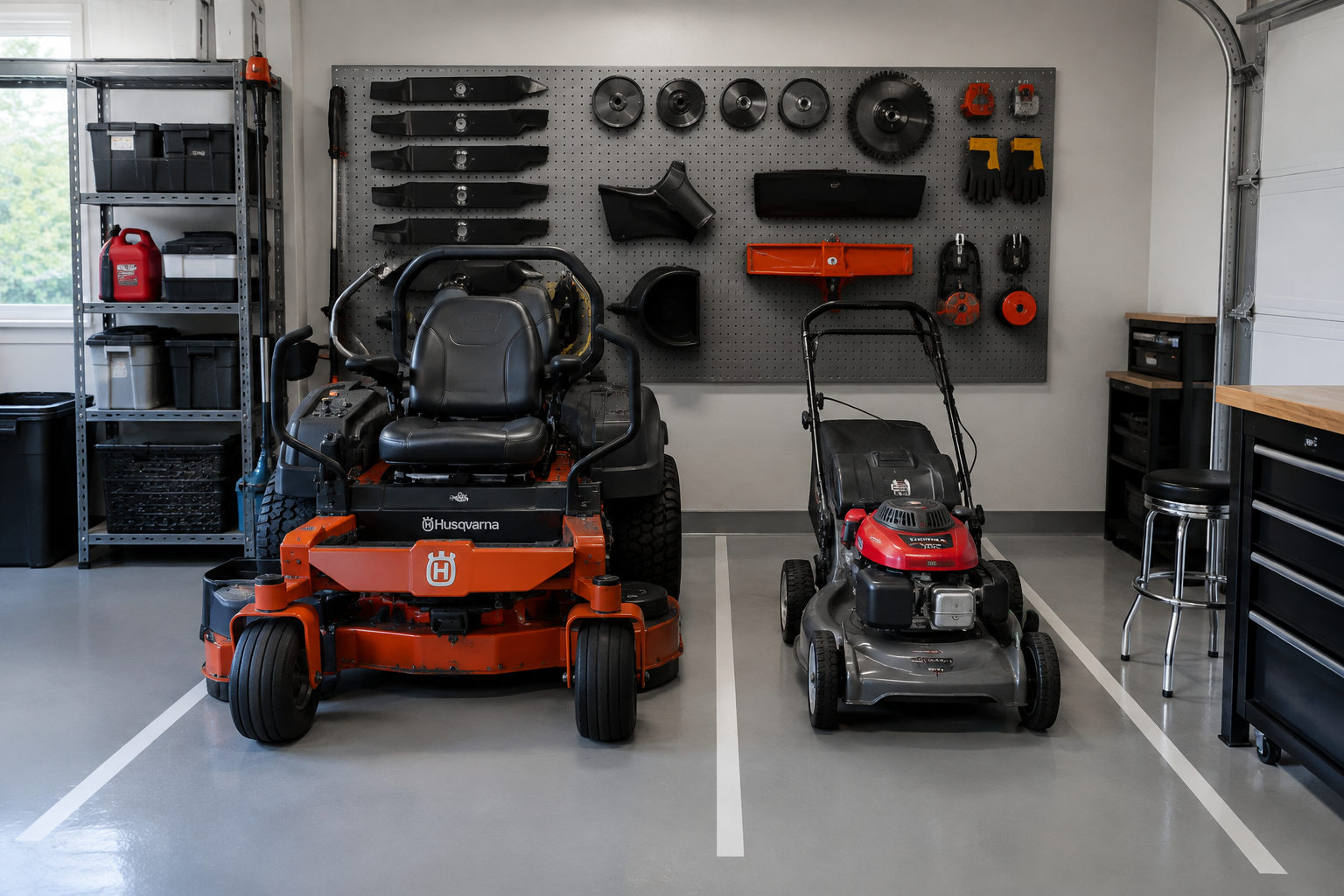
Dividing the mower zone into individual lanes with painted white lines makes it easy to park both machines without one blocking the other. The pegboard wall behind serves the zone specifically, holding blades, mulching attachments, and work gloves right where you need them. This kind of organized garage zoning approach keeps each category of equipment from bleeding into the next.
Trimmer and Blower Racks
String trimmers and leaf blowers are awkward to store. They’re long, they’re oddly shaped, and if you lean them in the corner they inevitably fall over and knock something else down. A proper wall rack solves all of that. There are commercial options built specifically for power equipment, and there are DIY setups using slatwall or pegboard that work just as well for less money. I’ve got a full guide on how to store a string trimmer in the garage that covers horizontal hooks, vertical holders, and what not to do. For blowers specifically, the article on how to hang a leaf blower in the garage has more detail on hook placement and weight distribution.
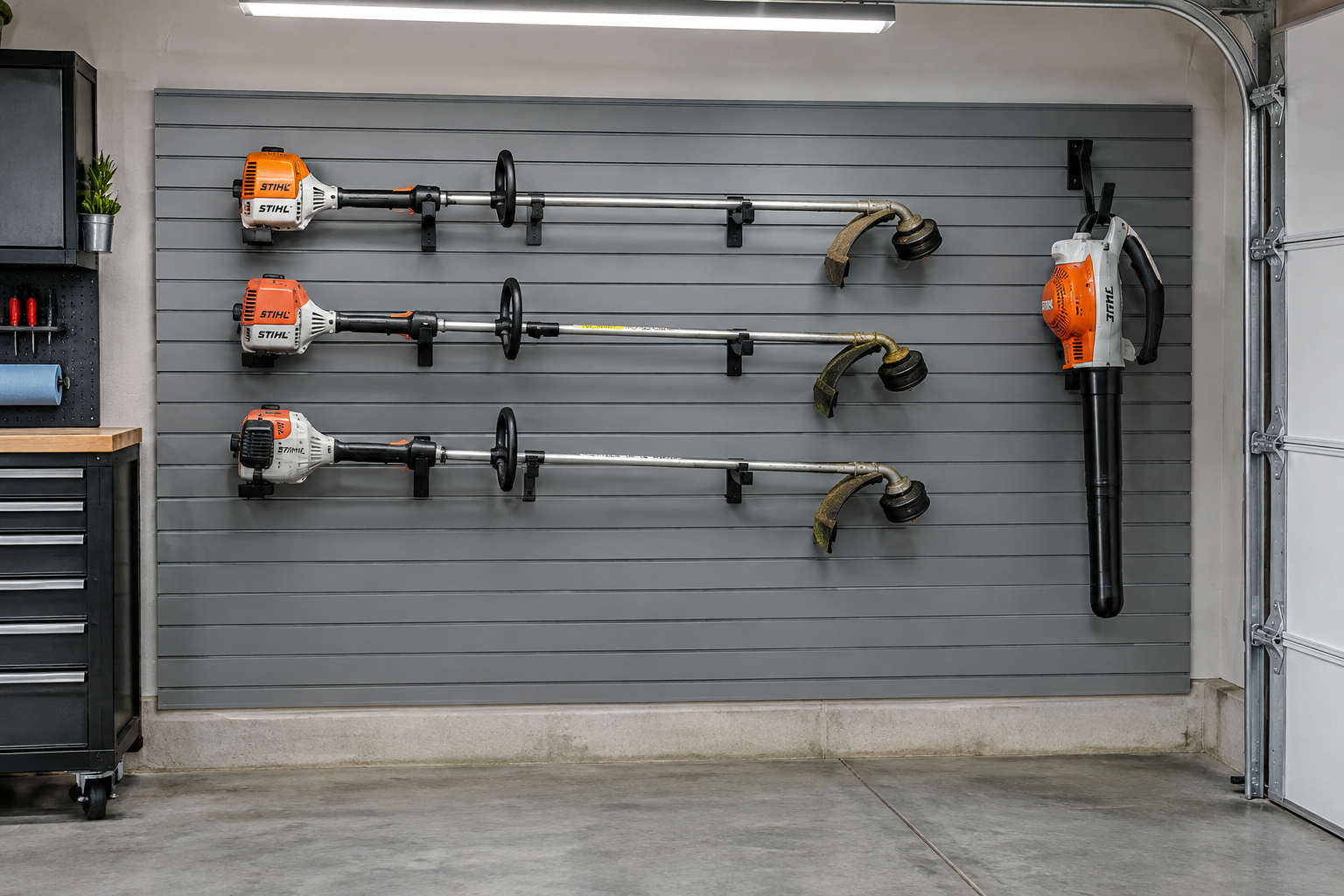
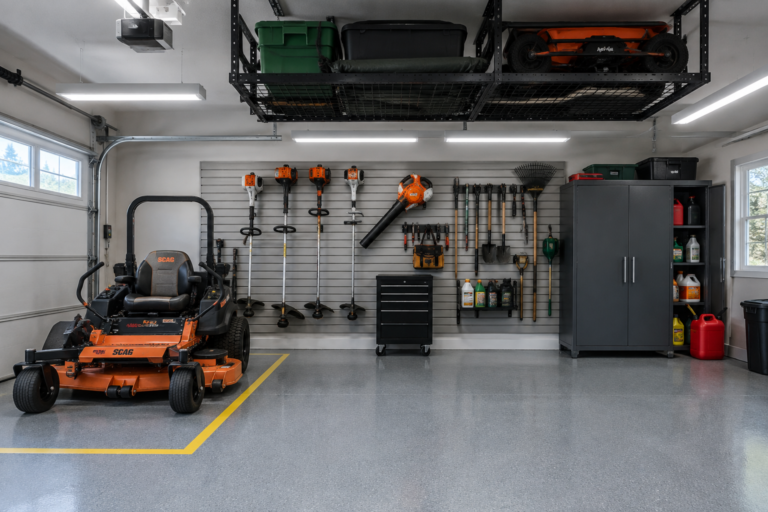
Gray slatwall panels give this wall section a clean, uniform look while letting you reposition hooks without drilling new holes. Three string trimmers hang horizontally on heavy-duty J-hooks, and the leaf blower tucks in right beside them using the same system. The setup uses slatwall and pegboard organization principles that make reconfiguring easy as your equipment collection changes.
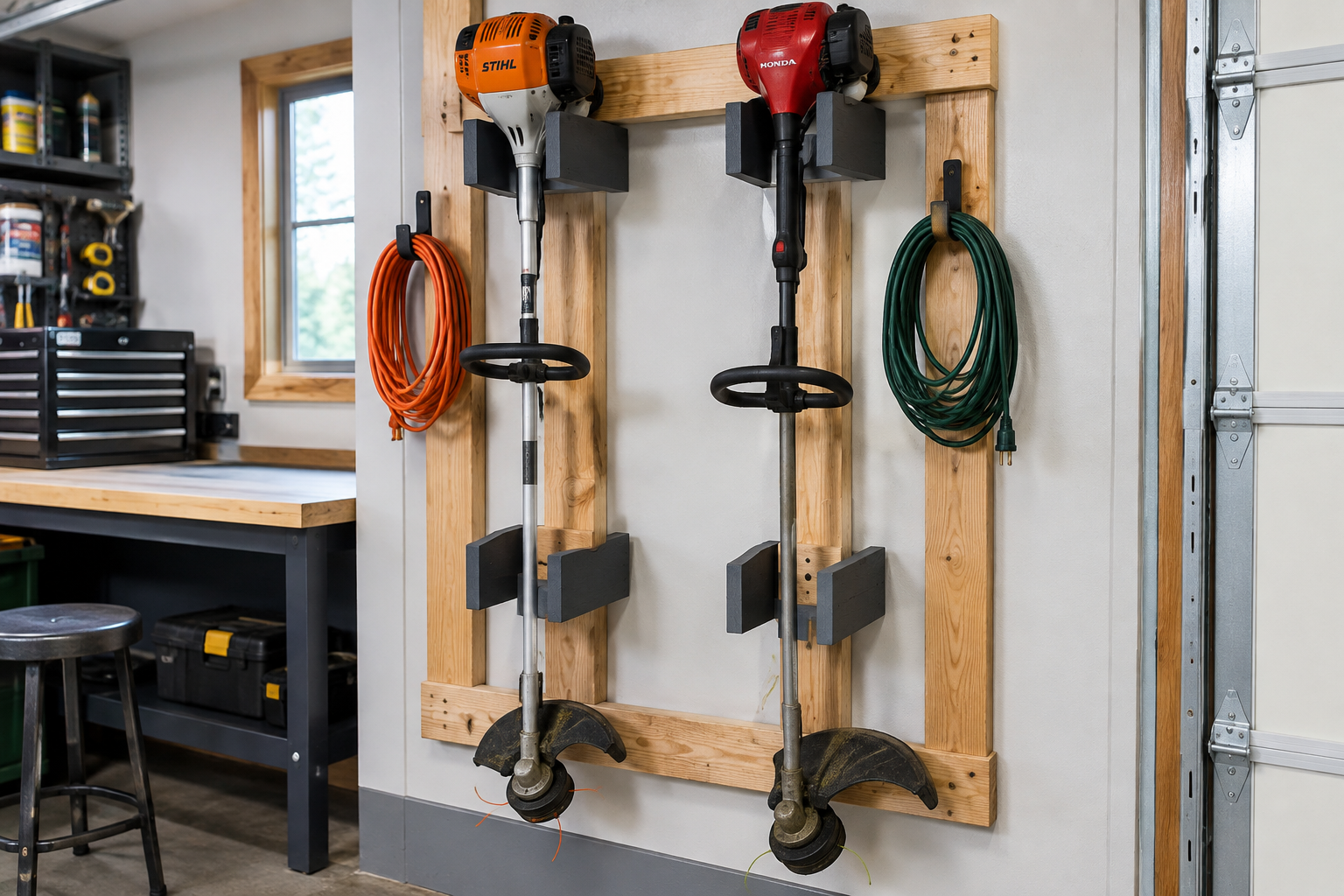
This DIY wooden rack uses simple 2×4 cradle brackets to hold string trimmers vertically against the wall, which is one of the most space-efficient positions for long-handled equipment. The dark gray paint ties the rack into the rest of the garage without looking out of place. Wrapping the power cords neatly on side hooks keeps things tidy between uses.
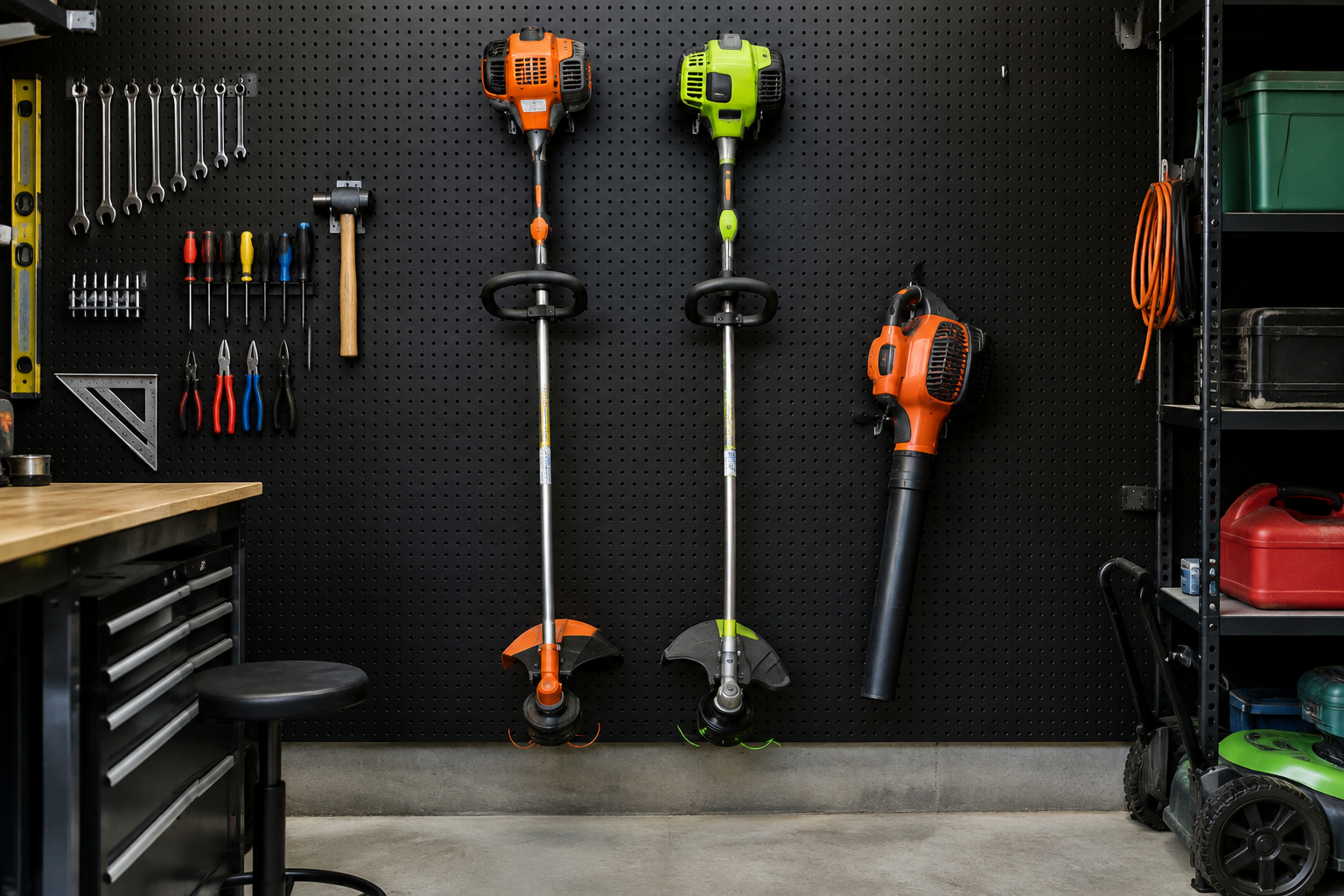
Black pegboard makes a high-contrast backdrop that lets orange and green equipment pop visually, which actually makes it easier to grab the right tool at a glance. Wide tool hooks carry the trimmers without putting stress on the shaft, and a smaller hook below handles the handheld blower. If you’re shopping for a system, this garage pegboard buyers guide covers the best panels and hook sets worth buying.
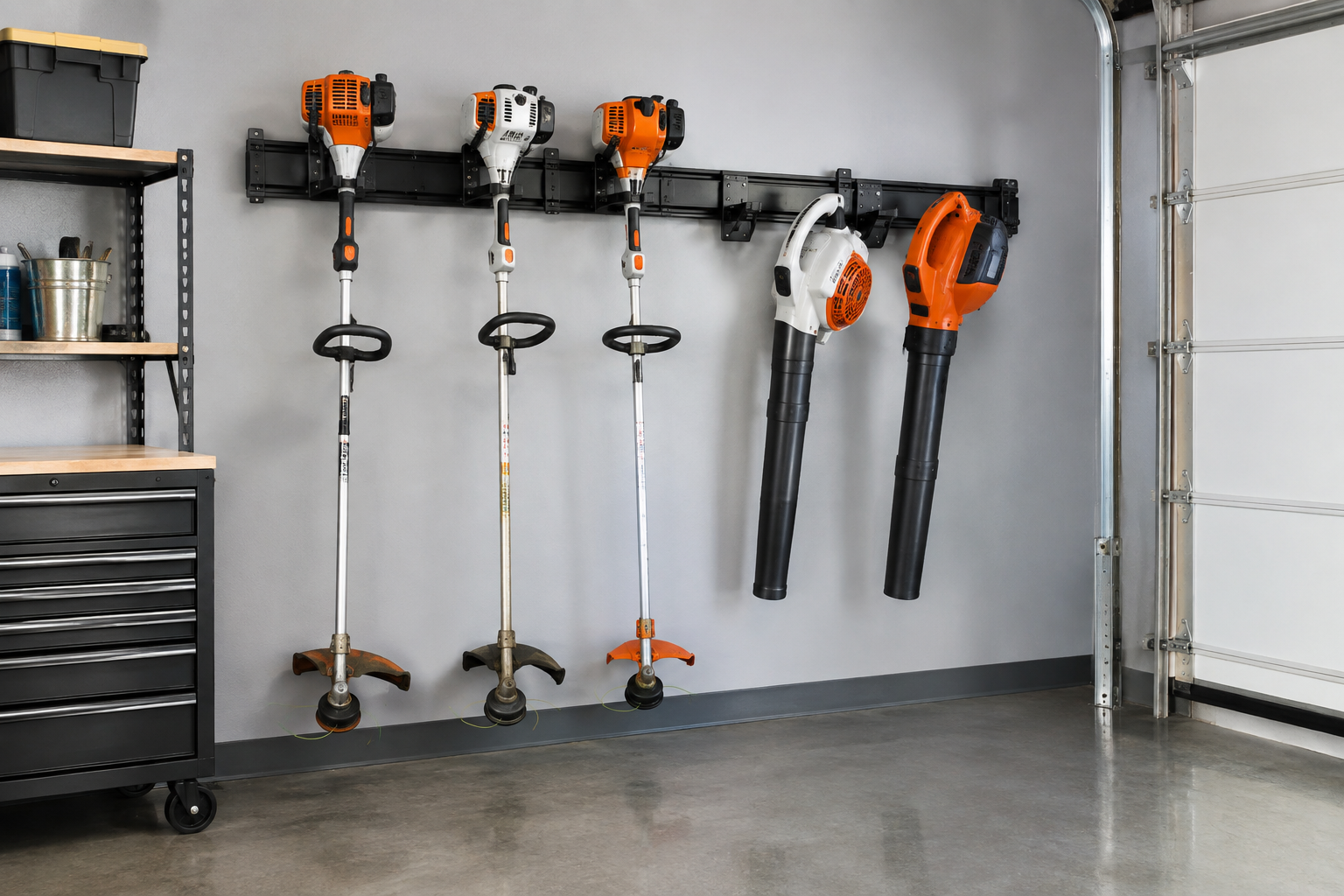
This commercial-grade steel rail system uses molded plastic cradles to hold each tool at the right angle without scratching the housing or putting strain on delicate parts. The uniform spacing gives the wall an almost retail-display quality, and everything is off the floor, which makes sweeping under the rack effortless. It’s a good fit if you run a landscaping side business or simply have more equipment than a basic pegboard setup can handle.
Fuel and Supply Cabinets
Storing gasoline, mixed fuel, engine oil, and fertilizer in the open is both messy and potentially dangerous. A dedicated fuel and supply cabinet gives you a locked, contained spot for everything flammable or chemical-based in your lawn care lineup. Steel cabinets are the most common choice because they meet fire safety codes in most areas, but there are also ventilated plastic options worth considering for lighter use. My guide on safe garage storage for paint, gas, and chemicals is a good starting point before you buy a cabinet. And if you’re comparing cabinet materials and build quality, the breakdown of steel vs. modular garage cabinet systems covers the tradeoffs in detail.
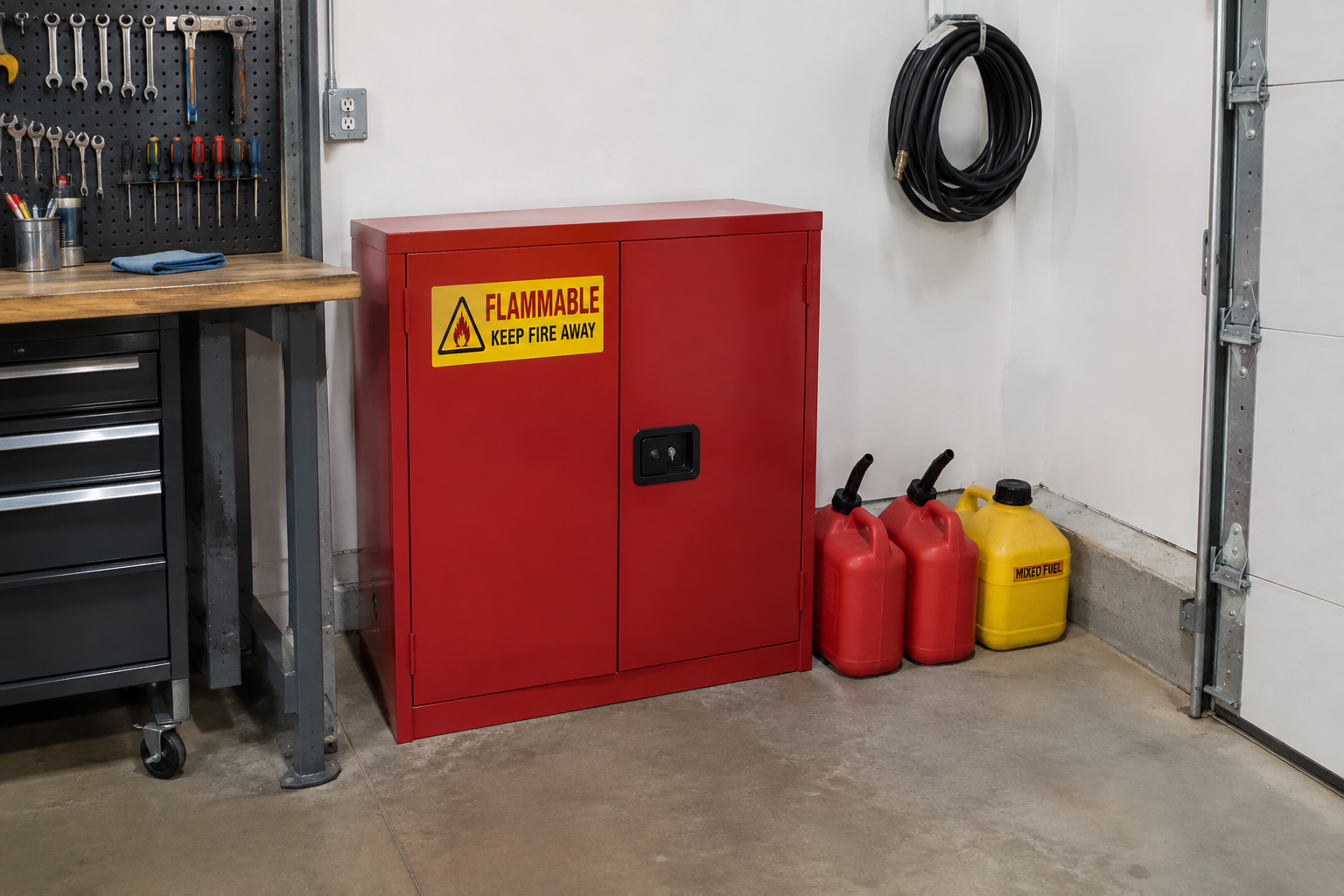
A red two-door steel flammable storage cabinet is the gold standard for anyone keeping gasoline or ethanol-blended fuel in the garage. The yellow warning label isn’t just decorative, it signals to anyone in the space that this cabinet is not a general storage bin. Parking the gas cans directly beside the cabinet keeps the fueling process in one zone and out of the main traffic path.
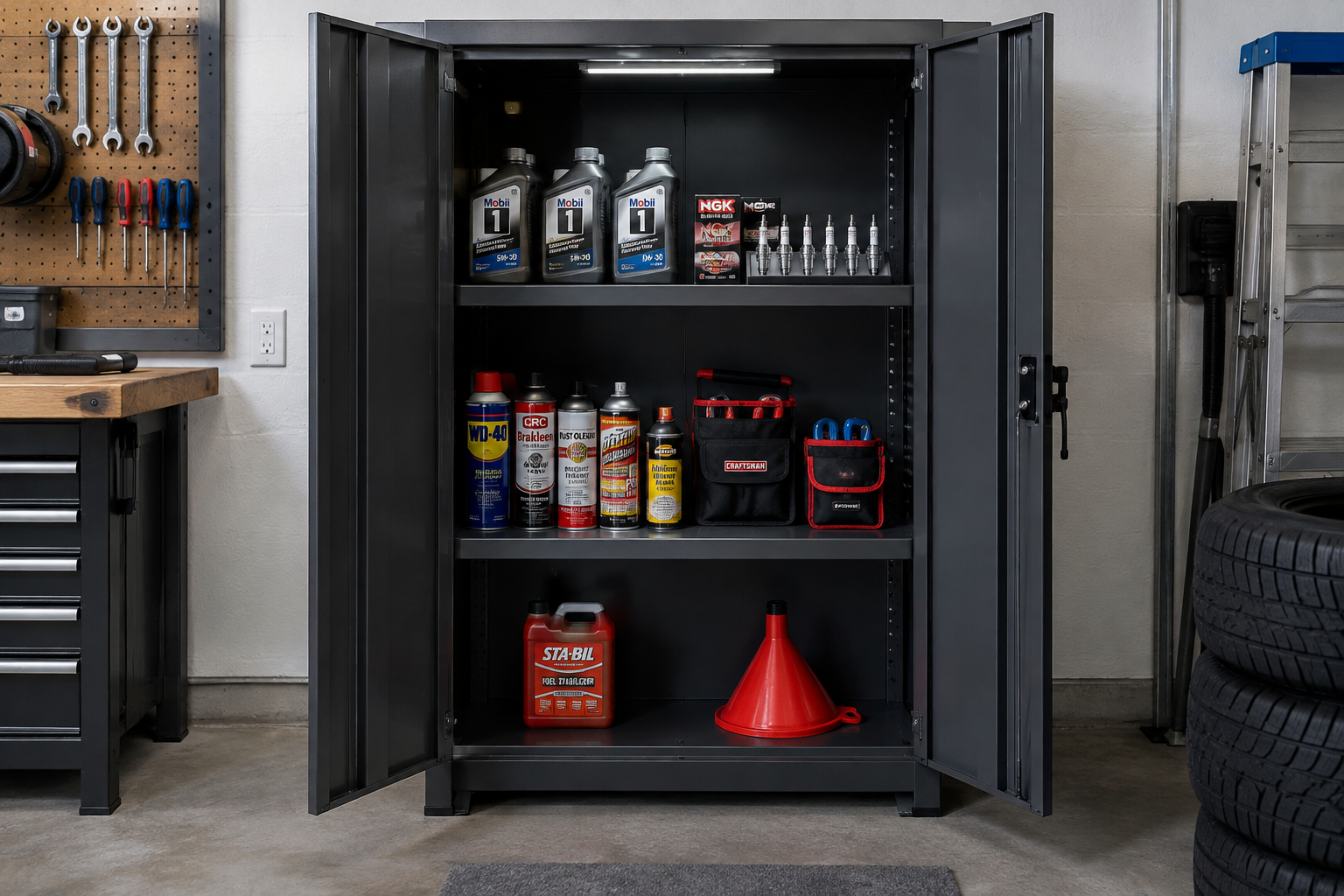
Opening this dark gray metal cabinet reveals a fully organized lawn equipment supply station, with engine oil and spark plugs on top, spray lubricants in the middle, and fuel stabilizer and a funnel at the bottom. A small LED strip light inside the cabinet makes it easy to find what you need even in a poorly lit corner. This kind of organized approach pairs well with the broader tips in this guide to garage storage cabinets for tools and chemicals.
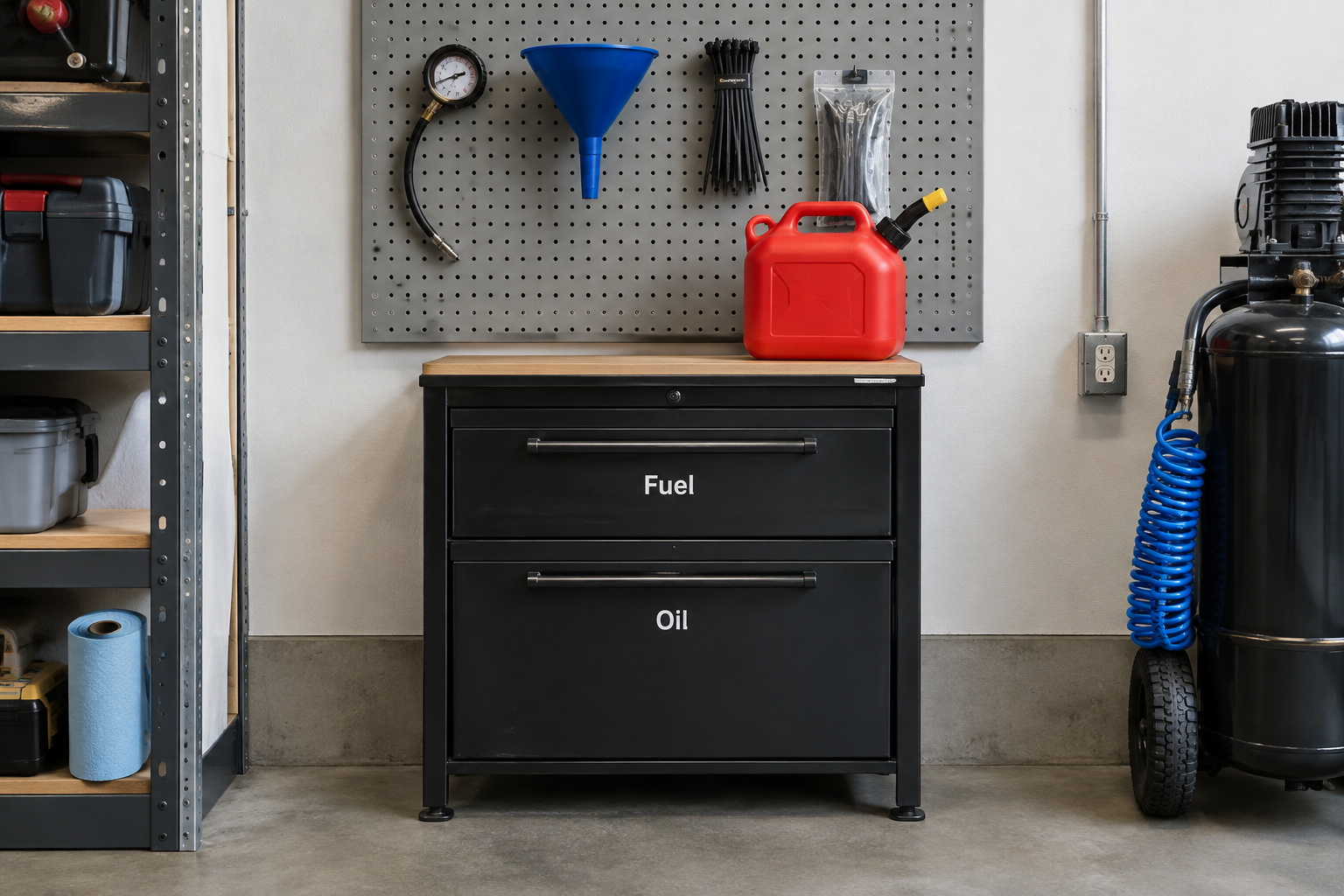
This compact setup pairs a short black steel base cabinet with a pegboard section above, turning a single wall strip into a complete fuel management station. Labeled drawers for ‘Fuel’ and ‘Oil’ keep the guesswork out of maintenance day, and the pegboard holds small accessories like a tire gauge and funnel directly overhead. A single gas can rests on top of the cabinet, within easy reach but still contained in its zone.
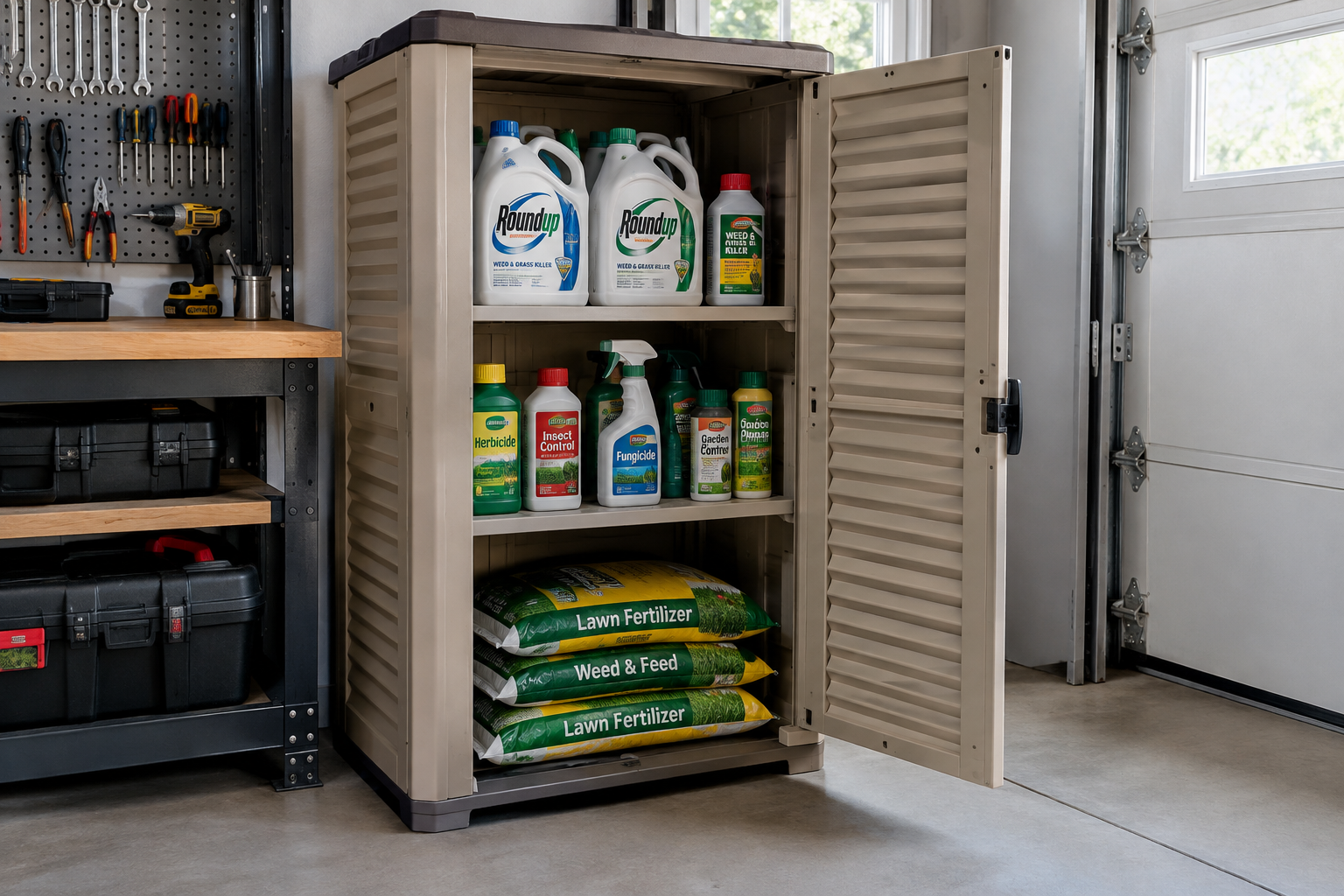
A ventilated plastic cabinet works well for lawn chemicals like fertilizer, pesticide, and weed killer since the airflow helps prevent moisture buildup and keeps odors from concentrating. The shelves are sized to fit standard-size bags and jugs without cramming, so you can actually see what’s in stock before a shopping trip. Keeping lawn chemicals in a dedicated enclosed cabinet also reduces the risk of accidental spills on other gear stored nearby.
Seasonal Rotation Systems
In Florida, I run my mower year-round, but a lot of homeowners need to swap lawn equipment in and out depending on the season. Snow blowers come out, mowers go to the back wall, and suddenly the garage feels half the size. A seasonal rotation system is really just a plan for where things live when they’re not in active use, combined with storage that makes swapping easy. Overhead storage is a major part of this for most people, and the garage overhead storage ideas article has a lot of visual inspiration for making that work. If you’re dealing with snow blowers specifically, the best garage snow blower storage guide walks through positioning and cover options worth knowing about before winter hits.
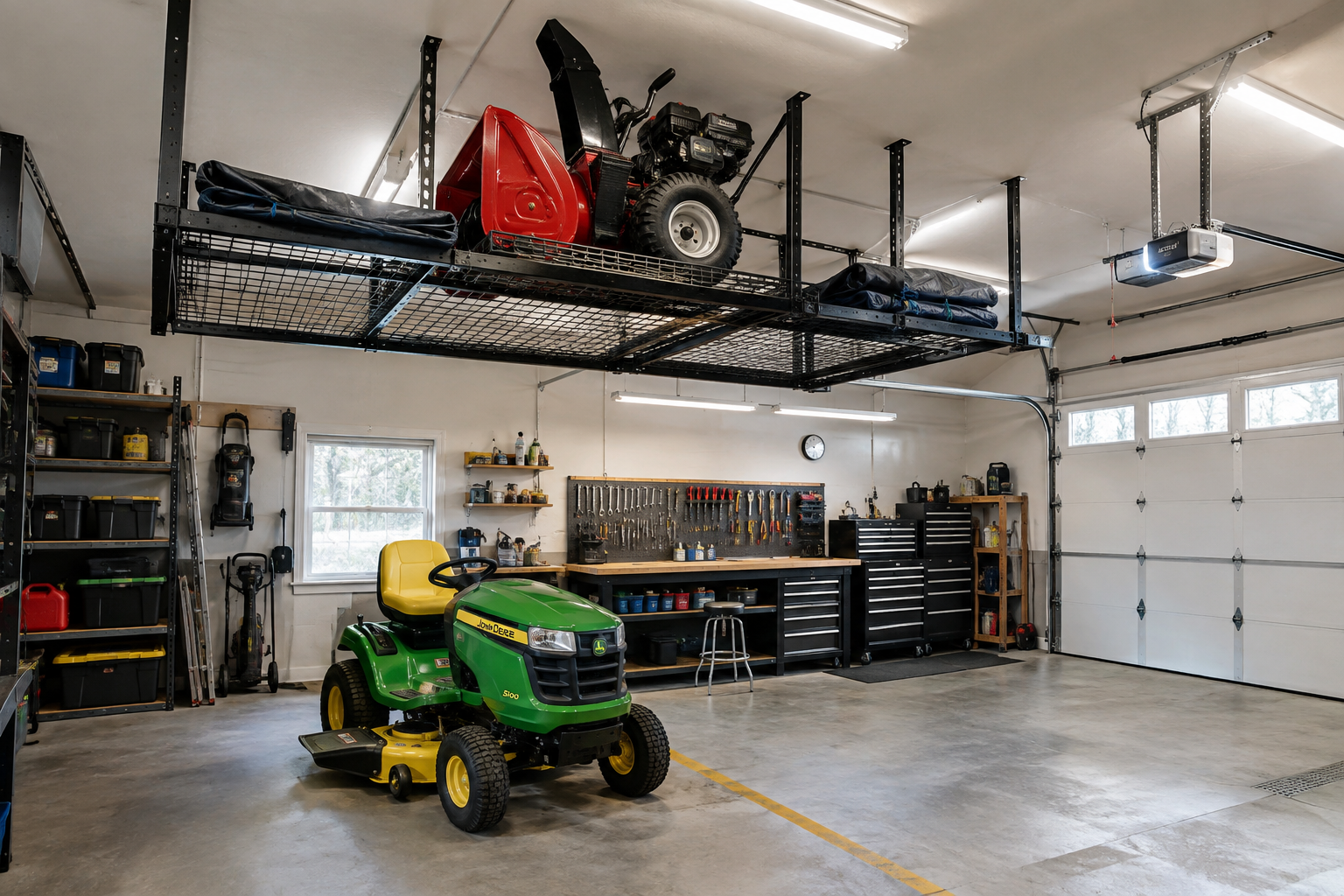
Lifting the off-season snow blower onto a ceiling rack clears it completely from the floor, giving the riding mower room to park directly below during the warm months. The black steel grid platform is rated for several hundred pounds, so even a heavy two-stage snow blower sits up there without concern. This overhead approach is exactly the kind of vertical storage covered in this guide to overhead garage storage racks and hoists.
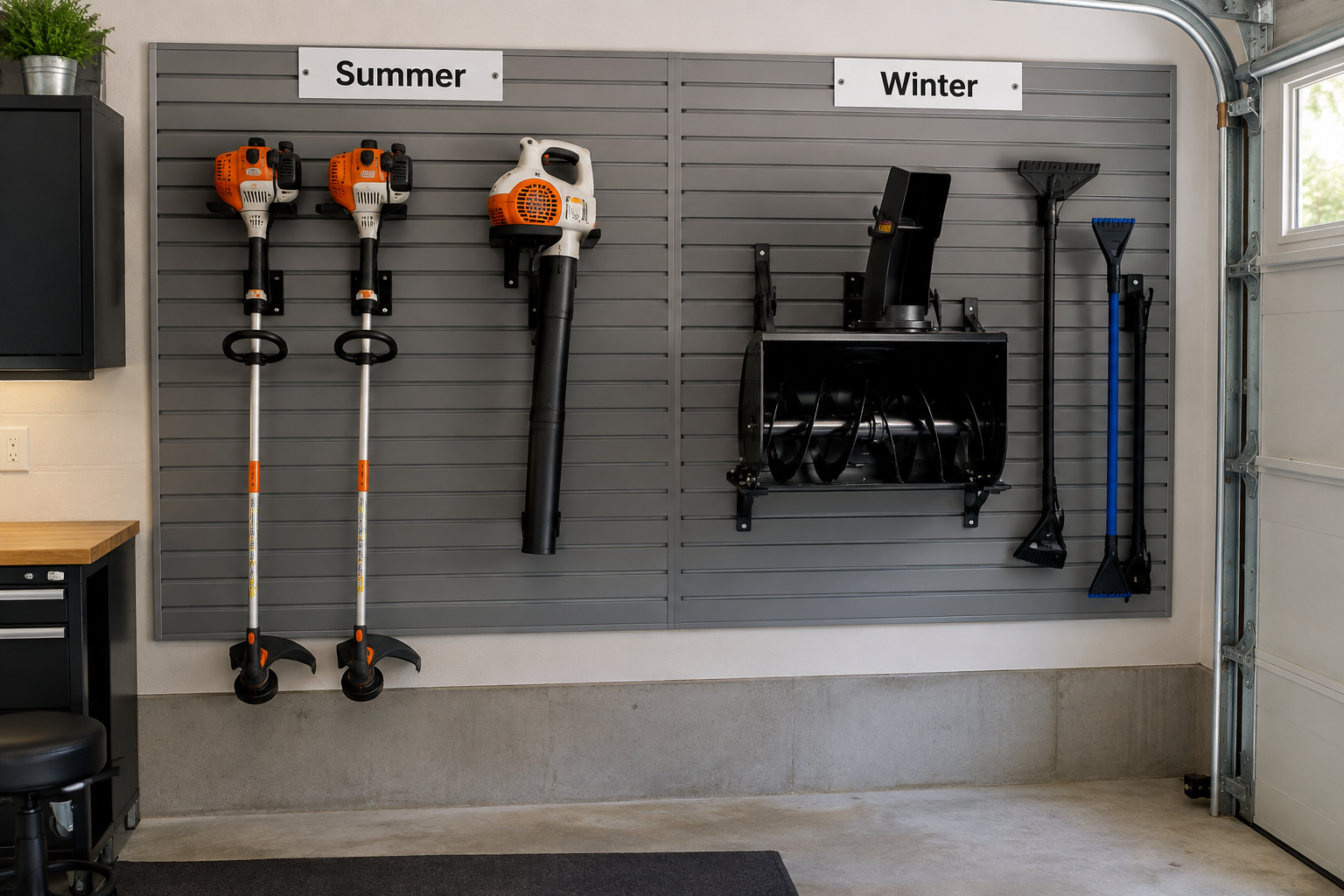
Labeling slatwall zones by season turns a generic wall panel into a rotation guide you don’t have to think about. The ‘Summer’ section holds the trimmer and blower in their active-season positions, while the ‘Winter’ section is pre-configured for ice scrapers and snow blower attachments so swapping takes minutes. This kind of labeled system also fits naturally into a broader garage labeling and inventory strategy that makes the whole space easier to manage.
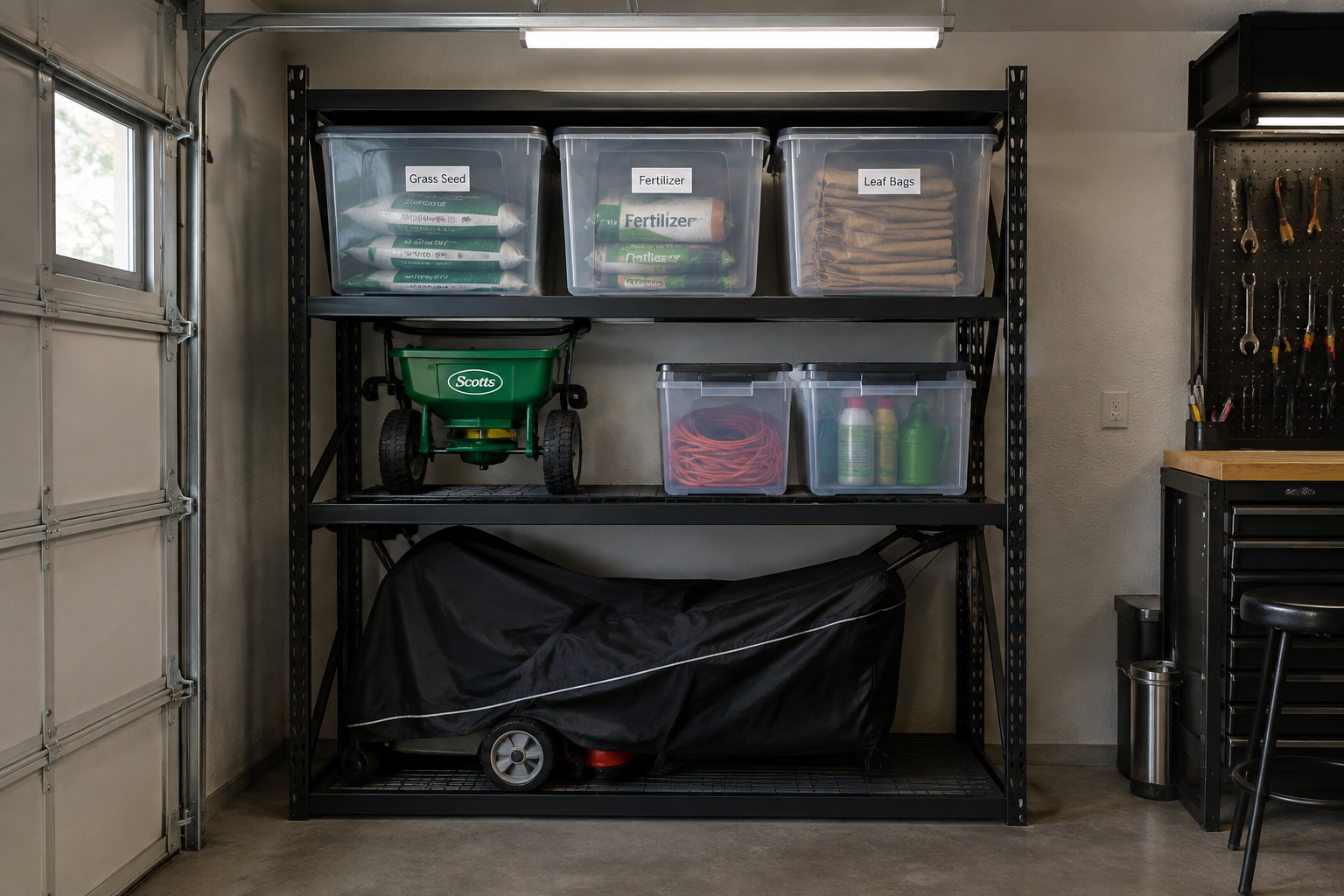
Parking a covered push mower on the lower level of a back-wall shelving unit keeps it protected from dust while freeing up prime floor space for active equipment. Clear labeled bins stacked above hold seasonal consumables like grass seed, fertilizer spreader parts, and leaf bags so everything for that season is together in one spot. The fitted black equipment cover extends mower life by blocking dust, insects, and incidental moisture between uses.
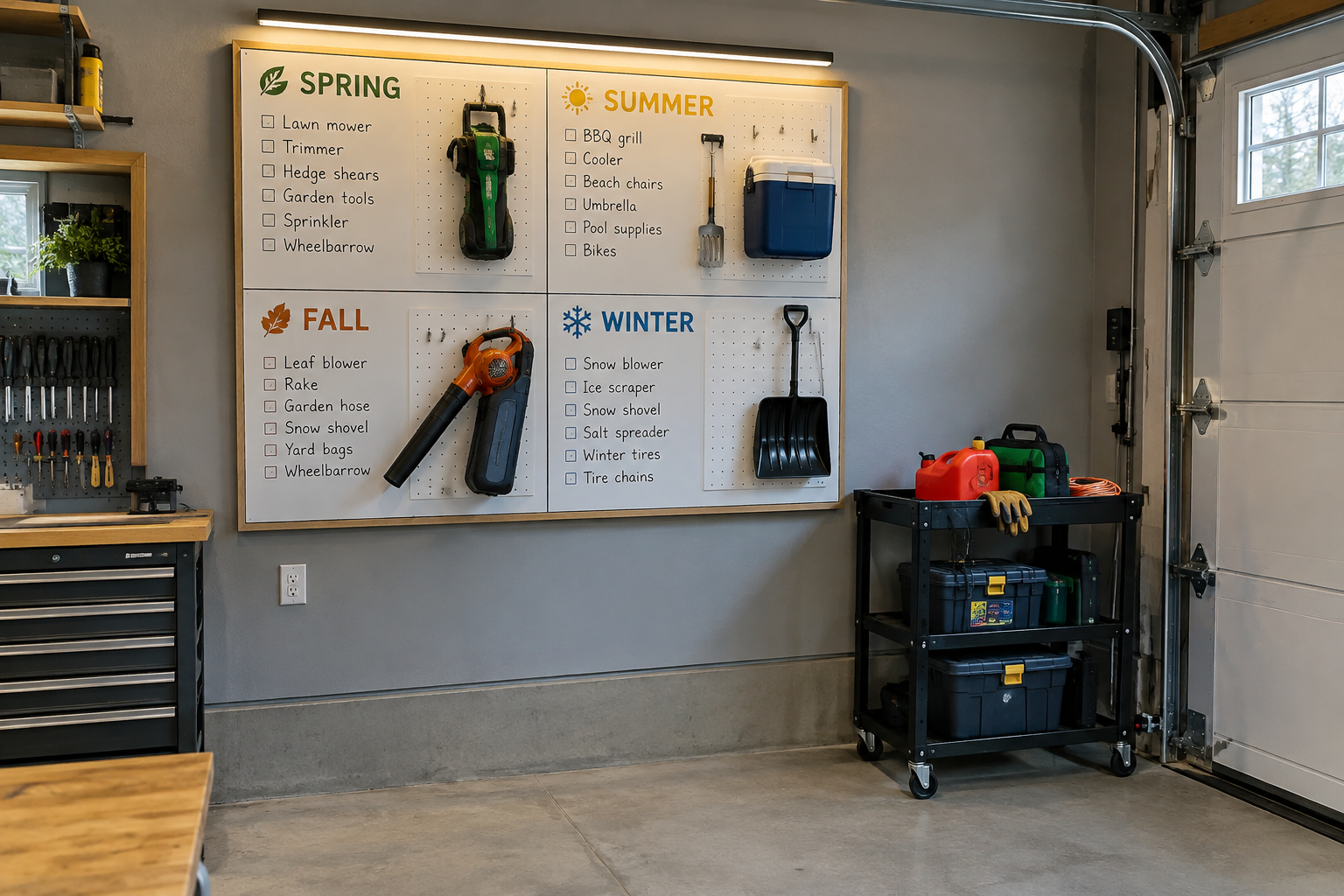
A seasonal rotation board takes the guesswork out of spring and fall garage switchovers by mapping out which equipment belongs in which spot for each part of the year. Each quadrant lists the tools that should be active and the ones that should be in back-of-garage or overhead storage, so anyone in the household can follow the system without being shown. Pairing this board with a monthly and seasonal garage maintenance calendar keeps the rotation on schedule rather than happening whenever the clutter gets bad enough to force it.
