

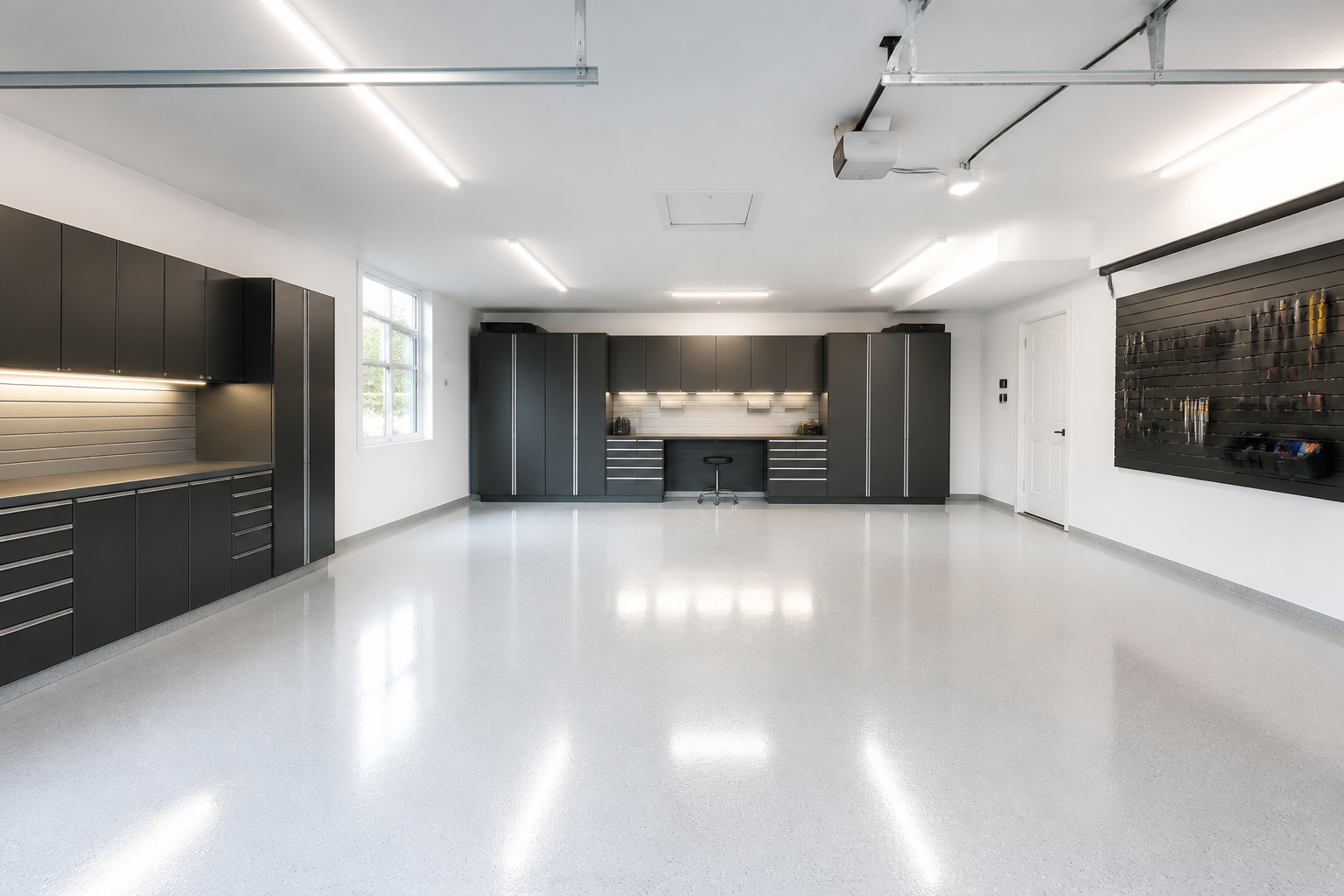
A minimalist garage strips away the chaos and gives you back control. I’ve found that clean lines, smart storage, and a neutral palette transform even cramped spaces into places you actually want to spend time. This guide covers clean storage solutions, simple layouts, and neutral tones to help you create a clutter-free garage.
Clean Storage Solutions
Clean storage starts with getting things off the floor and onto the walls or ceiling. I’ve learned that the best minimalist garages use vertical space efficiently, with wall-mounted systems that keep tools and gear organized without visual clutter. Closed cabinets hide the mess while open racks display only what you need regularly. The goal is to create storage that looks intentional, not accidental. Every item should have a designated spot that makes sense for how you use your space.
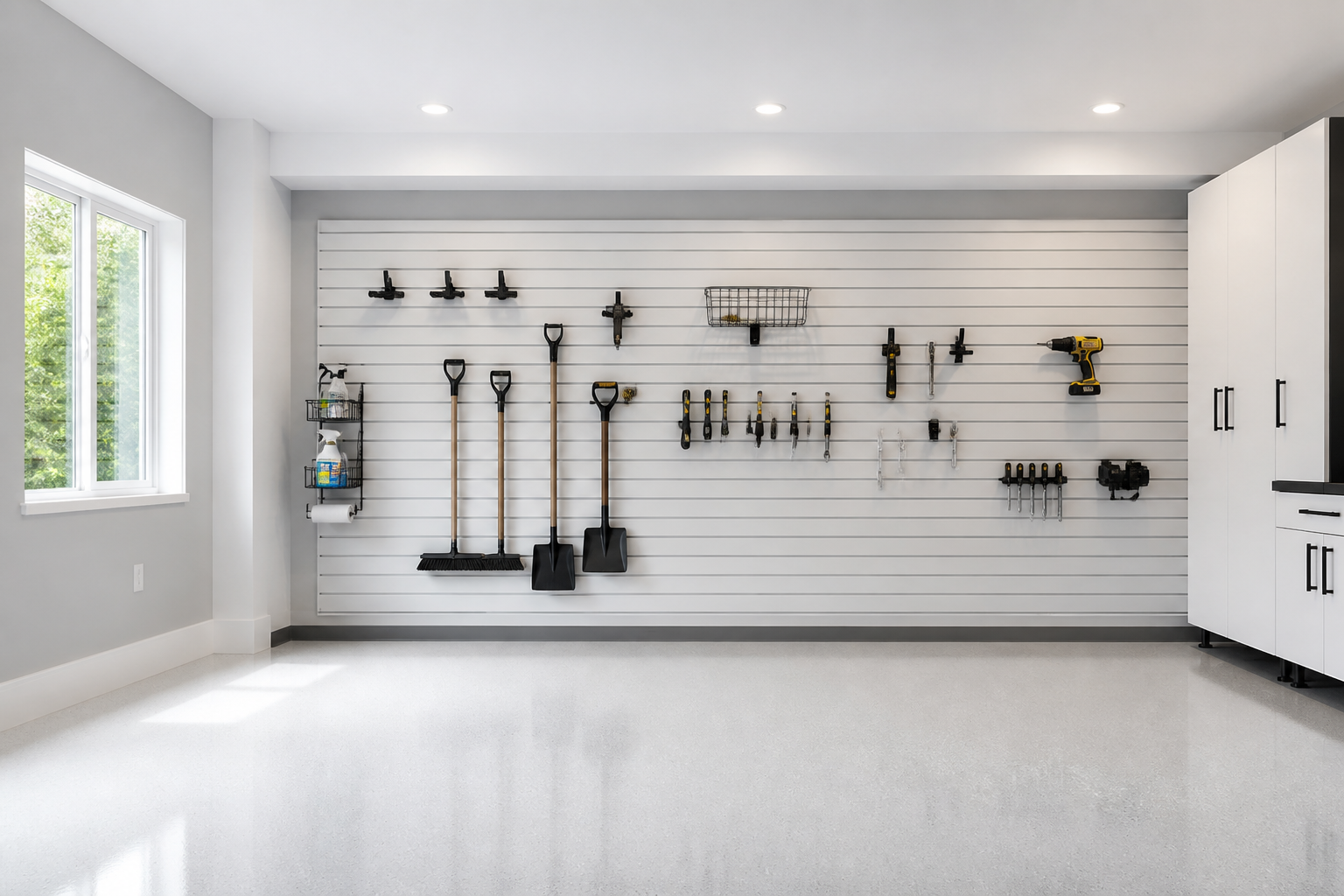
White slatwall creates a clean backdrop for tool storage while keeping everything within reach. The uniform hook system eliminates the random nail-and-screw approach that makes garages look messy. This setup works especially well in smaller garages where every square foot counts.
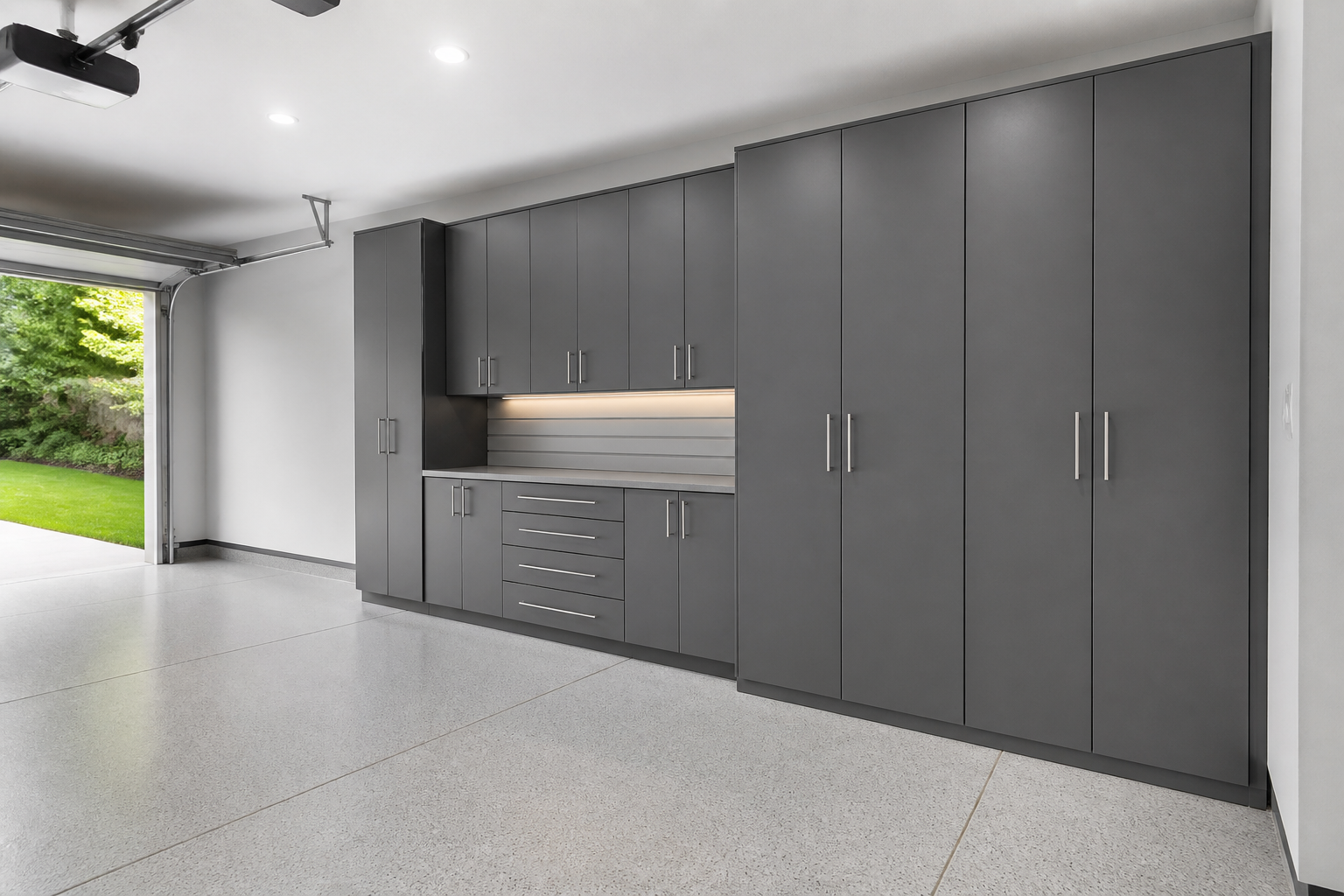
Closed cabinets are the secret to minimalist storage because they hide the visual noise. These gray metal units provide tons of capacity while maintaining a furniture-like appearance. The under-cabinet lighting adds function without cluttering the ceiling.
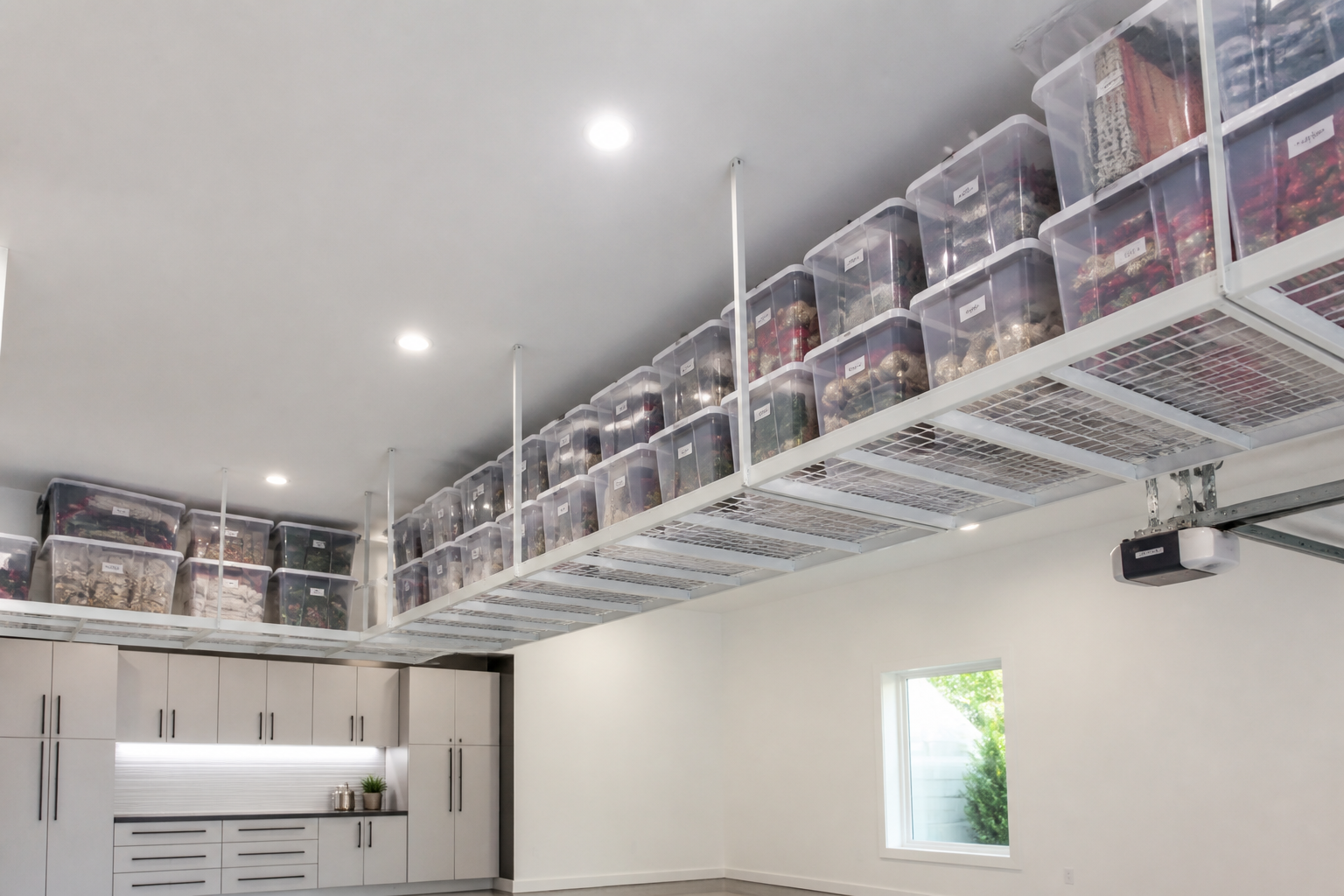
Ceiling racks free up wall and floor space while keeping seasonal items accessible. Clear bins let you see what’s stored without digging through unmarked boxes. Check out more overhead storage solutions if your ceiling height allows for this approach.
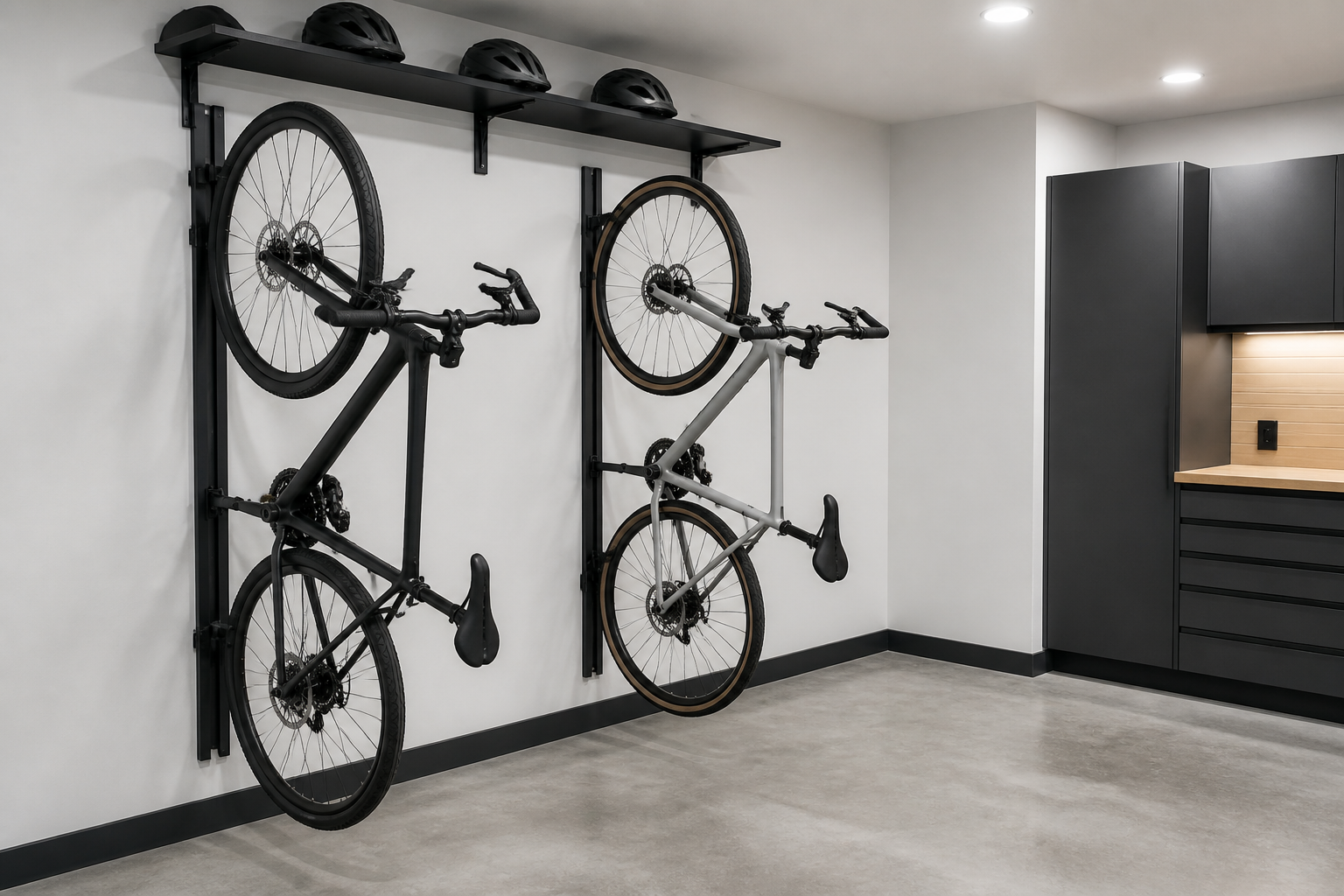
Vertical bike storage uses wall space instead of precious floor area. The simple hook system keeps bikes secure without bulky racks that intrude into the garage. This works great for families who want their bike storage to look intentional.
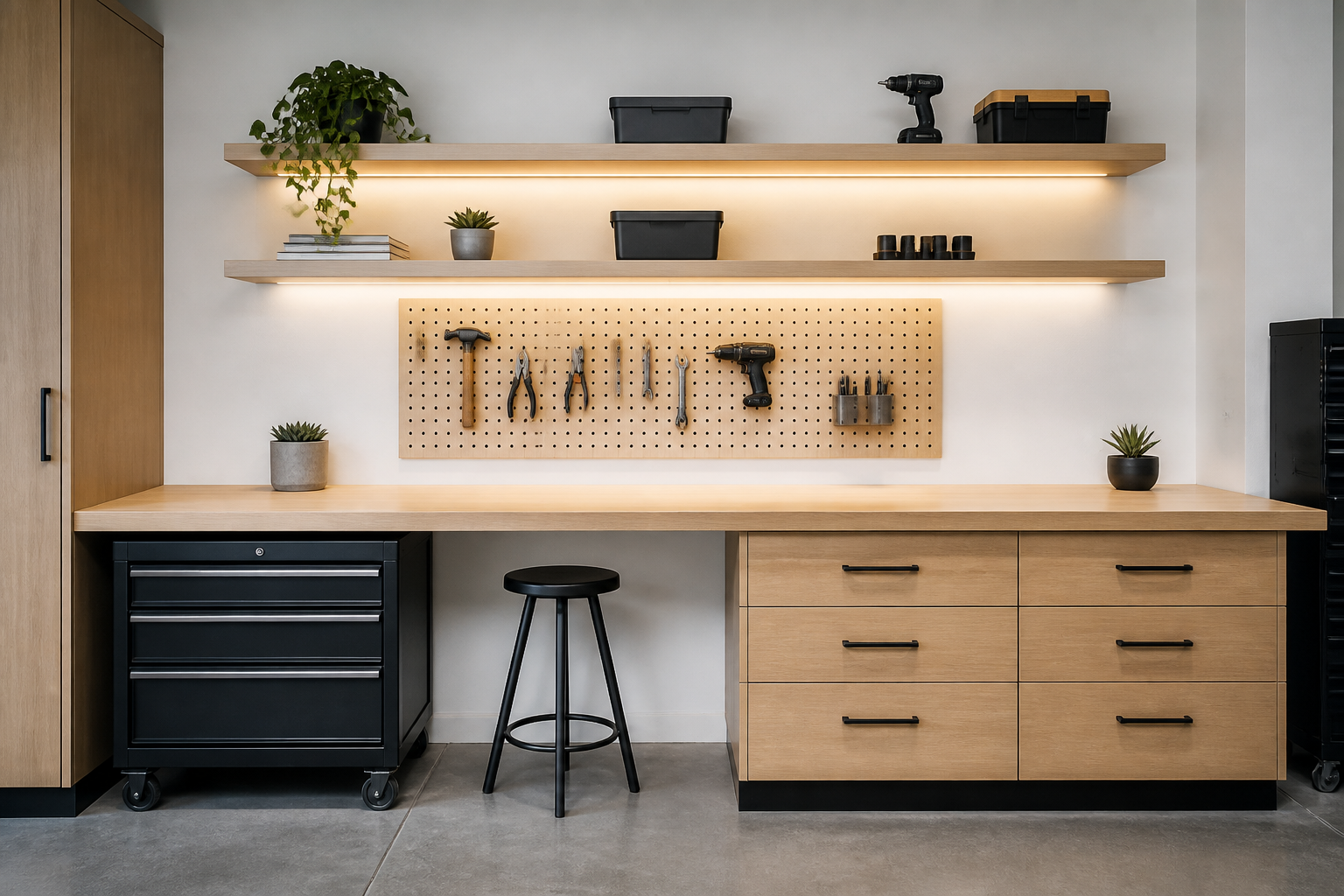
Floating shelves add storage without the heaviness of traditional cabinets. The light wood brings warmth to an otherwise stark space while maintaining clean lines. A small pegboard section provides tool access without covering the entire wall.
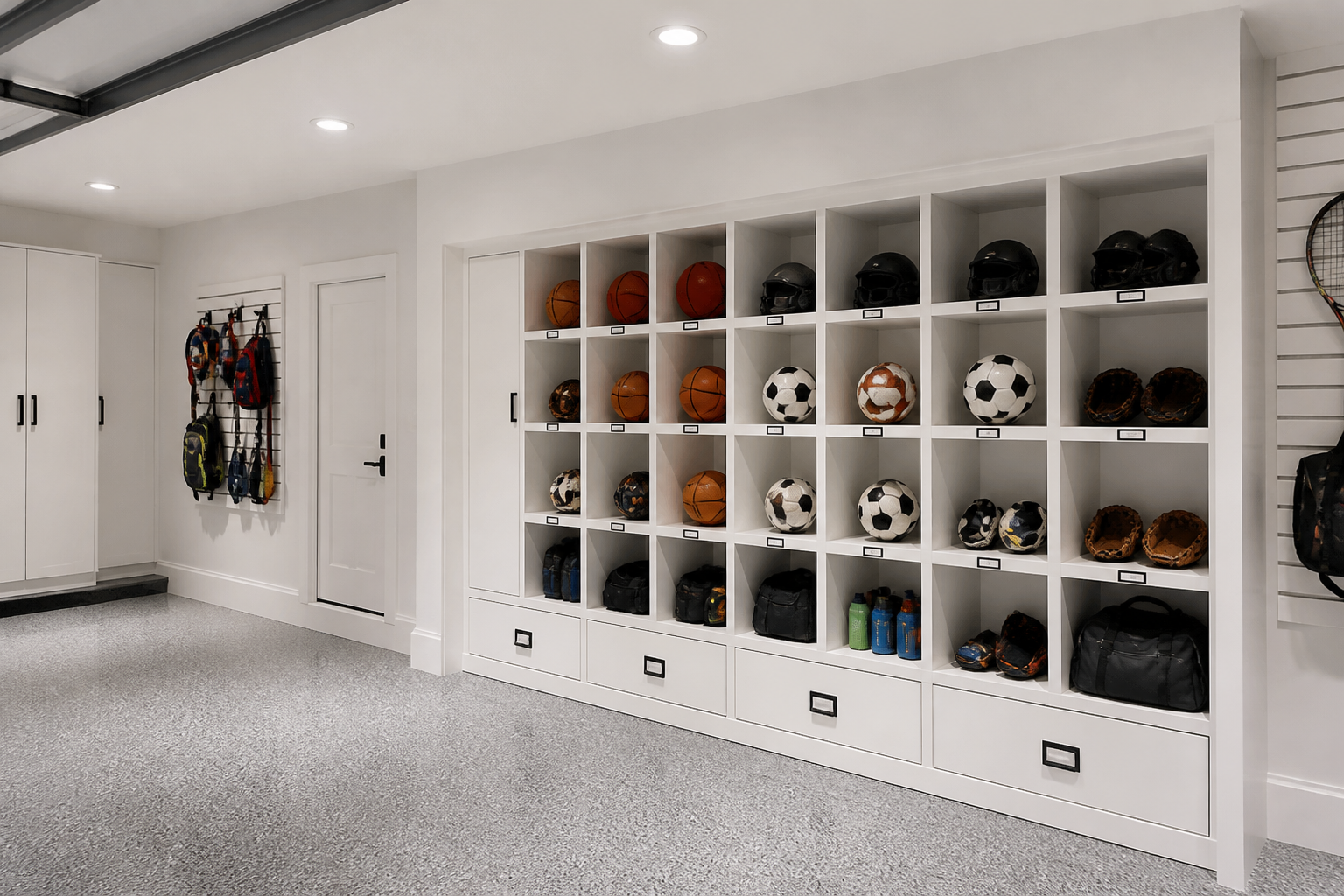
Cubbies assign each sport or family member their own space, eliminating the pile of equipment by the door. This approach works beautifully for ball storage and gear that otherwise ends up scattered. Labels keep everyone accountable for putting things back.
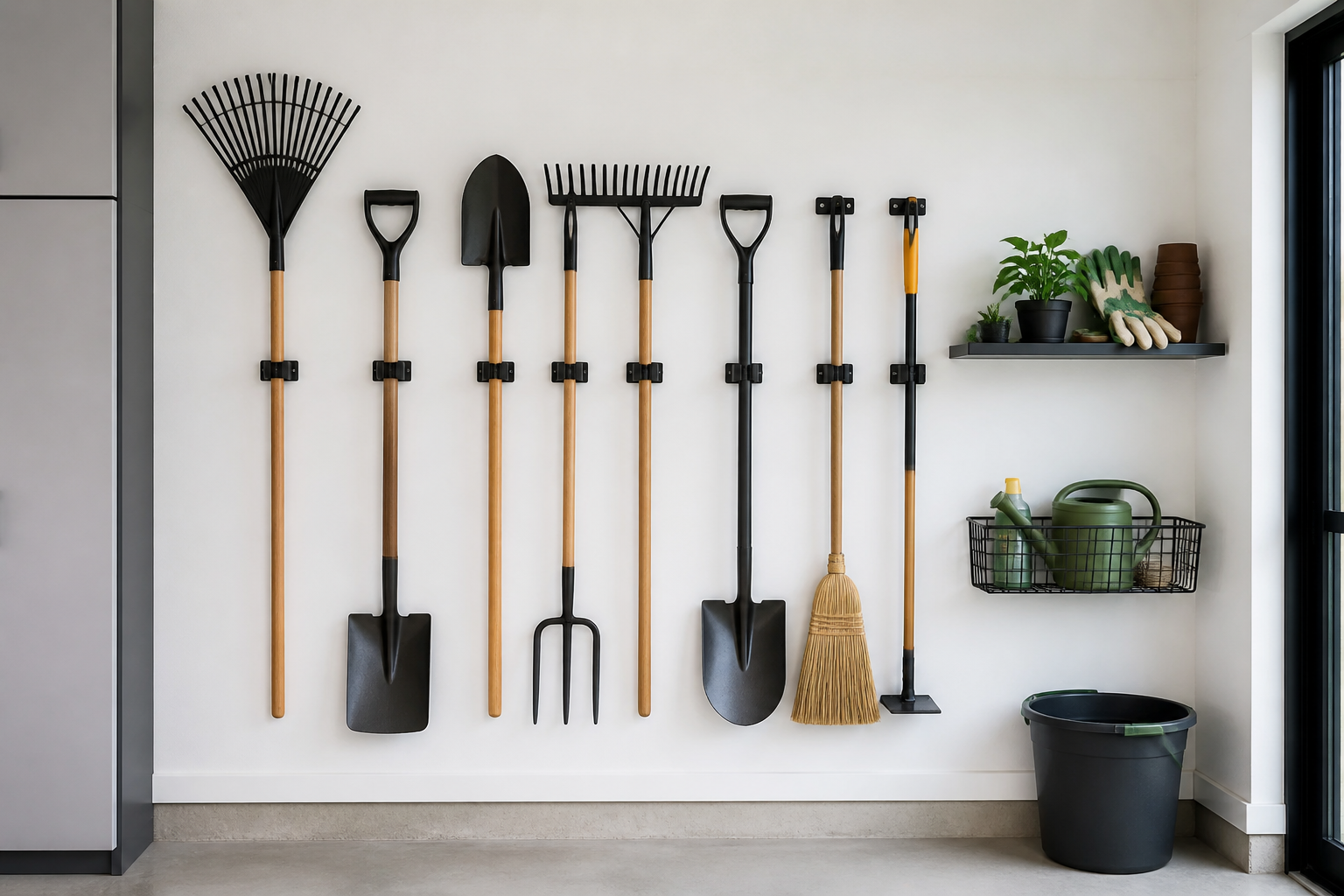
Wall clips keep long-handled tools upright and easy to grab without a bulky storage unit. The aligned handles create a visual rhythm that looks neat even with multiple tools. This simple system prevents the tangled mess that happens when tools lean in a corner.
Simple Layouts
Minimalist layouts prioritize open floor space and clear paths. I’ve noticed that the best designs keep the center of the garage empty, pushing storage to the perimeter where it doesn’t interrupt traffic flow. Symmetry helps create calm, but function always comes first. The key is to plan zones for different activities rather than randomly placing storage wherever it fits. A simple layout makes your garage easier to use and maintain.
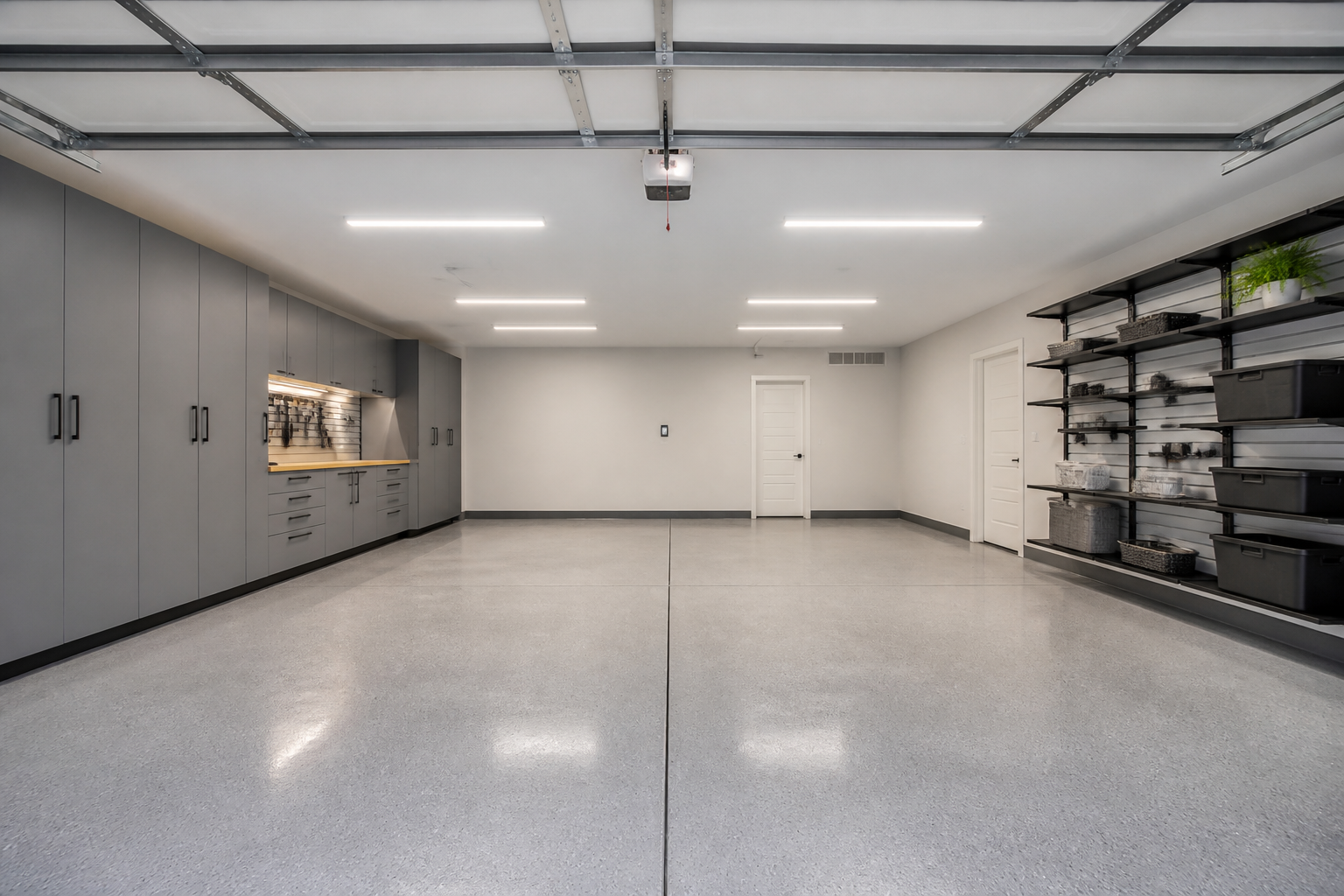
Keeping the center clear makes parking and moving around effortless. This layout confines all storage to the perimeter, creating a spacious feel even in a standard garage. The symmetrical approach brings visual order to the space.
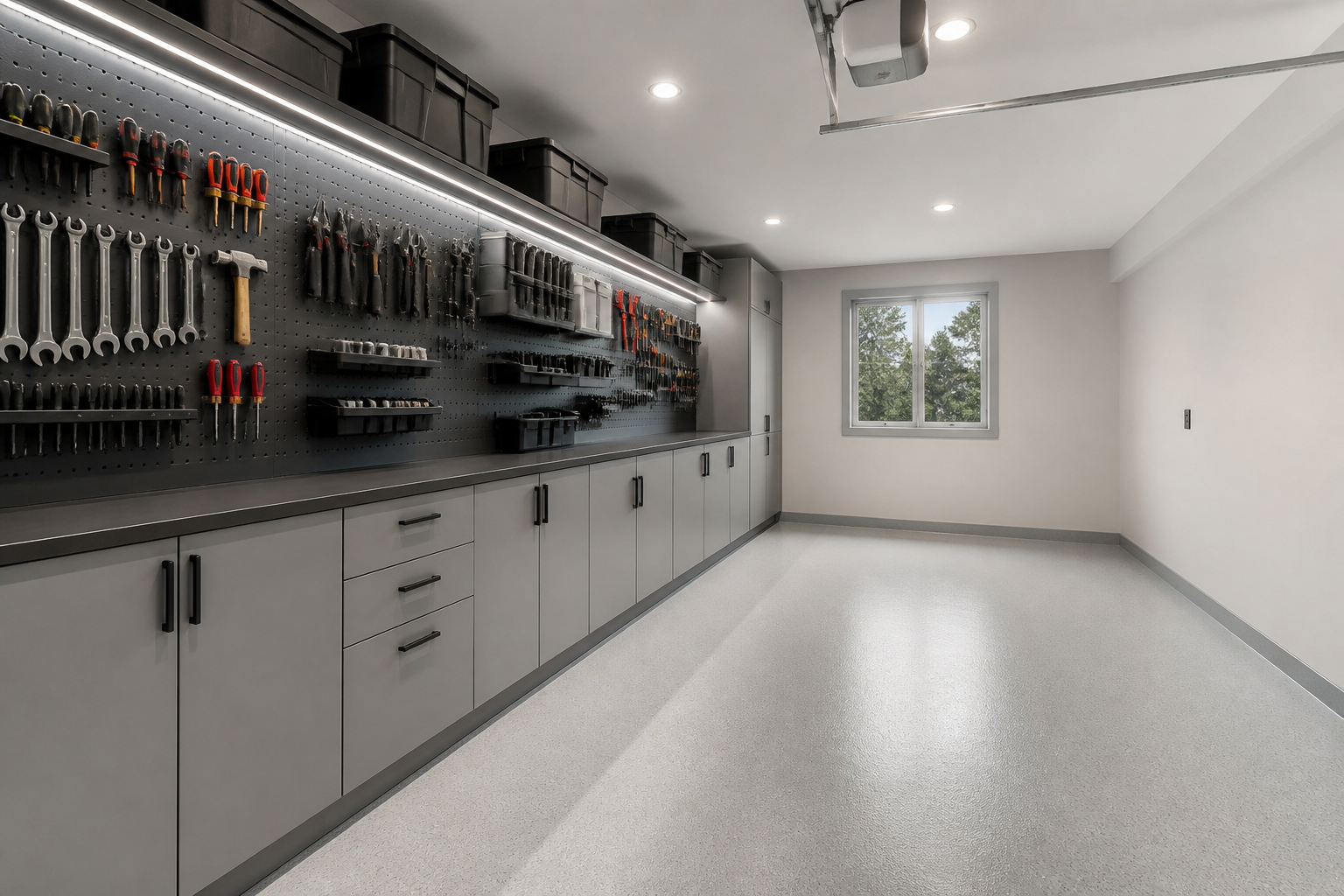
A one-wall system works perfectly when you need to maximize parking space. Everything goes on a single wall, leaving the rest of the garage open for vehicles or projects. This is my favorite approach for one-car garages where space is tight.
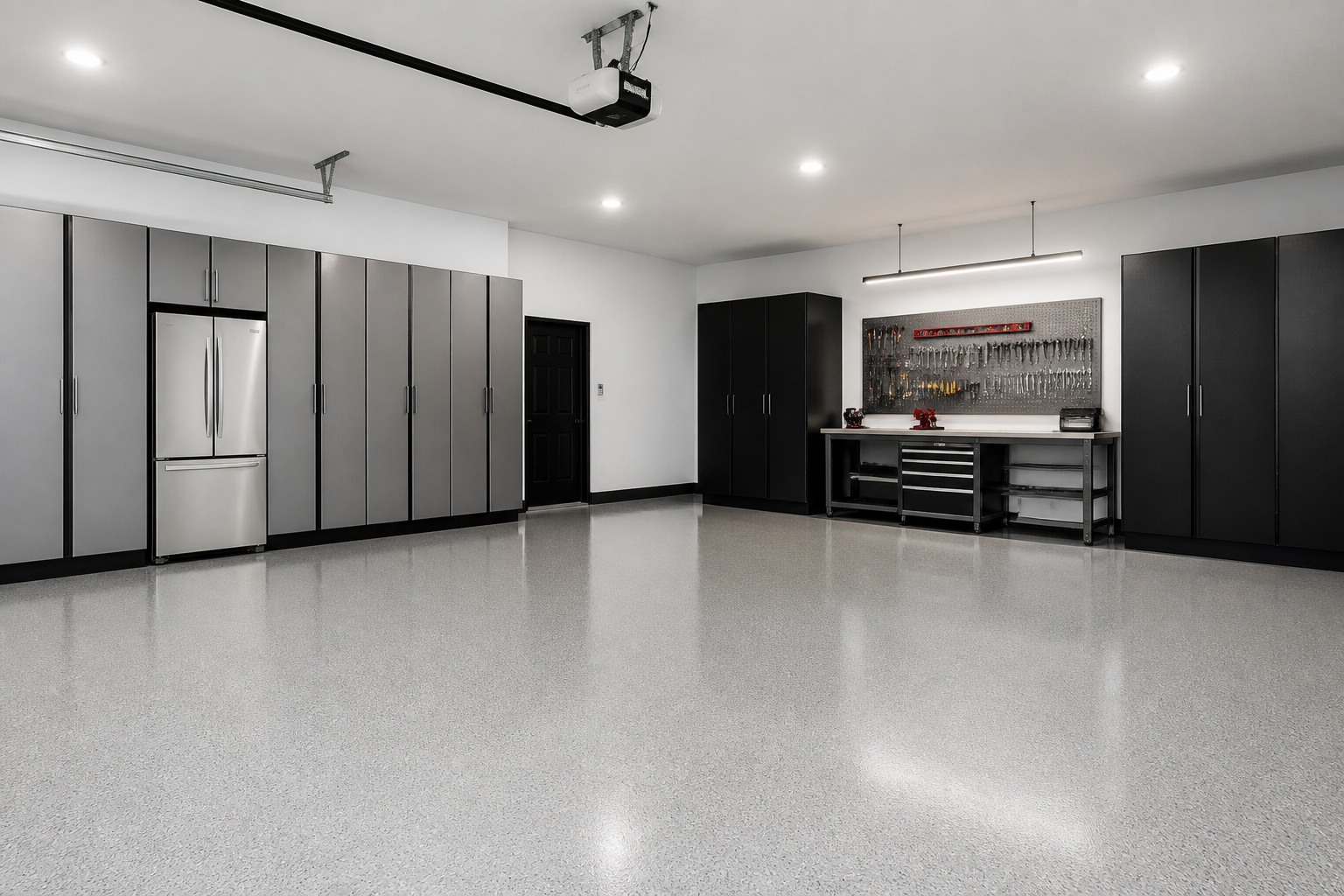
Creating a dedicated work zone in one corner keeps projects contained. The simple bench and overhead lighting define the area without walls or dividers. This zoned approach prevents workshop clutter from spreading across the entire garage.
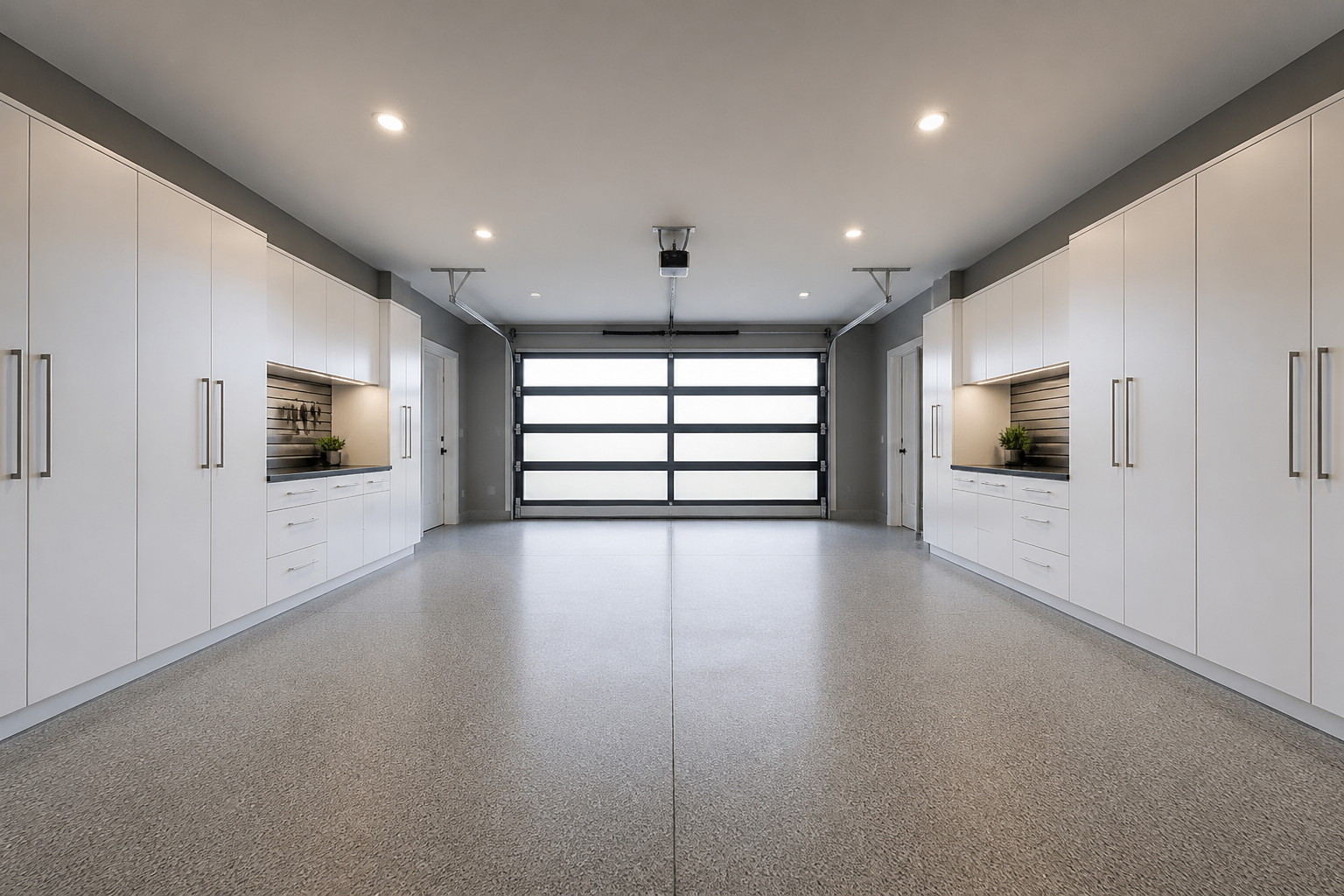
Symmetrical layouts create an instant sense of order and calm. Matching storage on both sides balances the space visually while doubling your capacity. The clear center aisle maintains easy access to everything.
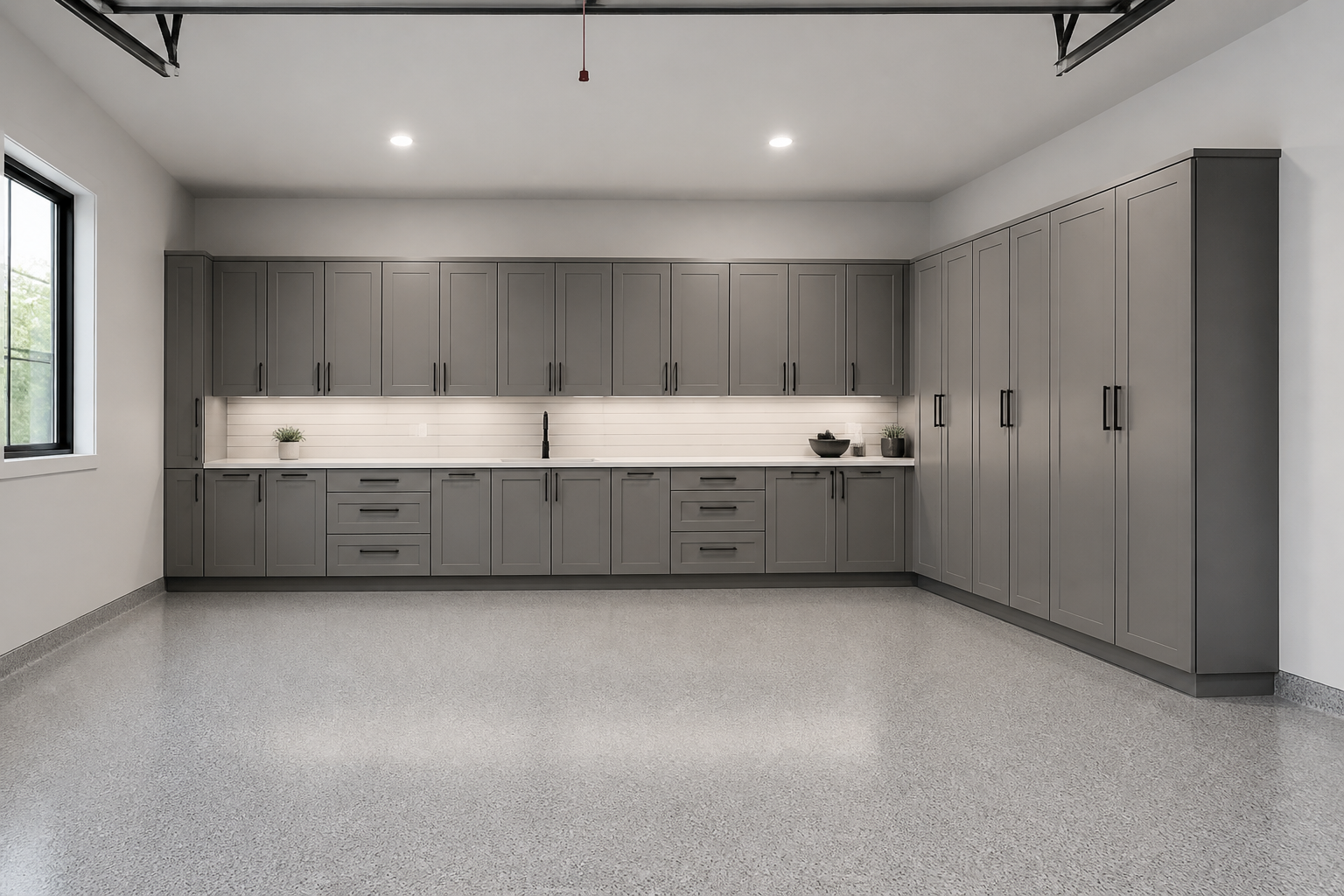
An L-shaped layout maximizes storage while maintaining openness. The configuration uses the back and one side wall, leaving plenty of room for parking and movement. This works great when you want storage capacity without boxing in the space.
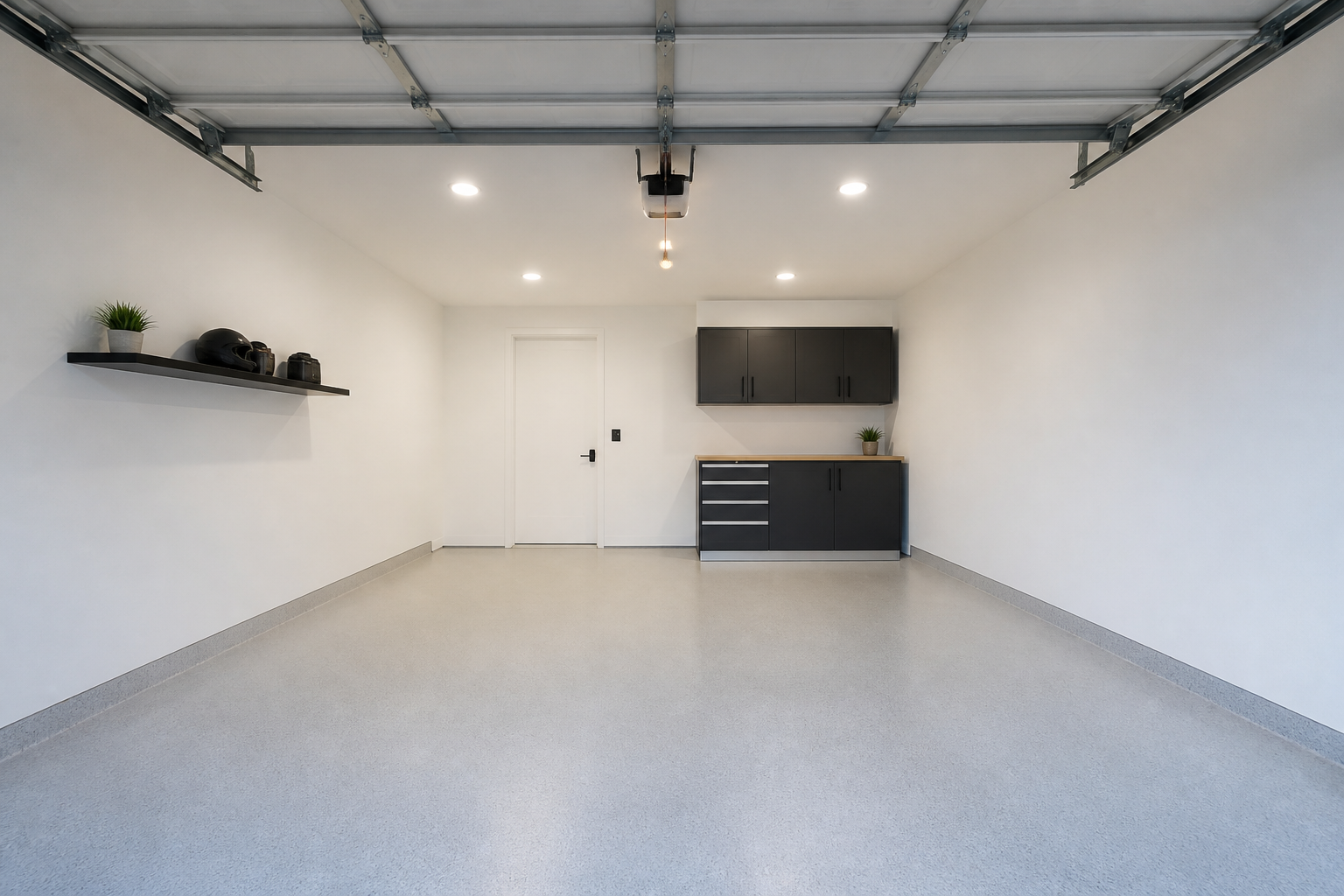
Sometimes the simplest layout means having only what you truly need. This garage proves you don’t have to fill every wall with storage. The negative space makes the room feel larger and less cramped.
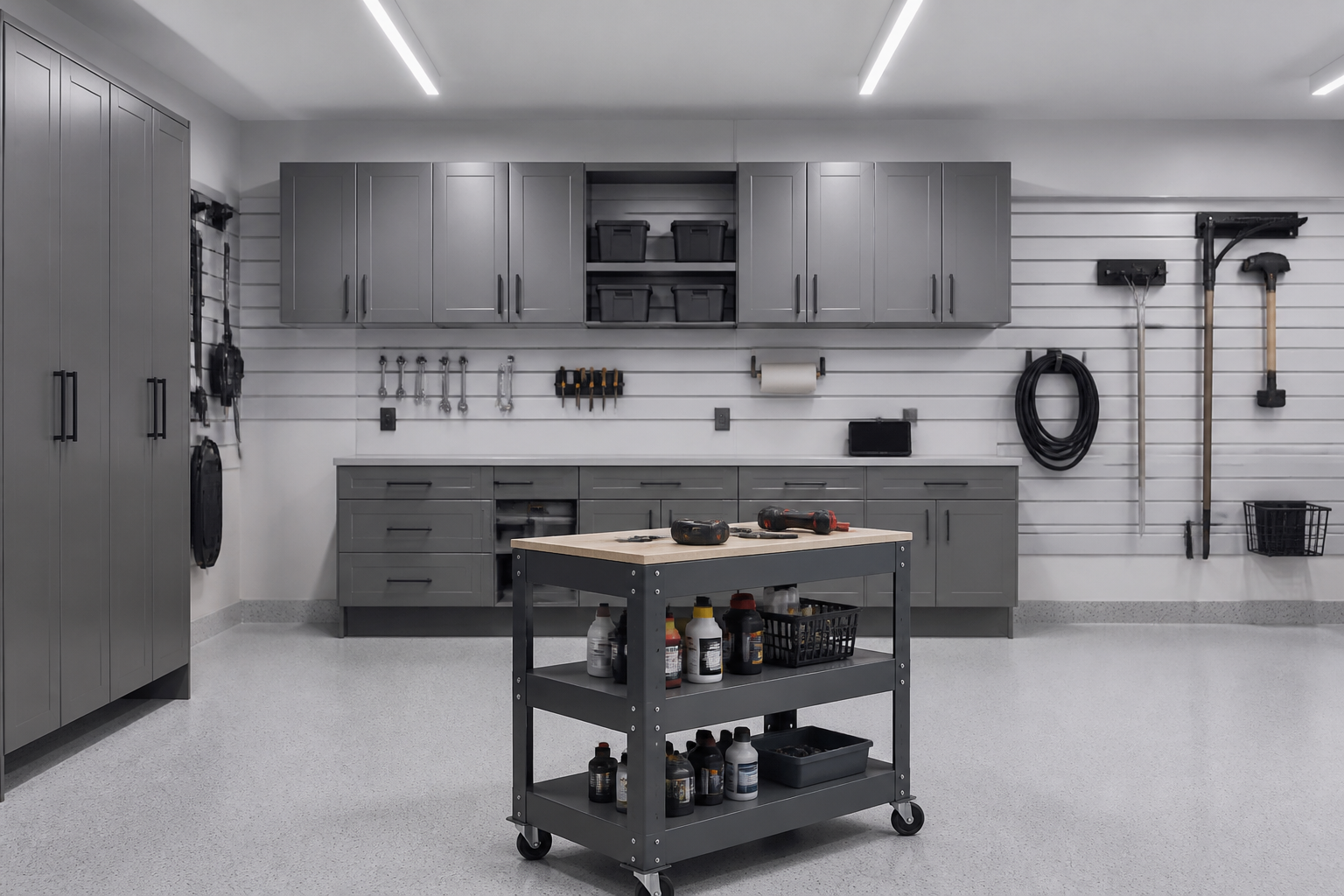
A mobile cart adds flexibility to a minimalist layout without permanent fixtures. You can roll it to where you’re working, then tuck it away when done. This approach keeps the layout simple while adapting to different projects.
Neutral Tones
Neutral colors form the foundation of minimalist garage design. White, gray, black, and natural wood tones create a cohesive look that feels calm rather than chaotic. I stick with a limited palette of two or three colors throughout the space, which makes everything feel intentional. Neutral doesn’t mean boring, it means the focus stays on function rather than competing colors. These tones also make the garage feel cleaner and more spacious.
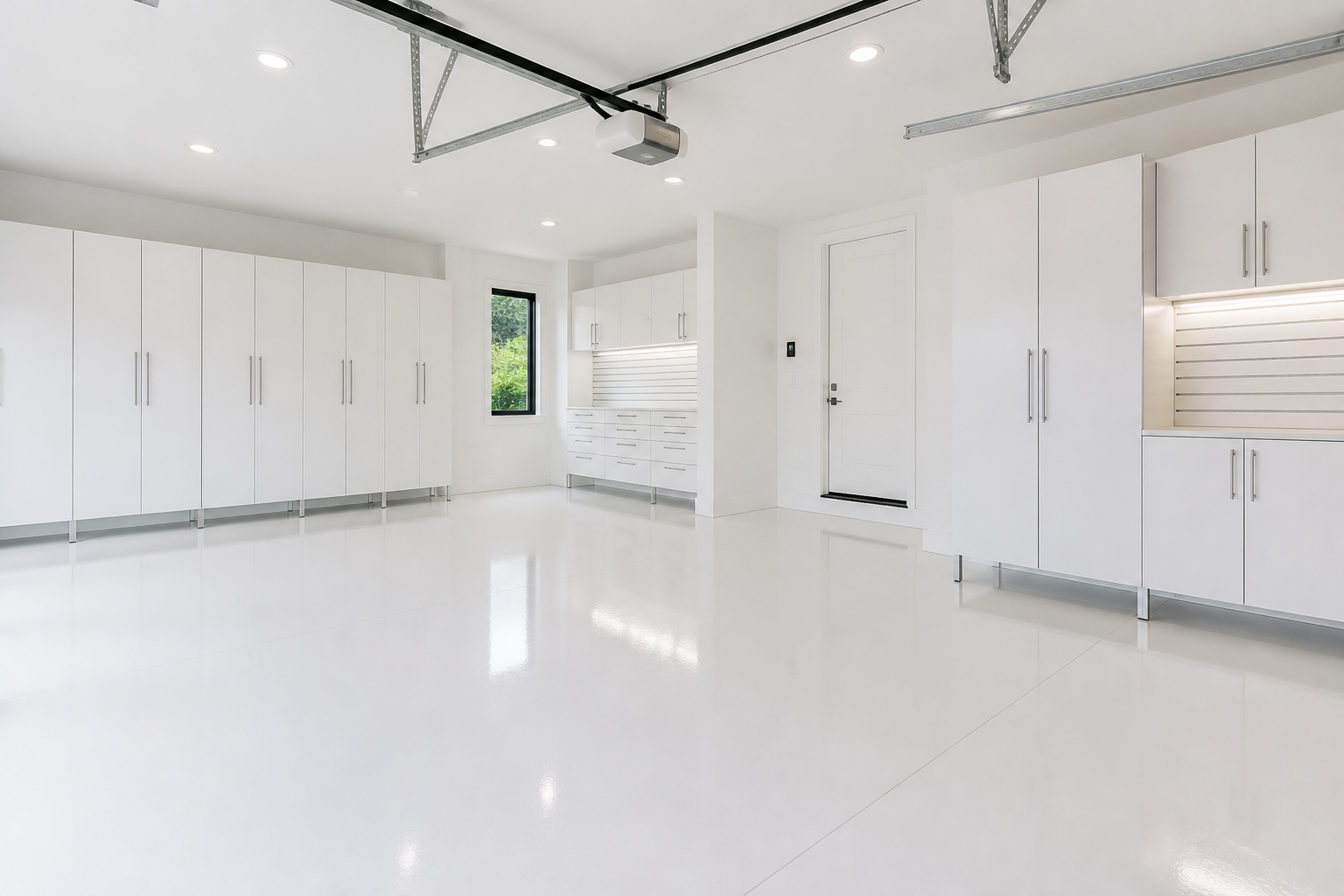
An all-white garage reflects maximum light and creates a studio-like atmosphere. The monochromatic approach makes the space feel larger and emphasizes cleanliness. Chrome hardware adds just enough contrast without breaking the color scheme.
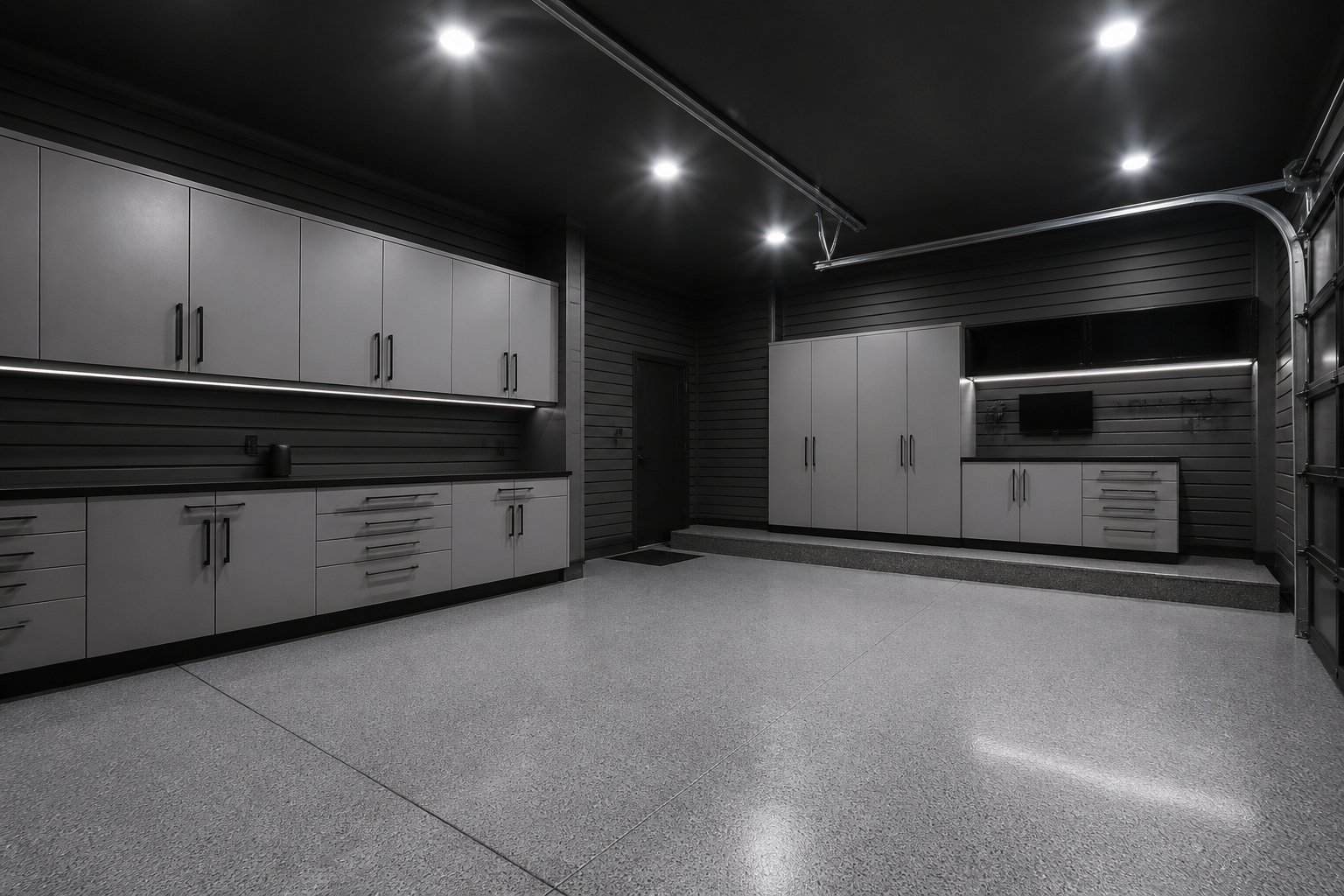
A graduated gray palette adds depth without color. The mix of charcoal, medium, and light grays creates visual interest while staying firmly neutral. Black metal accents tie the scheme together and add definition.
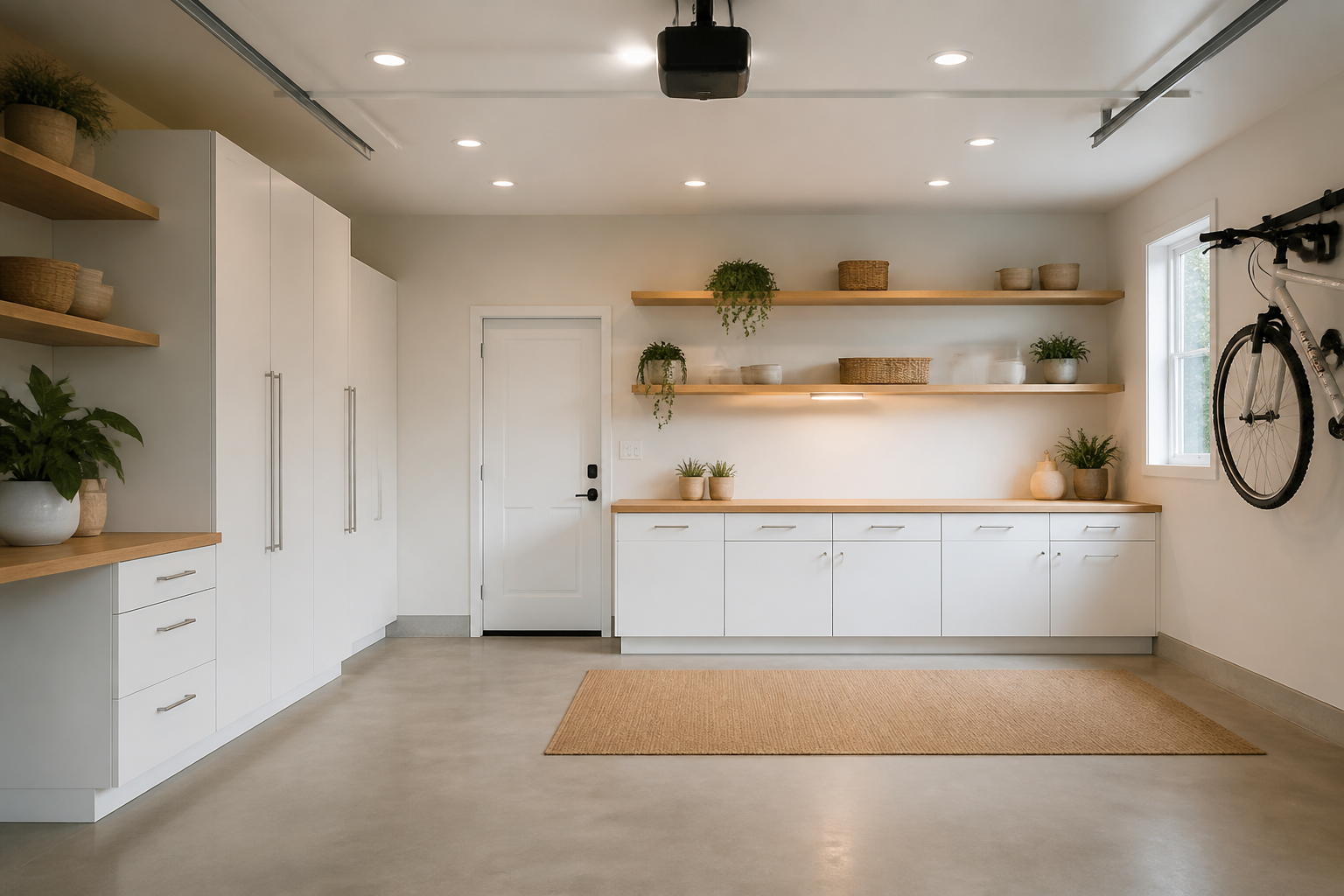
Natural wood brings warmth to an otherwise cool palette. Light wood shelves and bench tops soften the starkness of white walls and cabinets. This Scandinavian-inspired combination feels welcoming while staying minimal.
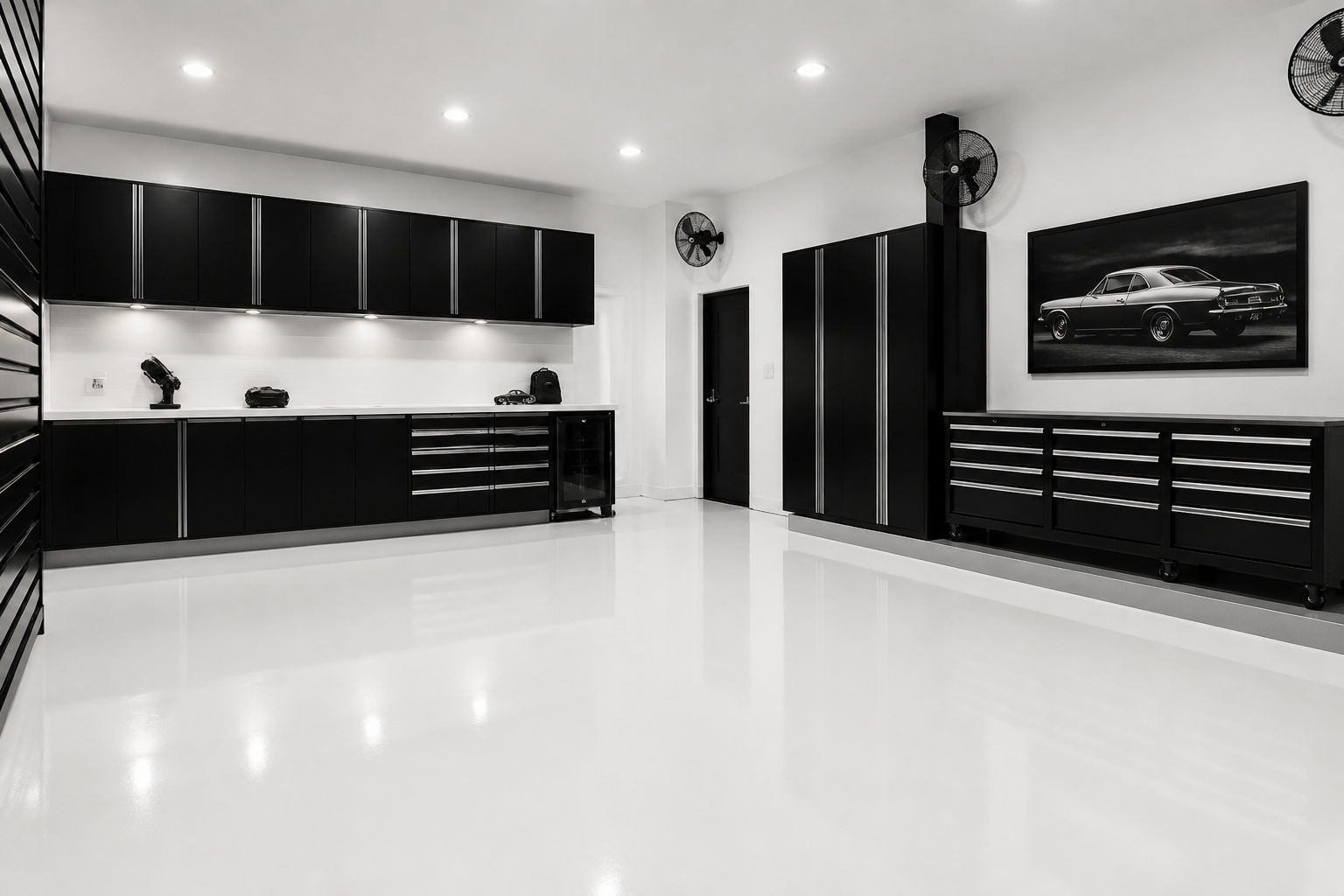
Black cabinets against white walls create drama within a neutral scheme. The high contrast makes a statement while keeping things simple. This bold approach works when you want your storage cabinets to stand out as design elements.
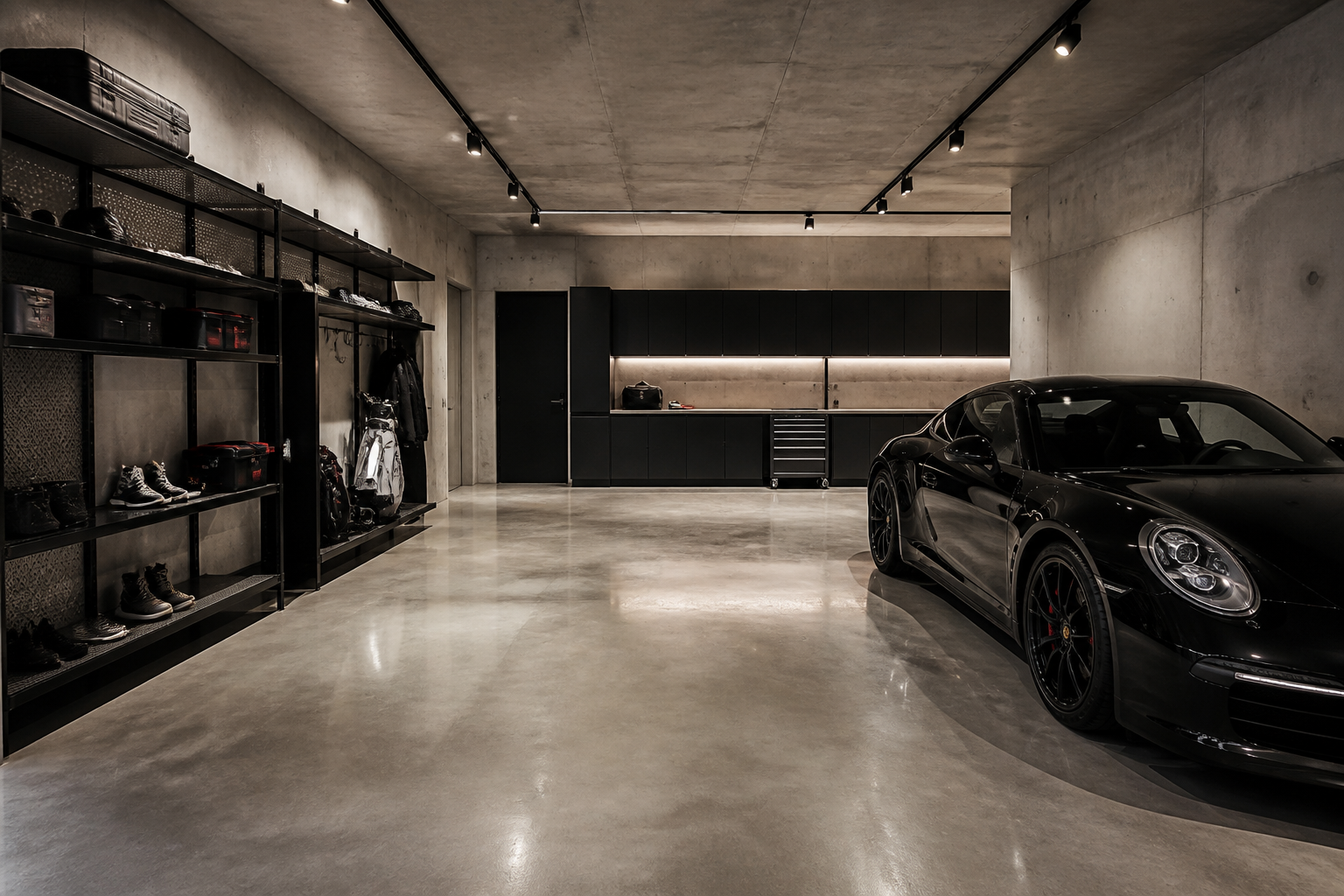
Exposed concrete embraces an industrial neutral palette. The raw material provides texture and character without added color. Sealed and polished concrete maintains the minimalist vibe while being extremely durable.
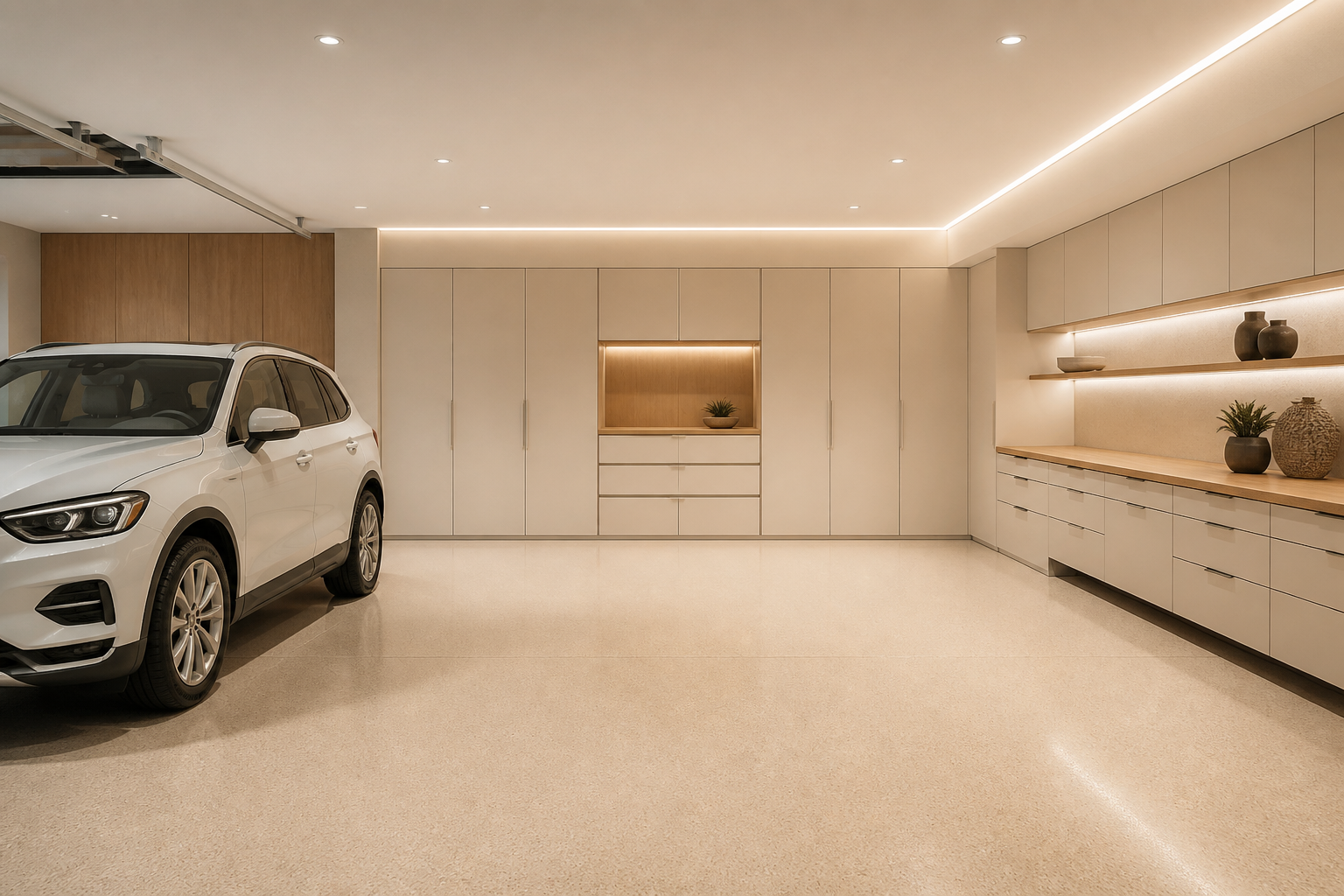
Warm neutrals like beige and cream offer a softer alternative to stark white. This palette feels more inviting while maintaining the minimalist aesthetic. The warmer tones work especially well in garages that connect to living spaces.
