

As an Amazon Associate I earn from qualifying purchases.
Modern garages have come a long way from bare concrete and pegboard hooks. Whether you want a sleek workshop, a clean parking space, or something in between, the right design choices make a huge difference. In this article I’m covering four areas that define the modern garage look: clean cabinet systems, minimalist color schemes, smart storage walls, and polished floor finishes.
Clean Cabinet Systems
Nothing pulls a garage together faster than a well-designed cabinet system. When everything has a home behind closed doors, the space instantly looks intentional rather than cluttered. I’ve seen garages go from chaotic to showroom-quality with nothing more than a run of matching cabinets along one wall. If you’re weighing your options, my guide to steel vs. modular garage cabinet systems breaks down the real differences in durability, cost, and customization. The ideas below range from full wall-to-wall installations to compact single-wall setups, so there’s something here regardless of your square footage.
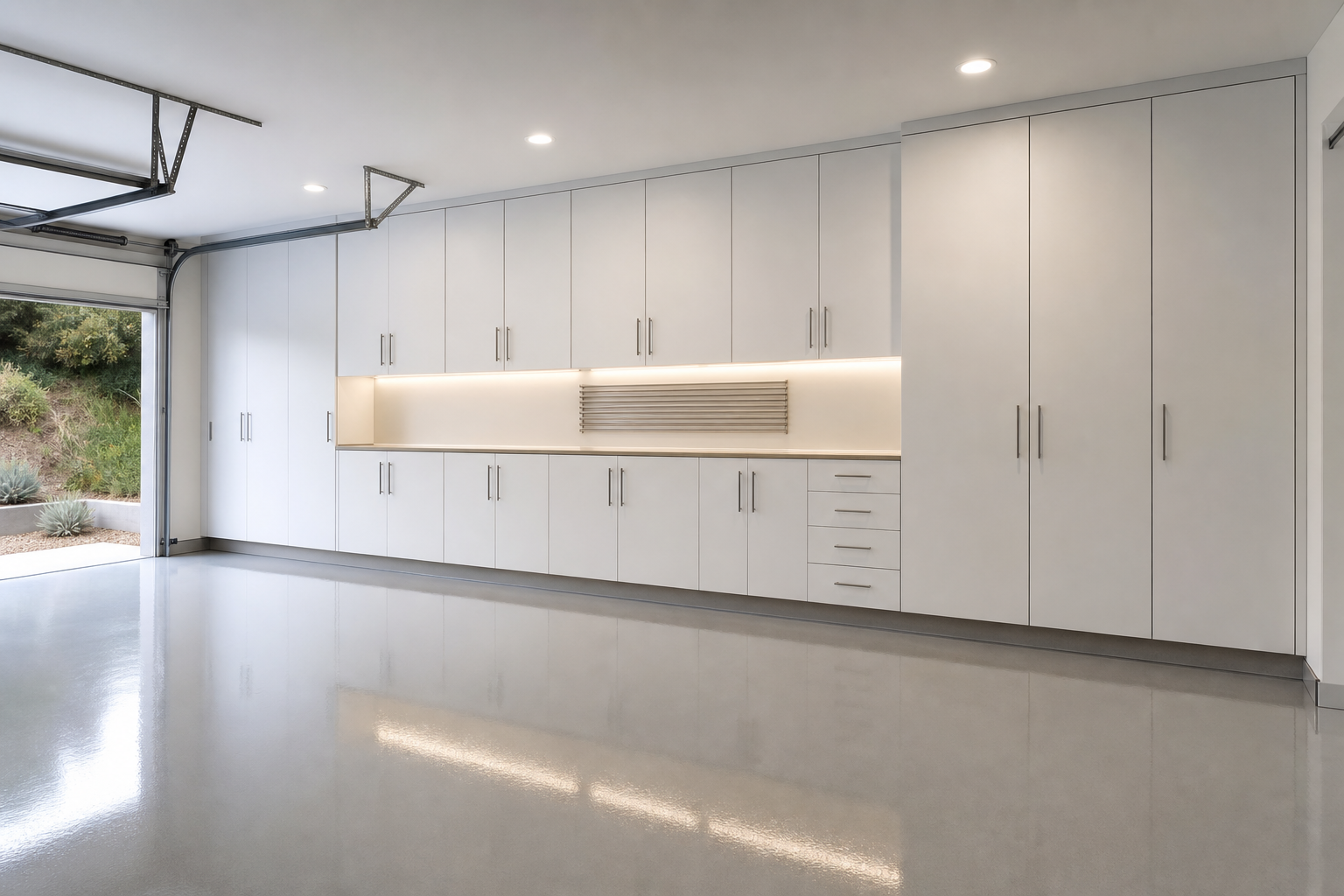
Matte white flat-panel doors give this full-wall cabinet run a furniture-grade look without the furniture price. Thin stainless bar pulls add just enough contrast without breaking the clean lines. LED strips tucked under the upper row light the workbench area without any exposed hardware.
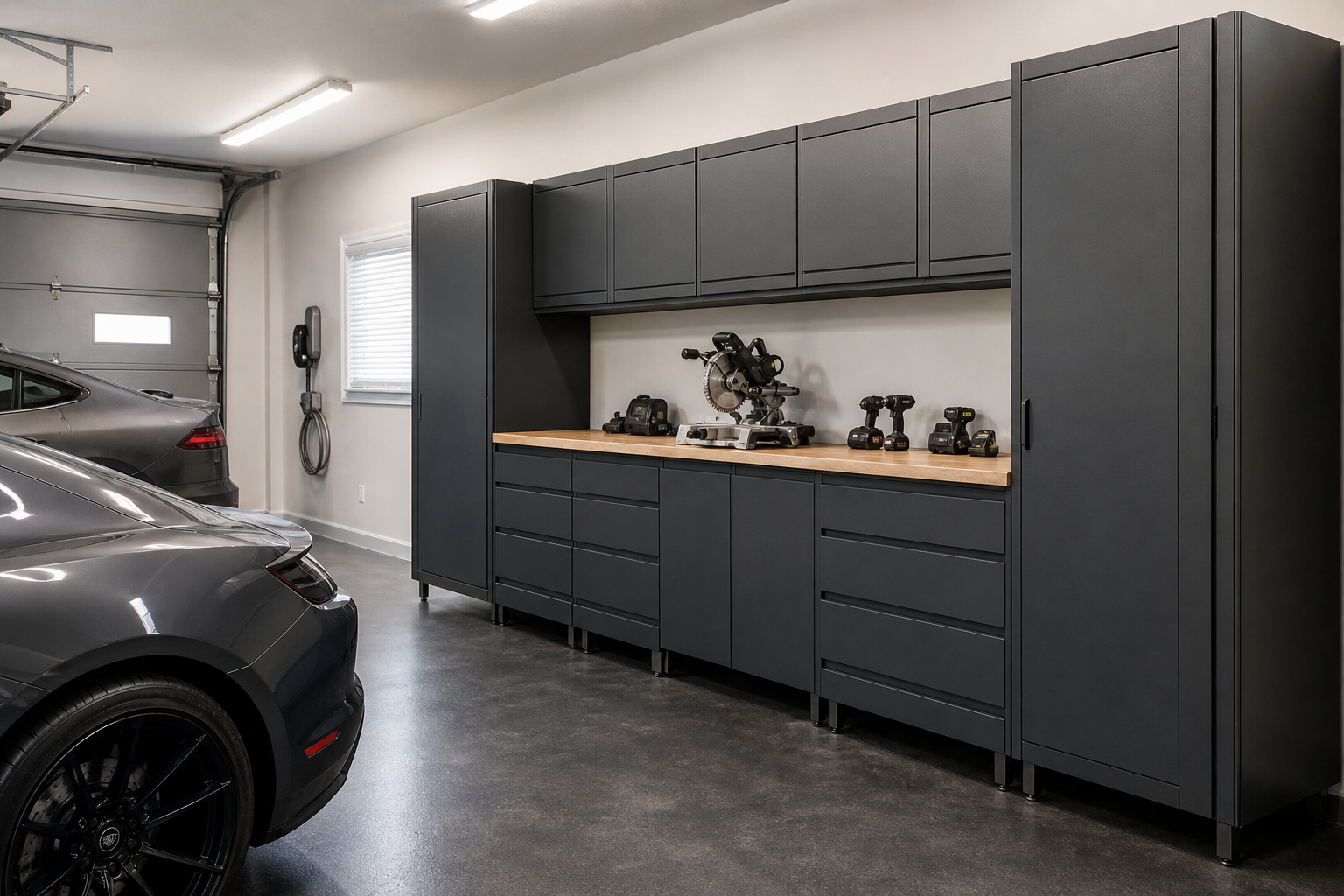
Charcoal gray steel cabinets pair well with a warm butcher block top, softening what could easily feel like an industrial space. The mix of tall columns for long-handled tools and base units for bins keeps the layout practical. If you want to compare budget-friendly options for a setup like this, check out my breakdown of the best garage storage systems for every budget.
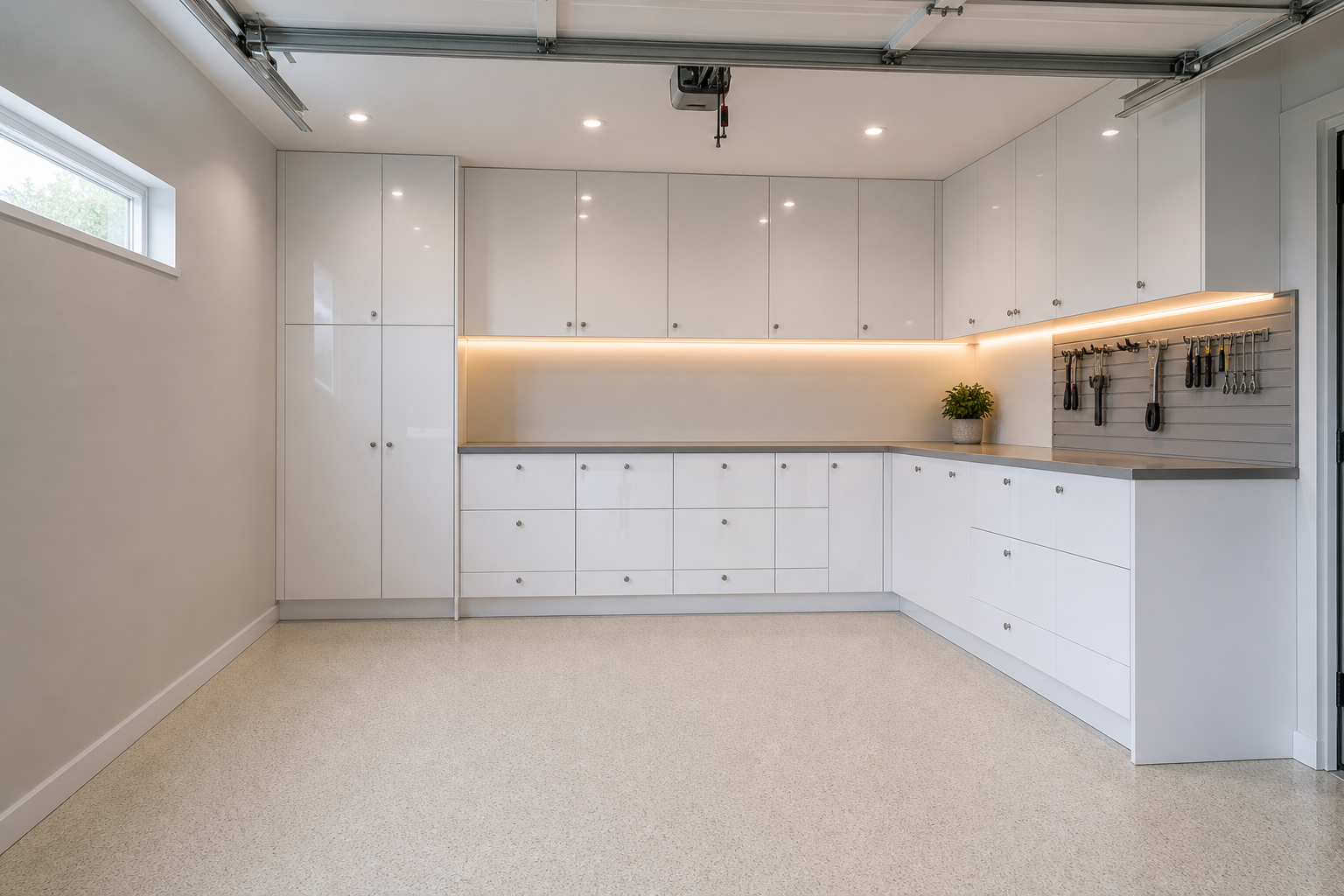
Gloss laminate fronts bounce light around a smaller garage, making the space feel larger than it is. An L-shaped run wraps two walls efficiently, giving you more linear feet of storage without taking up floor space. The warm LED strip underneath keeps the workbench well lit during evening projects.
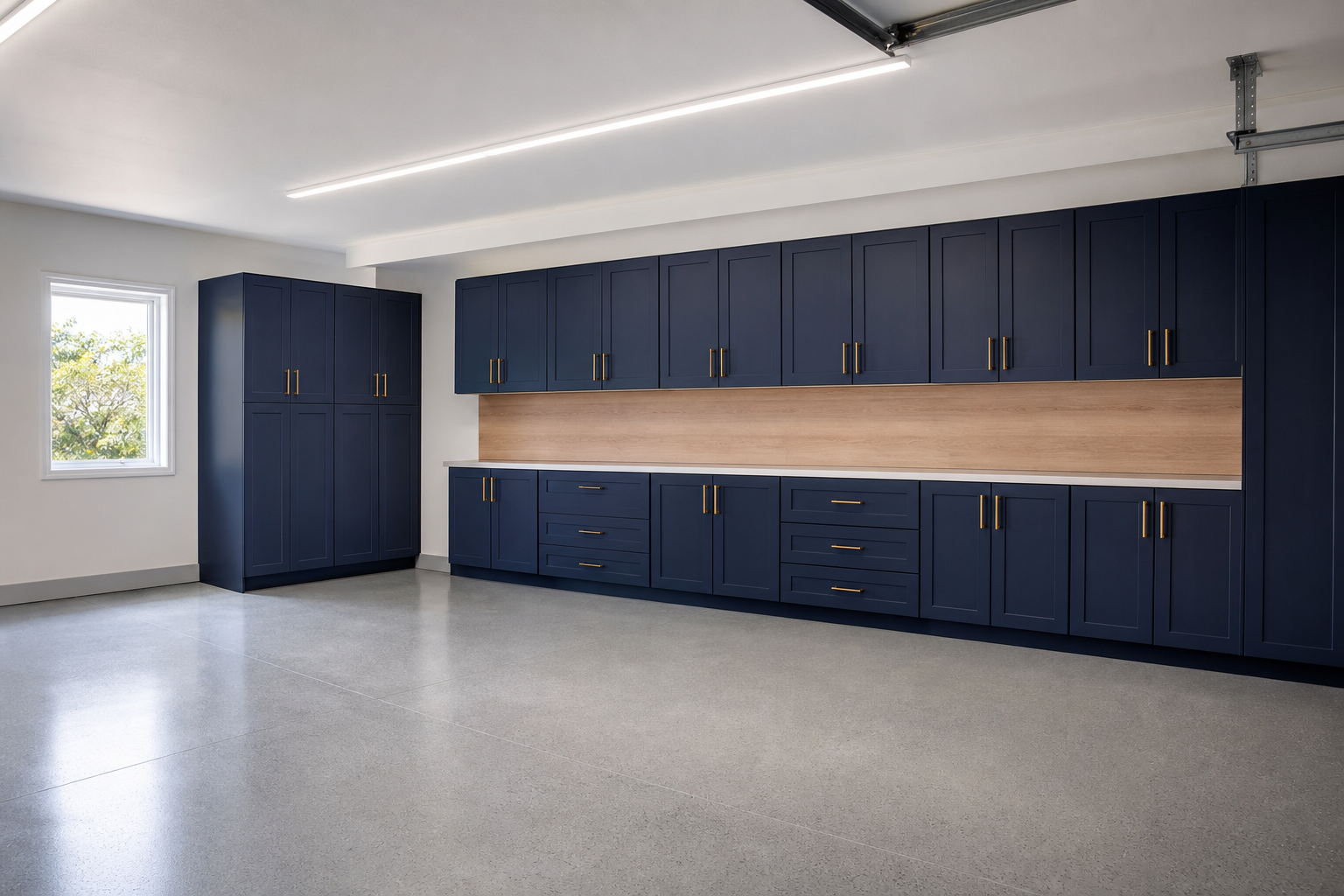
Navy shaker doors bring in a bold color choice that still reads as polished rather than loud. Brushed gold hardware and a light oak accent strip give the whole wall a kitchen-quality finish. It’s an easy way to make your garage look expensive without a full renovation budget.
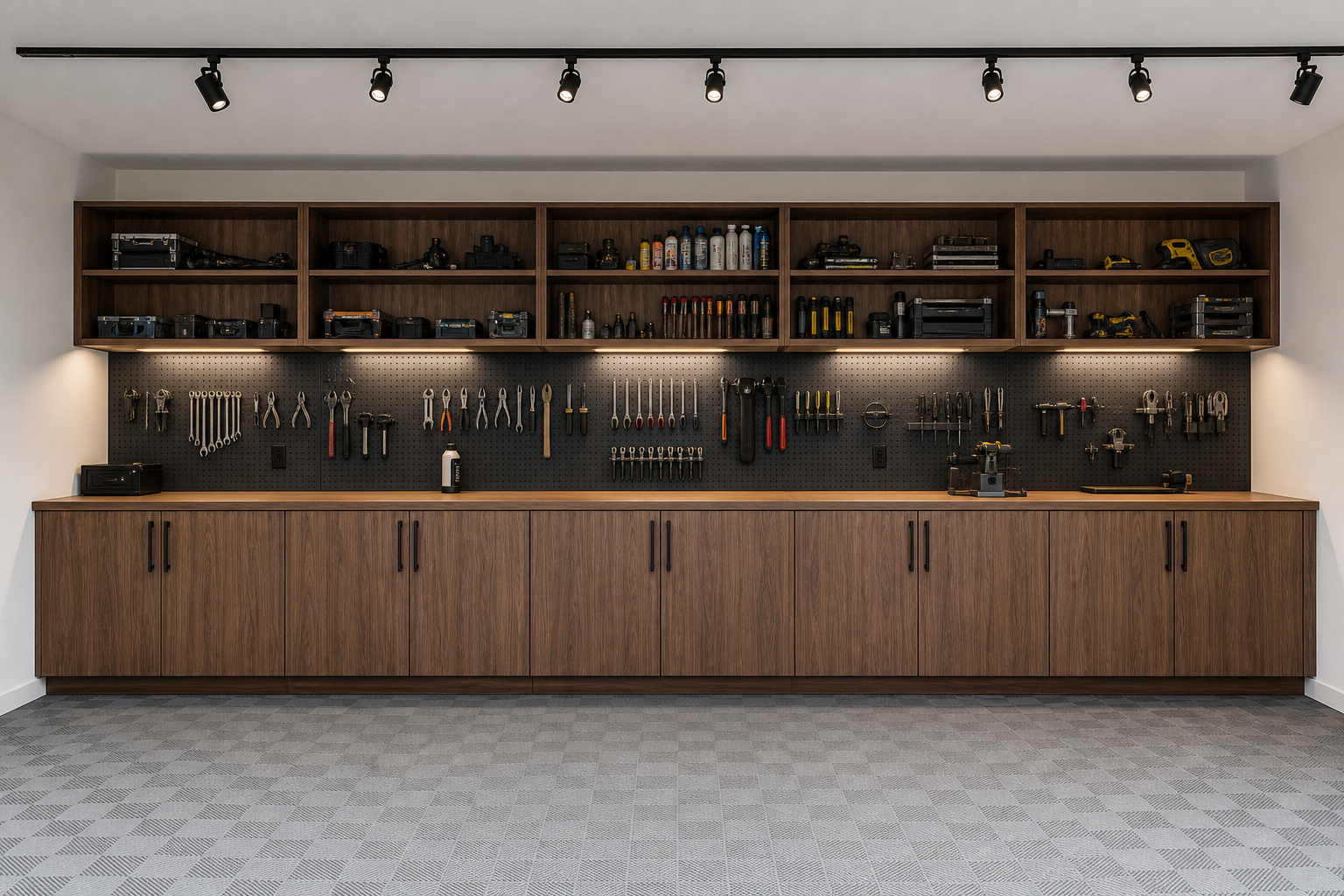
Warm walnut veneer panels add a woodworking-shop character that plain gray cabinets just can’t match. The hybrid design keeps frequently used hand tools accessible on open shelves while hiding bulkier supplies behind closed doors below. Black matte handles and track lighting pull the look into clean, contemporary territory.
Minimalist Color Schemes
Color is one of the most underused tools in garage design. Most people default to builder-grade off-white walls and call it done, but a deliberate two- or three-color palette can completely change how the space feels. The key to a minimalist scheme is restraint. Pick one dominant neutral, one accent, and let good lighting do the rest. I cover a lot of this thinking in my minimalist garage ideas post, but the images below give you some concrete starting points. These palettes work whether you’re parking cars, running a home gym, or building out a workshop.
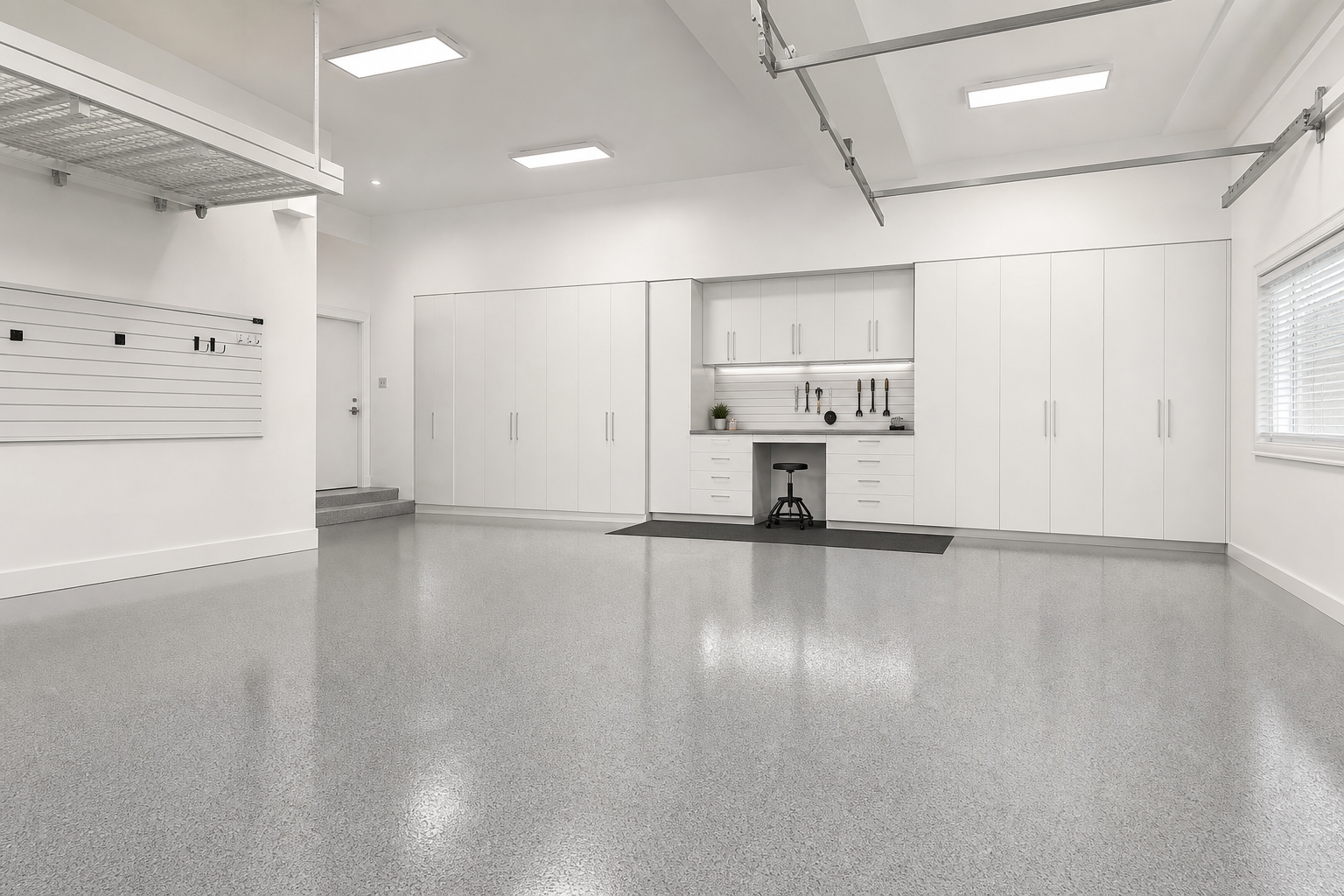
An all-white garage reads crisp and open, especially in a single-car space where low light is common. The pale gray epoxy floor keeps things grounded without competing with the walls. A few black accents, a mat, a stool, prevent the space from feeling sterile.
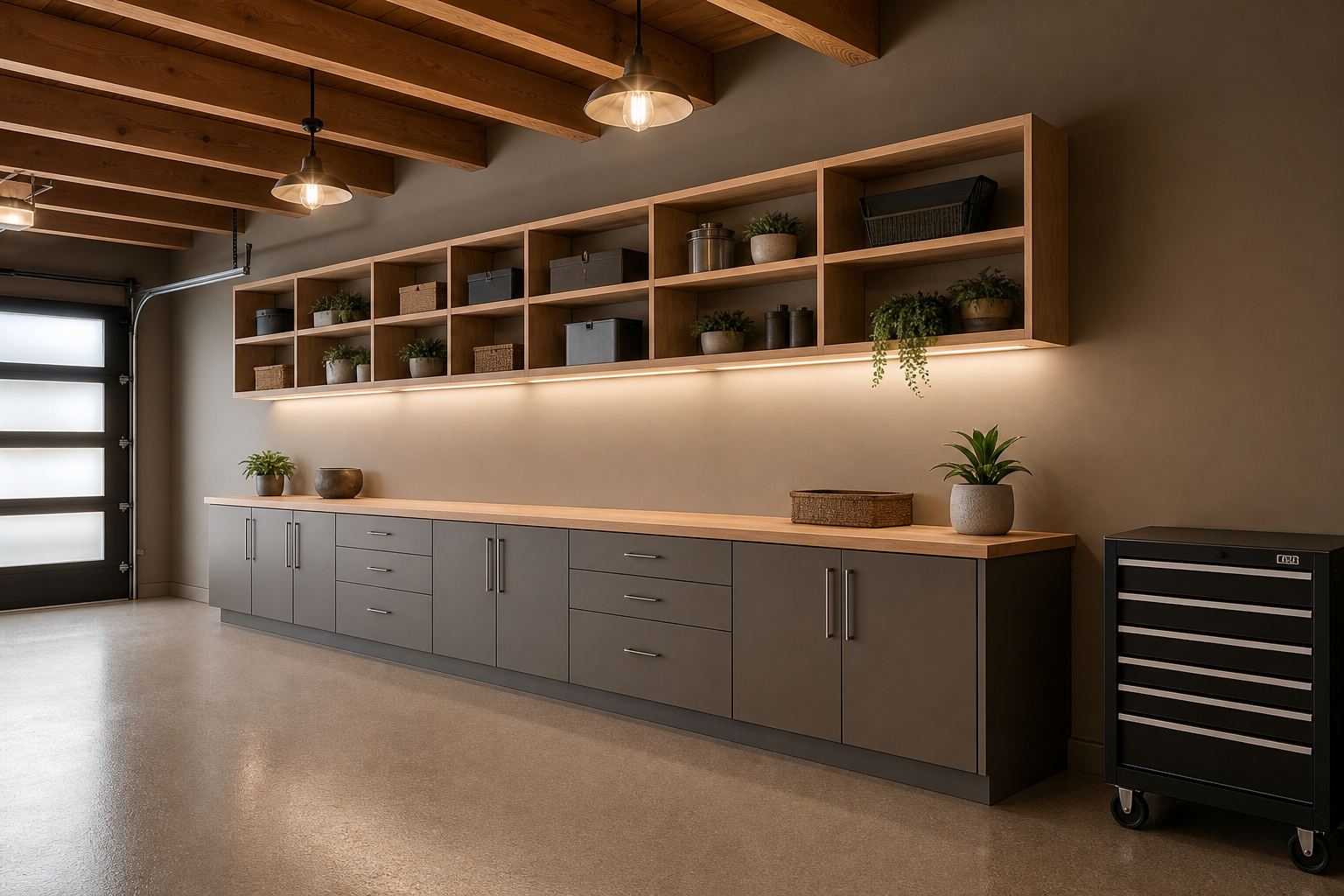
Greige walls and a taupe floor create a warm, cohesive base that works well with natural wood accents. Edison-style bulbs lean into the warmth and keep the atmosphere from feeling clinical. This kind of tonal palette is forgiving, minor scuffs and everyday wear blend right in.
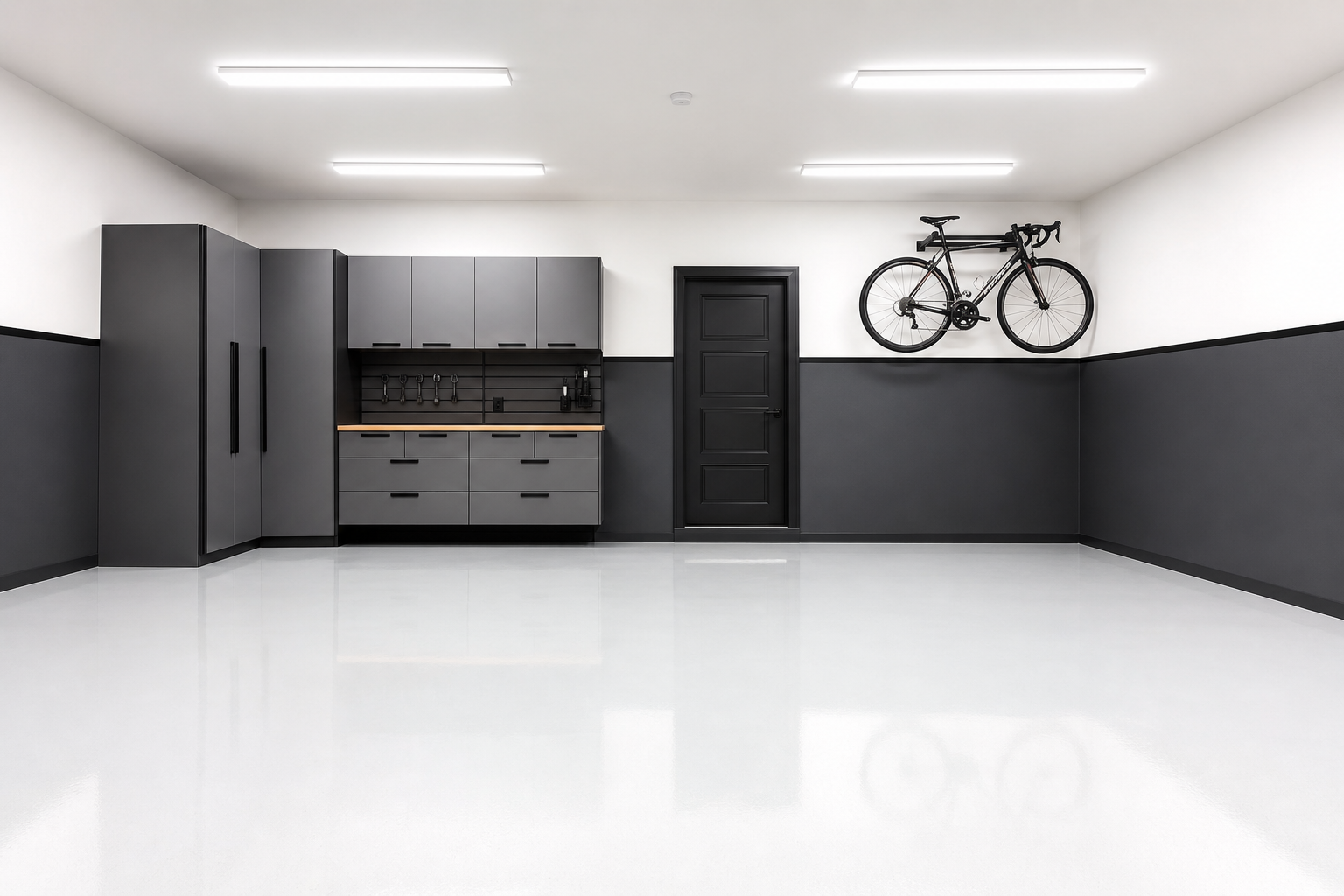
Splitting the wall into charcoal on the bottom and white on top is a simple trick that adds visual structure without complicated materials. The crisp dividing line acts like a shadow rail, hiding minor scuffs in the high-traffic lower zone. The glossy white floor bounces light upward and ties the upper wall color back to ground level.
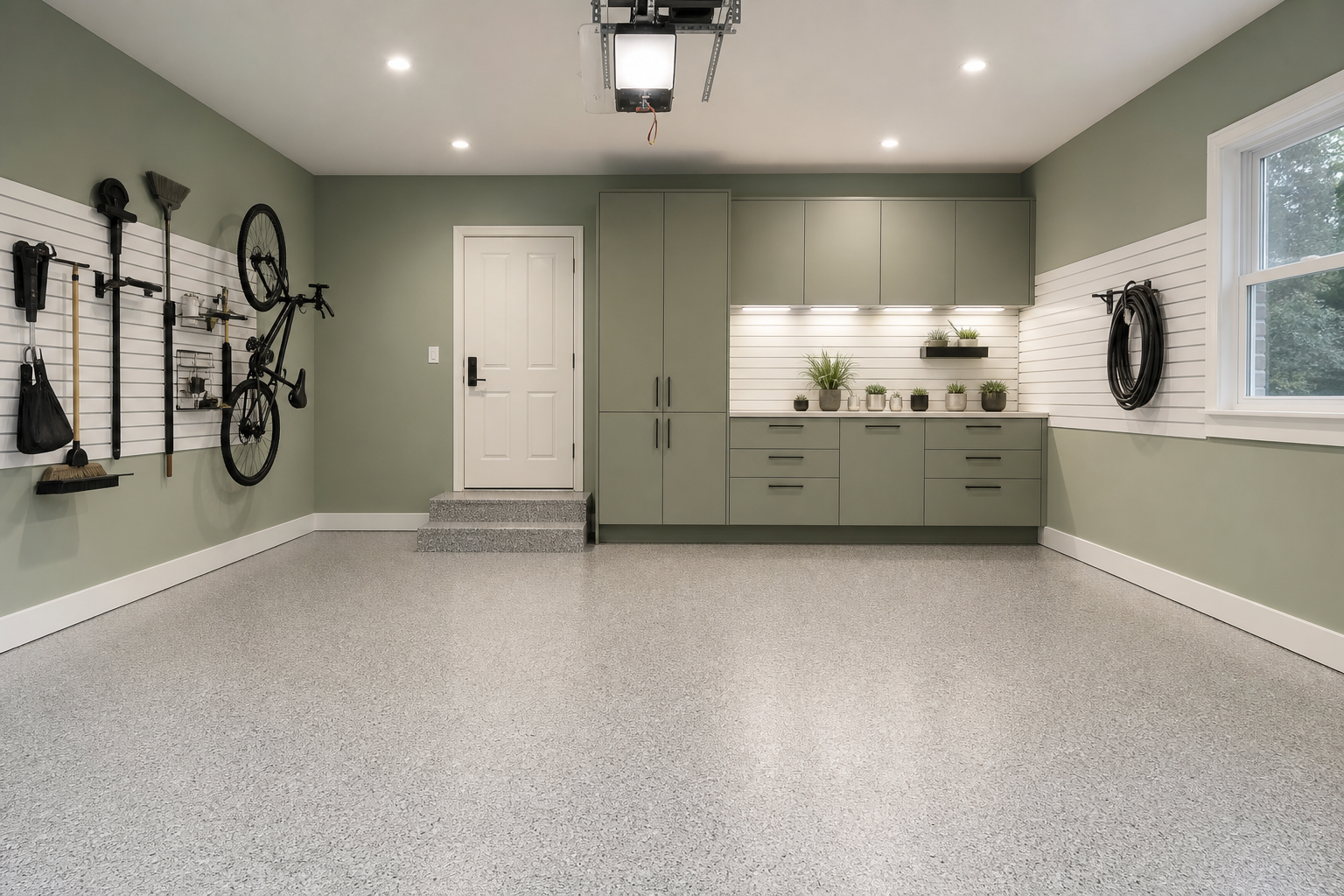
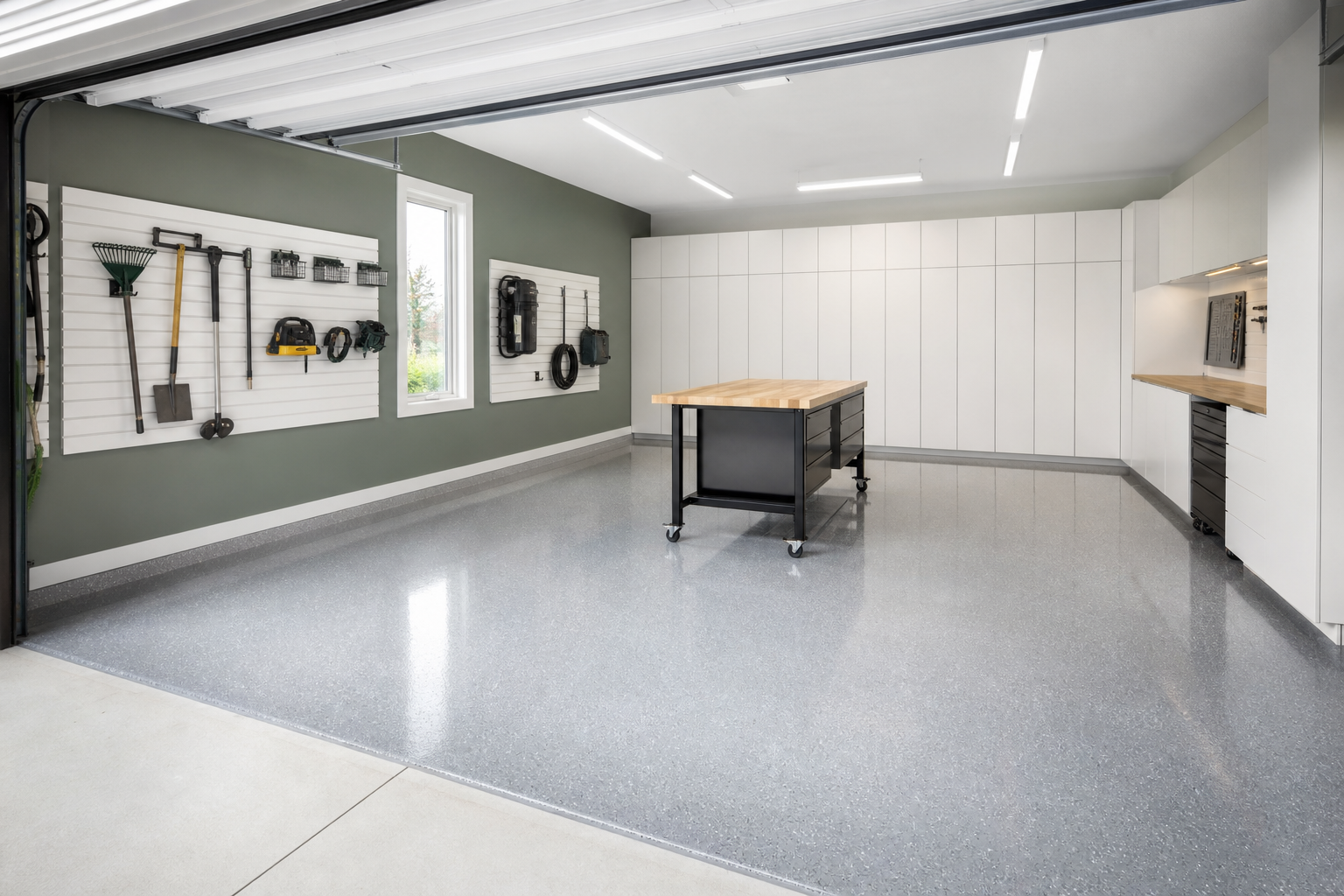
Sage green walls bring a calm, slightly organic feel that separates this garage from the typical gray-and-white palette. White trim, white ceiling, and white slatwall keep the space bright so the green reads as a soft backdrop rather than an overwhelming statement. If you’re planning a flake floor to complement a wall color like this, my article on choosing the right flake color for your garage floor will help you dial in the right match.
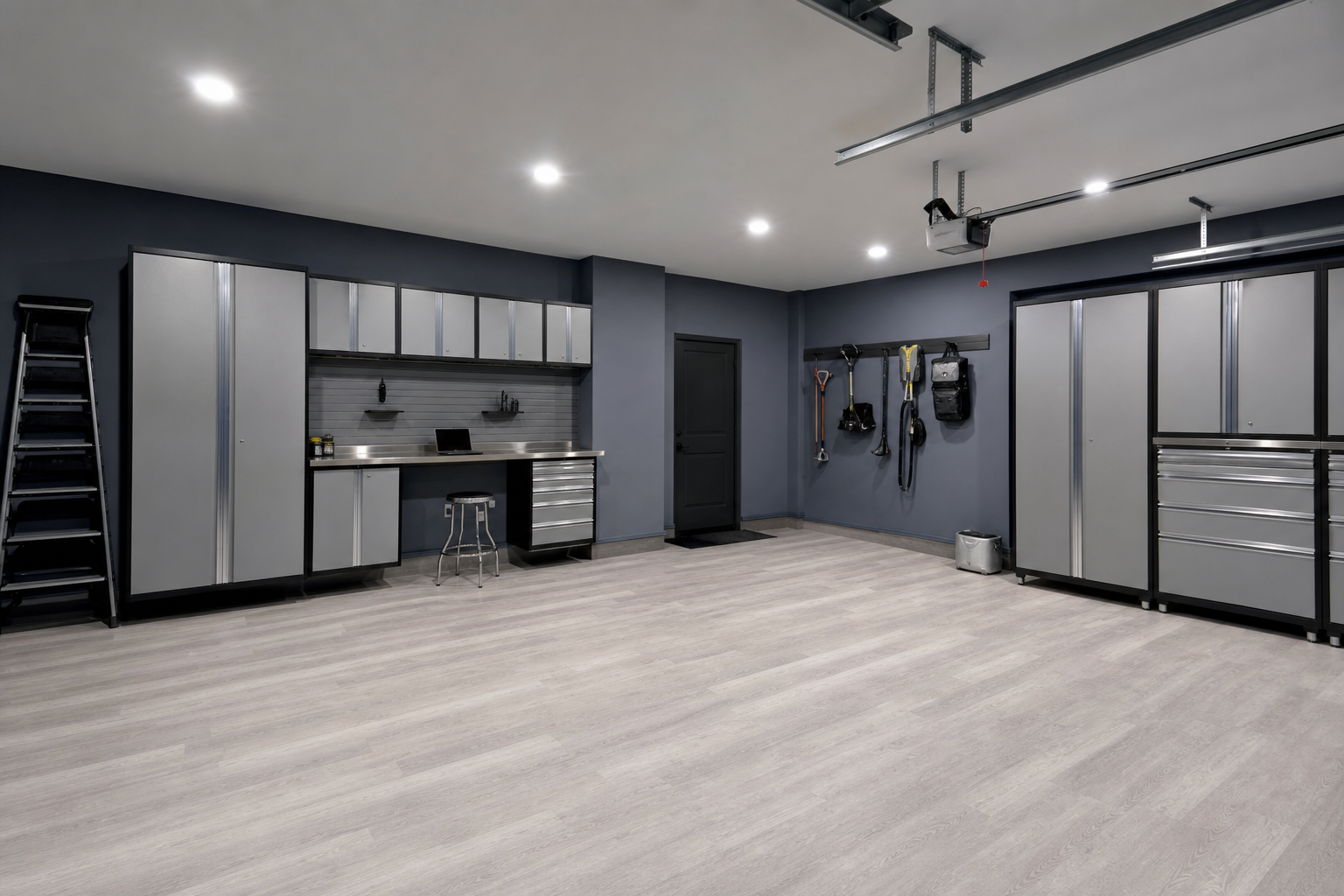
Slate blue-gray sits right at the intersection of cool and neutral, making it easy to pair with stainless steel and polished concrete-look flooring. The concrete-look vinyl underfoot adds warmth and softness that bare concrete can’t deliver. Cool white overhead LEDs sharpen the whole palette and keep the space feeling energized without harsh shadows.
Smart Storage Walls
A storage wall takes your vertical space seriously. Instead of scattered hooks and mismatched shelving units, a purpose-built storage wall gives every item a defined spot from floor to ceiling. Systems built around slatwall, French cleats, or heavy-duty wall panels are flexible enough to reconfigure as your needs change. I’ve put together a detailed look at organizing with slatwall and pegboard systems if you want the full breakdown on hardware and panel types. The ideas below show how these walls look when they’re done well, from tight tool zones to full multi-use layouts.
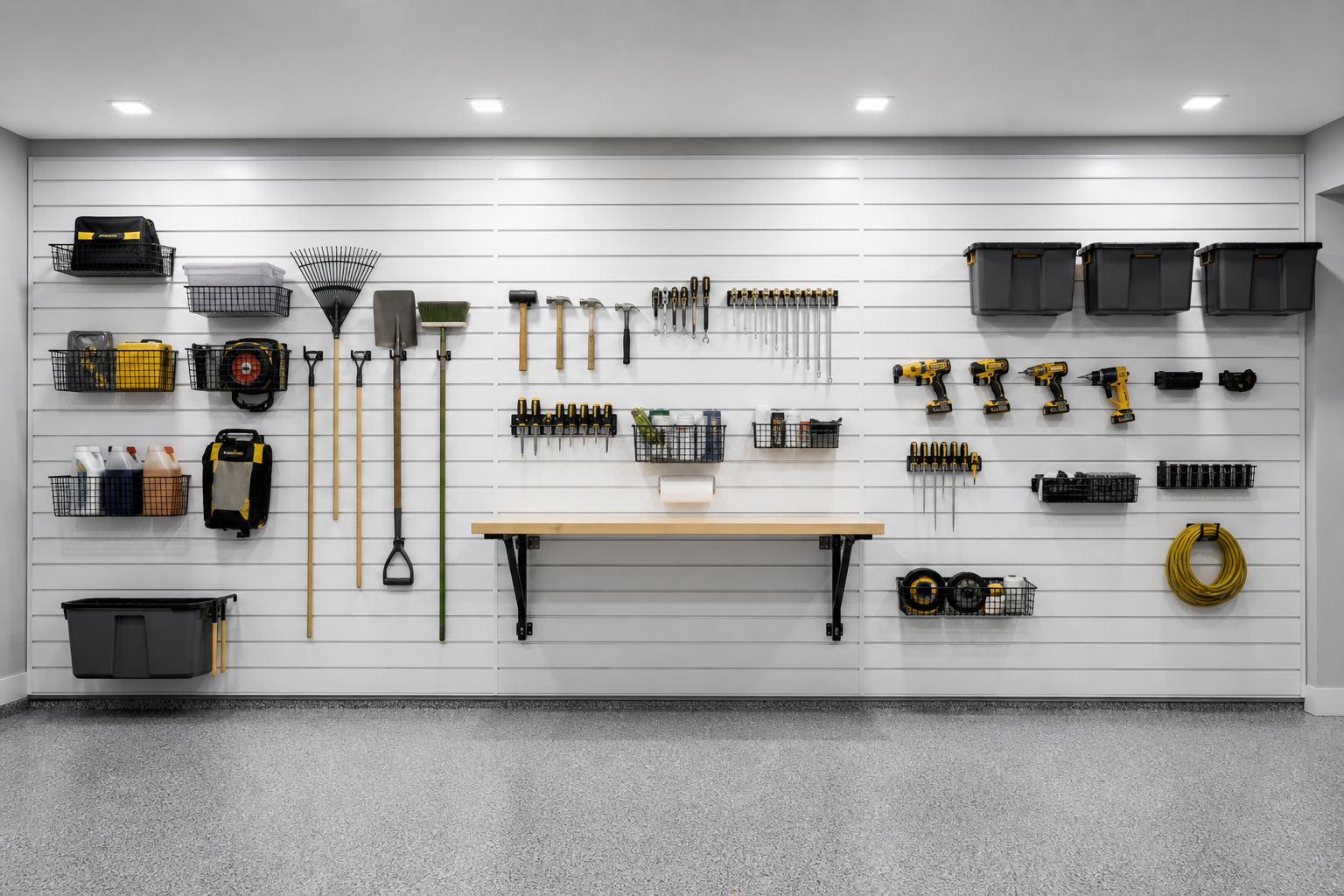
White slatwall panels create a consistent backdrop that makes even a packed tool collection look organized. A fold-down workbench mounted directly to the slatwall is a smart move in a single-car garage where floor space is tight. Every accessory, bin, basket, hook, is infinitely repositionable as your tool collection grows or changes.
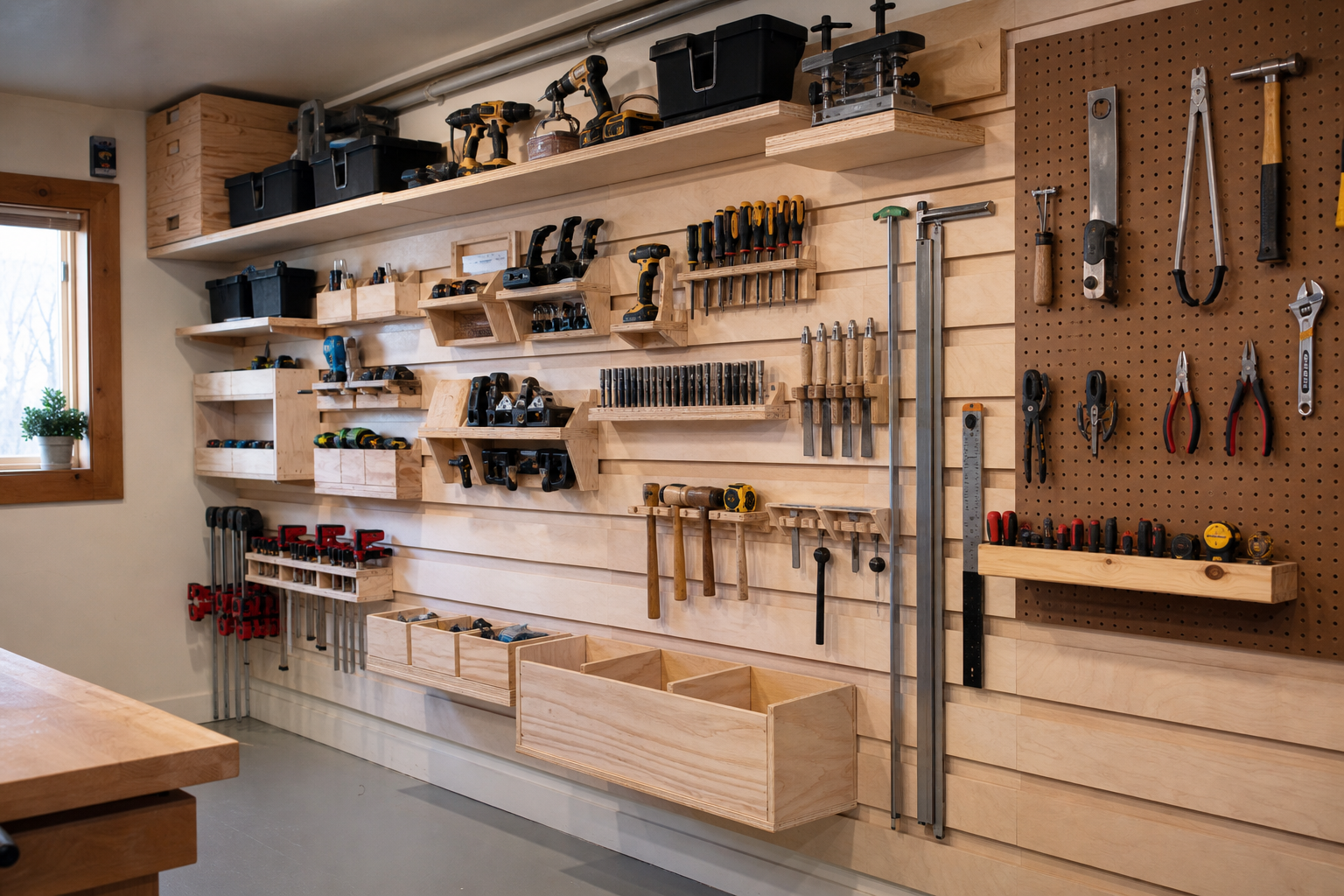
A French cleat wall built from plywood strips is one of the most flexible storage systems you can put up, and one of the most cost-effective. Custom wooden holders mean every tool gets a holder shaped exactly for it rather than a generic hook. If you want to add a pegboard section alongside your cleats, my guide to the best garage pegboard systems covers the best panels and hardware for the job.
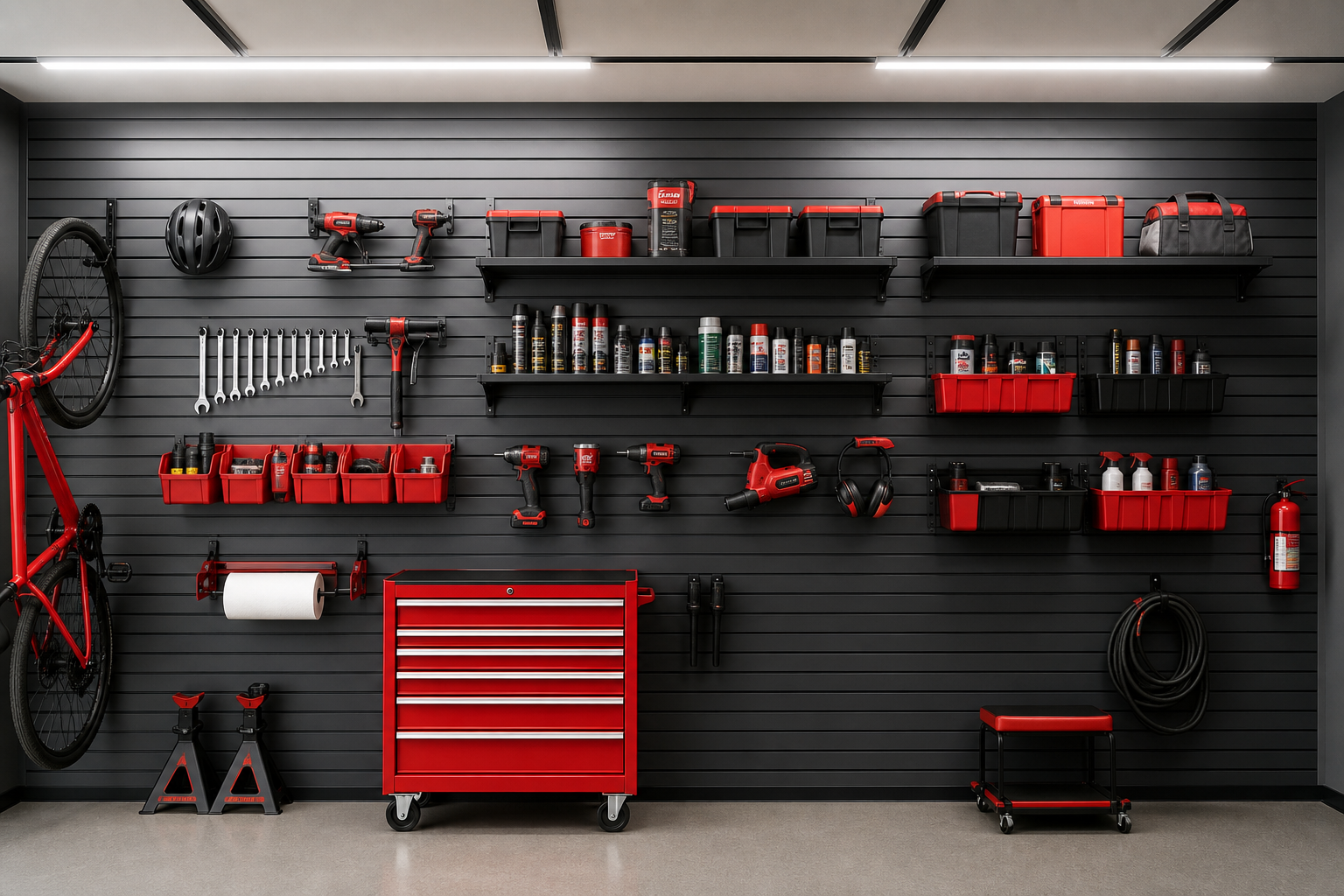
Metal slatwall panels are noticeably more rigid than PVC versions and can carry heavier loads per square foot without flexing. The red and black accessories against the charcoal panels give this wall a deliberate, color-coded look that makes finding tools faster. A matching red roller chest parked below the wall pulls the whole zone together visually.
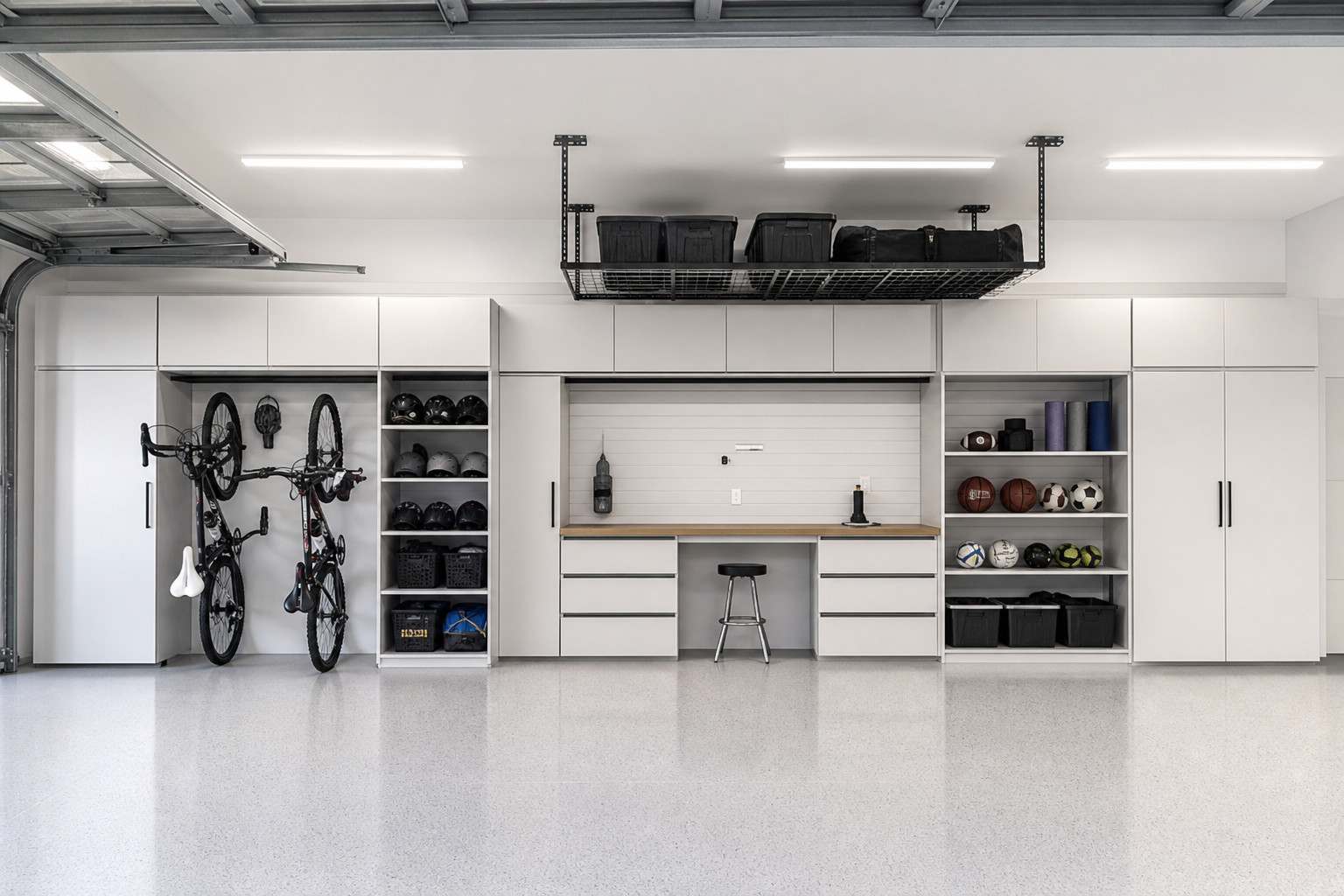
A modular system that combines closed cabinets, open shelves, and overhead racks eliminates the need for separate freestanding units scattered around the garage. Vertical bike hooks integrated into the wall panel free up the floor completely, which is one of the bigger quality-of-life improvements in a two-car garage. For more options on getting bikes off the floor, my roundup of the best garage bike storage systems covers wall-mounted and ceiling options side by side.
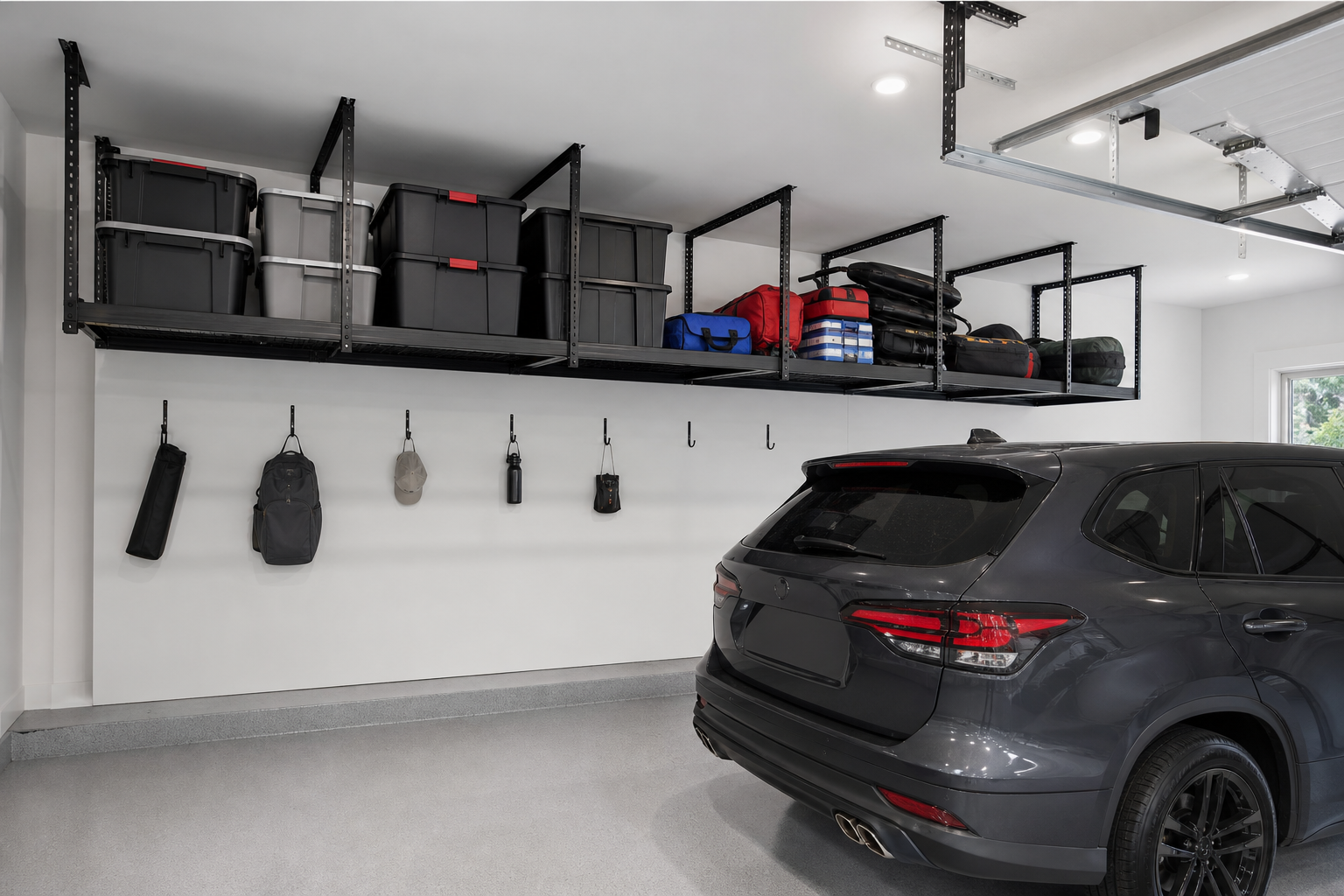
Ceiling racks turn the dead space above the car bay into prime storage real estate for bulky seasonal bins and equipment. A powder-coated black rack against a white ceiling looks intentional rather than like an afterthought. If you’re planning an overhead system, my complete guide to garage ceiling storage racks walks through load ratings, installation tips, and top-rated systems.
Polished Floor Finishes
The floor is the largest single surface in your garage and it sets the tone for everything above it. A polished, sealed, or coated floor signals that the whole space was planned, not just thrown together. Epoxy and polyaspartic coatings are the most popular options, but there are more choices than most people realize. My full epoxy garage floor ideas guide goes deep on colors, finishes, and prep considerations. The five floors below range from solid neutrals to decorative flake finishes, and every one of them is a significant upgrade over bare gray concrete.
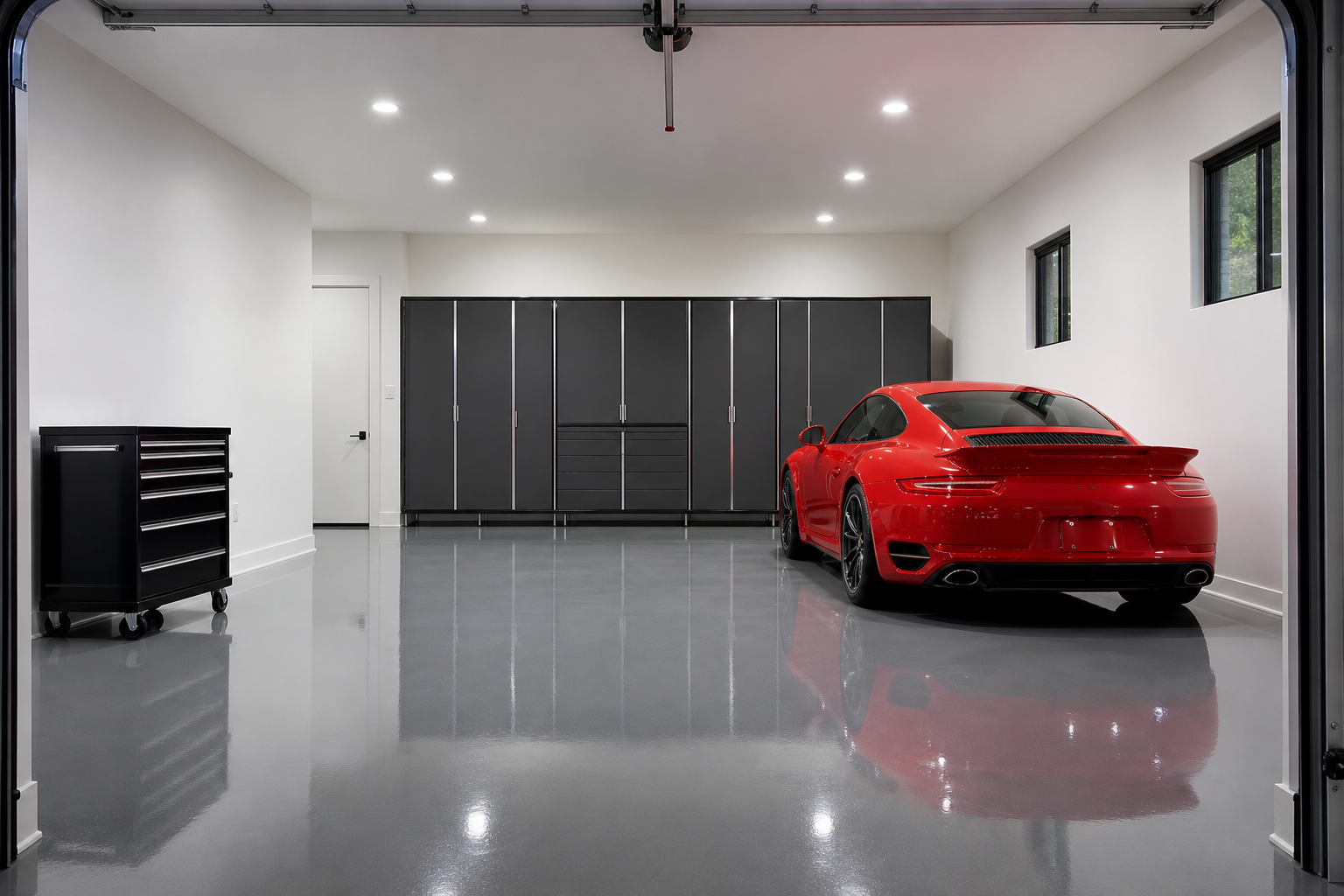
A solid gray polyaspartic coating with a high-gloss topcoat creates that mirror-like reflection you see in luxury auto showrooms. The finish is harder and more UV-stable than standard epoxy, so it holds its sheen longer. Paired with white walls and simple black accessories, this floor does the heavy lifting for the whole room’s look.
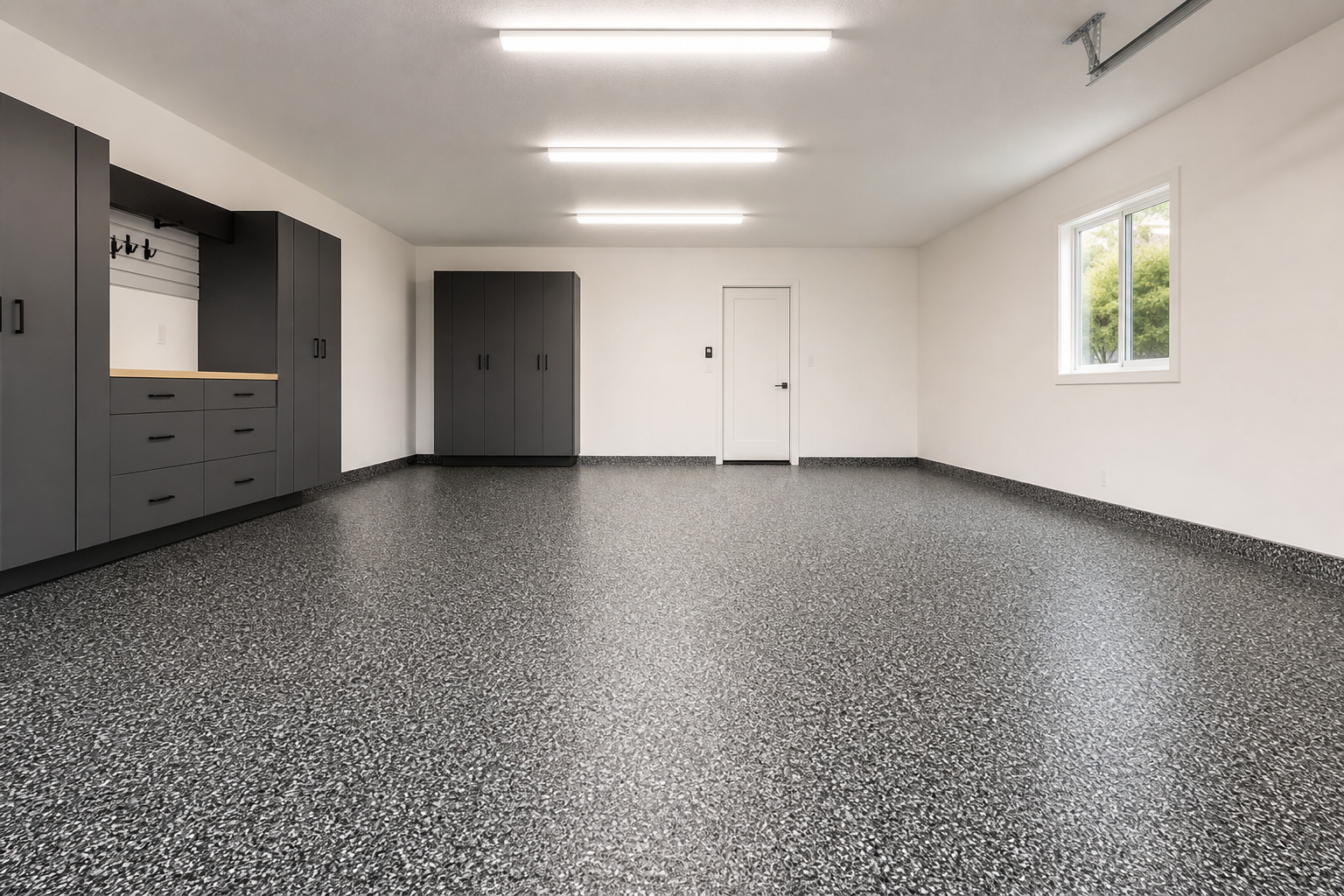
A full broadcast flake floor in a black, white, and gray blend hides tire marks, oil drips, and everyday dirt better than any solid color can. The dense chip pattern gives the surface excellent texture and grip underfoot when wet. If you’re still deciding on your color combination, my article on how to choose the right flake color for your garage floor walks through the decision in detail.
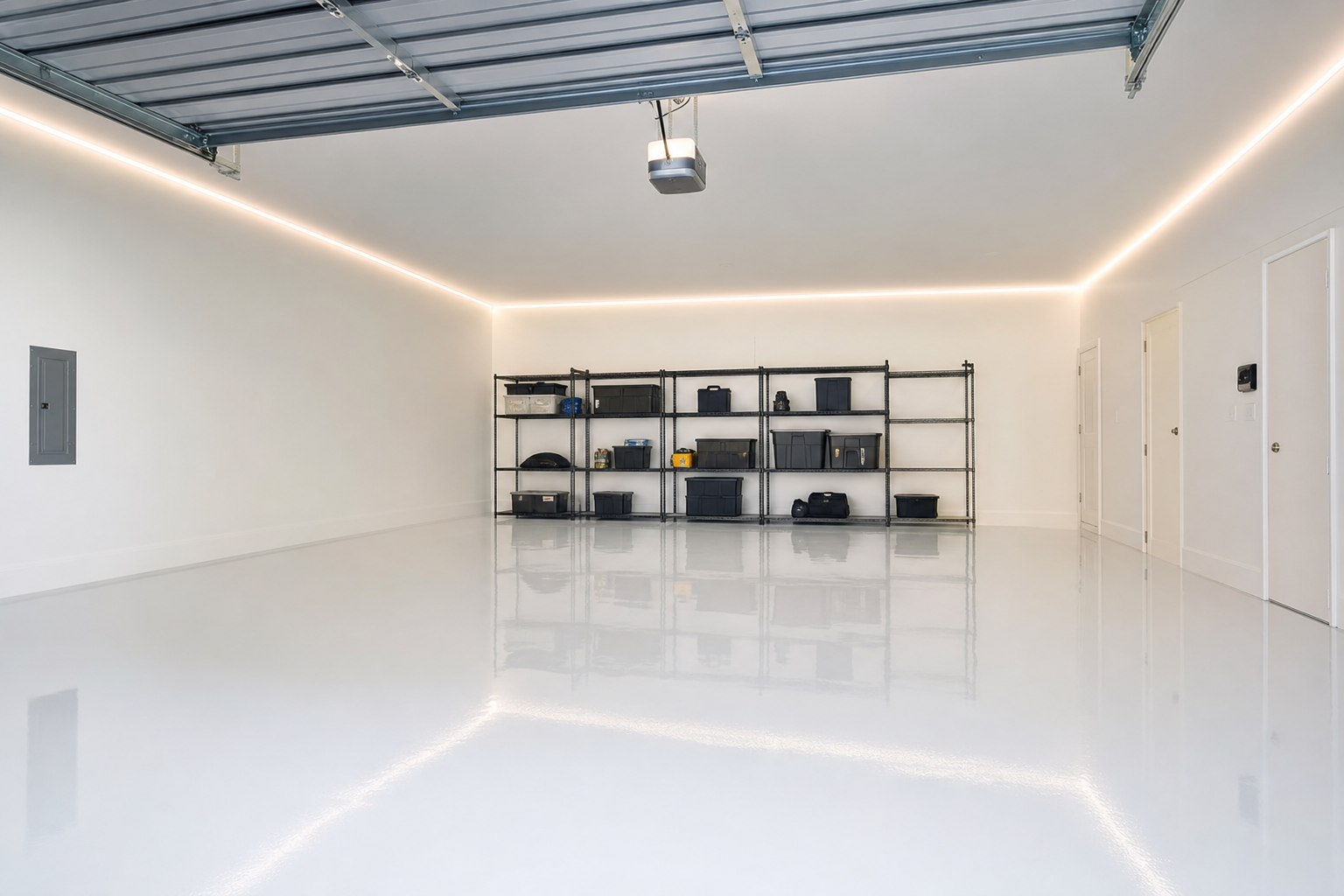
A white epoxy floor is the boldest choice on this list and it pays off in spaces that get good natural or artificial light. The high-gloss topcoat bounces light in every direction, making even a single-car garage feel noticeably larger. White does show dirt more readily than gray, but a quick sweep or mop keeps it looking sharp.
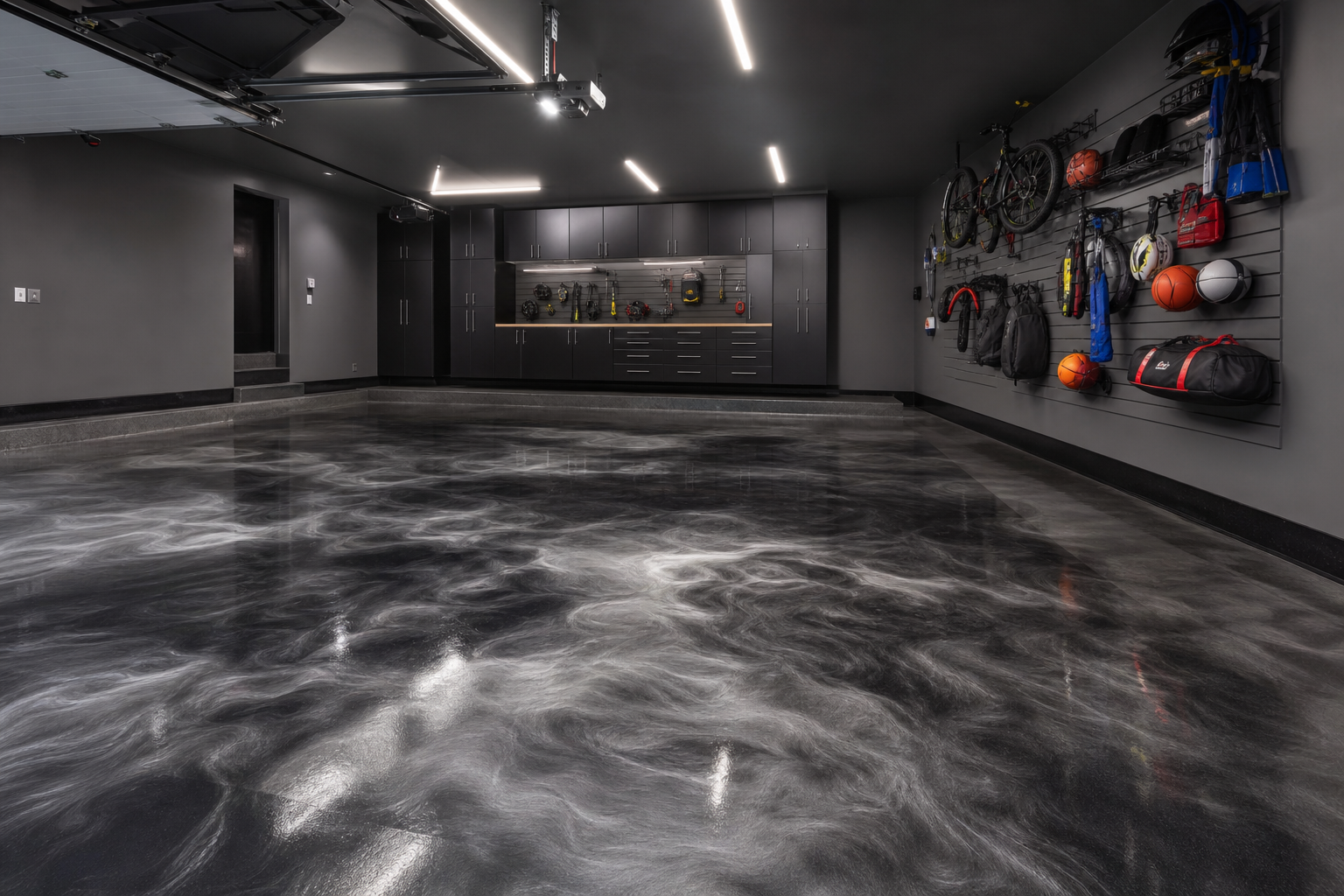
Metallic epoxy floors are genuinely one-of-a-kind because the swirling pattern forms during application and no two floors look exactly the same. Dark graphite tones with black and silver swirls create a dramatic effect that makes the garage feel more like a car photography studio than a parking space. This finish pairs best with equally deliberate wall colors and lighting rather than left as the only upgraded element.
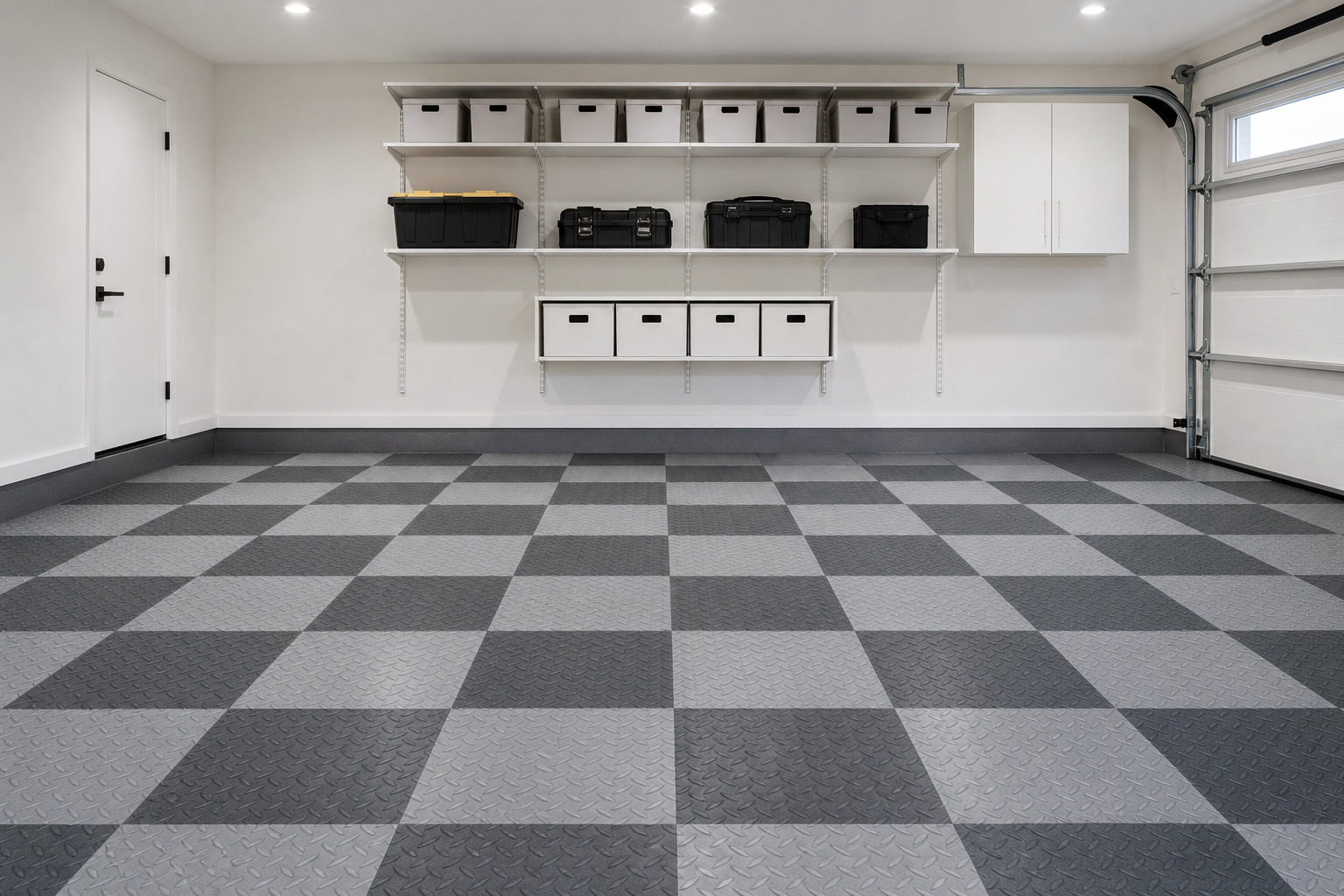
Interlocking floor tiles in a two-tone gray checkerboard are a no-prep, no-epoxy option that still looks sharp and deliberate. The raised diamond texture on the tile surface provides grip and drains water away from the surface quickly. If you’re weighing tile brands before committing, my comparison of RaceDeck vs. Swisstrax garage floor tiles covers the key differences in thickness, load rating, and feel underfoot.
