

As an Amazon Associate I earn from qualifying purchases.
A small garage doesn’t have to feel like a storage closet with a car squeezed in. With the right ideas, even a single-car or one-and-a-half-car space can handle tools, bikes, gear, and a vehicle without feeling chaotic. In this article I’m covering four areas where tight garages gain the most ground: vertical storage solutions, compact layout tricks, fold-away workstations, and space-saving parking setups.
Vertical Storage Solutions
When floor space is gone, the walls and ceiling still have plenty left to give. Going vertical is the single most effective move in a small garage, and it works whether you’re renting or own the place outright. A combination of wall-mounted systems, overhead racks, and tall cabinets can turn a bare stud wall into serious storage. If you’re not sure where to begin, my small garage organization guide walks through the whole process from start to finish. And if the ceiling feels like wasted real estate, the ideas in my overhead storage ideas post will change that fast.
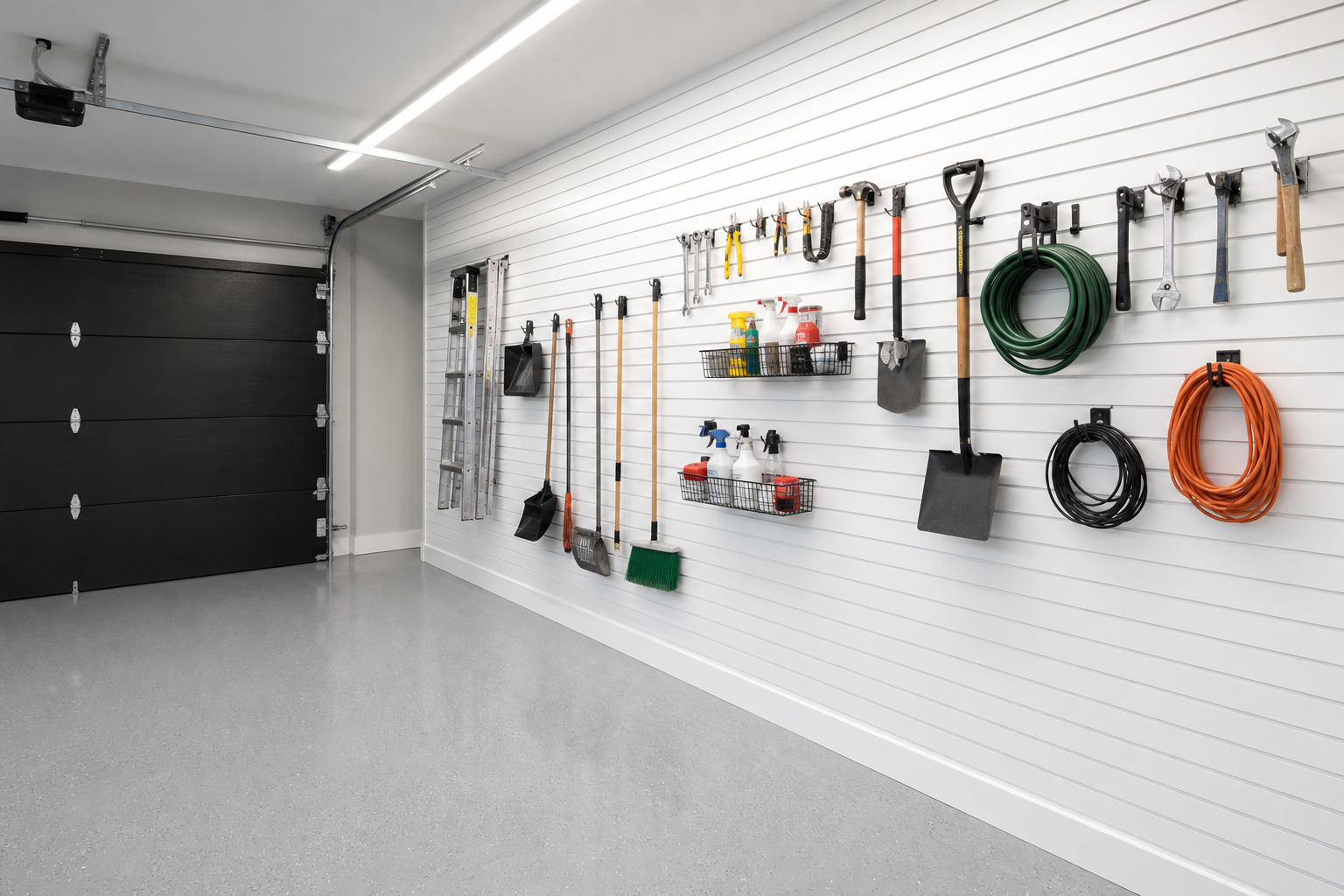
Floor-to-ceiling slatwall panels in white make every inch of wall space configurable without a single permanent commitment. The metal hooks and wire baskets slide and reposition in seconds, so the layout evolves as your storage needs change. It’s one of the cleanest ways to clear floor clutter while keeping everything visible and within reach.
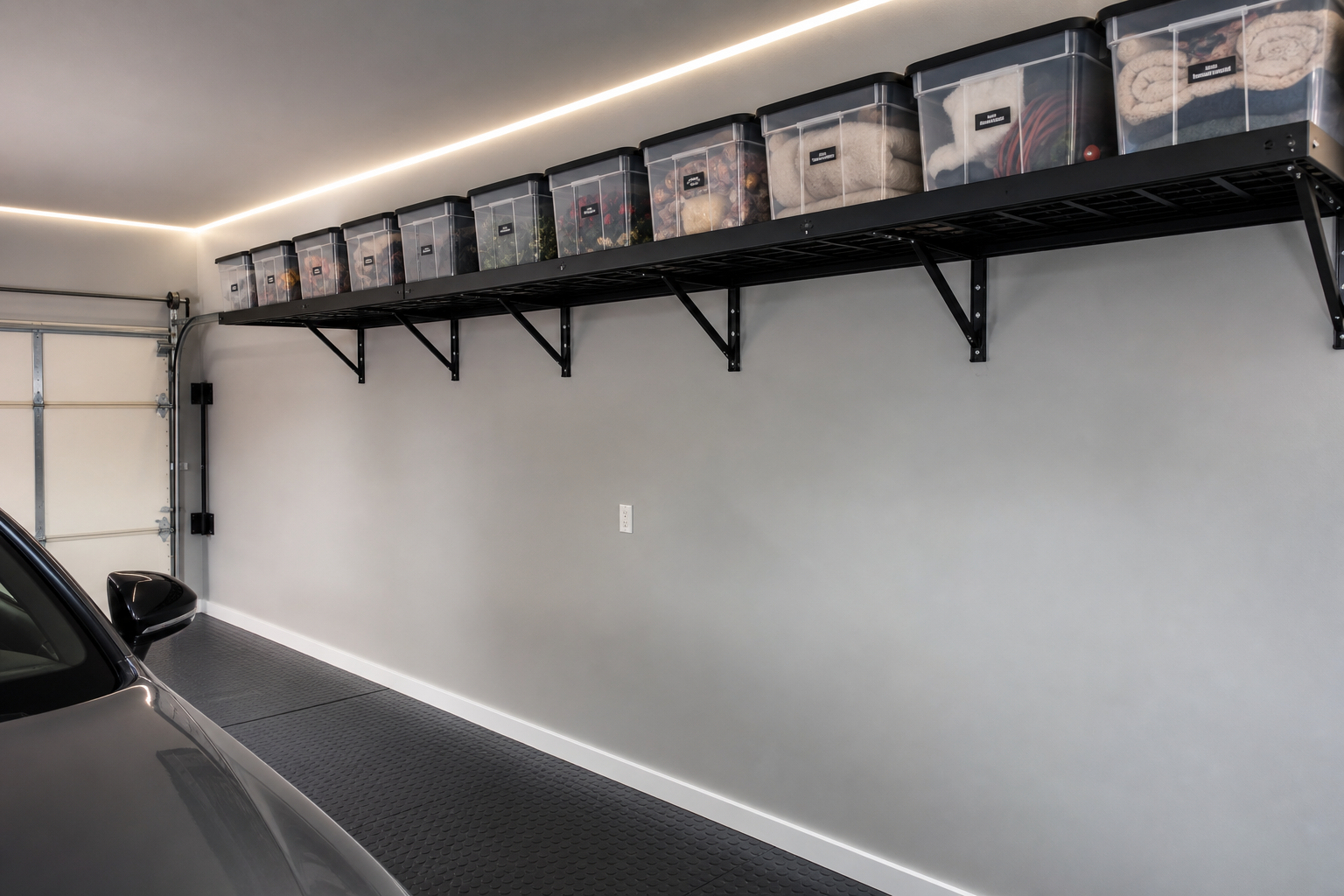
Ceiling-mounted steel racks suspend labeled storage bins at head height, leaving the floor and lower walls completely clear. This setup is especially good for seasonal items, holiday decorations, and bulky gear you only need a few times a year. For a full breakdown of how to install a system like this yourself, see my guide on how to install overhead ceiling storage in a garage.
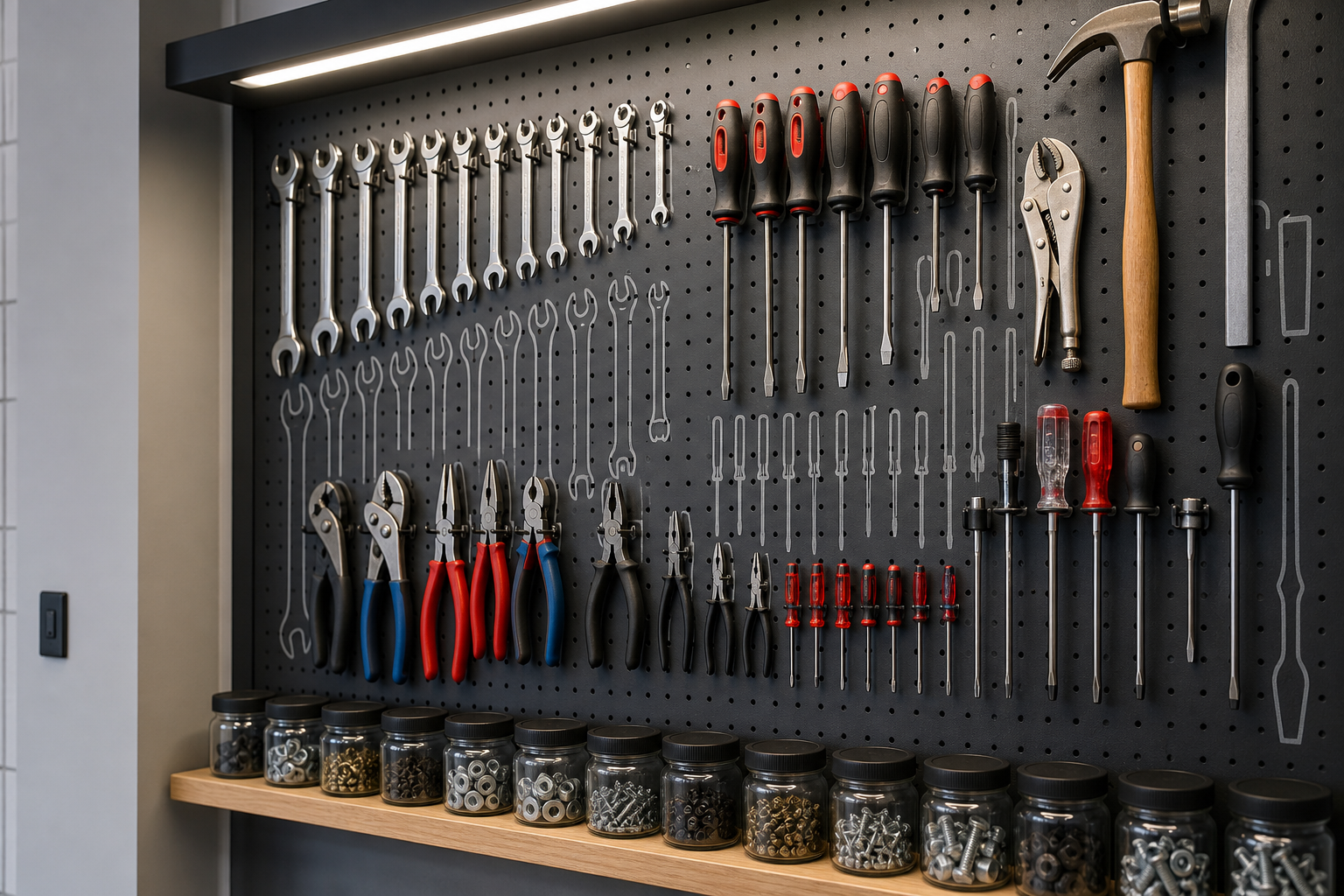
A dark pegboard with painted tool silhouettes does two jobs at once: it stores everything and tells you instantly when something’s missing. The natural pine shelf below adds a warm contrast to the charcoal background. There are a lot of creative directions you can take this setup, and my pegboard ideas post covers options for different wall sizes and tool collections.
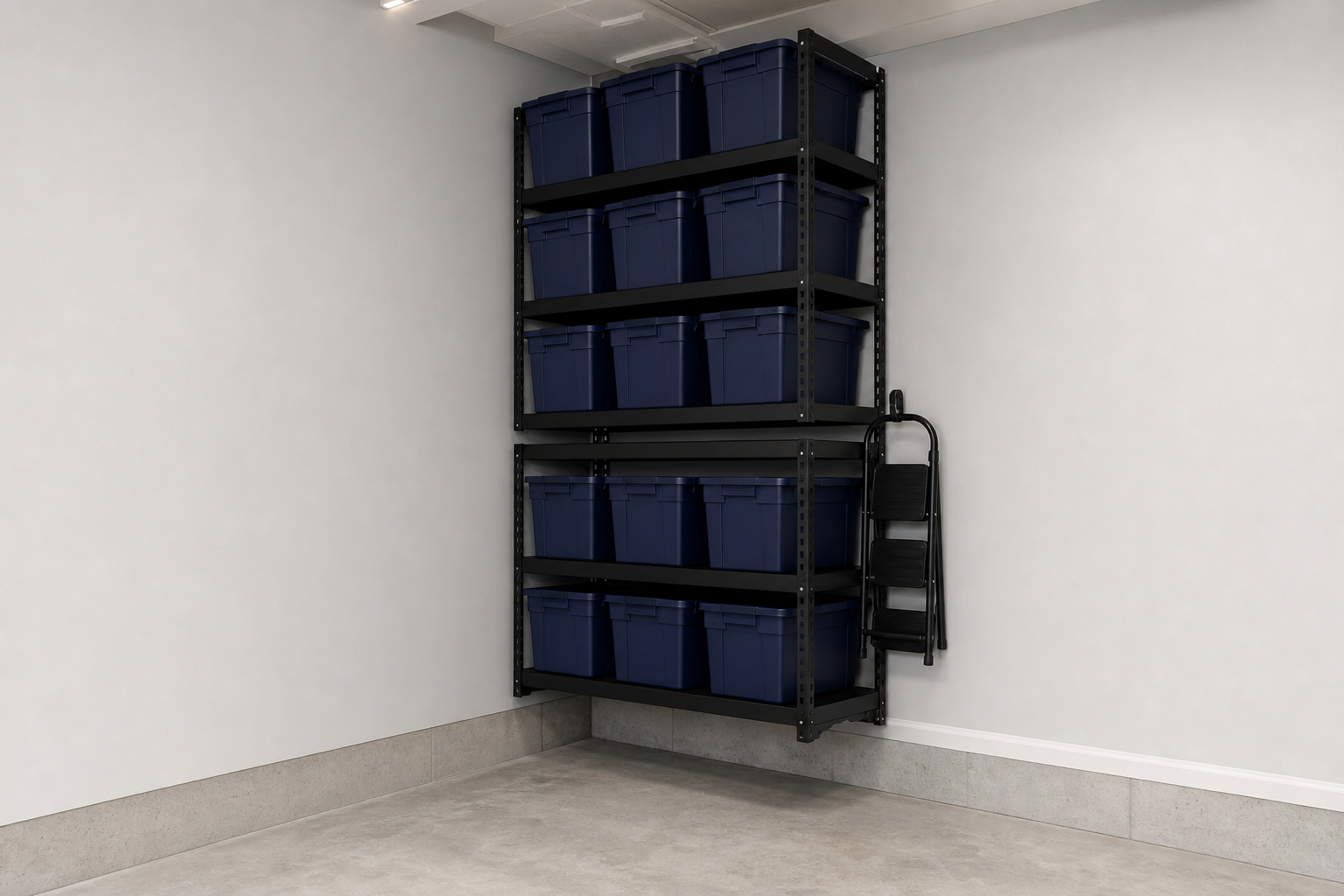
Stacking two shorter wall-mount shelving units to fill a corner all the way to the ceiling doubles the storage in a footprint that might otherwise hold one shelf. Matching navy bins keep things looking intentional rather than improvised. The step stool hung on the side is a small detail that makes the top shelves genuinely usable every day.
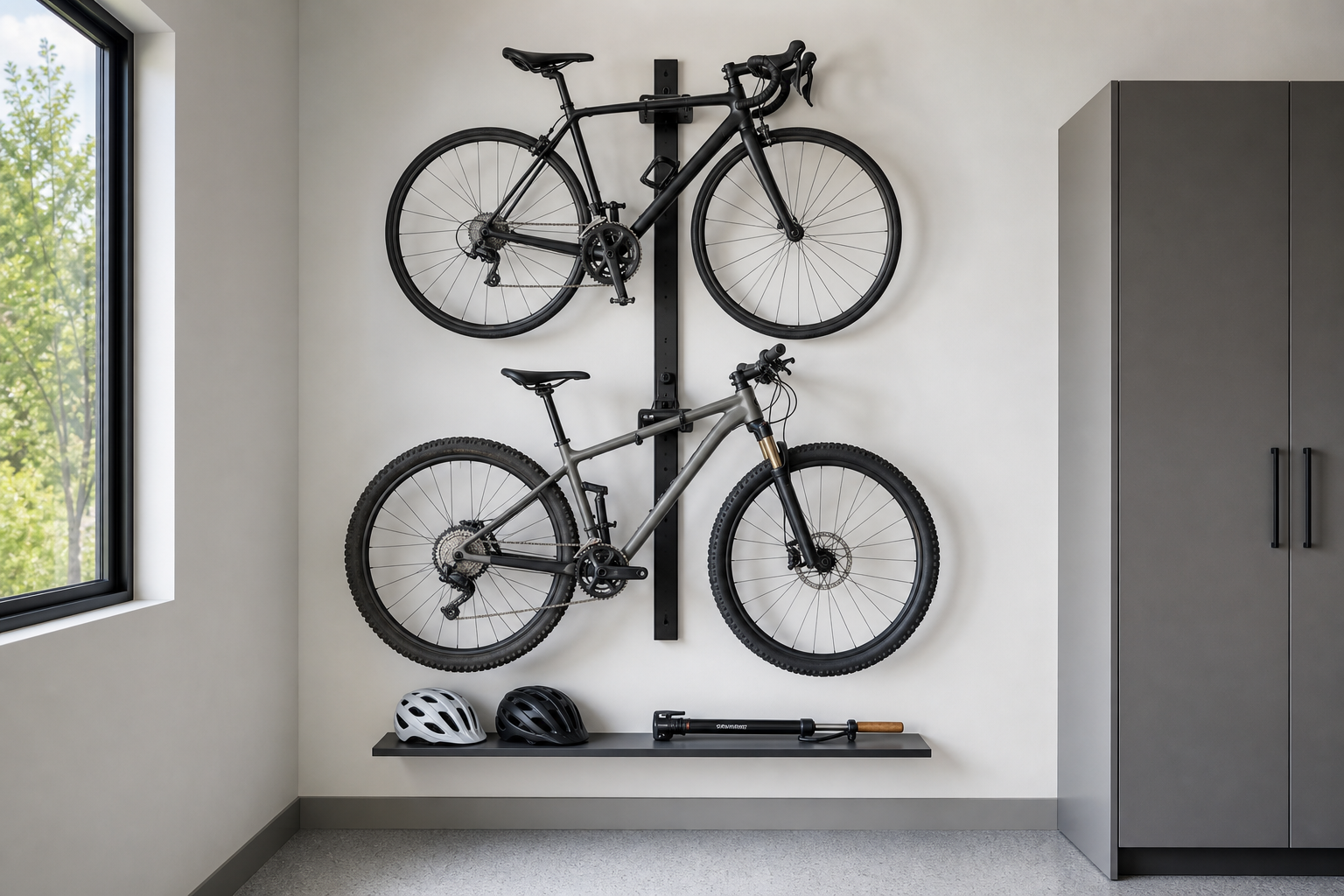
Stacking two bikes on the wall rather than parking them on the floor can free up four to six square feet of usable floor space, which matters a lot in a tight one-car garage. The horizontal hook mounts keep each bike stable and off the paint. If you’re choosing between several mounting styles, my guide to the best wall-mounted bike racks for garage storage compares the main options side by side.
Compact Layout Tricks
A good layout does more than organize stuff , it shapes how the space feels and whether you can actually move around comfortably. In small garages, every zone has to earn its spot. The goal is making sure storage, walking paths, and any work areas don’t fight each other. Thinking through your layout before buying anything prevents a lot of rework later, and my post on how to plan a garage storage layout that works is a good place to map it out. For even more tailored ideas, the best garage storage ideas for small one-car garages article focuses specifically on tight single-car spaces.
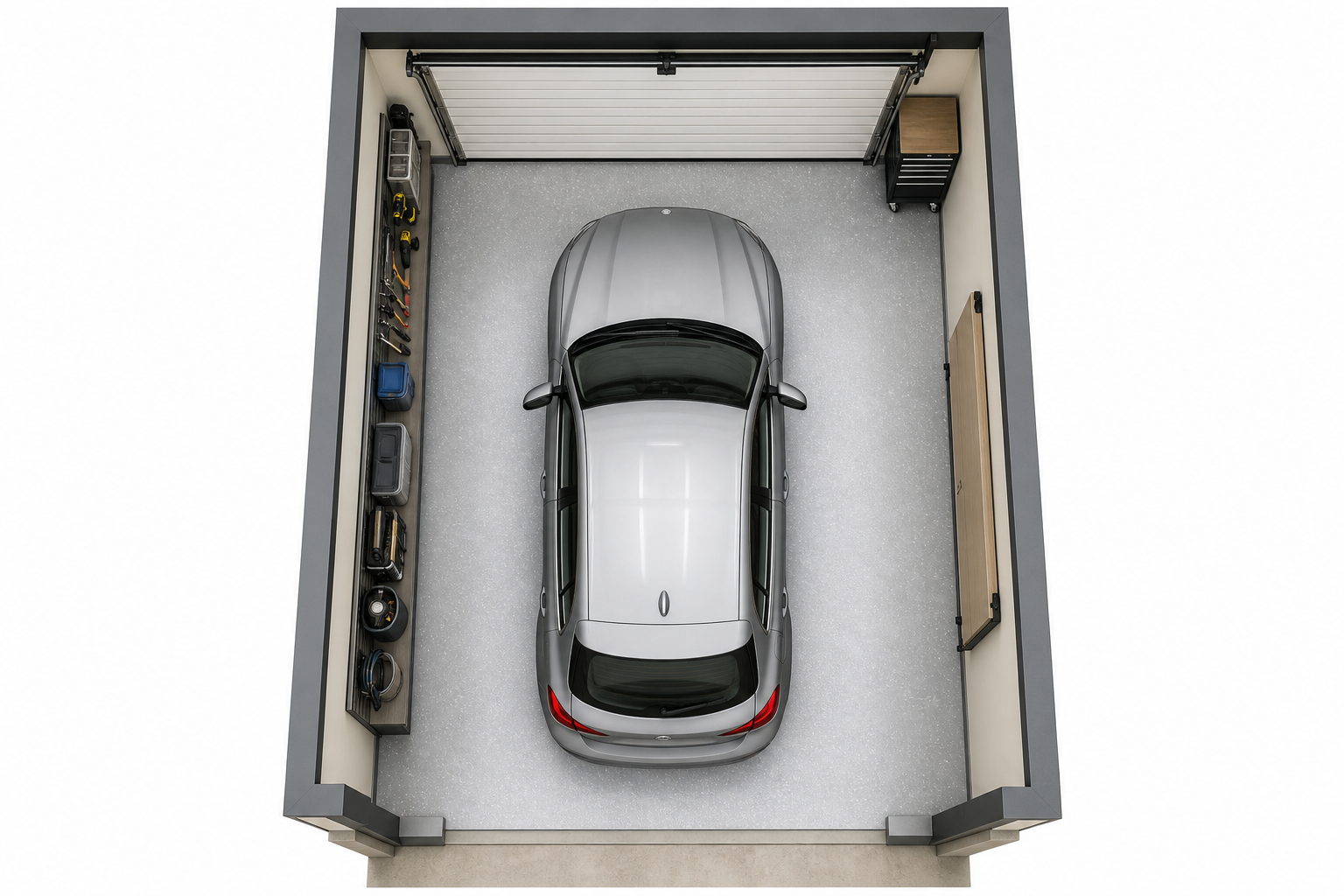
Seeing the layout from above reveals how much room storage and walking zones actually take up around a parked car. In this plan, the storage is concentrated on one wall and one corner to keep the driver and passenger door swings completely unobstructed. That kind of intentional zoning is the difference between a garage that works and one that frustrates you every morning.
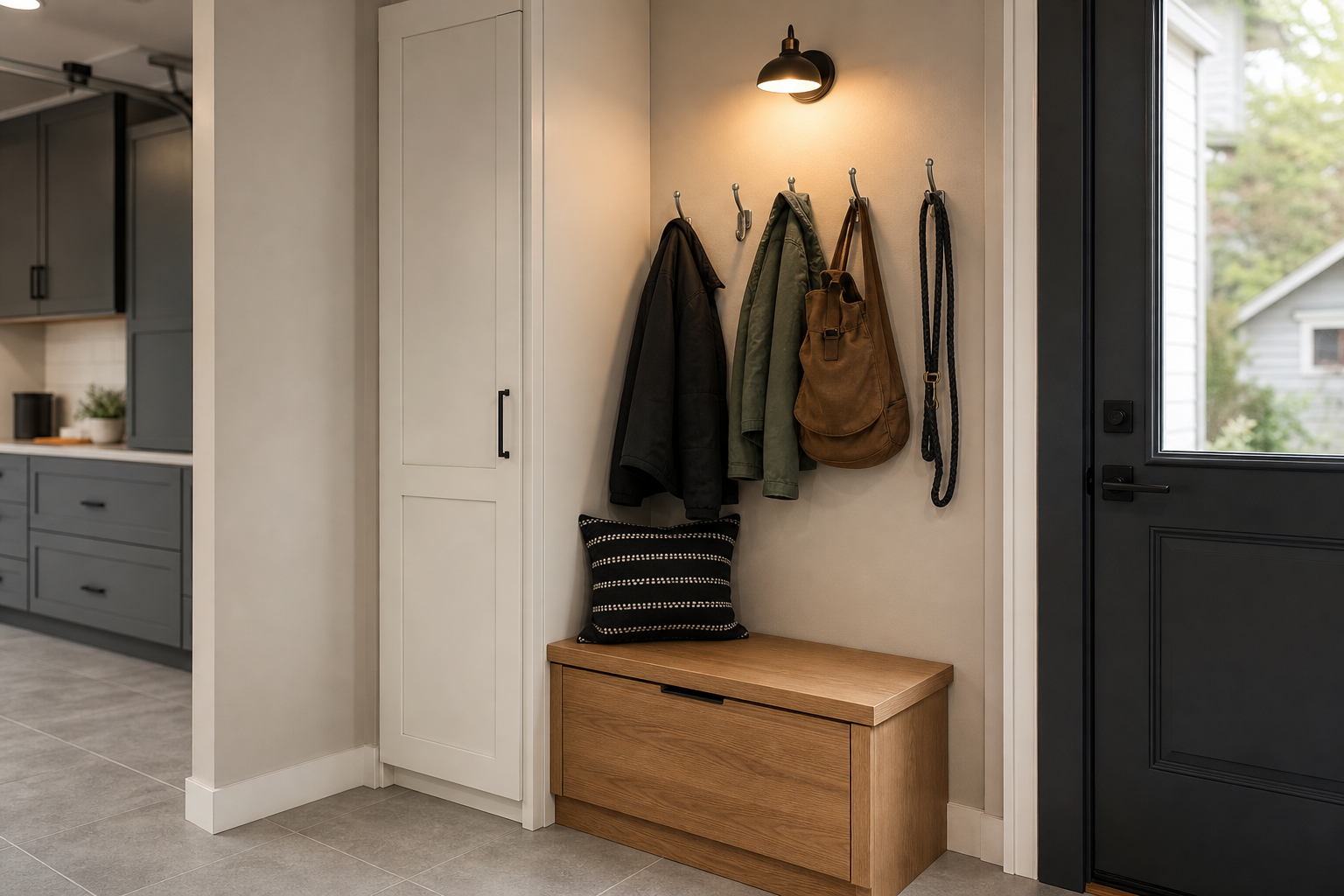
Turning the corner beside the side entry door into a proper mudroom zone keeps everyday clutter contained without eating into the main garage floor. The lift-lid bench hides shoes, and the closed cabinet handles the items you don’t need to see every day. It’s a residential touch that makes the garage feel intentional from the moment you walk in.
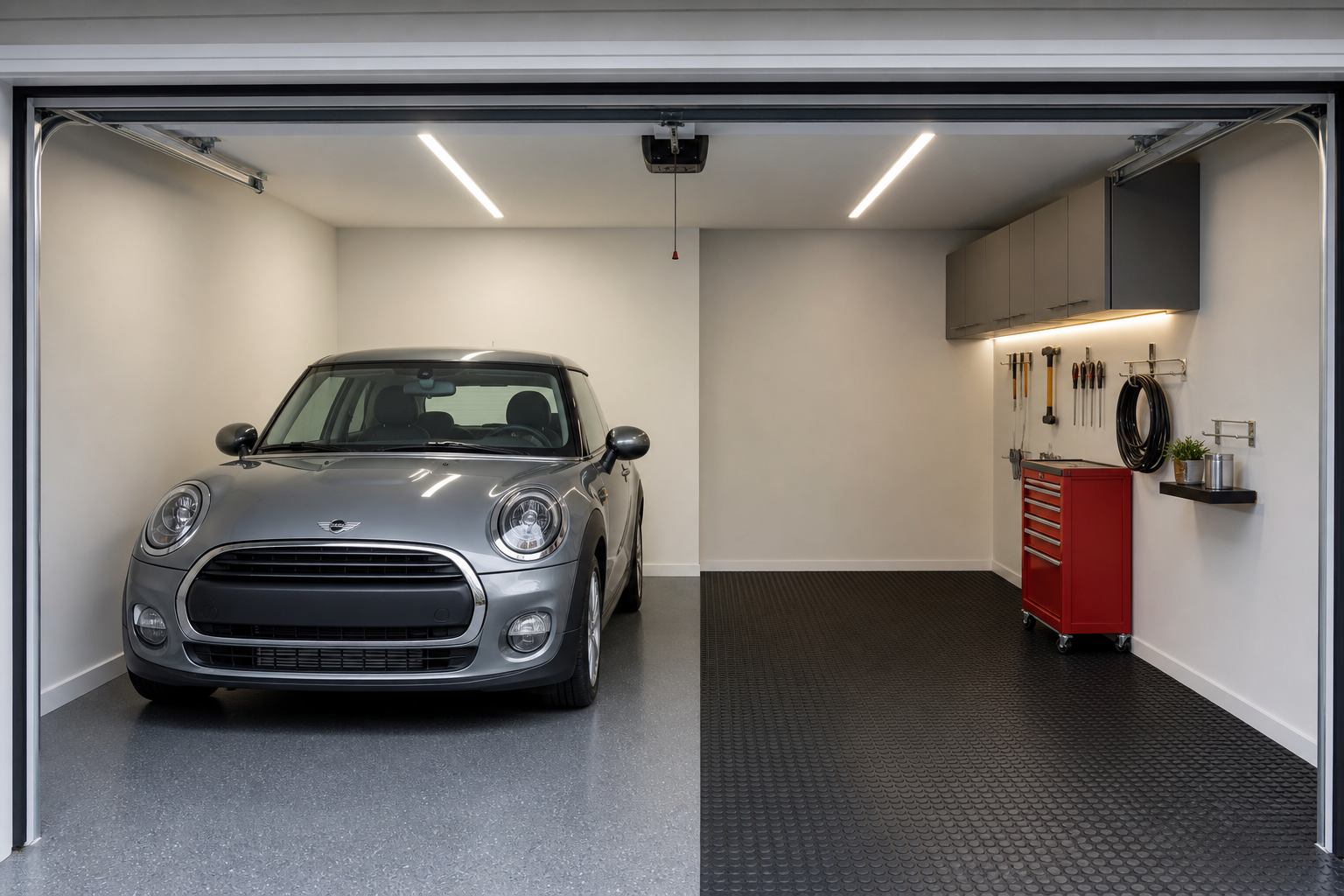
Using floor material as a visual zone marker is one of the simplest tricks in a dual-purpose garage. The gray epoxy signals car territory; the black mat signals work territory. No walls, no permanent structures , just a clear cue that keeps tools out of the car lane and the car out of the work zone.
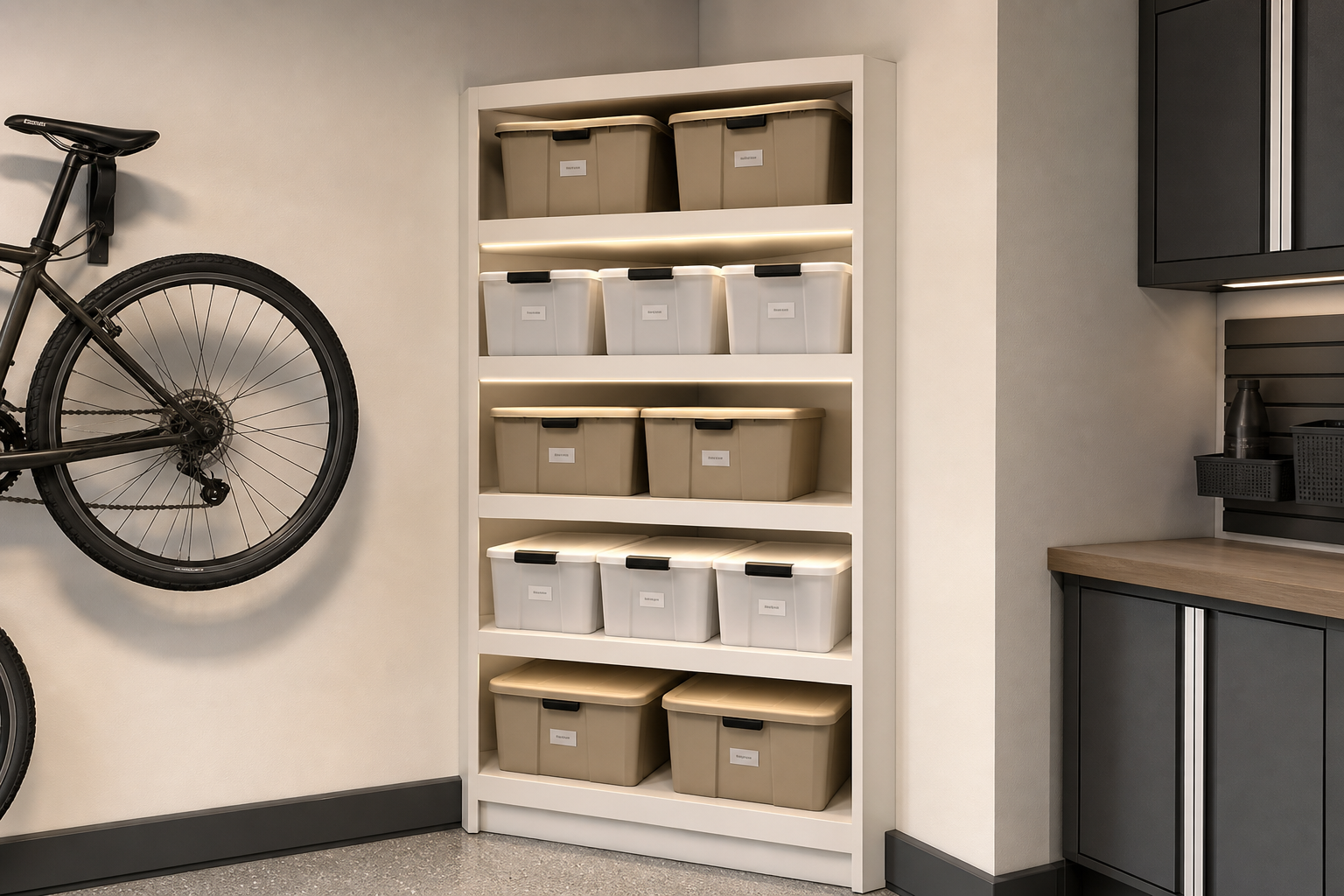
Purpose-built corner shelving with an angled face uses dead corner space without pushing into the walking path , a detail that most stock shelving units skip entirely. The LED strips under each shelf mean you’re not digging through shadows to find the right bin. Corner units like this pair well with a full labeling system, which I cover in detail in my post on how to label and inventory your garage storage.
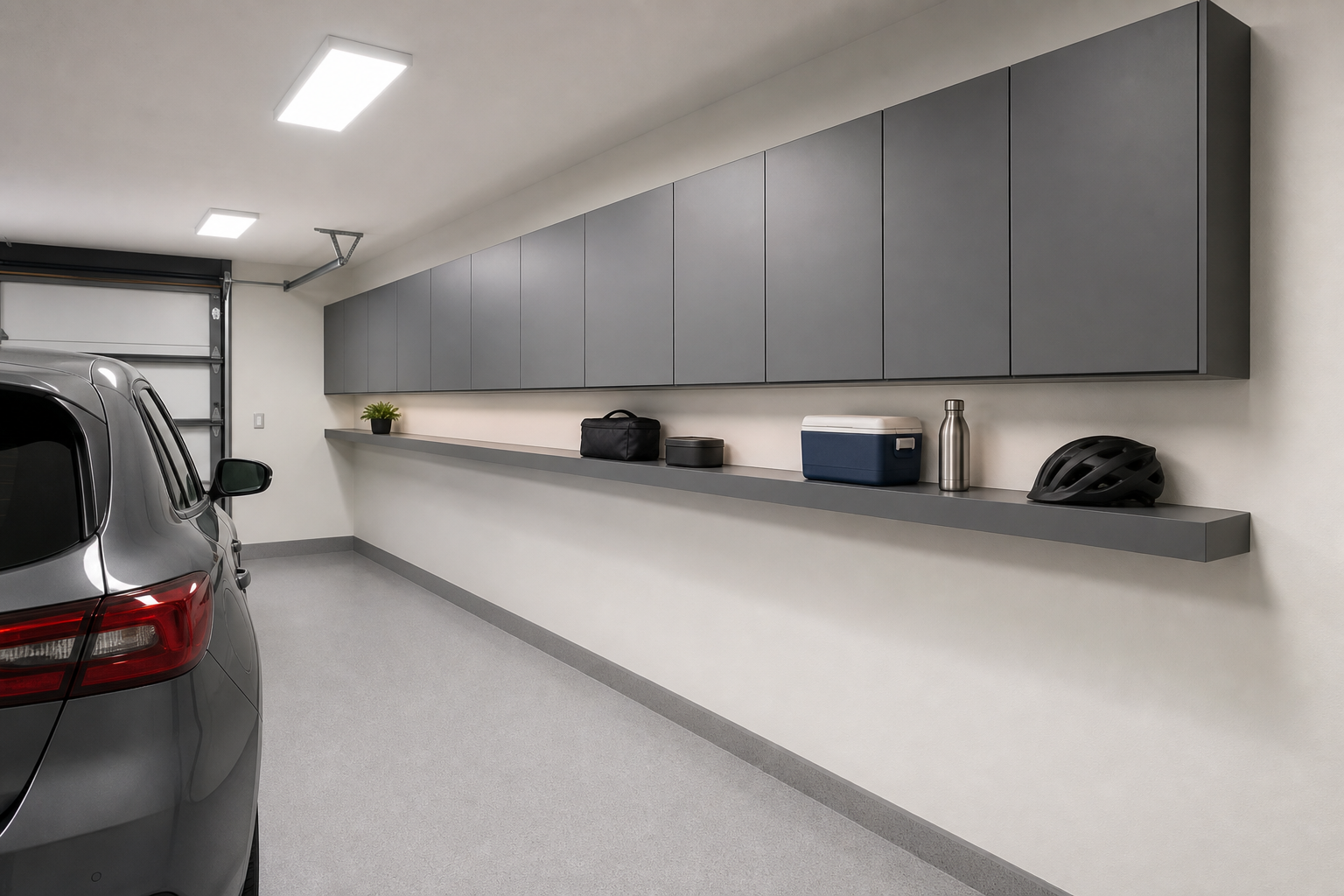
Running shallow 12-inch-deep cabinets the full length of a wall keeps the floor clear while adding substantial closed storage above the car’s roofline. The slim profile means the car still fits with comfortable clearance. If you’re comparing cabinet systems for this kind of wall run, the Gladiator garage storage cabinet review covers one of the most popular options at this depth and height.
Fold-Away Workstations
A fold-away workstation is one of the best things you can add to a small garage, because it gives you a full work surface when you need it and disappears when you don’t. Most wall-mounted folding benches take up less than six inches of depth when folded, which is nothing compared to a traditional workbench. The key is building or buying one that’s strong enough to actually work on, not just look good. If you want to go the DIY route, my DIY garage workbench with storage build guide has a solid fold-down variation with step-by-step instructions. For pure inspiration on workshop layouts, the DIY garage workshop layout planning guide is worth a read before you pick a wall.
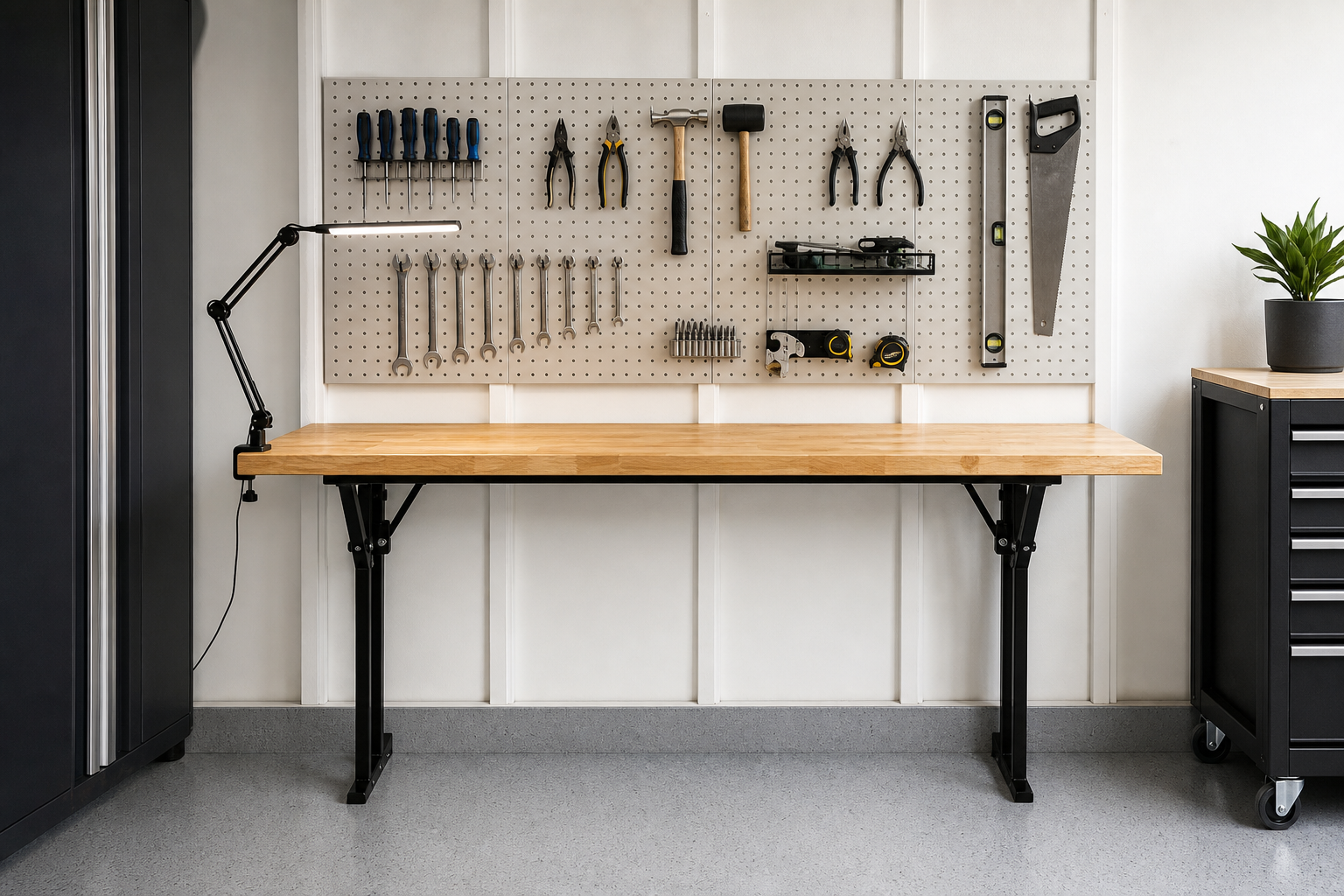
A butcher block fold-down surface with matte black folding legs strikes a balance between durability and warmth that a plywood bench just doesn’t match. The pegboard above keeps tools in arm’s reach while the bench is deployed without adding any footprint. When the legs fold up and the bench flips against the wall, it takes up almost no visual or physical space.
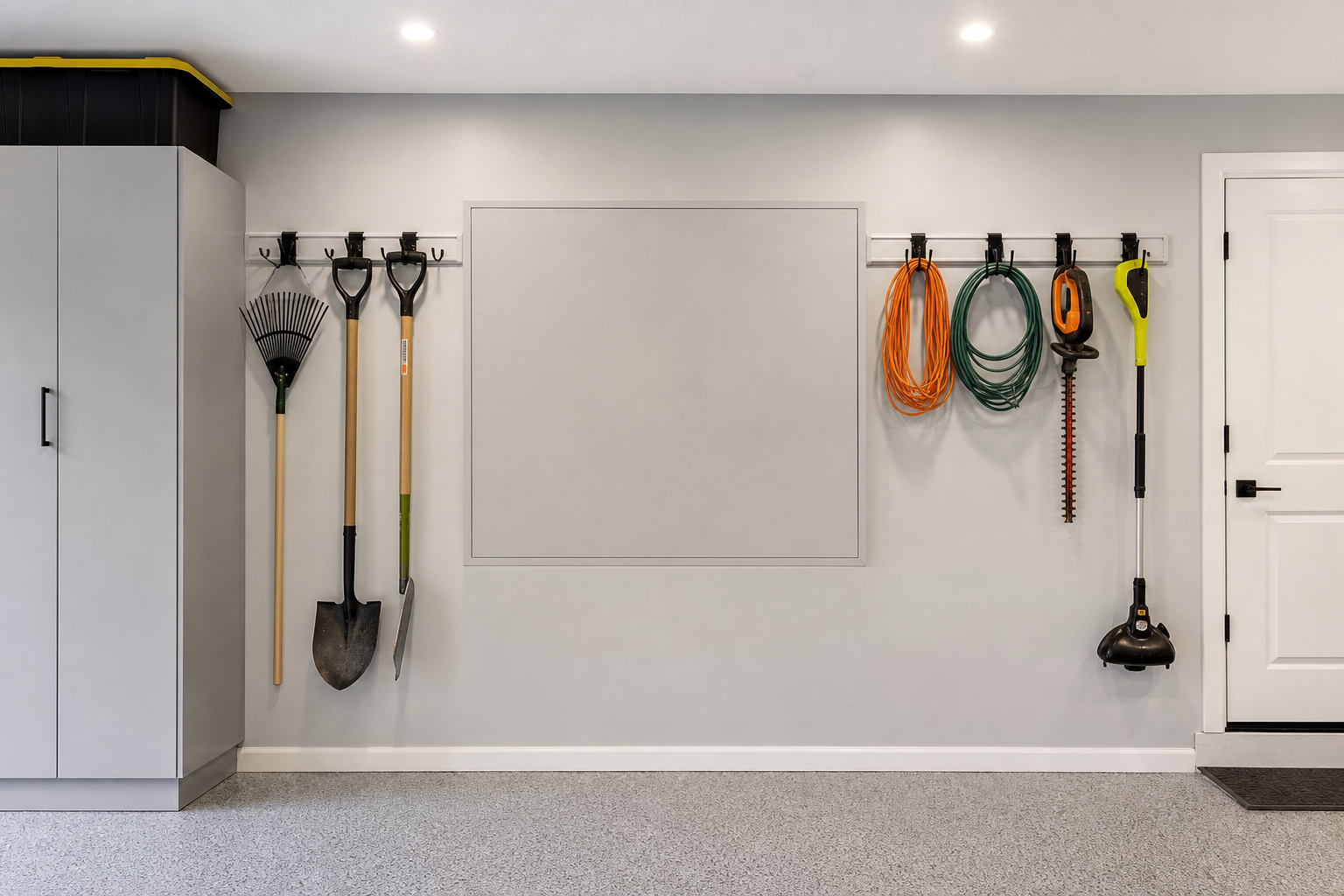
Painting the fold-down bench panel the same color as the surrounding wall makes it nearly invisible when not in use , important in a small garage where visual clutter is just as draining as physical clutter. The hooks on either side of the panel stay functional whether the bench is open or closed. It’s a tidy solution for a garage that doubles as a hangout or parking space after projects are done.
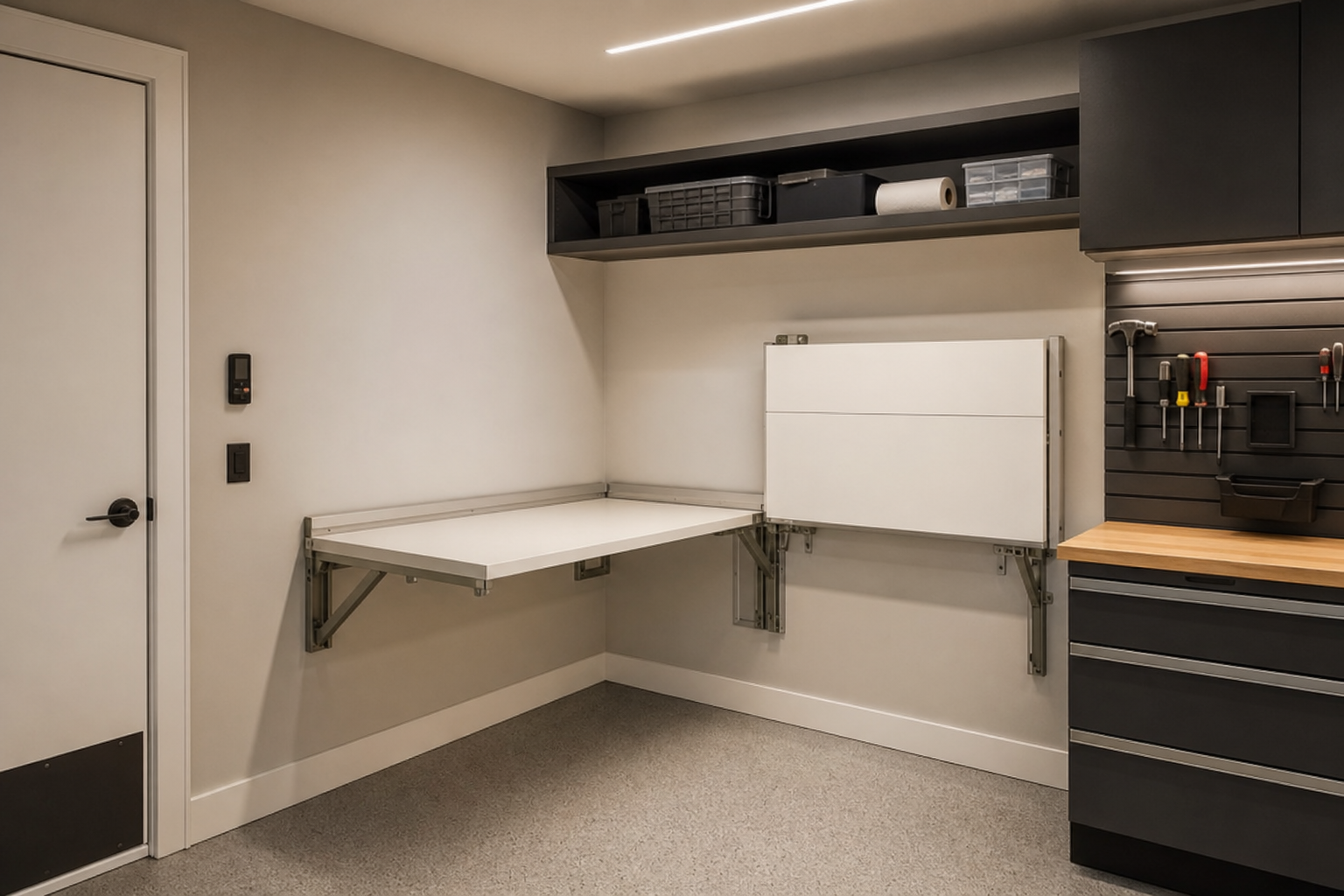
A corner fold-down setup lets you deploy one or both panels depending on how much surface area the job needs. The L-shape gives you room to spread out a project without committing the full corner every day. The white laminate surface is easy to wipe clean and reflects the shop lighting well, which matters when you’re working on small parts.
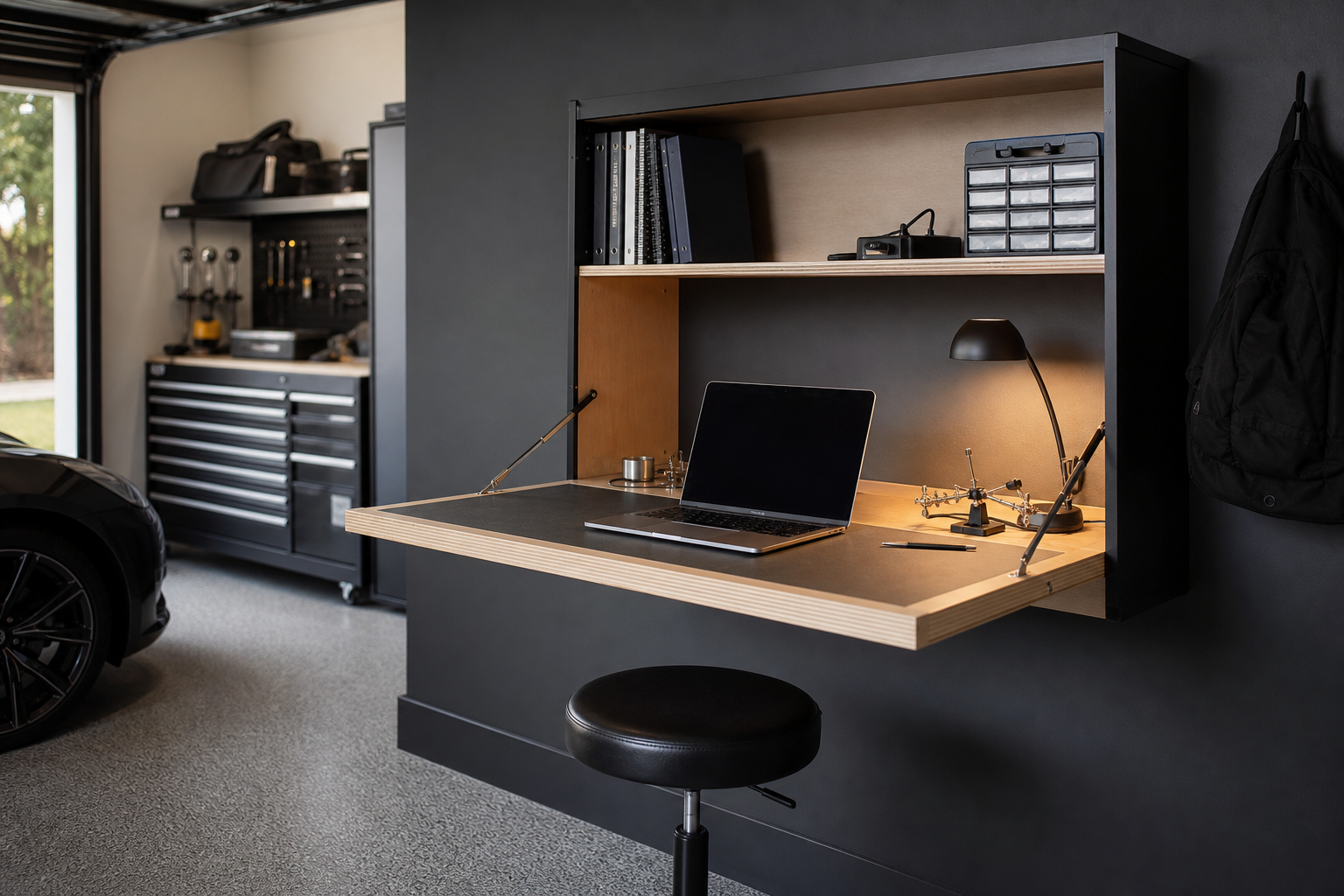
Setting a fold-down panel at desk height rather than bench height opens it up as a seated hobby or home office station, not just a place to use power tools. The charcoal wall and warm lamp give it a finished, focused atmosphere that doesn’t feel like a garage at all when you’re sitting in front of it. It’s an especially good fit for a detached garage that needs to handle both work and projects.
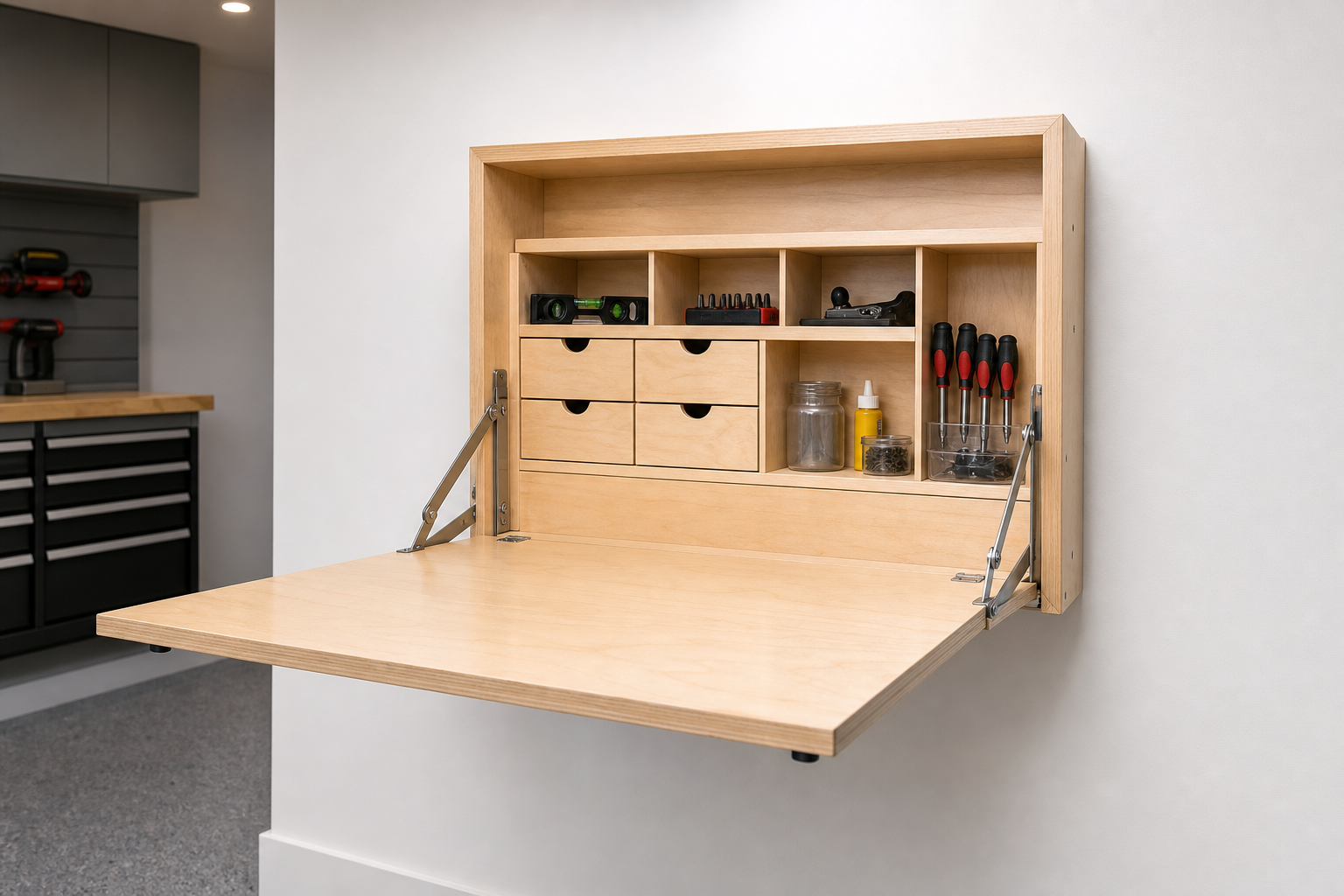
Building storage directly into the cabinet body behind the fold-down surface means every inch of wall depth is working for you. The small drawers and cubbies visible when the bench opens keep hardware sorted and within reach without a separate organizer unit. The maple and birch combination gives this a workshop-quality look that holds up to daily use. For a deeper dive into building storage like this from scratch, my best garage tool storage solutions guide for DIYers is a useful companion.
Space-Saving Parking
Getting the car in and out without damaging it, the door, or the stuff stored around it takes more planning than most people expect. In a small garage, parking precision matters, and there are some genuinely clever tools and layout moves that make it much less stressful. Parking aids like laser guides, foam bumpers, and floor sensors are low-cost and high-impact. I cover the best of those options in my garage parking aids guide. If you’re weighing whether it’s even worth pulling the car inside at all, my post comparing garage versus outside parking breaks down the real trade-offs.
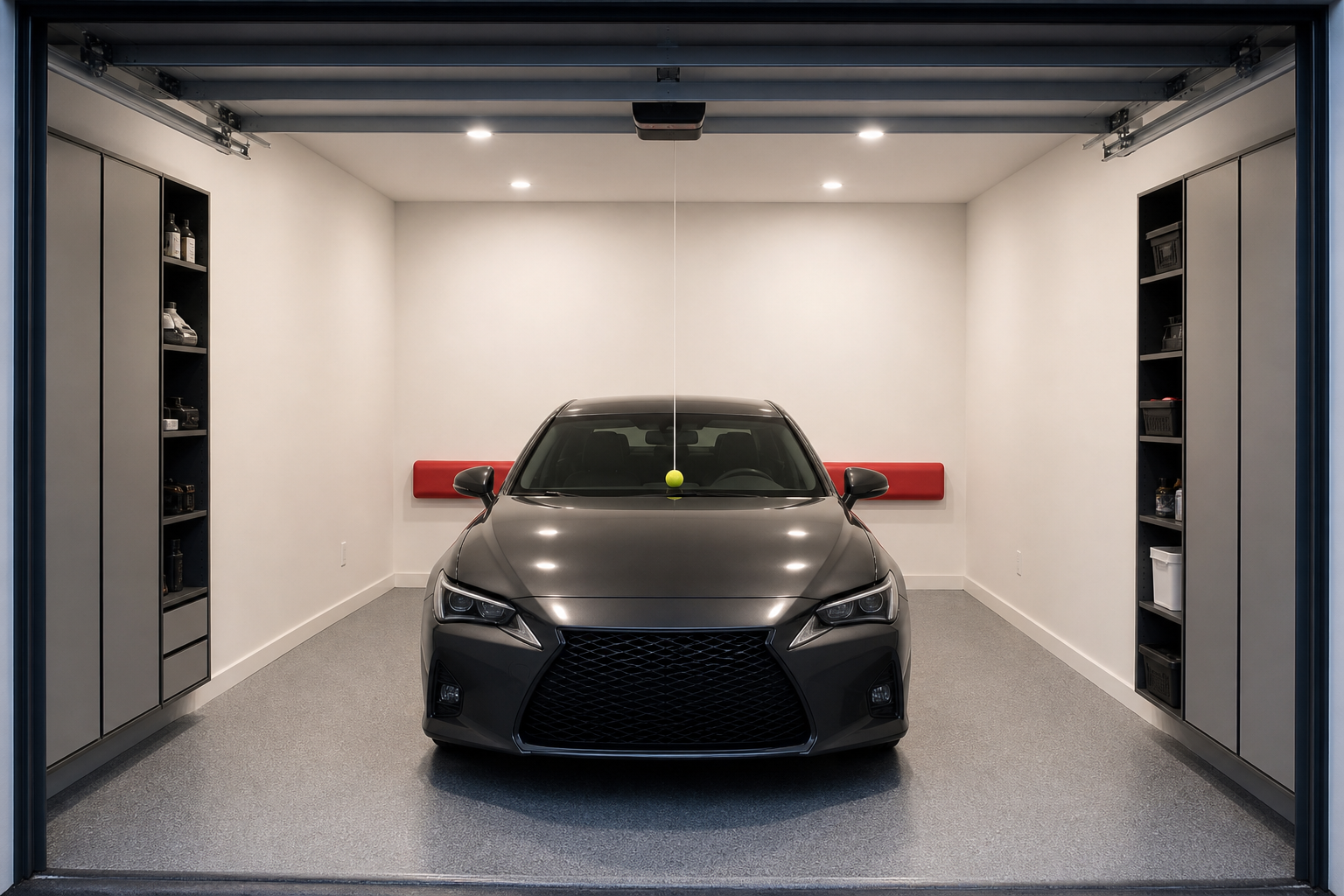
The tennis ball on a string is one of the oldest parking tricks for a reason , it works perfectly every time and costs almost nothing. Pairing it with a foam bumper on the front wall gives you both a visual stop cue and a physical one. Together they let you pull all the way in with confidence, which means you actually have room to open the door on both sides.
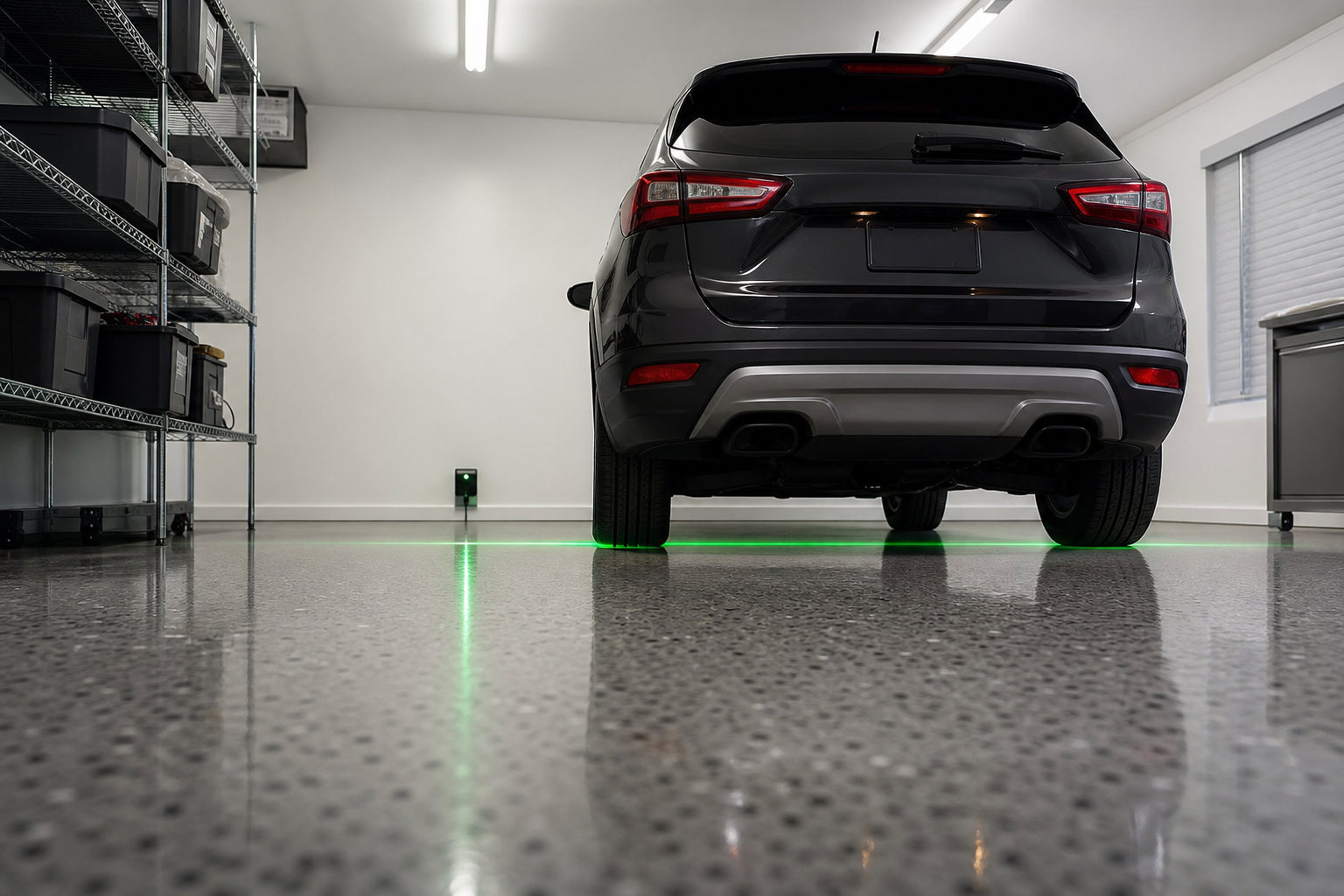
A wall-mounted laser parking guide projects a crisp line across the floor so you know exactly when to stop without looking at a ball or a bumper. It’s particularly useful in a garage where pulling in at an angle even slightly can throw off the door clearance on one side. The green line shows up clearly on a light epoxy floor even in bright shop lighting.
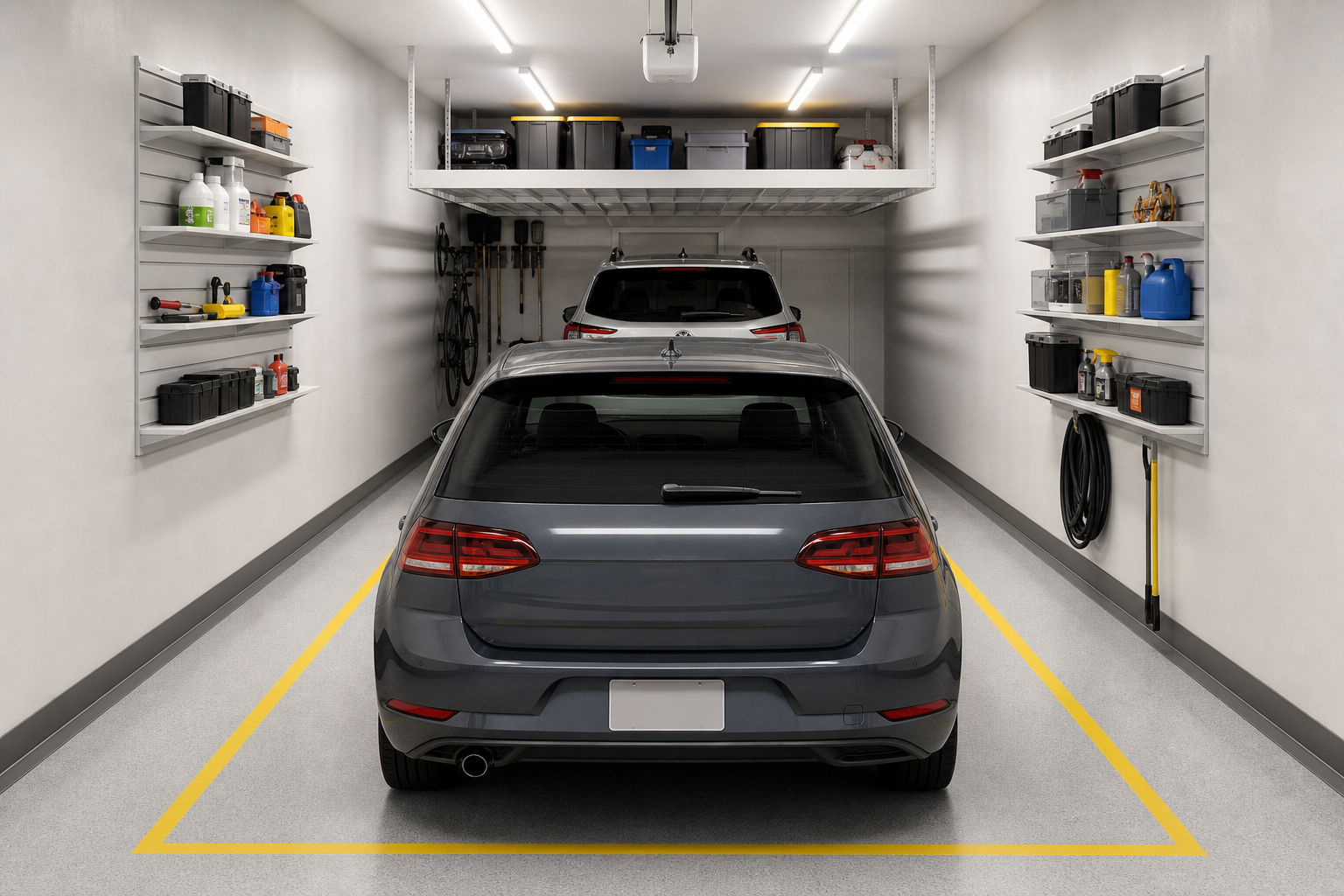
Painted floor lane markings take the guesswork out of a tandem parking setup, especially when two different drivers are putting vehicles in. Keeping the side shelving to 10 inches deep preserves enough lane width to walk alongside both vehicles comfortably. If you’re planning a tandem layout from scratch, the single vs. double vs. tandem garage dimensions guide has the exact measurements you need to check clearances before committing.
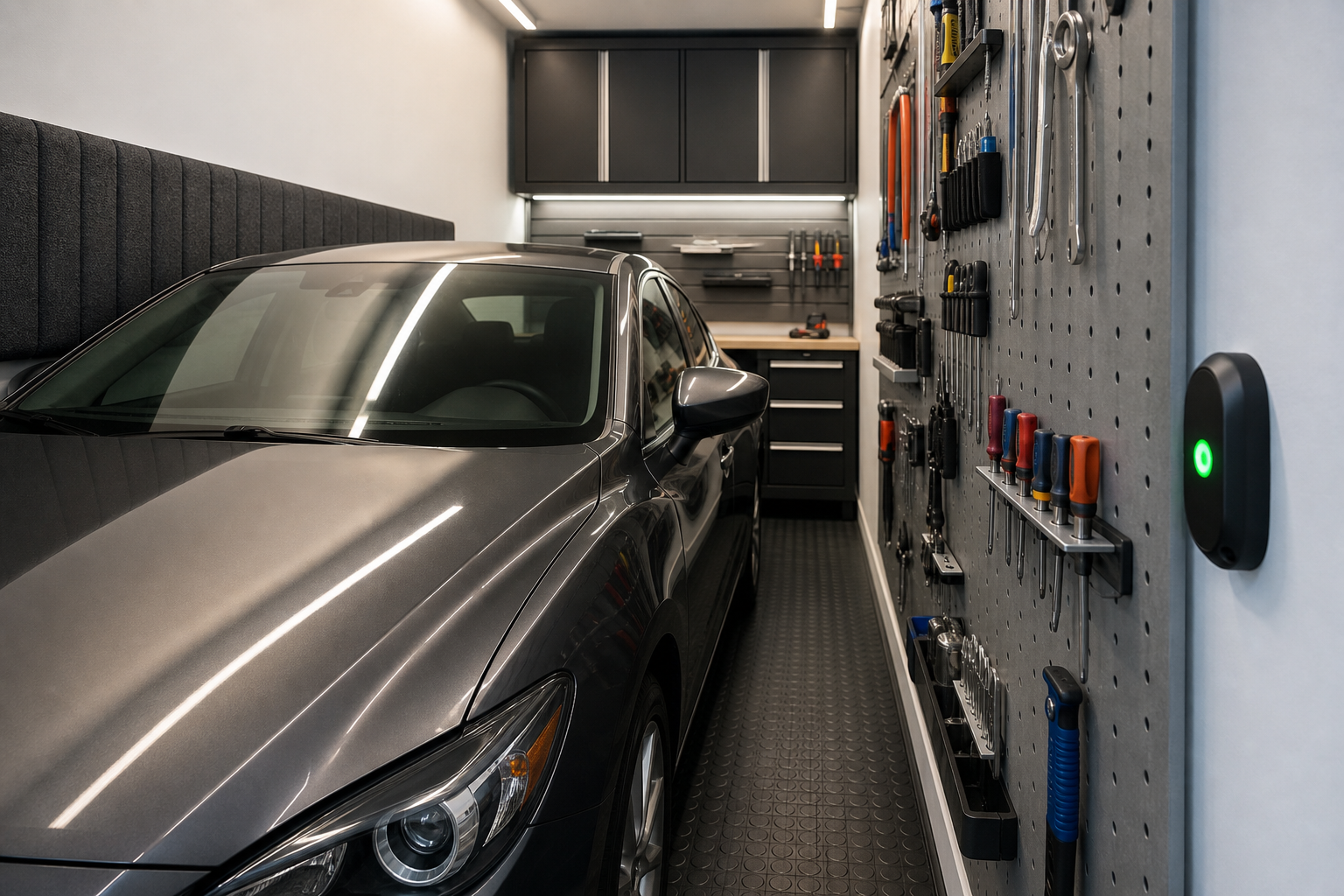
A side clearance sensor with an LED readout tells you how close the car is to the storage wall so you can park decisively instead of creeping in inch by inch. The vertical foam padding strip on the opposite wall protects the car door on the swing. Both additions together make a tight one-car garage feel a lot less nerve-wracking to use daily.
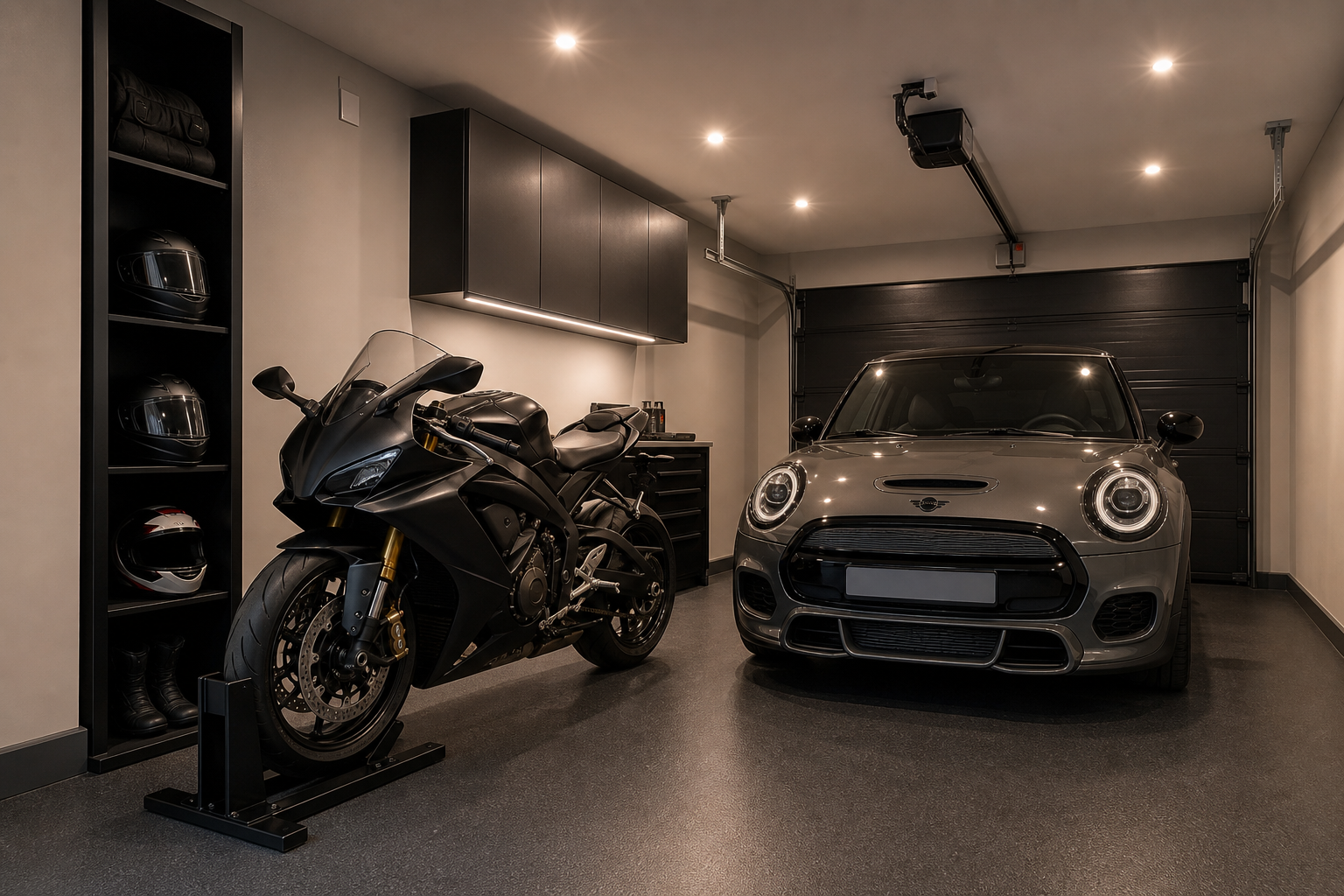
A wheel chock lets a motorcycle stand upright without taking up the additional footprint a center stand or side stand needs, and it keeps the bike locked in position while parked. Tucking it into the front corner reserves the main lane for the car. The narrow gear tower beside the bike keeps helmets and riding jackets stored right where you need them. For more ideas on fitting bikes into small spaces, my garage motorcycle storage ideas post goes much deeper on this.
