

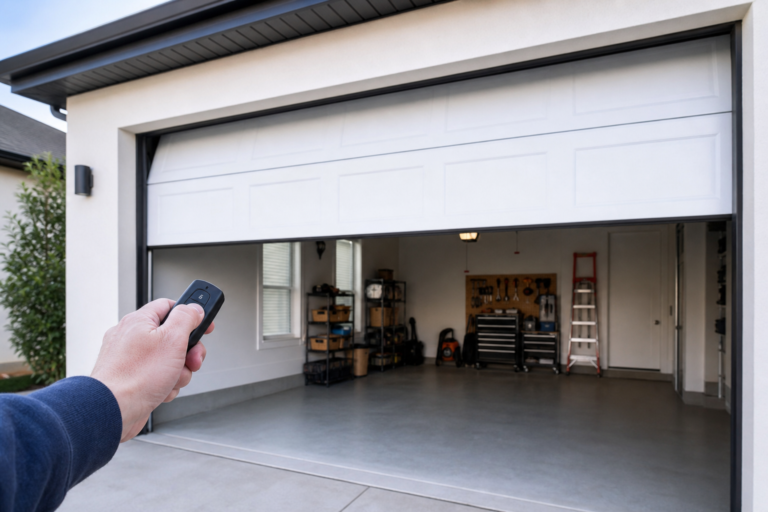
If your garage door opens by itself, you’re dealing with one of the most reported garage issues. Climate, age, and usage all play a role, but the root causes fall into a surprisingly short list.
This troubleshooting guide covers each possibility with clear explanations and actionable fixes. By the end, you’ll have the problem solved or know exactly what to tell a technician.
Understanding the Basics
Start troubleshooting by disconnecting the opener (pull the red emergency release cord) and testing the door by hand. If it moves smoothly and holds at the halfway point, the mechanical system is fine and the problem is in the opener or electronics. If the door is heavy or drifts, suspect the springs.
Lubrication is the cheapest, most effective maintenance. Apply white lithium grease or silicone-based lubricant to hinges, rollers (unless sealed nylon), spring coils, and track contact points every 6 months. Skip WD-40 for this; it’s a solvent that displaces moisture but doesn’t provide lasting lubrication.

Garage Door Lubricant
Quality lubricants make a noticeable difference in garage door operation and longevity
Safety sensors mount about 6 inches above floor level on both sides of the door opening. They send an infrared beam across the gap. If anything blocks or misaligns that beam, the door won’t close. Sensor issues are the number-one cause of “door won’t close” complaints and are almost always a quick fix.
For more detailed guidance on sensor alignment, check our complete garage door safety sensor alignment guide.
Stuck Wall Button Wiring
Cheap LED bulbs emit radio frequency interference in the 300 to 400 MHz range, overlapping with garage door opener frequencies. This causes remote range loss or complete signal blocking. Switch to LEDs rated “garage door opener compatible” or use rough-service incandescent bulbs in the opener’s socket.
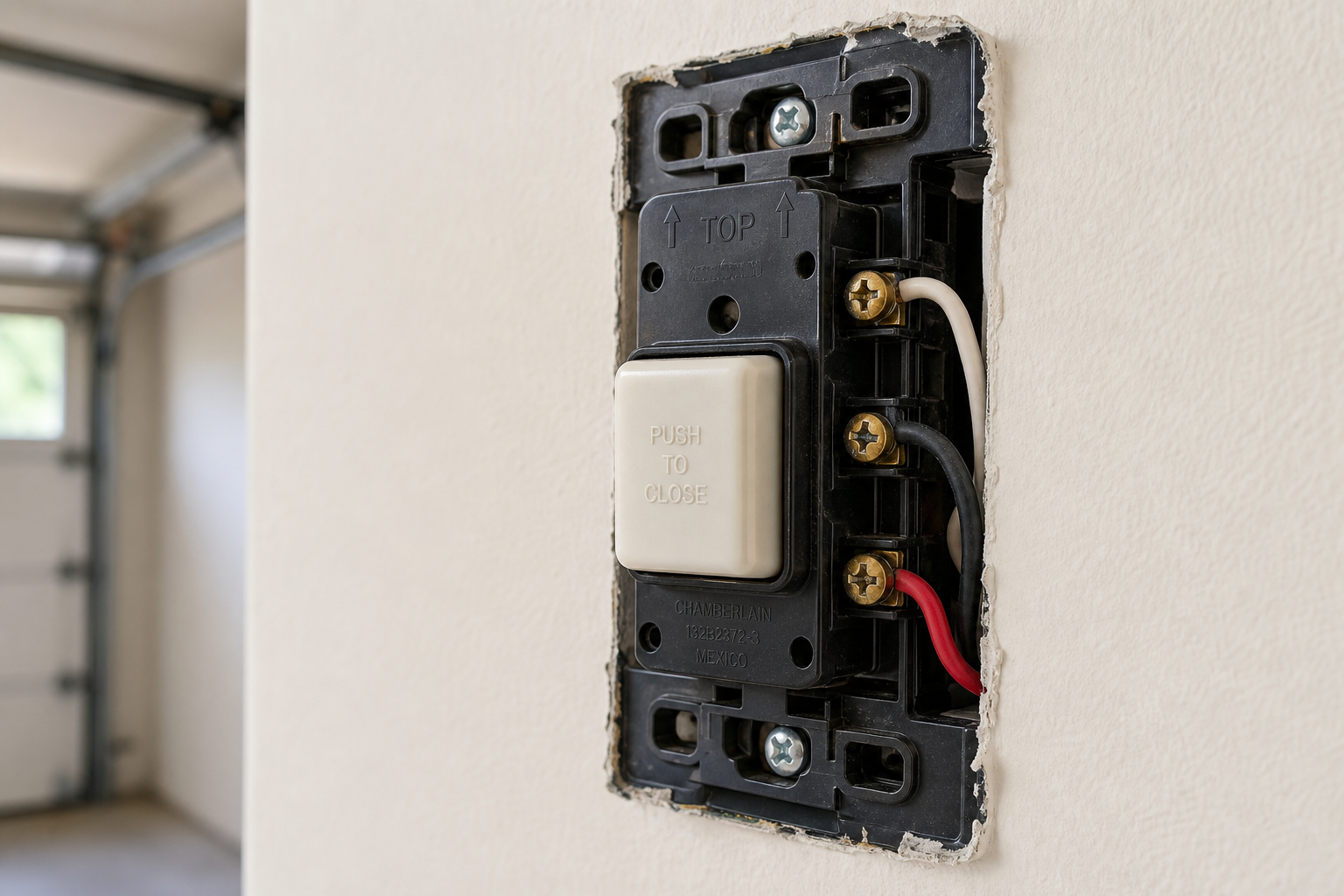
Check the wall button first when your door opens spontaneously. Water damage, worn contacts, or loose wiring can create a constant “open” signal. Remove the button from the wall and inspect for corrosion or damaged wires.
Measure twice and commit once. A tape measure and five minutes of verification prevent the mistakes that take hours to fix. This applies doubly to cuts, holes, and any irreversible step.
If your door consistently stops halfway instead of opening completely, the problem might be in the travel limits rather than random activation.
Circuit Board Problems
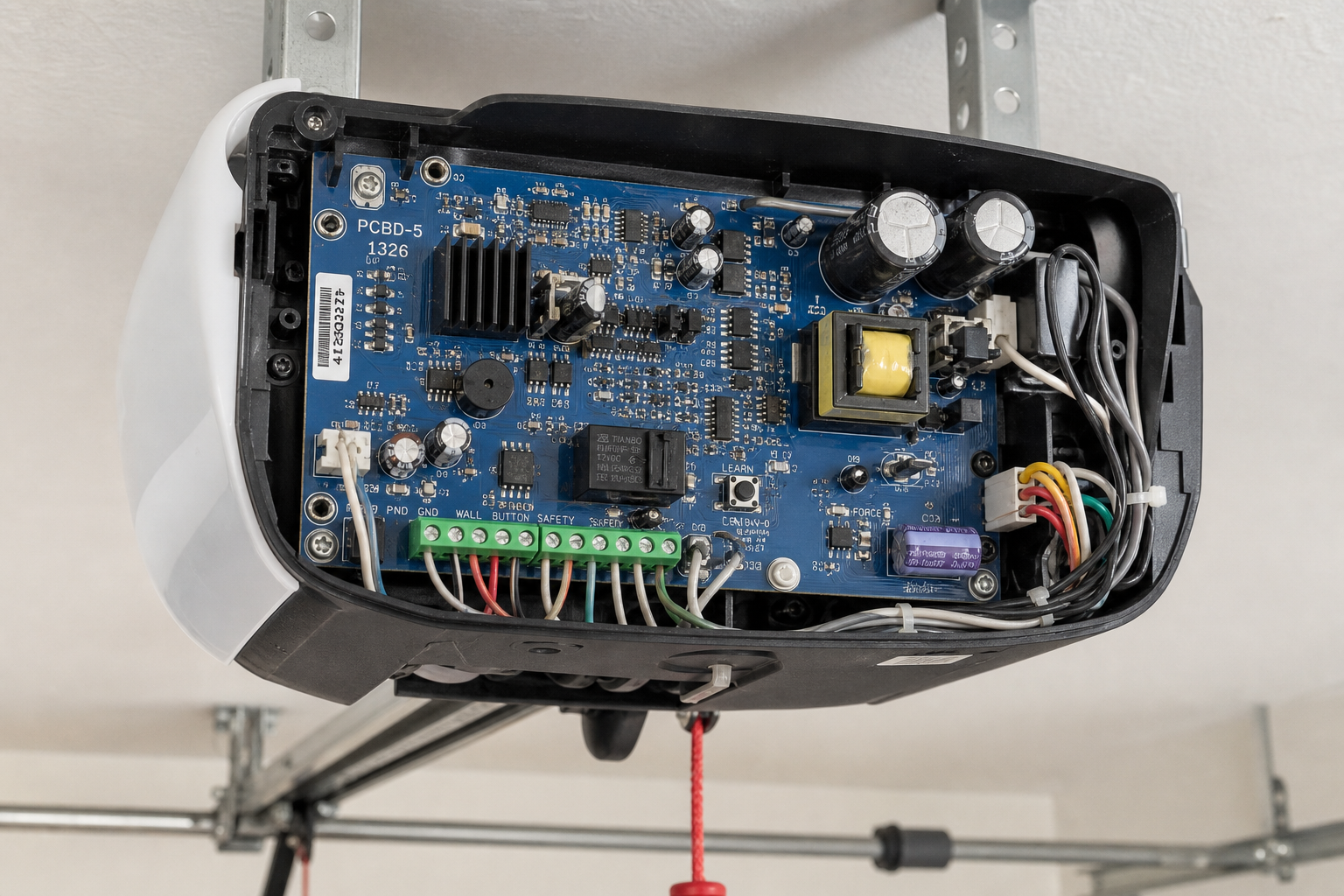
A shorted circuit board can send phantom signals that activate your opener randomly. Getting this diagnosis right requires matching your approach to actual conditions rather than following a generic formula. Climate, surface condition, and usage patterns all influence the best path forward.
Look for burn marks, corroded connections, or loose wiring on the opener’s main circuit board. Power surges from storms commonly damage these components. Water infiltration from roof leaks creates similar problems.
Document every product you use: brand, color, batch number, application date. Future touch-ups need exact material matches. Tape the info inside a cabinet door or take a quick phone photo for your records.
If this is your first project of this type, budget 50% more time than guides suggest. The learning curve is real, and careful work produces better results than rushing to meet an estimated timeline.
Radio Frequency Interference
Isolate the cause by disconnecting components one at a time and changing the opener’s frequency code. The details here make the difference between a result that lasts and one that needs redoing within a year. Take the time to assess your conditions before committing to a method or product.
Nearby radio towers, baby monitors, and wireless security systems can trigger garage door openers. Change your opener’s frequency or rolling code to eliminate conflicts. Most modern openers have DIP switches or learn buttons for this adjustment.
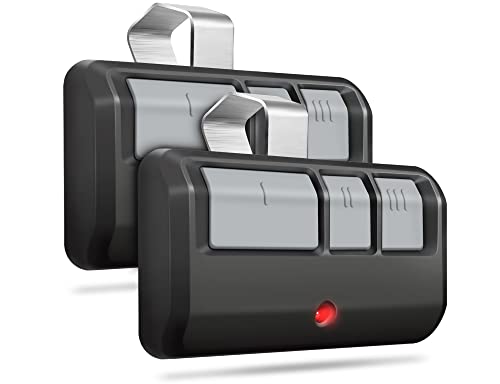
Garage Door Remote Replacement
Updated remotes with rolling code technology prevent interference issues
Follow manufacturer instructions exactly, even when online tutorials suggest shortcuts. Formulations differ between brands; what works for one product can cause failure with another. If the data sheet says 4 hours between coats at 60 degrees minimum, those numbers aren’t suggestions.
Consider upgrading to a garage door opener with battery backup if you’re experiencing electrical issues. Modern units have better surge protection and interference filtering.
Spring and Hardware Issues
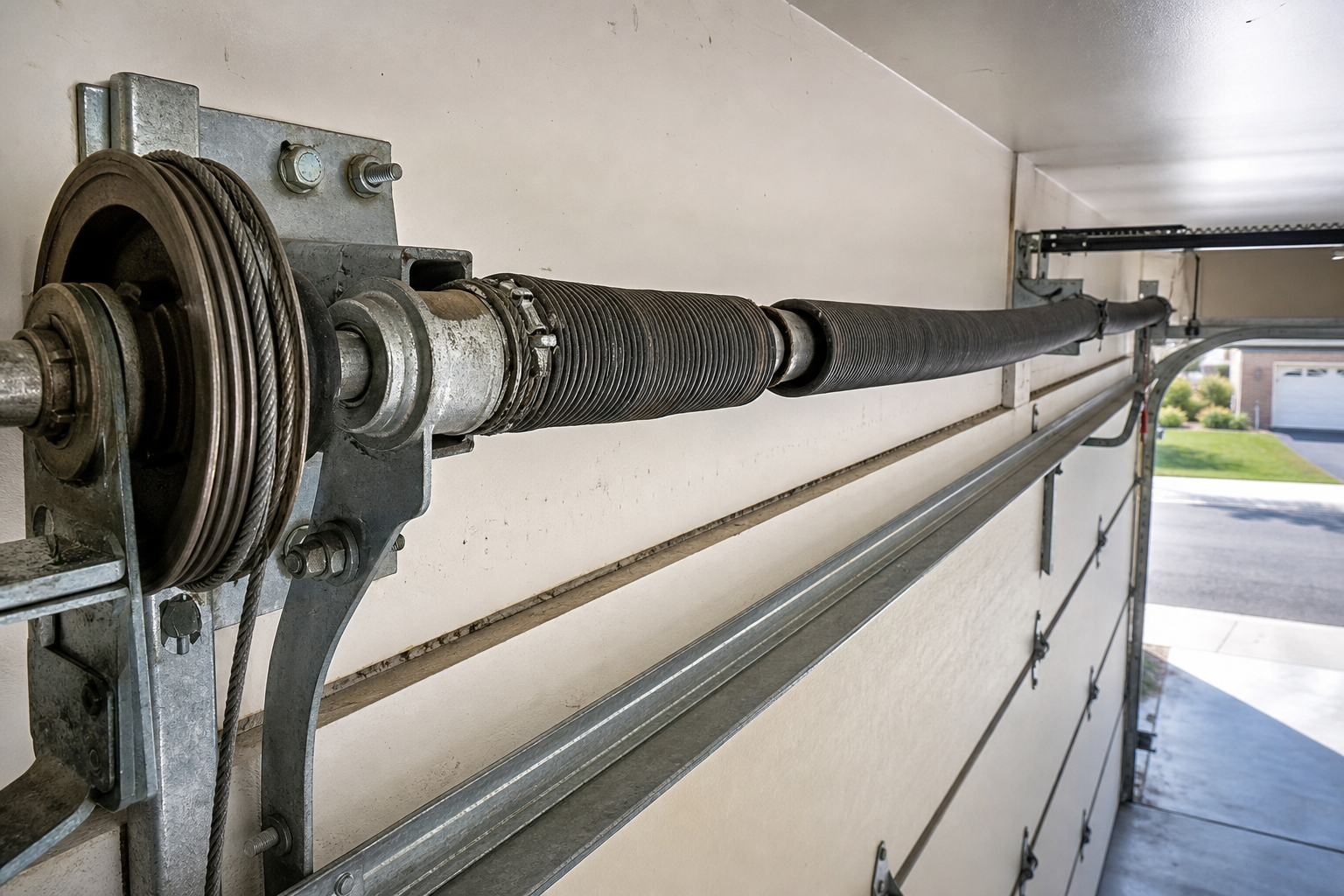
A garage door system includes panels, tracks, rollers, springs (torsion or extension), cables, hinges, weatherstripping, and the opener with its motor, drive mechanism, and safety sensors. When symptoms appear, the root cause isn’t always in the most obvious component.
Broken or improperly adjusted springs can cause the door to drift open after closing. This creates a safety hazard and puts extra strain on the opener motor. Never attempt to adjust torsion springs yourself; they store enough energy to cause serious injury.
Check weather stripping for damage that might affect sensor operation. Torn or hanging strips can block the safety beam and cause erratic behavior.
Practical Planning Tips
Set a realistic timeline and budget before buying anything. Most garage projects take 50% longer and cost 20% more than initial estimates, especially for first-timers. Build that buffer into your plan so unexpected discoveries don’t derail the entire project or blow the budget.
Prioritize your projects based on impact and urgency. Safety issues (faulty wiring, CO risk, structural problems) come first. Comfort improvements (insulation, lighting, climate control) come second. Cosmetic upgrades (floor coatings, paint, organization systems) come last.
Consider the seasonal timing of your project. Floor coatings apply best in mild weather (50 to 85 degrees). Insulation projects are most motivating before extreme weather hits. Electrical and plumbing work can happen year-round but should be completed before insulating or finishing walls.
GFCI protection is code-required for all garage outlets. These devices trip at small current leaks, preventing electrocution in damp conditions. In garages, trips can be caused by moisture, cold temperatures, or brief startup surges from motor-driven tools.
When to Call a Professional
DIY covers most of what’s listed above, but some situations need professional help. High-voltage electrical work, garage door spring replacement, structural modifications, and commercial-grade coatings requiring specialized equipment are all worth outsourcing.
A botched repair often costs more to fix than hiring the right person from the start. Panel replacement and major opener repairs fall into this category.
Get two to three quotes, verify licensing and insurance, and ask for recent references. A reputable contractor explains the process clearly, provides a written estimate, and backs the work with a written warranty.
Wear appropriate protection throughout: safety glasses, gloves, respirator when working with chemicals or dust. Ventilate when using adhesives, paints, or solvents. These aren’t optional precautions.
Frequently Asked Questions
Do I need a permit for garage electrical work?
Most areas require permits for new circuits, panel upgrades, and 240V installs. Check with your building department. Unpermitted work creates problems when selling.
How long do garage door openers last?
10 to 15 years with regular maintenance. Belt-drive units tend to outlast chain-drive models. Motors, boards, and gears wear first. Consider whether you need a 1.25 HP vs 1.5 HP opener when replacing.
Should I replace garage door springs myself?
Torsion springs store enough energy to cause serious injury. This repair should always go to a trained technician with proper tools.
Why does my GFCI keep tripping?
Common causes: overloaded circuit, moisture on the outlet, cold temps affecting electronics, or ground faults in connected equipment. Isolate devices one at a time to find the trigger.
This article contains affiliate links. We may earn a small commission at no extra cost to you.
