

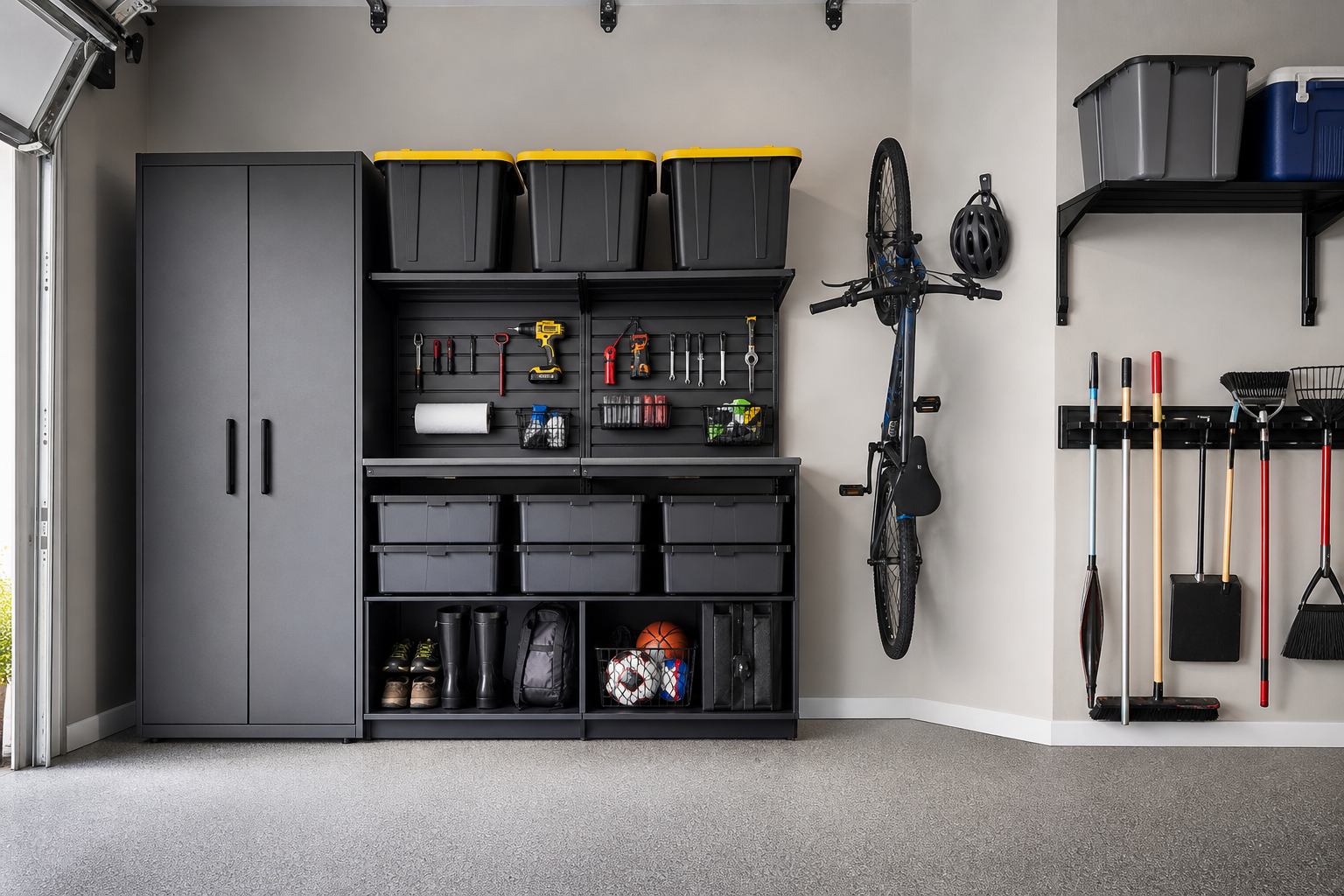
Understanding garage organization ideas for small spaces in detail gives you a real advantage, whether you’re planning a project, troubleshooting, or making smarter decisions about your space. The specifics matter more than most people expect.
This guide covers everything you need to know in practical terms, with actionable takeaways you can use right away.
Understanding the Basics
Effective garage storage uses walls and ceiling as primary surfaces, keeping the floor clear for vehicles and work. Wall-mounted track systems, overhead ceiling racks, and sturdy cabinets provide organized access without eating into parking or workspace.
The math is simple: a standard two-car garage measures 20 by 20 feet, giving you 400 square feet of floor space. Mount shelving on three walls, and you gain 60 linear feet of storage at zero floor cost. Add overhead racks in the 4-foot dead zone above car hoods, and you’ve created 80 square feet of additional storage that was previously wasted air.
Zone your garage before buying products. Common zones: tools/workbench, automotive, seasonal items, sports gear, lawn/garden, and household overflow. Each zone stays self-contained so everything for a given task lives in one spot.
Sketch your zones on graph paper or use painter’s tape on the floor to mark boundaries. This takes 30 minutes and prevents the classic mistake of buying a storage system that blocks access to something you use weekly. Mark where your car doors swing open, where you need walking paths, and where overhead garage door tracks limit ceiling storage.
Clear plastic bins beat cardboard for garage storage in every way: moisture resistance, pest resistance, visibility, and stackability. Label each bin on the front for easy identification. A label maker and 20 minutes of work saves hours of searching over the coming years.
Bin size matters more in small garages. Standardize on two or three sizes maximum so they stack efficiently. 12-quart bins work for small items like car care products or hand tools. 66-quart bins handle seasonal decorations or camping gear. Oversized bins become too heavy to lift safely when full and waste vertical space on shelves.

Clear Garage Storage Bins
Perfect for visibility and moisture protection in garage environments
Wall Systems That Actually Work
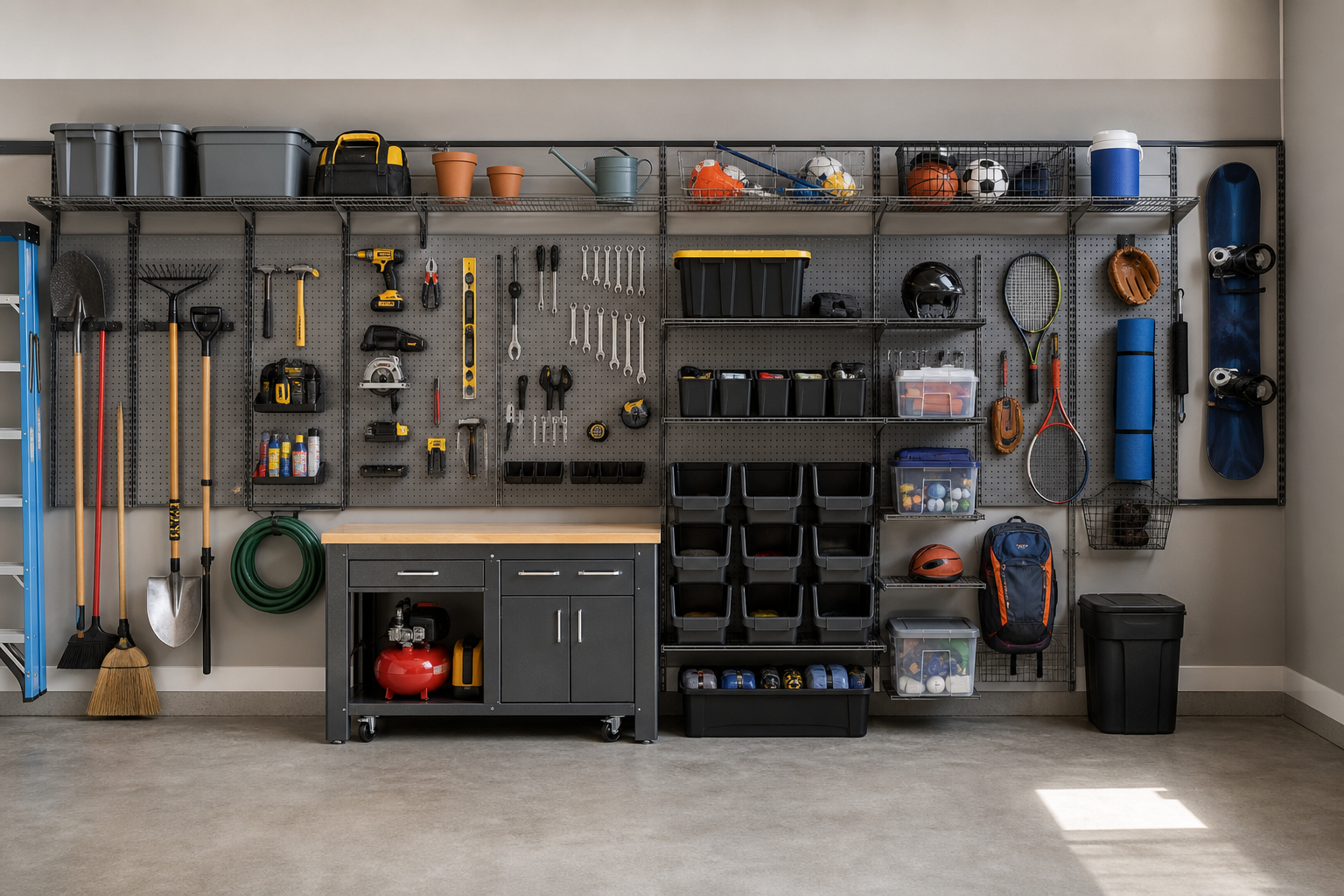
Slatwall panels use horizontal channels accepting hooks, baskets, shelves, and brackets. Weight distributes across multiple points, making the system stronger than individual fasteners. Quality installations support 25 to 50 pounds per square foot when mounted into studs.
Slatwall comes in 4-by-8-foot panels, typically in ¾-inch thickness. Installation requires finding studs (16 or 24 inches on center in most garages), cutting panels to fit around windows or electrical boxes, and securing with 3-inch screws every 12 inches vertically. A two-wall slatwall installation in a one-car garage takes a full weekend for someone comfortable with basic carpentry.

Garage Slatwall Storage System
Professional-grade organization with maximum weight capacity and accessory options
For detailed installation instructions, check out our guide to installing garage slatwall accessories.
Pegboard costs less but handles lighter loads. Standard ¼-inch pegboard maxes out around 5 to 10 pounds per hook. ½-inch metal pegboard pushes that to 15 to 20 pounds per hook but costs nearly as much as slatwall. The real limitation: pegboard accessories are less diverse and often cheaper-feeling than slatwall options.
Track systems split the difference. Horizontal aluminum or steel tracks mount to studs, accepting hooks and brackets that slide along the length. Weight capacity hits 50 to 100 pounds per bracket depending on the system. The flexibility is the selling point: reconfigure your layout in minutes by sliding brackets to new positions as your storage needs change.
A quality steel garage cabinet makes a noticeable difference in results. Check current options and reviews to find the right match for your project.
Cabinets with adjustable shelves give you more usable capacity than fixed shelves. A 36-inch-wide cabinet with four adjustable shelves holds everything from spray paint cans (8 inches tall) to gallon jugs (12 inches tall) without wasting vertical space. Fixed shelves force you to choose one height that inevitably wastes room above shorter items.
Overhead Storage Realities
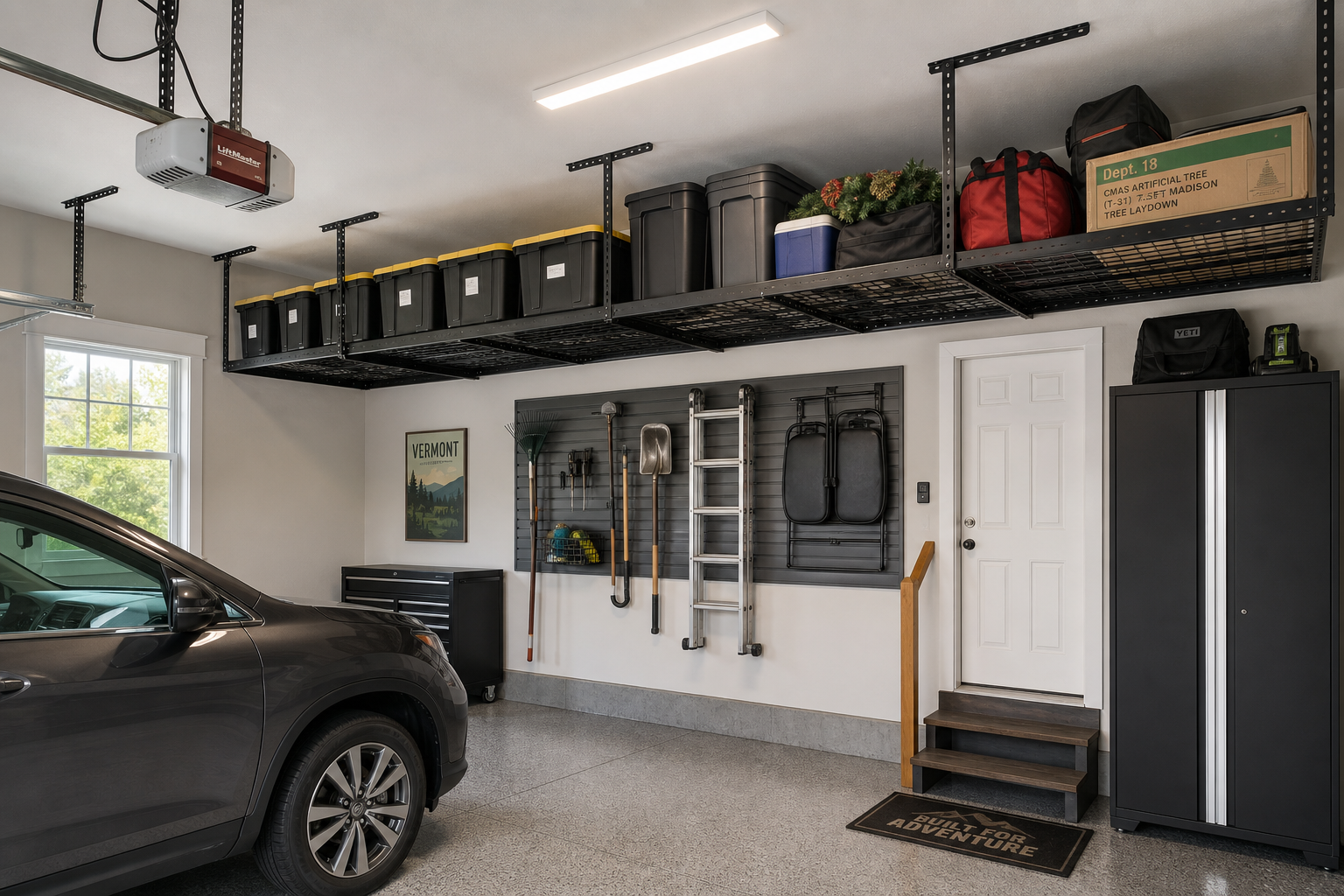
Weight capacity is critical and often misunderstood. Wall systems in studs hold 50 to 75 pounds per linear foot. On drywall alone, that drops to 15 to 25 pounds before failure. Ceiling racks rated for 600 pounds assume even distribution; concentrating weight in one area can cause failure well under the total limit.
Overhead racks come in two main styles: ceiling-mounted platforms and garage ceiling storage racks that hang on adjustable cables. Platform racks install directly to ceiling joists and sit 16 to 40 inches below the ceiling. Cable-drop racks adjust from 12 to 45 inches below joists, letting you fine-tune clearance above your vehicle.
Measure your garage door opener and tracks before buying overhead storage. High-lift and jackshaft openers leave more ceiling space than standard-lift systems. Standard-lift doors need 12 inches of clearance behind the door in the open position. Your overhead rack must clear that space or the door damages your storage every time it opens.
Learn more about garage door opener options in our comparison of 1.25 HP vs 1.5 HP garage door openers.
Most ceiling joists in garages run perpendicular to the garage door, spanning the narrow dimension. A 20-foot-wide garage has joists spanning that 20 feet, typically 2-by-8 or 2-by-10 lumber on 16-inch or 24-inch centers. Each joist can support several hundred pounds, but confirm this before loading a rack. Trusses and engineered joists have different load ratings and sometimes prohibit direct attachment without reinforcement.
The sweet spot for overhead storage: items you use seasonally but not weekly. Holiday decorations, camping gear, winter sports equipment, and pool supplies. Don’t store anything overhead that you need quick access to. Climbing a ladder to retrieve a screwdriver defeats the purpose of organization.
For automated solutions, consider ceiling storage lifts that bring items down to eye level at the push of a button.
Vertical Storage Strategies
Corner spaces waste capacity in most garages. A 90-degree corner holds nothing useful at floor level, but mount a corner shelf unit and you gain 8 to 12 square feet of storage. Rotating corner units with lazy-susan mechanisms provide access to every item without digging behind front-row bins.
Vertical bike storage reclaims 15 to 20 square feet per bike. Horizontal floor stands take up a 6-by-2-foot footprint per bike. Wall-mounted hooks lift bikes vertically, using only 2 square feet of wall space and zero floor space. Pulley systems raise bikes to the ceiling, clearing wall and floor entirely, but they require 10 feet of ceiling height to keep handlebars above head level.
For specific bike storage recommendations, see our best garage bike storage systems guide.
Ladder storage is practical: horizontal wall brackets spaced 4 feet apart. Mount them 7 feet high and your ladder is out of the way but reachable without tools. Don’t lean ladders in corners where they block access to entire zones. That’s 20 square feet of dead space for a ladder you use twice a year.
Long-handle tools (rakes, shovels, brooms) need 6 to 8 feet of vertical clearance. Mount a tool rack 12 inches below the ceiling and handles stay above head height. Spring-loaded clips or horizontal slots keep each tool separated so you can grab one without moving three others.
Bins on upper shelves should be light enough to lift safely overhead. Keep heavy items (paint cans, automotive fluids, bulk hardware) at waist height or below. Lifting 40 pounds overhead is how people hurt themselves. Store it lower or split it into two lighter bins.
Clear garage storage bins are a reliable choice that’s well-reviewed by garage owners. Browse the latest selection for current pricing and availability.
Small-Space Floor Plans That Function
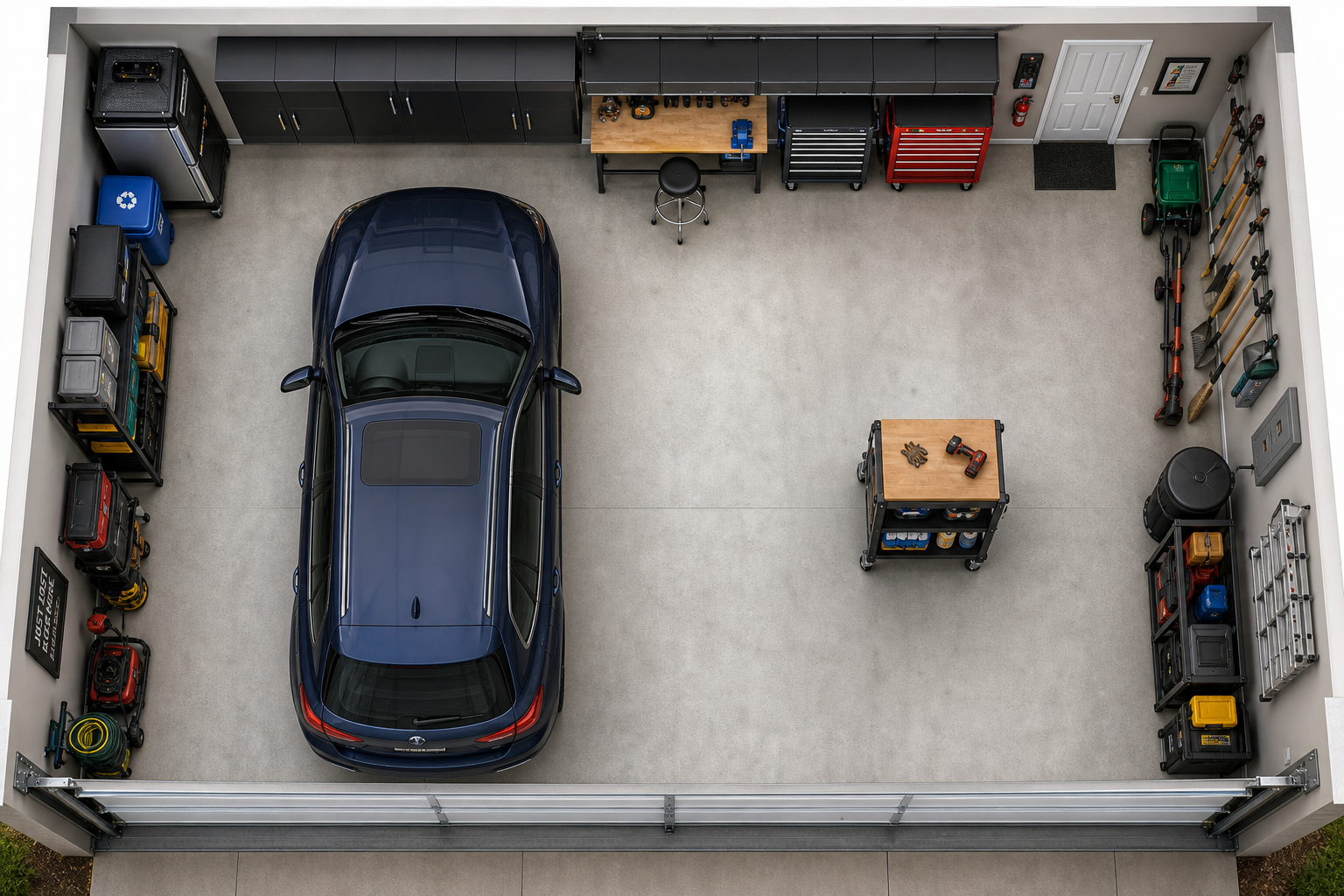
Single-car garages measure 12 by 20 feet on average. That’s 240 square feet total, with 100 to 120 square feet consumed by the parked vehicle. You’re organizing 120 square feet effectively.
Run shelving or cabinets along the back wall (12 feet) and one side wall (20 feet), leaving the other side for car door clearance and walking access. Mount shallow shelving (12 inches deep) on the door-side wall if you can spare it. This creates an L-shaped or U-shaped storage perimeter that keeps the center clear.
Fold-down workbenches save massive floor space in tight garages. A 4-foot workbench mounted on hinges folds flat against the wall when not in use, taking 3 inches of depth instead of 24 inches. You lose some work surface stability compared to fixed benches, but you gain parking space for the other 350 days a year you’re not actively using the bench.
Discover more space-saving options in our best garage folding workbenches review.
Mobile storage carts work well for frequently accessed items in small spaces. A three-tier rolling cart (18 by 30 inches) holds power tools, fasteners, and supplies. Roll it to the work area when needed, then back to its parking spot along the wall. Fixed shelving in the same footprint provides more capacity but less flexibility.
Check out our best garage rolling tool carts for mobile organization solutions.
Magnetic tool strips mounted inside cabinet doors or on wall studs organize drill bits, screwdrivers, and small hand tools in 2 inches of depth. A 24-inch magnetic strip holds 15 to 20 tools visibly and accessibly. Compare that to a drawer where tools pile on top of each other and you spend 30 seconds finding the right Phillips head.
For more magnetic organization ideas, see our best garage magnetic tool holders guide.
What Not to Store in Small Garages
Bulk storage of items you rarely use doesn’t belong in a small garage. If you haven’t used something in two years, it’s taking space from items you use monthly. Offsite storage units free up 50 to 100 square feet in your garage. Do the math on what that floor space is worth to you.
Temperature-sensitive items suffer in uninsulated garages. Paint freezes below 32 degrees, ruining latex formulas permanently. Batteries lose capacity in extreme heat. Propane tanks are fine in garages, but gasoline and diesel should live in approved containers in well-ventilated areas, not crammed on shelves where fumes accumulate.
Items that belong in the house: important documents, electronics, anything with sentimental value, food (even canned goods in hot climates), and photographs. Garages experience humidity swings, temperature extremes, and occasional pest intrusions. Don’t risk items you can’t replace.
Hazardous materials require specific storage: flammable liquids in approved metal cabinets, pesticides and herbicides locked away from children and pets, aerosols kept below 120 degrees to prevent rupture. Check local regulations on quantity limits for flammables. Most areas cap residential storage at 10 to 25 gallons of combined gasoline, oil, solvents, and thinners.
Practical Planning Tips
Set a realistic timeline and budget before buying anything. Most garage projects take 50% longer and cost 20% more than initial estimates, especially for first-timers. Build that buffer into your plan so unexpected discoveries don’t derail the entire project or blow the budget.
Research local building codes and permit requirements for your specific project. Electrical work, structural modifications, and HVAC installations often require permits and inspections. Working without required permits can create liability issues, insurance complications, and problems when selling the home.
Most organization-only projects (shelving, racks, bins) don’t require permits. Running new electrical circuits, installing overhead door operators, or modifying structural framing does. Call your local building department before starting work that involves electrical, plumbing, or structural changes.
Consider the seasonal timing of your project. Floor coatings apply best in mild weather (50 to 85 degrees). Insulation projects are most motivating (and noticeable) before extreme weather hits. Electrical and plumbing work can happen year-round but should be completed before insulating or finishing walls over the wiring.
Organization projects work in any season. Winter downtime is ideal for planning and installing systems when you’re not using the garage for yard work staging or summer projects. Clear everything out once in January, install storage, and reload in organized zones.
Tool Investment Strategy
Invest in quality tools for tasks you’ll repeat. A reliable stud finder, a good level, a quality tape measure, and proper safety gear (eye protection, hearing protection, respirator) make every project easier and safer. These tools pay for themselves across multiple projects over the years.
A laser level beats a bubble level for installing long runs of track or slatwall. It projects a perfectly level line across 30 feet, eliminating the cumulative error that happens when you “walk” a short level across a long wall. Laser levels cut installation time in half.
Common Mistakes to Avoid
Overbuying storage before purging junk is the most expensive mistake. Sort everything first: keep, donate, trash. Only then measure what you’re actually keeping and buy storage to fit. Most people discover they can eliminate 30% to 40% of garage contents, saving hundreds in unnecessary storage products.
Mounting shelves too high makes them useless for daily access. The top shelf should sit at eye level or just above (6 to 7 feet for most people). Anything higher requires a step stool, which means it won’t get used consistently. Save those high zones for true long-term storage accessed once or twice a year.
Ignoring weight distribution on overhead racks causes sagging or failure. A 600-pound-rated rack fails if you stack 400 pounds in the center 2 feet and leave the ends empty. Spread weight evenly across the platform. Use multiple smaller bins rather than one giant bin in the middle.
Buying non-adjustable systems locks you into one configuration. Adjustable shelves, movable hooks, and reconfigurable track systems adapt as your needs change. Fixed systems force you to work around their limitations forever. Spend 20% more upfront for adjustability and you’ll use the system effectively for decades.
Blocking access to utilities is a daily frustration. Water heaters, electrical panels, HVAC equipment, and water shut-off valves need clear access per code and common sense. Leave 3 feet of clearance in front
