

As an Amazon Associate I earn from qualifying purchases.
Finding the right tool storage setup can make the difference between a garage you dread walking into and one you actually want to spend time in. These 20 garage tool storage ideas cover four approaches that work across different budgets, space sizes, and skill levels: wall-mounted tool walls, rolling tool chests, pegboard and hook systems, and drawer and bin organization. Whether you’re starting fresh or just trying to bring some order to an existing chaos, there’s something here worth stealing.
Wall-Mounted Tool Walls
A dedicated tool wall turns one of your garage’s biggest unused assets into prime storage real estate. By mounting storage systems directly to studs or a plywood backer, you keep the floor clear and put every tool within arm’s reach. These setups work especially well in single-car and tight garages where every square foot of floor space matters. If you’re working with limited square footage, the ideas in this small garage organization guide pair perfectly with a wall-mounted approach. The five setups below range from simple French cleats to full custom builds.
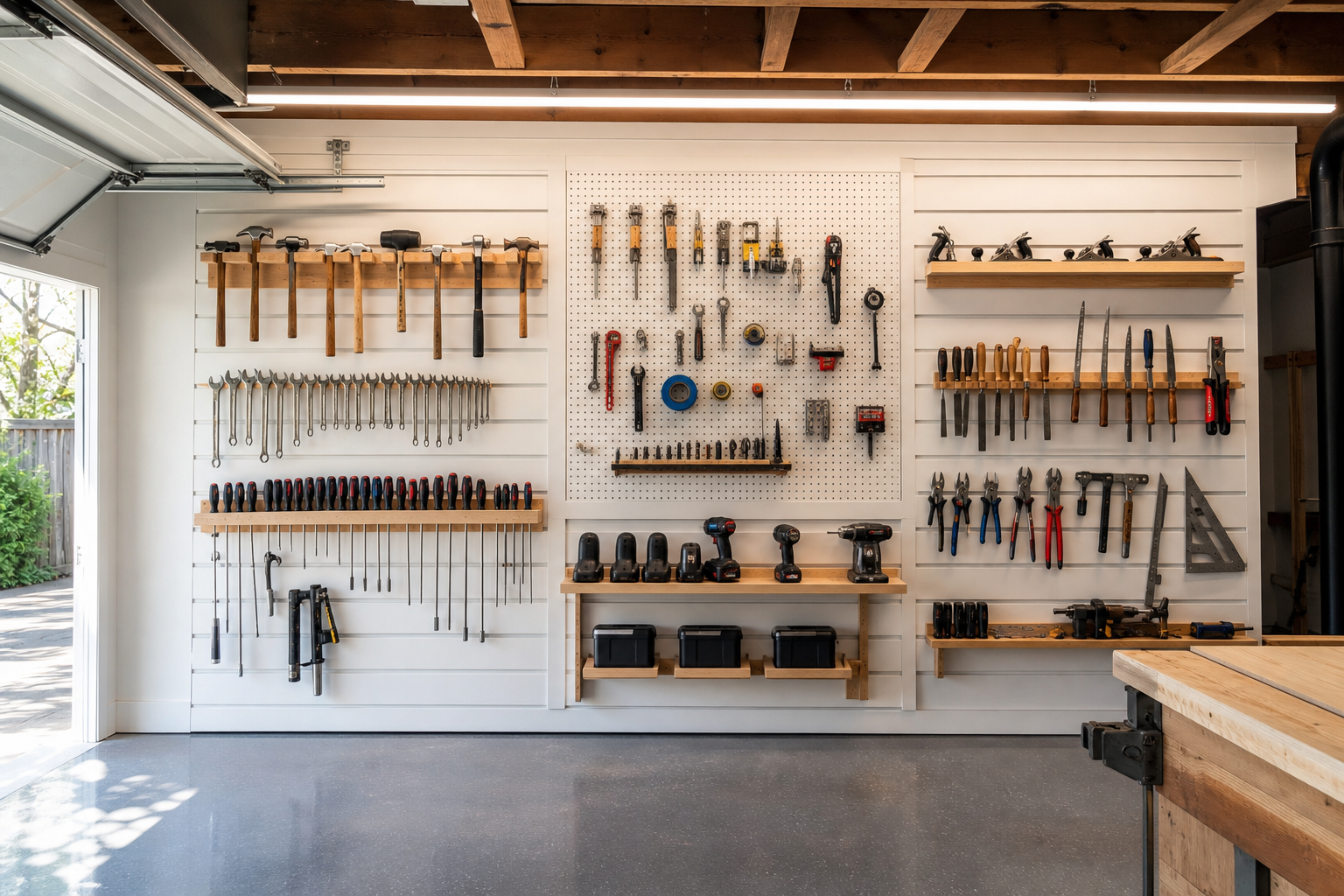
This French cleat system uses a full plywood backer painted matte white, with individual tool holders cut from birch plywood and shaped to fit specific tools. Everything is slotted in at a consistent height, giving the wall a tidy, almost retail-display quality. The LED strip lighting above the wall is a small detail that makes a huge difference when you’re hunting for a specific socket size.
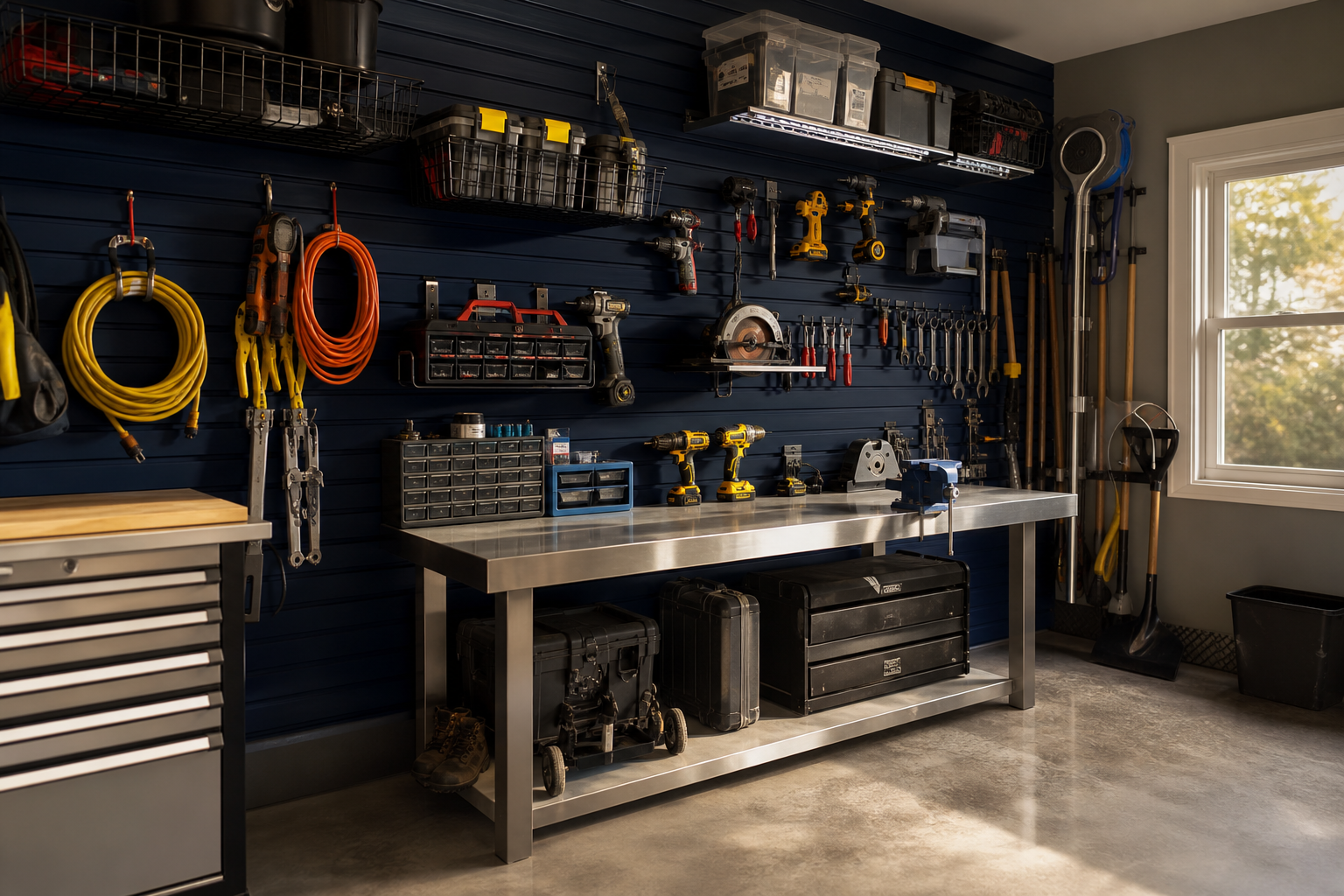
Slatwall panels in a deep navy finish give this garage a sharp, showroom feel while doing serious organizational work. Wire baskets hold larger items like extension cords and safety gear, while individual hooks keep power tools visible and accessible. If you want to compare slatwall against other wall systems before committing, this breakdown of slatwall and pegboard organization systems lays out the pros and cons of each.
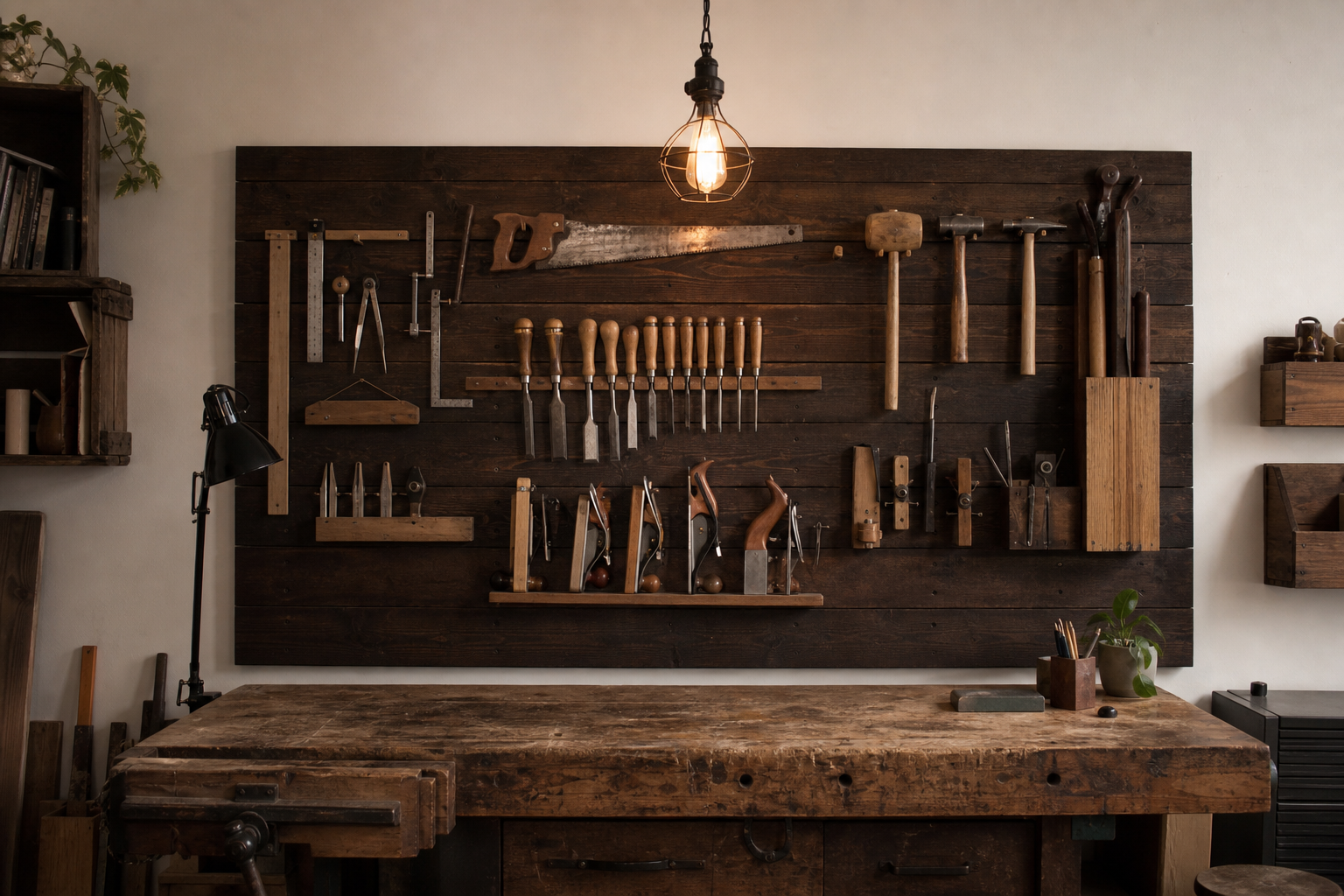
This setup uses dark walnut-stained reclaimed planks as a backdrop, with simple dowel pegs and a magnetic tool strip doing the actual holding work. The result has more personality than most garage walls ever achieve. It leans into the workshop aesthetic without sacrificing function, and the Edison bulb light overhead makes this corner feel intentional rather than accidental.
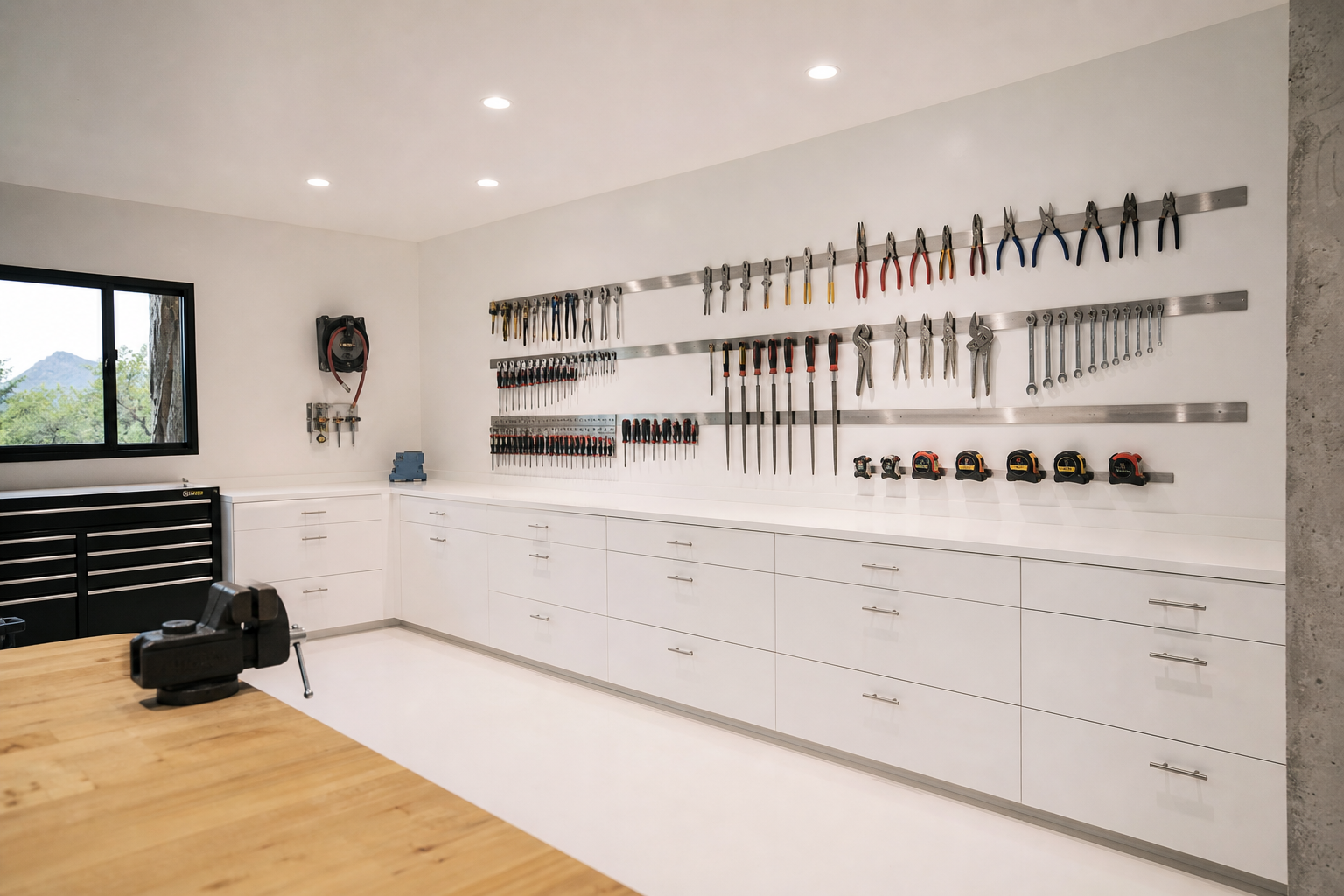
Stainless steel tool rails mounted on a crisp white wall create a setup that feels closer to a professional workshop than a home garage. Tools are sorted by size from left to right, which sounds simple but genuinely saves time when you’re mid-project. The white cabinet storage below mirrors the wall finish, tying the whole space together into one cohesive system.
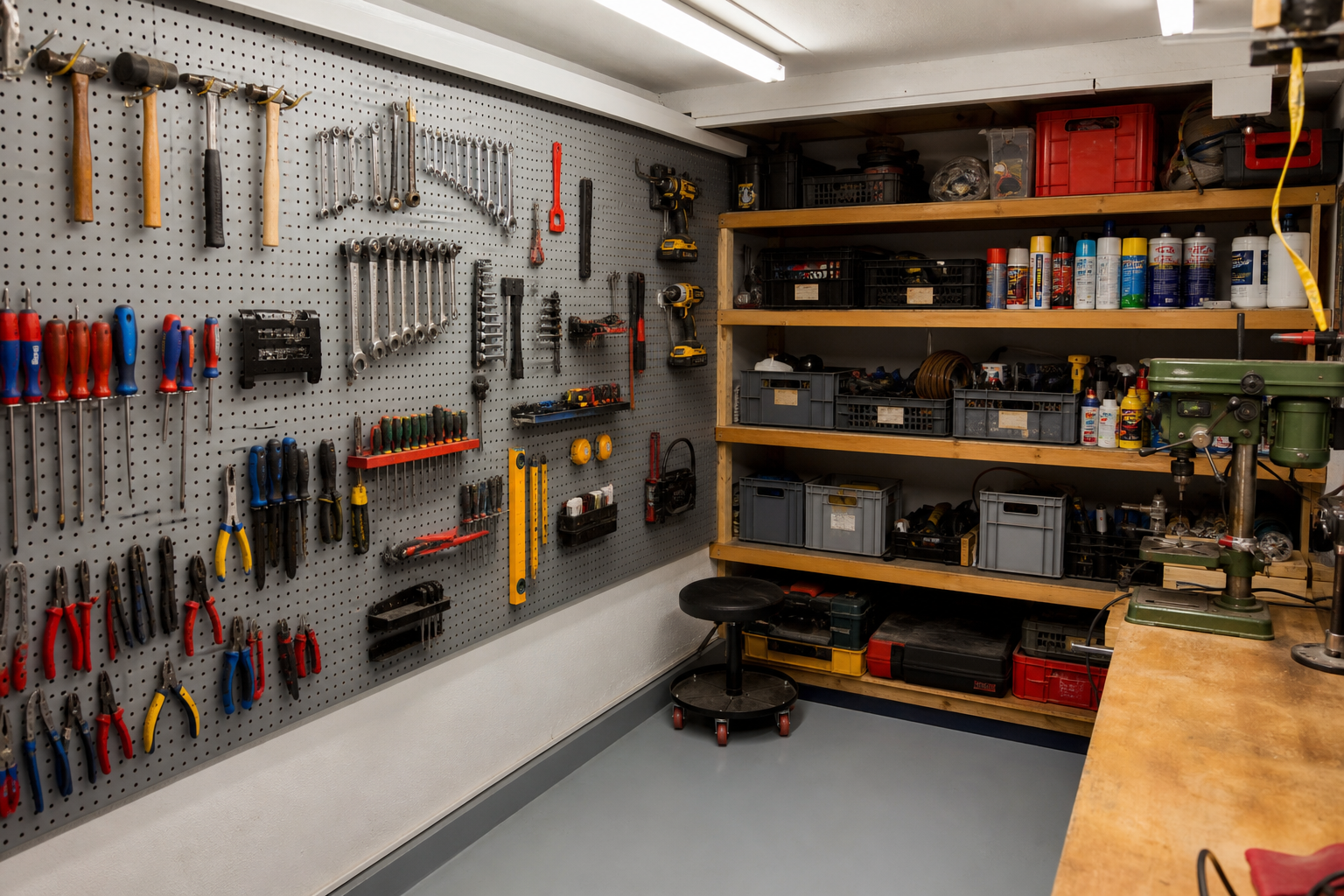
Using two walls in a corner doubles your vertical storage without taking up any additional floor space, which is a smart move in any garage. The light gray pegboard keeps tool clusters organized while the adjacent open shelving handles bins and containers that don’t hang well. This kind of thoughtful layout planning is exactly what a good garage storage layout guide helps you work out before you start drilling holes.
Rolling Tool Chests
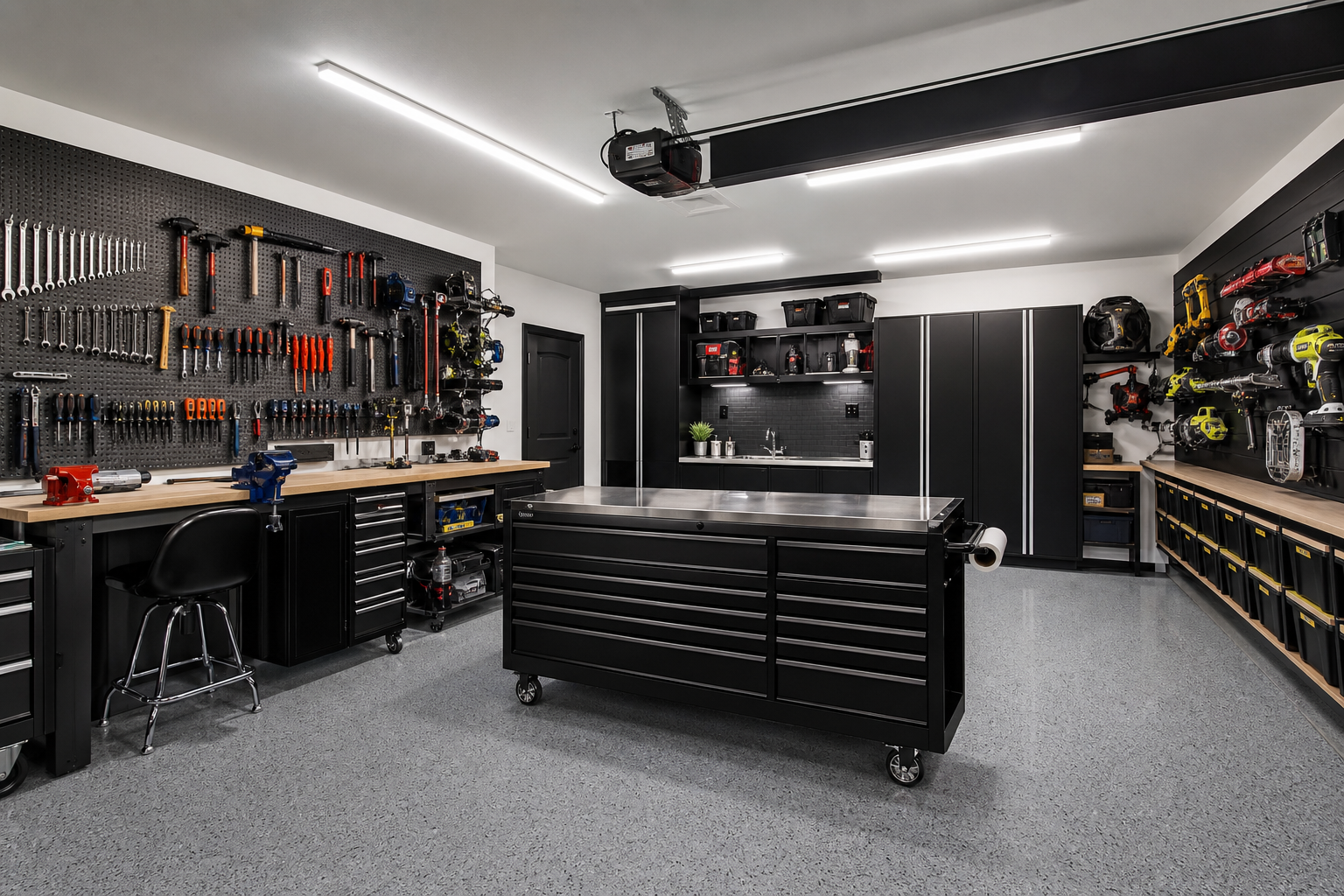
Rolling tool chests are one of the best investments you can make in garage organization because they combine storage, mobility, and a work surface in one unit. A good chest keeps your most-used tools at waist height and lets you roll everything to wherever the job is happening. They come in everything from basic budget models to heavy-duty professional units with ball-bearing drawer slides and powder-coated steel bodies. I’ve put together a detailed look at the best garage rolling tool carts if you want help narrowing down which size and style fits your workflow. The setups below show how different configurations can transform the look and function of a garage.
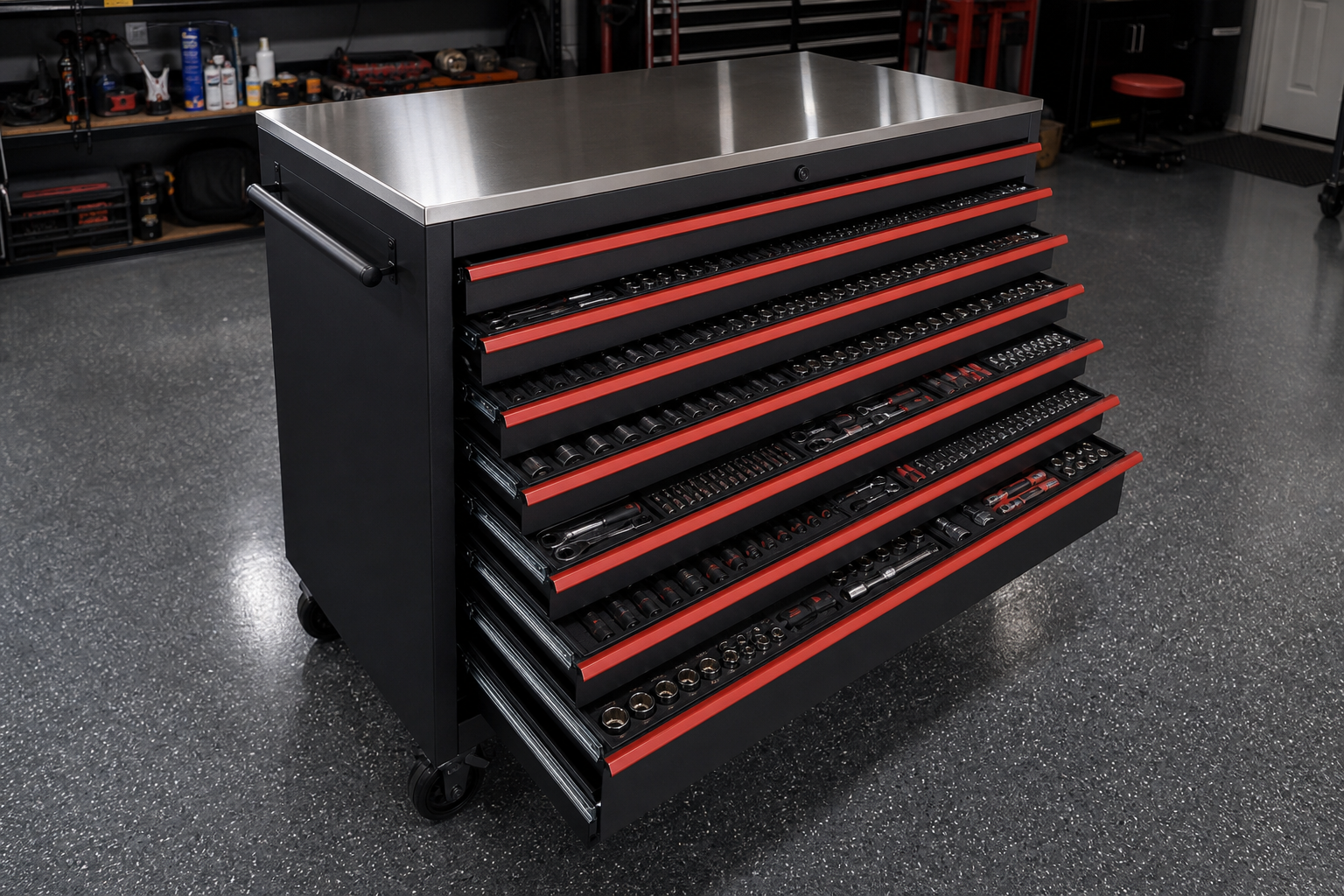
This full-size matte black chest pairs red drawer pulls with a stainless steel top, striking the right balance between professional utility and good looks. The foam-insert drawer liners keep sockets and wrenches from sliding around, and everything stays visible at a glance. At this size, a chest like this effectively replaces the need for most other tool storage in the main workspace area.
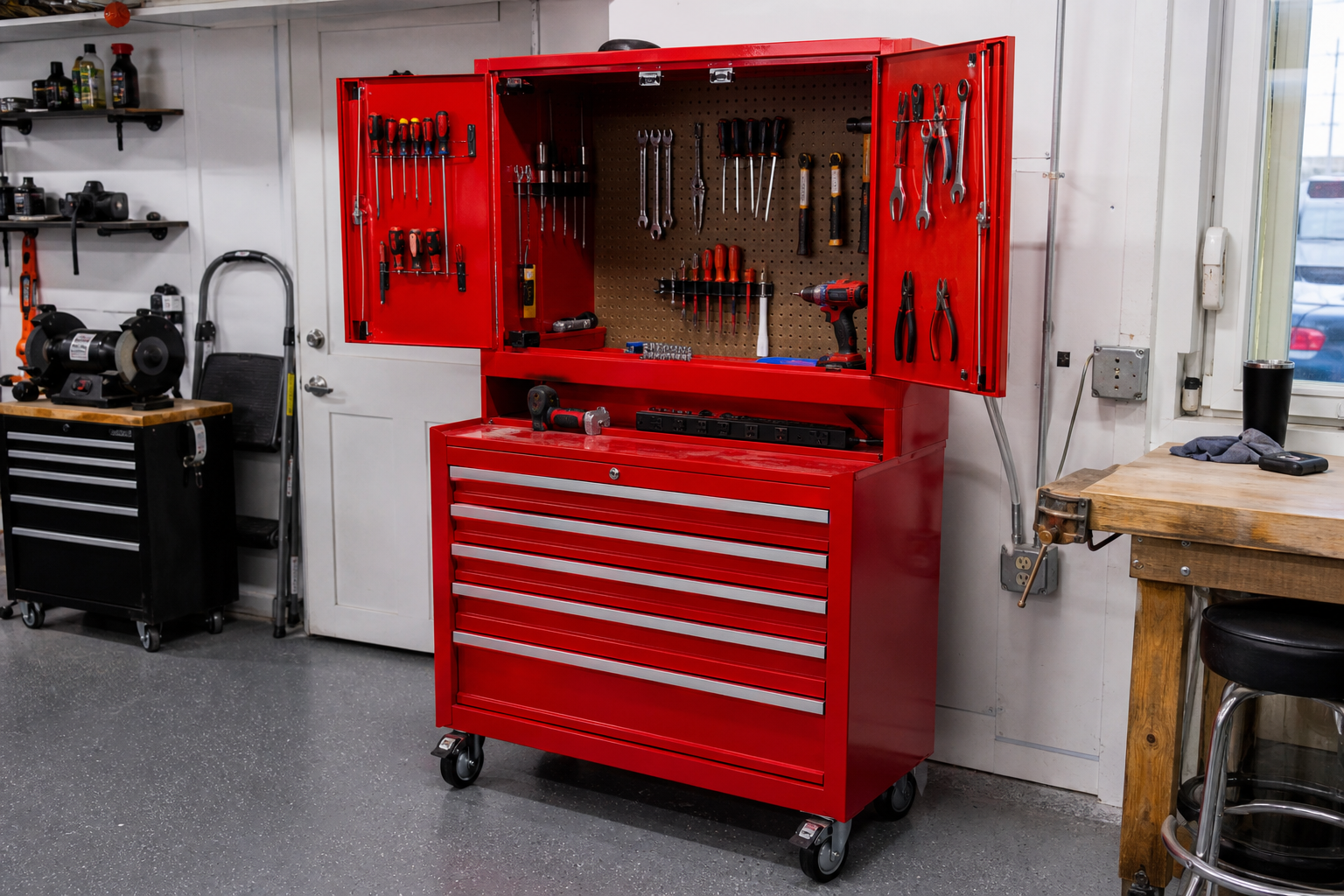
The two-piece combo format, with a rolling base cabinet topped by a hutch unit, nearly doubles your storage capacity without increasing the floor footprint. The pegboard back panel inside the hutch keeps smaller tools accessible without burying them in a drawer. If you want a closer look at the brands that make these combo units well, the garage cabinets buying guide covers steel options at multiple price points.
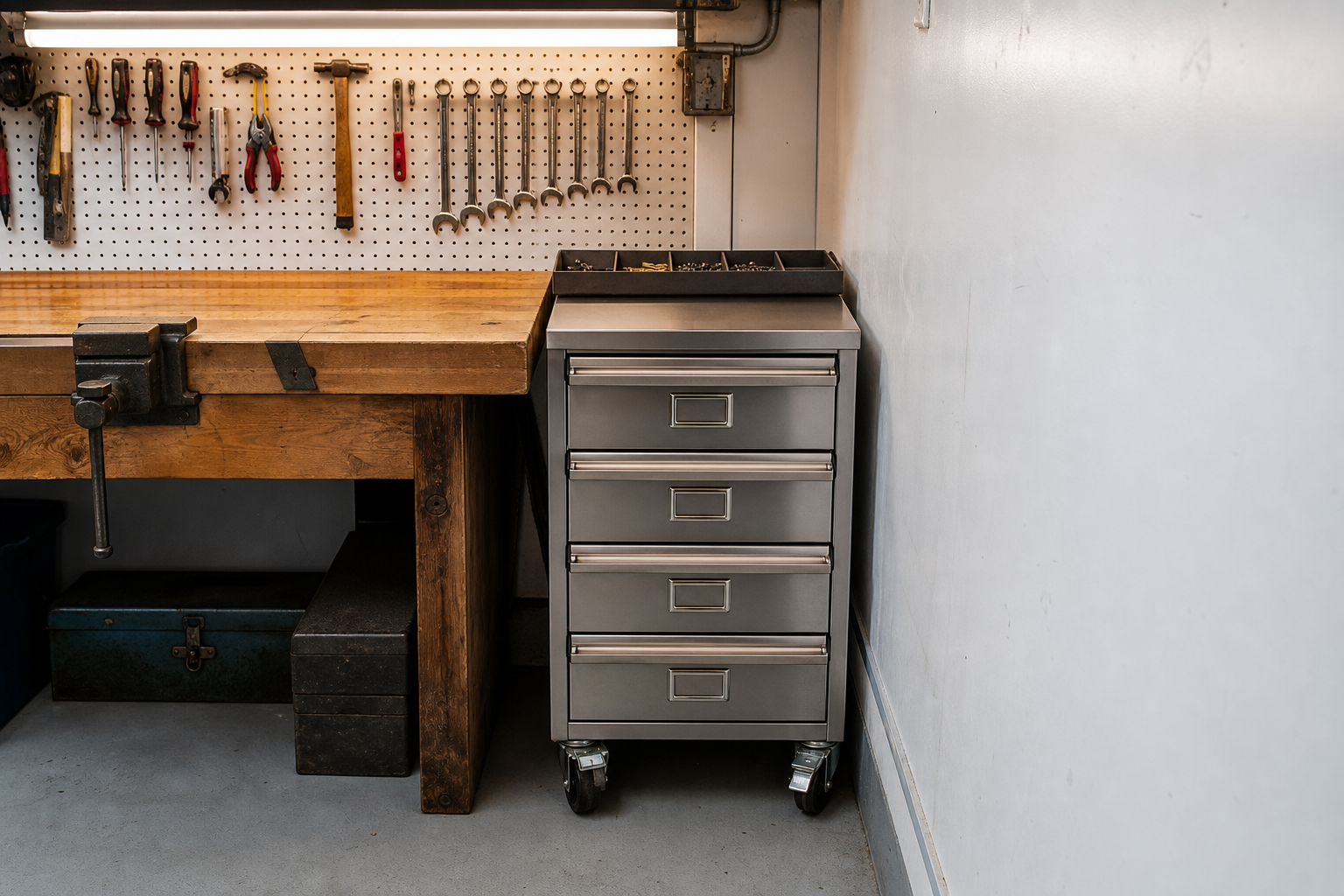
Not every garage has room for a full-size chest, and this compact four-drawer cart proves you don’t need one. The brushed stainless finish resists fingerprints and looks clean next to a workbench. Locking casters keep it stationary when you need it to stay put but let you roll it out into the driveway just as easily.
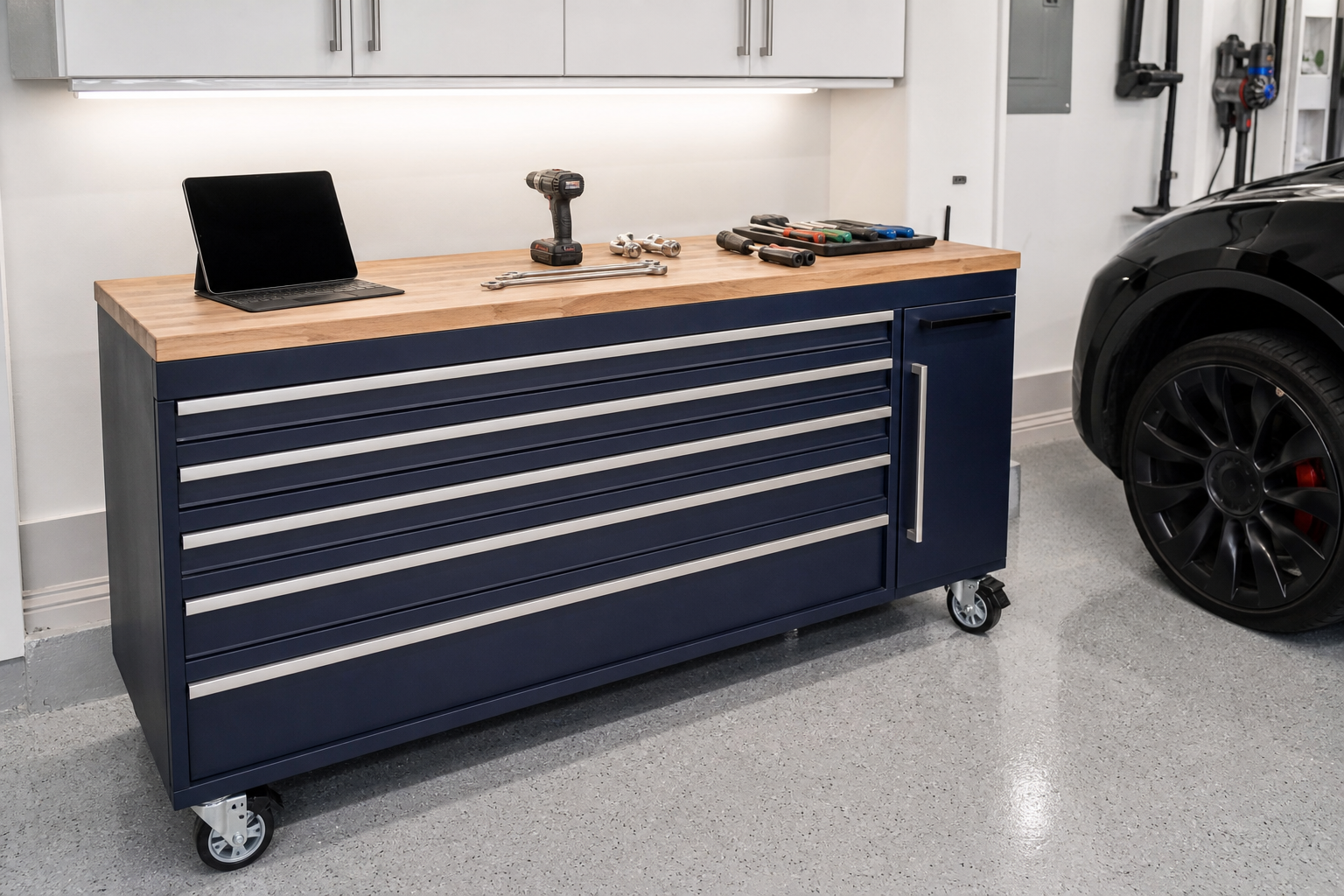
Navy blue with a butcher block top is a combination that shows up more and more in finished garages, and it works because the warm wood grain breaks up what could otherwise feel cold and industrial. The slim drawer profile keeps the chest from dominating the space visually while still holding a solid collection of hand tools. This is the kind of piece that makes your garage feel finished rather than functional-but-ugly.
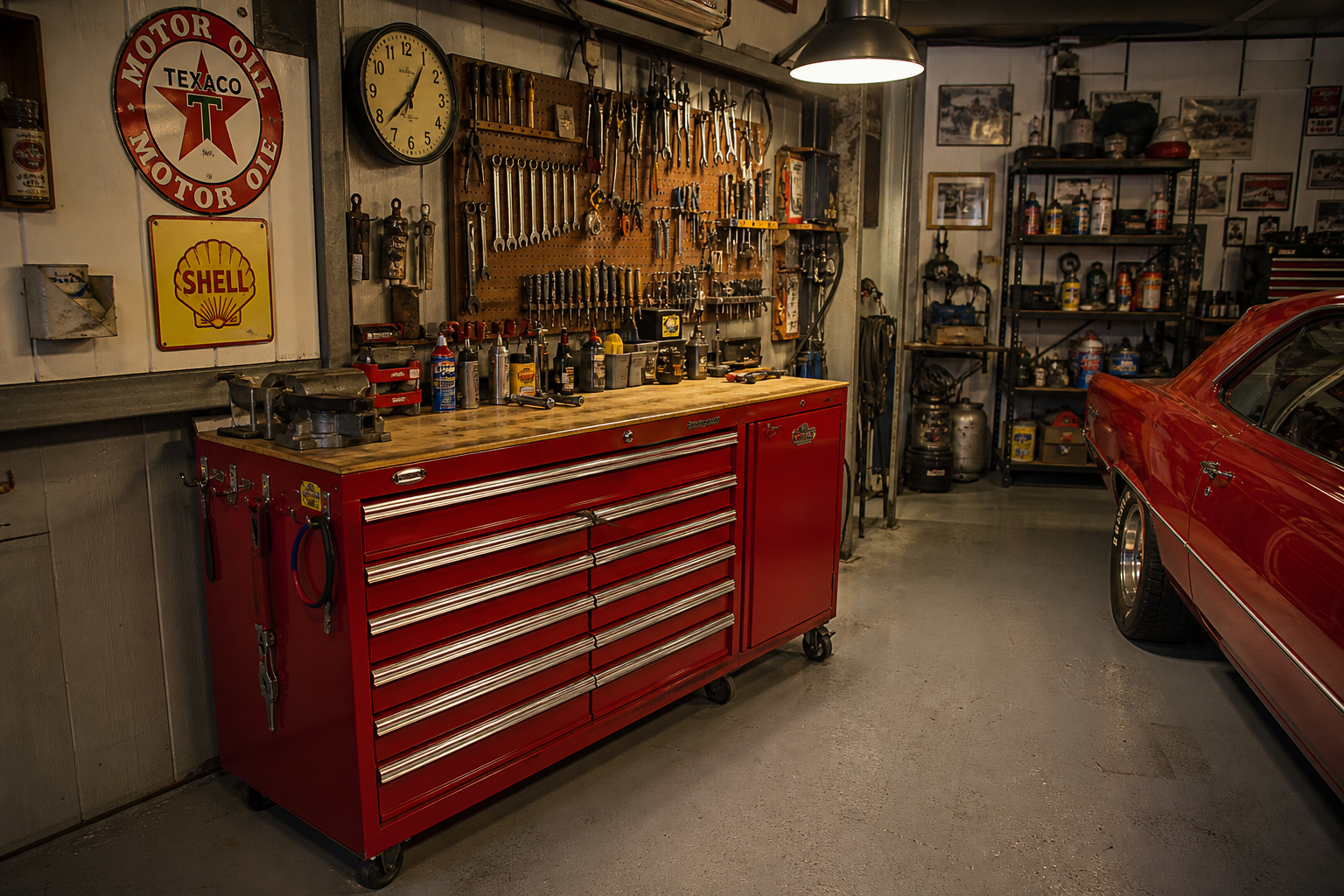
The classic red chest with chrome pulls is an icon for a reason, and it fits perfectly in a garage built around the automotive hobby. Pairing it with a matching side cabinet and a shared worktop creates a full workstation that handles everything from oil changes to engine work. The vintage signage and warm lighting around it turn what’s already a functional setup into a space that’s genuinely fun to be in.
Pegboard and Hook Systems
Pegboard might be the single most accessible garage tool storage solution available, and it has been for decades because it works. A sheet of pegboard with the right hooks lets you see every tool you own, rearrange your layout in minutes, and expand the system as your collection grows. It’s especially effective for hand tools that you reach for constantly and need within arm’s reach of a workbench. I’ve covered pegboard extensively on this site, and if you want the full picture before buying, the pegboard ideas guide and the best garage pegboard systems review are both worth a read. The ideas below show five different ways to make pegboard work harder in your space.
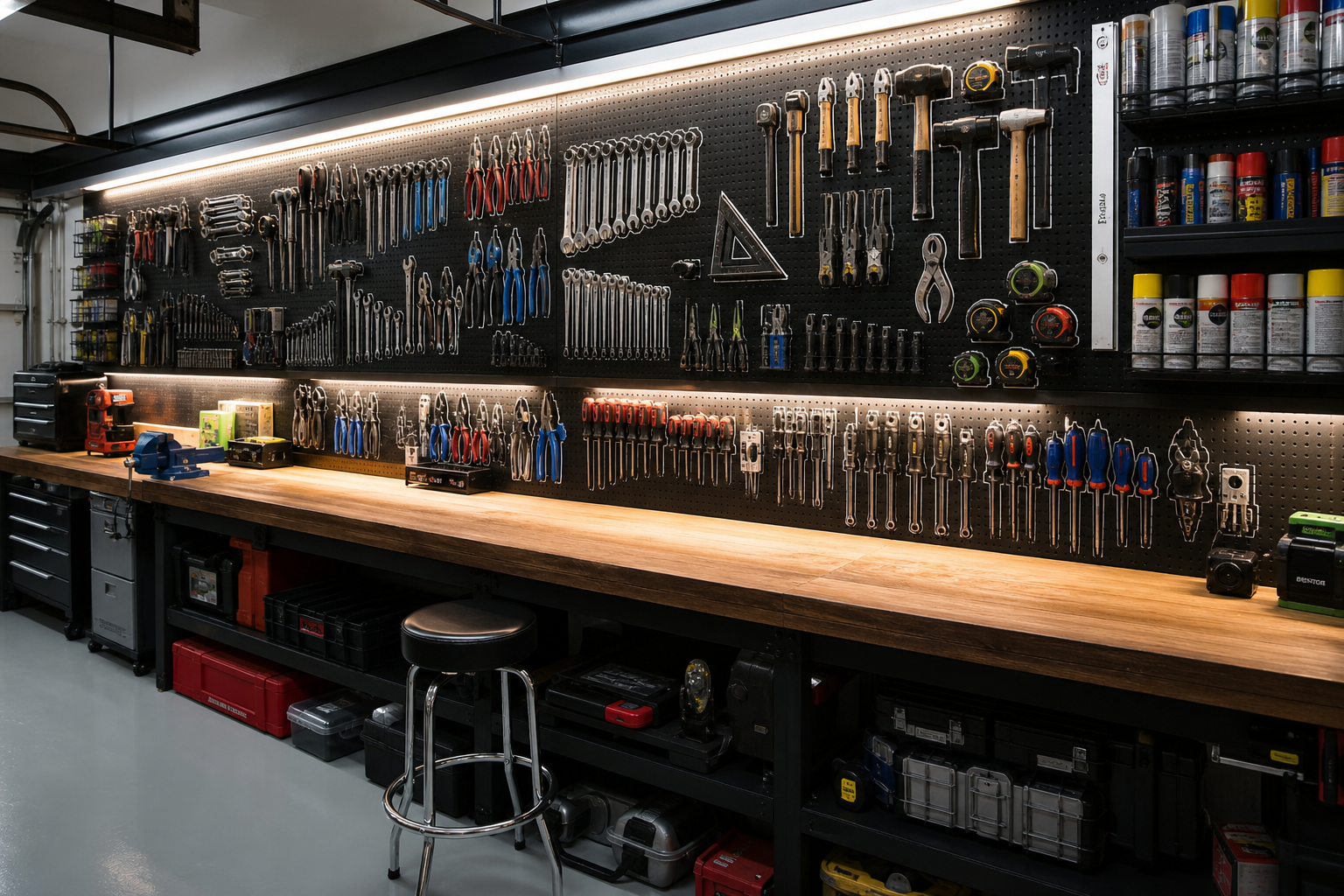
Painting tool silhouettes onto the pegboard surface behind each hook is a workshop trick that takes maybe an hour and saves you time every single day. Black pegboard gives the wall a more modern look than the standard tan, and it makes the colorful tool handles pop visually. If you want step-by-step instructions for mounting a setup like this, the pegboard installation guide walks through the whole process from stud-finding to final hook placement.
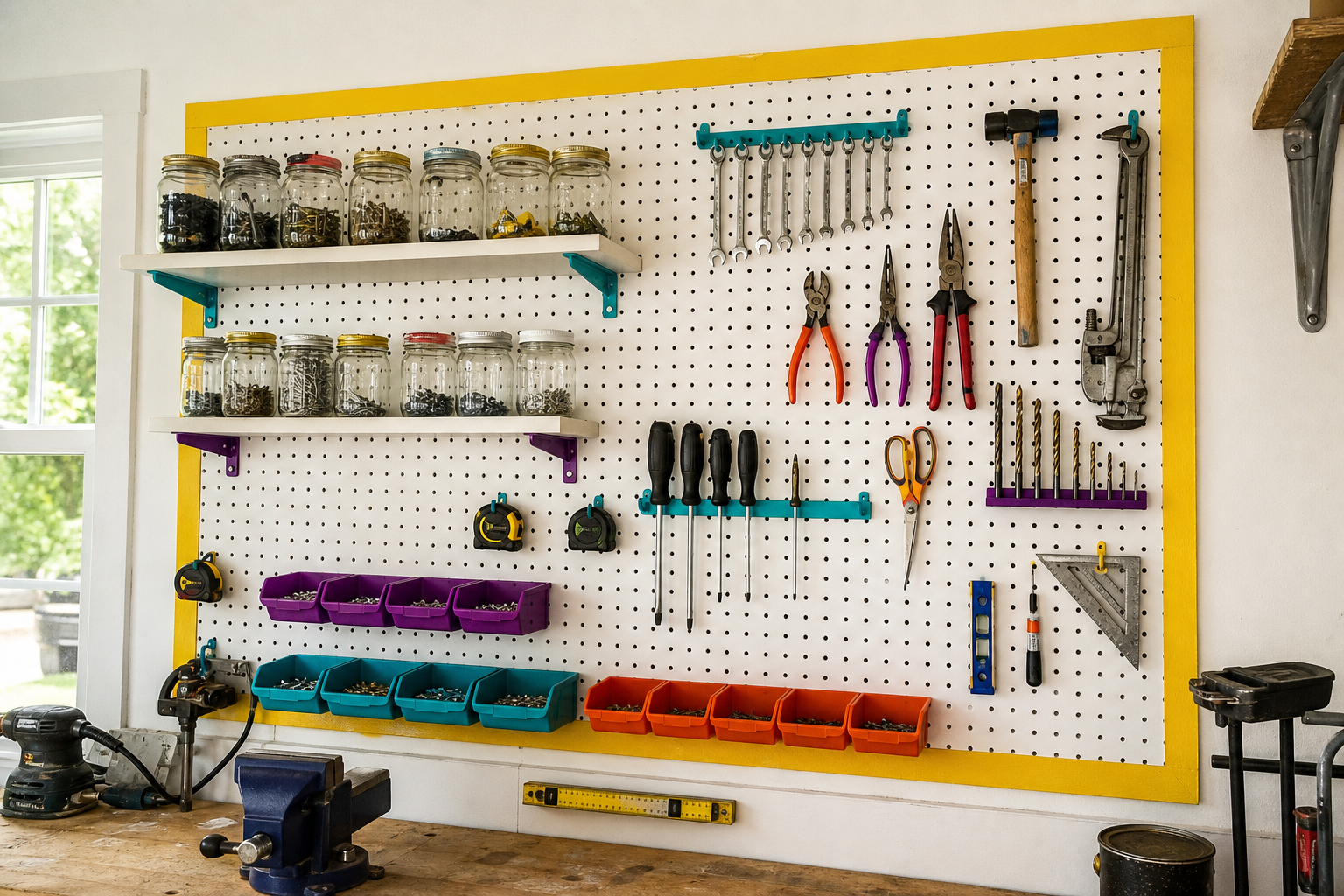
Adding actual shelves directly into the pegboard grid to hold mason jars and small bins is a space-efficient trick that turns the board into something closer to a full storage wall than just a tool hanger. The yellow border detail gives it a workshop-but-friendly personality that works well in a shared garage space. Small labeled jars for screws, nails, and drill bits mean no more rummaging through a disorganized hardware drawer.
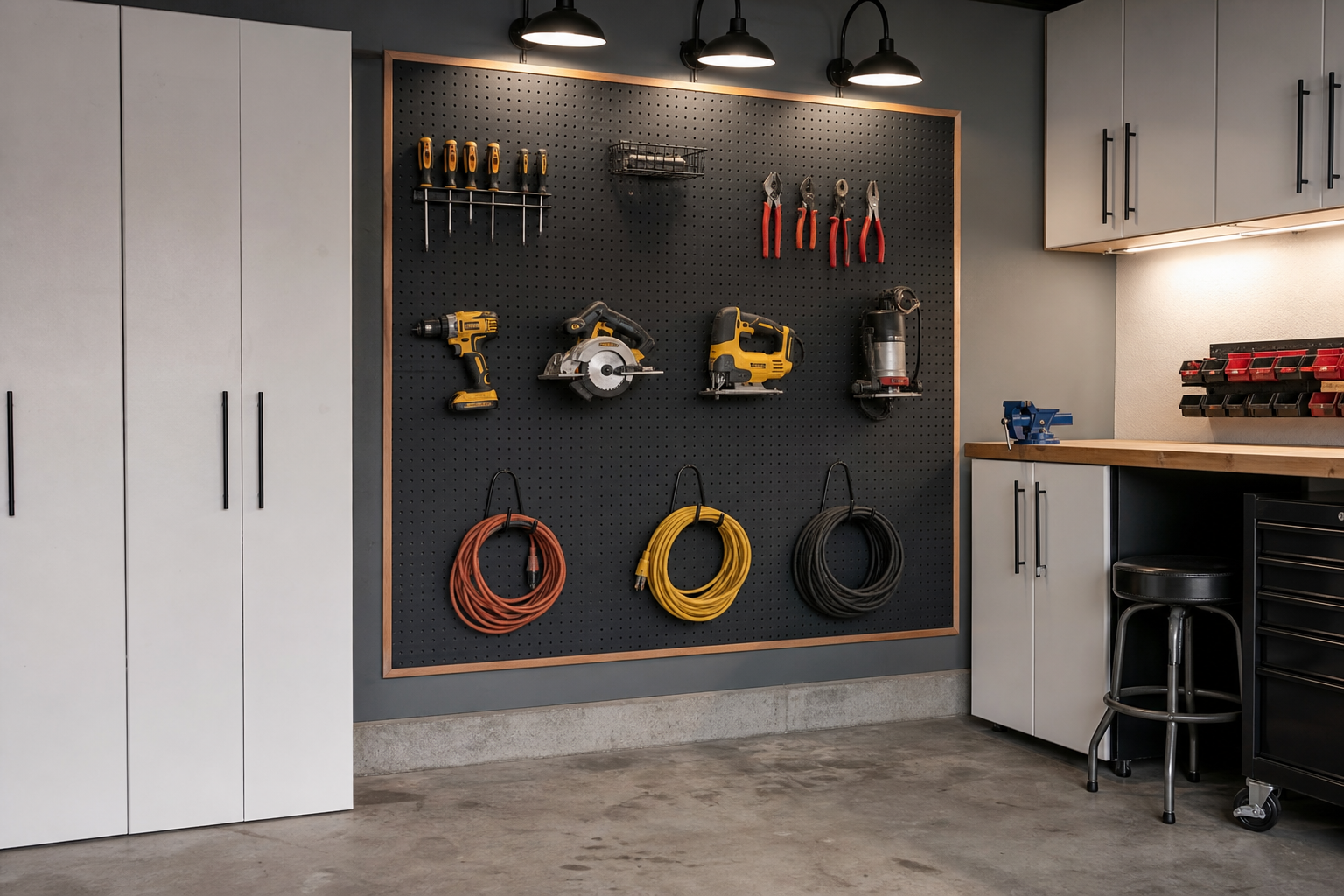
A charcoal gray pegboard flanked by white cabinets creates a strong visual contrast that makes the tools stand out and the whole wall feel intentional. Heavy-duty double hooks handle the weight of power tools without flexing, which matters more than most people realize until a drill falls on the concrete at midnight. The thin wood frame around the pegboard edges it away from utilitarian and toward something that actually looks designed.
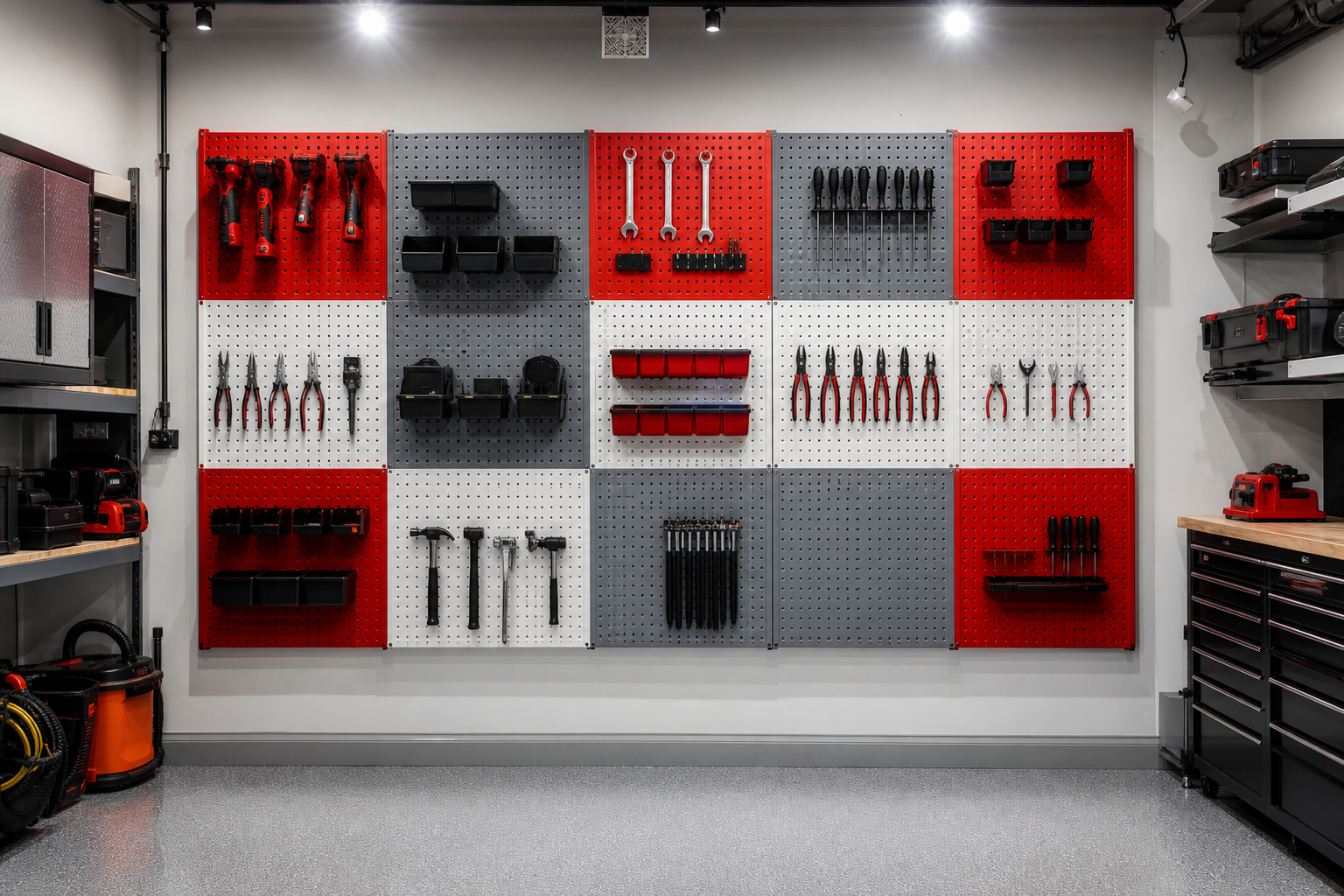
Modular pegboard systems that come in individual square panels let you build exactly the size and shape of board you need, including around windows, outlets, and switches. Mixing colors across the grid creates zones for different tool categories, which makes the layout easier to navigate. This kind of system is covered in detail in the complete guide to pegboard garage tool storage, including which panel systems hold up best long-term.
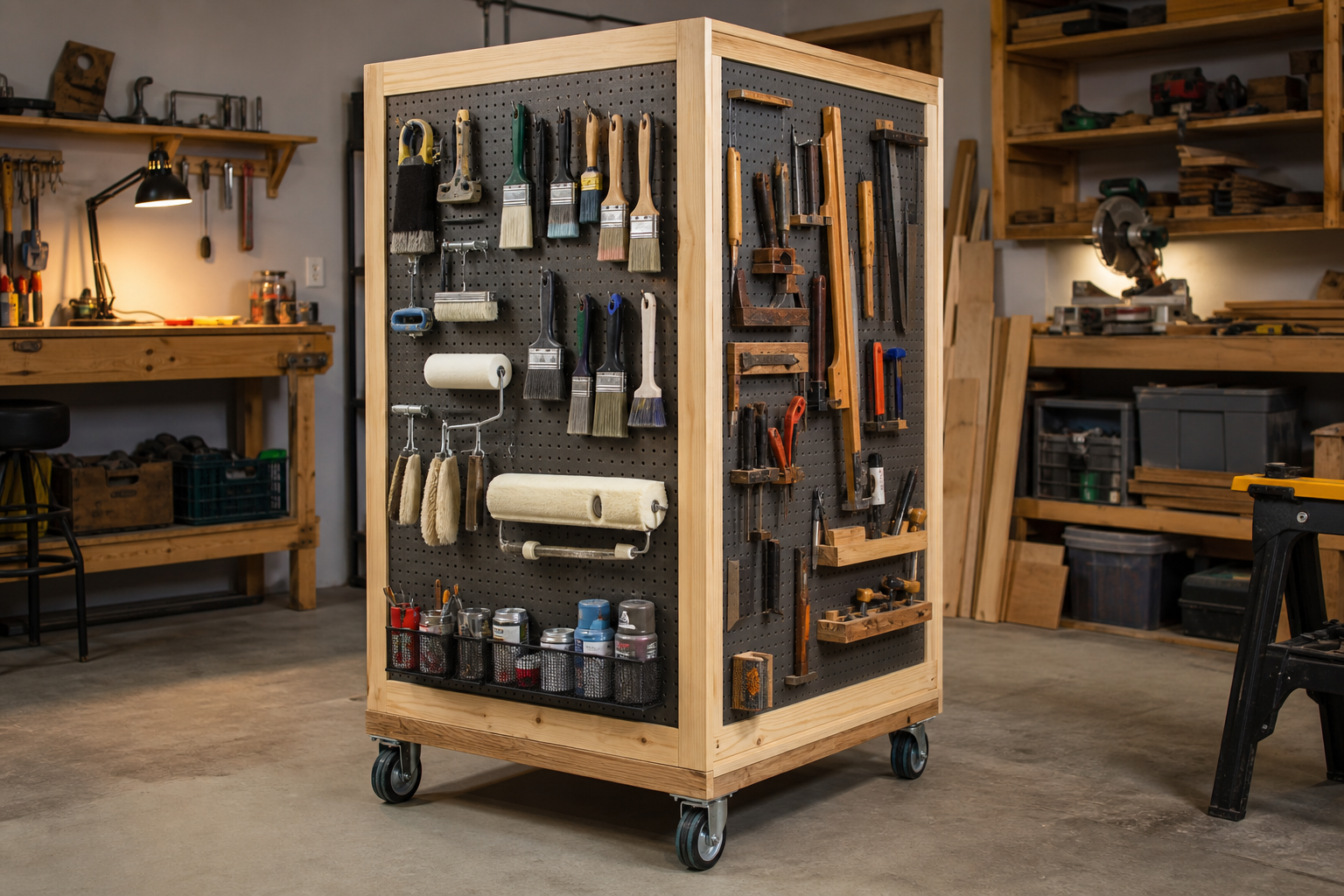
A freestanding, double-sided pegboard unit on casters is one of those ideas that sounds simple but genuinely changes how you use your garage. You can roll it to wherever the work is happening, and you get double the storage surface from a single footprint. Building one is a weekend project, and if you want a template for similar DIY garage builds, the DIY garage workbench with storage guide covers the construction principles that apply here too.
Drawer and Bin Organization
Good drawer and bin systems turn loose, chaotic tool collections into something you can actually find things in without digging. The key is combining the right containers with a consistent labeling approach, whether that’s foam drawer liners, stackable bin systems, or labeled cabinet drawers. These setups work well alongside wall-mounted storage because they handle the smaller items that don’t hang well on hooks. A clear labeling and inventory system makes any bin or drawer setup significantly easier to live with long-term. The five ideas below show how different approaches to drawers and bins can work in real garages.
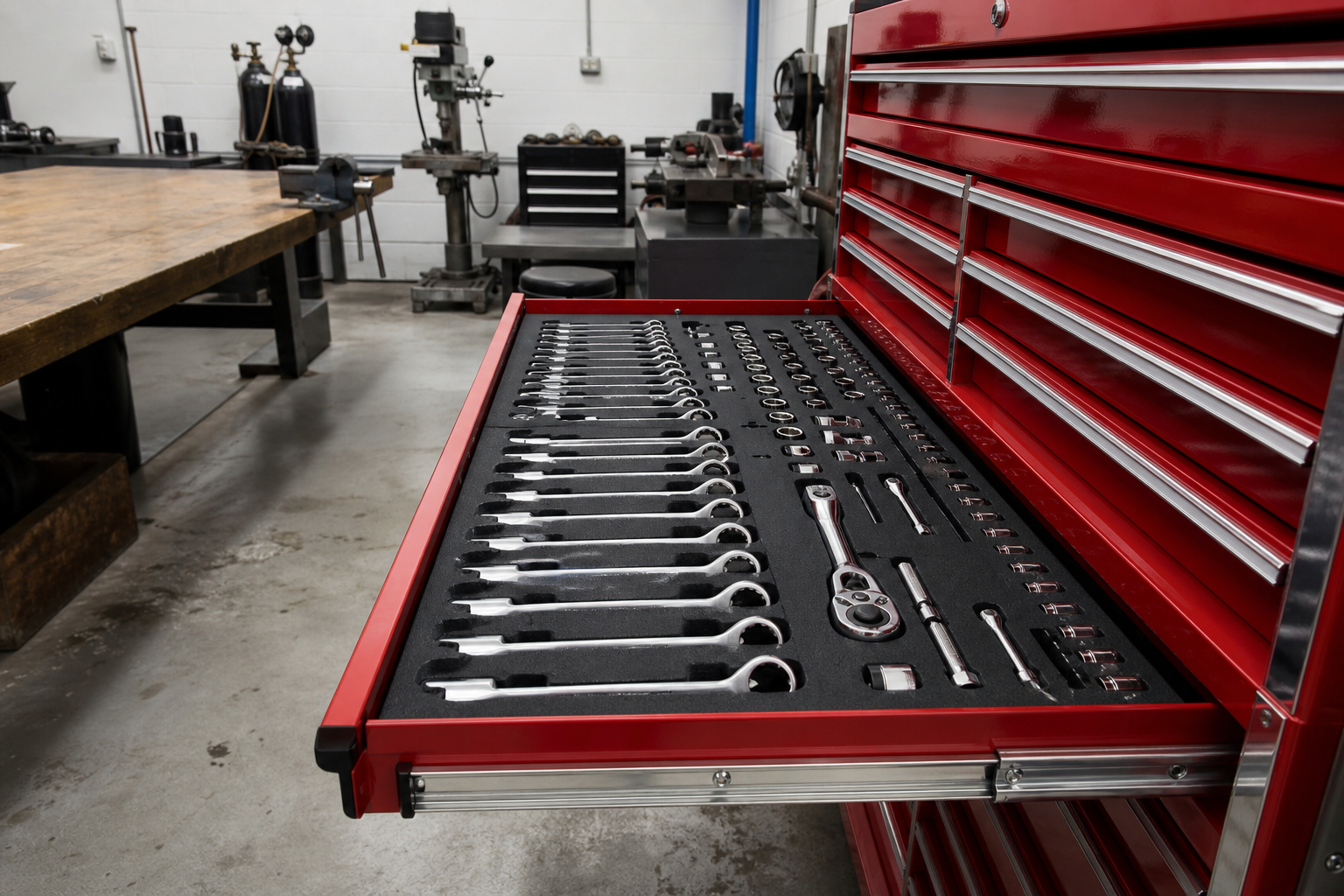
Custom foam inserts cut to fit specific tools are the kind of upgrade that feels unnecessary until you try it, and then you immediately want it in every drawer. The visual contrast of the black foam against the chrome tools also makes it instantly obvious if something is missing. This level of drawer organization pairs naturally with a higher-end cabinet, and the steel vs. modular garage cabinet guide can help you decide which type of cabinet deserves this treatment first.
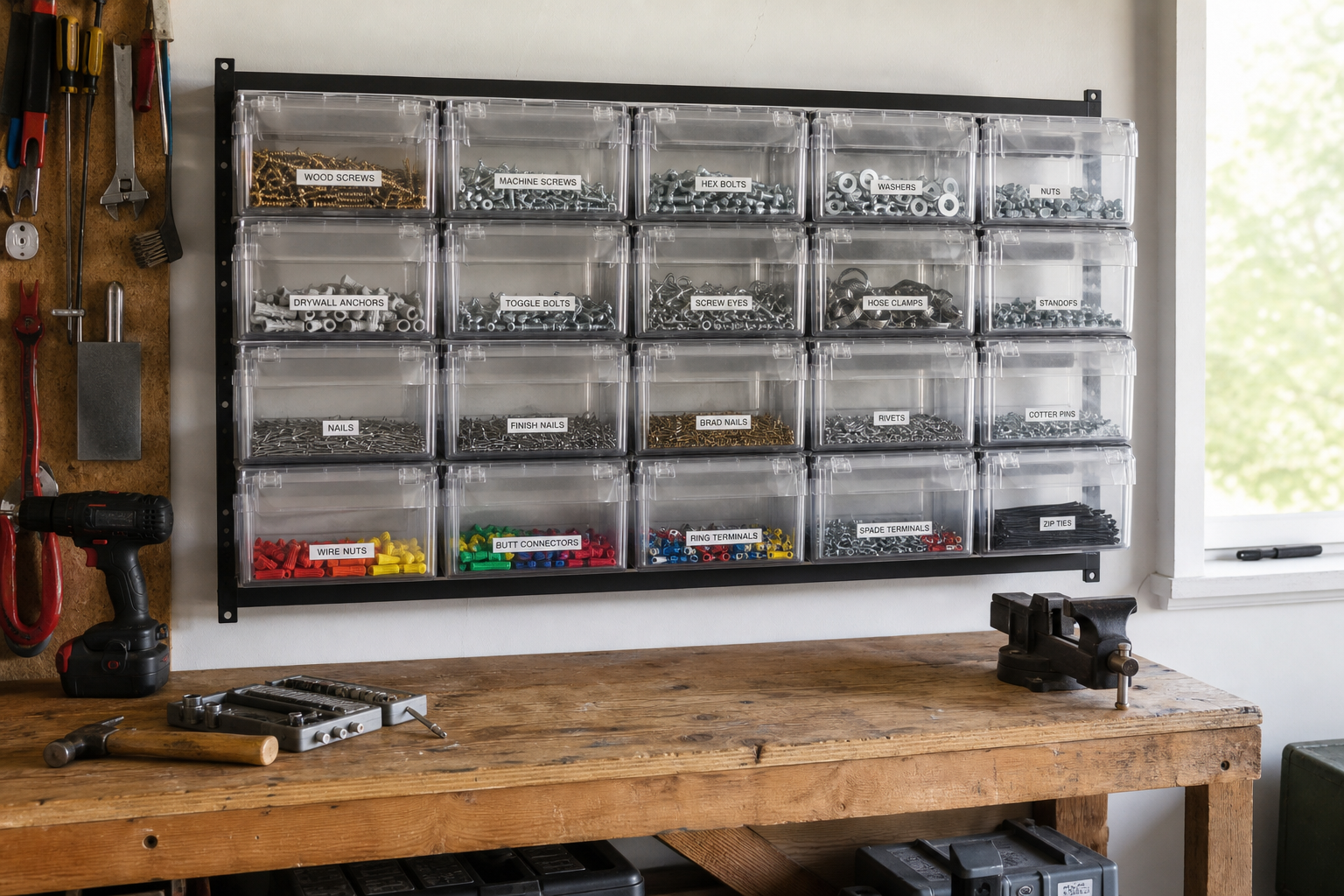
Clear bins eliminate the guesswork entirely since you can see the contents before you even pull a bin down. Sorting by type rather than by project is the system that holds up best over time because it matches how you actually think when you need something. The white label tape on every bin is a small touch that makes the whole wall feel considered rather than improvised.
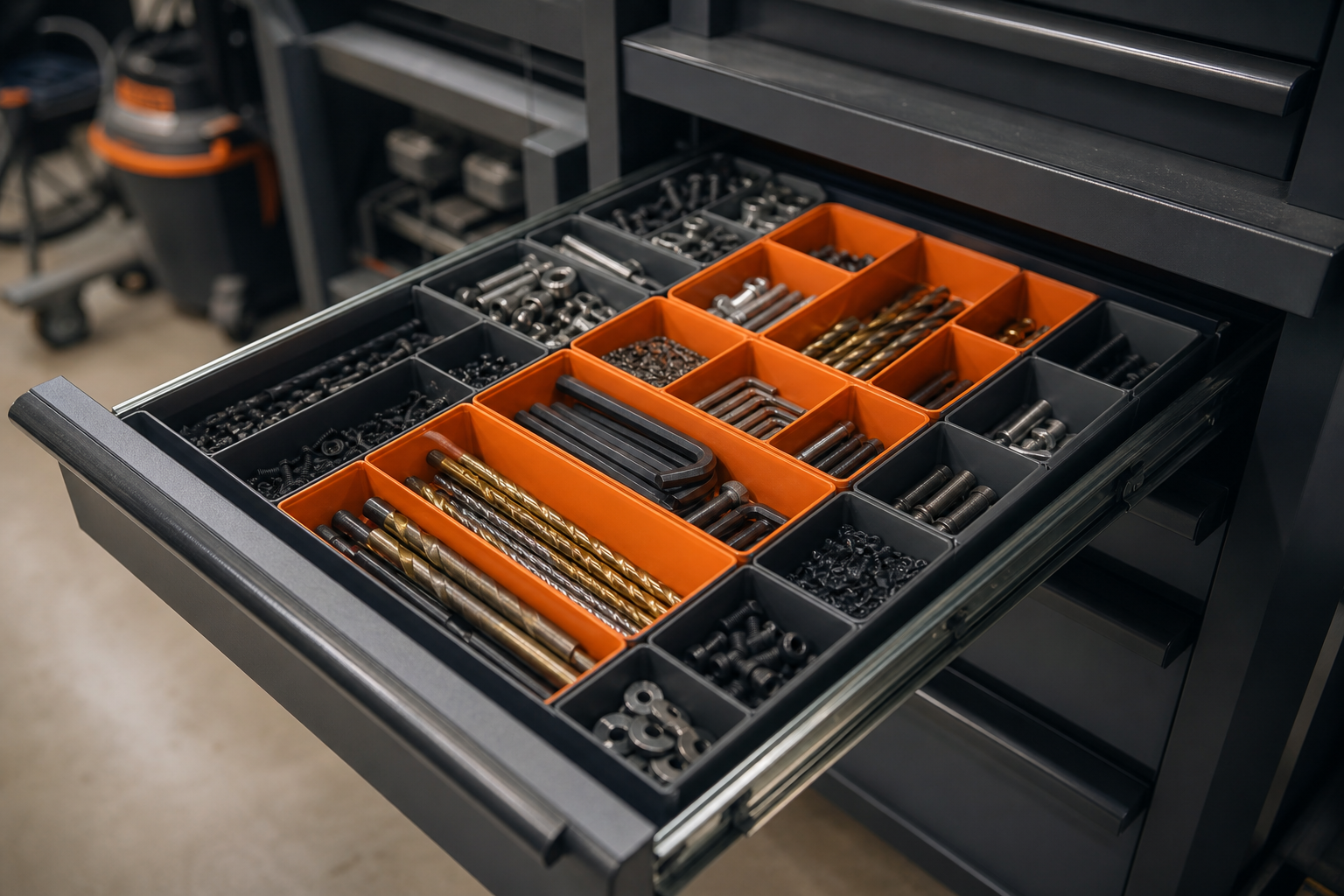
Nesting removable organizer trays inside a deep drawer is a practical workaround for cabinets that weren’t designed with small parts in mind. The orange and gray color scheme on the trays makes them easy to grab and carry to wherever the job is. It also means you’re not digging through a single drawer of loose fasteners, which is one of the most time-wasting habits in any garage shop.
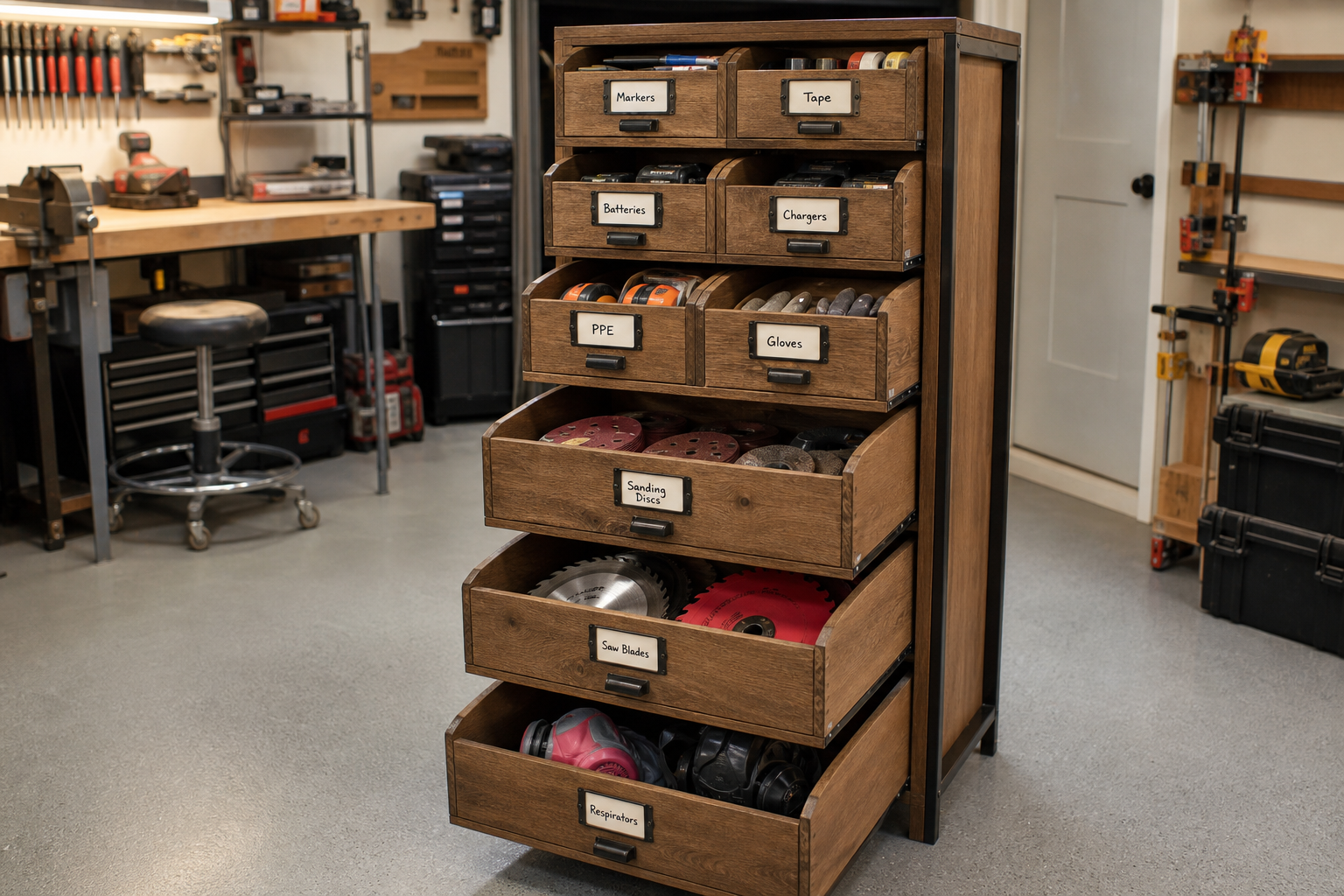
A tall pull-out bin tower handles the awkward in-between items that are too bulky for a tool chest drawer and too small to justify a full cabinet. The wood-grain finish softens what could otherwise feel like purely industrial storage. Sizing the bins by category, with larger bins at the bottom for heavier items, also makes the unit more stable and easier to use day to day.
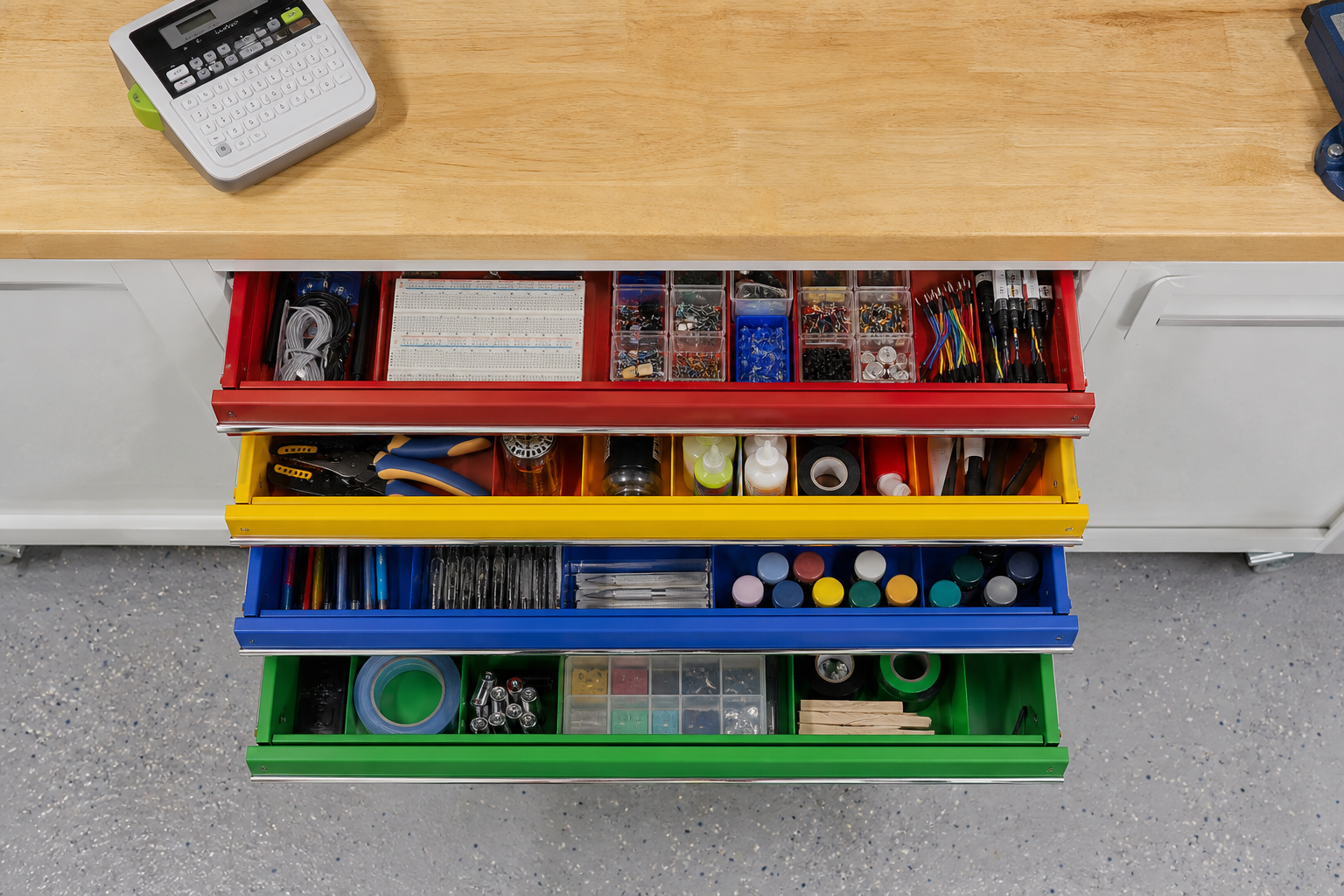
Color-coding drawer organizers by category is a low-effort system that works faster than reading labels when your hands are already full. The overhead composition here shows just how much you can fit into a standard cabinet when the drawers are actually organized rather than just filled. If the garage in this setup were smaller, the same approach would still work, and the garage organization ideas for small spaces guide has more examples of making compact cabinets punch above their weight.
