

As an Amazon Associate I earn from qualifying purchases.
Good shelving can turn a chaotic garage into a space you actually want to spend time in. Whether you have a single-car garage packed to the rafters or a spacious three-bay setup, the right storage system makes all the difference. In this article I’ve rounded up 20 garage shelving ideas across four categories: wall-mounted shelves, freestanding units, heavy-duty industrial racks, and adjustable modular systems.
Wall-Mounted Shelves
Wall-mounted garage shelving is one of the best ways to free up floor space without sacrificing storage capacity. By anchoring shelves directly into studs, you keep the ground clear for your car, workbench, or hobby gear. These systems come in everything from basic steel brackets to polished slotted-wall setups that look as good as they function. If you want to go deeper on installation, my guide on how to install heavy garage wall shelves that actually last covers the whole process from stud-finding to final load testing. For garages that are tight on square footage, pairing wall shelves with vertical storage is a smart move, something I cover in detail in my small garage organization guide.
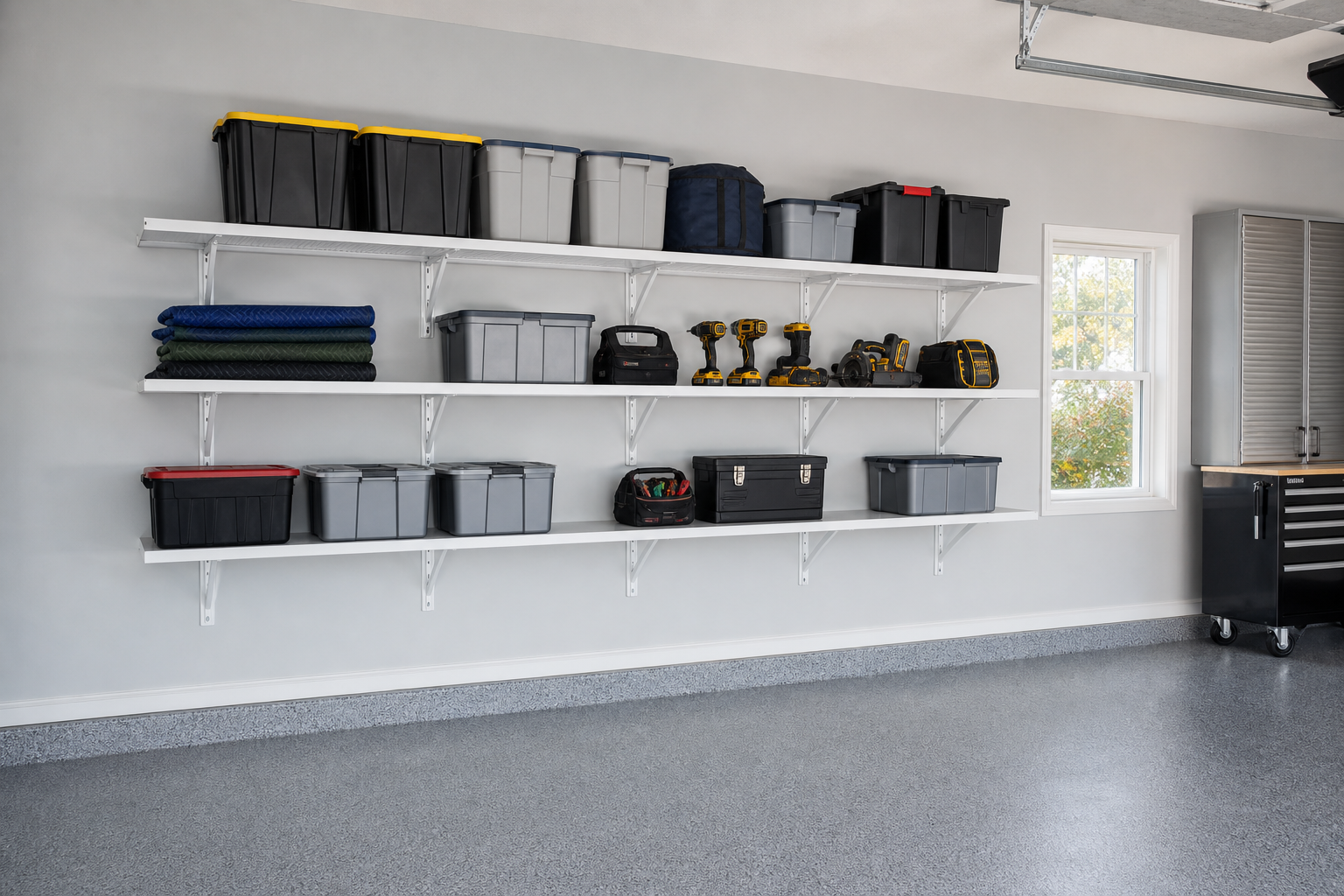
These white powder-coated steel shelves are mounted flush to a painted drywall wall, giving the whole garage a clean, finished look. The uniform bin sizes keep the visual noise down and make it easy to find things fast. Simple bracket hardware and a light gray wall color make this a great starter setup for any garage.
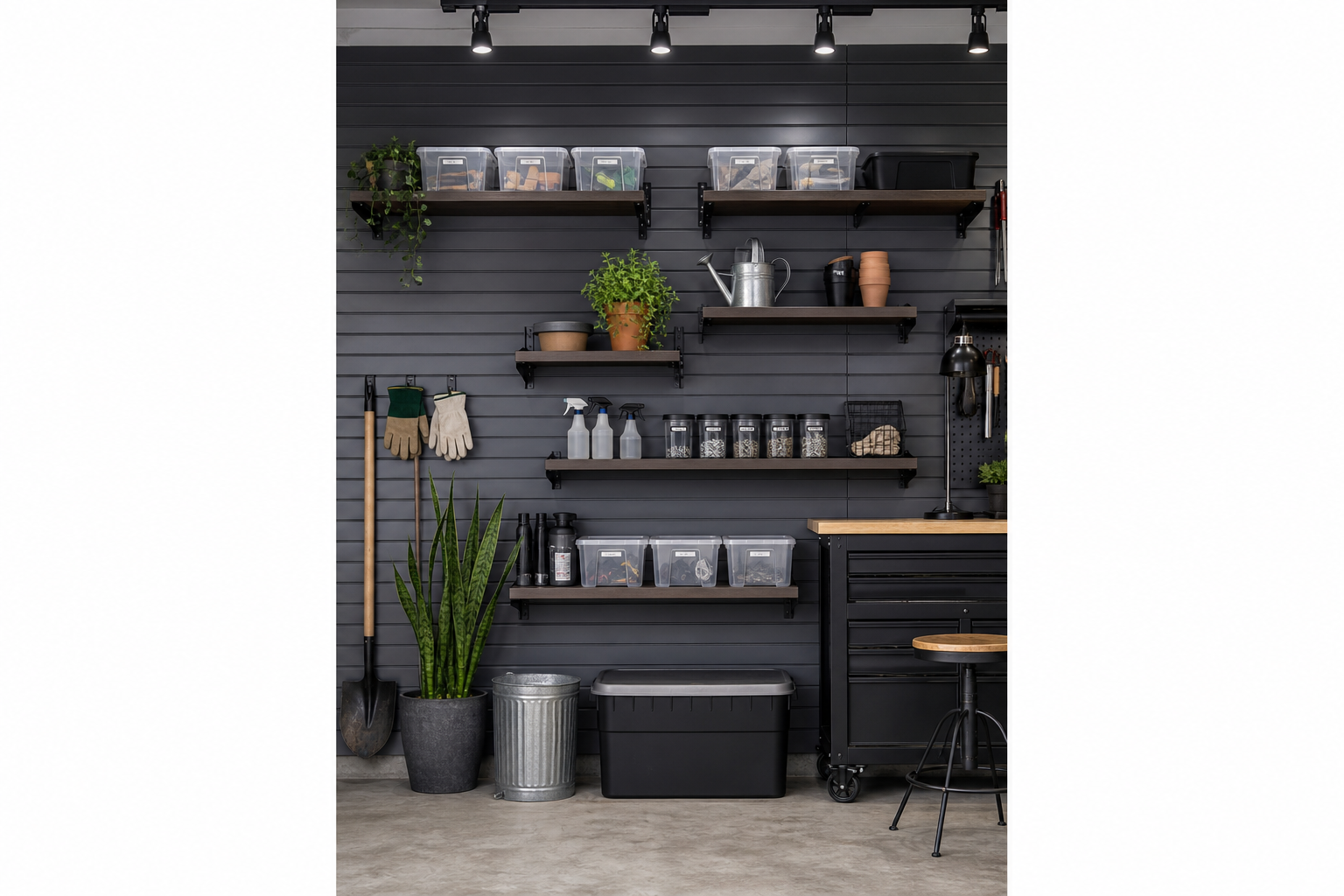
Slatwall panels give you total flexibility because you can reposition every shelf, hook, and bin without drilling new holes. The charcoal panel color paired with black hardware and warm wood-tone shelves creates an intentional, workshop-style look. If you like this system, check out my full breakdown of how to organize a garage with slatwall and pegboard.
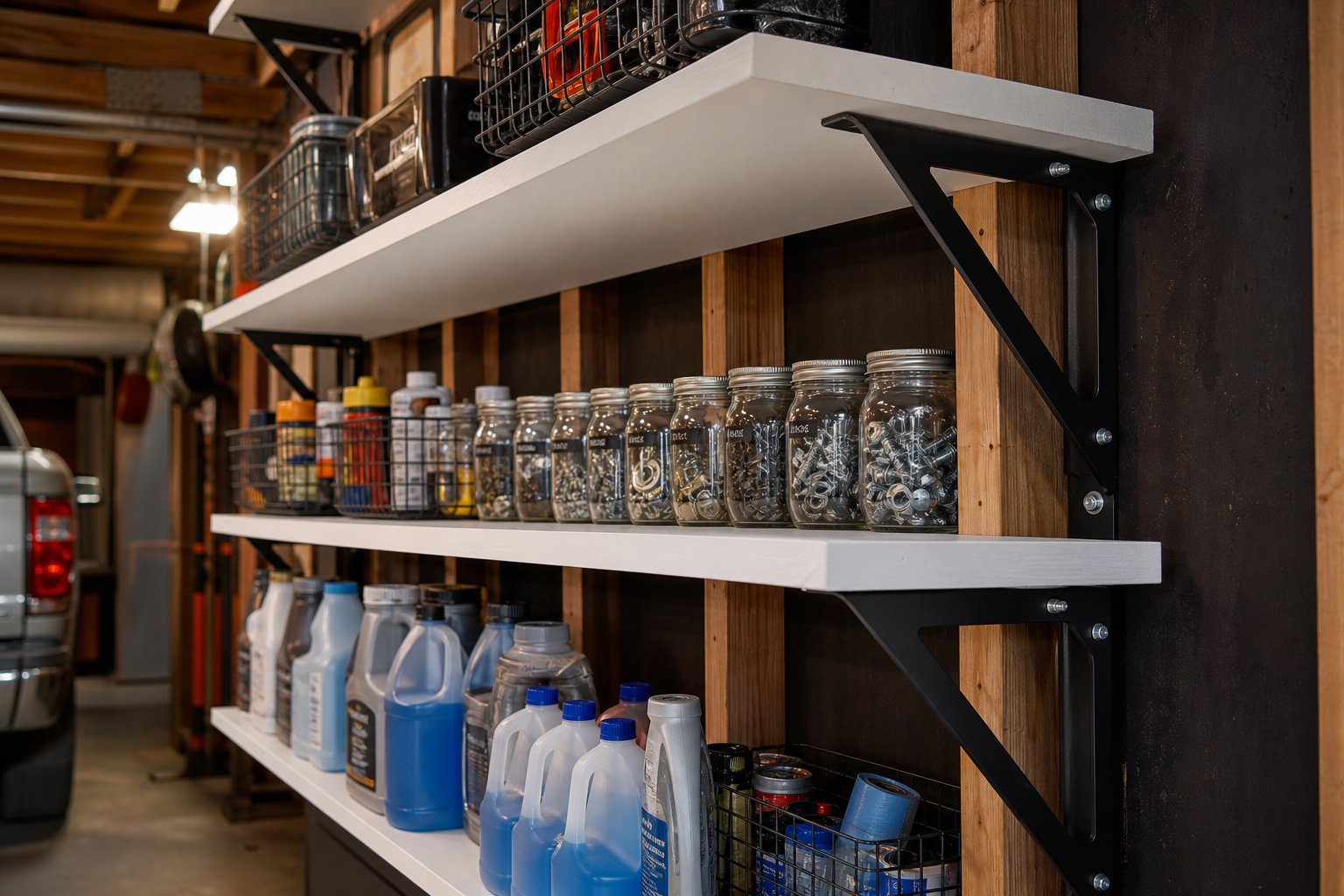
These deep plywood shelves are a weekend DIY project that costs a fraction of off-the-shelf systems but holds just as much weight when you hit the studs properly. Painting them white keeps the space feeling bright even in a garage that doesn’t get much natural light. The mix of wire baskets and labeled mason jars is a practical way to corral small hardware without losing anything.
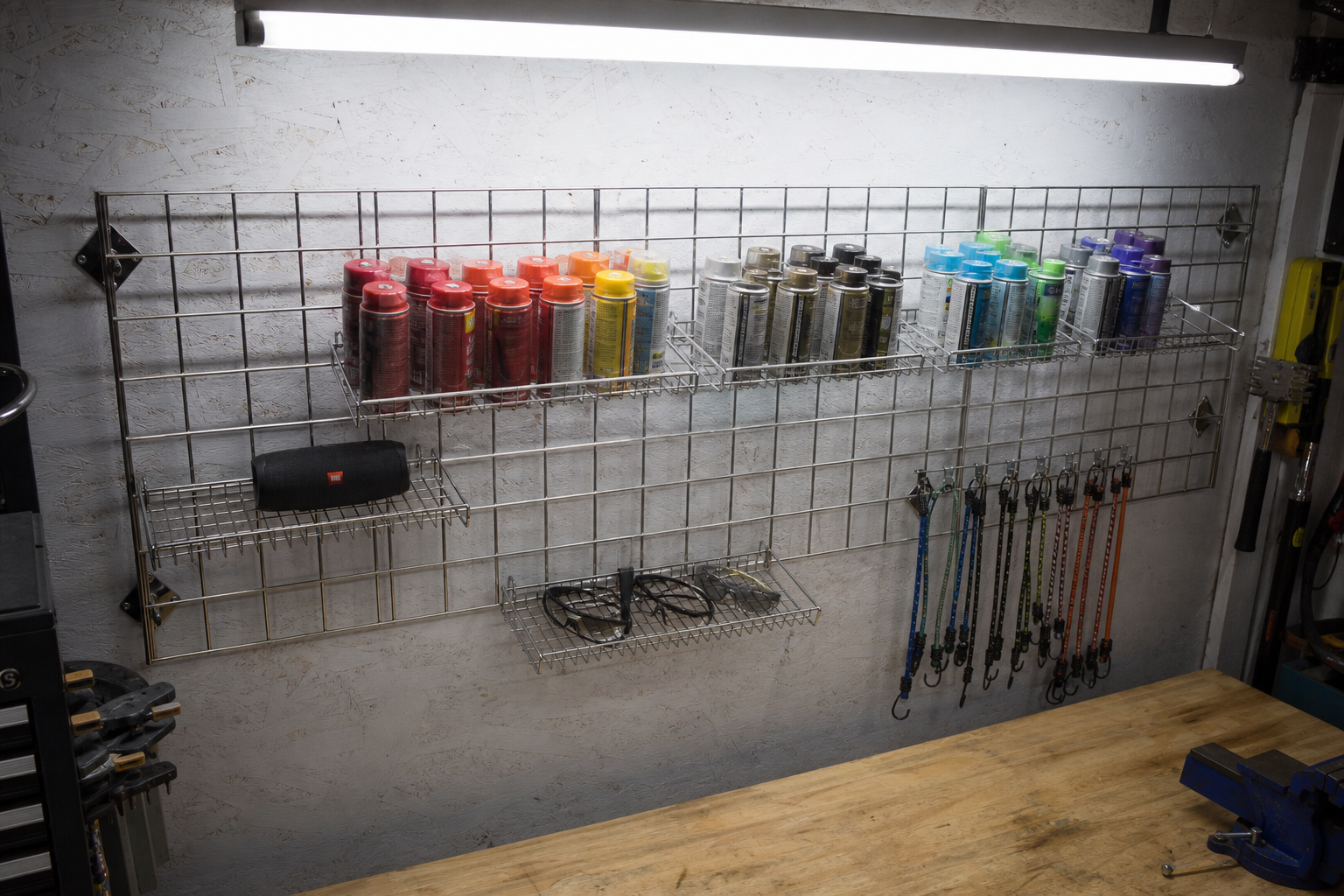
Wire grid panels are lightweight, affordable, and surprisingly strong for everyday garage supplies. The open design means air circulates freely, which matters if you’re storing anything that holds moisture. This setup works especially well for storing chemicals and aerosols where visibility and ventilation are both important, and my guide on safe garage storage for paint, gas, and chemicals has more tips on placing those items correctly.
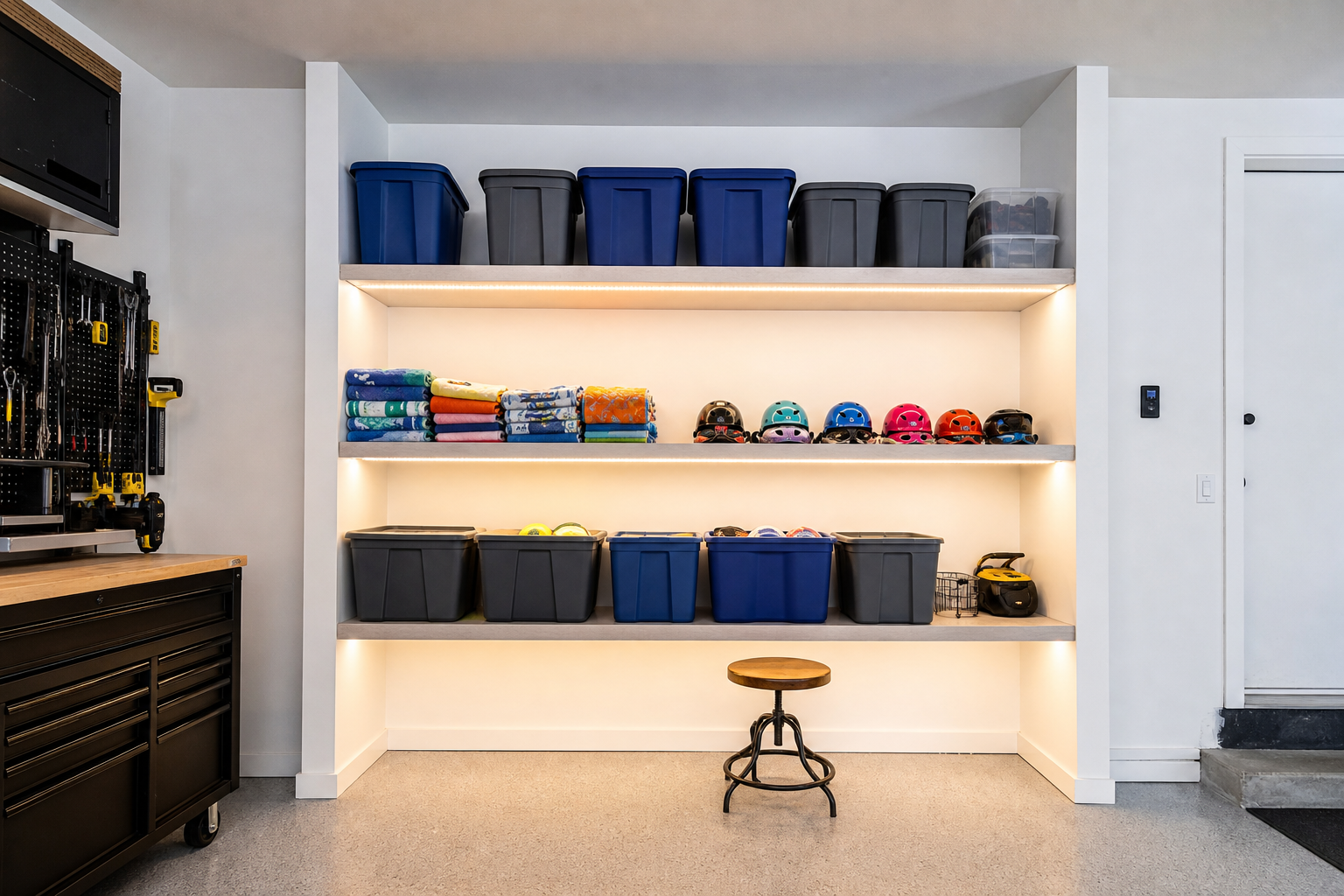
Adding side panels and under-shelf LED strips transforms basic wall shelves into something that looks genuinely built-in rather than bolted on. The blue and gray tote color coding makes it fast to grab what you need without reading every label. This style of shelving works well along the back wall of a garage where you want the storage to feel like part of the architecture.
Freestanding Units
Freestanding garage shelving units are the easiest way to add serious storage without touching a single wall. You roll them in, level them out, and start loading. That portability is a real advantage if you rent, if your garage walls are unfinished block, or if you just want the flexibility to reorganize whenever the mood strikes. I’ve tested a lot of these units over the years, and my guide to the best garage shelving units for heavy storage breaks down which ones are actually worth buying. Keep in mind that a good freestanding unit pairs well with overhead storage, so if you want to maximize every cubic foot of your garage, take a look at these garage overhead storage ideas too.
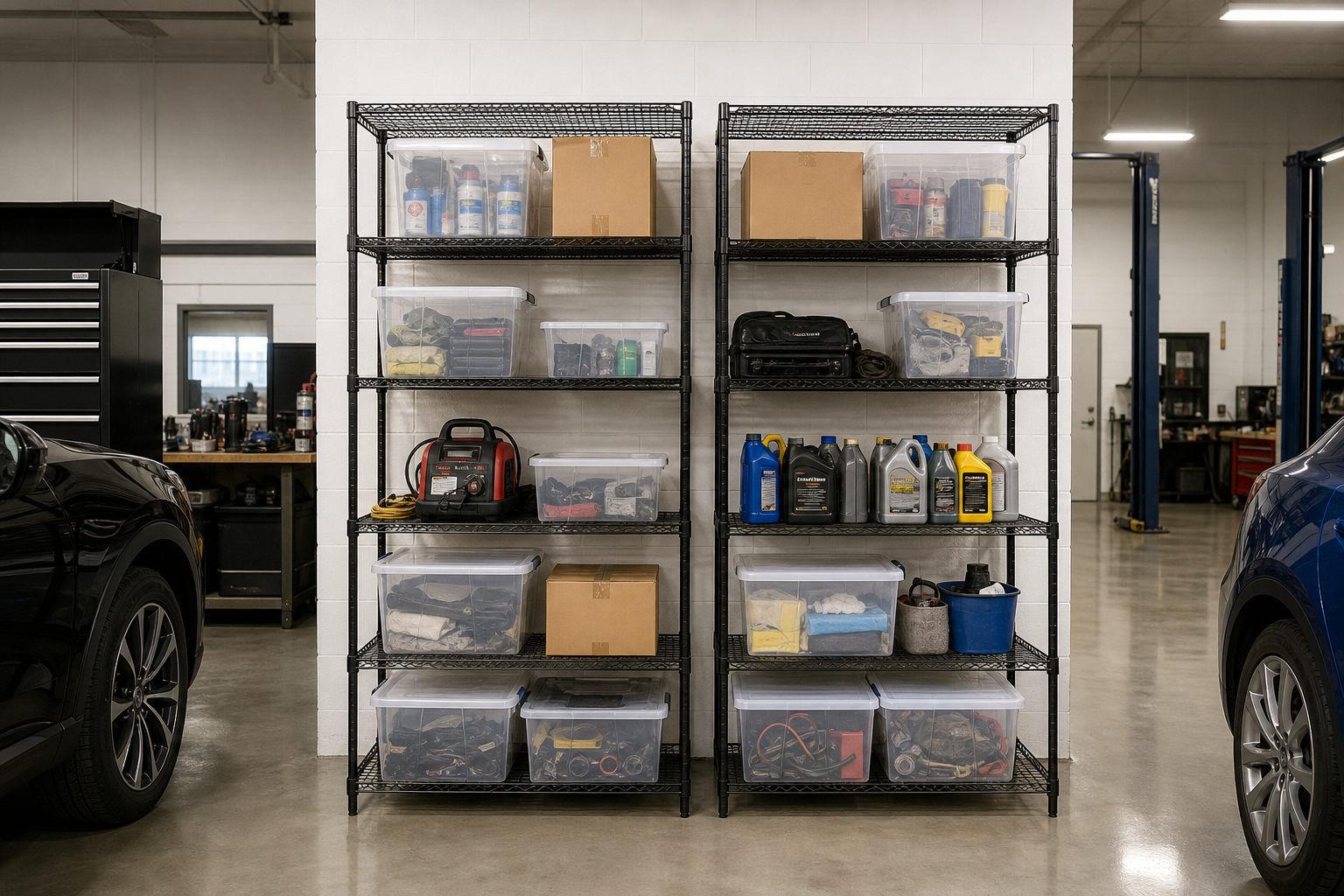
Tall five-tier wire units like these can hold several hundred pounds per shelf when they’re properly loaded front to back. The open wire design makes it easy to see what’s on every level without pulling everything out. Placing two units side by side creates a storage wall effect without any mounting hardware at all.
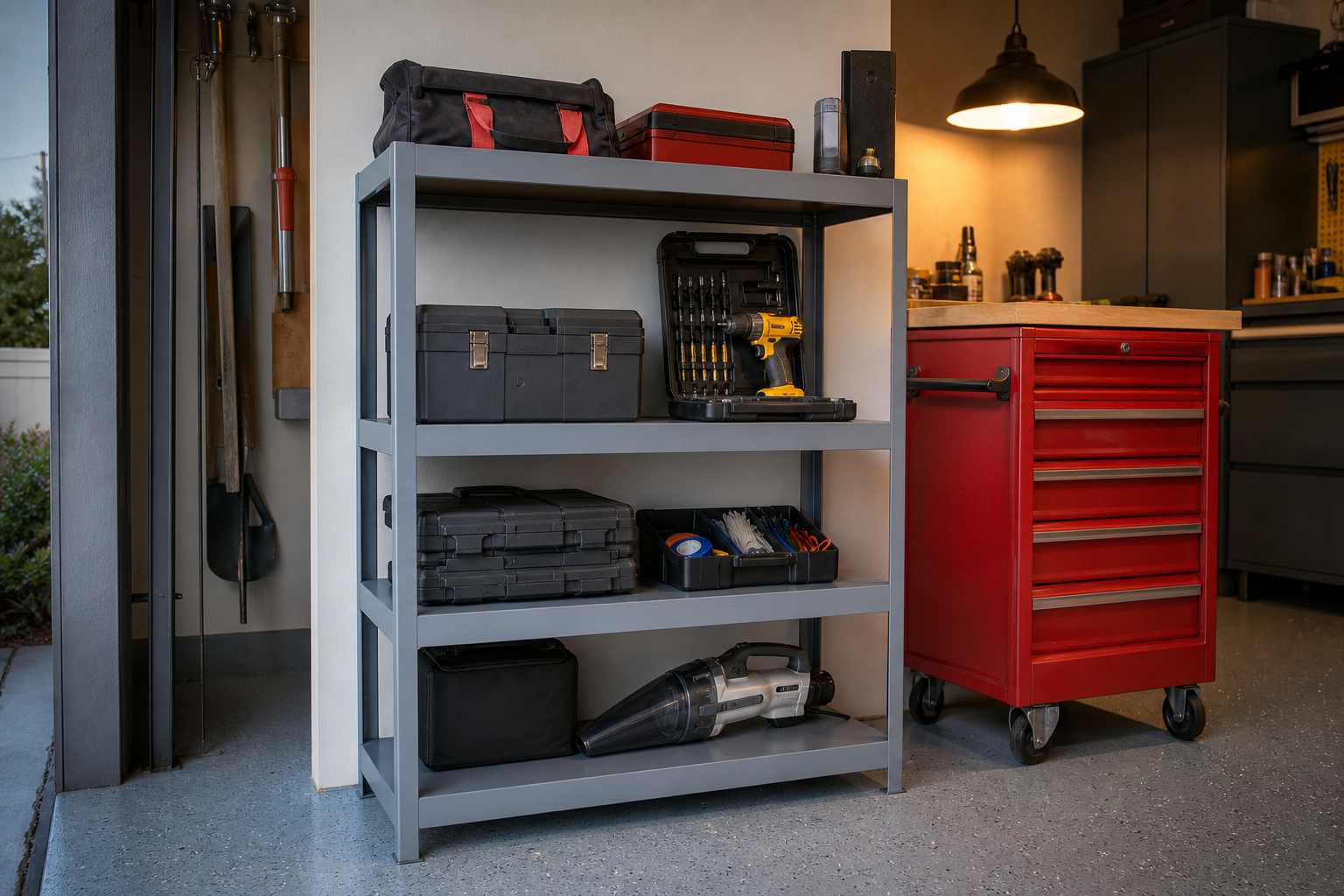
Solid-shelf steel units like this one are better than wire shelves for small items that would otherwise fall through the gaps. The medium height keeps everything within easy reach without a step stool, which I find matters a lot in a working garage where you grab tools constantly. Parking it next to a rolling tool chest creates an efficient tool zone that keeps your workbench clear.
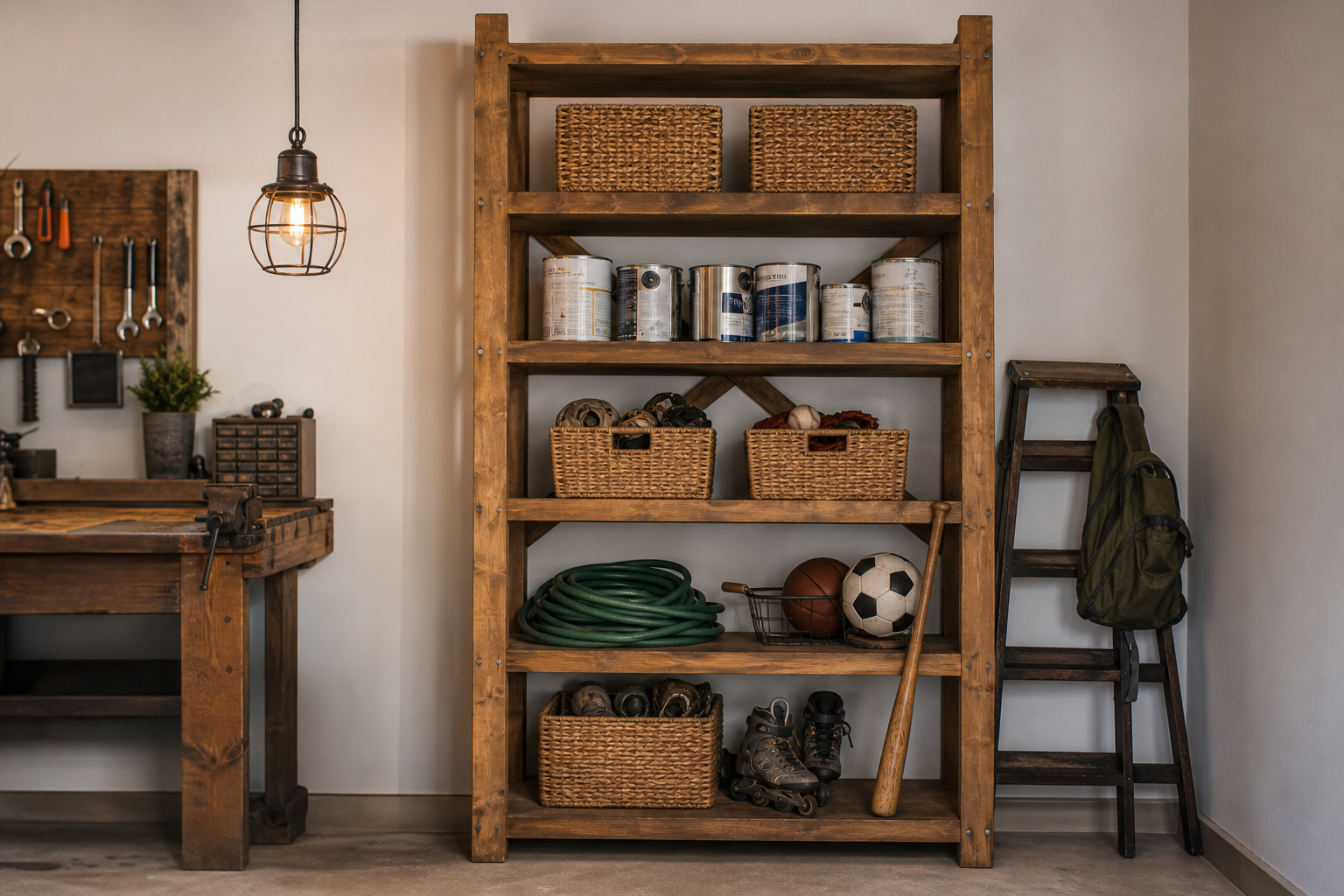
A DIY wood shelving unit built from pine and 4×4 posts gives you full control over the dimensions and a warm look that feels less utilitarian than metal. Staining the wood adds moisture resistance and makes the grain pop without hiding the natural character of the material. If you want to build something like this yourself, my DIY garage shelving weekend build guide walks through the whole process step by step.
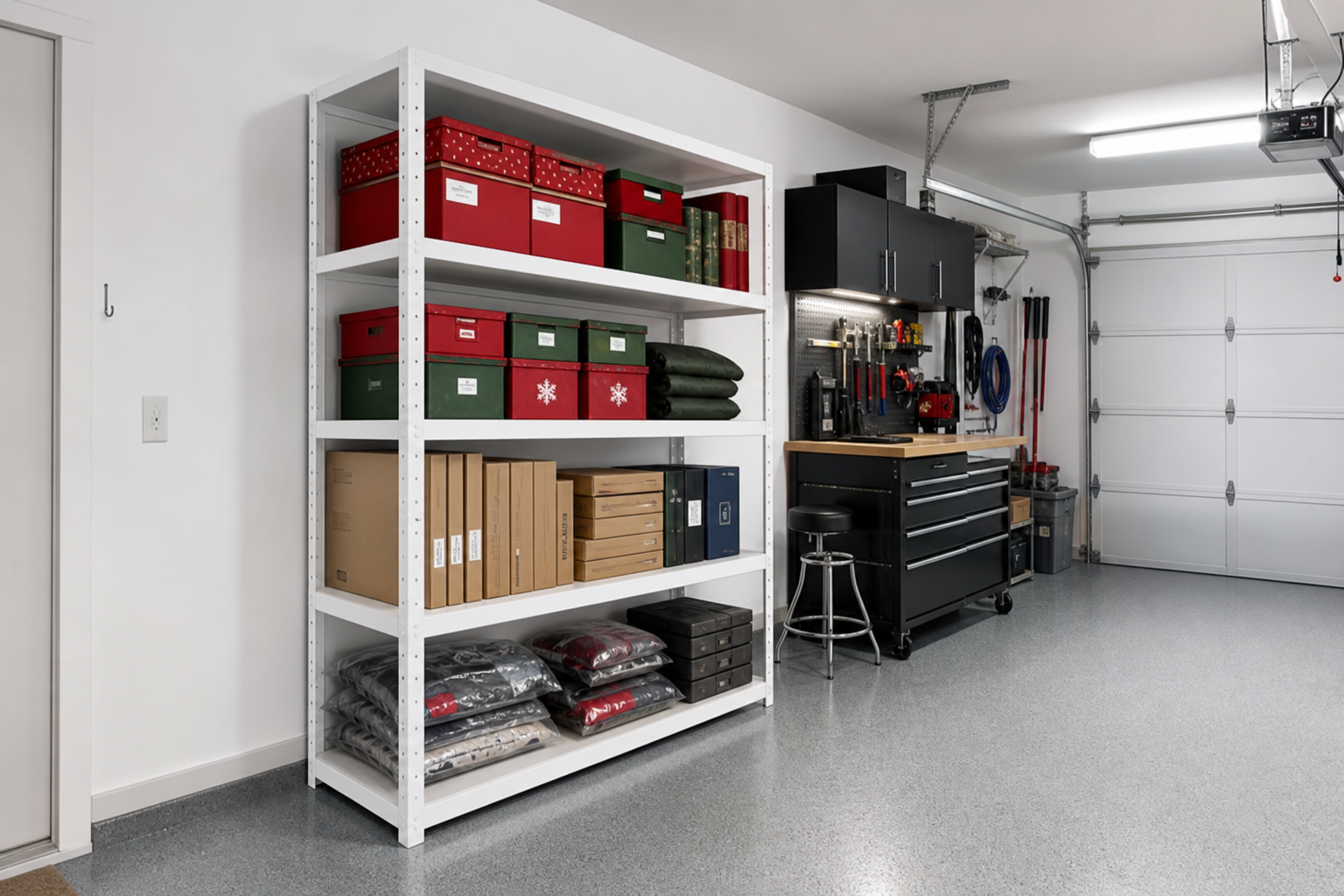
A closed-back white unit keeps everything behind it hidden and gives the garage a tidier appearance from the main entrance. This is a smart spot for holiday decorations, seasonal clothing, and flat-pack furniture that you only need a few times a year. If organizing your seasonal storage is a project on your list, my garage holiday decoration storage guide has a great system for keeping those boxes accessible without taking over the whole garage.
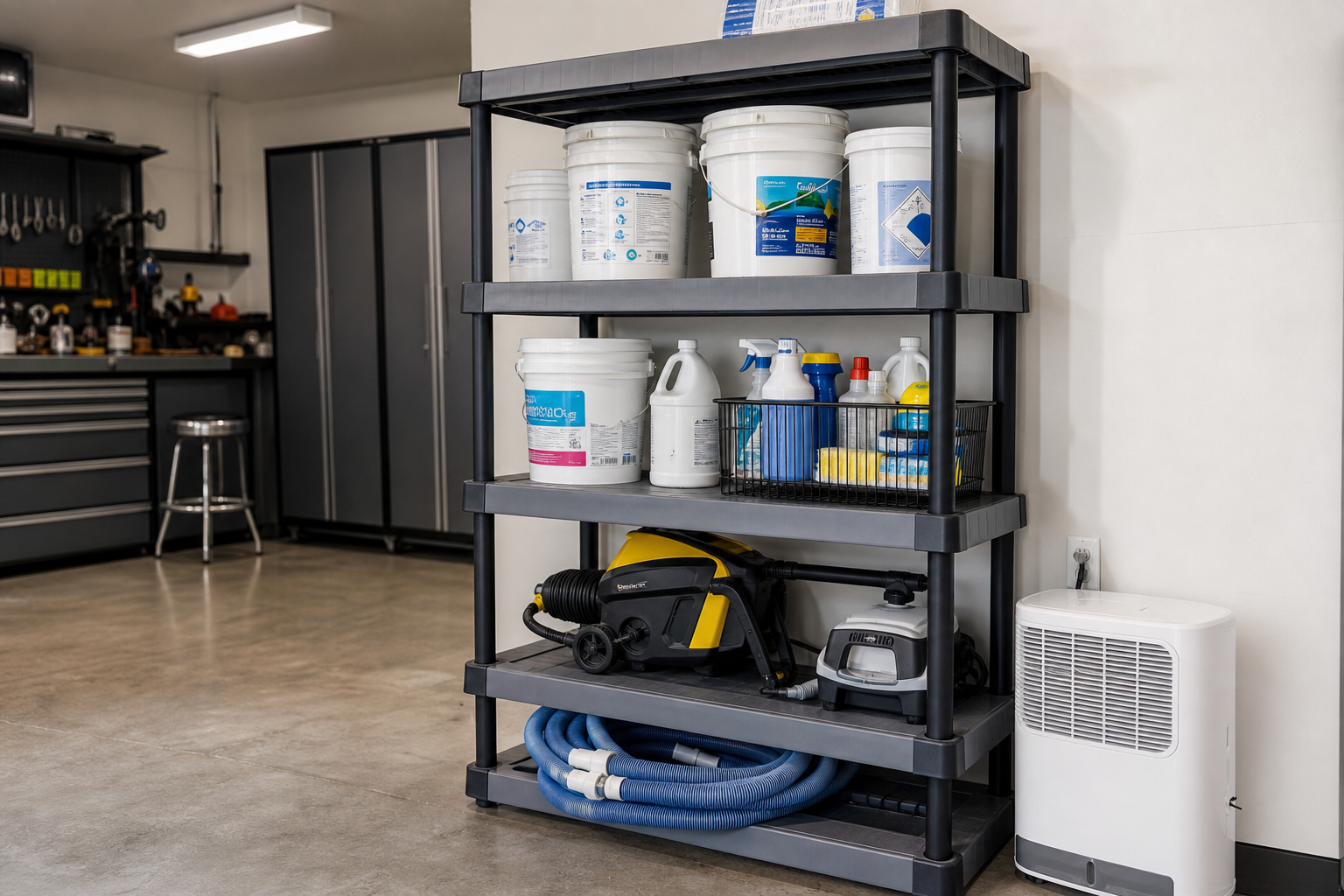
Heavy-duty plastic shelving is the right call for anything involving chemicals, water, or humidity because it won’t rust or corrode the way metal can over time. Here in Florida, that matters more than most places since the humidity alone can wreck an uncoated steel shelf in a season. The five-tier layout handles everything from large chemical buckets on the bottom to lighter accessories on the upper shelves.
Heavy-Duty Industrial Racks
When you need storage that can genuinely hold weight, standard home shelving won’t cut it. Industrial-grade garage racks, the kind you’d find in a warehouse, are built for serious loads and they last for decades. We’re talking welded steel frames, rated capacity per shelf, and hardware that doesn’t flex under pressure. These systems shine in garages that double as workshops, storage facilities, or spaces that need to hold lumber, engine parts, or bulk supplies. If you’re comparing options before you buy, my guide to the best garage shelving systems under $500 includes several industrial-grade picks that won’t break the bank.
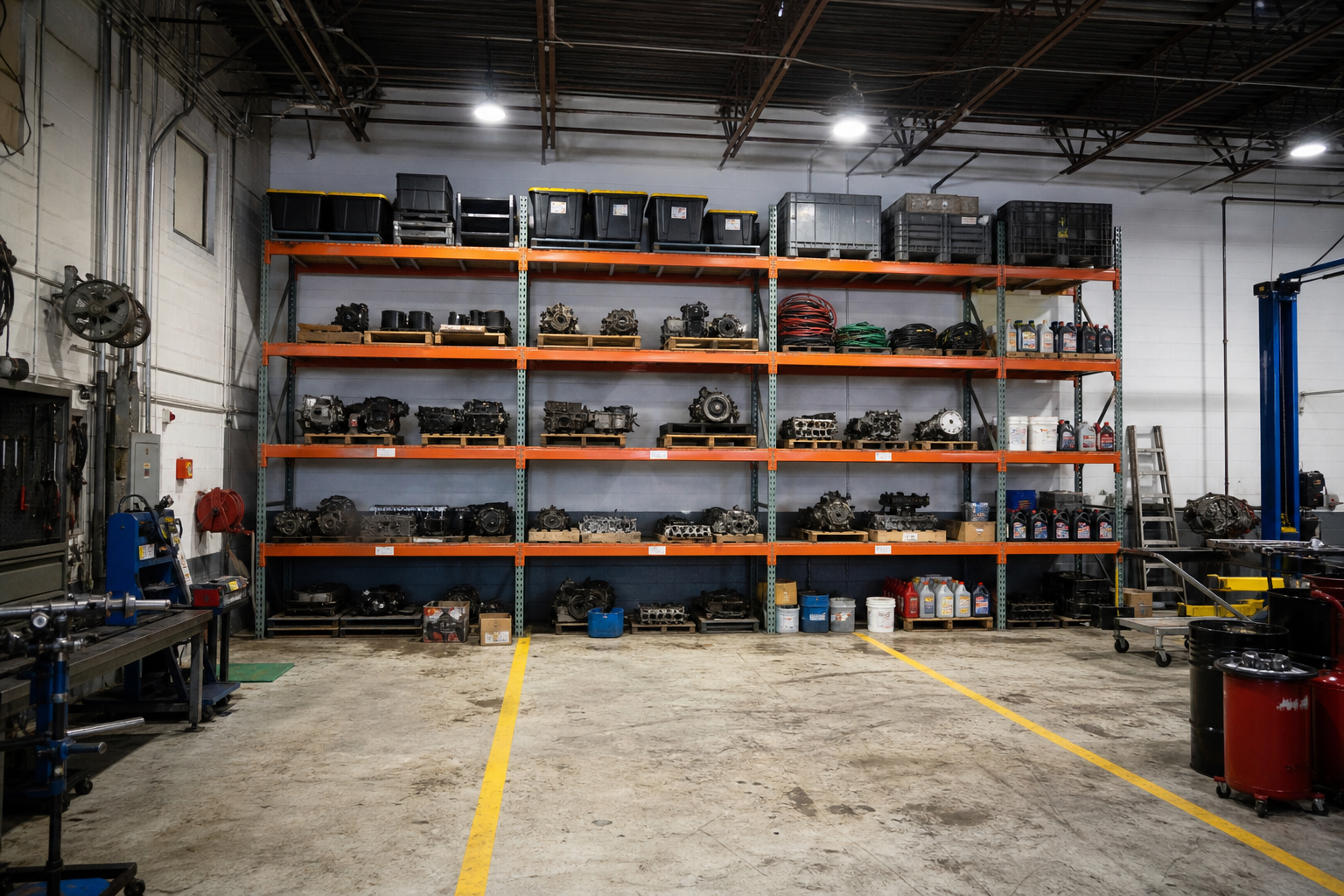
Pallet rack systems are the gold standard for heavy storage, originally designed for warehouses but increasingly popular in serious home garages. The orange uprights and gray beam color combination is the classic industrial look, and it reads as intentional rather than accidental. Load capacity on these systems typically runs into the thousands of pounds per level when anchored to the floor correctly.
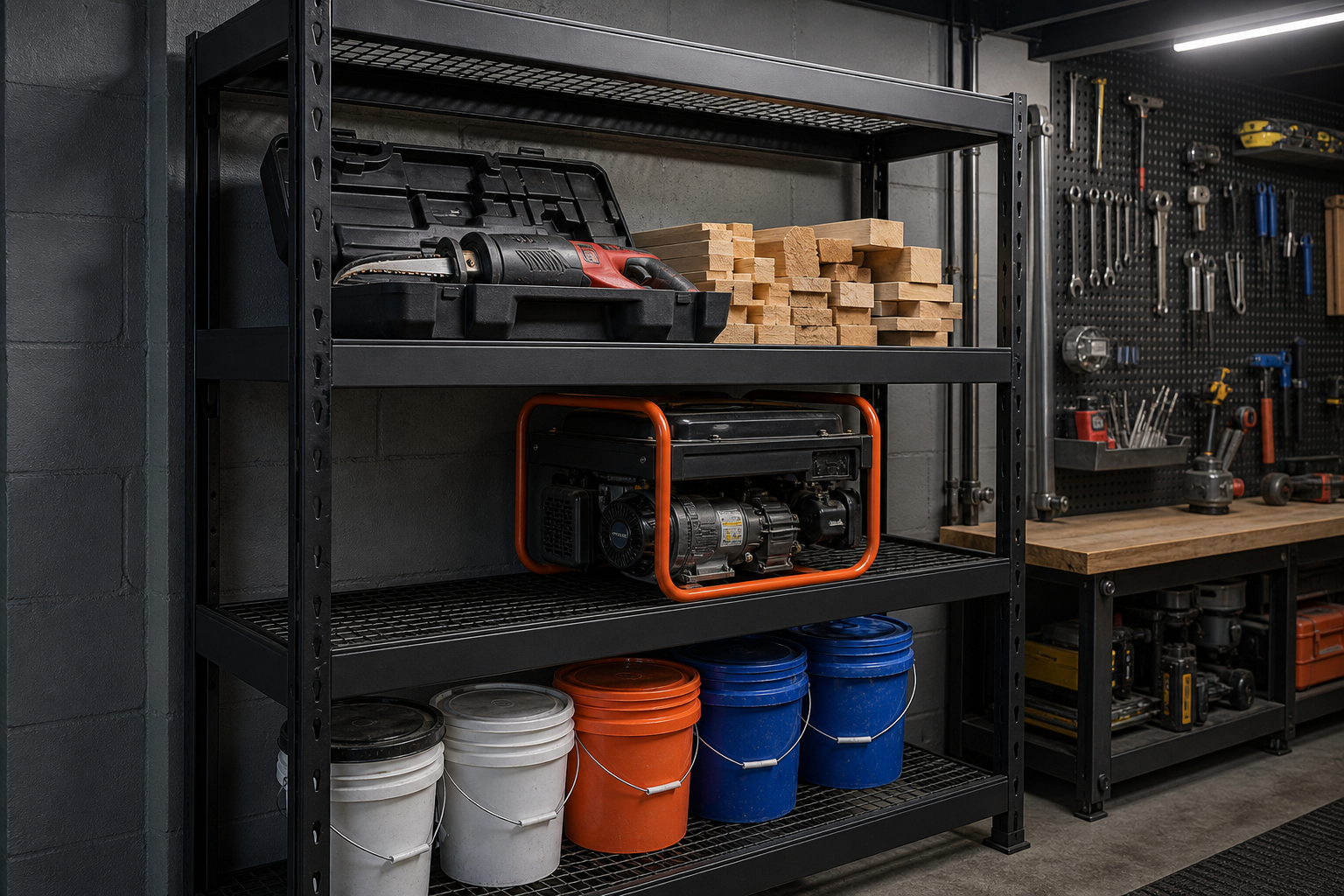
Welded-frame shelving with metal mesh decking is a step above bolt-together units in terms of rigidity, and you can feel the difference the moment you load it. The matte black finish gives it a polished, workshop-ready look that doesn’t look out of place next to a pegboard tool wall. Storing a generator on the lower shelf is smart because the weight stays low and the unit stays stable. If you’re storing a generator here, check out my portable generator storage rack guide for safety tips and ventilation considerations.
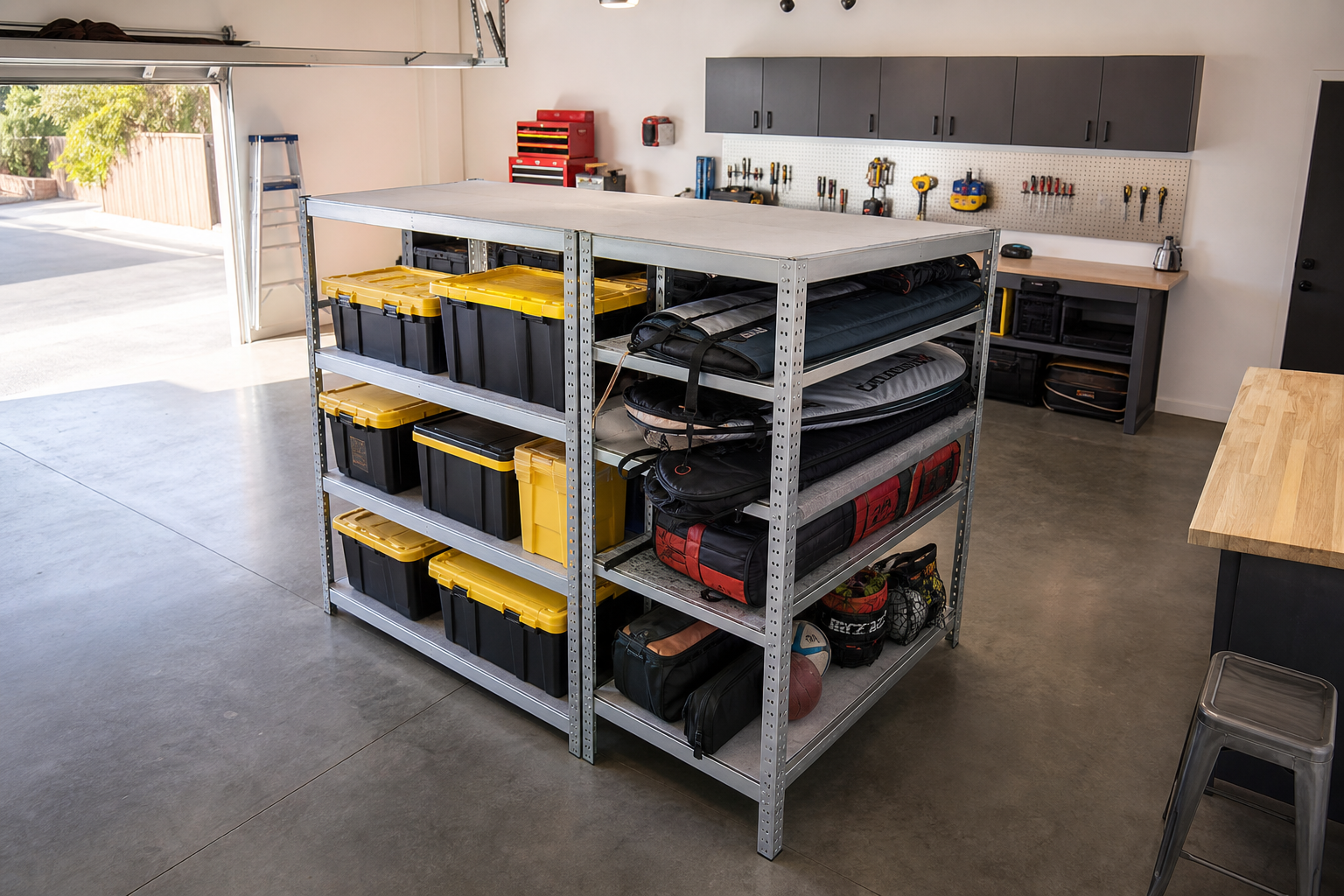
Creating a freestanding shelving island in the center of a large garage is a smart layout trick that doubles your usable shelf space without covering more wall area. The silver zinc finish is naturally corrosion-resistant, which makes it a solid choice if your garage sees temperature swings or humidity. Using one side for gear bags and the other for work supplies keeps two very different categories of stuff organized without a lot of extra effort.
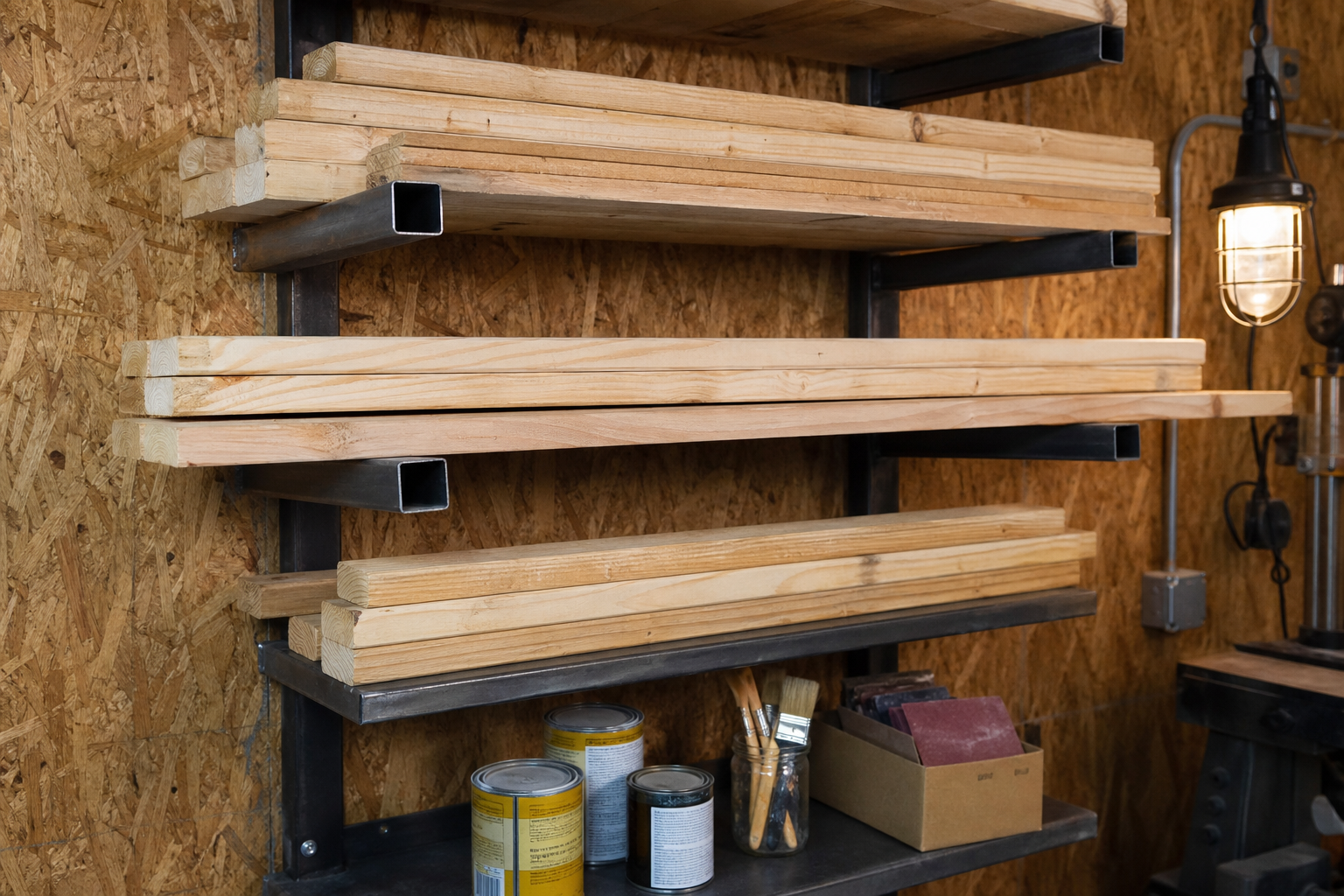
Cantilever racks are specifically built for long, awkward materials like lumber, pipe, and trim boards that won’t fit on standard shelves. The horizontal steel arms keep boards flat and accessible so you’re not digging through a pile every time you need a specific length. If you work with wood regularly, my guide to building a DIY lumber storage rack is a great companion to this kind of system.
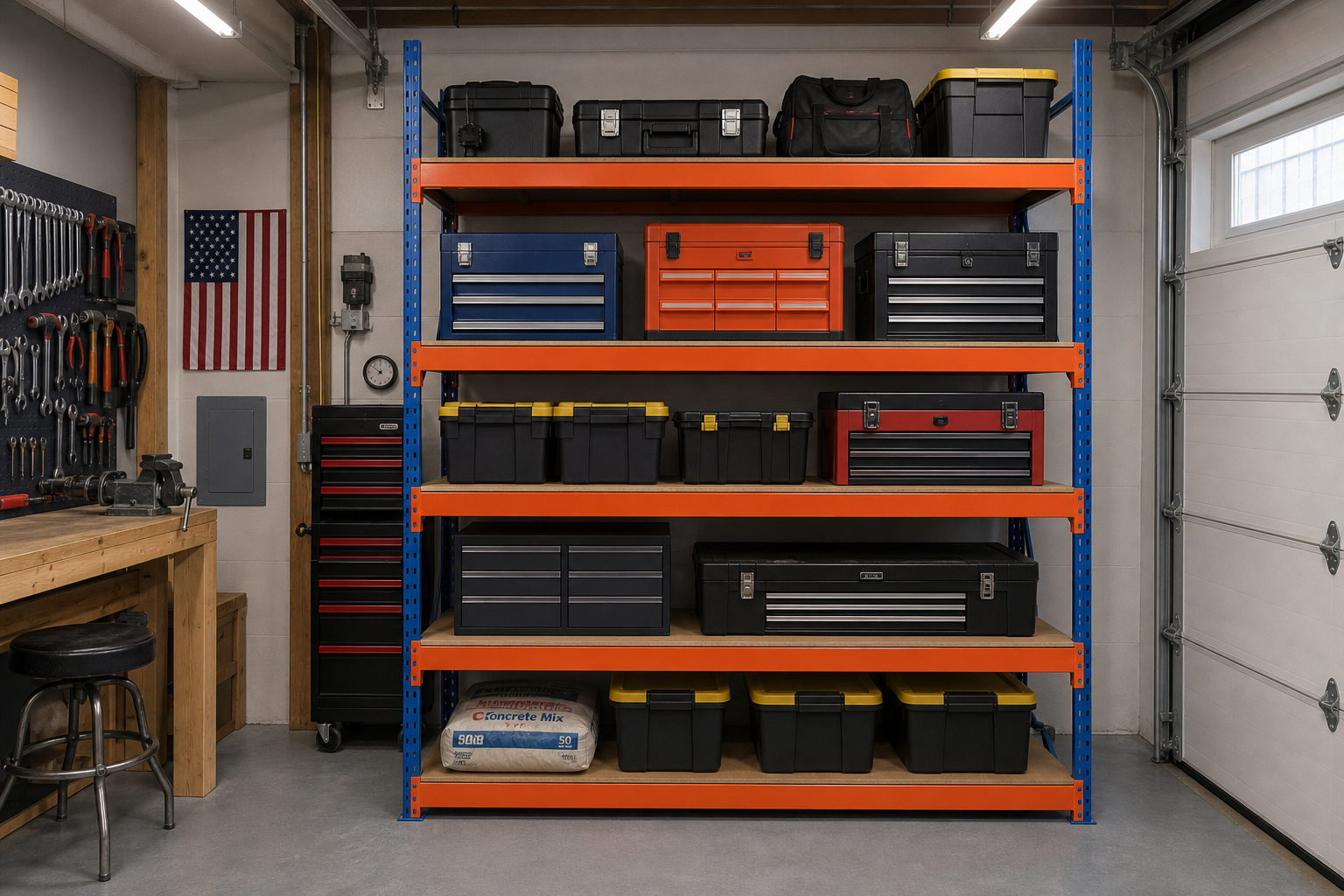
Rivet-style shelving earns its place in serious garages because the clip-in assembly is faster than bolt-together systems and just as strong under sustained load. Thick particle board decking handles heavy items like bags of concrete without flexing, and the bottom shelf is the right place to park your heaviest items for stability. The bold blue and orange color combination gives this corner of the garage an energetic, purposeful feeling that says work happens here.
Adjustable Modular Systems
Adjustable modular shelving systems are built for garages that need to grow and change over time. You start with a base configuration and expand by adding more bays, towers, or accessories as your storage needs shift. Most of these systems let you reposition every shelf in one-inch increments, which sounds like a small detail until you’re trying to fit a five-gallon bucket under a shelf that’s just two inches too low. Brands like Gladiator, Husky, and NewAge have made these systems genuinely attractive as well as functional. If you want a deep dive into the top cabinet-based modular options, my guide to the best garage storage cabinets comparing steel and modular systems covers the major players side by side. And if you’re still working out where everything should go, my post on how to plan a garage storage layout that works is a good place to start before you buy anything.
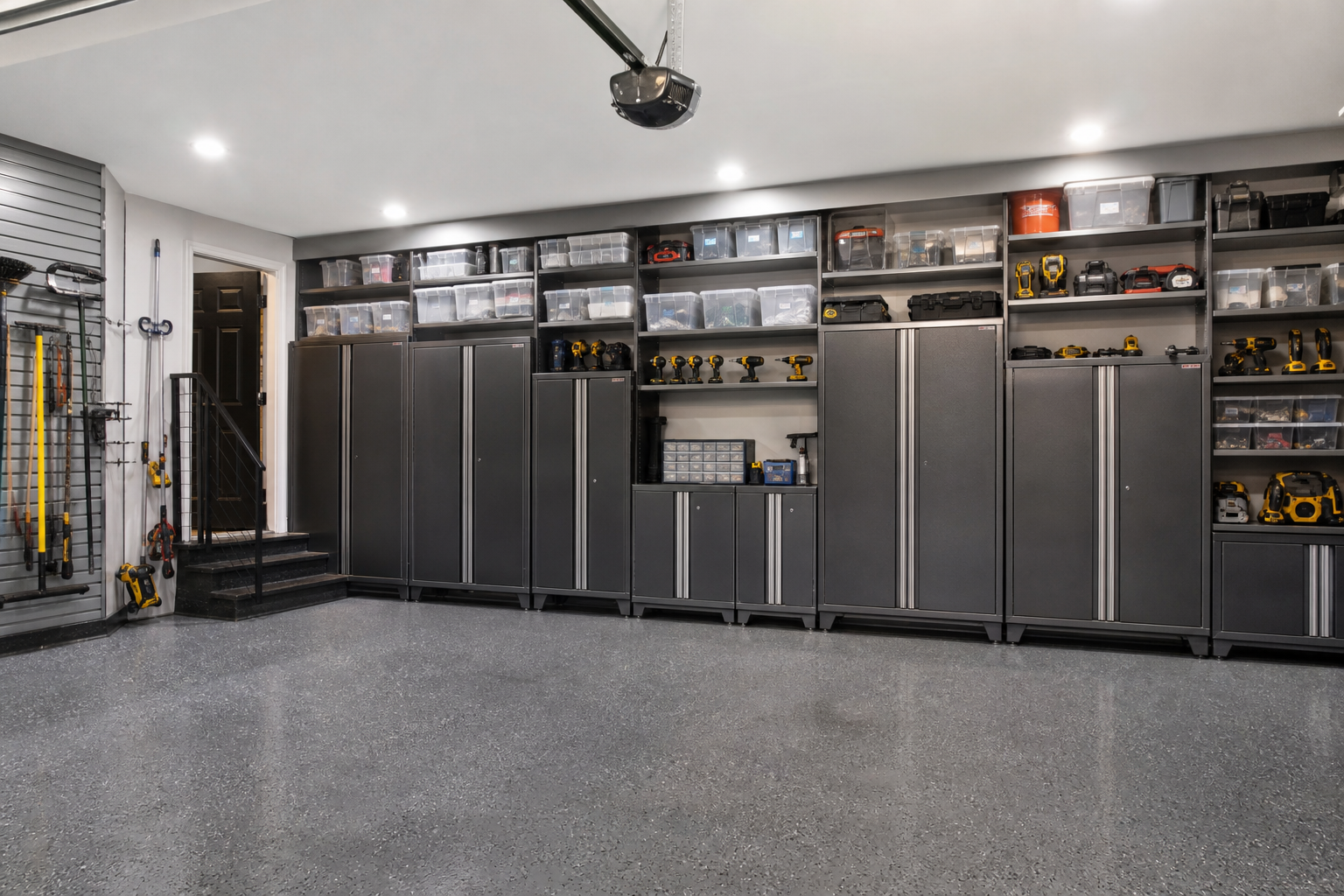
Combining closed cabinets at the bottom with open adjustable shelves above is one of the most practical modular configurations you can set up. The closed lower cabinets hide less attractive gear like fluids and cleaning supplies while the open upper shelves keep frequently used items visible and within reach. For a closer look at Gladiator’s specific lineup, I’ve got a full review of Gladiator garage storage cabinets that covers dimensions, load ratings, and real-world performance.
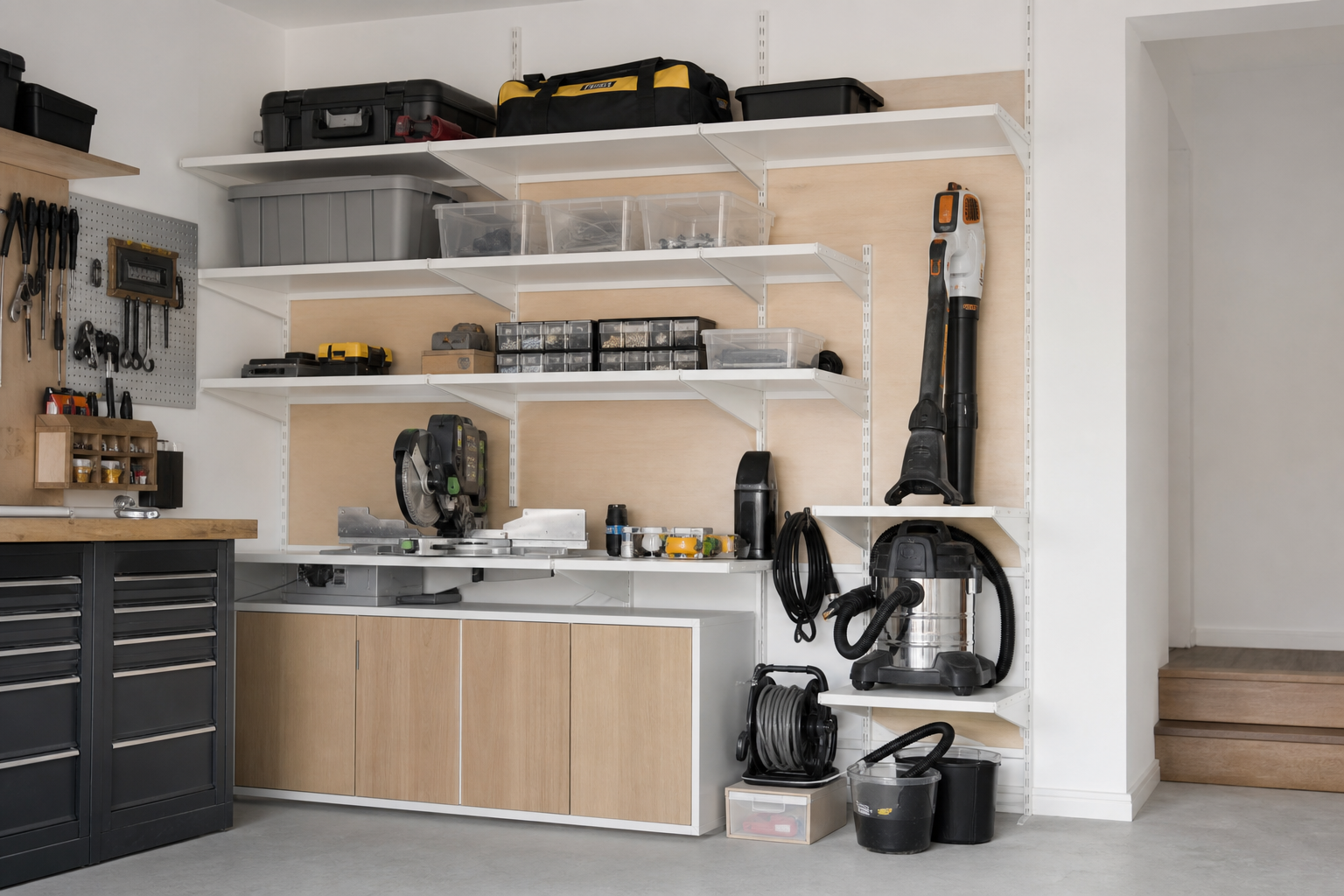
Vertical upright track systems with shelf clips make it genuinely easy to reconfigure shelf heights as your storage needs change, no tools required for most adjustments. The light wood back panel behind the white steel shelves adds warmth that keeps the garage from feeling purely functional. This kind of setup works well for storing items of dramatically different sizes, from shop vacuums on the floor level to small parts bins on the upper shelves.
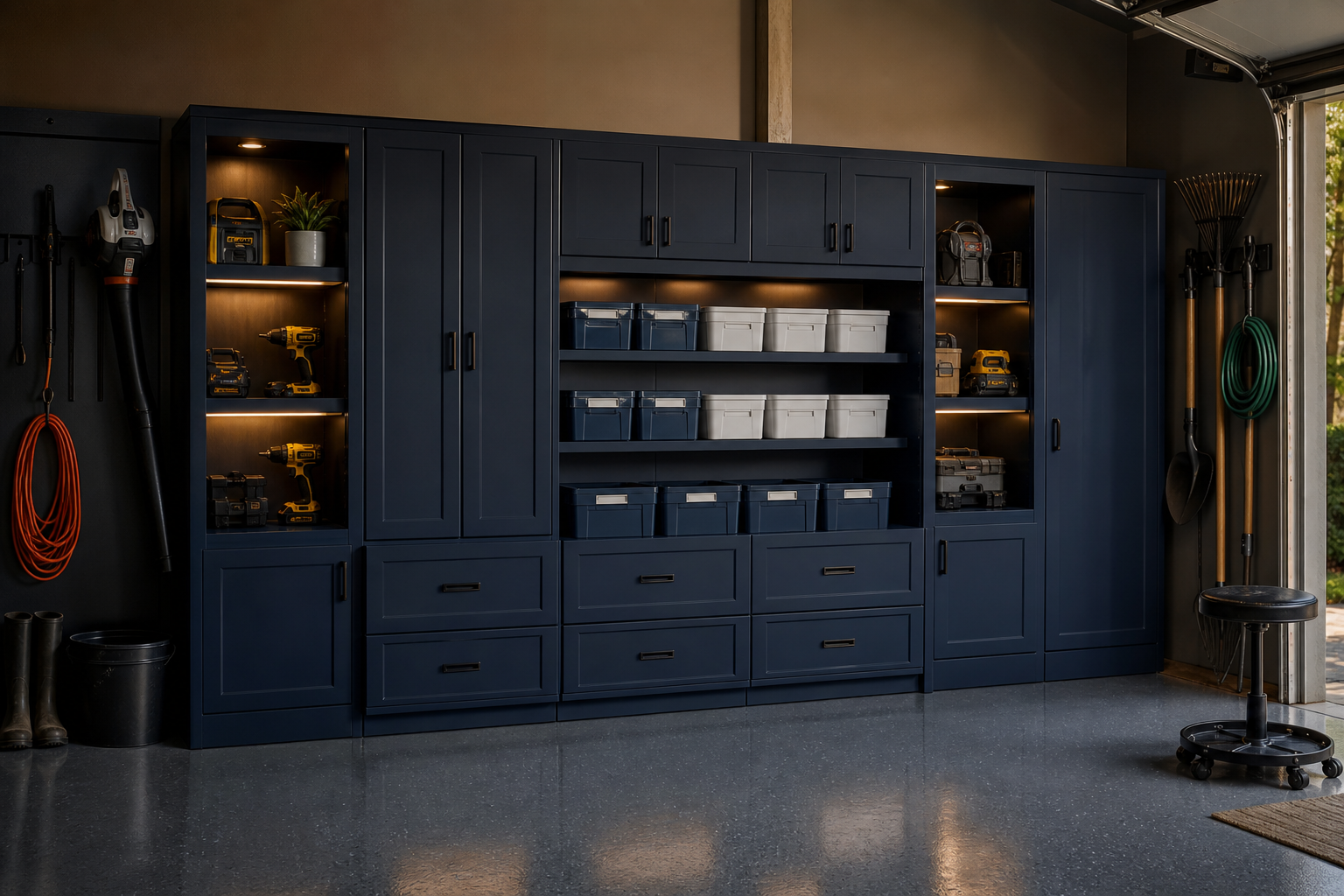
A full-wall modular system in deep navy creates a high-end, intentional look that most people don’t expect to see in a garage. The built-in side hooks for cords and yard tools mean every accessory has a designated spot rather than ending up in a pile on the floor. Under-shelf accent lighting is a finishing touch that costs very little but makes the whole system look like it was professionally installed.
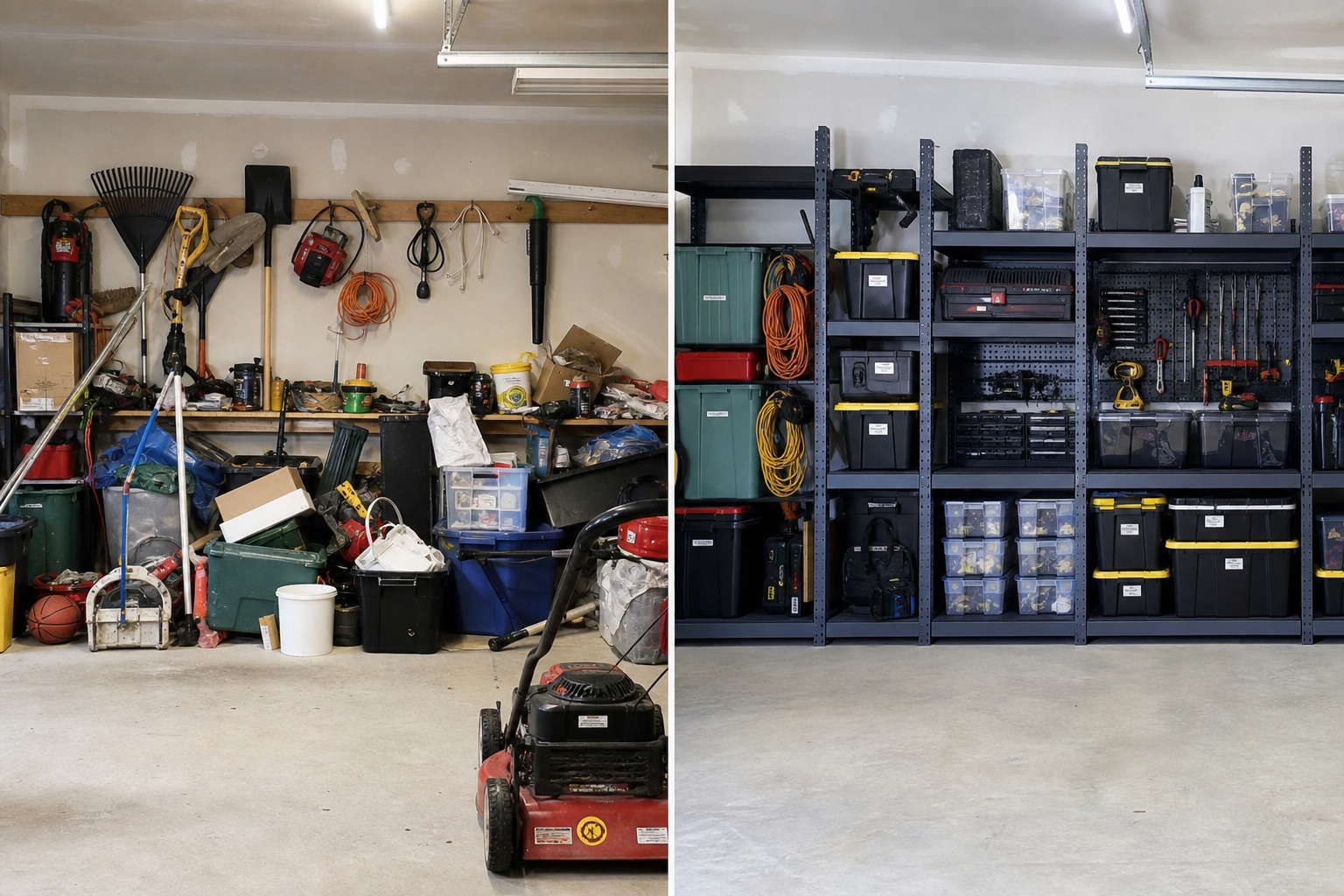
Seeing the before and after side by side makes the case for modular shelving better than any product description. The same floor space, the same wall area, but an entirely different result based purely on having a system that assigns a place to everything. If this is where your garage is right now, the best garage storage systems for every budget guide is a practical starting point for figuring out which system fits your space and your wallet.
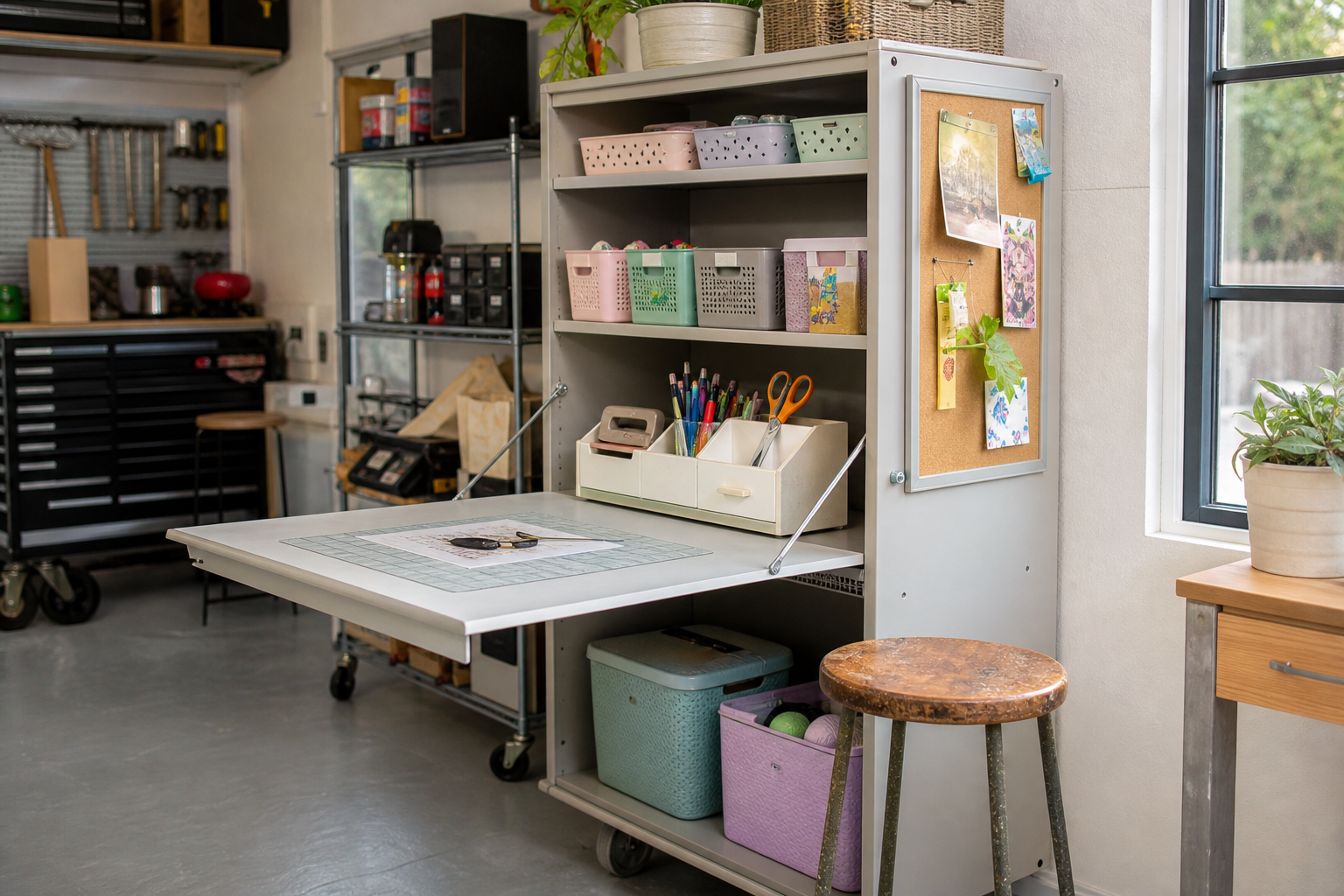
Modular systems that include a fold-down work surface blur the line between storage and workspace, which is exactly what a well-used garage needs. The pastel bin color coding makes supplies easy to find at a glance and keeps the whole corner feeling organized without being sterile. This kind of dedicated hobby corner is a great example of how a garage can serve more than one purpose when you plan the layout carefully, something I get into in my post on garage wall panels and how they anchor modular systems to any wall type.
