

As an Amazon Associate I earn from qualifying purchases.
A good garage workbench can change everything about how you work. Whether you’re doing weekend repairs, building furniture, or wrenching on a car, the right bench gives you a dedicated place to get things done without fighting for space. In this roundup I’ve pulled together 18 workbench ideas across four categories: heavy-duty work surfaces, fold-down space savers, built-in tool storage, and mobile workbench carts.
Heavy-Duty Work Surfaces
Some projects demand a bench that doesn’t flex, rattle, or slide across the floor. Heavy-duty work surfaces are built to handle it all , vises, clamps, impact drivers, and the occasional frustrated hammer strike. These benches are typically made from thick hardwood, solid steel, or a combination of both, and they’re anchored to the wall or the floor so nothing shifts under pressure. If you’re planning to build one yourself, my DIY garage workbench with storage build guide walks through the whole process from lumber selection to final assembly. Getting the lighting right above a heavy bench is just as important as the bench itself, so keep that in mind as you plan your layout.
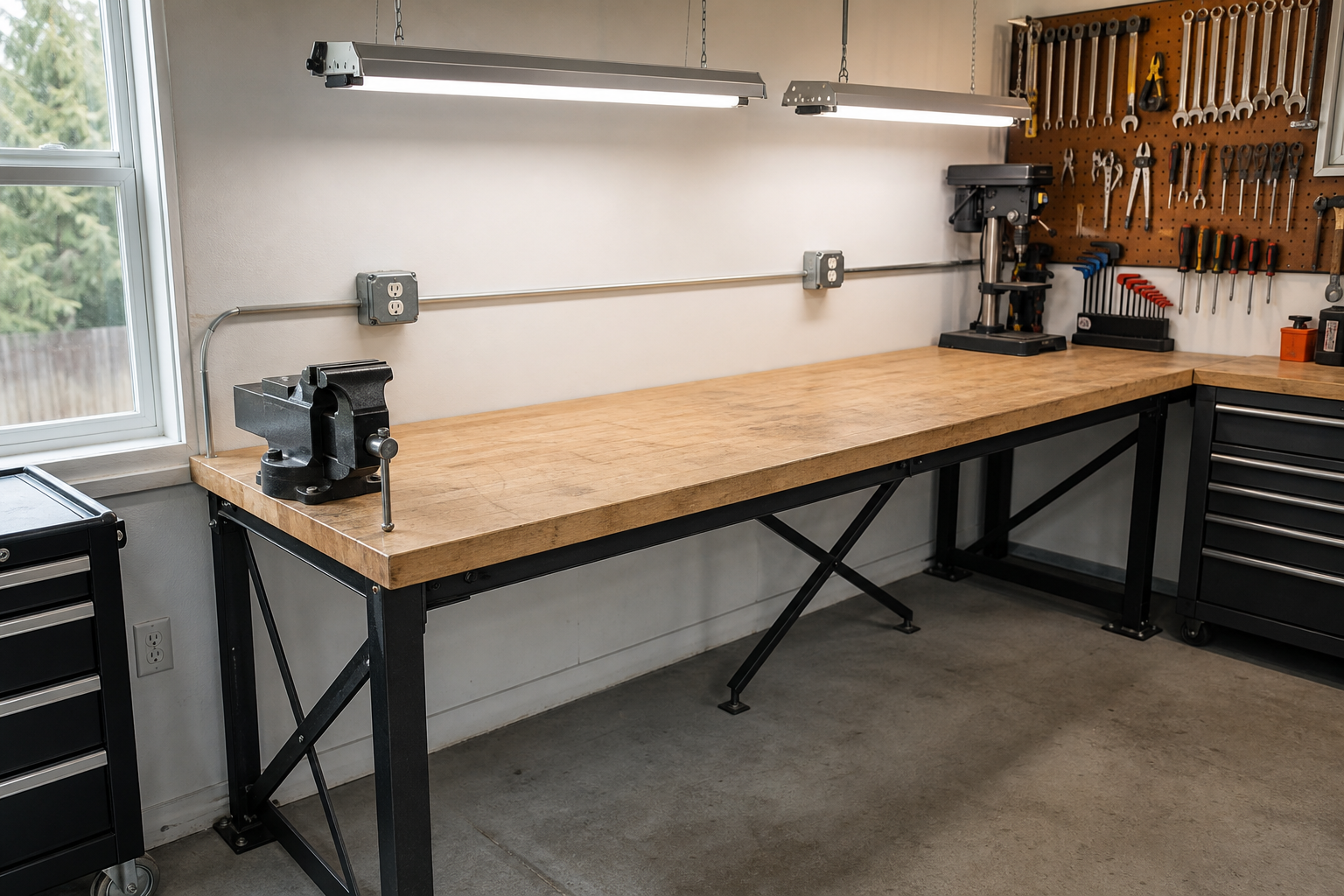
Thick maple butcher block paired with welded steel legs gives this bench a serious, no-nonsense feel. The black steel frame anchors the whole structure to the floor, eliminating any wobble during heavy work. It’s the kind of surface that looks better with every scratch and dent it picks up.
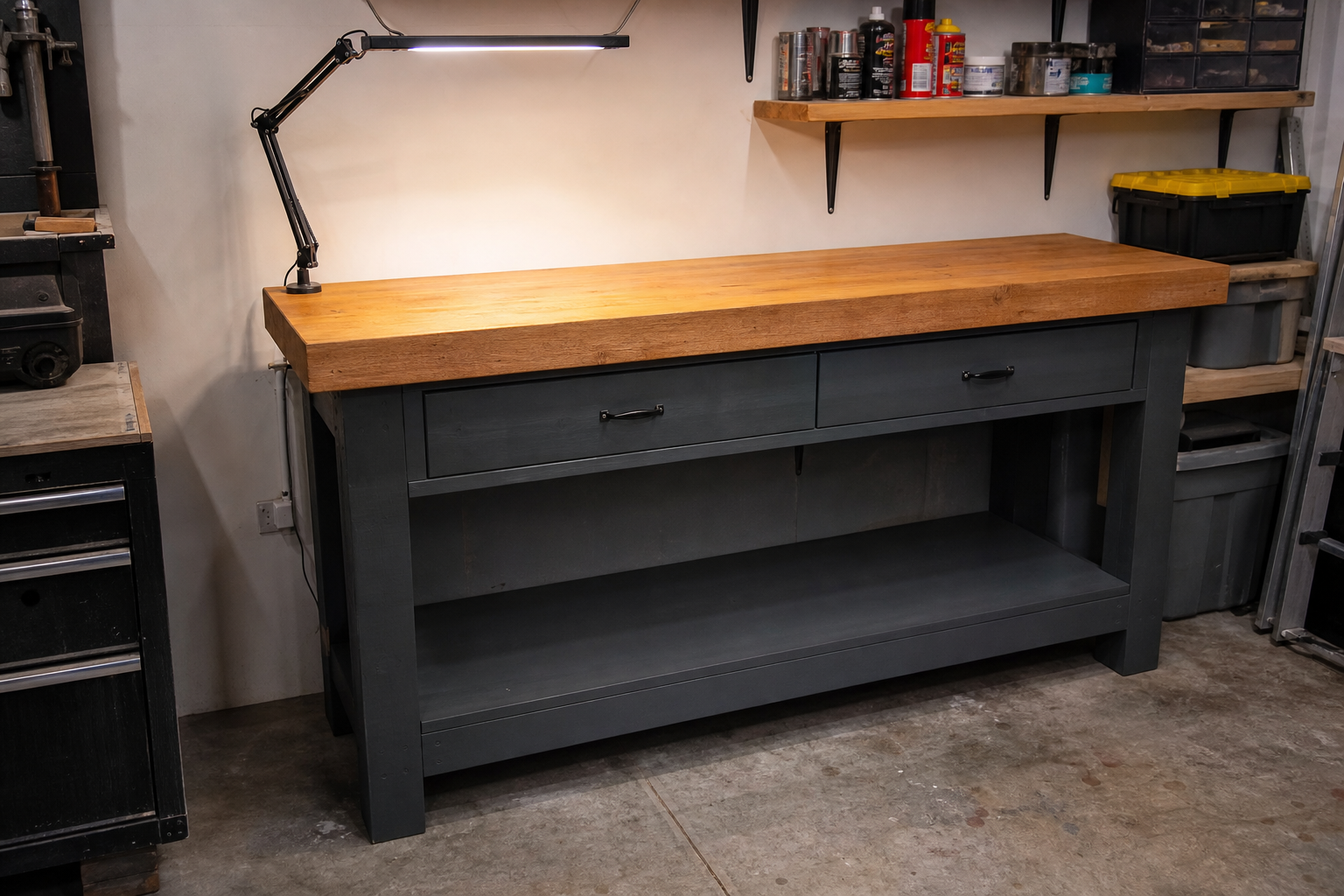
Oiled Douglas fir gives this bench a warm, workshop-like character that most metal surfaces can’t match. The doubled 4×4 base painted charcoal gray keeps the look clean while adding serious structural strength. Those two full-length drawers underneath pull their weight too , plenty of room for hand tools and hardware.
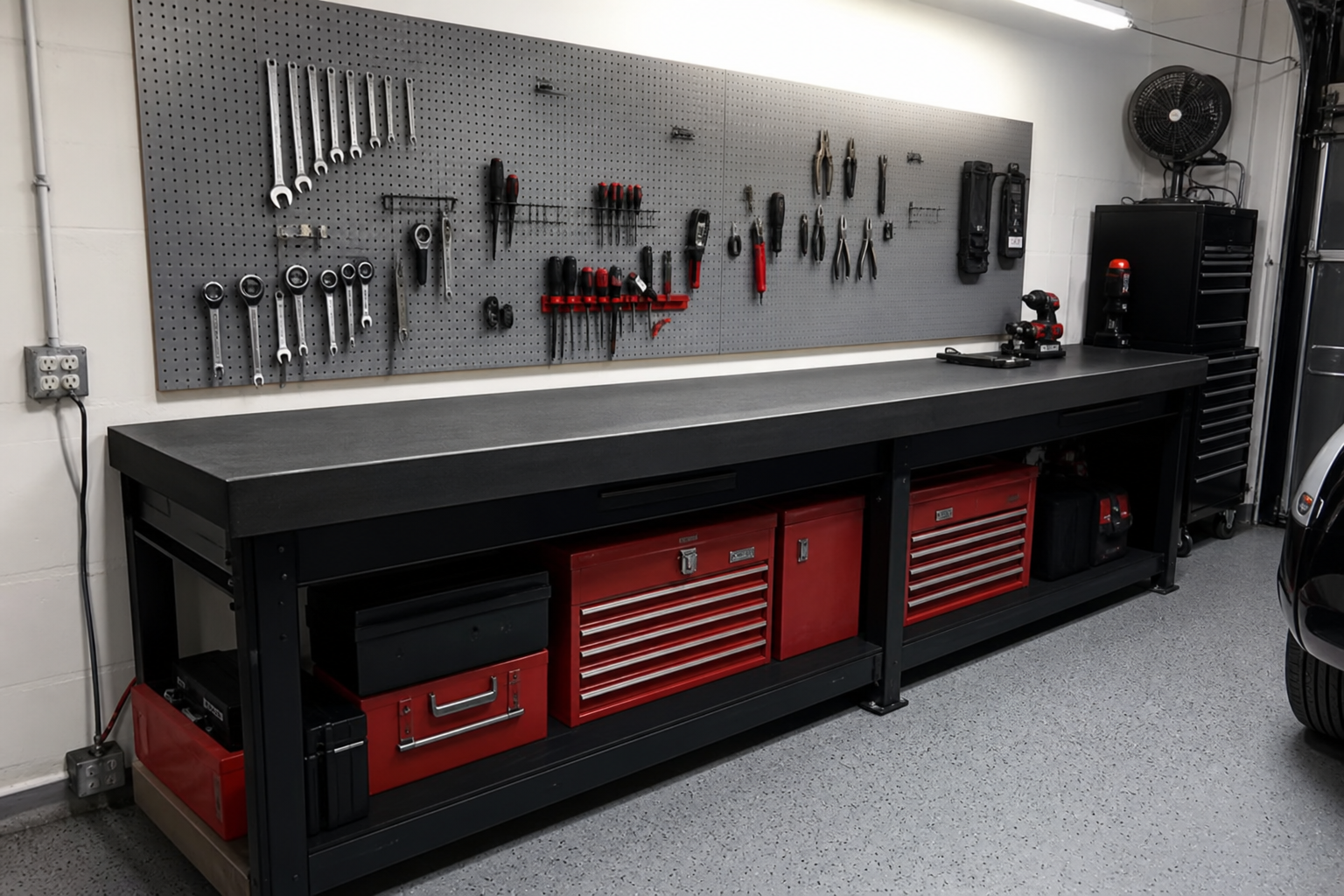
A phenolic resin surface resists oil, chemicals, and impacts in a way that bare wood simply can’t. The matte black powder-coated steel frame looks professional without being fussy. Pair this kind of bench with a well-organized pegboard setup above it and you’ve got a workspace that runs like a real shop.
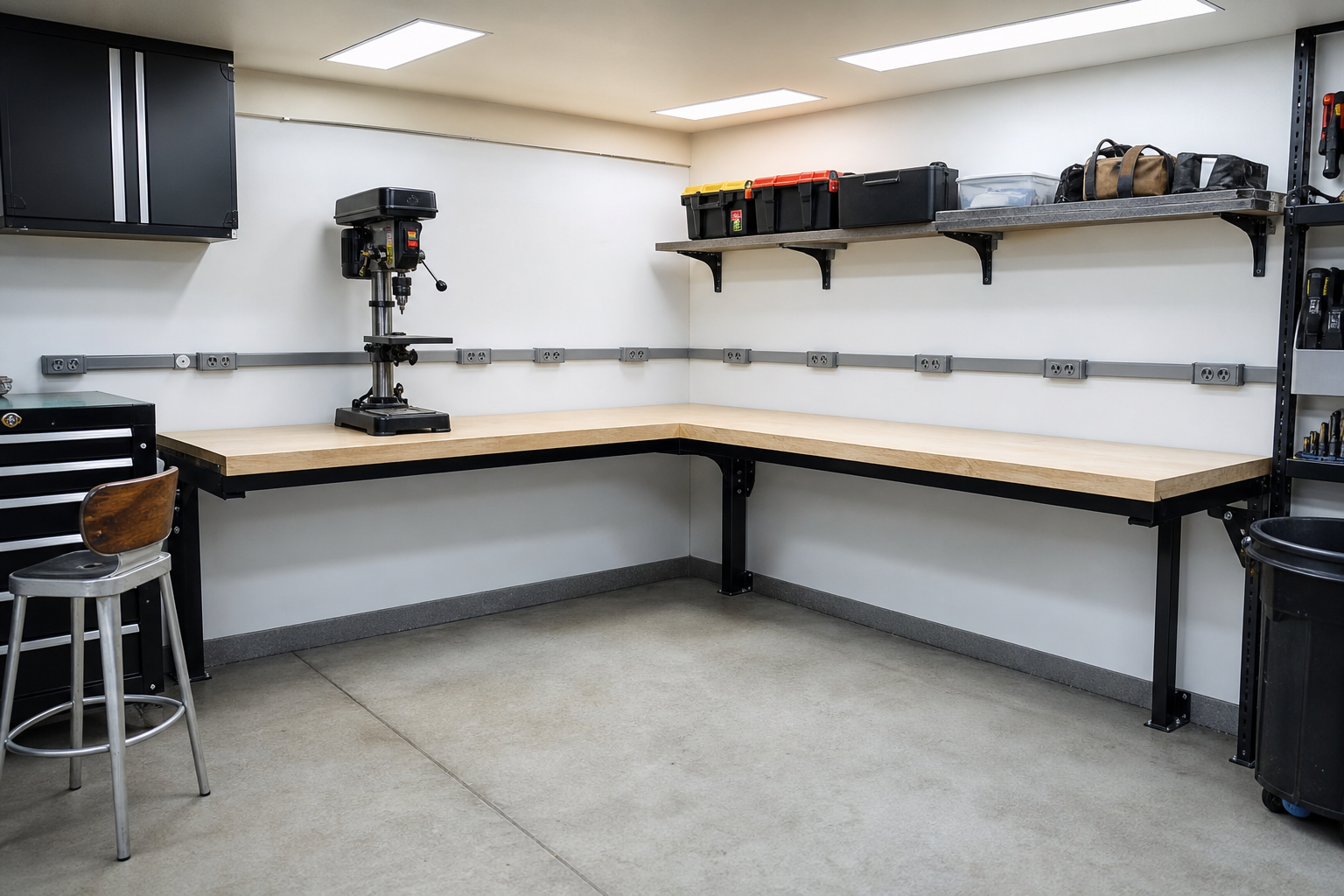
Corner benches like this one make great use of dead space and give you more linear footage of workspace than a single straight run. The laminated plywood top holds up to regular use and costs a fraction of solid hardwood. If you want to wire in outlets along the back, my guide on safely adding electrical outlets to a garage workbench covers everything you need to know.
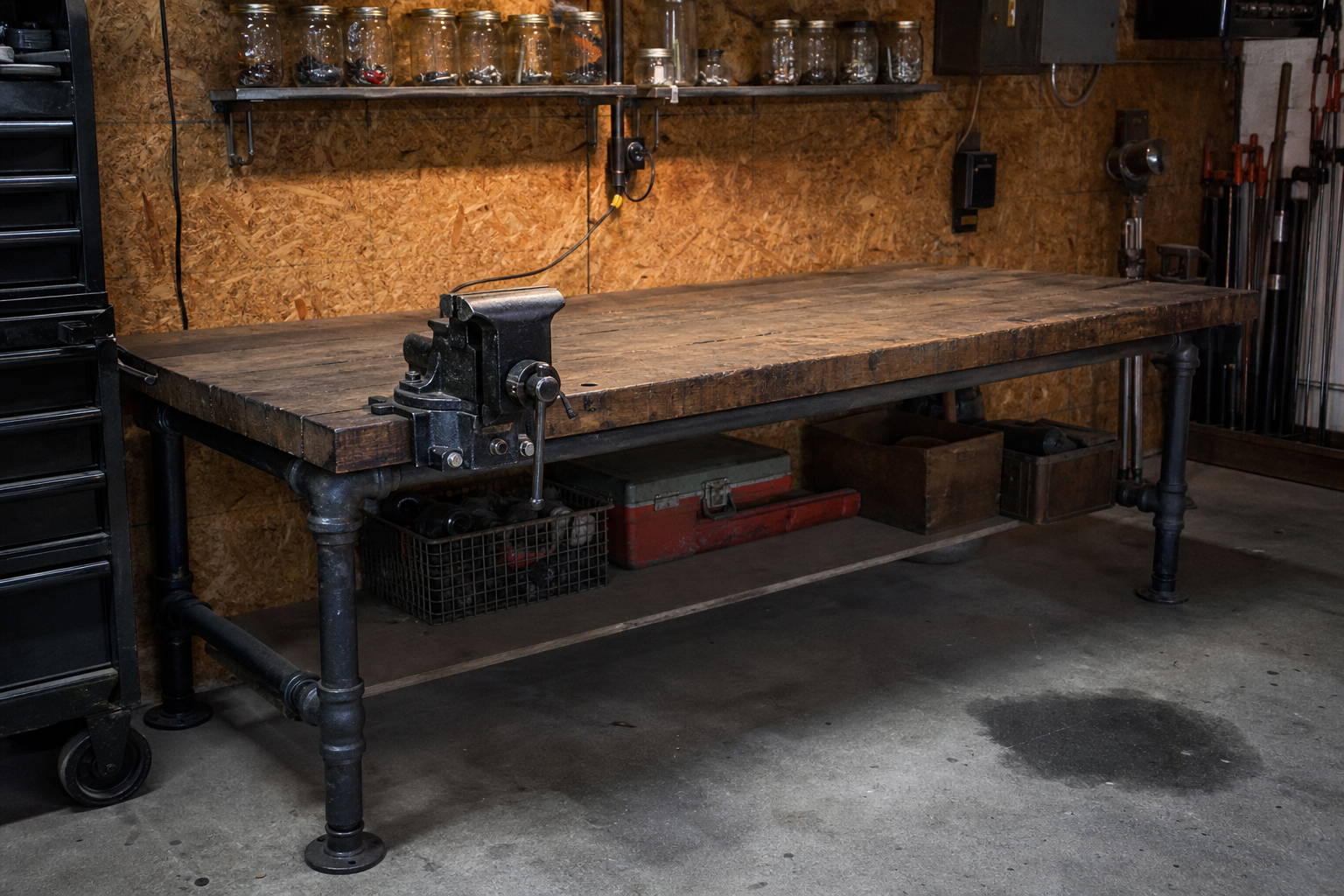
Reclaimed oak on black iron pipe legs is one of those combinations that always looks intentional, no matter how simply it’s put together. The aged wood brings real character to a garage workspace without any extra decoration needed. This style pairs especially well with raw or painted OSB wall panels, which are worth considering if you’re redoing your garage walls at the same time.
Fold-Down Space Savers
Not every garage has room for a full-size permanent bench, and that’s completely fine. Fold-down workbenches mount flat against the wall and drop down only when you need them, keeping your floor open the rest of the time. They’re a go-to solution in one-car garages or shared spaces where the car still needs to fit. If you want to build one yourself, I put together a complete guide to building a folding workbench that covers hardware choices, wall anchoring, and surface materials. These ideas range from simple single-panel drop benches to more elaborate setups with built-in storage.
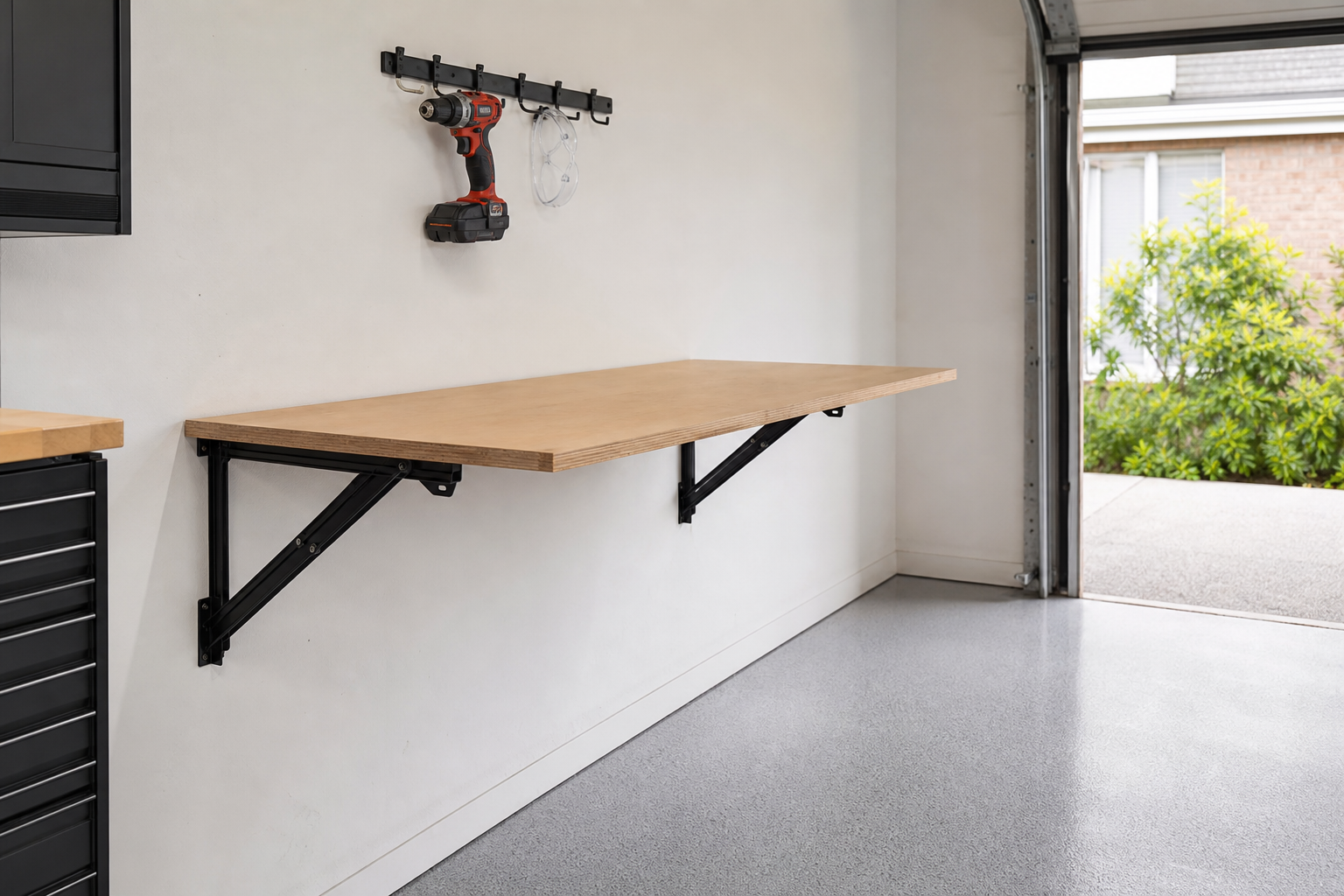
This is about as clean and simple as a fold-down bench gets , a single sheet of birch ply on two black folding brackets. When it folds up, it sits nearly flush to the wall and takes up almost no visual space. It’s a smart solution for a small garage where organization relies on keeping the floor clear.
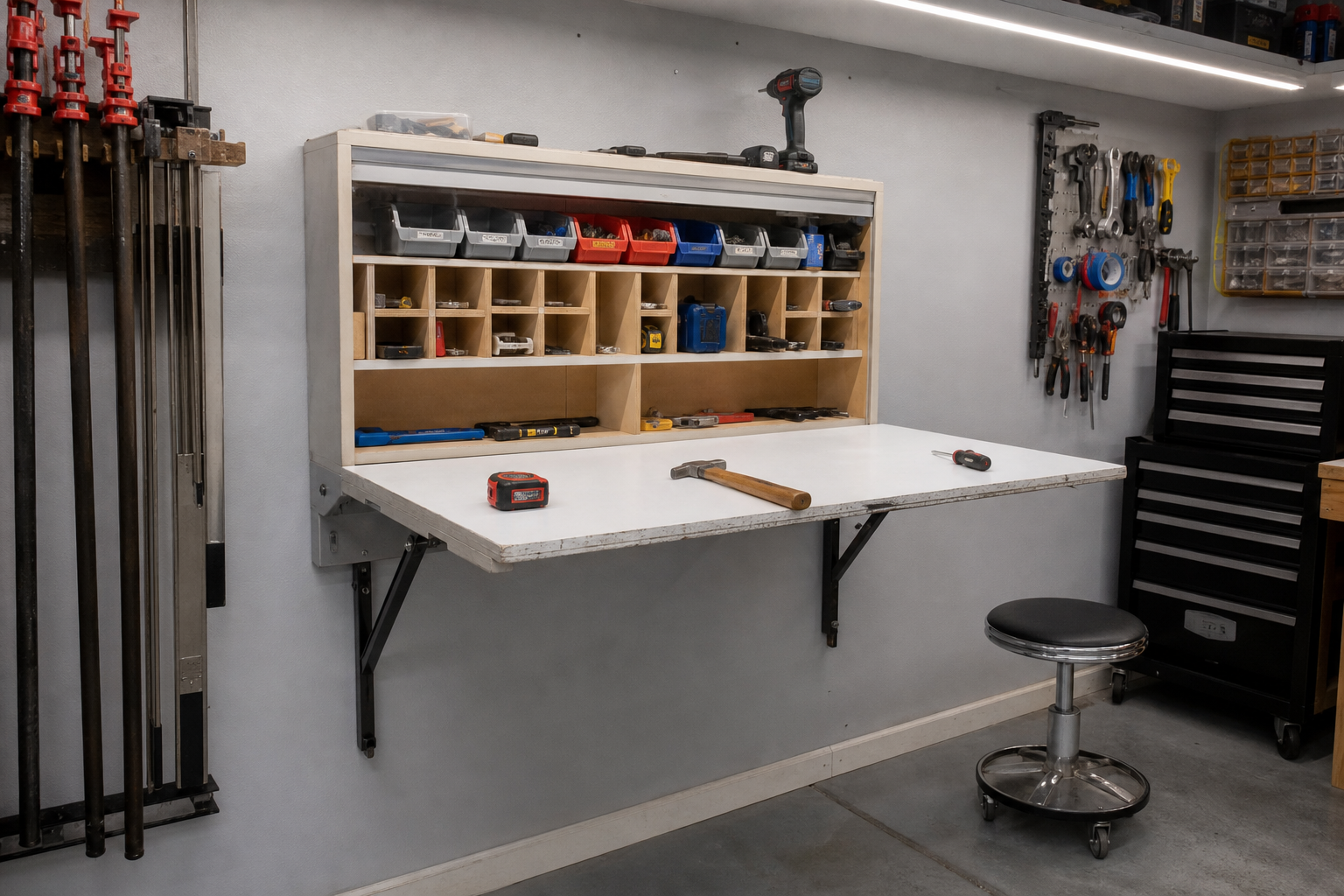
This design doubles as a shallow wall cabinet when folded up, hiding all those small parts and fasteners behind a clean face. The pigeonhole compartments inside are perfect for sorting hardware by size so nothing gets lost in a drawer. It’s a genuinely space-efficient idea that works especially well in garages where wall space does double duty.
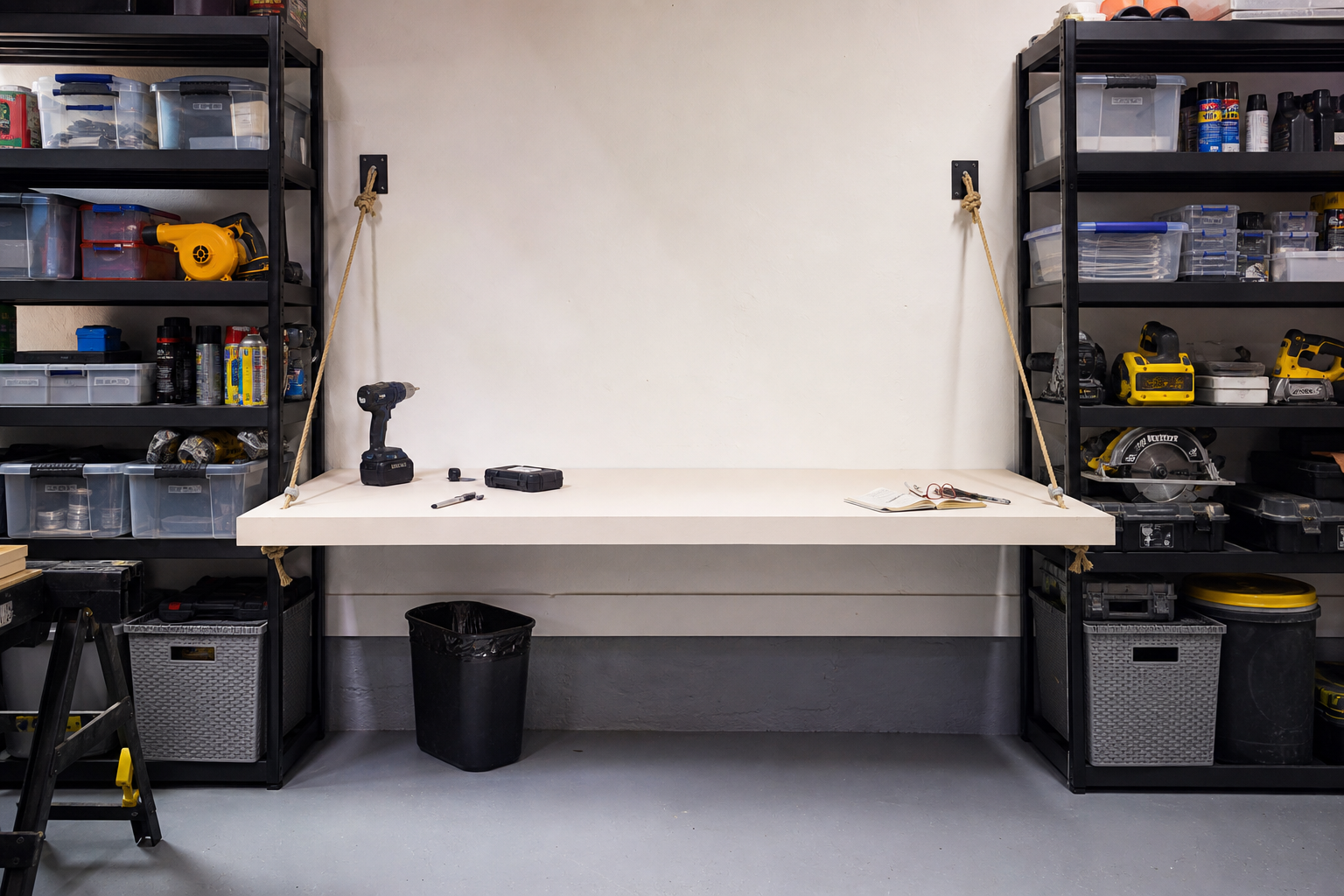
Rope supports give this bench an unexpectedly clean, almost minimalist look compared to traditional folding metal brackets. At six feet wide, there’s enough room to spread out a real project without feeling cramped. The shelving units on both sides serve as natural anchors and keep everything you need for the task within arm’s reach.
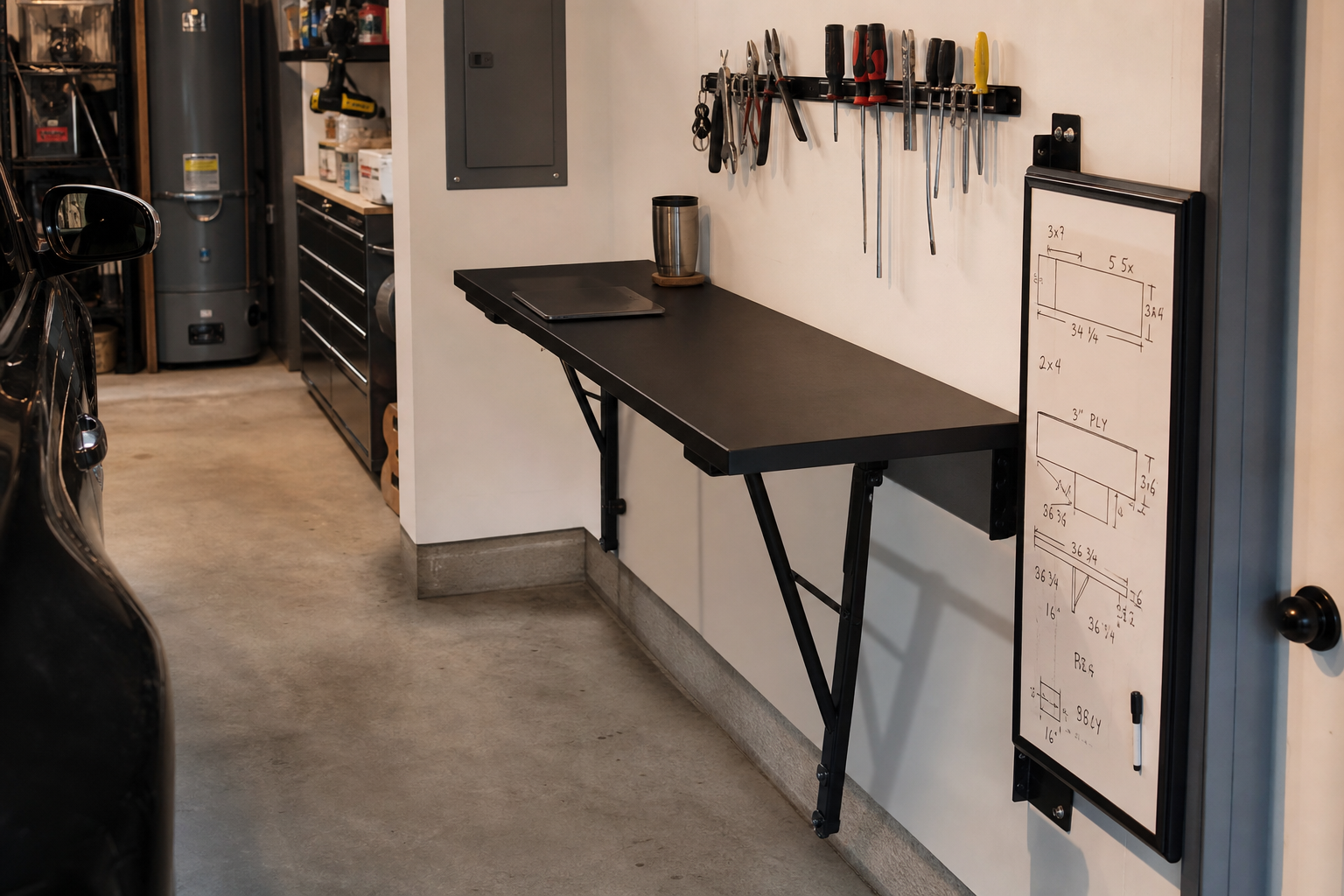
Painting the underside of the bench panel as a whiteboard is one of those ideas that sounds obvious once you see it. When the bench is folded up, you’ve got a vertical planning surface right there at eye level , perfect for project notes, dimensions, or a cut list. Tight on space? This compact layout is exactly the kind of thinking that drives good garage storage layout planning.
Built-In Tool Storage
A workbench without storage is just a table. Built-in tool storage integrates drawers, cabinets, shelving, and wall organization directly into the bench structure so everything you reach for is exactly where you left it. This category covers benches where the storage is part of the design from the start , not added as an afterthought. Wall-mounted systems above the bench play a big role here too, and a well-planned pegboard installation for garage tool storage is one of the most effective things you can add above any work surface. These five ideas show a range of approaches, from deep drawer banks to overhead cabinet combinations.
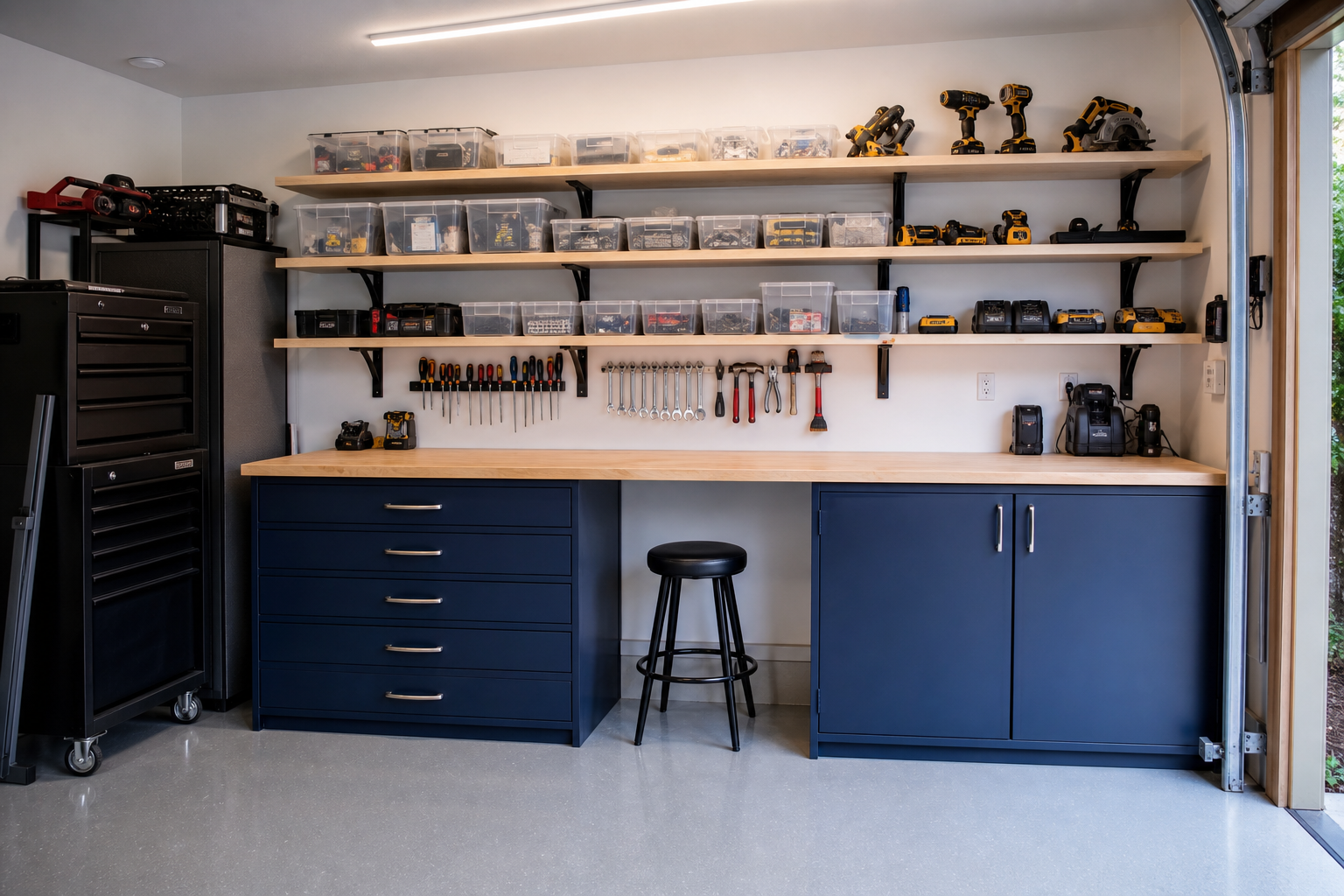
Navy blue cabinet fronts on a garage workbench are an easy way to make a purely functional space feel intentional and designed. The five-drawer bank on the left keeps hand tools sorted by type and within reach without ever opening a cabinet door. That combination of drawers on one side and doors on the other gives you flexibility for both small tools and bulkier items like power tool cases.
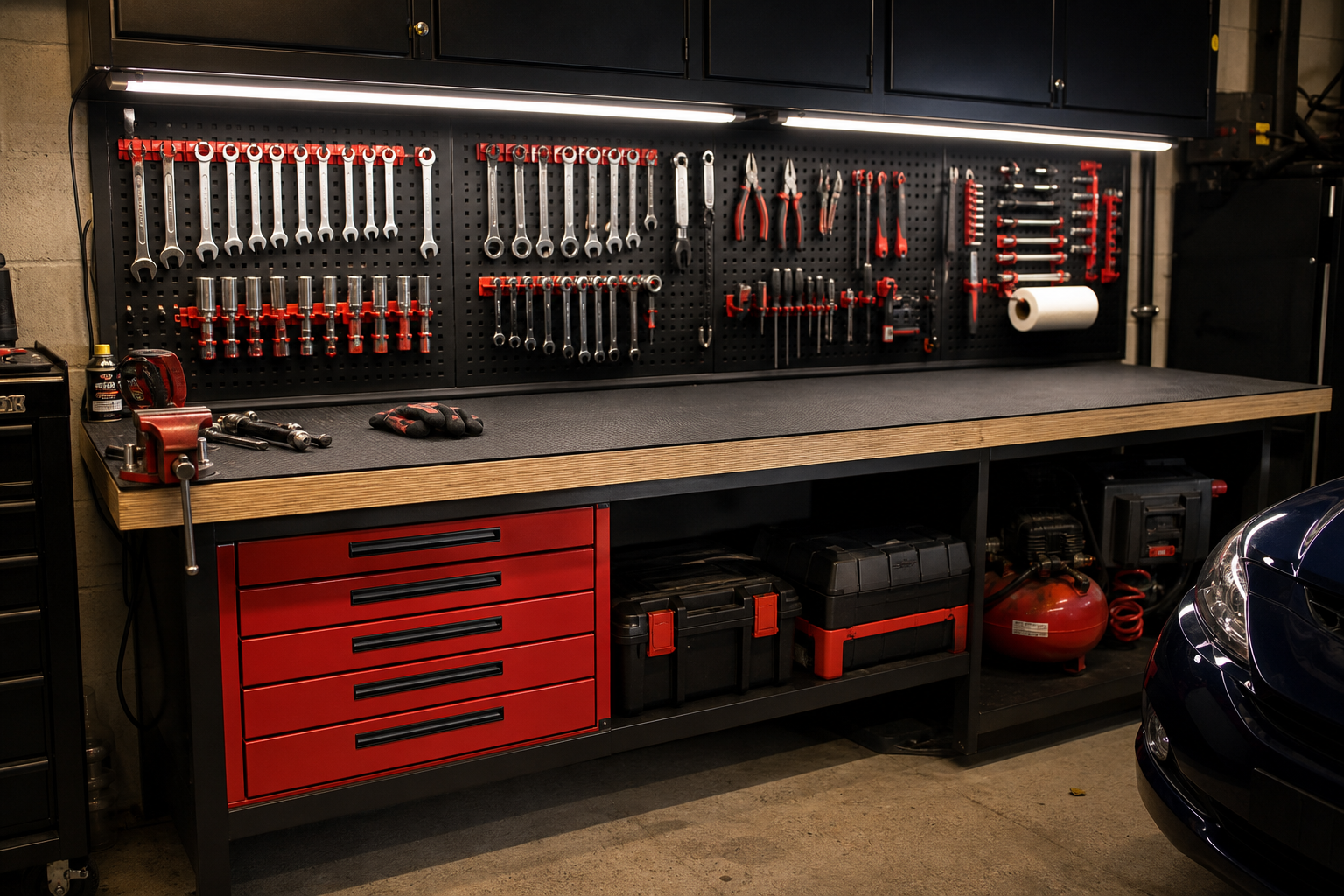
The red and black color combination is a classic in mechanic-style workshops and it’s popular because it works. Black pegboard above the bench keeps the most-used tools visible and accessible without any digging through drawers. If you’re choosing a pegboard system for this kind of setup, check out my breakdown of the best garage pegboard systems for tool storage to compare your options.
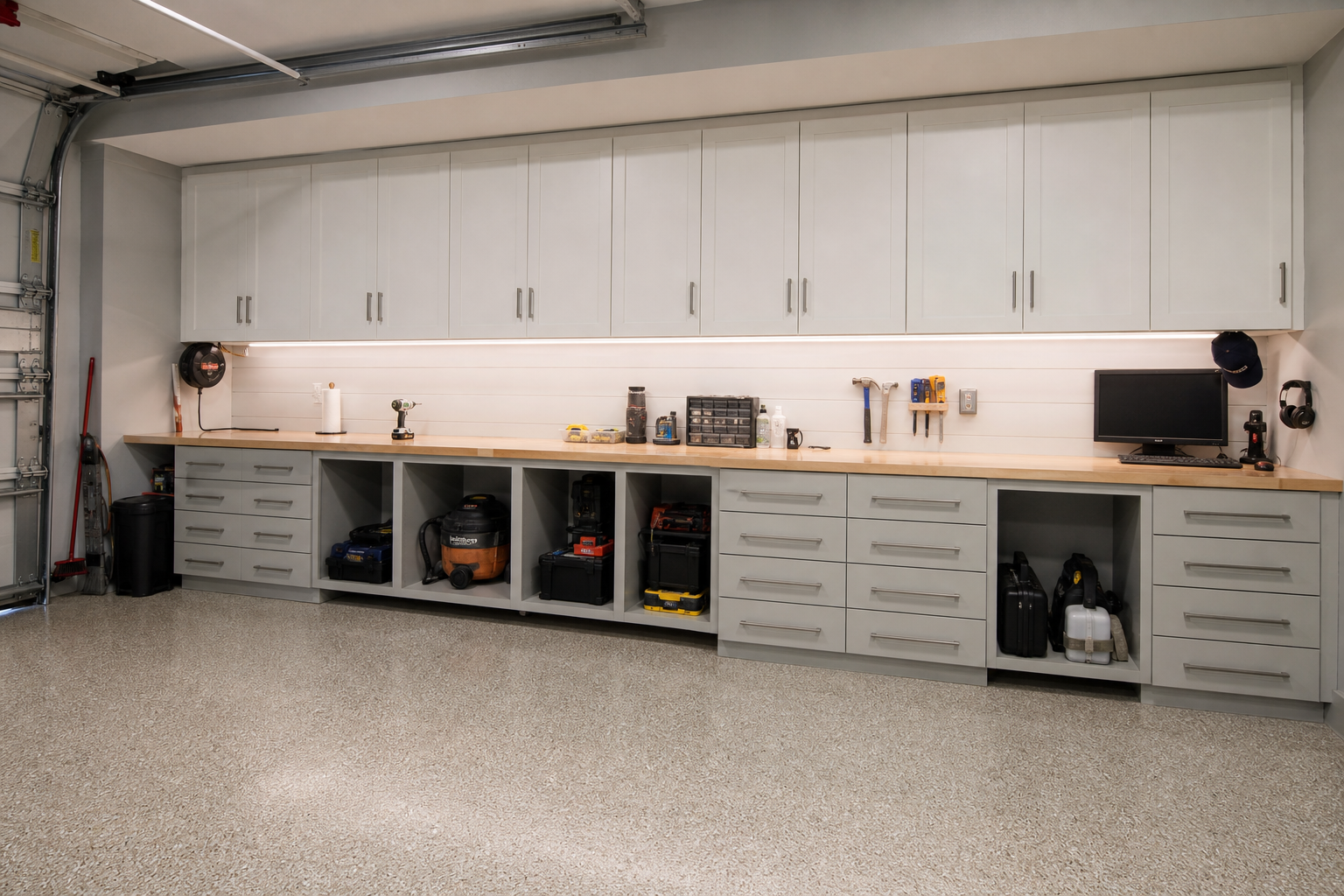
Running a workbench the full length of a garage wall is one of the most satisfying transformations you can do in a two-car garage. Shaker-style upper cabinets above the bench give the whole wall a finished, almost kitchen-like quality that most garages never achieve. Under-cabinet LED strips do a great job eliminating shadows directly on the work surface, which I dig into more in my guide to shadow-free garage task lighting.
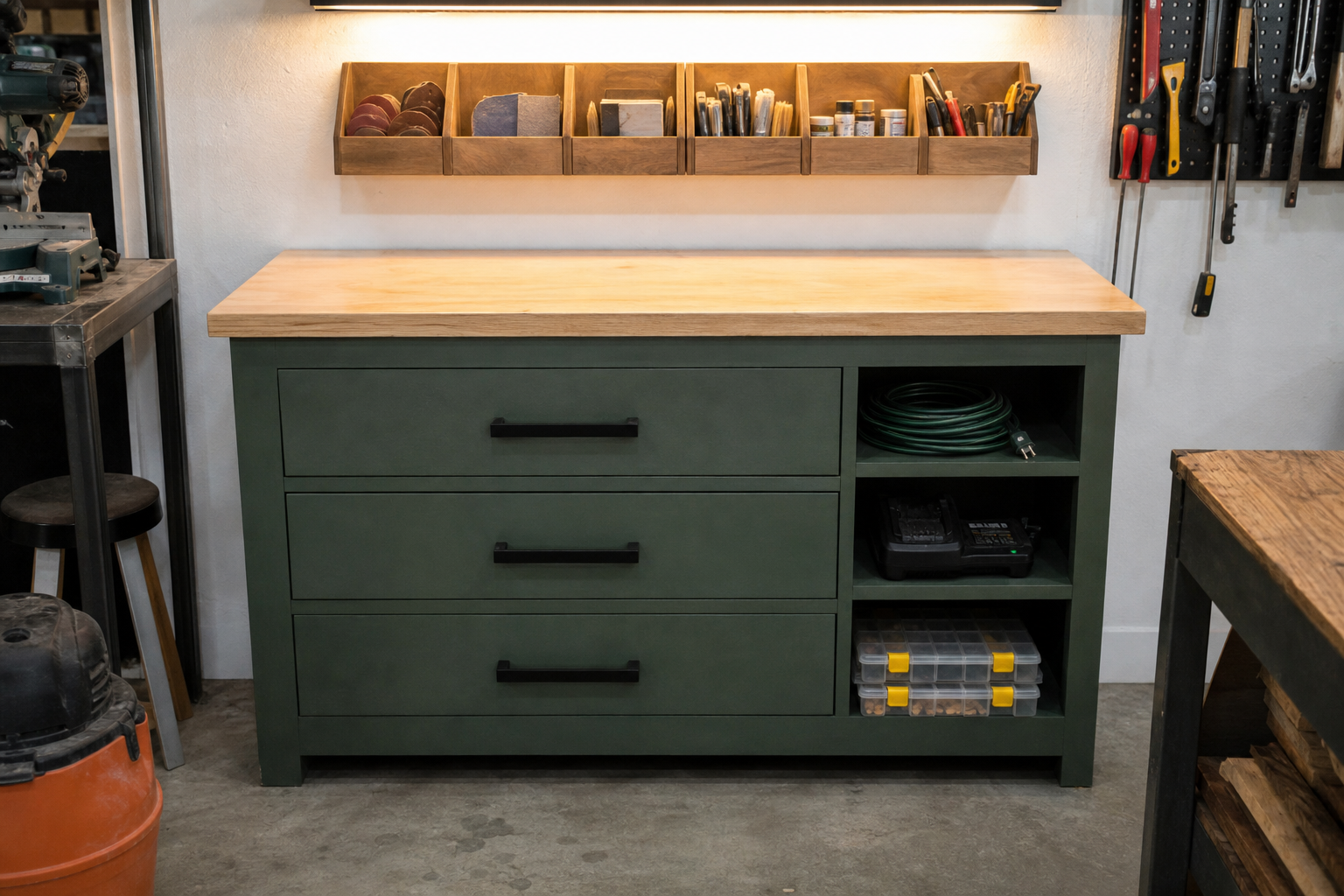
Dark green is an underused color in garage workbenches and it reads as calmer and more focused than the standard red or black. Those deep vertical cubbies for cords and chargers solve a problem that most bench designs completely ignore. The row of small wall bins above keeps consumables like sandpaper and bits off the bench surface but still at eye level.
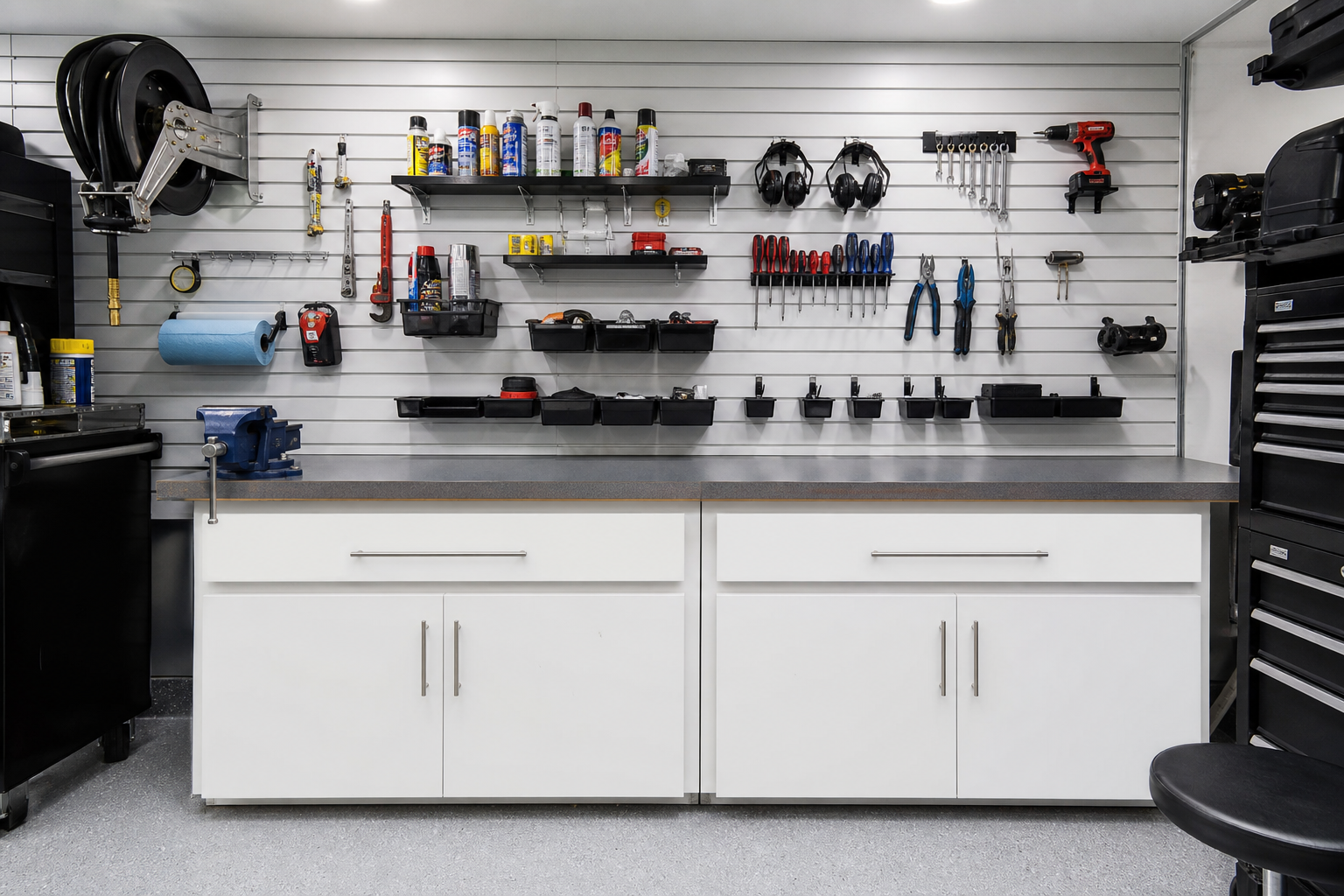
Slatwall behind a workbench is incredibly versatile because you can rearrange every hook and shelf without drilling a single new hole. The white panels and white cabinet fronts below the bench create a cohesive look that makes the whole wall feel planned out. If you’re considering slatwall or similar systems, my overview of garage wall panel options compares the main materials and price points side by side.
Mobile Workbench Carts
A workbench that moves is a workbench that works harder. Mobile workbench carts roll where you need them, tuck out of the way when the job is done, and can pull double duty as both a work surface and a tool storage station. They’re a natural complement to a fixed bench or a standalone solution in a tighter garage. Most roll on locking casters that hold rock-solid when you engage them. I have a full guide to the best garage rolling tool carts if you want to go straight to product picks, but these four ideas will help you see what’s possible before you commit to a style.
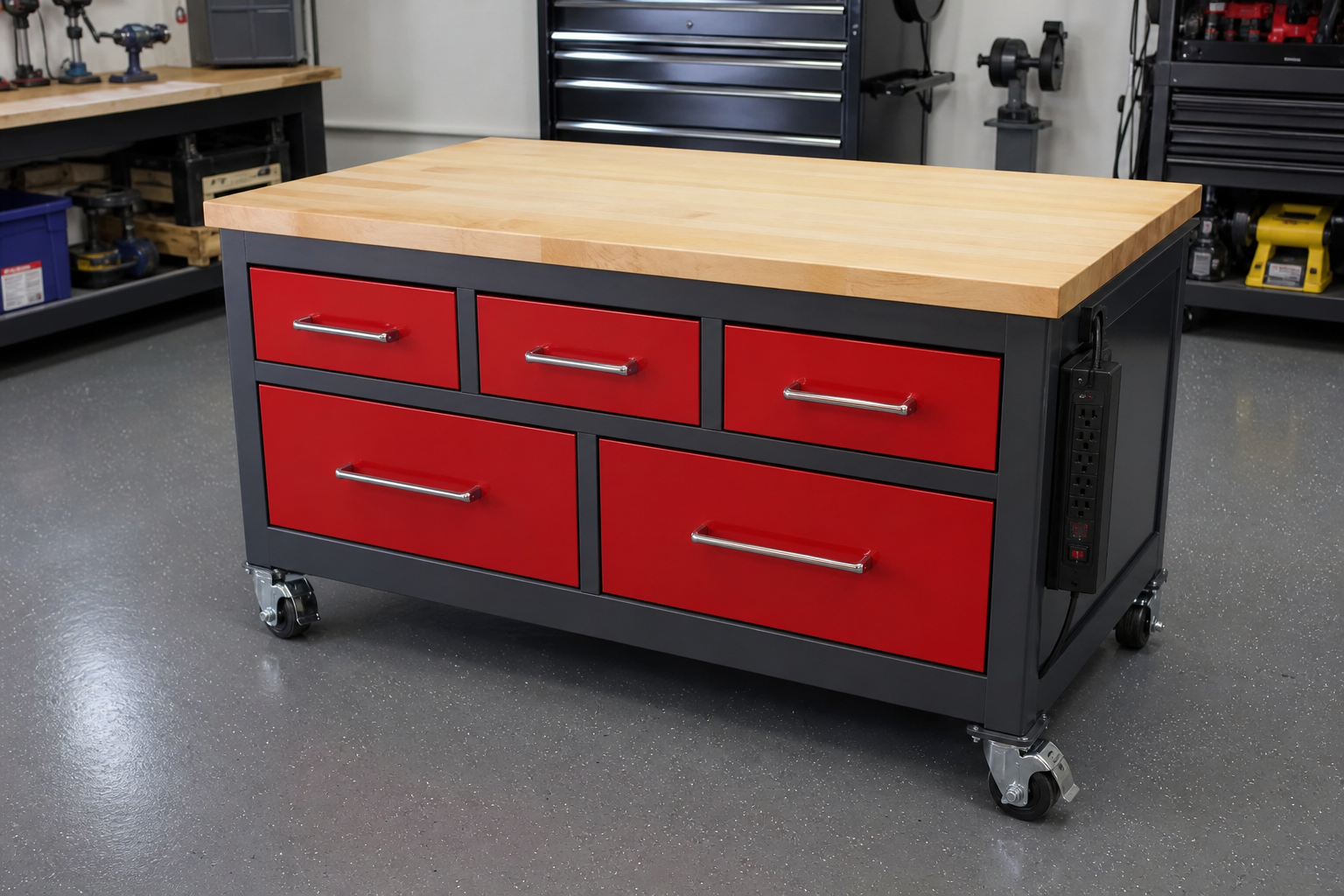
The maple butcher block top on a rolling steel cart is a combination that shows up in professional cabinet shops for good reason , it’s genuinely tough and looks great under shop lighting. Gloss red drawers make this cart a focal point of any garage rather than something you hide in a corner. The side-mounted power strip is a small detail that makes a big practical difference for corded tools.
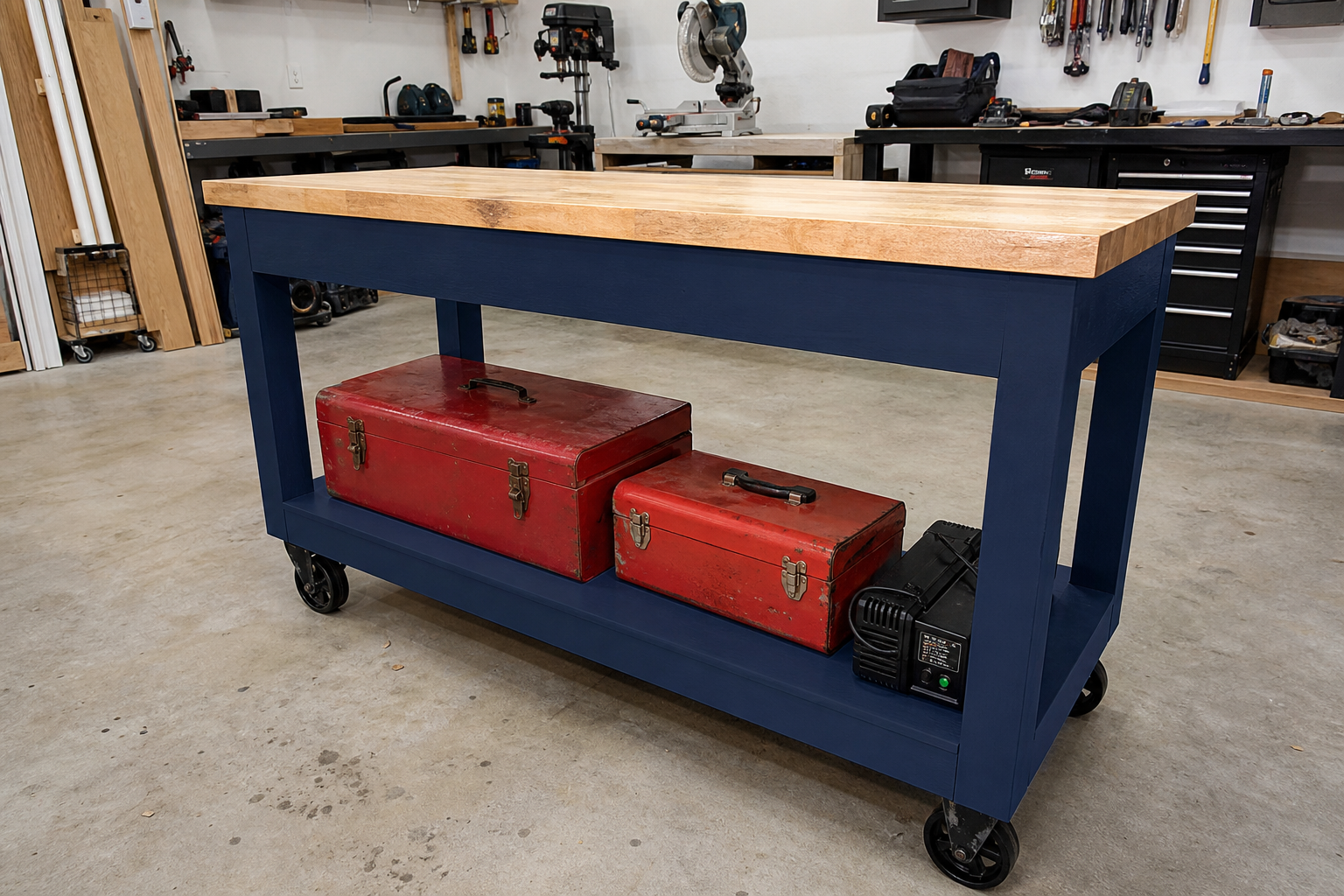
Building your own rolling cart from plywood costs a fraction of a commercial unit and gives you full control over dimensions and shelf spacing. Navy blue paint on birch plywood is a combination that photographs well and holds up to daily shop use. If you want a step-by-step approach, my DIY rolling tool cart build guide covers the construction from start to finish.
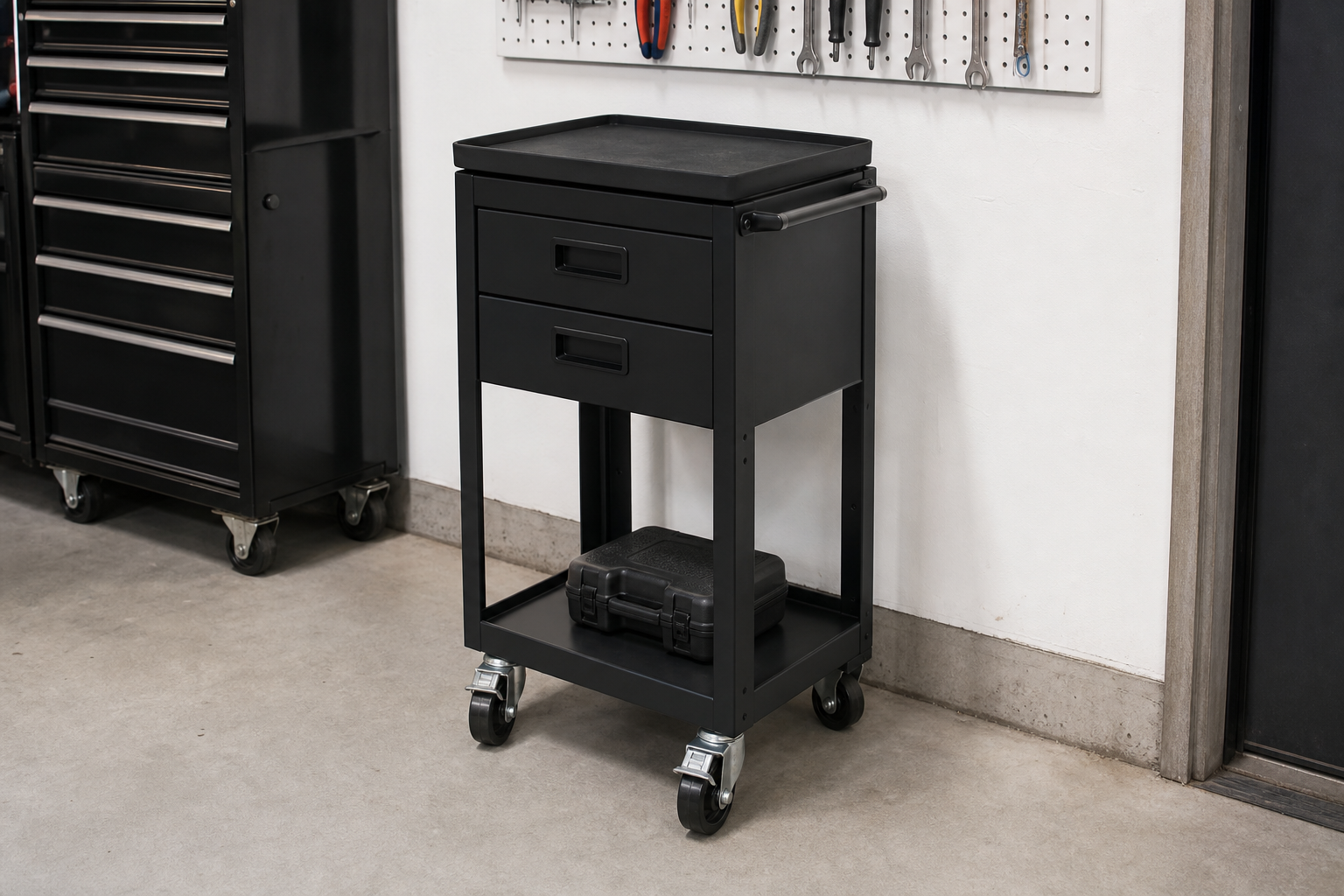
A narrow cart like this one fits in gaps where nothing else will go and still gives you a real standing work surface when you need it. Matte black powder coat is the most forgiving finish for a working garage , it hides scuffs and never looks dirty. This kind of cart is worth considering if you’re working through a garage organization plan for a small space and every square foot matters.
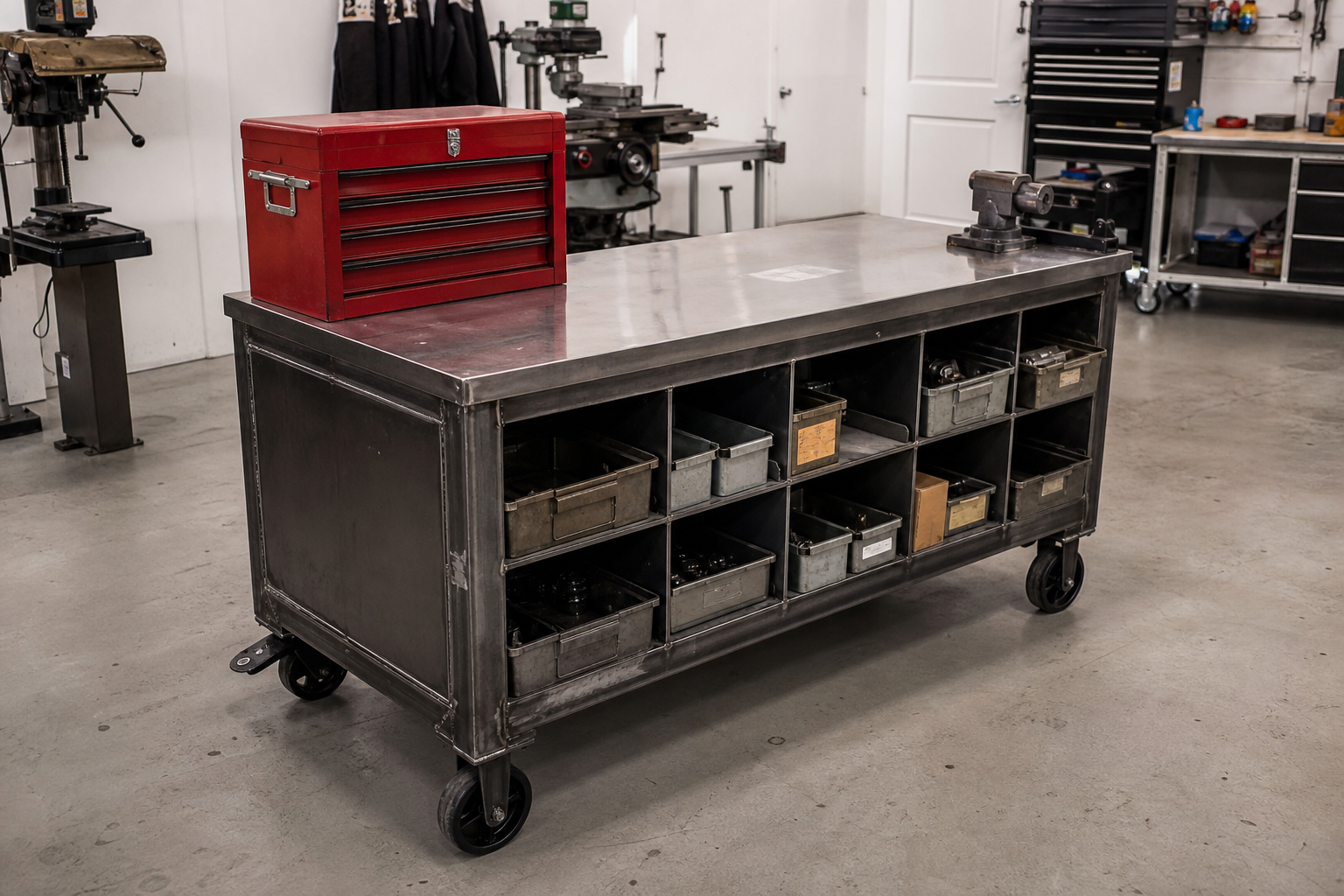
Stainless steel work surfaces are common in professional shops because they clean up fast and handle heat and chemical spills without complaint. The open cubby grid below keeps labeled bins organized and visible at a glance without digging through drawers. For anyone building out a serious garage workshop on a budget, this kind of cart is central to a budget garage workshop setup that doesn’t sacrifice function for price.
